At 2.30pm today, the Government published a series of documents relating to the appointment of Peter Mandelson as His Majesty’s Ambassador to Washington.
This is in the form of three PDF files, each with multiple messages, and about 1,500 pages in total. It’s not very easy to navigate through – we’ve created a simple search tool.
The tool breaks those large PDFs into individual message records where possible. Users can search the text, filter by sender, subject and date, and open both the extracted text and the relevant PDF page extract for each result.
Full details are below – here is the tool:
This was done very quickly with automated tools and should be seen as an aid to research, not an official republication or authoritative database. The source material is complex. Many documents are email chains, forwarded messages, scanned pages, redactions, WhatsApp transcripts or OCR text. That creates lots of limiations:
Some messages are easy to identify; others are ambiguous.
Some message boundaries may be imperfect.
Some sender, recipient, subject or date fields may be wrong or incomplete.
Some PDF page extracts may include more than the relevant message, or occasionally miss part of it.
OCR errors in the original text may affect search results.
Redactions in the Government publication remain redacted here.
The original PDFs should always be treated as the authoritative source. The extracted text and metadata are provided to make the documents easier to search and navigate.
The documents are Crown copyright and were published under the Open Government Licence.
The code we used to index the files and create the web app is available on our GitHub.
Iain Clifford Stamp told his followers the IRS owed them millions. Not because they had paid US tax, or because they had US investments. But because they had once signed mortgages, loans and credit-card agreements here in the UK.
Stamp says his organisation filed claims for 3,000 people, worth $600 million. The IRS froze the money. Stamp now says that was our fault — and says he will sue us for $120 million.
Stamp is a British fugitive, currently in Northern Cyprus, sentenced to 12 months’ imprisonment for contempt of court after refusing to comply with FCA proceedings.
He previously ran Matrix Freedom, a mortgage-elimination scheme which failed catastrophically at the High Court. The scheme was described as showing “every appearance of deceit, of abuse and contempt of court”, and left hundreds of Stamp’s “clients” thousands of pounds out of pocket and often in default on their mortgages.
The latest scheme has created thousands more victims, who’ve paid large fees to Stamp, in return for becoming unwitting participants in a US tax fraud.
The claims of free millions
The man in this video claims that everybody – in the UK and across the world – is owed huge tax refunds from the United States tax authority, the Internal Revenue Service (IRS):
“Did you know that you are actually owed back taxes on every mortgage, every loan, and every credit card you’ve ever had, going back to the age of 18?
Think about that for a second. I’m 56 years old. That means I’m owed back taxes going back 38 years. The longer you’ve had those loans, credit cards, and mortgages, the more tax you’re owed. So imagine getting all of that back in one lump sum. How life-changing would that be?
Before you assume this sounds too good to be true or some kind of loophole, it’s not. This is lawful. This is legal. All the elites and wealthy people of the world know exactly how to do this. I guarantee they’re doing it every single year.”
The man is part of a sovereign citizen1 movement led by a man called Iain Clifford Stamp, currently living in Northern Cyprus as a fugitive following a UK conviction for contempt of court.2
Stamp charges his followers thousands of pounds in “donations” to make these claims, and says the average is between two and three million dollars3, and over your lifetime you could claim $100m:
Well, my final thoughts are based on those that are already doing this, about the average is around somewhere between two and three million dollars is what you can recoup of taxes.
…
So if you’re if you’ve got another 20, 30 years on the monopoly board, then or maybe 40 years, 50 years, however many years you’ve got to play the play the game out and multiply that two to three million by how many years left?
…
It could be for a lot of people, it could be over $100 million that we’re talking about.
Stamp says his “Republic of Old Souls” organisation made claims in 2025 totalling $600m:
“Well, in 2025, we had IRS confirmed wages and tax transfers in excess of $600 million, and those recoupments4 were due to be funded to our membership between September of 2025 and now.”
And here’s Stamp’s explanation for why it works:
“You see, the birth certificate construct, an artificial player piece acting as a banker under the Bills of Exchange Act 1882 has made a deposit of energy.
The signature is the conduit of the energy transfer from the living man or woman through the birth certificate construct, a banker that is making a deposit, issuing a security promise to pay in the future that has no entitlement, no lawful standing to recoup that signature energy back to the birth certificate construct.
So if you’re going to recoup abandoned signature credit energy, which is taxes, you have to put a new piece on the monopoly board that is clean, that can operate as a nominee, as it says in the IRS Publication 1212. And if that entity, which is an artificial entity as a grantor trust, files a 1099-OID, it is making a claim that the signature, the creator of the signature, the living man-woman is the true beneficiary of the taxes that are being paid, at the moment, to the United States Treasury. On their ledgers, they are keeping those taxes.”
Stripped of the pseudo-legal language, Stamp’s claim is this: when you sign a loan agreement, a secret tax asset is created; that asset can be claimed from the IRS through a grantor trust using Form 1099-OID. Every part of that is false.
Form 1099-OID is not a magic refund form. It reports a specific kind of interest-like income on real debt instruments. 5 It does not turn a mortgage signature, credit-card agreement or birth certificate into a US tax refund. There is no such thing as “signature credit energy” or a “birth certificate construct”. A loan is money that you owe, not an asset. 6
We think most people would realise that these claims are nonsensical. The IRS does not hand out vast tax refunds to British citizens because they once signed a mortgage, loan agreement or credit-card application.
Some people, however, fall for this. Sometimes because they’ve fallen down a “rabbit hole” of internet conspiracy theories, and become unable to tell fact from fiction. Often because they are desperate; often in debt, and willing to believe anyone who offers a way out; sometimes because they are very vulnerable and with a history of mental illness. We’ve spoken to nine people who’ve seen family members fall under Stamp’s spell. There’s a common pattern: thousands, sometimes tens of thousands, of pounds paid in “donations”; debts mounting; relationships strained or broken; and the victim becoming more committed to the scheme, despite the promised riches never arriving.7
The reality – it’s just tax fraud
The scam Stamp is selling is well known. It exploits a vulnerability in the way the IRS processes a particular US tax form, the “1099-OID”. If you complete a form apparently showing that you suffered US tax, then the IRS will sometimes mail you out a cheque, even if in fact you never paid any US tax at all.8
A real 1099-OID refund scenario looks like this:
Diagram connections
Diagram connections
From Company issues $10,000 bond to investor for $9,500 cash to A year later, company redeems bond, paying investor $10,000 (Label: None)
From A year later, company redeems bond, paying investor $10,000 to Company withholds $150 tax from this (i.e. 30% of the $500 OID) and pays to IRS (Label: None)
From Company withholds $150 tax from this (i.e. 30% of the $500 OID) and pays to IRS to Company gives investor 1099-OID showing $500 OID and $150 withheld (Label: None)
From Company gives investor 1099-OID showing $500 OID and $150 withheld to Investor files tax return with 1099-OID and claims credit/refund of the $150 (Label: None)
What Stamp is doing is this:
Diagram connections
Diagram connections
From UK resident borrows $10,000 to Stamp fabricates 1099-OID for resident's trust showing $10,000 of OID and $10,000 of tax withheld. No tax was actually withheld (Label: None)
From Stamp fabricates 1099-OID for resident's trust showing $10,000 of OID and $10,000 of tax withheld. No tax was actually withheld to Stamp files tax forms showing the trust had $10,000 of income and overpaid tax (Label: None)
From Stamp files tax forms showing the trust had $10,000 of income and overpaid tax to IRS 'refunds' the $10,000 to the trust (Label: None)
This will sometimes appear to work – the IRS may actually send you a cheque. The one shown here is probably genuine:
But there is an obvious problem: if you complete a form saying that you suffered US tax when you didn’t, then you’ve committed fraud.9
It’s a fraud the IRS are very aware of. They publish an annual “dirty dozen” list of tax scams, and the 2009 list explicitly called out a 1099-OID fraud that perfectly describes the Stamp scheme:
These schemes are so persistent that the IRS continues to issue warnings about them, most recently including them in its 2026 list. And the US authorities do more than issue warnings; they aggressively prosecute 1099-OID promoters. In May 2024, a promoter was sentenced to five years in jail for running a scheme remarkably similar to Stamp’s:
There have been dozens of prosecutions over the years.10 While most of the frauds prosecuted to date involved US citizens, international borders do not offer immunity. The IRS has successfully extradited 1099-OID fraudsters from Trinidad and Tobago and from Canada to face trial:
If you’ve read our report on Simon Goldberg’s group “Empower the People”, Stamp’s scheme will look familiar. But where Empower the People processed perhaps 80 claims and attempted to defraud the IRS of around $1 million, Stamp claims to have filed returns for 3,000 trusts, claiming $600 million.
(As an aside, Stamp and Goldberg despise each other. Both have published extensive materials and videos accusing the other of fraud. Of course both are right.)
Stamp appears to believe he is different from Goldberg and all the other cases because he’s added a trust, and invented a vocabulary of “signature credit”, “98-series” trusts and an “810 Algorithm”. He has not. If you file, or cause to be filed, a Form 1099-OID claiming fictitious withholding on a fictitious debt instrument, the form is false. And that’s what’s happening here: there is no withholding and no debt instrument – that makes it fraud. Attempts by defendants in tax prosecutions to run these kinds of sovereign citizen arguments have consistently failed.11
We gave Stamp the opportunity to respond. He initially responded through “Ecclesia Law” – a Wyoming LLC that says it is a “a USA law firm operating exclusively under Attorney-in-Fact mandates”12 – sending us numerous nonsensical, repetitive and AI generated13 documents, of which this is typical.14
Did Stamp really submit $600m of fraudulent claims?
It would be easy to dismiss this all as a fantasy. $600m is a huge number, and one of the largest 1099-OID frauds ever.15
We had a long email exchange with Stamp in which he was adamant that he really did make $600m of claims. In the course of that correspondence, Stamp sent us what appears to be a genuine IRS wage and income transcript for the “Iain Clifford OID Trust”, used to make a $4.477m refund claim:
If, as it appears, the document is genuine, then this is remarkable piece of self incrimination – Stamp has sent us evidence that he committed US tax fraud – and at over $4m it would be one of the largest individual 1099-OID frauds ever. It is – obviously – not evidence that the IRS approved anything: IRS wage and income transcripts show data reported to the IRS on information returns; they do not, and cannot, show the IRS approved the report.16 So we can probably take Stamp at his word that he really did submit three 1099-OID records for Stamp’s trust, claiming about $4.477m of federal tax withholding. That claim is fraudulent on its face. Form 1099-OID is for original issue discount on real debt instruments; the IRS says the description box should identify the instrument by its “CUSIP” identification number.17 Stamp’s transcript instead says “ITEM DESCRIPTION: N/A”.18 The IRS has repeatedly warned that 1099-OID schemes are used to make false withholding claims and seek refunds based on fictitious “Treasury” or debt-discharge theories.19
Stamp claims to have established 3,000 “grantor trusts”, all making similar claims, with the total amounting to over $600m.
Is that true? Are there really 3,000 grantor trusts, with average claims of around $200,000 each? We have no evidence, and Stamp repeatedly refused to provide it. However, Stamp’s communications with his members/clients is consistent with there being thousands of participants. More specifically, recent litigation in New York between Stamp and a former associate provides some support that the 3,000 grantor trusts exist, and identify that an individual called William R Kimball made the claims for the trusts. We discuss the litigation further below.
“In 2025, we had IRS confirmed wages and tax transfers in excess of $600 million. And those recoupments were due to be funded to our membership between September of 2025 and now.
And of course, none of them were funded because some of the saboteurs, in fact, all of the saboteurs within our organization were reading Dan Neidle’s blogs. Dan Neidle was calling me a fraudster. Dan Neidle saying that the recruitment program, the Clifford Protocol doesn’t work.
All of those things contributed and tortiously interfered with the contracts that our membership had with the US trustees. Or as you know, the US trustees sent in fraud identity reports to the IRS and canceled all of the recoupments.”
Stamp makes a slightly contradictory claim in his New York lawsuit (more below), where he says his former associate Amy Jo Sanger “filed fabricated identity theft reports”:
Ms. Sanger maliciously filed fabricated identity theft reports to the IRS. These false reports directly undermined 3,000 legitimate grantor trusts that William Kimball had lawfully filed tax returns on. These 3,000 trusts belong to the customers of PT ICS Remedy Consulting (Indonesia), which serves as my administrative and tax filing firm.
It must also be possible that there never were $600m of claims, or they were immediately rejected, and blaming us or Ms Sanger is more convenient for Stamp than admitting the truth.
The New York lawsuit – and what it reveals about Stamp’s operation
A live lawsuit in New York shows us where the money went, who was filing the tax returns, and how Stamp was operating after leaving the UK.
On the surface, it is a narrow fight about a precious-metals account. GoldSilver LLC, a precious metals investment company, says it is holding about $883,00020 of gold, silver and cash in an account for something called the MTRXF Ministry Trust, and it asked the Southern District of New York to decide who is entitled to control it.21 This is an “interpleader” – someone essentially asking the court to adjudicate a dispute, rather than Goldsilver LLC take the decision itself, and risk being sued.
The account was opened in April 2025 in the name of “MTRXF Ministry Trust”, by a Colorado woman called Amy Jo Sanger (who said she was the settlor and trustee).2223
Stamp’s name is not on the trust documentation at all. He has not filed a conventional motion or witness statement with the court, but instead filed a document he describes alternately as a “statement of facts” and a “memorandum of law”. His case appears to be that Sanger was his bookkeeper who stole money from PT ICS Remedy Consulting, an Indonesian company controlled by Stamp, and placed it in MTRXF, her own trust. Stamp says that Sanger was trustee of another trust, the “OSN LLC trust” which had Stamp as settlor and Sanger as trustee.24
Stamp’s evidence for this consists of an “expert report” from an uncredited firm he runs25, and a witness statement from a US individual called William R Kimball who is authorised to make IRS electronic filings26 and appears to be the person making Stamp’s 3000 fraudulent refund claims. The “expert report” and “witness statement” just make a series of allegations without any stated basis, and are unlikely to be taken very seriously by the court.27
Kimball’s witness statement says his firm, William Kimball LLC, provides professional tax administration and filing services. We can find no evidence that Kimball actually carries on such a business. We are reasonably confident (from the identity documentation provided to the court) that this is the same William Kimball who ran a small biotech company.28 We don’t know why someone with a legitimate business would be involved with Stamp – we wrote to several email addresses that we verified were used by Kimball, but received no response.
So all of this tells us several things.
Stamp is now operating through an Indonesian company, PT ICS Remedy Consulting which he controls and capitalised with $2.3m.29
We now know who made the 3,000 claims – on Stamp’s account, it was William Kimball. If that’s true, he has exposed himself to criminal sanctions and, unlike Stamp, he’s living in the US.
Stamp’s “OSN LLC” trust document says all fees, donations, success fees and other income from MATRIXFREEDOM and I AM FREE, plus bank balances, intellectual property, code, platform design, and member and affiliate contact details, are trust property. The beneficiary is Iain Clifford. Until 2023, Clifford/Stamp was living in the UK – there must be a question whether he properly declared his income to HMRC.
One possible explanation is money laundering. Stamp appears to have made large amounts of money from Matrix Freedom and related ventures. The New York proceedings show money moving through an Indonesian company, a US citizen, a disputed trust and a US precious-metals account. We cannot know the full explanation, but this is exactly the kind of pattern that should attract scrutiny from banks, regulators and prosecutors.
Stamp’s response – a $120m lawsuit
Stamp has a very personal interest in the $600m of 1099 OID refund claims. He charges his members/clients “donations” – typically hundreds or thousands of pounds. But the real money would come if the claims were successful, as Stamp would have claimed a 20% “tithe” from any refunds actually received. In theory, a total of $120m.
When Stamp’s scheme collapsed (for whatever reason) his response was to blame our founder, Dan Neidle, and to threaten to sue him for $120m in Wyoming:30
The email says it’s a “Final Ultimatum” demanding removal of all Tax Policy Associates’ articles about Matrix Freedom within three days, after which Stamp would “transfer” his libel claims to “Ecclesia Law, – a trading name of MLITR Research LLC” which would then “prosecute” Dan in Wyoming.
By March 2026, Stamp changed his mind and was threatening to sue in Texas:
Stamp is a former financial services professional with a background of business failure and losing investors’ money in dubiouscircumstances. At some point after losing his regulatory authorisation, he started selling, and perhaps believing, “sovereign citizen” conspiracy theories.31 Stamp then founded an organisation called “Matrix Freedom”, selling pseudo-legal “remedies” to (very often) desperate and vulnerable people. These included a “mortgage elimination” scheme which charged clients £3,000 for template documents that (Stamp claimed) would make their mortgage disappear. Over 200 people brought claims in the High Court using these documents. Every single one was struck out, with the court saying:
” It is to all intents and purposes a ‘get-rich-quick’ scheme. Only it is nothing of the sort because the arguments that it relies upon, and which have clearly been made available to people to widely adopt, are so misconceived as to be fundamentally wrong. This deceit is all the uglier because the material that forms the building blocks of the claims (and the large group of claims) is a nonsensical and harmful mix of legal words, terms, maxims, extracts and statutes which are designed to look and sound good, at least to some. But they stand only as an approximation of a claim in law, a parody of the real thing.
…
The totality of claims that are the subject of this judgment have not revealed the full extent of the source, and nature, of encouragement and co-ordination that lies behind them but there is every appearance of deceit, of abuse and contempt of court, and it is a matter of time before a full picture of these comes to light.”
OpenDemocracy published an article on Stamp; Stamp responded by suing for libel. The claim was struck out because (amongst other failings), the pleadings were “so unreasonably vague and incoherent so as to be abusive”, and contained “the very same reliance on incoherent legal propositions that were the subject of serious and unequivocal criticism” in the mortgage case.
Stamp made a series of other claims, including against HMRC, which were dismissed as “wholly without merit”. All of this resulted in the High Court making a “general civil restraint” order against Stamp, which requires him to obtain the consent of the court before filing a lawsuit. Mr Justice Cotter said Stamp’s claims relied upon “misconceived and/or incoherent and inherently inconsistent arguments based on false propositions which have been invented to circumvent the current law”:
None of these failures stopped Stamp making very large amounts of money from selling his “get rich quick” schemes. In a leaked management meeting, Stamp’s team revealed that in its best month in 2022, Matrix Freedom made £500,000 from its clients. The organisation is now significantly larger, with many millions of profit made (and there’s more about this in the New York proceedings, see below).
As these schemes involve attempting to deal in mortgages and consumer loans, they require authorisation from the Financial Conduct Authority which, unsurprisingly, Stamp does not have. By 2023, the FCA had obtained an all-assets restraint order against Stamp. He was arrested and interviewed at his home in Swanmore, Hampshire. He then fled the country – first to Bali, then to Northern Cyprus.
Stamp was required by a court order to disclose all his assets. He served a witness statement saying he had “no assets, bank accounts, shareholdings, directorships or investments.” This was a lie. The court found that he had at least six undisclosed bank accounts, a BullionVault precious metals account and crypto accounts, with which he spent over $24,000 on luxury goods (Cartier, Chanel, Dior, Balenciaga) and over $60,000 on travel and hotels. He was also an undisclosed director of ten companies.32
The court found Stamp in contempt on all nine counts and sentenced him to 12 months’ imprisonment. He filed documents that were “nonsensical and difficult to understand” and “gibberish”, and didn’t show up for either hearing. His “attorney-in-fact”33, David Ayerst, did turn up and was physically removed from the courtroom when he refused to leave.
Stamp says he has appealed to the Court of Appeal, but the documents we’ve seen suggest it’s unclear if he made a valid appeal application and, if he did, it is unlikely an appeal would be granted.
Stamp has a 12-month prison sentence waiting for him in England. He has an FCA criminal investigation hanging over him. His assets are frozen (in theory). And yet he continues to run the operation, now rebranded as “The Republic of Old Souls” — filing tax returns from Indonesia, threatening journalists from Wyoming, and posting videos explaining why it’s everyone else’s fault. He changed his name to “Iain Clifford” in August 2024 by deed poll34; we will continue to refer to him as “Stamp” for consistency.
What happens now?
The reality for Stamp’s followers is that the promised millions are not coming.
Many will have paid thousands of pounds in “donations”. Some may have built their finances, relationships and hopes around the belief that the IRS owed them life-changing sums. But there is no secret tax asset. There is no “signature credit energy”. There is no lawful route by which a British borrower can claim a US tax refund because they once signed a mortgage, loan or credit-card agreement.
On Stamp’s own account, his organisation created 3,000 trusts and caused $600m of fraudulent refund claims to be filed with the IRS. He has publicly explained the scheme. He has identified the supposed legal basis. He has blamed us and others for the IRS freezing the money. And he has sent us what appears to be an IRS transcript showing a $4.477m fraudulent withholding claim for his own trust. It is very strange that someone would incriminate themselves so thoroughly, but that is what Stamp has done. Northern Cyprus may not be as safe as Stamp imagines – it has recently shown a willingness to deport foreign fugitives.
If William Kimball really made false US tax filings for 3,000 trusts, then his position is also extremely serious.
The position of Stamp’s clients is different. In principle, a person who knowingly submits a false tax claim can commit a criminal offence. But many of Stamp’s followers appear to be victims themselves: people persuaded by pseudo-legal nonsense, conspiracy theories and promises of impossible wealth. Some may have had little idea what was being filed in their name or in the name of a trust created for them. In theory they should take independent legal advice if any IRS forms were filed using their details, and do so with particular urgency if any refund money is actually received. We fear that few if any will have either the willingness or the resources to do that.
The tragedy is that the people least able to afford the consequences of Stamp’s actions are likely to suffer most. Stamp can reinvent himself, change his name, move jurisdiction, create new entities, and publish new videos blaming saboteurs. His followers are left with the losses, the broken promises, and the legal consequences of false documents filed in their names.
All this could have been prevented if action had been taken against Stamp before he fled the UK. Not mere sanctions for regulatory breaches (effective as the FCA appears to have been), but arrest and prosecution for defrauding his mortgage “clients”. The failure to stop him then led to the much larger fraud now, and the much greater number of victims.
The promised millions were never real. The fraud, the victims and the consequences are.
Many thanks to K for extensive research, and to K, P and C for their US tax expertise.
Footnotes
The conspiracy theory that individuals have access to a secret “government account” originated in far-Right anti-government movements in the United States in the early 1980s. By the late 1980s, Roger Elvick developed the idea further, claiming that these supposed accounts could be accessed by filing fraudulent tax forms with the IRS see analysis. Elvick obtained payments from the US Treasury using these methods before being convicted of fraud and imprisoned for much of the 1990s. Elvick’s scheme involved submitting false IRS Forms 1099-OID to fabricate withholding credits, triggering refunds. Courts consistently treated these filings as fraudulent, and similar schemes continue to be prosecuted.
Elvick was also associated with extremist groups, includingreportedly participating in networks linked to Aryan Nations and other white supremacist groups, which were influential in developing pseudo-legal theories about government “strawman” accounts. From the 2000s onwards, variants of his theory spread more widely online, becoming embedded in what courts and researchers now describe as the “sovereign citizen” movement. ↩︎
Stamp claims the conviction is a “jurisdictional nullity”. The points he raises are, at most, allegations of procedural or evidential error. In English law, a decision is a nullity only where the court lacked jurisdiction or there was a fundamental defect going to its authority (for example, no valid service and no submission to the court’s jurisdiction). Stamp’s complaints, even if well-founded, would render the decision at most voidable on appeal; they do not make it a nullity. In the event, his arguments are untenable; Stamp plainly had notice of the proceedings (both in law and in fact), any issue as to the prosecutor’s internal authority does not affect the court’s jurisdiction, and Stamp failed to pursue either point at the hearing (indeed he failed to attend the hearing). It’s also unclear whether Stamp actually brought an appeal within the applicable time limit. We’d therefore be surprised if he’s granted permission to appeal. ↩︎
At this point Stamp can’t keep his story straight. If he’s made $600m of claims for 3,000 people then the average is $200,000, not $2-3m. We are very doubtful any of his followers have recouped anything like $2m, not least because Stamp would be proudly displaying large cheques as evidence. ↩︎
Stamp may use the word “recoupment” because a Google search for “1099-OID refund” makes very clear the scheme is fraudulent. ↩︎
Nothing Stamp says has any connection with the actual content of IRS Publication 1212. Publication 1212 is a guide to original issue discount – broadly, interest-like income on debt instruments issued at a discount – and to the reporting obligations of brokers, middlemen and holders of such instruments. Its references to “nominees” are mundane: a broker or middleman may hold an actual OID debt instrument for the true owner, and may therefore have to issue information returns. That does not create OID where none exists, and it does not turn a mortgage, credit-card application, birth certificate or signature into a tax-refund-generating security. Stamp takes ordinary words from Publication 1212 – “nominee”, “OID”, “beneficiary”, “1099-OID” – and attaches them to an entirely imaginary theory. Nothing in Publication 1212 or US tax law supports that theory. ↩︎
Modern commercial banks do create new money when they make a loan. They do this by recording a loan asset (you owe them £X) and creating a matching deposit liability (your account now has £X). This is standard double-entry bookkeeping. However whilst the deposit belongs to you (you can spend it), the asset belongs to the bank (your obligation to repay). ↩︎
There’s a well-documented phenomenon of members of cult-like groups rationalising the group’s failures, and becoming more committed to the cult. When Prophecy Fails is the classic text. ↩︎
Why does anyone get a cheque when, in principle, the IRS should be able to see that they never received the withholding tax? There are additional warning signs the IRS should register – the withholding tax is in most reported fraud cases equal to the “discount” – that should ring alarm bells given the actual withholding tax rate is 30%, not 100%. And a further bell should ring because, when the issuer of a debt security gives a 1099-OID to an investor, they file an identical copy to the IRS – a modern tax system really should only issue refunds once withholding tax payments and 1099-OID forms have been received, and basic initial checks have been satisfied. But the IRS is famously reliant on paper forms, and in practice the timing of returns and refunds mean that the IRS often pays out refunds before it has reconciled refund claims with the filings it has received. The reconciliation also seems imperfect, probably because of the very large volumes and antiquated systems – so many 1099-OID frauds continue for a while before being discovered, and in the meantime it’s common for at least some cheques to be issued. Mistaking this for IRS approval is a serious mistake. ↩︎
The applicable US criminal provisions include 18 U.S.C. § 1343 (wire fraud), if customers were solicited online or false filings were transmitted through interstate or foreign wires; 26 U.S.C. § 7207 (fraudulent returns, statements or other documents), for delivering Forms 1099-OID or related documents known to be false as to material matters; 18 U.S.C. § 371 (conspiracy to defraud the United States), if Stamp, PT ICS Remedy Consulting and an ERO agreed to obstruct or impair IRS functions by filing false returns; 26 U.S.C. § 7206(1) and (2) (fraud and false statements), for making, subscribing, aiding, assisting, procuring, counselling or advising tax documents false as to material matters; and potentially 18 U.S.C. § 1956 / 18 U.S.C. § 1957 (money laundering / monetary transactions in criminally derived property), if proceeds of the fraud were routed through PT ICS Remedy Consulting in Indonesia and into US accounts or bullion accounts. ↩︎
The leading Supreme Court authority is Cheek v United States, 498 U.S. 192 (1991). Cheek pre-dates the modern sovereign citizen movements, but the arguments run by Cheek look very familiar. The case supplies the governing rule for criminal tax cases: the government must prove “wilfulness”: the voluntary, intentional violation of a known legal duty. A genuine good-faith misunderstanding of what the Internal Revenue Code requires may negate wilfulness, even if the misunderstanding is objectively unreasonable. But a belief that the tax laws are invalid, unconstitutional, or do not bind the defendant is different, particularly when the defendant is fully aware of previous prosecutions and IRS statements. The courts characterise this as a rejection of the law, not a misunderstanding of the law, and it provides no defence – and Federal appellate courts have repeatedly applied this principle to sovereign-citizen and tax-protester arguments. In United States v Sloan, the Seventh Circuit rejected the claim that the defendant was a “freeborn, natural individual” and state citizen outside federal tax jurisdiction. In United States v Ward, the Eleventh Circuit rejected arguments that the United States’ taxing jurisdiction was limited to federal enclaves and that the defendant was not an “individual” within the Code. And in United States v Gerads, the Eighth Circuit sanctioned litigants who claimed to be “Free Citizens of the Republic of Minnesota” and not subject to federal taxation – their arguments were “utterly without merit”. So a defendant may, in principle, rely on a genuine misunderstanding of a complex tax obligation. But pseudo-legal theories that the taxpayer is sovereign, outside federal jurisdiction, not a “person” or “individual”, or immune from tax law are routinely treated as frivolous, not as a defence. ↩︎
“Attorney in fact” is a US term for someone acting under a power of attorney. Claims that an “attorney-in-fact” can act as a courtroom representative are a standard sovereign-citizen trope, and have been rejected by US courtsfordecades. We have reported Ecclesia Law to the Wyoming State Bar. ↩︎
The documents have numerous signs of AI-generation – for example overuse of em dashes, heavy/unnecessary use of tables, broken footnotes, and fluent but empty and sterile prose. In one case, Stamp sent us an email in which he forgot to delete “Gemini says” at the start (it’s visible in the plain text/source but not the html). ↩︎
The document is based on the standard sovereign citizen claim that there is a distinction between someone’s physical body (“the living man”) and a “corporate debtor legal fiction” created by their birth certificate. As the High Court recently noted, there’s no record of any court, anywhere in the world, accepting these kinds of arguments. It makes a series of”pseudo legal” arguments, which look like law to some laypeople, but have no legal meaning whatsoever. Neither this nor any other document refers to actual US tax law; when we challenged Stamp for the legal basis for the claims he made. For completeness, we have set out his claims and the actual position here:
Under the Bills of Exchange Act 1882, a signed mortgage loan is a negotiable instrument. The Bills of Exchange Act is a UK Act of Parliament. It is irrelevant to the US tax code, and Stamp surely knows this. The US Treasury said: “The theory behind their use is bogus and incomprehensible”. For completeness, a standard “mortgage loan” is not a bill of exchange under the Act because it is a two-party loan/security agreement, not an order addressed by one person to another requiring payment. It is also not normally a “promissory note” because it is a wider contractual arrangement, not an unconditional negotiable promise to pay a sum certain; the amount ultimately payable is also rarely a fixed “sum certain”.
26 U.S.C. §6049(d)(4) and Treas. Reg. §1.6049-4(b)(3), support a “nominee reporting mandate”. These are realcitations, but nothing in these provisions authorises a borrower/beneficiary/trust to prepare and file its own 1099-OID.
A trust can file its own “corrective 1099-OID”.26 U.S.C. § 6049(a) requires information returns from the person who pays interest, or a nominee receiving interest on behalf of the true owner. It does not let the recipient invent a Form 1099-OID. IRS Publication 1212 says the issuer or broker provides Form 1099-OID, and nominee reporting applies where someone receives a Form 1099-OID for amounts belonging to another actual owner: IRS Publication 1212.
OID arises from signing a loan.26 U.S.C. § 1273(a) defines original issue discount as the excess of a debt instrument’s stated redemption price at maturity over its issue price. It has no relevance to a borrower signing a mortgage.
The issue price is zero because credit is created “ex nihilo”. § 1273(b) determines issue price by reference to what investors paid for the instrument, its stated principal amount, or other statutory pricing rules. It is not zero because a borrower signed a document.
Banks remit Form 945 taxes on “signature OID”. Form 945 is for non-payroll withholding, including backup withholding on reportable interest and dividends. It is not a secret pool of tax generated by loan signatures.
The “810 Algorithm” clears refunds. IRS materials use Transaction Code 810 as a refund-freeze code. The Internal Revenue Manual says a freeze is set by posting TC 810: IRM 21.5.6, Freeze Codes. Stamp’s own account that the claims were hit by TC-810 freezes is therefore consistent with IRS fraud controls, not IRS approval. Stamp’s refund claims are fraudulent whether or not they are immediately blocked by the IRS, and whether or not he correctly understands the algorithm the IRS uses when determining which claims to block.
Publication 1212 permits “nominee correction”. Publication 1212 is about genuine OID instruments. Nominee reporting applies where a nominee actually receives a Form 1099-OID for amounts belonging to someone else. The result (very broadly) is that the nominee issues another 1099-OID to the beneficiary; the amount of OID does not change. This does not allow a trust to create a new Form 1099-OID from an ordinary loan, PAYE deduction, utility bill or service contract.
A “98-series EIN” gives special Holder in Due Course status. EIN prefixes are administrative. They do not grant commercial-law rights, tax-credit status or standing to reclaim bank withholding.
HJR-192 is the legal foundation. HJR-192 was a 1933 gold-clause measure about payment obligations in lawful money. It has no connection to OID, Form 1099-OID, IRS withholding, refund credits or grantor trusts. ↩︎
The Brekke fraud was for $763m and, like this one, mostly involved non-US citizens. $13m was actually received by the Brekke participants. The Poynter fraud was for $100m; $3m was paid out. The Jenkins fraud was for $562.4m; it’s unclear how much was paid out. According to the IRS, all the various schemes have together claimed $3.3 trillion in fraudulent refunds. ↩︎
IRS, Topic no. 159: a wage and income transcript “shows the data reported to us on information returns such as Forms W-2, Form 1099 series, Form 1098 series, and Form 5498 series”. ↩︎
IRS, Instructions for Forms 1099-INT and 1099-OID, Box 7: “Enter the CUSIP number, if any. If there is no CUSIP number, enter the abbreviation for the stock exchange, the abbreviation for the issuer used by the stock exchange, the coupon rate, and the year of maturity… If the issuer of the obligation is other than the payer, show the name of the issuer.” See also IRS Publication 1212, explaining that OID reporting concerns debt instruments and that a nominee who receives a Form 1099-OID for amounts belonging to another person files a nominee Form 1099-OID for the actual owner, not for invented “signature credit”. The statutory framework is 26 U.S.C. §1272 (current inclusion of OID by the holder), §1273 (OID is the excess of stated redemption price at maturity over issue price), and §6049 (returns regarding payments of interest, including nominee reporting). ↩︎
We asked Stamp about this in correspondence. He said the IRS “810 Algorithm does not rely on text-based item descriptions” but instead “cross-references the Payer EIN and the specific CUSIP number against the Payer’s Form 945 tax module”. This is gobbledegook. Stamp’s reference to the “810 Algorithm” is to the IRS’s procedure for putting a fraud hold on refund claims. Stamp confuses this with substantive law – he believes (or pretends to believe) that if you successfully fool the IRS’s fraud detection processes, and the IRS don’t put a hold on your refund claims, then your refund claim is lawful. ↩︎
IRS, The Truth About Frivolous Tax Arguments: in OID schemes, filers falsely list large OID income and corresponding withholding, often using debt such as credit card debts and mortgages; Form 1099-OID “is in no way a financial instrument” and is not a method of payment or Treasury redemption. IRS processing guidance also treats suspicious 1099-OID withholding claims as potential fraud: see IRM 3.11.6 on “outlandish and/or unsubstantiated credits” often involving Forms 1099-OID, and IRM 3.12.8, which says to flag Form 1099-OID submissions for fraud where federal tax withheld exceeds income or the submission appears fraudulent. ↩︎
The numbers shift a little across the filings: $700,000 in the February letter and Ecclesia Law “expert” report, approximately $900,000 in the later statement of facts and March letters. The 6 February letter refers to “approximately USD $700,000” of Indonesian company funds; the 11 February statement of facts refers to “approximately $900,000”; the 3 March and 27 March letters refer to approximately $900,000 frozen by GoldSilver. See Clifford amended supplemental letter, 6 February 2026, p.1; Clifford statement of facts, pp.1 and 3; Clifford letter, 3 March 2026, p.1; and Clifford status report, filed 7 April 2026, pp.1-2. ↩︎
GoldSilver’s interpleader complaint says the account held “27 100-ounce silver bars, 269 ten-ounce silver bars, seven ten-ounce gold bars, 68 one-ounce gold bars, and $5,437.47 in cash”, and that the approximate value of the assets was $883,613.38. It says GoldSilver has “competing claims” from Sanger and Clifford as to their roles in the trust and authority over the account. See GoldSilver interpleader complaint, 21 October 2025, pp.1-5. GoldSilver says the online application was apparently filled out by Sanger. GoldSilver says: “The Account was funded on or about June 25, 2025 through a transfer deposit from another account held at GoldSilver in the name of ICS Remedy Consulting. GoldSilver understands that Sanger controls the ICS Remedy Consulting account.” See GoldSilver interpleader complaint, p.3. ↩︎
We spoke to an experienced Colorado trust attorney who thought the MTRXF trust document would likely have no legal effect, and that the trust assets would be regarded as owned by Sanger.The trust document has numerous strange features – to name just three: it doesn’t name beneficiaries (they are in secret “Trust Minutes”), it claims to be created by the “Common Law Right of Contract” (trusts in Colorado are governed by the Colorado Uniform Trust Code and the law of equity); the trust claims to have “absolute sovereign immunity from all outside interference” and says “No court’s authority is recognized to intercede”. ↩︎
Sanger says Stamp later gave GoldSilver a different document, dated 17 February 2025, which concerned an “OSN CORPORATION Trust”. She says that was a different trust, not the document she used to open the GoldSilver account, and not something that amended or replaced the MTRXF paperwork. See Sanger declaration, pp.1-2. ↩︎
Our view is that this “trust” would not be not recognised under English law and probably creates some kind of agency relationship under which Sanger acts for Stamp. The document fails the English law requirement that a trust must be certain. There is uncertainty as to who is the trustee – the document says the trustee is “Amy Sanger the shareholder and director of OSN LLC (the “Trustee”)”. There is uncertainty as to whether a trust relationship is actually intended – the trust is said to be irrevocable (clause 12). but it also says the settlor can collapse the trust at any time (clause 10) and the settlor can direct the trustee and appoint a replacement trustee. There is also uncertainty of subject matter: the trust is stated to be over future acquired property (generally not possible). English law does not recognise revocable trusts. Colorado law does, but we understand from Colorado counsel that Colorado would not recognise this trust given the lack of certainty. The document says “this Trust is established under Common Law” which is a non-sequitur – trusts are a creation of equity, not common law. ↩︎
“Ecclesia Law” which “functions as the Attorney-in-Fact division of MLITR Research LLC, a Wyoming-registered company”. Stamp says he writes the LLC’s materials, and it seems reasonable to assume it is controlled by him. The report consists of conclusions and allegations against Sanger but does not explain the basis of the conclusions and reasons for the allegations. ↩︎
The “expert report” provides no reasoning or methodology. The “witness statement” contains no first hand account of events, and contains conclusory statements such as that Sanger is a “a very dishonest person”, and statements outside Kimball’s knowledge, such as the nature of Ms Sanger’s role. Kimball claims to have filed a IRS Form 3949-A against Sanger – the form is used to report breaches of tax law. Stamp characterises this as the IRS formally accepting Kimball’s “repudiation” and Sanger becoming subject to an active federal criminal investigation. There is no evidence of that at all. The form itself is just an IRS information referral form, and its own instructions say Form 3949-A is not the right form for identity theft or unauthorised preparer filing. ↩︎
We say “ran” because, whilst the website lists Lee Thibodeau as the co-founder, but he died last year. ↩︎
The Indonesian registry categorises the company’s business activity under KBLI Code 70209: “Other Management Consulting Activities”. The description for this code covers generic business advice, human resources, and management information. It is a broad, catch-all classification commonly used by foreign entities that do not want to trigger regulatory scrutiny in Indonesia. The company’s profile says it changed its name to ICS Remedy Consulting in on 11 February 2026, and that was approved/recorded by the Indonesian authorities on 5 March 2026. The timing is odd given that Stamp made a filing in the New York litigation on 11 February 2026 referring to “my Indonesian entity, PT ICS Remedy Consulting”. ↩︎
Since late 2024, Stamp has conducted a sustained campaign of pseudo-legal threats against Tax Policy Associates and its founder. In November 2024 he sent Dan Neidle the first of three sovereign-citizen “estoppel notices,” before issuing a fake “Lien Judgment” from his own invented court claiming Dan owed him money. ↩︎
Like most sovereign citizens, he denies he is a sovereign citizen, but the language he uses, and the arguments he employ, makes clear that he realistically is. ↩︎
As noted above in the context of Ecclesia Law, “Attorney in fact” is a US term for someone acting under a power of attorney, which sovereign citizens frequently claim permits someone who is not a qualified lawyer to represent a third party. US courts have consistently rejected that proposition. The position in England and Wales is the same: rights of audience are reserved to authorised persons, and a power of attorney does not create an exception (which is why Ayerst was not permitted to represent Stamp). ↩︎
It’s unenrolled, the wording is eccentric, and it gave a correspondence address rather than an actual address. It’s unclear why he changed his name; our suspicion is it was an attempt to escape or defeat the FCA proceedings. ↩︎
Richard Tice, the deputy leader of Reform UK, used his Quidnet property company’s REIT status to save tax. That meant Quidnet itself paid no corporation tax on its property business – but the quid pro quo was that its corporate shareholders had to pay tax on the dividends they received. They did not. Instead, Mr Tice signed accounts wrongly claiming that the dividends – £514,000 in total – were tax exempt. The result: they failed to pay £98,000 of corporation tax.
This is a different issue from our previous report, which found that Quidnet REIT failed to withhold about £120,000 of tax on distributions to Mr Tice and his offshore trust. But it arises from the same underlying mistake: claiming the tax benefits of a REIT but ignoring the tax liabilities.
Diagram connections
Diagram connections
From Quidnet REIT to Tice companies (Label: £514k dividend)
From Quidnet REIT to Tice companies (Label: £514k dividend)
Key points:
Quidnet REIT paid about £514,000 of property income distributions to four companies: Tisun One, Tisun Two, Tisun Three and Tisun Four.
Quidnet REIT paid no corporation tax on this income, because it was a REIT. The four Tisun companies were supposed to pay tax instead — but they didn’t.
The payments were wrongly treated in the accounts as tax-exempt ordinary dividends. In fact they were taxable REIT property income distributions.
The result was about £98,000 of unpaid corporation tax.
Mr Tice has previously said the lack of tax was due to losses elsewhere in the group. The accounts contradict that, and our analysis finds there were insufficient losses in the group to eliminate the tax.
HMRC should be able to assess the tax, plus roughly £27,000 of interest and penalties likely in the region of 10–15%.
These are basic errors. That raises a further question: what else went wrong? In particular, did Mr Tice’s offshore trust also fail to pay tax on the distributions it received from the REIT?
Mr Tice did not respond to requests for comment from us or The Sunday Times.
Technical terms in this article
Real Estate Investment Trust (REIT)
A UK company that elects into a special tax regime for property investment. Broadly, the REIT does not pay corporation tax on its qualifying property rental business; the tax point is shifted to investors.
A distribution paid by a REIT out of its property rental business profits or gains. Unlike an ordinary dividend, a PID is generally taxable in the hands of the investor.
Tax deducted by the payer before money is paid out. In the REIT context, PIDs are generally paid under deduction of income tax at the basic rate unless an exception applies.
A normal company dividend. For most UK corporate recipients, ordinary dividends are generally exempt from corporation tax. That is different from a REIT PID.
The main UK tax on company profits. In this article, the key point is that UK companies receiving REIT PIDs are generally taxed on them as property business income.
A UK tax relief allowing certain losses of one company to be surrendered to another company in the same 75% group. It is often used to offset one company’s profits with another’s losses.
Where companies are only in the same group for part of an accounting period, group relief is limited to the period of common ownership. The relevant shared period is called the overlapping period.
A note in a company’s accounts showing how you get from the accounting profit to the tax charge. It can reveal whether a company says tax was reduced by dividends, losses, group relief or something else.
A digital filing format for accounts and tax documents. It looks like an ordinary document on screen, but has machine-readable tags embedded in it so software and regulators can identify what each figure means.
From 10 September 2018 to 9 August 2021, Quidnet was a REIT: a form of tax-exempt investment fund that invests in real estate. The consequence is that the company becomes exempt from corporation tax on its property rental business, but its investors are (broadly speaking) taxed as if they held the real estate directly.1
Quidnet REIT direct shareholders as at 1 July 2021
From Richard Tice (direct) to Quidnet REIT (Label: 13.00%)
From RJS Tice Family Settlement to Quidnet REIT (Label: 16.88%)
From RJS Tice Family SIPP to Quidnet REIT (Label: 34.98%)
From Tisun One to Quidnet REIT (Label: 7.80%)
From Tisun Two to Quidnet REIT (Label: 7.78%)
From Tisun Three to Quidnet REIT (Label: 7.78%)
From Tisun Four to Quidnet REIT (Label: 3.38%)
From Huntress (CI) Nominees to Quidnet REIT (Label: 4.42%)
From NJG Tribe SIPP to Quidnet REIT (Label: 2.99%)
From Employees to Quidnet REIT (Label: 0.98%)
Quidnet REIT correctly paid no tax on its property income. But that shifted the burden elsewhere.
It had to withhold tax on dividends it paid out of that income to Richard Tice and his offshore trust – “property income distributions”. As we’ve previously reported, it didn’t do that. Quidnet mistakenly treated the dividends as ordinary dividends and failed to withhold about £120,000.
This report is about another, potentially more serious, error. Quidnet’s UK corporate shareholders had to pay tax on their dividends. They did not – they treated them as tax-exempt.2
There were four corporate shareholders:3 Tisun One Ltd, Tisun Two Ltd, Tisun Three Ltd and Tisun Four Ltd. The sole director of all four companies was Richard Tice.
Quidnet REIT made about £514,000 of payments to the four Tisun companies.4 None of them ever paid tax.
The consequences are straightforward: HMRC can recover the tax, with interest and penalties. We return to this below.
Richard Tice’s original explanation
The Sunday Times asked Mr Tice why none of the four Tisun companies ever paid any corporation tax. Mr Tice told The Sunday Times that this was because of “wider losses suffered by the group”:
These statements were incorrect:
The accounts do not show losses being used.
There were in fact no tax losses in the group.
The front page of the accounts shows that the Tisun companies had no auditor – the only person who signed the accounts was Mr Tice:
The accounts don’t show loss utilisation
What the Tisun companies’ accounts actually show is an incorrect claim for a dividend exemption.
Here’s Tisun Three Limited’s tax reconciliation from its 2021 accounts (the tax reconciliation shows how you get from the profit in the accounts to the tax charge).
In this period, Tisun Three received £60,906 of property income distributions from the REIT. The accounts show the expected tax charge of £11,572 if you just apply the corporation tax rate of 19% to the £60,906 of income.
The tax reconciliation then explains why this tax doesn’t in fact arise. It shows the £11,572 of tax cancelled-out by a £11,572 negative entry labelled “dividend income”. The meaning is clear: the accounts are saying this was a dividend, and companies are normally exempt from corporation tax on dividends.
The problem is that this wasn’t a normal dividend at all. It was a “property income distribution” from a REIT – the REIT had been exempt on that profit, but corporate shareholders were not exempt. Tisun Three Ltd made the same mistake as Quidnet REIT did – it treated the payments from Quidnet as normal dividends, not as property income distributions.
The company therefore unlawfully failed to pay tax.
The result was that Tisun Three failed to pay tax on £60,906 of income in 2021, meaning lost corporation tax of £11,572 (at the 19% rate at the time).
This is repeated across almost all the Tisun companies accounts for all relevant years.5 You can download all the relevant accounts here.
The total untaxed income was £513,901, and therefore the lost tax was £97,641.6 Our methodology for this calculation is set out in full below.
We should, however, consider the possibility that someone was being sloppy and typed “dividend income” when they really meant “dividend income is sheltered by losses”. If all we had was the printed accounts then we couldn’t exclude that possibility. We can, however, go beyond the printed accounts and read the underlying iXBRL code7 that Tisun Three Ltd’s accounting software uploaded to Companies House. The code for this line is:
This shows that the “(11,572)” figure in the tax reconciliation, negating the tax, was given the tag “TaxIncreaseDecreaseFromEffectDividendsFromCompanies”. This is a specific tag for the dividend exemption.8
If the company really had sheltered its income with losses, we would expect to see a group relief or loss-related reconciliation item (such as “TaxIncreaseDecreaseArisingFromGroupReliefTaxReconciliation”), not a dividends-from-companies item.
The iXBRL code also shows the accounts were submitted using CCH Accounts Production software. Here’s a screenshot showing what the accountant would have seen when entering the figures into that software, and what they would have entered to get the result that we see:
And here’s what they would have entered if they were actually claiming group relief:
The iXBRL code tells us that the tax reconciliation wasn’t merely poorly or sloppily worded – the accountant submitting the return actively selected the dividend exemption – when the dividend exemption could not in fact apply.
Is it theoretically possible tax losses were used?
It is possible in principle that Mr Tice was correct that group relief was claimed, and the accounts are simply wrong. For example, an accountant simply absent-mindedly used the dividend exemption box, when actually the Tisun companies were utilising losses from elsewhere in the group. The tax accountants we spoke to thought this would be unlikely. This is not a “fat finger” error, because it was repeated for three different companies across three years: 2020, 2021 and 2022.
There is, however, a more fundamental problem: our team undertook detailed due diligence of the wider group (including a review of 38 companies’ filings and 260 sets of accounts), and we found no material losses that could have been used to shelter the Tisun companies’ profits. That’s because, in short, the parent of the Tisun companies didn’t have assets or liabilities that could generate a material tax loss, and the way the group was structured means that losses of companies in the wider group were unavailable. Full details of this analysis are set out below.
So we believe we can exclude the possibility that the reason the Tisun companies paid no tax was the availability of losses elsewhere in the group.
Could the accounts just be wrong and tax really was paid?
We can exclude this for two reasons.
First, all four Tisun companies received dividends from Quidnet and then passed them straight up10 to their parent, Tisun Investments, without retaining anything to pay tax. The Tisun companies show no sign of any borrowing to fund any tax liabilities, and no creditor liability reflecting an upcoming tax bill. Their accounts show that each company’s sole asset was its investment in Quidnet REIT shares (funded by an inter-company loan).
Second, when the Sunday Times first asked Mr Tice about the lack of tax in the Tisun companies, he agreed they paid no tax, but said that was because of group relief.
The consequences
This is not tax avoidance. There was no loophole or grey area here. The rules on REIT property income distributions are clear: they are taxable in the hands of UK corporate recipients. This is understood by all advisers and (in our experience) most businesspeople owning and operating REITs.
Nor is this tax evasion – a criminal offence requiring dishonesty and intent. There is no evidence of either here.
The Tisun companies just paid the wrong amount of corporation tax. The practical consequence is that HMRC is likely to seek to recover that tax.
In most cases, HMRC would do this by issuing a “discovery assessment” — reopening a closed tax year where it discovers that tax has been underpaid. This is routine where an error only becomes apparent after the original return was filed.
Where a company has failed to take reasonable care — what the law calls a “careless” error — HMRC has six years from the end of the relevant accounting period to assess the additional tax. All of the periods in question here appear to fall comfortably within that window.11 We expect HMRC’s starting position would be that a failure to tax property income distributions is careless, and it is not obvious what explanation the company could provide that would overcome that.
In addition to the tax itself, penalties are likely. For careless inaccuracies, the statutory penalty range is up to 30% of the tax due. In practice, where the taxpayer cooperates and the error is disclosed, penalties are often lower — commonly around 10–15%.
Interest would also be payable on the late-paid tax: HMRC charges interest automatically on underpaid liabilities, calculated from the original due date, and in this case it would come to about £27,000 – the calculation is below.
There is then a wider question. If Quidnet failed to withhold tax because it didn’t understand the nature of REIT distributions, and the Tisun companies failed to pay tax on those distributions for the same reason… what other errors were made? In particular, did Mr Tice’s offshore trust pay any tax at all on its distributions? It certainly should have done – but the errors we have found make us wonder if in fact it did.
Richard Tice’s response
The Sunday Times wrote to Mr Tice on Thursday. We wrote on Friday:
We didn’t receive a response; neither did The Sunday Times.
Shortly after publication of this report, Mr Tice published a statement. It does not deny any element of our reporting:
Methodology – determining the taxable profit
We calculate the £513,901 figure by:
identifying the REIT distributions (PIDs) declared by Quidnet
matching them to Tisun shareholdings
reconciling against the filed accounts
The first step was to reconcile the dividend income shown in the Tisun accounts against the dividends we know Quidnet REIT declared, and the shareholdings recorded in Companies House filings.
Quidnet’s own accounts explicitly disclose the PID per share for each financial year. The table below sets out, for each year, the total PID per share, the individual dividends that make it up, and the treatment we have adopted:
Financial year
Total PID per share
Individual dividends making up the total
Notes / treatment
FY2019
12.75p
12.75p FY2019 final dividend, paid March 2020.
100% PID.
FY2020
10.43p (weighted annual average)
5.00p H1 interim (paid September 2020 as scrip) + 6.00p FY2020 final (paid April 2021).
100% PID. The 10.43p figure ≈ total FY2020 dividends (£682,432) ÷ year-end shares (6,542,911). The 2020 dividends were paid as scrip — shares in Quidnet rather than cash — but the corporation tax treatment of scrip dividends for a REIT is the same as for a normal company, i.e. identical to cash dividends.
FY2021
6.99p (of which 5.50p H1 interim + 1.49p “REIT-period” slice of the final)
5.50p H1 interim (paid August 2021); 5.30p FY2021 final declared 10 May 2022 for the period 1 July – 31 December 2021.
Quidnet ceased to be a REIT on 9 August 2021. The full 5.50p H1 interim was declared while Quidnet was still a REIT and so we treat it as 100% PID. Of the 5.30p final, only 1.49p qualifies as PID (covering the pre-9 August 2021 part of the post-H1 period); the remaining 3.81p is a post-REIT ordinary dividend and is not PID.
FY2022 onwards
0.00p
—
No PIDs after the REIT period ended.
We can cross-check these figures against the Tisun accounts. For Tisun One, the FY2019 final (£63,028) plus the H1 2020 interim (£26,665) totals £89,693 — the accounts show £89,680 (a trivial difference from scrip share rounding). This gives us high confidence that the PID calculations are correct.
There are, however, three anomalies that affect all the other accounts:
Anomaly 1: the dividends that didn’t exist
As we have reported, in 2020, all of the REIT distributions were paid in shares, not cash. According to Quidnet’s Companies House filings, those shares remained owned by the four Tisun companies. Yet the four sets of accounts show dividends being paid up to their parent company, Tisun Investments. There was no cash to fund those dividends, and no capital raising or increase in creditors to fund a cash dividend.
We don’t think this can be correct, but it’s not clear what happened. However, this does not change our calculations – the tax position is unaffected by whether the four Tisun companies in fact retained the shares or paid them as a dividend to Tisun Investments.
Anomaly 2: the FY2021 ~3.5% shortfall in Tisun One, Two and Three
For the year ended 31 December 2021, each of Tisun One, Two and Three booked dividend income of roughly £2,300 less than the per-dividend, per-share calculation implies. The shortfall is consistent in size (about 3.5%) and consistent in direction (accounts are lower than the calculated figure) across all three companies.
The per-dividend calculation for 2021 is simply the FY2020 final dividend (6.00p PID) plus the H1 2021 interim dividend (5.50p PID), each multiplied by the relevant Tisun shareholding at the record date:
Company
Quidnet shares
FY2020 final 6.00p × shares
H1 2021 interim 5.50p × shares
Calculated 2021 total
Per filed accounts
Shortfall (£)
Shortfall (%)
Tisun One
550,494
£33,030
£30,277
£63,307
£61,029
£2,278
3.6%
Tisun Two
549,383
£32,963
£30,216
£63,179
£60,906
£2,273
3.6%
Tisun Three
549,383
£32,963
£30,216
£63,179
£60,906
£2,273
3.6%
Total
£98,956
£90,709
£189,665
£182,841
£6,824
3.6%
The shareholdings are taken from the Quidnet confirmation statements on file at Companies House. The PID rates are the figures Quidnet discloses in its own 2020 and 2021 accounts: a 10.43p annual PID for FY2020 (broadly equal to the 5p H1 interim plus the 6p FY2020 final — we have treated it as 6p for the final on the basis of the stated per-dividend rates) and a 5.5p interim for H1 2021.
We cannot explain the ~3.6% shortfall. It is consistent in percentage terms across three separately-filed sets of accounts in one year; it could be some kind of intentional methodology but it seems more likely to be a calculation error.
In any event, for the purposes of the corporation tax calculation we will use the amounts Quidnet actually paid, per Quidnet’s audited accounts and the confirmation-statement shareholdings.
The effect is to increase our calculation of the Tisun companies’ taxable PID income by about £6,800 in aggregate, or about £1,300 of corporation tax at 19%.
Anomaly 3: Tisun Four’s dividend that didn’t exist
Tisun Four was incorporated on 11 September 2020 and subscribed for 238,233 Quidnet shares on 21 September 2020. Both dates are after the record date for Quidnet’s H1 2020 interim dividend, so ordinarily Tisun Four should not have received any part of the H1 2020 dividend, only the FY 2020 final dividend (paid in 2021) and then the H1 2021 interim dividend (paid later in 2021).
Tisun Four’s accounts for its first period (11 September 2020 to 31 December 2021) record total dividend income of £37,951. The comparative column in its 2022 accounts splits that 2021 income between a “Final paid” figure of £24,848 for 2020 and an “Interim paid” figure for 2021 of £13,103.
We can reconcile the “interim 2021” figure exactly:
Line in Tisun Four accounts
Amount Booked in Tisun Four’s accounts
Reconciles to line in Quidnet’s accounts
Calculation based on Quidnet accounts and Tisun Four’s holding
Match?
Interim 2021 paid
£13,103
H1 2021 interim @ 5.50p
5.50p × 238,233 = £13,103
Exact
However we cannot reconcile the £24,848 “final 2020” figure against Tisun Four’s actual legal entitlement to dividends in 2020:
Line in Tisun Four accounts
Amount Booked in Tisun Four’s accounts
Reconciles to line in Quidnet’s accounts
Calculation based on Quidnet accounts and Tisun Four’s holding
Match?
Final paid — the 6.00p paid when Tisun Four was shareholder
£24,848
FY2020 final @ 6.00p
6.00p × 238,233 = £14,294
Does not match booked figure
The £24,848 only reconciles against all Quidnet REIT’s 2020 dividends – which is wrong, because Tisun Four shouldn’t have been entitled to the 2020 interim dividend, as it wasn’t a shareholder on the record date.
Line in Tisun Four accounts
Amount Booked in Tisun Four’s accounts
Reconciles to line in Quidnet’s accounts
Calculation based on Quidnet accounts and Tisun Four’s holding
Match?
Final paid (2021 comparative) — as booked
£24,848
Full FY2020 annual PID @ 10.43p
10.43p × 238,233 = £24,848
Exact
This cannot be correct, not least because Quidnet’s 2020 accounts (the statement of changes in equity in particular) only reconciles if the 2020 interim dividend was not paid to Tisun Four.
We will again resolve this by following the Quidnet audited accounts, not the Tisun Four accounts. That has the effect of reducing Tisun Four’s taxable PID income by £10,554, i.e. reducing the tax underpayment by £2,005.
Net effect on the corporation tax calculation
Anomalies 2 and 3 pull in opposite directions but the headline number is unchanged:
Adjustment
PID income
CT at 19%
Tisun One/Two/Three FY2021 shortfall (added back to match Quidnet-paid PID)
+£6,824
+£1,297
Tisun Four H1 2020 excess (removed to match Quidnet)
(£10,554)
(£2,005)
Total adjustment vs. booked accounts
(£3,730)
(£708)
The full reconciliation
Adjusting for the anomalies, and using the Quidnet audited accounts PID rates and the known shareholdings at each dividend record date, we can calculate the PIDs received by each Tisun company:
Dividend
Tisun One
Tisun Two
Tisun Three
Tisun Four
Total
FY2019 final (12.75p PID)
£63,028
£62,900
£62,900
£188,828
H1 2020 interim (5.00p PID)
£26,665
£26,611
£26,611
£79,887
FY2020 final (6.00p PID)
£33,030
£32,963
£32,963
£14,294
£113,250
H1 2021 interim (5.50p PID)
£30,277
£30,216
£30,216
£13,103
£103,812
FY2021 final (1.49p PID)
£8,202
£8,186
£8,186
£3,550
£28,124
Total PIDs
£161,202
£160,876
£160,876
£30,947
£513,901
The FY2019 final and (subject to anomaly 3) the H1 2020 interim dividends pre-date Tisun Four’s existence – it was incorporated in September 2020. The later dividends were received by all four companies.
This produces total taxable income of £513,901. The corporation tax rate at the time was 19%, and so the unpaid tax was £97,641.
Methodology – group relief
The Tisun group from 20 November 2020
At the time of the later REIT payments, the Tisun companies were in a small group. This diagram shows the group, and the other Quidnet REIT shareholders:
Tisun / Quidnet group structure as at 1 July 2021
From Richard Tice to Tisun Holdco (Label: 77.1%)
From Richard Tice to Tisun Holdco (Label: 22.9%)
From Tisun Holdco to Tisun Investments (Label: 100%)
From Tisun Investments to Tisun One (Label: 100%)
From Tisun Investments to Tisun Two (Label: 100%)
From Tisun Investments to Tisun Three (Label: 100%)
From Tisun Investments to Tisun Four (Label: 100%)
From Richard Tice (direct) to Quidnet REIT (Label: 13.00%)
From RJS Tice Family Settlement to Quidnet REIT (Label: 16.88%)
From RJS Tice Family SIPP to Quidnet REIT (Label: 34.98%)
From Tisun One to Quidnet REIT (Label: 7.80%)
From Tisun Two to Quidnet REIT (Label: 7.78%)
From Tisun Three to Quidnet REIT (Label: 7.78%)
From Tisun Four to Quidnet REIT (Label: 3.38%)
From Huntress (CI) Nominees to Quidnet REIT (Label: 4.42%)
From NJG Tribe SIPP to Quidnet REIT (Label: 2.99%)
From Employees to Quidnet REIT (Label: 0.98%)
A company in a group can use “group relief” to utilise another group member’s tax trading losses, property business losses, and losses on certain financial and other types of assets, but not losses on capital assets.
There are, furthermore, stringent conditions for companies to be in a group relief group. There has to be a 75% common corporate shareholding (i.e. not via an individual owner). So the only possible companies that could have generated losses for the four Tisun companies are those in this diagram, and not other companies held separately by Mr Tice.12
Tisun Holdco never had any material assets or liabilities other than its shareholding in Tisun Investments.13 That leaves Tisun Investments Ltd as the only entity that could in principle have had losses that the four Tisun companies could have used. Tisun Investments’ accounts for 202014, 2021 and 2022, show that it did have sizeable accounting losses every year. However the nature of its assets and liabilities mean that we expect almost none of these losses would be recognised for tax purposes.
Tisun Investments Ltd’s assets were:
Two flats in Kent, combined into a single dwelling, in a building where all the other flats are now owned by the Tice family. The value of the dwelling was around £600,000 and at the time in question it was unmortgaged.15 So, whether used by the family or rented out, the property is unlikely to have generated material tax losses, and certainly not the ~£170k/year needed to shelter the Tisun profits.16
A motor vehicle on hire purchase – likely a personal car. The cost of this may be partially allowable for tax purposes, but the amounts are not material (probably £5-15k each year of capital allowances and running costs).
Unlisted investment assets, never more than £120,000. We don’t have any information about what the investments are, but the limited value means that they won’t have justified material management expenses, and any loss on disposal would be a capital loss (which can’t be used to shelter trading profits or property income).
Shareholdings in its subsidiaries – Tisun One, Two, Three and Four, and JMT Holdco. Management expenses incurred wholly and exclusively for the purposes of managing these assets would be tax deductible; but given the passive nature of the companies, it’s difficult to see how that could generate material deductible costs.
Loans to its subsidiaries (Tisun One, Two, Three and Four), and its parent, (Tisun Holdco).17 Loans to connected parties generally generate no deductible debits for the lender (even if impaired or written off). The Tisun subsidiaries’ accounts suggest no interest is charged but, even if it was, the tax deductions for the payer would be matched by taxable income in Tisun Investments. These loans are therefore not a plausible source of net deductible tax losses.
Loans to related parties, with a balance fluctuating between £0.8m and £1.1m. These include loans to Richard Tice personally, to Reform UK, and to other connected parties. The loans are all either interest-free or non-commercial. Non-commercial loans don’t generate deductible losses for the lender, and (again) neither do loans to connected parties.
Its liabilities were:
270,000 preference shares at 7% – treated as debt for accounting purposes but not for tax purposes, so no tax deduction available.
£1,679,712 owed to JMT Corporation, an associated company that’s not part of the group relief group. The loan is interest-free18, so doesn’t generate any losses for Tisun Investments.
Loans from related parties – again, these appear to be non-commercial funding arrangements. Any associated costs would be unlikely to be deductible, and there is no evidence of significant interest expense in the accounts.
We therefore conclude that Tisun Investments Ltd did not generate material losses that could be used to shelter profits elsewhere in the group. It looks like the company’s accountants agreed, as there’s no sign of a deferred tax asset, or any mention of losses or group relief.
It follows that the accounting did not merely misstate a group relief claim as a dividend exemption. There was no group relief in 2021 and 2022.
The Tisun group in 2020
Until 20 November 2020, Tisun Investments and its subsidiaries were part of a much larger group, headed by Sunley Family Holding Ltd.1920
Sunley / Tisun group structure as at 19 November 2020
From Sunley Family Holding to Sunley Family Limited (Label: None)
From Sunley Family Holding to Tisun Investments (Label: None)
From Sunley Family Holding to JMT Corporation (Label: None)
From Sunley Family Holding to West Eleven Investments (Label: None)
From Sunley Family Holding to William Tice Family (Label: None)
From Sunley Family Limited to Sunley Holdings (Label: None)
From Sunley Holdings to Sunley Estates (Label: None)
From Sunley Holdings to Executive Centre Brighton (Label: None)
From Sunley Holdings to Environ (Kent) (Label: None)
From Sunley Holdings to Bach Homes (Sunley) (Label: None)
From Sunley Holdings to GMH (2004) (Label: None)
From Sunley Holdings to SP (2004) (Label: None)
From Sunley Holdings to Sunley FPR (Label: None)
From Sunley Holdings to Fairfax Shelfco 321 (Label: None)
From Sunley Family Limited to Prospero 2006 (Label: None)
From Sunley Family Limited to Sunley Investments (Label: None)
From Tisun Investments to Tisun One (Label: None)
From Tisun Investments to Tisun Two (Label: None)
From Tisun Investments to Tisun Three (Label: None)
From Tisun Investments to Tisun Four (Label: None)
In the interests of clarity, the diagram omits the REIT and its other shareholders. It also omits a large number of inactive and/or dormant companies21, and entities (LLPs, settlements) which are not companies and so not relevant for group relief purposes.
During this period, Tisun Investments’ assets and liabilities were, so far as material, as set out above regarding the post-2020 period – so it had no losses to surrender to the Tisun companies. However the Sunley group had companies with much a wider and more extensive degree of activity than Tisun Investments, and some of the Sunley companies could have had large losses – potentially hundreds of thousands of pounds.22232425 So, at first sight, this could be an answer to how the Tisun companies’ 2020 profits were eliminated.
There is, however, a technical barrier that means in fact no losses the Sunley group could be used by the Tisun companies. Sunley Family Ltd had a “tracking share”26 structure. The economic rights to Tisun Investments Limited were not held by the wider Sunley group but were reserved to holders of Sunley Family Ltd’s “B ordinary shares”.27 Those B shares were held by Richard Tice – partly for himself, and partly as trustee for his Tice children. This “broke” the tax group – if the economic interest in a company is held by a third party then it’s no longer a member of its parent company’s tax group:
The group relief legislation is in Part 5 CTA 2010. The basic rule is that two companies are in the same group if one is a 75% subsidiary of the other, or both are 75% subsidiaries of a third company.
There are a further series of complex tests which mean that if the economic rights of the subsidiary are in fact with a third party, the subsidiary is not in its parent’s tax group. The statutory gateway for this is section 151 CTA 2010.28
HMRC explain the policy rationale in CTM81005. The rules are designed to stop group relief where the apparent parent is not the true economic parent – otherwise it would be easy for economically unrelated companies to use each other’s losses. 29
It follows that Tisun Investments was not part of the Sunley group for tax purposes.30
The Sunley losses are therefore irrelevant – however large they were, they couldn’t have been used by the Tisun companies. The only potential source of losses for the four Tisun companies was Tisun Investments and, for the reasons set out above, it had no material tax losses.
Earlier periods
Tisun One, Two and Three were incorporated on 6 July 2018, and Tisun Four was incorporated on 11 September 2020. But Tisun Investments Ltd was not a newly-created shell when the Quidnet REIT structure was put in place: it had existed since 2006 and, as its filed accounts show, had a mixture of investment, property, loan and short-lived work-in-progress activity over the years.
However, any tax losses from these earlier activities could not have sheltered the £514,000 of Quidnet REIT property income distributions received by the Tisun companies. Until 1 April 2017, carried-forward losses in one company could never be surrendered as group relief to shelter the profits of another company at all – they stayed locked in the company that made them. From 1 April 2017, the new Part 5A CTA 2010 regime allows carried-forward losses to be surrendered as group relief, but only if they arose on or after 1 April 2017 and only where the surrendering and claimant companies were members of the same group when the loss arose.31 Pre-2017 Tisun Investments losses are therefore locked inside Tisun Investments.
For completeness, we reviewed every filed set of Tisun Investments accounts from 2007 to 2024.32 The picture is of an investment/holding company with some short-lived property and work-in-progress activity, paying tax in several years and with no material carried-forward losses.
Methodology – interest calculation
We calculated late-payment interest using HMRC’s published late-payment rates, applying simple daily interest to the corporation tax outstanding in each period. The first period starts on 1 October 2021, the first deadline for paying the tax. The amount outstanding then increases when later corporation tax liabilities fall due:
Period
HMRC rate
Amount owed
Interest
1 Oct 2021 to 7 Jan 2022
2.60%
£51,055.85
£356.41
7 Jan 2022 to 21 Feb 2022
2.75%
£51,055.85
£173.10
21 Feb 2022 to 5 Apr 2022
3.00%
£51,055.85
£180.44
5 Apr 2022 to 24 May 2022
3.25%
£51,055.85
£222.76
24 May 2022 to 11 Jun 2022
3.50%
£51,055.85
£88.12
11 Jun 2022 to 5 Jul 2022
3.50%
£56,261.28
£129.48
5 Jul 2022 to 23 Aug 2022
3.75%
£56,261.28
£283.23
23 Aug 2022 to 1 Oct 2022
4.25%
£56,261.28
£255.49
1 Oct 2022 to 11 Oct 2022
4.25%
£92,297.63
£107.47
11 Oct 2022 to 22 Nov 2022
4.75%
£92,297.63
£504.48
22 Nov 2022 to 6 Jan 2023
5.50%
£92,297.63
£625.85
6 Jan 2023 to 21 Feb 2023
6.00%
£92,297.63
£697.92
21 Feb 2023 to 13 Apr 2023
6.50%
£92,297.63
£838.26
13 Apr 2023 to 31 May 2023
6.75%
£92,297.63
£819.30
31 May 2023 to 11 Jul 2023
7.00%
£92,297.63
£725.74
11 Jul 2023 to 22 Aug 2023
7.50%
£92,297.63
£796.54
22 Aug 2023 to 1 Oct 2023
7.75%
£92,297.63
£783.90
1 Oct 2023 to 20 Aug 2024
7.75%
£97,641.19
£6,717.18
20 Aug 2024 to 26 Nov 2024
7.50%
£97,641.19
£1,966.20
26 Nov 2024 to 25 Feb 2025
7.25%
£97,641.19
£1,764.90
25 Feb 2025 to 6 Apr 2025
7.00%
£97,641.19
£749.03
6 Apr 2025 to 28 May 2025
8.50%
£97,641.19
£1,182.39
28 May 2025 to 27 Aug 2025
8.25%
£97,641.19
£2,008.33
27 Aug 2025 to 9 Jan 2026
8.00%
£97,641.19
£2,889.11
9 Jan 2026 to 15 Apr 2026
7.75%
£97,641.19
£1,990.28
£26,855.91
The calculation runs to 15 April 2026 and assumes no tax was paid before then.
This issue was identified by one of our contributors, D. We developed this report in conjunction with Gabriel Pogrund of the Sunday Times, who discovered the initial tax issues with the Quidnet structure.
The REIT and accounting analysis for this and our original report was mostly from K, M1, and P1, with additional insights from D, R, P2 and M2. Thanks to J, B and M3 for practical advice on, and demonstrations of, the CCH accounting software used by the Tisun companies.
And finally thanks to all the volunteers who worked on the group relief due diligence, reviewing filings for 38 companies and 260 sets of company accounts.
The logic is that funds don’t pay tax; their investors do – we see this across almost all forms of investment fund, although it’s achieved in a variety of different ways. ↩︎
When a UK company receives a normal dividend from another company, it doesn’t pay tax – there’s a corporation tax exemption for dividends. The reason is that the subsidiary would have paid tax on its profits, so it makes no sense to tax them again. However property income distributions from REITs are different. A REIT does not pay tax on its property income. So it stands to reason that a UK company receiving a property income distribution pays corporation tax on it – and that is indeed the result. ↩︎
Why have so many companies? At the time, the REIT rules penalised a REIT if any single corporate shareholder held 10% or more. By splitting a single ~27% holding across four companies, each holding under 10%, it was straightforward to avoid the prohibition. The 10% rule was regarded as rather pointless by both taxpayers and HMRC and changes in 2023 mean it now rarely applies. All of which means that we would regard the splitting of the ownership (of itself) as tax planning, not tax avoidance; we don’t believe HMRC would have any realistic prospect of challenging it. ↩︎
Because they were UK companies, there was no requirement for Quidnet REIT to withhold tax. ↩︎
We see the same exact approach in the Tisun One, Tisun Two and Tisun Three accounts from 2020 to 2022, and the Tisun Four accounts for 2022. Tisun Four has no tax reconciliation for 2020 and 2021 but its accounts for these two years are otherwise consistent with the other ten accounts. In 2022, the companies did receive some ordinary dividends which really were exempt, but also property income distributions which were not. Our reconciliation distinguishes the two cases. ↩︎
These figures fully take into account that some dividends were ordinary dividends which absolutely were exempt. ↩︎
When a UK company files accounts electronically, it often does not send Companies House a simple PDF. Instead, it sends an iXBRL file: a document that looks like ordinary accounts on screen, but with machine-readable tags embedded behind the text and numbers. The tags were standardised by the Financial Reporting Council – you can see and search them all here. ↩︎
Also note that the £60,906 income in the tax reconciliation statement is given the tag “DividendIncome”; not technically correct. ↩︎
The screenshots are from the current version of CCH Accounts Production; we understand from the accountants we spoke to that the screens were the same in 2020, 2021 and 2022. ↩︎
Subject to an oddity about scrip dividends, discussed further below. ↩︎
i.e. because the earliest accounting period ended 31 December 2020, meaning HMRC has until 31 December 2026. ↩︎
A significant entity – JMT Corporation Ltd – is excluded from the diagram and analysis below because, whilst it is held by Tisun Investments, it isn’t part of a 75% group with the Tisun companies and so can’t surrender losses to them. JMT Corporation was Richard Tice’s late mother’s former investment company. JMT Holdco was incorporated in March 2020, held by Richard Tice directly – it then acquired JMT Corporation. At some point between March and December 2021, Tice sold 55.4% of the shares in JMT Holdco to Tisun Investments; Tisun Investments therefore treats it as a subsidiary for accounting purposes (but it’s not part of a group relief group). By 2024, JMT Corporation’s sole material asset was a £1.66m intercompany loan to Tisun Investments. ↩︎
It was incorporated on 17 March 2020. From 2020 to 2023 it appears to have been a very thin holding company: its only visible asset was its 100% shareholding in Tisun Investments Limited, carried at £32,418, and its only visible liabilities were short-term group creditors and, in 2020-2021, accruals/deferred income. The filed accounts do not include a profit and loss account. From the balance sheet/reserve movements only, the apparent results are: 2020 loss £925; 2021 nil movement; 2022 positive movement/profit £925; 2023 nil movement. ↩︎
Note the 2020 accounts were massively restated the following year; the 2020 accounts themselves show a large profit. ↩︎
In late 2022, a further part of one of the flats was acquired, worth £126,000, and a £491,000 mortgage with Weatherbys was taken out over all three titles the following year 2023. ↩︎
The building is on a private estate. We have full details of the dwelling, have reviewed planning consents, and believe we have identified how the dwelling is used; we are, however, not publishing further details given the possible privacy implications for the Tice family. ↩︎
The identity of the borrowers is not explicitly disclosed but the £2,064,976 “owed by group undertakings” in Tisun Investments’ 2024 accounts exactly reconciles to the balances shown in the latest accounts of the four Tisun subsidiaries and Tisun Holdco. Tisun One shows £559,961 owed to group undertakings, Tisun Two £558,960, Tisun Three £558,960, Tisun Four £369,500 and Tisun Holdco £17,595, giving £2,064,976 in total. ↩︎
We know JMT Corporation was the lender because JMT Corporation’s 2022 accounts show a matching amount “owed by group undertakings”. We know it’s interest-free because we can use JMT Corporation’s balance sheet to reverse-engineer its profit and loss account. The accounts show the company’s total assets decreasing by £31,261 as it liquidated its entire £488,192 investment portfolio, drew down its cash and other debtors, and used these funds to increase the pre-existing loan to Tisun Investments. Concurrently, total liabilities decreased by £17,229 as the company paid down historical short-term creditors and deferred tax provisions. Offsetting the £31,261 drop in assets against the £17,229 reduction in liabilities results in a net asset decrease of £14,032, which matches the company’s reported loss for the year. We see the same in other years. We conclude that there cannot have been any interest received on the loan to Tisun Investments. ↩︎
Until October 2020, Tisun Investments sat “lower” in the group, under Sunley Family Limited group. In October 2020 it moved under Sunley Family Holding Ltd, and on 20 November 2020 it moved out to Tisun Holdco. We discuss the consequence of that below. We show the October to November 2020 picture for clarity. ↩︎
In particular, Sunley Estates Limited was a substantial property company. Its 2020 accounts show investment property of £2.1m, group debtors of £12.2m, group creditors of £1.5m and net assets of £13.6m. Its profit and loss account grew from £8,862,526 in 2019 to £9,426,401 in 2020, telling us that the company’s total profits were £563,875 that year (the accounts disclose no dividends). However we need to reverse out two elements that are disregarded for tax purposes: a £1,171,448 positive revaluation of property assets, and a “deferred tax” provision of £222,575. That tells us the company may actually have made a loss of about £385,000. That is absolutely not a robust number – it’s possible that some or even all of this loss would disappear if we actually knew the underlying revenue and expense items. The loss would also be smaller or disappear if dividends were paid. Subsequent accounts (and the lack of any obvious utilisation against later profits here or elsewhere) suggest to us this may not actually have been a tax loss. Nevertheless, we conservatively assume that the tax loss we’ve inferred was real. ↩︎
West Eleven Investments looks much larger at first sight. Its net assets fell from £1,497,834 to £1,151,898, and its profit and loss reserve moved from a £2,176 deficit to a £348,112 deficit. That is a raw reserve fall of about £346,000. But the notes show a £399,546 tangible-asset revaluation loss and a £35,653 investment revaluation gain. Reverse those revaluations and the large apparent loss disappears entirely — the adjusted position is a small profit, not a loss. But, again, it doesn’t matter how many losses were generated – the overlapping period rules still apply. ↩︎
William Tice Family may have generated some small losses. Its net assets increased from £1,936,930 to £1,967,402, and its profit and loss reserve increased from £724,348 to £754,820. It therefore did not show an accounting loss overall. The accounts include a £69,540 investment revaluation gain and deferred tax increased from £94,389 to £121,235; stripping those out suggests, at most, a small underlying loss of about £12,000. ↩︎
On the (rare) occasions when these companies submitted full accounts, there was evidence of group relief. Sunley Holdings Limited’s accounts for 2017 and for 2019 show group relief surrendered and received. JMT Corporation Limited’s 2011 accounts show losses surrendered. However neither company filed full accounts in 2020 and so this doesn’t help us determine if losses were surrendered in 2020. ↩︎
This is sometimes done where for e.g. historic/tax/contractual reasons shares have to stay owned by one person/company, but it’s been agreed that actually all the benefit should go to someone else. In other words, it’s a way of executing a demerger without all the consequences of an actual demerger. ↩︎
The B shares were created on 13 October 2006, reclassifying 12,512 ordinary shares held by Richard Tice as B ordinary shares tracking all economic rights in Tisun Investments (defined to be “B Company Limited”). A 2010 resolution re-designated 3,713 D ordinary shares as B ordinary shares, ranking pari passu with the existing B ordinary shares. The structure was restated in new articles adopted in December 2014. Those articles again defined “B Company Limited” as Tisun Investments Ltd and preserved the same tracking rights over distributions and assets from that company. By the 2020 confirmation statement there were 16,225 B ordinary shares. The structure was then unwound in October 2020. A 16 October 2020 share-exchange resolution put Sunley Family Holding Limited above Sunley Family Limited. A 19 October 2020 dividend-in-specie resolution then declared a dividend on the B ordinary shares, satisfied by transferring the entire issued share capital of Tisun Investments Ltd. The result was that Tisun Investments was now in both the legal and the economic ownership of Mr Tice. ↩︎
HMRC’s CTM81121 example illustrates the same point: ordinary share capital can give the appearance of a group, but if the profit rights show someone else is the true economic parent, the group-relief relationship fails. ↩︎
A point of detail: on 19 October 2020, Sunley Family Limited transferred the issued share capital of Tisun Investments to Sunley Family Holding Limited by dividend in specie; the B shares remained so Tisun Investments did not join Sunley Family Holding Ltd’s tax group. Then on 20 November 2020, Tisun Investments was acquired by Tisun Holdco. ↩︎
A separate anti-avoidance rule in CTA 2010 Part 14, Chapters 2C and 2D (ss.676CB, 676CE and 676CH) also blocks pre-entry carried-forward losses from being surrendered as group relief for five years after an accounting period in which there is a change of ownership of the surrendering company. ↩︎
Simon Goldberg1 and his UK-based organisation, Empower the People, are running an elaborate scheme to defraud the US Government. The group files fake US tax returns to trick the IRS into refunding their members’ everyday UK consumer spending – a practice the US tax authorities have repeatedly warned is fraudulent.
When YouTuber Salim Fadhley publicised the fraud, Goldberg reported Fadhley to the UK police for harassment, instructed a law firm to send a “cease and desist” letter, and ultimately commenced a private criminal prosecution against him in Chelmsford Magistrates’ Court.
Empower the People operates a wider pseudo-legal grift. They run bogus “mortgage-elimination” schemes – which the Financial Conduct Authority warns are scams and potentially criminal to provide. None of this is done for free – they charge £1,300 for the US tax scam, plus 13% of the return – but Empower the People fails to charge UK VAT on its services, or pay corporation tax on its profits.
We believe there should be a criminal investigation into Goldberg and his group, and that the CPS should immediately take over Goldberg’s private prosecution, and discontinue it if it is not in the public interest.2 HMRC and the FCA should also investigate what appear to be widespread breaches of tax and regulatory law.
Technical terms in this article
IRS (Internal Revenue Service)
The US federal tax authority. It processes US tax returns and sometimes issues tax refunds.
A US tax concept for the economic return on a debt instrument issued at a discount to its redemption value. It has nothing to do with everyday consumer spending.
A filing that advances arguments the IRS treats as legally baseless. The IRS can reject these filings and impose penalties. The IRS says 1099-OID schemes are “frivolous”.
A loose movement promoting pseudo-legal theories that claim (wrongly) that debts, taxes, and laws can be avoided, or cash magically generated, by using certain documents or phrases. Courts routinely reject these arguments.
Simon Goldberg says he’s found the ultimate loophole: a way to legitimately claim back almost every penny you have ever spent on everyday bills, credit cards, and mortgages, using the 1099-OID US tax form:3
The core claim is so absurd it is hard to understand how anyone believes it: whenever you pay a bill in the UK, your bank secretly creates a matching credit. Goldberg tells his followers they can claim this hidden credit as a cash refund directly from the US tax authority – the IRS. And so you can claim a cheque from the IRS covering almost all your day-to-day spending.
Goldberg says his organisation, Empower the People, will handle this entire process:
Tally up your spending: Members calculate their total spending across all bank accounts and credit cards for a given calendar year. Almost everything counts: utility bills, rent, mortgage payments, petrol, and even buying gold. Only cash withdrawals are excluded.
Hand over your passport: Members send their physical passports to Empower the People so they can apply for a US Individual Taxpayer Identification Number (ITIN).
Sign blank forms: Empower the People passes the financial figures to a secret “expert” (who calls himself “Paul Muad’ib” after the sci-fi character). Because the expert’s method is his “intellectual property”, members receive signature pages for two US tax forms(with nothing completed on the forms). They sign them in blue ink and send them back to Empower the People – pledging under penalty of perjury to the contents of a completed tax return they are never allowed to see.
Send the forms to the IRS: Empower the People couriers the forms to the IRS in carefully timed batches so it doesn’t look “bloody obvious what’s going on”.
Wait for the cheque: Goldberg promises that, if successful, the IRS will send the member a physical cheque in US dollars. He says that the IRS retains about 20% of the refund, and Empower the People takes a fee, leaving the member with a cash windfall of roughly 65% of everything they spent that year.
The cheques arrive: there is a success rate of about 50% – and Empower The People provide this proof that cheques are actually received from the IRS:4
Naturally there is a fee – an upfront “donation” of £1,300 per year claimed, plus a 13% “back-end fee”:
Members are then encouraged to “recycle” this fabricated wealth by spending it to pay off their mortgages – which they can then tally up and claim back again the following year, creating a “snowball” of debt-free cash:5
The reality
None of the claims are real. It should go without saying, but the IRS doesn’t knowingly give US tax refunds for UK consumer spending.
There have been many schemes like Goldberg’s, which use the 1099-OID form to trick the IRS into posting refund cheques. The IRS publishes an annual “dirty dozen” list of tax scams, and the 2009 list explicitly called out a 1099-OID fraud that perfectly describes Goldberg’s methodology:
These schemes are so persistent that the IRS continues to issue warnings about them, most recently including them in its 2025 list.
The US authorities do not just issue warnings; they aggressively prosecute 1099-OID promoters. In May 2024, a promoter was sentenced to five years in jail for running a scheme remarkably similar to Empower the People’s:
While most of the frauds prosecuted to date involved US citizens, international borders do not offer immunity. The IRS has successfully extradited 1099-OID fraudsters from Trinidad and Tobago and from Canada to face trial:6
In his webinars, Goldberg refers extensively to the “expert” who completes the forms – the anonymous man who calls himself “Paul Muad’ib”. We do not know who he is. It is possible he does not exist and is an invention of Goldberg. It is also possible he is a real person, with “expertise” in US tax fraud. The one thing we are certain of is that he is operating completely outside the bounds of legitimate US tax practice. If he holds a valid IRS credential, Federal regulations strictly prohibit him from charging a percentage-based fee.7 Whether credentialed or not, he is operating illegally as a ‘ghost preparer‘—charging for tax preparation but unlawfully hiding his identity from the IRS by failing to sign the returns he generates.8
How the fraud works
Goldberg provides a threadbare justification for UK residents using 1099-OID forms to claim US tax refunds: payment of bills creates a “security” and that, because “your time is priceless”, your bills have been discounted:
He says:
Because whenever you pay a bill, what you’re actually doing is creating another debt, as it were, or in many cases, new cash, a new security.
…
The fact of the matter is that your time is priceless. So whether you’re accepting a thousand pounds an hour, 200 pounds an hour or five pounds an hour, you have discounted your value, your time from infinity down to that figure. It’s been discounted. And then you issued bills and you were the original issuer of those bills.
Why does Goldberg say this? And why is one particular US tax form, the 1099-OID, so important?
A 1099-OID form is used to report “original issue discount” (OID) – taxable income generated under US Federal tax law when debt securities are issued at a discount from their maturity value. The company that issued the securities gives its investors a 1099-OID, and they include it in their US tax return. In some unusual circumstances, the issuer of the debt security will withhold US tax at 30% from the discount amount. The taxpayer can reclaim this in their US tax return – and in some cases this can result in the IRS issuing a cheque to a person. This footnote has a more complete example of how a 1099-OID normally works.9
A real 1099-OID refund scenario looks like this:
Diagram connections
Diagram connections
From Company issues $10,000 bond to investor for $9,500 cash to A year later, company redeems bond, paying investor $10,000 (Label: None)
From A year later, company redeems bond, paying investor $10,000 to Company withholds $150 tax from this (i.e. 30% of the $500 OID) and pays to IRS (Label: None)
From Company withholds $150 tax from this (i.e. 30% of the $500 OID) and pays to IRS to Company gives investor 1099-OID showing $500 OID and $150 withheld (Label: None)
From Company gives investor 1099-OID showing $500 OID and $150 withheld to Investor files tax return with 1099-OID and claims credit/refund of the $150 (Label: None)
None of this has anything to do with personal bank or credit card transactions. And nothing Goldberg says bears any relation to what is on an actual 1099-OID form, and his nonsense about our time being discounted bears no relation to the actual US tax definition of “original issue discount” in 26 U.S.C. § 1273(a)(1) (as explained in IRS guidance). Most importantly: at no point does Goldberg explain how a withholding tax refund can possibly be due, when his clients never suffered any US withholding tax in the first place.
Any feature of a tax system which can result in a cash payment by a tax authority is vulnerable to fraud10 – and that’s the problem with 1099-OIDs.
The essence of the fraud is simple: fabricate a 1099-OID to show withholding tax that you never suffered, and use it to claim a refund:
Diagram connections
Diagram connections
From UK consumer spends $10,000 to 'Expert' fabricates 1099-OID showing $10,000 of OID and $10,000 of tax withheld. No tax was actually withheld (Label: None)
From 'Expert' fabricates 1099-OID showing $10,000 of OID and $10,000 of tax withheld. No tax was actually withheld to EtP files tax forms showing $10,000 of income and overpaid tax of $8,000 (Label: None)
From EtP files tax forms showing $10,000 of income and overpaid tax of $8,000 to IRS retains 20% of the $10,000 as tax and refunds the remaining $8,000 (Label: None)
In principle, the IRS should always be able to spot this, because they should be able to see that they never received the withholding tax.11 In practice the timing of returns and refunds mean that the IRS often pays out refunds before it has reconciled refund claims with the filings it has received. The reconciliation also seems imperfect, probably because of the very large volumes and antiquated systems – so some 1099-OID frauds continue for a while before being discovered.
How much tax is being defrauded?
Empower the People’s 1099-OID scheme seems to have started in 2022. This cheque, from the webinar slide deck, shows it was issued in October 2022 and relates to tax year 2018.12
At its 2023 Annual General Meeting (AGM), the organisation boasted to members that it had processed 80 claims that year.
While the 2024 AGM presentation omitted the exact number of claims, it did reveal the group’s revenue from the scheme:
Based on their fee structure, this revenue implies they successfully defrauded the IRS of around $1m during the 2023-24 period.13
This number is actually surprisingly low if we check it against other claims by Empower the People. If people really were claiming refund cheques for house purchases14, the annual number would be significantly higher than $1m. Similarly, if Simone Marshall (co-founder of Empower the People) was correct when she said in this 2024 interview15 that they’d received a $536,000 cheque the previous week, then annual refunds would greatly exceed $1m.
There is a linked organisation, “You and Your Cash“. The relationship between Empower the People and You and Your Cash is not clear to us; in the interests of clarity we will refer only to Empower the People throughout this report. Both are unincorporated associations.17 There are a number of relatedcompanies which all appear to be dormant.
The reality is that Simon Goldberg (who sometimes calls himself “The Spaniard”) and Empower the People are part of what they call the “truth movement”, and most outside observers call the “sovereign citizen” movement.18Sovereign citizens claim to believe19 that the legal and financial system is a conspiracy, and that by using the right documents or forms of words, a person can exempt themselves from laws, eliminate debt and create money out of nothing (often by claiming tax refunds for tax that wasn’t paid).
These “pseudolaw” theories originated in the US but are now increasingly common here. These claims have no legal foundation, and as far as we’re aware, they’ve failed every time they’ve reached a court in the UK, the US, Canada or Australia (the countries where sovereign citizens are most prevalent). There is a magisterial analysis of sovereign citizen legal positions in the Canadian judgment Meads v Meads.20 We have reported on one of the most financially successful sovereign citizens, Iain Clifford Stamp.
Goldberg is unusual for a sovereign citizen in that the true nature of his beliefs, and the services he sells to members/clients, is not readily apparent. He went as far as denying to us that he was a sovereign citizen. But in this video, no longer online, he is much more candid:
Goldberg says:
He’s a “sovereign movement” (at 33:21)
Everyone has a “straw man” – the sovereign citizen belief that everyone is attached to a corporate legal entity (at 25:41 and 53:07)
Governments guarantee everyone’s debt (at 29:25)
Judges are bankers (at 27:26) – because “they sit on the bench, which is an archaic word for “bank”
Birth certificates are a “financial bond” (at 43:58)
We also obtained a copy of this presentation which sets out similar views:
Goldberg told us the presentation does not reflect his views and was used in a session to “debunk pseudo‑legal theories circulating online.”. But it is completely consistent with the views Goldberg himself expounds in the video above. The 1099-OID reclaim scheme webinars are full of sovereign citizen tropes, including that that everyday banking operates under “the law of the sea” (admiralty law).
As with many fringe political movements, the sovereign citizen movement is fragmented, with different groups often feuding with each other. Goldberg and Stamp have a particular animus, and both have published numerous articles and videos saying the other is fraudulent.22
The private prosecution
Salim Fadhley presents a YouTube channel exposing conspiracy theories.
In Spring 2025, Fadhley published a series of videos criticising Goldberg. Here the first of the videos23 – Fadhley refers to “The Spaniard”, which is the name Goldberg often uses online:
if you have time, we would recommend watching this video and judging the tone and content for yourself before reading the rest of this section of our report.
Goldberg subsequently reported Fadhley to the police for harassment, and then commenced a private criminal prosecution against Fadhley and two other individuals. Goldberg himself is the private prosecutor, instructing a reputable barrister – Gary Summers of 9BR Chambers – to act for him. Goldberg crowdsourced donations to pay the legal fees.
Chelmsford Magistrates’ Court granted the summonses on 25 September 2025, and the barrister’s chambers published a press release. This goes much further than merely announcing the fact of the summonses, and states as fact that there was a “campaign of online harassment” and that the defendants “engaged in a pattern of defamatory, abusive, and racially charged communications across multiple platforms”. It adds that:
Despite opportunities for constructive engagement, the three individuals chose instead to continue to weaponize social media, targeting EtP’s trustees, members, and partners with falsehoods and inflammatory content which were not expressions of free speech but calculated efforts to harass, intimidate, defame, and destabilise.
We infer that this was drafted by Goldberg and/or Empower the People, not the barrister.
The prosecution is currently adjourned pending determination by the Crown Prosecution Service of whether to take it over. The next hearing is listed for 20 April 2026.
Given the contempt of court rules, we will not express any view on the harassment allegations. It is, however, our view that – on the basis of the evidence presented in this report – it is not in the public interest for Goldberg to be a private prosecutor. We will, therefore, be asking the CPS to take over the prosecution, and discontinue it if it is not in the public interest.
(We understand that Goldberg is also crowdsourcing a private prosecution of Iain Stamp. Whatever our views of Stamp, in our view it cannot be in the public interest for Goldberg to prosecute him.)
Before commencing the prosecution, Goldberg instructed a law firm, Artington Legal, to send this “cease and desist” letter to Fadhley:
In our view this was an improper letter for a solicitor to send to an unrepresented individual:
Meritless threats: It states that Fadhley faces potential prosecution for breaches of GDPR by “obtaining or disclosing personal data without consent”. Obtaining personal data is not, in itself, a breach of GDPR. Furthermore, there is no suggestion in the letter that Fadhley actually disclosed personal data at all. This threat of prosecution for GDPR breaches appears meritless and contrary to the SRA guidance on SLAPPs.
Ignoring journalistic exemptions: The letter entirely disregards the significant exceptions to GDPR that apply when processing is for journalistic purposes and the publisher reasonably believes it is in the public interest. The ICO expressly recognises that journalism is not limited to traditional media and applies to independent YouTubers.
Unparticularised claims: The letter makes broad, completely unparticularised allegations of defamation, which is again contrary to the SRA’s warning notices on abusive litigation and SLAPPs. The letter doesn’t even attempt to say what statements are being complained of, much less why they are defamatory.
Misrepresenting civil procedure: The letter concludes: “Failure to respond or comply will be treated as a refusal to remedy your breaches, and our client will take the necessary steps to protect their rights and interests without further notice to you”. This statement is untrue. A solicitor knows that their client cannot simply commence civil court action “without further notice”. The Civil Procedure Rules require pre-action letters to be sent in a specific format, which this letter does not follow.
The evidence for the 1099-OID fraud
This report is based on extensive documentation and video evidence provided by multiple independent sources.
The mechanics of the entire reclaim process are set out in detail in Empower the People’s “Standard Operating Procedure” document (which we obtained from two separate sources):
Clients participating in the scheme sign up online:
And are then required to sign this contract:
We are always meticulous before publishing allegations of fraud, and we presented our documentary evidence to Goldberg well in advance of publication. His response was not just to deny committing fraud – he outright denied that Empower the People provided any 1099-OID services at all:
And:
He even went so far as to claim the “Standard Operating Procedures” manual was fabricated as some kind of decoy:
All of this is a lie.
Here is a promotional flyer for an Empower the People webinar in August 2022, explicitly advertising a 1099-OID scheme:
And here is a complete recording of that webinar, in which Goldberg details exactly how his organisation runs its 1099-OID operation:24
We also obtained a recording of another, shorter, webinar, we believe from Spring 2023, covering much of the same ground:25
The video snippets interspersed throughout this report are drawn directly from these two recordings. Both webinars use this Powerpoint slide deck – the author in the metadata is “Simone Marshall”, co-founder of Empower the People.26
We can go back a little and see how the operation was set up. Here is Goldberg, at a members’ meeting in 2022, explaining that they’ve hired someone to operationalise the fraud by hiring “Ambia”, who they describe as a “1099 expert” because she has “undergone the 1099 process with Simon [Goldberg], and is very confident in the process and how to do it. She will be taking on that process when we roll that product… that benefit out, which is very imminent”:
And we can jump forward to see some of the claims made more recently. Here’s an excerpt from an interview with Simone Marshall (co-founder of Empower the People) in 2024.27. She discusses how Empower the People’s “1099 service” is much more effective than the service provided by their rival, Ian Stamp/Matrix Freedom:
“The only person in the UK that is successfully doing this is Spaniard [i.e. Goldberg]. He’s been doing it for three years now. Last week we had a cheque for $536,000, alright? So it works. Simon wouldn’t do stuff if it doesn’t work or if it’s going to hurt somebody. It’s all about reputation.”
(We are sceptical of the claim she received a cheque for $536,000. That seems much larger than the other indications of the scale of the operation.)
There is little reference to the 1099-OID scheme on the public internet, but there are traces – for example on the “You and Your cash” affiliate page28 it says:
1099 OID Essentials is not included, but 1099 OID Claims are – see the 1099 Session on Jedii Interactive for more details.
We wrote to Goldberg that he had lied to us in his initial written response. We have not received a reply.
Have Goldberg and his team committed fraud?
We believe this report demonstrates there is sufficient evidence for a criminal investigation of Empower the People and, if supported by that investigation, a prosecution.
The IRS aggressively prosecutes promoters of 1099-OID schemes for tax fraud, and sometimes prosecutes scheme participators (and anyone who signs a US tax form they haven’t read is in a very precarious legal position). So it seems reasonably clear that Goldberg and his colleagues are at risk of a US federal prosecution.
However, given that the participants, promoters, and evidence are overwhelmingly based in the UK, this may be a case where a UK prosecution of the promoters is more appropriate.29
Here is how the Crown Prosecution Service summarises the offence of fraud by false representation:30
The Empower the People scheme involves a series of blatant false representations: that the client’s ordinary consumer spending was “original issue discount”; that a large amount of tax was withheld when in fact none was; and that a tax refund was due when the IRS explicitly states it is not.
The scheme intends to make a gain for Empower the People’s clients (through the refunds) and for Empower the People itself (through the upfront and back-end fees it charges). It is therefore defrauding both the IRS and Empower the People’s own clients.31
The crucial legal question is whether those involved were “dishonest.” Under English law, this means asking whether their conduct was dishonest by the standards of ordinary decent people (regardless of whether the individuals themselves believed at the time that they were being dishonest).32
The leading textbook of criminal law and practice, Archbold, states:
“In most cases the jury will need no further direction than the short two-limb test in Barton “(a) what was the defendant’s actual state of knowledge or belief as to the facts and (b) was his conduct dishonest by the standards of ordinary decent people?”
In our view it is highly likely that Goldberg and his team knew full well that the IRS views 1099-OID schemes as illegitimate. We base this on the following five points:
1. Basic research reveals the fraud
As noted above, the IRS has included 1099-schemes in its “dirty dozen” list of tax scams, starting in 2009 and continuing to the most recent list in 2025. A simple Google search for “1099-OID scheme” reveals many websites explaining the fraud, including a Wikipedia page and a report of a successful IRS prosecution of a scheme looking almost identical to Goldberg’s scheme. It strains credulity to believe that Goldberg and his team did not see any of this, particularly after Salim Fadhley publicly accused him of fraud.
2. A massive rejection rate
Goldberg says their “success rate” is 45 to 50%33. No legitimate adviser sees half their tax forms rejected. This alone should have put him on notice that the IRS did not accept his legal positions.
Furthermore, Goldberg admits they have had filings formally rejected as “frivolous”.34. He gives the impression this is a minor administrative hurdle, but a basic Google search would have revealed that it is serious for a filing to be rejected as frivolous. Indeed that same Google search would have revealed an IRS notice which specifically describes Goldberg’s own scheme as frivolous, and would have revealed recent prosecutions for essentially the same scheme.
To explain away this high failure rate, Goldberg invented a story blaming rogue IRS staff for throwing applications in the bin to reduce their workload:35
OK, but someone in their bloody wisdom decided that, well, I’ve got all this backlog of paperwork where people have been working from home or they’ve been off sick or they’ve decided to jack it in. And in fact, a lot of people that were in the US that were from other countries were sent home. So a load of cheap workers left, which left the IRS short on staff, created a backlog. And so what did someone do? What’s the easiest way to get rid of a paper backlog, do you reckon? Well, let me tell you what some bright spark decided to do was bin all the paperwork over at the IRS. I know it sounds ridiculous, I know it sounds hard to believe, but a member of staff actually trashed a whole load of paperwork in order to get rid of it. I guess that’s one way of clearing a backlog but anyhow they were then found out. There was an audit conducted on the IRS – I think it was by the Fed – and they discovered that this had happened and it all blew up and was reported in the Washington Post.
3. Empower the People deliberately stagger their form submissions to prevent detection
Goldberg explicitly states that Empower the People does not submit all client forms at once. They stagger them so that the authorities do not notice what they are doing:
“It goes by courier to the IRS to make sure it doesn’t get lost in the bloody post, all right. Now from the moment it’s been couriered – because we have to time this, we don’t send them reams of stuff and hundreds of cases all at once because then it’s bloody obvious what’s going on. We don’t want it to be obvious what’s going on. We want these things to slip in with what the elite are doing, and what the nobles are doing, and what the bankers are doing.”
“So the IRS are on the lookout for people that are processing these claims because we’re not supposed to, we’re not part of that elite group. We’re not part of their club. So they don’t necessarily know everyone that’s not part of the club, right? So they’re on the lookout.”
This strongly implies a consciousness of guilt – an understanding that the IRS would reject the refunds if they understood what was going on.
4. Empower the People ensure their clients never see the tax forms submitted in their name The clients don’t ever see what’s written on the tax forms that bear their signature:37
“Then we’re going to need certainly digital files, so scans of the passport to be sent over through [their admin assistant], through us to the expert38 so that the expert can create the forms for you and complete the forms for you
And you will be provided with the signature pages only because the actual mechanism that has been formulated by the expert – it is his intellectual property.”
People are signing US tax forms, under penalty of perjury, without knowing what they contain. The IRS says “never sign a blank tax form“, but that is exactly what Empower the People requires. British citizens are signing US federal tax forms, under penalty of perjury, without knowing what they contain.
We’ve never heard a tax adviser claim that the way they complete simple tax forms is valuable intellectual property. We expect the reality is more sinister: if the clients saw the completed 1040-NR and 1099-OID forms, they might immediately see that they were committing perjury. They would see a form falsely claiming that a UK bank39 withheld thousands of dollars in US federal income tax, which is obviously untrue (and Goldberg at no point even mentions withholding tax to his clients). By only providing the signature pages, the “expert” ensures the client remains entirely ignorant of the specific lies being submitted to the US government in their name.
5. Internal fears of IRS scrutiny
A source provided us with an internal chat log between Empower the People staff during their 2025 AGM, in which EtP’s “paralegal” said:
“Unfortunately, arseholes like Stamp and now that Salim guy have most probably raised the bar of scrutiny at the IRS.”
Conclusion
Even if Goldberg and his colleagues began as true believers in sovereign citizen theories, a jury could well conclude that, as time went on, they must have realised that their core claims were untrue. If so, we expect most ordinary decent people would say that their behaviour was dishonest. Ultimately that is something a jury would have to decide.
What else does Empower the People do?
While the 1099-OID scheme targets the US government, Empower the People also runs a sprawling pseudo-legal operation targeting UK institutions, local authorities, and consumers. Here’s their description of upcoming projects at a 2022 meeting:
“1099 reclaims” is the US tax fraud discussed in this report (and which Goldberg denied to us that he operates). The others are various sovereign citizen-style pseudo-legal services which Empower the People sell to their members (for a fee).
Most of their claims are now hidden behind members-only logins, but some are still available, for example:
” If you know what you’re doing, and if you understand why it works, and your true relationship to the SYSTEM and in particular the CORPORATE STATE, then “yes”, you can clear debts using nothing more than a signature! “
The explanation for why this works is incoherent:
A source provided us with a complete set of the documents which Empower the People use to provide these services. This includes standard-form templates as well as drafted client letters. We will not be publishing all the documents,40 but a few examples show how the operation is both dangerous and absurd.
This is Empower the People’s “acceptance for value” template. It purports to discharge debts by “accepting” a bill as a money order and appointing the creditor as “fiduciary trustee” to set off the account. This is a standardsovereign citizenapproach, and it is legally meaningless.
This is a template document intended to nullify a Transport for London penalty. It relies on an incomprehensible claim that the then-Secretary of State for Transport, Grant Shapps, was appointed by Empower the People under a power of attorney (similar documents are discussed here):
Much of Empower the People’s activity involves charging adherents for pseudo-legal documents that supposedly will eliminate mortgage debt. In this arena, they’re competing with Iain Stamp. Like Stamp’s operation, the documents are an incoherent mixture of legal misunderstandings and conspiracy theories, none of which are recognised by English law.
A slight variation in the Empower the People documents is that the correspondence is directed to the Land Registry rather than to the client’s bank. Here’s an example:
When that correspondence is (inevitably and correctly) ignored by the Land Registry, Empower the People send further rounds of correspondence, and eventually (after ten letters) send a final letter claiming that the failure to respond gives rise to a massive financial penalty. In this example they claimed the Chief Executive of the Land Registry had, by ignoring their correspondence, assented to pay a penalty of £39m:41
This is nonsense. It is a fundamental principle of English law that you cannot create a contract where another party’s silence is deemed acceptance. We are unaware of any court in England, or indeed in the English speaking world, accepting arguments like this.42
These activities present a severe risk to consumers, who may be fooled into paying steep fees for documents that have zero legal effect. Worse, by following this “advice,” clients may end up defaulting on their mortgages and losing their homes.
The Financial Conduct Authority published a notice in 2022 warning consumers from dealing with people like Empower the People. The FCA said that they believed these services constituted “claims management services” requiring regulatory authorisation. The FCA’s prosecution of Goldberg’s rival, Iain Stamp, states the FCA also believes these activities breach the prohibition on unauthorised debt counselling, mortgage advice and financial promotions. The regulatory experts we spoke to agree with this assessment.
These regulatory breaches may amount to a criminal offence.
The FCA told us:
“We can’t comment on individuals.
We have warned consumers about false claims that they can avoid having to pay their mortgage, taxes or other debt.
We would urge any consumers who are struggling to speak to their lender and ask for support.”
Failure to pay UK tax
As well as facilitating US tax fraud for its members, Empower the People appears to be systematically failing to pay its own UK taxes.
Here is Empower the People’s accounts for 2024, published at their AGM:
As an unincorporated association carrying on a trade, Empower the People is subject to corporation tax – but the accounts from this and previous years suggest no corporation tax has ever been paid.43
The payments members make to join the 1099-OID scheme are described as “donations” but obviously are not – they are fixed payments for a specific service.44 That, and the fact the group’s revenue is above the £90,000 registration threshold, means the payments are subject to VAT.45 Empower the People should be registered for VAT, and accounting to HMRC for VAT on the fees it receives for the services it provides. We believe it does not.
We asked Simon Goldberg why Empower the People appeared to pay no VAT or corporation tax. He did not respond.
It may be relevant that, in this video from 2013, Goldberg claims that tax is voluntary:
Goldberg’s justification is that tax legislation applies to “person” but, “according to the Acts of Parliament and the Interpretation Act, the definition of the word ‘person’ is an artificial entity, corporate soul or legal fiction”. It’s an obviously false claim, rebutted by one look at the legislation, but US sovereign citizens have been making similar arguments, and failing in court, for decades.46
Where did Goldberg get these ideas?
Simone Mitchell, co-founder of Empower the People was recently interviewed on a podcast. She told the host that Goldberg “studied under Winston Shrout”.47 And Goldberg himself said at a meeting that “having woken up, [he] went to some Winston Shrout seminars”:
Failure to safeguard its members personal information
Empower the People is taking advantage of vulnerable and naive people by selling them schemes that are in some cases just ineffective, and in some cases criminal. There’s an additional problem: a complete failure to safeguard their data.
The breach is more than technical. The day after we published this article we were contacted by several people who had noticed that Empower the People stored client/members’ documents on their website without any security.49 Anyone could go to a standard WordPress API endpoint and see a complete list of all the files on the website, including pseudo-legal documents drafted for their members (for example claiming millions of pounds from the Land Registry).
We discussed this with information security specialists who told us that this kind of vulnerability is routinely discovered by automated scanning tools that continuously crawl the internet looking for these kinds of misconfiguration. Criminal groups routinely use automated scanning tools to locate websites with exactly this type of misconfiguration and harvest exposed documents for identity theft, fraud, or resale. The specialists we spoke to said that vulnerabilities of this type are commonly discovered within days or weeks by automated scanners, and that it was therefore plausible that the documents had already been indexed or downloaded by third parties.
We reported the vulnerability to Empower the People the next day, 27 February. We didn’t receive a response, but soon after, they blocked direct access to the documents. However they failed to block access to the complete list of documents, including the names of many of their clients/members. We wrote to Empower the People again on 3 March reporting this; access to that list has now been secured. We didn’t receive a response, although it seems Empower the People has asked its members to write to us complaining about the data breach. Those complaints would be better directed at Empower the People.50
Before we knew about the vulnerability, we received a large number of Empower the People’s internal documents (perhaps obtained through this vulnerability, perhaps otherwise). We’re passing them all to the authorities but will not retain copies of any personal information.
Many thanks to B for initial research, K, P and C for their US tax expertise; P, C and M for additional research; C2 for UK regulatory insight; N for advice on the mutual trading exception; and Michael Gomulka and A for English criminal law advice. Thanks to J for invaluable comments on a late draft, and to Dr S for picking up errors on timestamps.
Footnotes
An obvious point: Simon Goldberg is a fairly common name, and a search on the internet for Simon Goldberg finds people who are nothing to do with the Goldberg that is the subject of this article. ↩︎
This case illustrates a known problem with private prosecutions; the lack of any assurance that the private prosecutor is acting in the public interest. The Government closed a consultation on the subject last year, and it’s widely expected that the law will change in the next two years to introduce a mandatory code of practice, separate investigative and prosecutorial functions, a requirement for private prosecutors to meet the Director of Public Prosecutions’ (DPP) public interest test, and to introduce an accreditation system and regular inspections for private prosecutors. ↩︎
This and other video excerpts in this report are compiled from the webinars in the evidence section below. Here we have edited together different sections so as to clearly show what is proposed in one video, and added subtitles. The edit is consistent with the overall message, as is clear if you watch the whole of the webinars. ↩︎
We have not been able to verify if the images are genuine, but we expect that they are. Recent US prosecutions of people running these schemes (discussed below) show that the schemes can be extremely successful, at least in the short/medium term. And it would make little sense for EtP to continue to operate the scheme for four years if nobody ever received a cheque. So EtP’s claimed success rate of 50% may or may not be accurate, but we expect that their clients have received a material number of cheques (and the figures discussed below support that). ↩︎
This clip illustrates what a peculiar organisation Empower the People is: it starts with nonsensical claims into creating a “snowball” of free cash from IRS using an obvious fraud, then segues into detailed and rather sensible advice as to how to pay down your mortgage. ↩︎
Although it is possible that in the Goldberg case, a defendant could successfully argue that it is more appropriate to prosecute in the UK, given that is where the witnesses and evidence are. The offences that were extradited had more connection to the US, including the use of US bank accounts. ↩︎
When a person prepares a tax return for someone else they are supposed to obtain a “preparer tax identification number“, add it to the return and sign the return, which is then signed by the taxpayer. Empower the People’s “expert” doesn’t do this. He is a “ghost preparer” – invisible to the IRS (there’s another excellent article on that subject here). ↩︎
A company issues securities with a face value of $10,000 to an investor. The securities are issued at a discount, so the investor pays $9,500. A year later, the securities redeem for $10,000. The company provides the investor with a 1099-OID form showing the company’s name and the $500 of “original issue discount” income (in box 1). The investor then includes this income in their US tax return.
If the investor is a UK resident then, in very rare cases, the company would be required to withhold US tax at 30% on the “original issue discount” of $500. So it withholds $150 and pays the investor $350. It gives the investor a 1099-OID form specifying the company’s name and (in box 4) the $150 of tax the company withheld.
It must be stressed that this is a highly unusual scenario. We spoke to three experienced US tax counsel, and none had ever seen “original issue discount” withholding applied to UK retail investors – box 4 is usually empty. That’s because in practice the withholding tax exemption for “portfolio interest” would almost always apply. The cases where that exemption wouldn’t apply – e.g. securities held by banks, bearer securities, securities where the interest is contingent on profits – are unlikely to be relevant to debt securities held by normal UK investors.
But in this unusual case, it would make sense for the UK retail investor to complete a US tax return and obtain a refund of the $150 of tax withheld. They obtain a US tax number from the US and complete a US tax return, using form 1040-NR, and file it together with the 1099-OID given to them by the issuer. The investor isn’t subject to US tax on the original issue discount income (because they’re not resident in the US) but they get a credit for the $150 on the 1099-OID. If the investor had no US taxable income at all, they’d receive a cash cheque for $150. ↩︎
The withholding tax is in most reported fraud cases equal to the “discount” – that should ring alarm bells given the actual withholding tax rate is 30%, not 100%. And a further bell should ring because, when the issuer of a debt security gives a 1099-OID to an investor, they file an identical copy to the IRS – a modern tax system really should only issue refunds once withholding tax payments and 1099-OID forms have been received, and basic initial checks have been satisfied. ↩︎
It’s common in these frauds to file for retrospective reclaims. ↩︎
If we assume they processed 80 claims in 2024, then the total initial fees were 80 x £1,300 = £104k. The chart shows about £230k of income – if the additional £126k represents the 13% back-end fee then that implies around £1m of refunds were obtained, i.e. $1.3m. Of course it’s possible that there were more claims in 2024 than 2023, which would mean more of the £230k comes from the initial fee and less from the 13%, implying a lower level of refunds. We don’t know if that’s the case, so believe it’s fair to say “around $1m”. ↩︎
There are, perhaps, three possibilities. First, our estimate could simply be wrong – the fees may not work our in the way we infer from Empower the People documents – and the refunds larger than our estimate above. Second, our estimate could be correct, and Goldberg/Marshall are exaggerating – the refunds are much less successful, or much smaller, than they suggest. Third, the refunds are much larger but the money is not all being booked in Empower the People’s accounts, for whatever reason. ↩︎
You and Your Cash claims to be a “private trust”, but probably isn’t. ↩︎
In 2010, the FBI said it regarded sovereign citizens as domestic terrorists – for the very good reason that people who claim laws don’t apply to them tend to attack public authorities, courts and police officers. Since then, it’s become common for people promoting sovereign citizen ideology to vehemently deny that they’re sovereign citizens. We should be clear that we don’t regard this group as terrorists, or indeed as physically dangerous in any way. The combination of sovereign citizen ideology and US gun rights means that the position in the US is much more dangerous than that in the UK. Here, whilst there have been cases of sovereign citizen violence, they have been much more limited. ↩︎
We say “claim to believe” because sovereign citizen “gurus” often make large amounts of money by selling sovereign citizen schemes, and it’s often not clear if they really believe what they say, or it’s just a scam. ↩︎
An archaic statute which is probably no longer in force, but at the time provided a practical solution for the families people lost at sea by deeming them to be dead after seven years. It appears at some point someone in the US confused the name of this Act with “cestui que trust” – an archaic term for beneficiary. This became a common sovereign citizen belief, and is used by fraudsters in the UK to sell fake car insurance. The Ministry of Justice has received dozens of Freedom of Information Act applications from people convinced “cestui que vie” trusts are real, and now refer people to the detailed response noted above. ↩︎
We would caution against relying on anything that either person (or their organisation) says. For example this article, which accuses Goldberg of US tax fraud, appears to be AI written and references to documents/sources that are not provided and may not exist. This article does not use anyone connected with Stamp as a source, and our article on Stamp does not use anyone connected with Goldberg as a source. ↩︎
Fadhley mentioned Goldberg in an earlier video, but only in passing. ↩︎
AI-generated transcript here, or here with time markings. We should add that we are not completely certain this is the exact webinar promoted by the flyer above – the time of year appears to match, but there could be an additional webinar around the same time which we have not yet obtained. ↩︎
AI-generated transcript here, or here with time markings. This video, unlike the previous one, shows images of participants during the Q&A at the end. We have blanked out the participants except for Goldberg, out of fairness to people who may in some cases be victims of a fraud. Note that the audio is very out of sync by about 45 seconds – we haven’t corrected this because we didn’t want to modify the file (beyond the redaction). ↩︎
Noting of course that metadata can easily be added, removed and altered by anyone at any time; it’s not evidence that the document is genuine (the preponderance of other evidence makes that clear beyond reasonable doubt) but is an indication that she prepared the slides. ↩︎
We are linking to our archive of the page, because we anticipate it will be amended shortly. It was live on 26 February 2026. ↩︎
We expect the police/CPS would not prosecute the scheme participants. A case could be made that they are involved in a conspiracy to defraud and/or fraud by false representation, but establishing dishonesty for the retail participants would be much more difficult than for the promoters. ↩︎
There are other possible offences, for example conspiracy to defraud. ↩︎
The clients might not feel defrauded if they end up making money, but (based on Goldberg’s own figures) roughly half pay fees and never receive a refund; furthermore, those receiving a refund may eventually be required by the IRS to repay it with penalties. ↩︎
The subjective element of the test for dishonesty (see Ghosh (1982)) was removed by Ivey [2017] for civil cases, and that decision was confirmed to apply to criminal cases in Barton [2020]. The fact that a defendant might plead he or she was acting in line with what others were doing, and therefore did not believe it to be dishonest, is no longer relevant if the jury finds they knew what they were doing and it was objectively dishonest. ↩︎
See the second video, 01:06:57 to 01:07:53, and 01:11:51 to 01:12:08 ↩︎
The Washington Post reference may be a complete misreading of this event – the IRS destroyed 30 million paper-filed information returns (1099s and W-2s filed by third-party companies, not personal tax returns) because their antiquated software was being taken offline for the 2021 tax season. It wouldn’t have impacted Goldberg’s 1099-OID claims. ↩︎
This is from the second webinar, cropping out the other participants (thus the low resolution). Note that the audio is very out of sync. ↩︎
That’s the anonymous person who calls himself “Paul Muad’ib” after the sci-fi character.↩︎
Another possibility is that the form is completed in line with the sovereign citizen conspiracy theory that everyone has an “all caps name” which is a company, and their “all caps name” is stated as the issuer. That seems less likely; we’d hope the IRS’s systems would pick up if JANE SMITH LIMITED was a stated issuer on a 1099-OID. ↩︎
We are withholding the bulk of the documents because of the obvious concern that they could be adapted for use by other sovereign citizen groups, and we have no desire to add to the burden on the public authorities, courts, and businesses who have to deal with this nonsense. If any researchers or authorities would like a copy of the documents, please get in touch. ↩︎
In principle this kind of correspondence could amount to a criminal offence, such as fraud by false representation or blackmail. In practice it tends to just be binned. ↩︎
Although others have certainly tried to play games by pretending that someone can be forced to agree to pay penalties by magical contractual wording. ↩︎
In our view EtP is clearly carrying on a trade of providing services. The fact the services may be illegal does not prevent it from being taxable (and see also here). The “donations” are in our opinion taxable income, either because they are in reality payments for services, or under the rule in Falkirk Ice Rink. Many of the expenses won’t be deductible, particularly any which amount to the commission of an offence. The “mutual trading” exception is unlikely to apply because some members are being charged large fees to participate in the 1099-OID scheme, but (broadly speaking) they don’t get any enhanced rights to the association’s surplus. The very commercial nature of the fees charged for the services also feels unlike a normal mutual trading situation. ↩︎
The leading case on this point involves a Dutchman called Mr Tolsma, who played a barrel organ on a street corner and invited passers by to leave donations. The Dutch tax authorities claimed he had to account for VAT on these payments, because he was making a supply (or barrel organ music) to those passing by. The court disagreed; the passers-by heard the music whether or not they made a donation. There was no “necessary link” between the musical service and the payments to which it gave rise. There is a “necessary link” between Empower the People’s 1099-OID services and the “donations” they charge. ↩︎
Often relying, as Goldberg does in this video, on looking up words in an old US legal dictionary, and thinking that has force of law, and indeed overrides statute law. ↩︎
Their website is run on WordPress, a standard platform for hosting websites, with a “plugin” that enabled pages for members to be secured. However the plugin did not secure the members’ documents, which anybody could access, and the API was not locked down. ↩︎
The exposure may constitute a breach of the UK GDPR. Personal data must be processed “in a manner that ensures appropriate security”, including protection against unauthorised access (Article 5(1)(f) and Article 32 UK GDPR). Leaving members’ documents accessible through a public API for an extended period strongly suggests that appropriate technical and organisational measures were not in place. In addition, organisations that become aware of a personal-data breach must notify the Information Commissioner’s Office within 72 hours if the breach is likely to pose a risk to individuals (Article 33). Where the risk is high – for example because personal documents have been exposed – the affected individuals must also be informed (Article 34). Failure to implement adequate security measures or to notify the ICO of a notifiable breach can lead to regulatory investigation, enforcement action, and potentially substantial financial penalties. ↩︎
The official US Department of Justice “Epstein Library” search facility is slow and cumbersome. We can’t duplicate a multimillion-document search on our website, but we have made a fast and efficient search for the approximately 7,500 documents that are related to Peter Mandelson.1 It’s much less complete than jmail, but has the advantage that it gives you the original PDF, not the machine-read text (which can be unreliable/incomplete).
The bar chart below shows the dates of all the emails we’ve indexed.2 You can hover over the chart (or touch on mobile) and see the dates/subjects of individual emails, then click to view that email.
These 7,500 documents match a fuzzy search for “Mandelson”, or literal searches for “Petie”, “Reinaldo”, “Avila da Silva”, or “Global Counsel” ↩︎
Note that the PDFs contain no metadata, and so we infer dates from the text of the emails; this is far from being completely reliable. Many of the later email hits are false positives, i.e. not relating to Mandelson – we tried to err on the side of completeness. ↩︎
Multiple documents in the Epstein files show Peter Mandelson forwarding confidential Government emails to Jeffrey Epstein in 2009 and 2010.
The leaked material concerned live policy issues of immediate financial interest to Epstein and his circle. This report contains the full text of the most significant known leaked emails, together with a short explanation of the context and value of the emails.
This was all during the same period that Mandelson (via Epstein) advised Jamie Dimon of JPMorgan to “mildly threaten” the Chancellor to reverse a proposed tax on bank bonuses.
The leaks and the assistance to JPM were followed within months by highly valuable job offers from the very sector that benefited from that intelligence – job offers that Epstein procured and assisted with. And those job offers were so lucrative that Mandelson rejected an offer of $3-5m/year.
This article was updated as the story developed. Final update: 8 February 2026.See our separate analysis on the prospects of prosecuting Peter Mandelson.
In August 2009 the UK economy was still deep in the aftermath of the 2007–08 financial crisis, with the banking sector severely weakened and credit markets badly disrupted. Bank lending to businesses had collapsed: in the six months to February 2009, net lending by UK and foreign banks to UK businesses fell from £53.5 billion to just £8.6 billion. Small and medium-sized enterprises were hit hardest. It’s the reduction in lending that caused a financial crisis to become a crisis for the rest of the economy.
Jeffrey Epstein exchanged hundreds and possibly thousands of emails with Peter Mandelson. In June 2009 he told his girlfriend, Ghislaine Maxwell, that Mr Mandelson was “for all intents and purposes” deputy prime minister:
(Epstein referred to “Petie” frequently when talking about Peter Mandelson to others, and sometimes when corresponding with Mr Mandelson.)
That relationship later paid off.
The August 2009 leak
Shriti Vadera was a Minister of State1 who played a key role in the UK’s response to the financial crisis. On 2 August 2009, she wrote a memo (in her characteristic capital letters) with proposals for pushing the banks to increase their lending. Ms Vadera sent it to other advisers in Number 10, plus Jeremy Heywood (the Prime Minister’s Principal Private Secretary) and Peter Mandelson (at the time a senior Cabinet Minister and Business Secretary).
Jeremy Heywood replied, talking about the importance of the non-bank lending market and securitisation.
This was a confidential discussion, which would have been of keen interest to Wall Street.
Four seconds after receiving Mr Heywood’s email, somebody forwarded it to Jeffrey Epstein (whose email address was [email protected]):
The sender’s name is redacted. It could have been any of the recipients, or someone they forwarded the email to. Whilst Peter Mandelson was one of the recipients of the original email from Ms Vadera, his name doesn’t appear on Jeremy Heywood’s reply – but he could have been bcc’d, or the recipient list may be incomplete or have been silently redacted or deleted.
The June 2009 leak
A few months earlier, Nick Butler, a special adviser to Gordon Brown, had sent an email to the Prime Minister with proposals for increasing private sector investment and improving Government finances. He suggested that, instead of focusing on spending cuts and tax rises, the Government should consider disposing of £20bn of “saleable assets” that didn’t need to be in the public sector.
The email was sent to Ms Vadera, Christina Scott (Private Secretary to the Prime Minister) and Peter Mandelson.
Mr Mandelson forwarded it straight to Jeffrey Epstein:
Epstein responded two hours later asking what “saleable assets” Mr Butler was referring to. Mr Mandelson responded that he thought it meant land and property.
It seems likely that Mr Mandelson was also the source of the August leak:
At the top of both email chains, the sender’s name has been redacted. In the August email this leaves the leaker unidentified. In the June email, Mr Mandelson’s name appears later in the chain. A key piece of information: the redacted sender line at the top of both emails is the same length, which is consistent with both emails having been sent by the same person.
One small but telling detail is the time shown on the emails. In summer 2009, the UK was on British Summer Time, one hour ahead of GMT. The internal Government emails in these chains are correctly timestamped one hour ahead. But the messages forwarded to Jeffrey Epstein are timestamped at GMT, not British Summer Time.2 That doesn’t mean the sender was abroad. Rather, it suggests the emails were sent from a personal email account or device set to GMT, not directly from a Government email system. In other words, these look like deliberate forwards from a personal inbox, not accidental leaks from an official one. Either both leaks were sent by the same person (Mr Mandelson), or Mr Mandelson and one other person independently used a personal email account or device configured to GMT. The former is plainly the simpler explanation.
Also consistent (but of course not probative), both leaks were sent by someone who used a BlackBerry and hadn’t turned off the default signature.
The fact the email from Mr Heywood was forwarded only four seconds later suggests that one of the direct recipients forwarded it. We rather expect Mr Mandelson was one of the recipients (it would be standard Government practice to “reply all”) and that his name has been omitted, redacted or deleted. However if that is wrong, and Mr Mandelson was not a direct recipient then he is surely in the clear; this is something Number 10 should be able to check.
The Epstein files contain extensive correspondence between Mr Mandelson and Jeffrey Epstein. There is no evidence that we are aware of that any of the other recipients on the August email chain (Shriti Vadera, Jeremy Heywood, John Pond) were in contact with Epstein.
The question can be speedily resolved by obtaining the unredacted email from the US Department of Justice.
It was four months after this that Mr Mandelson worked against his own Government, advising JPMorgan (via Epstein) to “mildly threaten” the Chancellor of the Exchequer.
The 2010 leaks
Mr Mandelson continued to share other confidential information with Jeffrey Epstein throughout 2010. It’s pretty amusing to see Jes Staley congratulate Epstein on predicting the actions of the British Government, when the same thread shows exactly how Epstein could make such accurate predictions:
It looks highly improper for a serving Cabinet minister to be “helpful” (in whatever way) to a specific private transaction involving a major bank, via an intermediary like Epstein.
US financial reform
On 28 March 2010, Jeffrey Epstein asked Mandelson to lobby Larry Summers3, President Obama’s chief economic adviser. He wanted him to ask Mr Summers to meet with Jes Staley of JPMorgan to discuss the proposed Volcker rule (which would, broadly speaking, prevent banks taking trading positions). Epstein said that he (Epstein) couldn’t do this directly.
Mr Mandelson wasn’t feeling well, but when he recovered the next morning, his response was to ask Staley to produce a briefing note.
Epstein asked Staley to do this, and to “craft an argument why Volcker is bad for Europe”:
Staley prepared that note, and Epstein forwarded it to Mr Mandelson.
(These emails were found by Jim Pickard of the Financial Times.)
Three days later, 31 March 2010, the Chancellor of the Exchequer met Larry Summers, and Mandelson sent Epstein a short summary of the meeting straight afterwards.
(Thanks again to Sophie)
Mr Mandelson’s principal private secretary subsequently sent him a formal note of the meeting.4 It contained high level details of the new banking regulation and taxation that Mr Summers and the US Administration were seeking to enact, and some discussion of how the US should engage with France and Germany. Mr Mandelson forwarded the note to Jeffrey Epstein five minutes after receiving it.5
Epstein responded with suggestions as to how hedge funds should be taxed, and then detailed questions about the drafting of the new US rules (“may” vs “shall). Mr Mandelson was meeting Larry Summers for breakfast the next morning – there is a possible implication that Mr Mandelson would discuss the questions with him (but that is not clear, and there’s nothing on the point in the subsequent notes).
The next day, 1 April 2010, Mr Mandelson had that meeting with Larry Summers. Mr Summers shared some fairly candid views on the likely form any new banking regulation would take. At 1.22pm, Mr Mandelson’s private secretary sent a note of the meeting to Mr Mandelson. Within two minutes, Mr Mandelson forwarded it to Jeffrey Epstein:
(These emails were found by Gary Gibbon and the Channel 4 News team).
The €500bn Eurozone bailout
On 9 May 2010,6 Mr Mandelson wrote to Epstein confirming market rumours of the €500bn bailout of the Eurozone. Mr Mandelson said the bailout would be announced that night, and it was:
A few days later, Mr Mandelson gave Epstein advance notice of Gordon Brown’s resignation.
We can be reasonably confident7 that Mr Mandelson’s first email was sent at 10.07am on 10 May 2010. Gordon Brown’s resignation wasn’t public until about 7.19pm that evening.
This email was found by Gabriel Pogrund of the Sunday Times.
How did Epstein view Mandelson?
We perhaps get a clue from this exchange. Epstein and businessman/lawyer David Stern talk about Mandelson as if he’s on retainer:
The context was Terra Firma’s troubled private equity acquisition of EMI, which all-but destroyed the historic music group. Citi had financed the acquisition, and were about to enforce and acquire EMI from Terra Firma.8
Jeffrey Epstein casually suggests Mr Mandelson could help; David Stern responds that in his view it’s too early. There is no surprise or confusion at the way the serving Business Secretary is name-dropped into the discussion. That suggests that both Epstein and Stern viewed Mandelson as someone whose political influence and contacts could be deployed if and when it became useful.
Two weeks later, Epstein did reach out to Mr Mandelson. It’s unclear whether they spoke.9
And here, the Epstein-Mandelson relationship looks like the relationship of a client to their lobbyist, with Epstein asking Mandelson to set up a meeting between Larry Summers and Jes Staley:
Was there a quid pro quo?
The payments
We know that in 2003 and 2004, Mr Epstein wired a total of $75,000 to Mr Mandelson:
We don’t know what the payments were for, or if there were others. Mr Mandelson says he can’t recall the payments, but hasn’t clearly denied receiving them. The bank statements look genuine.
A month before the first payment, Ghisliane Maxwell sent Mr Mandelson an email which might have included a request for his bank account number (it says she wants to discuss the “act. for the money”):
This was of course years before the email leaks. However at around the same time as the leaks, Mr Mandelson’s then-partner was receiving payments from Jeffrey Epstein to fund his osteopathy course:
Mr Mandelson has claimed he thought it was a bursary from Epstein’s foundation. There is no evidence of this in the emails. It appears to have been an entirely personal arrangement, and the evidence suggests Mr Mandelson knew that at the time:
The job opportunities
Far more lucrative than the cash payments was Jeffrey Epstein’s help in obtaining a high-paying job.
The email in the Epstein files suggest that Mandelson had a particularly close interest in JPM, speaking to Jes Staley both directly and via Epstein (but of course we only see the emails to/from Epstein). Mandelson also looked for commercial opportunities for JPM – for example forwarding an email he’d received inviting him to a business forum in Shanghai:
And here we see Mandelson, a serving Cabinet minister, endorsing JPM involvement in a friend’s commercial listing:
Soon after the 6 May 2010 election, when Gordon Brown was still Prime Minister, Staley told Mandelson that supporting Mr Brown would be “bad form commercially”. We take that to mean “would be bad for your future job prospects”:
Then, two days after the change of Government in 2010, Epstein wrote to Jes Staley – it appears they were discussing a potential Deutsche Bank job for Peter Mandelson:
That appeared to pay off in June, with Deutsche offering Mr Mandelson $4-10m/year. The CEO’s stated reason for the hire was to “be able to access governments, families and corporations”:
But in July, Mr Mandelson was still looking:
And he thought he could do better than Deutsche Bank’s $3-5m:
And some unknown “DB revelation” intervened:
And here he is approaching Glencore (a letter we’d suggest is not very well written or persuasive; Epstein was much better at this):
They’re talking about advisory roles for a reason. Ministerial rules required that ministers must seek advice from the Advisory Committee on Business Appointments (ACoBA) about any appointment/employment they wanted to take up within two years of leaving office. So Mr Mandelson had to obtain permission for most jobs (which might well not be forthcoming) – but advisory roles were technically out of scope of the rules in force at the time.10
Mr Mandelson and Jeffrey Epstein were fully aware of the ACoBA restriction. This email shows Epstein telling Mr Mandelson he was “working around your restriction” (here they appear to be discussing a role advising BP on the fallout from the Deepwater Horizon oil spill).
By August Mandelson and Epstein seem to be just throwing ideas at each other – first discussing Blackstone:
And then Barrick, the gold and copper mining company:
At some point Mandelson decides he doesn’t want a full-time job, because he wants to build his own “Global Counsel” business. He wants a one-day-a-week job that still pays millions. That ends up being with Lazard, the financial adviser and asset manager.
At the start of the engagement with Lazard, Mandelson doesn’t seem to know anything about them – he asks what Epstein thinks of the firm. He relies on Epstein throughout the process, asking for advice on whether to tell JPM he’s speaking to Lazard, and even what to say when he meets the Lazard CEO:
It was announced in January 2010 that Peter Mandelson was becoming a senior adviser to Lazard. Pressreports at the time speculated he could be earning “as much as $1m per year”. The Lazard role was one day per week; Deutsche Bank was full time – but the emails above suggest his actual earnings likely exceeded that figure.
After the two year ACoBA period ended, he was appointed Chairman of the international arm. As ACoBA Chair has said, the rules are “next to useless”.11
Mandelson kept looking for more opportunities, with Epstein’s help. Here he is in 2011, asking whether he should try to get on Facebook’s board:
And naturally Mandelson sought Epstein’s advice at the very earliest stage of establishing his consultancy, Global Counsel:
The cover-up
In 2011, reports started to appear that Mandelson had been meeting Epstein. The Telegraph picked up a Florida court application that Epstein had made to leave his house arrest, in order to meet a senior British Minister in New York:
Mandelson had tried to meet Epstein, but had to cancel, saying “NYC… here I don’t come”:12
When the Telegraph story broke, Epstein and Mandelson seem to have liaised to get their story straight – they hadn’t in fact met:
The co-founder of Global Counsel, now its CEO, prepared a statement denying the meeting, and suggesting that Mandelson barely knew Epstein. He then checked this statement with Epstein himself:
That was a highly deceptive statement; we view it as part of a cover-up.
We believe the evidence shows that Jeffrey Epstein was pivotal to the creation and development of Global Counsel. There is much more on this in CityAM and the Financial Times.
The complete picture
Peter Mandelson wasn’t bribed by Jeffrey Epstein, and certainly wasn’t blackmailed by him. We believe the evidence suggests that Mr Mandelson provided intelligence and lobbying because he thought it was in his own commercial interest. He was correct. The payback was far greater than $10,000 of osteopathy tuition fees – it was Mr Mandelson’s subsequent highly lucrative career, and the (even more lucrative) creation of Global Counsel. All of which was enabled and assisted by Jeffrey Epstein and his network of contacts.
As Mr Mandelson said to Epstein, “it’s about reputation and perception”:
Thanks to K for additional research.
Footnotes
Sitting in both the Department of Business and the Cabinet Office, and in practice often an adviser to Gordon Brown. ↩︎
i.e. both messages (June and August) show the forward/reply header times in +0000 even though the UK was on BST (+0100) on both dates; meanwhile the embedded No 10/UK participants’ messages correctly show +0100. ↩︎
Summers had his own connection to Epstein which, whilst highly unsavoury, doesn’t appear to have involved leaking documents. ↩︎
The Chancellor thanked Mr Mandelson for his “intelligence ahead of the meeting” – query if that “intelligence” was the Staley talking points. ↩︎
The email from the PPS was sent at 1.38pm British Summer Time – the time offset is visible in the header. We know that Epstein’s emails are on New York time (GMT -4), because one of his emails has the time offset visible in the header. Mandelson’s emails don’t have a stated time offset, but the given times of the exchanges between him and Epstein only make sense if the email times are from the same time zone. That could be because Mandelson was in New York, but more likely it’s because Epstein’s gmail account was automatically translating the emails into Epstein’s time zone. ↩︎
This was after the 2010 General Election but the day before Gordon Brown resigned. ↩︎
Because the email at the top of the page has a timestamp showing that (as noted above) Peter Mandelson’s blackberry is operating on British Standard Time, without an adjustment for daylight savings time. ↩︎
Disclosure: our founder, Dan Neidle, advised Citi on its enforcement/acquisition. ↩︎
Epstein and failed to arrange a deal to help out Stern/Terra Firma. He tried to bring in his friend, Tommy Mottola (former head of Sony), and unknown other parties – but it seems they thought (correctly) it was easier to do a deal once Terra Firma were out of the picture. ↩︎
Nearly 100,000 properties in England and Wales – worth c£460bn – are owned by offshore companies. We’ve conducted an extensive analysis and created an interactive map that lets you search by property or location, and see where offshore companies are being used to hide the true ownership of the property. In 44% of cases, representing c£190bn of property, the real human owner (the “beneficial owner”) is hidden, despite the law requiring disclosure.
Some of this will be accidental, but the evidence suggests that a significant proportion is intentional. Some people are just not registering. Others are registering offshore companies as beneficial owners, rather than the individuals who really control the property. And over a fifth of all properties are held by trusts that fail to declare the true owner.
The UK’s failure to properly enforce its own rules is enabling tax evasion, money laundering, sanctions-busting and corruption. The Times has a report here.
This reports sets out our findings in detail and proposes legal and enforcement changes. We also provide open access to our map, so that you can find properties near you, or anywhere in England and Wales, owned by offshore companies that are not correctly disclosing their true ownership.
We have published our methodology in full so that interested parties can reproduce, challenge and improve our analysis.
The rules, and who’s ignoring them
In 2022, new rules required most overseas entities owning UK real estate to register with Companies House and declare who owns them – their “beneficial owners“. As manypeoplehave pointed out, the rules have been widely ignored.
We analysed data1 from the Land Registry for England and Wales, cross-referenced to Companies House and other data sources. Disappointingly, our analysis has to exclude Northern Ireland because the data isn’t available, and exclude Scotland because Registers of Scotland imposes unacceptable licensing terms. More on that here.
Our analysis puts every offshore owner in one2 of the following categories:
Grey: We have no idea who owns 8% of the offshore companies owning English/Welsh of property. They ignored the law, and the company failed to register with Companies House.
Red: Another 5% of offshore companies list a foreign company as their beneficial owner, hiding the real individuals controlling the company. This is generally unlawful.
Amber: Another 10% of overseas companies are registered with Companies House, but claim they have no beneficial owner. In most cases this is not correct – it’s hiding the true owners.
Blue: 21% of offshore companies list a beneficial owner who is just a trustee – the largest category of hidden ownership. The real beneficial owner is not identified. We believe in most cases this is unlawful.
Green: That leaves 56% of offshore companies where the real beneficial owner is clearly being disclosed.
What the colour categories mean
(If you click on the word “category” anywhere in this article, a window will pop up with the colour codes and explanations.)
In some cases the overseas property owners are taking a legally correct or at least defensible position. But in most of the cases we’ve looked at, they are not.
Technical terms in this article
Proprietor
The person or persons registered at the Land Registry as owning land in England/Wales
The register of overseas entities was last analysed in detail in Catch me if you can: Gaps in the Register of Overseas Entities, from the Centre for Competitive Advantage in the Global Economy (CAGE). The overall picture of non-compliance hasn’t changed, other than that the number of overseas entities claiming to have no beneficial owner has more than doubled. 3
Explore the data, and see who’s hiding ownership near you
Here’s our interactive webapp. If you’re on mobile, or want to view full screen, click here. You will need to register and agree to terms before using. This isn’t a formality – the Land Registry requires us to retain your email address and IP address (but we do not, and technically cannot, see what you are doing with the app). More on this below.
The colour codes in the webapp reflect the colour categories.
The webapp will start a tutorial when you load it; you can run it at any time by clicking the “help” icon.
Full details below of the webapp, our methodology, its limitations, and what we think it demonstrates. Please don’t jump to assumptions about tax evasion/avoidance/illegality without reading this report in full. Locations of markers are approximate. All the information in the webapp comes from publicly available sources.
How many overseas owners fail to disclose?
Here’s the proportion of property owners failing to identify the beneficial owner, broken down by the date of the transaction – reporting started in 2023, and transactions from earlier years were required to register later that year.4
The number of proprietors simply failing to register is much lower now than for the “legacy” pre-2023 registrations: 1% in 2025 compared to 9% pre-2023. That’s to be expected: if someone buys a property today then the conveyancer is likely to remind them of the registration obligation, and the lender likely to enforce it.5
However, the number of proprietors claiming to have no beneficial owner has more than doubled – 9% before 2023, 11% in 2024 but 19% in 2025. There will always be a certain proportion of proprietors that genuinely have no beneficial owner, but it’s not obvious why that would increase over time. A plausible explanation is that the lack of enforcement has emboldened people to make false statements.
And here’s our illustrative estimate of the total value of offshore-held property in each category. The total value of all offshore-owned property is c£460bn, of which c£190bn does not have an individual beneficial ownership disclosed.
If we break it down by region:
These figures are illustrative estimates, and not statistically robust – they should therefore be regarded as broad, order-of-magnitude estimates intended to indicate scale rather than precision. We take the average price paid for overseas-entity properties that had a recorded purchase price in 2023–2025, and then scale up by the number of overseas-entity properties in each category. That can’t be done for regions with very small numbers of transactions in a year (e.g. Yorkshire and Humberside had no offshore transactions between 2023 and 2025).
The estimates are based on Land Registry price-paid entries from 2023–2025 for overseas-entity properties.6 For each category we compute an average price from that sample, then multiply by the total number of properties in the category. We attempt to remove obvious duplicates caused by portfolio transactions.7, and extrapolate to the full stock of property held by overseas entities.
There are numerous reasons why this won’t statistically represent the actual value of the properties.8
Is there a difference for different property types?
We can only identify the type of property for some of the entries in the dataset but, where we can, residential property makes up about a quarter of the total. Land Registry data lets us distinguish between “detached”, “semi-detached”, “terraced”, “flat/maisonette” or (residential or non-residential) “other”9. The categorisation is not perfectly accurate and very incomplete – most residential properties are not identified at all by our current approach (and more on this below).
There is a reasonably clear trend: detached properties are almost twice as likely to be in the “red” category (company disclosed as the hidden beneficial owner, hiding the real owner):
Which countries are the worst offenders?
Jersey is by far and away the jurisdiction with the largest number of companies holding English/Welsh real estate. So it’s unsurprising that Jersey also has the largest number of companies which are hiding their ownership (you can hover over the categories to see the full data):
It’s more meaningful to look at the percentage of real estate holding companies in each country which are potentially non-compliant:
Looking at the worst offenders:
Saudi Arabia has a small number of companies holding English/Welsh property (only 260) but 90% are non-compliant. This is disproportionately down to just a small number of proprietors. Mohammed A.Al-Faraj Corp. for Trading & Contracting owns 125 properties in the UK but isn’t registered with Companies House. Another, Takamul Economic Solutions owns 37 properties but isn’t registered. And International Capital Real Estate Company LLC owns 29 but isn’t registered. The links in this paragraph should take you directly to the relevant view in the webapp (if you are registered and logged-in).
Singapore has 2,114 companies and 70% are non-compliant. That alarming statistic is, however, mostly driven by just one company – Profitable Plots PTE. It holds 1,000+ properties in the UK but hasn’t registered with Companies House, probably because its directors were jailed in Singapore for financial fraud.10 So it would be unfair to draw any wider conclusions about Singapore.
Often ownership is hidden by mistake – people don’t understand how the rules work. But it seems that sometimes very aggressive legal interpretations are being taken.
We can illustrate this by looking at the statistics for each category in turn, and then reviewing the specific details of the most expensive properties in each category.11
Red – ownership hidden behind a foreign company
The red category properties are where there’s no individual beneficial owner declared, just a company. In most cases this is unlawful.12
We can get a sense of the varied reasons why companies are in the “red” category if we use the webapp to look at the most expensive properties in that category.
The most expensive “red” property is part of Arundel Great Court and the Howard Hotel, 12 Temple Place, London. It was acquired for £793m on 10 October 2025 by a Jersey company, Store Holdings South Ltd. That company gives its beneficial owner as another Jersey company, Store Holdings Group Ltd. That looks like a breach of the rules – the registered beneficial owner should usually be an individual. It therefore seems likely that the true owner is being hidden; perhaps accidentally, perhaps intentionally.
The second most valuable is Christian Dior’s £164m flagship shop at 161 and 162 New Bond Street, together acquired for £313m . It’s owned by a Luxembourg company which registers its beneficial owner as LVMH SE. The LVMH group is listed; however the parent/listed entity is LVMH Moet Hennessy Louis Vuitton SE – so that’s the entity that should be listed as the beneficial owner. However there may be a larger error than this. 65% of the voting shares in LVMH are controlled by the Arnault family. Query if in fact Bernard Arnault should be listed as a beneficial owner.
Next, a mews in Kensington, acquired for £194m in 2019 and owned by an Abu Dhabi company, Medco Holding Ltd. It registers its beneficial owner as International Capital Trading LLC. But this company isn’t listed; it shouldn’t be given as the beneficial owner. International Capital Trading is a bona fide business, but it’s hiding its true owner. That’s not permitted.
City landmark 1 Poultry, acquired in 2025 for £110m. It’s owned by One Poultry Trustee No. 1 Limited and One Poultry Trustee No. 2 Limited. The first registers two further trustees as its beneficial owner; the second registers none at all. Until 2025 it was owned by Hana Alternative Asset Management; it’s now owned by unnamed Korean institutional investors. Given the wide ownership, it’s probably correct that no individual beneficial owner is registered.
A £108m logistics unit in Chiswick is owned by two trustees in the Boreal group. Apex Group trustees are registered as beneficial owners, together with a UK company, a Jersey company and “The Asticus Foundation”. The Jersey company and the foundation don’t appear to be registrable beneficial owners; they should not have been registered. Boreal is owned by four individuals – query if they should have been listed.
Mayfair properties acquired for £94m in 2023 by a Jersey company, which registers its beneficial owner as a Bermudan company, Brookfield Wealth Solutions Ltd. That Bermudan company should not have been registered. Brookfield is widely held, and so probably the correct answer is that nobody should have been registered. The incorrect registration of the Bermuda company therefore provided more transparency than if Brookfield had followed the technically correct approach.
When we see these kinds of questionable registrations for the most valuable and highest profile companies, it suggests that non-compliance is widespread.
Grey – failed to register
The grey category properties are where the proprietor simply hasn’t registered with Companies House:
The most common reason why a company is in this category is that it broke the law and didn’t register with Companies House. There are other reasons:
It did register, but with a typo in its name, so the app doesn’t match it.
It changed its name, but didn’t update its Land Registry entries.13
Our code has made a mistake and failed to match when it should have done.
Again looking at the most expensive properties:
A mansion at 4 Grafton Street in Mayfair, bought in 2018 for £69m and one of the most expensive houses in London. It’s registered to 4 Grafton Street Limited, but no such company is registered with Companies House. The property is said to be owned by a German national. This looks like a straightforward failure to register.
Another grand house, 19 Hill Street, sold for £52m in 2008. It’s registered to a “Hill International Investments Inc” which hasn’t registered with Companies House.15
Amber category properties are where the overseas entity says it has no beneficial owners:
Sometimes a company has no beneficial owner under the overseas entity rules. This could be the case, for example, if there’s no one person who holds more than 25% of the shares, more than 25% of the voting rights, or exercises significant influence or control over the company. Often very valuable properties genuinely have no single beneficial owner, because they’re owned and controlled by widely held entities like pension funds, private equity funds and other similar arrangements. In such a case it is correct to file with the register of overseas entities on that basis, and list the “managing officers” instead.
However we again see a pattern of questionable registrations. Take the top five most valuable amber properties:
The W Hotel at Leicester Square (10 Wardour Street) is owned by a Jersey company, Arctic Leicester Square Ltd, which claims to have no beneficial owner. The hotel is owned by the Al Faisal Holding Company of Qatar, which appears to be controlled by Sheikh Faisal Bin Qassim Al Thani. It’s therefore unclear why he isn’t registered as the beneficial owner.
It’s no coincidence that three out of these five hold the real estate in Jersey – as the chart above shows, Jersey is by far the most significant offshore centre for holding UK real estate.
Our review suggests a significant number of private equity and fund management companies aren’t complying with the rules. But there are exceptions.
Blackstone are the world’s largest alternative asset management. They register their founder and CEO, Stephen Schwarzman, as the beneficial owner of over 1,000 properties. Blackstone is listed, and many businesses in this position therefore only register the listed company as the beneficial owner. But Blackstone have gone a step further, and asked: is there a person who in practice exercises significant influence over the company? The answer to that question was that there is such a person – Stephen Schwarzman. Blackstone appear to be one of a minority in the real estate industry who apply the rules properly.
Blue – only trustees declared
Blue category properties are where the only beneficial owners declared by the overseas entity are trustees. Transparency International has previously identified a widespread failure to disclose the true beneficial owner of trust structures. We believe the position is even more serious.
It is generally correct to identify trustees as beneficial owners (even where they are companies). However, in most situations where a trustee owns property, it in practice acts at the behest of another party. That makes sense – not many people would put property in trust if they wouldn’t be able to influence the trustees. And this is the key point: an individual with significant influence/control over the trustees’ activities is specifically required by the rules to be registered as the beneficial owner. However, in almost all cases, they are not. The trust industry appears to be systematically ignoring the law.
Here’s the breakdown by country:
The top five commercial properties owned by trusts:
The Intercontinental Hotel at the O2 was acquired in 2016 by a Jersey company for £400m. The Jersey company names two trustees as its beneficial owner – and no human beneficial owner. The hotel is reported to be owned by the Arora Group, controlled by Surinder Arora. The Arora Group itself says it has no beneficial owners; it is not obvious why that is correct. If Mr Arora is the controller of the Arora Group then we expect he has significant influence over the trustees, and therefore should be named as a beneficial owner of the Jersey company.
Land in Watford was acquired in 2019 for £250m by two Jerseycompanies. Both companies list only Croxley Master Trustee Limited as their beneficial owner. We expect the trust is in practice acting at the behest of the ultimate owners of the structure. A planning document suggests the ultimate owners may be the BAE Pension fund and Goldman Sachs. Pension schemes are generally exempt from beneficial ownership disclosure, but if Goldman Sachs has a 25% interest then it should have registered its listed US parent as a beneficial owner.
Mulberry’s flagship store at 50 New Bond Street was acquired in 2021 for £198m by twoJersey trustee companies. The building is owned by the Al Khashlok Group, and the founder of the group, Dr Awn Hussein Al Khashlok is registered as a director of the companies. So it’s surprising that the Jersey companies claim to have no beneficial owner. We expect in practice they are under de facto control or, at least, significant influence by Dr Al Khashlok.
An office building in Aldgate was acquired in 2019 for £183m by twoJersey trustee companies, which claim to have no beneficial owners. The directors are employees of Ogier, the Jersey law firm. The building appears to be really owned by Singapore investment company City Developments Limited, which is 43% owned by member of the Hong Leong group, a family owned conglomerate. The question is whether there are individuals who in practice have significant influence or control over the trustees.
280 Bishopsgate was acquired in 2020 for £173m by two Jerseytrustees, which appear to be operated by fund administrator Langham Hall. We expect they in practice are under the de facto control and influence of the ultimate owners, CBRE Investment Management, King Street Real Estate GP, L.L.C. and Arax Properties. Arax says it’s controlled by one individual. CBRE is controlled by its listed parent CBRE, Inc. We don’t know which, if any of King Street’s partners control it. However it’s reasonably clear that CBRE and Arax’s owner should be listed as beneficial owners of the Jersey trustees.
The top six residential properties owned by trusts:
9 Holland Park in London (Richard Branson’s former house) was acquired for £53m in 2016 by a BVI company. The beneficiaries are listed as two Isle of Man trustees. In practice we expect an individual has significant influence/control over the trustees’ activities and should be registered – but isn’t. So we don’t know who really owns the property.
Just around the corner is 8 Abbotsbury Road, acquired for £21m in 2016 by a Bahamas company (which is overdue filing its Companies House return). The beneficiary is listed as a Cayman Islands trustee, again holding for an unknown person or persons.
Apartment 51, 17 Park Crescent, London, was acquired for £18m in 2021 by a Delaware LLC. The registered beneficiary is Robert Frederick Smith. The exact same ownership structure is used for other apartments in the same building, acquired for a total of £60m in 2020/21. Robert Smith appears to be the American investor (the date of birth matches, and he uses the same correspondence address for other companies that he owns). However Mr Smith is registered as a trustee, rather than owning in his own right. Someone presumably has control of the trust – and they’re not registered (it may well be Mr Smith himself).
Flat 1, 33 Chesham Place, London was acquired for £16m in 2017 by a BVI company. The registered beneficiary is a Singapore corporate trustee holding (once again) for an unknown person or persons.
Why are trustees not complying with the law?
There are two factors here:
Most of the commercial property above is likely owned by “Jersey property unit trusts” (JPUTs). These are legitimate investment vehicles used for commercial real estate investment.17 However these funds are typically directed/managed by an investment manager of some kind: where that investment manager has beneficial owners, they should be listed as beneficial owners of entity owning the property. They almost never are.
The other properties will be held by private trusts of some kind, typically discretionary trusts established for financial planning and/or tax reasons. Few if any people put property into trust without a way of ensuring the trust does what they want. Typically this is achieved by the settlor sending a “letter of wishes” to the trustee which they are not legally required to follow, but in practice always do. In our view this is “significant influence” and/or de facto control, and so the settlor should be registered. However we see numerous discretionary trusts where no settlor is registered. Take, for example, Cove Estates Ltd – an Isle of Man company which holds five titles in Cornwall. Its beneficial owner is declared to be Knox House Trustees Limited, a company owned by Douglas Barrowman. However there is no entry for Barrowman or whatever other persons have significant control/influence over the trustees (and therefore over Cove Estates Ltd). That is very unlikely to be correct.
We can get a sense of how widespread this is by looking at the number of properties held by the big professional trustees, and counting how mnay times we see a true individual beneficial owner disclosed, and how many times we don’t.
Our analysis shows 201 professional trustees registered as beneficial owners of UK properties. Of those, 181 have never once disclosed a true beneficial owner. This chart shows the other 20 trustees, who’ve disclosed a true beneficial owner at least once, and the percentage of their properties where full disclosure was made:
Looking at the trustees that appear to top this chart, and therefore be the most compliant:
JTC Trustees appears to have a high level of correct reporting because their Companies House entry discloses they are held by JTC plc, a listed company. That is correct disclosure of their own position; however they don’t appear to ever disclose individuals as beneficial owners.
Line Trust Corporation Limited appears to have a high level of correct reporting because their properties in London’s East End often show a Gibraltar individual, Douglas Ryan, as a beneficial owner.
Chancery Trustees and Oak Trust (Guernsey) Limited seem to genuinely disclose individual beneficial owners in a material number of cases, making them unusual in the trust market.
Standard Bank Offshore Trust Company Jersey Ltd discloses two individuals as beneficial owners, but they appear to be employees of Standard Bank. The true beneficial owners are not disclosed, so far as we can see.
Bad as this all is, our analysis likely under-estimates the secrecy which is being employed by trust companies. There’s evidence that the trust companies are using UK corporate beneficiaries to “block” the beneficial ownership rules. Take an example: this land in Grimsby. It’s owned by two Apex Jersey trustee companies. The beneficial owner is stated to be Apex Consolidation Entity Ltd, a UK company which claims it has no beneficial owners itself. What’s really happening is (we expect) that the land is under the de facto control of the settlor of the trust under a letter of wishes or similar arrangement – the settlor should be registered as a beneficial owner (but isn’t). However because there’s a UK incorporated company declared as beneficiary, our webapp assumes all is well and puts the property in our “green” category.
Is there a “trust loophole”?
A key reason why there’s so little disclosure of the true ownership of these trusts is the widespread belief – almost universal in the world of professional trustees – that there’s a significant loophole in the rules.
The “loophole” looks like this:
Someone – let’s say Vladimir Putin – wishes to hide their ownership of a valuable house in London.
Mr Putin arranges for the house to be acquired by Offshore Trustees Ltd on his behalf.
Offshore Trustees Ltd is a professional trust company in Jersey owned by individuals unrelated to Mr Putin. Like many such companies, it holds hundreds of properties for hundreds of different people.
Offshore Trustees Ltd holds the property on discretionary trust for Mr Putin, in practice always acting as he requests (under a “letter of wishes”).
Or to put it in a structure diagram:
Standard Transparency
🏠
UK Property
🏢
Overseas Company
(Legal Owner)
👤Real Individual Registered as beneficial owner On Register
The “trust loophole”
🏰
UK Property
🏢
Overseas Company
(Legal Owner)
⚖️Offshore Trustees Ltd Registered as beneficial owner On Register
“Letter of wishes” / Significant influence over ownership of house
🕵️Vladimir Putin Actual Controller Hidden / Not on Register
Offshore Trustees Ltd claims it’s technically correct under current law for the owners of Offshore Trustees Ltd to register as the beneficial owners of Offshore Trustees Ltd, and for there to be no entry for Vladimir Putin, even though he’s the one controlling the property. That is the position the corporate trustees we spoke to are taking. The justification is that Mr Putin has no significant influence or control over Offshore Trustees Ltd as a whole, only over a small part of its activities (its ownership of his house).
This, however, completely undermines the point of the register. 18
It is also at odds with the wording of the legislation. Mr Putin’s has his own trust – the only property in the trust is his house (he’s unlikely to be “sharing” a trust with Offshore Trustees Ltd’s other clients, and there would be legal and tax complications if he did). Mr Putin has significant influence or control over the “activities of the trust” even though he doesn’t have significant influence/control over Offshore Trustees Ltd itself. The rules specifically make that distinction, and look at the activities of the trust. This means Mr Putin should be registered as a beneficial owner. We understand the Department for Business and Trade believes this is the correct approach, and therefore the “loophole” does not exist. We agree – that’s the answer consistent with both the spirit and letter of the legislation. However, both our discussions and the evidence above suggest that the trust industry does not agree.
It would be helpful if the Department of Business and Trade could make this point explicit in the guidance. If not, the law should change to put the point beyond doubt.19
Why does it matter?
There is nothing inherently suspicious about a foreign entity holding UK real estate. For example, if you zoom into Canary Wharf, you’ll see Citibank’s UK headquarters, which is held (unsurprisingly) by Citibank. If a foreign person is investing in UK real estate then it is only natural it holds through a foreign company, and UK tax rules will now tax it in broadly the same manner as a UK company – so there is no avoidance here.20
Some people have presented the raw numbers of overseas real estate holders as some kind of problem – that is in our view wrong and misleading.
However it is absolutely a problem when the true ownership is hidden.
In most of the colour category examples above we were able to establish the true ownerships of the largest properties. That’s because they were large properties and their acquisition was often publicised. For smaller properties, and residential properties, this is usually not possible. So the lack of correct disclosure, which was a slight headache for £200m properties, becomes a significant barrier for (say) £10m properties. This creates a series of problems:
Tax. Where a foreign individual owns a “property rich company” holding UK real estate, and sells that company, he or she will in most cases be liable for UK capital gains tax. But if the individual is never disclosed as the beneficial owner, HMRC have no way to know if that sale took place. Each grey, red and blue company represents potential UK lost tax. And of course the owner may also be failing to pay foreign taxes – property is particularly well suited to tax evasion when beneficial ownership can be concealed.
Sanctions. Our app displays (in purple) properties owned by sanctioned individuals and entities. The number of such properties is extremely small – 38. We don’t believe this is correct. We spoke to sanctions experts who expected there would be hundreds or even thousands of UK properties owned by sanctioned Russians – but because they hold via red, grey and blue category companies, we don’t know who they are, and we don’t know what they hold.
Money laundering and corruption. UK property is an excellent safe way to park large amounts of money if you’ve stolen it or are looking to hide it – and the Government’s economic crime plan says that £100 billion laundered through and within the UK. The register of overseas entities should prevent that – but all its flaws mean that in practice it doesn’t.
How to enforce the rules
People are going to continue to ignore the overseas entity rules until there are clear consequences for breach. Only fourteen fines were collected in the two years since the rules were introduced (our of 444 issued).
We would suggest that DBT consider the following steps as part of its next review:
The Department of Business and Trade and/or Companies House should issue a notice warning the trust industry about the widespread failure to register true beneficial owners.
Companies House should start using their civil penalty powers at scale, sending formal notices to proprietors with questionable (or absent) registrations,21 and requiring further information. If there is no satisfactory response, Companies House can now place a warning notice on the Companies House register and a restriction on the Land Registry title (preventing mortgages being obtained or the property being sold).
Where there are good grounds to believe the law has been broken (for example a simple lack of registration, or inadequate response to the formal information notice), Companies House should send formal warning notices and then, if ignored, issue penalty notices (which scale with property value).
This would likely result in many thousands or penalties being issued. History suggests most would be ignored. We’d suggest expanding Companies House existing powers so that a restriction can be placed on title where penalties are not paid.
Companies House should select test cases, with particularly clear facts, for prosecution. The officers of a company commit a criminal offence if it fails to register with the register of overseas entities – with up to two years’ imprisonment and an unlimited fine. About 8% of all properties are in this category. We’re not aware of any prosecutions. It’s rational for people to pay little attention to these rules unless there are clear sanctions for those that intentionally or negligently fail to comply.
It’s always been the case that rules that aren’t enforced may as well not exist.
Limitations and methodology
The code that analysed the Companies House and Land Registry data, and then created the webapp, can be found on our GitHub here. It’s all open source, and everyone is welcome to use/copy/adapt the code and the data, provided they fairly attribute it to us.
The basic approach is as follows:
Go through the Land Registry’s dataset of overseas companies that own property in England and Wales (“OCOD”).
The property type isn’t listed on the overseas company dataset. We therefore cross-check against the Land Registry’s separate price paid dataset, which includes a not-very-reliable flag for the type of property. The price paid dataset doesn’t include the title number, so we cross-check the two datasets first using the price paid and the postcode, and then using fuzzy matching on the address. This is far from completely reliable, and even then only matches a small proportion of the overall properties – properties sold since 1999, with a “price paid”, and where the correct “property type” box was ticked. Further work could be done to improve this.
Use the Companies House API to search for each owner (registered proprietor) on the register of overseas entities. This is complicated by numerous inconsistencies in formatting, spelling, etc.
If the proprietor can be found, then use Companies House’s API again, to identify its beneficial owners, their category (UK company, offshore company, individual, trustee) and the nature of their ownership.
Geolocate the property, the company, the registered proprietors and their beneficial owners, sanity-checking to catch obvious mismatches. Geolocations are by postcode and Google’s geocoding api and therefore will be approximate.
Categorise each owner, and each property, into the colour categories above: green only when every proprietor has at least one individual non‑trustee controller; amber where there’s no registered beneficial owner, grey where we can’t find the named proprietor on Companies House, blue where all the registered beneficial owners are trustees, and red where the only registered beneficial owners are offshore entities (excluding those we’ve found on databases of listed companies).22
This is not straightforward due to the poor quality of the data:
There are many wrong and misspelt company names. Sometimes the errors are small, e.g. Al Jameel Holding Ltd is listed as the proprietor of fourteen properties, but there’s no such company at Companies House. The actual owner is probably Al Jameel Holdings Ltd (with “Holdings” in plural). Similarly, the Pokemon Company International. Inc, which appears to have misspelt its name “Pokermon” on its land registry entry. We show these as “grey” – unregistered owners, as that is both technically correct and avoids us making arbitrary value judgments.
Minor errors abound. Even major companies like Hutchison Ports have typographical errors in their entries – writing “Je49wg” instead of “Jersey”. Or the Pokemon Company International. Inc, which misspelt its name “Pokermon” on its land registry entry.
Where a company is in the Land Registry data but not on Companies House then we check for minor variations; if we can’t find them, we mark it as unregistered. It’s hard to know where the boundary lies between typographical error and failure to register. For example, one overseas entity on the register is “Bontex & Luis Inc”. There is no such company. There is a “Bontex & Luis Inc Ltd“, but that’s a UK company not an overseas entity (so this is unlikely to be a mere typo). We’ve marked Bontex & Luis Inc as unregistered.
In some cases a company’s name has changed but the register wasn’t updated. We try to catch this.
Locating the address isn’t easy. Where there’s a correct postcode we can easily use the ONS postcode list – although many postcodes are large and only give an appropriate result. About a quarter of the approximately 100,000 properties on the register list an incorrect postcode, or no postcode. In these cases we use the Google geocoding api, but when that gives a wrong location (which it often will if the address is mangled), then our location will be wrong.
There are then obviously wrong addresses – e.g. overseas entities giving their address as Guernsey followed by a London postcode.
If you do identify any errors then please get in touch.
The detail is set out in the code published on our GitHub. Our approach necessarily involved a series of judgment calls, and errors are inevitable. Nobody should make any conclusions about particular companies without checking them carefully by hand.
We’d be delighted if others find our code useful, but unfortunately we’re not able to provide any support on installing or using the code.
The first is where companies have been placed on the Land Registry’s list of UK companies owning property in England and Wales rather than the list of overseas companies. We have undertaken an initial analysis, and found some entities that should be on the overseas entity list:
Cases where the stated entity type suggests it’s a foreign company. There are fourteen entities with names ending in “Inc”, ten ending in “SA”, one “NV”, nine in “Corporation” and ten “PTE Ltd”. Many of these are likely innocent errors, but one entry looks potentially fraudulent – an “Apple International SA” owning small plots of land in Durham.
Cases where the given company name says explicitly it’s a foreign company – for example one entry on the register is “CPS Investment Management Limited (incorporated in British Virgin Islands)”.
Financial institutions whose name suggests they are foreign entities: Royal Bank of Canada Trust Company (Jersey) Limited, HSBC Trustee (Singapore) Limited, Kleinwort Benson (Guernsey) Trustees Limited.
Foreign governments: the Hellenic Republic and the Federal Government of the United Arab Emirates. The Hellenic Republic entry shows it owning the Greek Embassy – so this is clearly the real Hellenic Republic which an administrative error misclassified as a UK company. The UAE is listed as owning a modest detached house in Pevensey – we don’t know if that’s misclassification or fraud (i.e. someone using the UAE’s name).
There are other data problems: there are at least thirteen individuals on the list of UK companies.
It’s likely that the initial error in these cases was made by the company/individual buying the property (or their conveyancer).23. The Land Registry says they don’t validate company numbers (which is fair enough), but it appears that they also don’t undertake basic checks of the list.
The above errors are not hugely significant, and probably responsible for no more than 100 proprietors being missing from our analysis.
The second category is more mysterious.
Land Registry records show that a company called Uart International SA acquired a £12m house in Oxfordshire in 1992. However it’s not on the Land Registry’s list of overseas entities holding English/Welsh real estate (or the Land Registry’s list of UK companies). One possibility is that this is an accident (e.g. the company accidentally declared it was an individual). Another is some kind of Land Registry data error.
Uart International SA did comply with the register of overseas entities rules – it registered with Companies House as a Panamanian company. It is concealing its true beneficial owner – likely unlawfully, it declares a BVI company, Shorndean Developments Limited, as its beneficial owner (plus a Cyprus trustee company).24
We don’t know if the case of Uart International SA is a strange one-off error, or the sign of a more systemic problem. It’s not possible to conduct reverse-searches of the Land Registry, so at present we have no way to examine this question further. The Land Registry, on the other hand, could easily search its register for obvious foreign entity names which have not been correctly registered – we expect this would take little more than a simple database query.
However we do know that Uart International SA is a very significant case, because – as the BBC has reported – the Pandora Papers show that Shorndean Developments Limited is ultimately controlled by Vladimir Chernukhin, the former Russian Minister of Finance.
Scotland and Northern Ireland
Our analysis is limited to England and Wales for the simple reason that HM Land Registry makes data for England and Wales available (but see below), but its Scottish and Northern Irish equivalents do not.
There is a Scottish register kept by Registers of Scotland but, for reasons we do not understand, Registers of Scotland told us they prohibit any use that (like this one) makes the full data available for public viewing, and they also require us to have “appropriate security and monitoring controls in place in relation to the data you provide online to ensure customers use it appropriately”. There’s also a requirement that we don’t use the data in any way that could affect Registers of Scotland’s reputation. We can’t agree to this.
We aren’t aware of any arrangements for publishing the Northern Ireland register.
This all has consequences. It’s hard enough to see who is the ultimate owner of UK property, given the widespread non-compliance. But with Scottish property we can’t even start. So, for example, Bagshaw Limited is an Isle of Man company owning property in Glasgow and which was reported to be ultimately owned by Douglas Barrowman and Michelle Mone. There is, however, no easy way to investigate that from publicly available sources.25
HM Land Registry’s impossible licensing terms
The only reason this webapp exists is that The HM Land Registry makes the dataset (of overseas companies owning property in England and Wales) freely available. This is fantastic. However there’s a problem: the Land Registry’s licence contains provisions that require us to collect the name, email address and IP address of all users, and provide them to the Land Registry if for their “audit” purposes:
This is unacceptable from a privacy standpoint, and in the view of the GDPR specialists we spoke to, clearly contrary to GDPR. We’ve no idea why a public body would act in this way.
It also makes no sense. Anyone can go to numerous websites that show every property in the UK, its precise address and estimated current price. Or anyone wanting the overseas entity data can download the underlying Land Registry data directly, as one large spreadsheet, by entering a name verified with a credit card (real or stolen). If you’re a fraudster who wants to quickly identify valuable properties then that spreadsheet is much more useful than our webapp. There is in practice no way to tie a particular fraudulent use of the data with a particular download.
By contrast, our webapp is an awkward tool for criminals, and a convenient tool for journalists, researchers and members of the public. The idea that users of this webapp are a particular fraud risk, justifying routine collection of personal data and handing it over on demand, is indefensible.
We have told HM Land Registry that we will comply with the licence terms so far as they are lawful. UK GDPR overrides any contractual term that would require unlawful processing of personal data. In particular:
We will not provide HM Land Registry with users’ personal data for general “audit” purposes. If HM Land Registry wants to audit compliance, we can provide appropriately redacted records (including no personal information.
We accept that HM Land Registry has a legitimate interest in preventing or detecting crime. But that does not justify handing over everyone’s personal data. We will only disclose personal data where HM Land Registry makes a specific, particularised request and it is “necessary” and therefore lawful under GDPR. It is not clear to us how such a request would ever be necessary and therefore lawful.26
That is why registration is required. We are collecting the minimum personal data needed to run the service and to meet the licence requirements so far as we lawfully can. That includes collecting names, email addresses and IP addresses, but we will absolutely not pass that information to HM Land Registry without a very convincing, and lawful, rationale. We will not pass that information to any other party without a court order (which we would resist). We explain this in our Privacy Notice, and we will be transparent about any request for access we receive.
We do not track how users are using the webapp – and technically we cannot, because the webapp runs entirely locally on the user’s device. So we know if a particular user accessed the webapp at a particular time, and the IP address they accessed it from (unless they are using a proxy or VPN), but we do not know anything else.
We have explained the above to HM Land Registry and suggested they reconsider their licensing terms. They have asserted that their terms are “fair” and “lawful” but haven’t been able to explain why providing them with complete data on all users, their contact details and IP addresses for “audit” purposes is “necessary”.
We don’t know why a public authority is trying to enforce oppressive data collection terms, and we are referring the matter to the Information Commissioner.
You are free to use the map for any purpose – if you find something interesting then we’d be grateful if you could credit us, but you don’t have to.
Thanks to T, C, O and L for most of the analysis and coding, to K1 for specialist ROE input, and to B and A for their GDPR expertise. Thanks to K2 for their expert review. The original concept and coding of our 2023 map was by M. With thanks to CAGE and Transparency International for all their previous work in this area.
Sometimes more than one category apply, for example there is a trust owner and an owner which is a (non-trust) corporate. Our code prioritises the most “serious” category, being broadly red -> grey-> amber -> blue ↩︎
CAGE converted roughly 90,000 titles into an estimated 152,000 properties using a title-to-property conversion, which is a different unit of measurement; they also use somewhat different categories to us, so our counts are not directly comparable with theirs. ↩︎
Note that this is a count of overseas entities/proprietors not titles/properties. ↩︎
Because otherwise their security will be prejudiced; property owned by an overseas entity that isn’t registered can’t be sold. ↩︎
We only use data from 2023, 2024 and 2025 because it’s hard to account for asset price inflation in earlier years. ↩︎
For two reasons. First, if one buyer acquires multiple properties in the same transaction then often each title shows the overall purchase price. So a simple average would massively over-estimate the price paid. Second, in other portfolio cases there could be a transaction that is commercially for £1bn, but split with different values across different properties. We treat this as one transaction. Our deduplication is heuristic and may both miss duplicates and remove genuine distinct purchases, affecting the average price and therefore the scaled total. ↩︎
Most significantly the underlying data is affected by selection bias: high-value commercial and residential property is often transferred via corporate share sales rather than registered land transfers, meaning many valuable assets never appear with a contemporary price on the Land Registry at all. Whilst sales are supposed to always include the price paid, for some very valuable properties people (unlawfully) fail to do so. These factors would tend to make our estimate too low. On the other hand, the result is susceptible to a few very high value transactions – and this would tend to make our estimate too high (but excluding those transactions would create probably a larger source of error). Conversely, the subset of transactions that do appear in recent years may not be representative of the historic stock as a whole (some very valuable property is never sold; some property with a very low value is never sold) – we don’t know what the overall impact of this factor would be. An additional two factors potentially under-estimate value: we are ignoring inflation, and we’re ignoring post-acquisition improvement of properties. ↩︎
A mixture of land, commercial property, mixed use, and non-standard dwellings ↩︎
There are exceptions for Governments and public authorities, UK companies, companies whose shares are listed on a regulated market in the UK, EU or certain other jurisdictions, and corporate trustees. All of these are registrable beneficial owners that should properly be on the register (although that doesn’t prevent any individuals who also have significant influence/control also being on the register). We’ve done our best to screen those out, so the red properties are in most cases companies that should not be on the register. However there will inevitably be errors. Please look at any specific case in detail before jumping to conclusions. ↩︎
There are some surprising examples. Barclays Wealth Trustees (Jersey) Limited owns five properties but isn’t registered with Companies House. The reason seems to be that it changed its name to Zedra Trustees (Jersey) Limited but didn’t update the Land Registry. ↩︎
For unknown reasons, the original Companies House registration in 2022 said the company was incorporated in Gibraltar (even though the land registry entry said it was a Jersey company). This was then updated to Jersey in 2024. ↩︎
The benefit of a JPUT is that investors can own property through a “tax transparent” fund – meaning investors are taxed directly on rental income, rather than there being two levels of taxation, but without the stamp duty land tax complications that would follow from using a partnership or LLP. ↩︎
There was a change of law last year to require simple trusts/nominee arrangements to be registered – but it doesn’t apply to settlements/discretionary trusts. There are also separate rules requiring overseas entities to registerinformation regarding trusts and their settlors and beneficiaries with Companies House. This information is not made public. In principle it can obtained by applications to Companies House, but in practice it is difficult or impossible to make such applications, because you have to know the name of the trust (information that usually only the parties involved will possess). ↩︎
There is a further, deeper, problem. Even if Vladimir Putin was registered as a beneficial owner, he’d be registered as a beneficial owner of the trust company. We wouldn’t have anything tying him to his actual house. Fixing this requires more significant changes to the design of the overseas entity regime. ↩︎
The position used to be different. Foreign companies holding UK real estate have always been subject to UK tax on their rental income, but gains used to be exempt. That changed in 2015 for residential real estate and in 2017 for non-residential real estate. There also used to be an inheritance tax benefit for non-domiciled individuals of holding UK real estate through a foreign company; that went in 2017. There is a brief summary of some of these issues here. It is therefore often the case that UK land is held offshore for historic tax avoidance reasons that no longer apply, but extracting the land from the current entity owning it is more cost/hassle than it’s worth. ↩︎
We anticipate that Companies House and HM Land Registry, with their enhanced data access, could greatly improve on the approach we adopted for this report. ↩︎
We also exclude offshore entities that are themselves registered with Companies House (e.g. because they are proprietors of different properties) and declare individuals as beneficial owners. However there is a source of error here, because we don’t make this check recursive. So if, for example, a property is held by proprietor A, for beneficial owner B, which is an offshore entity registered with beneficial owner C, which is another offshore entity registered with an individual D as beneficial owner, our code will show this property as “red” even though it really should be “green”. We haven’t checked if there are any real cases like this – there may well not be. ↩︎
Because it’s not on the Land Registry entity lists, it’s impossible to tie the company to the Oxfordshire property without (as we did) looking at the individual Land Registry title. ↩︎
i.e. because if a crime was committed using Land Registry data, how would HM Land Registry suspect one of our users, as opposed to anyone else who downloaded the dataset? And how would our user data, merely consisting of times, email addresses and IPs, enable identification of a suspect? ↩︎
The flagship policy is being widely reported as a cut in income tax1 for low earners, by increasing thresholds from 2026/27. The 20% basic rate will now start at £16,538 instead of £15,398. The 21% intermediate rate will now start at £29,527 instead of £27,492.
This is a very peculiar tax cut. I have four quick thoughts, and an interactive tax calculator showing the effects:
A very small tax cut
The impact looks like this:
A taxpayer earning £15,398 or more receives a small tax cut – £6.02 at £16,000, rising to £11.40 at £16,538 (i.e. because that’s 1% of the difference between £16,538 and £15,398).
A taxpayer earning £27,492 or more receives an additional tax cut – £5.08 at £28,000, rising to £20.35 at £29,527 (1% of the difference between £29,527 and £27,492).
Everyone earning more than £29,527 gets the full benefit of both cuts, i.e. £31.75.
This may be a contender for the smallest income tax cut in history. The previous record holder was the Australian $4 per week tax cut of 2003, widely mocked as a “milk and sandwich” tax cut. The £212 “marriage allowance” introduced by the Cameron Government runs it a close second. The £31.75 cut beats both handily – it’s 61p per week. The amounts are so small that for some small businesses, the time/cost of recoding people’s taxes will be more than the tax they will save.
It’s not a tax cut
The benefit of the tax cut is undone by “fiscal creep” – the freezing of personal allowances and tax thresholds at a time of relatively high inflation (just over 3%). That pushes the low paid over the personal allowance, and others into higher tax brackets.2
This is a much bigger effect than the “tax cut”. If we just look at the personal allowance, to keep up with 3% inflation, the threshold should have risen from £12,570 to £12,947. It didn’t rise at all – and means that, in real terms, everyone earning £12,947+ is worse off by £72. The “tax cut” means there’s no fiscal creep in 2026/27 for the basic rate and intermediate rate band threshold, but there is for the other band thresholds.3
So in real terms nobody is receiving a tax cut. The real effect of the Scottish Budget is that the income tax increase from fiscal creep is slightly reduced.
Across the whole UK, fiscal creep amounts to a tax increase of £30bn/year. The cost of the Scottish tax cuts is £50m – it’s an irrelevance in fiscal terms.
The benefit goes to higher earners
This is being positioned as a “tax for low earners”, but most of the benefit goes to higher earners. Of the £50m overall cost of the tax cut, about two-thirds will go to the highest earning 50% of taxpayers. That’s because all of the top 50% receive the full £31.75 benefit, but many lower paid taxpayers receive nothing or only £11.40.4 We shouldn’t overstate this, because the amounts involved are so very small. But given the tax cut is symbolic, it’s fair to ask why the symbolism is so odd.
It’s – obviously – all about politics
Given these oddities, why bother to implement a tax cut at all?
The Scottish Government’s Tax Advisory Group (of which I am a member) had no involvement in the decision-making process. This was an entirely political measure.
It’s likely the purpose is to enable the Scottish Government to say that everyone earning the Scottish median income of £31,136 (or less) will pay less tax in Scotland than in the rest of the UK. That had always been their aim, but inflation/wage rises meant it ceased to be true in 2023/24 and probably 2024/25. So the very slight nudge to thresholds is intended to ensure that (at current projected median earnings) the median earner in Scotland pays about £24 less tax than someone on the same earnings elsewhere in the UK (and someone earning less than £29,527 about £40 less). This is, however, very dependent on median earnings. Higher than expected inflation/wage increases will reverse it, as happened in 2023/24.
The real difference is for higher incomes. Someone earning £50k pays £1.5k more tax; someone earning £100k pays £3,300 more. That means, overall, Scotland raises about £1bn of additional tax which (broadly speaking) funds additional social and education expenditure. That’s a perfectly valid political choice and, it seems, a popular one. But I’d prefer it was presented more frankly, without gimmicks like “tax cuts” that aren’t tax cuts at all.
The tax calculator
Our interactive tax calculator starts by showing the comparison between Scotland and the rest of the UK. You can also opt to see the change caused by the Scottish Budget, but it’s almost invisible on the chart.
There’s a guide to how to use it in our Budget analysis here, which also discusses marginal tax rates: what they are, and why the UK marginal rates are so unfortunate.
Code
The code for the calculator is available here. If you want to experiment with different rates, you can download all the files and run “index.html” locally. You can then edit “UK_marginal_tax_datasets.json” and add different scenarios.
Footnotes
Note that this is for income tax on wages; income tax on savings/dividends remains at the UK rates and thresholds; a somewhat irrational quirk of devolution. ↩︎
Scotland has no power to change the personal allowance per se, but it could effectively increase the personal allowance by creating a small 0% rate (with additional changes at the top end to roughly mimic the £100k personal allowance clawback). This would broadly amount to the same thing in economic terms. ↩︎
Note that the IFS presents figures for the value of the tax cut in real terms; ours are in cash terms. ↩︎
A simple back-of-the-envelope calculation: HMRC data shows that, in 2022/23, 9% of Scottish taxpayers paid the starter rate. They save nothing from the tax cut. 38% paid the basic rate – most will save £11.40. Then 35% paid the intermediate rate – most will save £32. 18% paid the higher/top rate – all of them will save £31.75. So the weighted saving of the bottom 47% is c£9; the weighted saving of the top 53% is c£32. So about 78% of the benefit would be going to the top 53%, if earnings were the same as in 2022/23. Wages have of course risen significantly since then, pushing many taxpayers in the bottom 50% into higher bands – that’s bad news for them overall, but means they receive proportionately more of the benefit of the tax cut. Overall we estimate that around 60-65% of the benefit will end up going to the top 50%. ↩︎
We’ve modelled the impact of the English “mansion tax“1 by analysing land registry data on every property transaction since 1995. This lets us estimate how much each postcode and Parliamentary constituency will pay. It’s an approximate and lower-bound estimate – see methodology details below. As property taxes are devolved, there’s currently no mansion tax in Wales and Scotland – although I rather expect there will be soon.
This interactive map shows the results of our model, marking every postcode that contains “mansion tax” properties. It also shows English and Welsh data2 on the current council tax bands, median house prices, and the changes in house prices since 1995 (which demonstrate quite how out of date council tax is):3
You can view the map fullscreen here. It’s important to stress that this is only showing postcodes – the markers on the map are at the centre4 of the postcode and do not represent individual properties.
This chart shows our estimate of the revenue from the mansion tax for each constituency. You’ll be unsurprised to see that most affected properties are in London (you can move the mouse over individual constituencies to see full details).
My view is that the tax is good policy. There will be inefficiencies and unfairnesses, as with all taxes, but the basic concept is right: ending the anomaly that someone in a £10m home pays the same council tax as someone in a £1m home – and only twice the council tax of someone in a £400k home. I wrote more about my views here.
This chart shows how the “mansion tax” makes council tax somewhat more progressive:
It would be technically straightforward for our analysis and map to show the estimated value and mansion tax for individual properties, but we were uncomfortable with the privacy implications (although there are many property price websites that let you see “price paid” data for specific properties). We therefore limit the map to postcodes (which has the side benefit of making the app load and respond much faster).
Our very simple approach has obvious limitations:
The open Land Registry data doesn’t include title numbers or other identifiers for properties. So we have to “de-duplicate” repeated transactions in the same property, so we only count the most recent. This is error-prone and we err on the side of conservatism – we’ll therefore be missing some properties.
The open Land Registry data also doesn’t differentiate between residential and commercial. We use the “Property Type” field which says whether a property is detached, semi-detached, terraced, flat/maisonette or “other”. In principle, “other” should be commercial property and the other types should be residential – but there will be numerous cases where this isn’t so. For example a farmhouse sold with the farm may be classified as “detached” and so caught in our data as if the full price related to the house, when realistically it won’t.
Inflation is higher in some areas within a constituency than others
We can’t take account of improvements etc to properties, conversions (e.g. where a property is split into flats), and any other changes after a sale.
Our approach completely ignores properties that haven’t been sold since 1995.
In some cases (particularly high value property) the price is hidden, or too low.
Portfolio transactions are another problem – e.g. where multiple low value properties are acquired for a large £2m+ price, but no separate price is registered for each property. In that case the land registry sees each property as a £2m+ sale, and we end up with multiple false identification of “mansions”. We try to fix this by identifying when there are multiple purchases on the same postcode on the same date for the same price – but this won’t catch all such cases (e.g. where a portfolio transaction spans multiple postcodes). There isn’t an easy way to fix this.
Taken together, our approach is likely generating a lower-bound estimate of the actual static revenue from the tax. The total estimated revenue is £510m.6
This is much less than the OBR’s static revenue estimate of £600m – that will be because they used more sophisticated approaches, for example more granular house price inflation corrections, better detection of residential property, inclusion of properties that aren’t in the transaction data. The OBR then adjusts the static estimate to reflect behavioural effects (clustering below thresholds) and losses to other taxes – this brings their total estimated revenue to £400m.
So our figures, and our map, are missing properties and undervaluing properties, and that together amounts to an error of about 20%. We make no attempt to adjust for behavioural effects. So none of the figures we present will be individually accurate, but the overall picture should be an accurate reflection of the constituencies and postcodes from where the “mansion tax” revenues will come.
Strictly the “high value council tax surcharge” or HVCTS. ↩︎
Unfortunately it’s limited to England and Wales – the Scottish data is separate. ↩︎
Much worse in England than Wales, because England is still on the original 1991 valuations, but Wales revalued council tax in 2003. There was a huge amount of house price inflation in the 1990s. ↩︎
Strictly it’s the address-weighted centre, not the geometric centre. ↩︎
i.e. labelled as detached, semi-detached, terraced or flat/maisonette. Almost all of those are residential. Some of the other category (“Other”) will also be residential, but we’ve no way to screen those using only land registry data – typically one would use a commercial database to cross-check. Government/local authorities can of course use council tax/business rate records. ↩︎
The original version of this article said £400m. We’ve since improved the algorithm; it’s better at removing repeated transactions in the same property (i.e. because we only want to take the most recent). It’s also now using change in median detached house prices per constituency, rather than change in all median house prices. Detached houses are likely a better proxy for change in value of very expensive homes. ↩︎
This online calculator calculates your tax on employment, self-employed or partnership income, and shows how it changes under a variety of Budget proposals. It charts the marginal and effective tax rate at all income levels, and shows where you fall on that chart.
Now updated for the actual Budget, with rates for 2026/27 rates and 2027/28 (assuming the only changes are those announced in the Budget to property, savings and dividend rates).
The charts show that teachers, doctors and others earning fairly ordinary salaries can face marginal tax rates of more than 60%, and sometimes approaching 80%. We believe it’s inequitable and holds back growth. Rachel Reeves should commit to ending these anomalies.
This Government was elected on a platform of kickstarting economic growth. It has a large majority, and probably four years until the next election. It’s a rare chance for real pro-growth tax reform. That’s all the more necessary if we are going to see tax rises.
It’s important to note: the point of the tax calculator is not that UK tax rates are currently too high. Overall they are not; they’re low by international standards, and the average worker pays less tax on income than their equivalents in other countries. But there are earning levels at which there are anomalously high rates, and that is damaging.
When it starts up, the chart shows the current UK tax marginal rates at each income point. You can enter your income and see your tax result1, and your position on the chart. You can use the “tax rules” dropdown to select:
The 2023/24 rates.
The Scottish current or 2023/24 rates.
The IFS suggestion to increase income tax by 1p (it’s one of several options, not a proposal as such).
The app will then chart the marginal rate at each income point or (if you change the top left dropdown) give you a chart of effective rate at each income point, or net income vs gross income.
You can select a scenario in the “compare against” dropdown, and that scenario will be added to the chart (dashed red line).
The options
You can select options that demonstrate some of the features in our tax system that create anomalously high marginal tax rates:
You can choose whether you’re employed, self-employed, retired, a contractor paid under “IR35“, or a member of a partnership/LLP.
Once you increase “number of children” above zero, you see the effect of child benefit.2 This increases the income of anyone with children under 16 (or under 20 if in approved education or training) but, once their income (or that of a cohabiting partner) hits £60k, the “high income child benefit charge” (HICBC) starts to claw child benefit back. It’s completely gone by £80k. That creates a very high marginal tax rate at £60k – 58% for someone with three children, and 67% if they also have a student loan.
If you add “childcare subsidy” you can model the impact of the tax-free childcare scheme and the various Government free childcare hours schemes in England, Wales and Scotland.3 These schemes are generous – potentially worth £20k in some cases, and we classify that as increasing your income (and therefore reducing your effective tax rate). However the schemes are completely withdrawn if income exceeds £100k (with the exception of the Scottish scheme4). That creates the very odd effect that someone using the schemes becomes worse off if their income exceeds £100k – a marginal tax rate well in excess of 100%.5
The “marriage allowance” option deals with the small element of personal allowance sharing between married couples.
And anyone earning £100k sees their tax-free personal allowance reduced, by £1 for every £2 of income above £100k. This isn’t an option – it happens automatically. It means the marginal rate at £100k is 62%, falling back to the “correct” amount of 47% once the personal allowance is completely gone at £125,140.
What the marginal rates mean
The “marginal tax rate” is the percentage of tax you’ll pay on the next pound you earn.7 is withdrawn results in nonsensical marginal rates It’s therefore critical because it impacts your incentive to earn that pound. It’s obvious that if 100% is taxed you’ll have a lower incentive than if 0% is taxed; and the.same is true for 70% vs 40%. We’ve written a fuller explanation of the precise meaning of “marginal tax rate”, and why it’s so important.
If you turn on all the “options” you’ll see a series of very high marginal rates across the UK, over 70% in some cases. The rates are even higher in Scotland (the red dashed line):
The marginal rate from the marriage allowance and the childcare subsidies is so high that it goes off the above chart. So it’s clearer if we plot net income vs gross income:
The marriage allowance is so small that it’s invisible in this chart (it’s a largely pointless piece of complication). The withdrawal of childcare subsidies, however, completely distorts the picture. When you earn £100k, you immediately lose these. So in this chart, with someone receiving £20k-worth of childcare subsidies, they are suddenly £20k worse off when they earn £100k, and their net income doesn’t recover to where it was until their gross income reaches £152k (or, in Scotland, £170k.8)
There are other minor effects which, for simplicity, our calculator does not cover.9
One issue not covered by the calculator is the high marginal rates impacting working people receiving benefits (other than child benefit). This improved significantly after the introduction of universal credit, but problems remain, particularly around the interaction with child benefit. Benefits are outside our expertise and therefore are not covered by this article or our calculator.
What are the real world effects?
Thanks to a recent series of Freedom of Information Act applications by Tom Whipple at The Times, we can see that large numbers of people take steps to avoid these high marginal rates:
That pronounced “bump” at £100k represents approximately 32,000 taxpayers managing their income so it doesn’t go past £100k. However it’s important to recognise that counting the people in the “bump” gives us a lower bound: there will be others who hold back their income above or below the £100k point, but outside the visible “bump”. There will be others who respond to the incentives by ceasing working altogether or leaving the UK (anecdotally there are large numbers of professionals moving to Dubai; however there’s no hard evidence as to the scale of the effect).
This, however, is nothing compared to the “bump” at £50k – there are 230,000 taxpayers there. Again this is a lower bound.
This is from tax year 2022-23 when the child benefit clawback was at £50k – this will be an important cause of the bump, but we expect there are three others.10
These “bumps” reflect broadly three taxpayers responses:
No change in economic activity (i.e. working hours) but taking steps to legally reduce taxable income. The most obvious example is making additional pension contributions and/or salary sacrifice. Additional pension contributions are an attractive option to people nearing retirement, but unattractive for people at the start of their careers.
No change in economic activity but tax evasion – i.e. self-employed people artificially depressing their income by not declaring income over £50k to HMRC.11
Actually reducing their income – for example self-employed contractors turning away work, or employed staff working fewer hours (or even, in at least three cases we’ve heard of, refusing promotions).
Both outcomes reduce the tax people are paying. However the second outcome has an obvious wider effect – it’s reducing the supply of labour.
We’ve heard anecdotally from managers unable to persuade staff to work more hours, or return to work full time – it’s a particular problem for hospital managers, as junior consultants’ pay is within the £100k “trap”.
But it’s important not to just focus on the impact on jobs that we might think are of particular societal importance.
It’s also problematic if an accountant or estate agent turns away work because of high marginal rates – it represents lost economic growth and lost tax revenue.12 It also makes people miserable.
Inflation and frozen thresholds mean the problem is getting worse each year – the data The Times obtained shows much larger “bumps” in 2022/23 compared to 2021/22. So 2025/26 will be considerably worse:
What’s the solution?
These problems are getting worse over time, as fiscal drag takes more and more people into the thresholds that trigger these high marginal rates.
This creates a double problem. First, the economic distortions created by the high marginal rates start to impact into mainstream occupations (doctors, teachers). Second, the revenues raised by the marginal rates are now so great that they become hard to repeal.
Ending the high marginal rates in one Budget is, therefore, not realistic – particularly in the current fiscal environment. The cost of making child benefit, the personal allowance, and childcare subsidies universal, would be expensive (somewhere between £5-10bn, depending on your assumptions). The obvious way of funding this – increasing income tax on high earners, appears to have been ruled out.
We would suggest five modest steps:
An acknowledgment that the top marginal rates are damagingly high, and that the Government will take steps to reduce them when economic circumstances permit.
Some immediate easing of the worst effects, at minimal cost to the Exchequer, for example by smoothing out the personal allowance taper over a longer stretch of income, therefore reducing the top marginal rate, and slightly increasing the additional rate so that the measure is revenue-neutral overall.
A commitment to uprate the thresholds for clawback of child benefit, personal allowance and childcare subsidy in line with earnings growth or inflation.
A commitment that no steps will be taken to make the high marginal rates worse, or create new ones.
A new rule that Budgets will be accompanied by an OBR scoring of the highest income tax marginal rates before and after the Budget.
There’s a coherent political case for people on high incomes paying higher tax (whether we agree with it or not). There is no coherent case for people earning £60k, or £100k, to pay a higher marginal rate than someone earning £1m. It’s inequitable and economically damaging. Ms Reeves should call time on high marginal rates.
Code
The code for the calculator is available here. If you want to experiment with different rates you can download all the files and run “index.html” locally. You can then edit “UK_marginal_tax_datasets.json” and add different scenarios.
The data showing the “bumps” is available here. Many thanks to The Times for sharing it with us, and letting us publish it.
Footnotes
Please note that the calculator is intended to illustrate tax policy. It is not designed to actually calculate your tax for your tax return, and should not be used for that purpose. ↩︎
Note there is no limit on how many children you can have for child benefit purposes – and that produces some extremely high marginal rates if you select e.g. six children. ↩︎
The way the childcare free hours schemes work is complex and varies considerably from individual-to-individual – the calculator doesn’t attempt to provide a detailed analysis but simply lets you enter the amount of overall subsidy. ↩︎
Which provides up to 1140 hours of free childcare. This isn’t means-tested. However the tax-free childcare scheme is means tested, even in Scotland. ↩︎
It can be expressed as 2,000,000% if we look at the loss of income for someone with £20k of free childcare who was earning £100k but receives a £1 pay rise. However in reality the concept of a marginal tax rate has little meaning in such circumstances. ↩︎
Noting of course that Scottish students don’t have to pay tuition when studying at Scottish universities, so their student loans will be much lower. The full rate is really only relevant to graduates who studied elsewhere in the UK and then move to Scotland. ↩︎
The calculator calculates your marginal rate over £100 rather than £1. That’s necessary because the personal allowance taper reduces the personal allowance by £1 for every £2 of income over £100k. If the marginal rate is calculated over £1 then it produces a different result for even numbers than odd numbers, which doesn’t make sense. The choice of £100 is arbitrary, but has no effect other than to change the (essentially meaningless) childcare subsidy marginal rate. ↩︎
Although the Scottish childcare scheme is less generous and so this problem is usually less extreme in Scotland. ↩︎
The £1,000 personal savings allowance drops to £500 once you hit the higher rate band, and to zero once you hit the additional rate band. The £5,000 starting rate for savings tapers out, but slowly, and so it just somewhat increases the marginal rate – it’s also less relevant for most people. ↩︎
First, people responding to the increased marginal rate of the higher rate tax band – but this effect should be small (when the marginal rate rises from 28% to 42% that means take-home pay on the next pound is reducing by about 20%). Second, people irrationally responding to the higher rate band – we found evidence that a large number of people believe that when you cross the higher rate threshold, you pay a higher rate of tax on all your income. Third, owners of small/micro businesses whose income fluctuates year-by-year managing the profits they take out so they don’t cross the higher rate threshold. It should be possible to definitively establish the impact of child benefit clawback when we obtain data on 2024/25, the first year when the child benefit clawback threshold was moved to £60k. ↩︎
It ought to be possible to check the extent of this by comparing the data for taxpayers on PAYE with other taxpayers, i.e. because tax evasion is not generally practicable for people on PAYE. A more sophisticated analysis would look at the way reported taxable income changes over time, as the income increases and as it decreases. ↩︎
Particularly when the economy is running at very little spare capacity; it would be different if there was high unemployment/plenty of spare capacity, because the work that was turned away would (at least in theory, in the long term) be undertaken by others ↩︎
The FT has reported that Rachel Reeves is planning a “Budget tax raid on the owners of expensive homes”, expected to raise around £4bn. But less than a 20% of that revenue comes from homes in the top council tax band, while roughly 80% comes from the much larger group of homes in the second-highest band.
We’ve built an online calculator where you can test different council tax changes, so you can see how small changes affect total revenue – and what they mean for individual taxpayers.
This is an update of our previous article, which looked only at changes to the top band. And there’s more here, from Chaminda Jayanetti at Politics Home looking at the regional unfairness that would be created by increasing Band G and Band H.
How much is raised? And from whom?
Council tax is based on 1991 property values, divided into eight bands from A to H. Band H is the highest – roughly homes now worth over £1.5 million – and Band G the next, typically £750k – £1.5 million.1
This calculator lets you experiment applying different rates to Band G and Band H (you can view it full screen here):
Note that all figures here are for England. Scottish and Welsh council tax are devolved, and so the bands are slightly different. If applied across the whole of the UK, expect overall revenues to be 5-10% higher than those shown in the calculator.
What the calculator shows about the proposal in the FT
The simplest approach is the one the FT says the Government is considering – doubling council tax for Band G and Band H.2 You can model this in our calculator by setting the Band G and Band H multipliers to 2.0:
As the FT says, doubling both bands would raise about £4 billion – but more than three-quarters of that would come from Band G households. In practice, that means families in £750k to £1.5m homes would see their council tax double – an average rise of around £4,000.
The reason is simple: there are roughly eight times as many homes in Band G as in Band H.3
Band H represents the UK’s 0.6% most valuable homes. Band G represents the next 3.5% most valuable4 – so we should expect in many cases people living in Band G homes earn £100k+. For those just in this bracket, that means £67k after tax (more if it’s a dual income household). A £4k tax increase is significant for them.
Council tax liability falls on occupiers – whether homeowners or tenants. In the long term, landlords rather than tenants bear the cost of council tax (because it reduces rents) but in the short-to-medium term all the cost falls on tenants.
Can we achieve the same result in a fairer way?
It seems intuitive that we could raise more money by leaving Band G alone, and instead adding new bands at the top.
You can test this in the calculator by clicking “split band H into new bands”. This creates three new above band H (you can change the values for each band using the slider).
You’ll see you have to apply an unrealistically high multiplier to these bands (increasing council tax bills five to ten times) to even approach the revenues achieved by a simple doubling of Band G and Band H council tax:
We can’t realistically expect people in £1.5m homes to pay a £25k council tax bill. This is not a sensible proposal.
What if we try a mansion tax?
We can achieve a fairer result if, instead of a multiplier, we apply a “mansion tax” to all the properties in Band H – i.e. a % of property value within the bands. That has a much reduced impact in those at the bottom of the band (say £1.5m to £3m properties) and a much higher impact at the top end.
You can see the impact of this in the calculator by clicking the “New Band H % tax” button. This then applies the set percentage to all property value within that band (on top of existing council tax).5
However a percentage tax fails to raise as much as a simple doubling of Band G and Band H council tax unless we apply rates approaching and exceeding 2%:
Rates this high would in our view be unwise. They would be capitalised into property values (i.e. because people pay less for property that carries a liability). We estimate this effect would cause a 20%+ one-off fall in high end property values. This would have two consequences:
First, it would reduce SDLT revenues. This will be a large effect because of the disproportionate SDLT revenue from high value property. We estimate SDLT revenue could fall by around £2bn/year.
Second, it would be unfair to the current owners, operating in a similar way to a one-off property wealth tax.
There’s also a practical problem: creating a valuation system for applying a percentage tax to the c150,000 properties over £1.5m would require considerable resources (and take time to create). The council tax banding system was designed to avoid such difficulties.
So it’s easy to see why the FT says the Government is more drawn towards a simple doubling of rates.
The fairness problem
Our view is that it is absolutely fair and right to create new council tax bands at the top end and apply higher rates to them (provided we don’t set the rates so high that we see very significant declines in property value).
It does not, however, seem fair to greatly increase council tax for people in Band G. People living in Band G properties will often be comfortably off, but are certainly not the “super-wealthy”. In many cases they will have experienced significant tax increases over the previous ten years. It seems particularly unfair if any doubling will be cumulative on the second home premium, which doubles (and, in Wales, triples) the cost of council tax for people with a second home. A 600% premium would be unjust, and the impact on house prices would be so severe as to almost amount to confiscation.6
Why is it that most of the tax increases of the last ten years have been on reasonably high earners and not on the super-rich? The obvious answer is the correct one: it’s much easier to raise large amount of money from them. There is no way to raise £4bn from the super-rich that’s anything like as easy as doubling council tax on moderately high value properties.
The original calculator only applied to band H. The updated code, covering band G and band H, is available on our GitHub.
Photo of FT headline (c) The Financial Times Ltd, and reproduced here for purposes of criticism and review.
Thanks to C for assistance with the modelling.
Footnotes
The figures in this paragraph, and used in the calculator, are what you get when applying average house price inflation to the 1991 figures. Because they are an average, they will be wrong in many local authorities – and in London and the Southeast the bands are often considerably higher. ↩︎
And then presumably adjusting the local government funding formula so that the benefit goes to central Government. ↩︎
London and the South East have most of the Band H stock. In many other regions, almost no homes were worth £320k in 1991. So, today, there are entire local authorities with zero Band H homes. By contrast, Band G exists everywhere – it’s the top “normal” band in most of the country. ↩︎
In other words, a 1% rate set for a band between £1.5m and £3m will apply a 1% tax to all the value of a property that falls within £1.5m to £3m. A £1.5m property would pay nothing. A £2m property would pay £5k. A £3m property would pay £15k. ↩︎
There are people who choose to have two modest homes rather than one more expensive home – there is no rational reason for them to pay six times as much council tax. Any such dramatic one-off increase falls on the current owners (i.e. because there is a sudden drop in value). It impacts developers with current ongoing projects (as their expected price will suddenly fall). It deters developers from future projects (because of the possibility this will recur). The argument that the second home premium enables local people to buy is not well supported; in many cases the homes in question will still be out of reach for locals. ↩︎
Doctors, lawyers, accountants, fund managers, and other high earning professionals are often members of partnerships and LLPs. They’re not employees – and so there’s no 15% employer national insurance. This creates a big tax saving. The Timesis reporting that Rachel Reeves is considering changing this – and that it could raise £2bn.1
UPDATE evening of 22 October: The Times is now reporting that, to avoid hitting GPs, the change would be limited to LLPs and would not affect general partnerships. That would be a serious error which would create unfairness and economic distortion, and open up avoidance opportunities.
Taxing people differently just because of their choice of legal vehicle is irrational – and there’s certainly a principled justification for equalising the position.2 It also achieves the political aim of mostly affecting only high earners – around 0.1 % of taxpayers receive 46% of all partnership income, and 98% of the tax raised would come from the highest earning 10% of taxpayers.3
But it’s not without political cost – more reasonably paid professionals (like GPs) would also be affected: the average GP who’s a member of a partnership earns £118k, and would see their take-home pay fall by about £6k (although some of the tax revenues raised by the new measure could be used to fund an increase in GP pay).
The response of those affected, and the impact on tax revenues and the wider economy, is hard to predict. There are also practical problems, and fairness issues around where precisely the line would be drawn.
This is certainly something any Chancellor should consider – and there may be ways of squaring the circle, and raising revenue without hitting GPs or creating a series of unfair new anomalies.
The think tank/academic group CenTax published a detailed report in September analysing HMRC data around LLP/partnership taxation. The £2bn figure comes from their report – which I highly recommend. Note that their data is from 2020 – so realistically all the figures should be uprated by around 15-20% for inflation/wage growth.
The figures
This calculator shows how much additional tax would be paid by a partner if the most straightforward version of the proposal were adopted. It also shows how much of that additional tax would be saved if the partnership incorporated. The calculations are local to your PC/phone, and nothing you type is sent over the internet.
This is all very much a quick approximation, and it doesn’t take the many complicating factors into account.4 Please don’t rely on it for anything more than an illustration of the impact of the proposal.
The current situation – the doctors
When someone is employed, their employer applies employer national insurance to their pay packet. So, for example, if a hospital has £118k to pay its doctors,5 about £16k comes out immediately as employer national insurance. The doctor only ever sees the remaining £100k – and of course pays income tax and employee national insurance on it. He takes home about £70k.
The doctor never sees that missing £16k, and might be completely unaware of it – but in the long term, evidence shows that he’s paying it (because it reduces his wage).
Now imagine a doctor who’s a “locum”. They’re often (but not always) taxed as self-employed. There’s no employer’s national insurance. So the doctor is paid the whole £118k. She’s paying more income tax and national insurance (because of the higher gross pay), but ends up taking home around £76k. Our locum is £6k better off than an employed doctor.6
Let’s take a third category – a GP. The £118k figure I’ve been using comes from the CenTax report – they estimate it’s the average earnings of a GP who’s a member of a partnership.
Most GP practices are set up as partnerships. A traditional partnership is just people working together in business, but many GPs use a more modern entity, a “limited liability partnership” which behaves like a company in most respects but is taxed like a partnership.
A member of a partnership isn’t an employee and (usually) is taxed in the same way as someone who’s self employed. So a GP will be taxed in the same way as the locum. No employer, and overall she’s £6k better off than an employed doctor.
This is a very irrational result.
It looks more irrational when we get to very highly paid professionals.
Highly paid partners
Most of the £2bn revenue comes from people earning far higher amounts than the £118k received by the average GP. Around 0.1 % of taxpayers receive 46% of all partnership income.
This is from the CenTax report:
Not shown on this table are much less profitable partnerships such as farm partnerships. CenTax proposes an allowance or exemption that prevents them being affected.
The greatest number (but not the highest earners) are solicitors. CenTax reckons the average income of solicitors who are partners/members of LLPs is £316,000.7
A solicitor whose gross income is £316k currently takes home about £180k. If his income was subject to employer national insurance, he’d take home £158k.8
This is a very big difference. His effective tax rate (i.e. overall tax divided by overall income) has gone up from 43% to 50%. His marginal tax (i.e. the % tax they pay on the next pound he earns) has gone up from 47% to 54%.9
A partner earning £2m currently takes home £1,072k. If employer NICs applied, she’d take home £934k – meaning £138k more tax. Her effective tax rate has gone up from 46% to 53% and her marginal tax rate is now 54%.10
This puts our £2m partner in the same position as (say) a trader at a bank where their salary and bonus pot are together £2m. Previously she paid less tax; now she pays the same.
An important point: the reason law firms are usually structured as partnerships is history rather than tax. Until relatively recently, solicitors were required to practice as partners or sole practitioners. Firms weren’t able to become companies until 1985. Even today, most of the big firms aren’t in practice able to incorporate because, whilst it would be permissible for their English lawyers, it’s not permitted for many of the foreign lawyers they practice with.
Similarly, auditors (and thus many accountants) historically had to structure as partnerships, and still do in some countries.
However many professionals absolutely do structure as partnerships for tax purposes. Most fund management businesses – private equity and hedge funds – are structured as LLPs rather than companies. The main, and perhaps only, reason for this is tax. Other businesses are in the same category, e.g. some estate agents and architect firms.
According to CenTax, the average member of a financial services partnership earns £675,000. There will be some earning ten or twenty times this figure. Someone earning (say) £6m would pay £414k more tax if employer national insurance applied to their pay.
The arguments for and against
There are several obvious arguments in favour:
If the Chancellor is to stick to her fiscal rules then, absent very large spending cuts, she needs to find additional tax revenue. This is a relatively easy way of taxing high earners.
It’s in principle correct that everyone who makes their living from work should be taxed the same way.
This are complex rules to stop people disguising employment as LLP membership. Those rules could now be abolished.11
CenTax estimated that imposing employer national insurance on partnership members’ pay would raise around £2bn. Their analysis seems sensible to me – although it’s based on 2020 numbers so the figure today would be around 15-20% higher.
The original CenTax proposal looked at taxing partnerships generally; restricting any change to LLPs would be a bad mistake. Any rule which doesn’t apply to all professional tax-transparent vehicles will be unfair, economically distortive and – inevitably – gamed. We could expect large-scale avoidance, as firms seek to convert into either general partnerships or (more likely) foreign entities that have many of the benefits of LLPs but aren’t subject to the new tax rule. If ever there were sectors willing and able to structure their way out of a tax they don’t those sectors would be it’s accounting firms, law firms, and fund managers.
The more general consistency problem
More fundamentally: some lawyers practice as individuals. They wouldn’t pay employer NICs. That seems odd. If LLPs/partnerships result in much more tax than sole traders, we’ll (at the margins) see some people breaking away from firms to set up on their own. And some sole traders that would have gone into partnership, won’t.
This becomes quite hard to fix unless employer national insurance (or something equivalent) is applied to all the self-employed (and see further below).
Behavioural response
It’s easy to calculate the “static” revenue from a tax change – it’s just multiplying numbers together.
Estimating the actual revenue is much more difficult, because you have to take into account the “behavioural response”.
Here there will be several:
Some people will move from LLPs and partnerships to become self-employed consultants (and escape the new tax). Sometimes this would be real. Sometimes this would be artificial avoidance – one could imagine a GP practice or law firm splintering into multiple “consultants” all claiming to be self-employed. New anti-avoidance may be required on top of existing rules.
Large law firms practice all over the world. In many cases it’s possible to do much the way work in Dubai as in London. So (at the margins) we will see some members of these firms move from London to Dubai to escape the tax. And not just Dubai – for various reasons, lawyers in many European countries pay lower tax than lawyers in the UK.
Some people will work less, because they are less motivated. Conversely, others will work more, because they need to work more hours/years to earn the same amount.
Some firms will restructure into companies. The partners/members will become shareholders. On the fact of it this saves just a small amount of tax – my calculations suggest an average GP could save £3k, and even a £2m law firm partner would save only £13k. However in practice it may save more than this, as the companies could retain and reinvest profit. That may even have business and economic advantages.12
And another response that won’t impact revenue: some of the incidence may be borne by firm employees, e.g. with employed lawyers receiving smaller pay rises than they otherwise would, and some by clients, in the form of increased fees.13
CenTax used historical “elasticity” data to estimate that imposing NICs on partnerships would cause a loss of tax revenue equal to about 20% of the “static” estimate. That feels in the right range.
The question is whether there would be a wider impact on UK law firms, fund managers etc, beyond just the loss of tax revenue, and perhaps a wider impact on the City and the economy as a whole. I don’t know the answer to that.
Complication
There will be, inevitably, complications in how this works. For example:
Some of the return received by partners represents remuneration for their labour. Some is a return on capital. There would need to be some mechanic for differentiating between the two, without allowing people to over-allocate their remuneration to a capital return. The return on capital is currently usually quite small; that in part may reflect low risk, but may genuinely be less than it should be.
Many of the largest law firms are single partnerships/LLPs, with partners/members all over the world. The new rules would have to only apply to distributions to UK partners/members – and sometimes particularly for US firms) the distributions are significantly of foreign profits which are taxed abroad and not here.14
Fund management LLPs often stream fund returns as well as what is realistically labour income. Differentiating between the two may not be straightforward.
How a messy compromise could produce a principled result
I am not very good at politics, and try not to make political predictions.
That said: it seems to me there are likely to be few people opposed to the idea of increasing the tax of millionaire lawyers. There may be rather more people opposed to the idea of increasing the tax on GPs. A £6k cut in take-home-pay is likely to go down badly with GPs, particularly when compared with the (net) £2,000 increase they received from the most recent pay deal.
That raises obvious political questions: but exempting doctors from any new rule would be unprincipled. The Times is suggesting that might be the direction the Government is going, but that would be a serious mistake (for the reasons noted above re. consistency).
A better answer, suggested by CenTax, is for central Government to increase GP pay, funded by the new tax measure.
Or a more principled approach – and one which avoids revisiting the doctors’ pay deal – would be to create a per-partner/member exempt amount, set at a level so doctors pay little or no additional tax.
If the exempt amount were set at the average GP partner pay of £118,000, I estimate this would reduce the yield from about £2bn to about £1bn (calculation on the second tab of the spreadsheet).15
That kind of messy compromise could actually prepare the way for the most principled change of all: applying employer national insurance to all forms of work, employed and self employed. That’s clearly out of the question (at least politically) if we’re talking about the moderately paid self-employed (e.g. tradespeople). But if it’s done with an exempt amount, then suddenly it seems more realistic. We could apply to other forms of income too, such as rent.
And all this has the laudable side-effect of dealing with the consistency problems identified above. It might even pave the way towards abolishing national insurance altogether – the first step towards abolition is ensuring that everybody pays it.
Obvious disclosure: I was a partner in a large law firm. I have no economic interest in any law firms today, but it goes without saying I am going to be influenced by my background.
This is just the latest in a long series of articles reporting on Budget speculation. The speculation is damaging and I wish whoever in the Government is responsible for the leaks would stop. ↩︎
Historically, many people have justified the lower tax on self employed and partners by saying they take more entrepreneurial risk than the employed. That is sometimes true – but not always. An employee in a small start-up is probably taking more entrepreneurial risk than a partner in a large accounting or law firm. And someone starting up a new business through a company will usually be taking much more risk – but their overall effective rate of tax (corporation tax and income tax) is usually much higher than that of a partner in a firm. ↩︎
Such as: student loans, childcare subsidies, pensions, return on capital – there are many more. ↩︎
Of course I’m simplifying; there are many other costs of employing people, not least pensions – but the conclusions are the same even if we cater for all the real-world complexity. ↩︎
It’s a surprisingly small difference, given that before tax she was £16k better off. The reason is the high 62% marginal rate on earnings between £100k and £125k. ↩︎
Obvious point: this is not the average earnings of solicitors – most solicitors aren’t partners. ↩︎
That’s because he is paying for the employer national insurance – it reduces his gross wage. You can see the calculations in the spreadsheet. ↩︎
A pedant might say that the employer national insurance isn’t his tax. That’s true in a pure legal sense – it would be the partnership paying the tax. But realistically, and in economic terms, it absolutely is the tax of the partners. ↩︎
The real rates may be higher than this – law firms often have significant non-deductible expenses, which tend to increase the effective and marginal rates beyond what one would expect. ↩︎
On the other hand there would need to be new rules differentiating between professional partnerships and other partnerships, e.g. passive investment partnerships. ↩︎
As partnerships/LLPs can’t reinvest profit without creating “dry” tax hit for partners. ↩︎
I suspect these effects will be small for law firms, given the very international environment they operate in. Associate remuneration has in recent years been heavily driven by the level of associate remuneration in the US; that dynamic seems unlikely to change. Increasing fees may be difficult for areas of work where English lawyers can advise from outside the UK. ↩︎
One solution might be to make the tax apply at the level of UK resident partners/members, so completely differently from normal employer’s national insurance. ↩︎
The disadvantage is that partnership is still a tax saving for people earning less than £118k. ↩︎
The Government needs money. Council tax is regressive – high-value properties pay a trifling sum in comparison with their value. It must be tempting for Rachel Reeves to solve both problems in one go by raising council tax on high-value properties.
We’ve created an interactive calculator that shows how this could be done, and how much could be raised.
How council tax could be raised
Council tax only slightly varies with the value of properties:
This is because of the way council tax is charged in bands, by reference to 1991 valuations. The middle band, D, is properties worth between £68,001 and £88,000 (in 1991 money). The top band, H, is properties worth more than £320,000 in 1991 (about £1.5m today). By law, band H properties are charged only twice as much council tax as band D properties. The IFS has described all this as “out of date and arbitrary” and said council tax is “ripe for reform”.
So an obvious fix is to split band H into four bands, H1, H2, H3 and H4, with H1 retaining the 2x multiplier that band H currently has, and the others having higher multipliers.
Or something more radical: a proportional property tax could be charged on properties in bands H2, H3 and H4, as a percentage of property value (but only on the value in those bands, so no “cliff-edges”).
How much could be raised?
The calculator below lets you experiment with either new multipliers or a percentage tax for high value properties. It shows how much revenue the change would raise across England, and the average council tax bills it would generate.
We split band H in four, and the slider at the top lets you position each of the new bands. Then you can choose between a “multiplier” tax and a “percentage tax” – and the revenue consequence is displayed at the bottom. You can also see the average bill someone in each band will pay (on mobile you have to click the “info” icon for that).
You’ll see that adding a few more bands doesn’t raise much money. For example, a new 3x band at £2m, 4x band at £4m, and 6x band at £8m only raises £270m. Owners of £8m+ properties pay an additional £9,000 of tax each year.
Creating a new percentage tax on top of existing council tax, on the other hand, raises more significant amounts. A flat 0.5% annual tax on all property value above £2m raises about £1bn, with owners of £8m+ properties paying an average of £90,000 more tax each year.
Or make it progressive: 0.5% from £2m to £4m, 0.7% from £4m to £8m and 1.1% for £8m+, and we raise about £1.5bn. Owners of £8m+ properties now pay £120,000 more tax each year.
These figures are just for England; if applied across the whole of the UK, expect overall revenues to be 5-10% higher. And the various approximations and assumptions in our approach mean the real-world revenues would likely be somewhat higher (see the methodology section below).
The obvious conclusion: there is potential for the Government to raise a useful amount of additional tax by taxing high value properties, but the amounts are limited.
Does extending council tax make sense?
The obvious reason to do this is that Government needs to raise tax. Raising it from people who can likely afford it, on property which is currently under-taxed, makes some sense.
There is also an equally obvious moral case for making annual tax on property more progressive. A £100m property in Mayfair currently pays less tax than a terraced house in Bolton. A fairer tax on property feels the right thing to do.
There’s a relatively small economic benefit: an annual tax creates an incentive to use/develop property that may currently be very under-used or even derelict.
There are, however, also some obvious problems:
A percentage property tax would require somewhat regular valuations. Valuing the c4,500 properties over £10m is relatively straightforward. Valuing all the c80,000 properties over £2m is more difficult, and would require considerable resource (and take time to create). The council tax banding system was designed to avoid such difficulties.
There will be some people in very valuable properties who don’t have enough income to comfortably afford the new tax – “asset rich, cash poor”. This is often overplayed: someone owning a £3m house usually has numerous ways to raise funds. However any new tax could include a deferral option (e.g., paying the tax as a lien on the property upon sale or death). These kinds of mechanisms are common in other countries with annual property taxes.
The biggest problem: the tax will be capitalised into property values. The day after the tax is announced, the value of e.g. a £10m property facing (say) an annual £50k bill will fall – in principle by somewhere around £600,000.1 So someone buying the property a week later isn’t really paying the new tax – it’s paid by the person owning the property at the point of announcement (because they’re getting a lower purchase price). In the real world things tend to be not quite so tidy, but there is nevertheless an unfairness that most of the economic burden will fall on current owners – it’s like a one-off property wealth tax. There is no way to solve this problem – land tax proponents often regard it as a form of rough justice. Others may be less sanguine.
So we can expect some people will sell to escape the tax; but that will be mostly a one-off effect, as new buyers economically are much less exposed.
Unlike a proper land value tax, a percentage property tax somewhat disincentivises improving properties. Once you’re into the range of (say) a 0.5% property tax, then every £100k you spend improving the property triggers an additional £500 of property tax each year – in principle reducing the value of the property by about £6,000. So you’re paying £100k but receiving a net benefit of £94,000.
Some would add another disadvantage: if (as would be wise) a percentage tax is charged on the landowner, landlords would simply pass on any additional tax to tenants. That’s widely believed, but mostly not correct: rents are primarily determined by location value and demand, not by the landlord’s costs. More tricky would be an increase in council tax multipliers; the bill would go to tenants. In the medium term rents should adjust so that most of the cost is borne by landlords, but in the short term it would be a tax on tenants in high value properties.
If we look at all taxation of wealth and property, the UK has higher tax as a percentage of GDP than any other OECD country:2
The reason is simple: council tax (it’s most of that grey bar – a “recurrent tax on immovable property”). And that’s council tax paid by most people, not council tax paid by the very wealthy. We under-tax high value property ownership compared to most of the world, at the same time as we overtax purchases.
My view is that there is a strong case for adding more multiplier-based council tax bands. I’m less convinced that a percentage tax makes sense given the administrative/valuation issues and the horizontal equity problem.
The balance changes once we’re looking at wholesale reform: replacing all of council tax, business rates and stamp duty with land value tax. The boost that such a reform would give to growth and homebuilding in my view more than counters the downsides. But bolting on a miniature version of such a tax as a pure revenue-raiser looks less attractive.
Methodology
The calculator works as follows:
First, it estimates the number of properties in a given band. We weren’t able to find any reliable data on the number of high-value properties in the UK, so we estimate this using three data sources:
The council tax data shows 154,000 properties in Band H, which (on average) means they’re worth about £1.5m today. We use £1.5m as our starting point for the new bands, and 154,000 as the “true” figure for the population of £1.5m+ properties.
HMRC stamp duty statistics give us figures for the number of residential property transactions in six bands above £1.5m – the highest is £10m+. We use this to estimate the number of properties in England between any two values, interpolating for values below £10m and using a Pareto distribution above that. We then cap the top-end estimate, fixing the most valuable residential property in the UK at £210m (the reported value of the UK’s most expensive property).
Some property is held in UK or foreign companies or trusts. It isn’t normally sold, and so doesn’t appear in stamp duty returns. But such properties have to pay an annual tax, ATED, and data on such “enveloped” properties is published by HMRC, in bands up to £20m. We use this data to estimate the number of properties; again interpolating when within the published bands, and using a Pareto distribution beyond that. We add the output of this estimate to the stamp duty estimate (it increases the result by 5-10%).
When in “multiplier” mode, we apply council tax discounts (e.g. single person) and premiums (e.g. second homes) using the current data for band H. We don’t discount/premium when in the percentage mode.
This is all very approximate:
Our assumption that annual stamp duty statistics are representative of the housing stock is clearly wrong. A flow is not always representative of a stock. Some very large estates are rarely if ever sold (think “old money”). We will therefore likely be under-counting very valuable properties, and therefore potential revenue, but we weren’t able to quantify this effect.
There will be some double-counting (likely limited) between the ATED and stamp duty datasets, e.g. where a property paid ATED in 2023/24 and was sold that same year.
Our analysis is for England only, but 1% of the ATED properties are in Scotland – this creates a small over-statement of our estimate. We didn’t just deduct 1% from the ATED estimates, because we expect that the Scottish properties are lower in value, and that would therefore potentially add more error than it removes.
We apply band H data for discounts and premiums across all four of our new bands H1 to H4. It is plausible that the most valuable properties are less likely to qualify for discounts (e.g. single owners) and more likely to have premiums (e.g. second homes). Again this suggests we may be under-counting revenue.
We assume that all properties have risen in value to 495% of their 1991 valuations. This likely over-values properties outside London and under-values property in London. It may therefore mean we significantly under-estimate values, and therefore potential revenue, at the top end. A more sophisticated analysis could account for this to some extent.
We apply tax to the bands at the band averages; slice integration would have been more accurate – but only very marginally changed the results, and that didn’t justify the added complexity.
Chancery Law & Tax is “one of the UK’s leading providers of Legal Services”. It appears to have no employees or directors with any legal or tax qualifications. It’s owned by a man called Tony Gimple.
Mr Gimple’s previous firm, Less Tax for Landlords (aka the One Consultancy Group) promoted a landlord tax avoidance scheme. Mr Gimple sold the scheme very successfully for years – but it was an incompetent disaster, was shut down by HMRC, and has left hundreds of landlords in a dire financial position.
Mr Gimple has learned nothing. Chancery Law & Tax is going down the same path – advising landlords but getting the basics badly wrong. If the new proposed regulation for advisers doesn’t put him out of business, it isn’t working.
LT4L advised landlords to move their properties into an “hybrid partnership” LLP. Mr Gimple said this somehow enabled an inheritance tax exemption (it didn’t) and that LLP income was “trading income” (it isn’t). These were elementary mistakes that a trainee accountant would spot.
This was false – professional indemnity insurance does not work this way. And, sure enough, HMRC did not agree with the way the scheme was structured, and says it should have been disclosed as a tax avoidance scheme. No landlord has received a penny from LT4L’s insurers.
Mr Gimple now says he never understood the structure, and trusted LT4L’s accountant, Chris Bailey, to get the tax right. But listen to one of his interviews – he’s talking at length, with great confidence:1
Or this presentation:
Almost everything he says in the interview and the presentation is dangerous nonsense.
Someone with so little understanding of UK tax should never have been selling a tax scheme, and certainly shouldn’t be running a tax firm now. But he is.
Chancery Law & Tax
Mr Gimple’s new firm has just published a guide to incorporating a property business.
Incorporating therefore creates a potentially significant ongoing tax benefit for landlords.
But there is a big risk. Incorporation of a landlord’s business can easily trigger capital gains tax and stamp duty land tax. These will often be very large liabilities, much larger than the ongoing tax saving. Great care needs to be taken.
Mr Gimple’s guide mainly discusses the section 162 TCGA “incorporation relief” from capital gains tax. However it claims that section 162 also applies to stamp duty land tax:
This claim is simply wrong. Section 162 does not apply to SDLT in any manner.
This isn’t a one-off mistake. The guide goes on to say that “qualifying businesses are not typically subject to SDLT”:
It’s another serious error. In all cases where an individual is incorporating a property rental business, there will be an up-front SDLT charge – potentially a very high one given current rates.
If the individual is carrying on a property rental business in partnership then the complex rules in Schedule 15 Finance Act 2003 may apply to prevent an SDLT charge – but specialist advice is required. There is zero connection between s162 and Schedule 15 (or indeed any aspect of SDLT).
These errors suggest that Mr Gimple and Chancery Law & Tax lack a basic understanding of SDLT.
The Less Tax for Landlords connection
Mr Gimple is promoting incorporation to the very landlords who were sold the failed Less Tax for Landlords scheme. There are some highly complex SDLT consequences of the LT4L scheme2, and on the evidence of this guide, Mr Gimple’s firm lacks the expertise to deal with them. Given his track record, we would strongly advise affected landlords to instead seek independent advice from an adviser with tax qualifications.
Is it legal to call the firm “Chancery Law & Tax”?
Chancery Law & Tax obviously have the word “Law” in the title, and say they’re “one of the UK’s leading providers of Legal Services”. They claim to provide a Will writing service.
Finally, the Advertising Standards Authority may have a view on how reasonable it is for a small unregulated firm with a dismal history to say it is “one of the UK’s leading providers of Legal Services”.
Who should landlords turn to for advice?
Landlords, and anyone else needing tax advice, should use a regulated firm, and only deal with regulated professionals. If you’re speaking to a salesman like Mr Gimple, with no legal or tax qualifications, then our view is that you’re making a mistake, and potentially a very expensive one.
In particular the complex “sum of the lower proportion” rules which apply where the beneficial interest in a property has been partnership property of this kind of property investment partnership. The matter is further complicated by changes in the LLP members’ entitlement to income, and potentially also by the paragraph 12A elections rules. ↩︎
Henley & Partners’ 2025 Wealth Migration Report says 16,500 UK millionaires will leave this year. That’s a very small percentage, which is surprising when the OBR expected 25% of the wealthiest non-doms to leave the UK.1 And many private wealth industry figures have told us that many of the figures in the Henley & Partners reports don’t make sense. Wealth specialists in business and academia have told us they doubt that it’s possible to do what Henley & Partners claim.
Our team has therefore conducted a full statistical and forensic review – which shows that the Henley & Partners reports can’t be trusted:
Definitions change, numbers don’t. The report dropped all property wealth between 2023 and 2025, yet its millionaire counts barely moved. That is impossible if the published methodology were real. And when the FT asked about this, New World Wealth (who write the report) admitted that property was never actually included in the analysis, although before 2025 their reports all said that it was.
Too many even numbers. Wealth reports from Knight Frank, Forbes and UBS have as many odd numbers as even numbers – which is what you’d expect. But the Henley & Partners wealth and migration figures have too many even numbers – the chance of that occurring naturally is 2%. It’s classic evidence of numbers typed, not measured.
Digit patterns look “made‑up”. Trailing digits cluster on 0s and 5s, with almost no 1s. Statistically, the chance of that occurring naturally is about 1 in 240,000. More evidence that the numbers are manually created or adjusted.
Millionaire/centimillionaire ratios are “frozen.” In 2023‑25, 14 of 38 cities show a less than 1 % change in the ratio of millionaires to centimillionaires (people with $100m of net wealth). Five of the world’s largest and most dynamic cities showed a change of less than 0.1 %. Our model gives only a 0.03% likelihood of such stability arising from chance. The likely explanation: a single growth/shrink factor is applied to both brackets: another sign the figures are engineered, not observed.
A one‑man firm says it tracks 150,000 fortunes – right down to investments, cash and crypto – and nets off their debt. That simply can’t be done. Not even by tax authorities.
Official data flatly contradicts the Henley & Partners figures. UK millionaires ($1m+) are overstated by almost 100 %, while UK centimillionaires ($100m+) are understated by around 70 %.
No statistical controls. As was first reported by Tim Harford in 2024, the report uses no statistical controls of any kind. Even if it did what it claimed, it’s just a survey, no more scientific than a Twitter poll.
Until an independent audit is carried out, the Wealth Migration Report should be treated as marketing material, not evidence.
Henley & Partners are a firm which sells migration services. They have no statistical expertise. They told us that New World Wealth doesn’t share the details of its methodology with them. We accept that, if there was fabrication, Henley & Partners are unaware of it.
The methodology changed dramatically. The data didn’t.
The Henley & Partners reports count numbers of millionaires ($1m+), centimillionaires ($100m+) and billionaires ($1bn+) by their “net wealth”. This was originally defined to include real estate. The Henley & Partners 2023 report said “wealth” means “property, cash and equities less any liabilities”. It added “the bulk of the average high-net-worth individual’s wealth is tied up in residential property and equities.”2
The 2024 USA report says they are measuring “wealth” defined as “listed company holdings, cash holdings, and debt-free residential property holdings” (our emphasis). That’s a small but important difference – because now they don’t just net off property debt, they ignore mortgaged property altogether.34
There was then a further change in 2025. The 2025 report said “wealth” only includes “listed company holdings, cash, bonds, gold, and crypto5 holdings”.6 The 2025 USA report says explicitly that “real estate assets are excluded”.
We should therefore see a change in the Henley & Partners figures between 2023 and 2024, and then another between 2024 and 2025.
Over the period 2023 to 2025, the fall in the number of millionaires should be dramatic. In large cities like London and New York, where one-third of a dollar millionaire’s net wealth is tied up in the home,7 eliminating property wealth should cause the number of millionaires to fall by around 20%.8
We don’t see any effects like this.
The data doesn’t change
This is the Henley & Partners 2023 list of the world’s wealthiest cities. At this point the definition of wealth in the reports clearly included property – and these are cities where property is a big component of wealth:
The 2024 figures should show all mortgaged property dropping out of the data. A large amount of wealth should have disappeared, with the number of dollar millionaires dropping significantly (and a smaller effect on centimillionaires).
There should have been a particularly large effect in (for example) New York, the Bay Area and London, where large numbers of people are millionaires based solely upon their net property wealth.
Then, when the final change in 2025excluded all real estate, we should have seen a further change, and overall a drop of around 20% in millionaire numbers in cities with high house prices. We don’t see anything like that:
And everything is presented as if the figures are comparable year-to-year.
It’s as if nothing happened.
What this means
New World Wealth ignored our questions – but when the Financial Times asked, the founder conceded that the model has never counted property wealth at all, even though the published “methodology” said it did.
New World Wealth then told the FT that the wording of the methodology was changed because there had been “a lot of question marks about why our numbers were so much lower than these Credit Suisse numbers . . . we probably had to refine the methodology to explain that”. This is revealing: when the data was criticised, their response wasn’t to revisit the data, but to change the stated methodology.
This could be deliberate deceit; it could also be a small firm out of its depth and acting out of panic. We don’t know – but it means we don’t believe any of the methodology can be trusted.9
There are suspicious patterns in the data
The Henley & Partners data is supposed to be the output of a model/calculation. We used standard forensic accounting techniques to detect whether this was the case.
Odd numbers
A common method used by forensic accountants is checking what percentage of numbers in a list of figures are odd. For many datasets it should be 50%, but humans often have a subconscious preference for even numbers.
So we looked at the Henley & Partners data from 2022 to 202510 and checked the last significant digit in the counts of millionaires, billionaires (ignoring cases where the number is zero11), and centimillionaires:
We’d expect to see as many odd as even numbers – but we don’t.12 There are many fewer odd numbers that we would expect: 42.5% out of 299 datapoints. The chance of such a result (or fewer) occurring by chance is 0.5%.13
The fact we are seeing such a similar percentage of odd numbers across the $1m, $100m and $1bn data (42.7%, 42.5% and 42.2%) suggests that the same process/person is responsible.
The city data is even more anomalous, with the centimillionaire data having only 37% odd numbers out of 210 datapoints – the probability of that being chance is 0.01%.14
We checked the last significant digit of the 159 migration‑flow numbers Henley published for 2022 to 2025. 41.5% of these were odd. That’s only 2% likely to have happened from chance.15
Distribution of digits
Another well-established technique for detecting rigged numbers is to count the last digits.
Imagine you’re investigating an election, and you suspect that the figures for the number of voters in each constituency have been faked.
Computers are pretty good at generating random numbers. Humans are surprisingly bad – we have funny biases. So you could go through all the voting figures and count how many times the last digit is a 1, how many times it is a 2 etc. You’d expect all the digit counts to be roughly the same – because for practical purposes the last digit is random, and so there’s a one in ten chance each digit comes up.
If you find that (say) most of the last digits are 0s, 5s and 8s, and there’s only one 1, then you’d have strong grounds for suspecting foul play.
We did just that with the Henley & Partners data on the centimillionaires ($100m+) in each country,16 counting the last digits.17 And it turns out most of the digits are 0s, 5s and 8s, and there’s only one 1:
We can calculate how likely it is that this just happened through chance.
The probability of getting no more than one 1 is 0.4%.18 That’s unlikely – but the probability of the entire distribution being so peculiar is even less likely: 0.00042% or roughly one in 240,000.19
Forensic accountants often scrutinise datasets for this type of pattern, as it suggests that numbers were not the result of a direct count or measurement but were instead estimated or rounded to convenient figures. While this is common in budgets or forecasts, it is a serious anomaly in a dataset that purports to be a precise count of individuals. The additional spike in the digit 8, coupled with the near-total absence of the digit 1, further strengthens the case for artificial number generation.
We also see a suspicious pattern in the billionaire data:
Again a lack of 1s. This isn’t as anomalous as the centimillionaire data, but still only a 2% likelihood such a distribution would arise through chance.20 This time rounding is not a good explanation, because there is no excess of 0s and 5s.
We then ran the same analysis on the Henley & Partners data for the number of centimillionaires in each city, again looking at the last digit:
Yet again, few 1s, and a spike of 0s and 5s. The probability of this distribution being chance is 0.1%.21
The city billionaire data has too many repeated entries for us to be able to obtain a statistically valid result.
Interestingly, we didn’t see similar statistically significant anomalous patterns in the city or country millionaire data. 22. We also can’t apply these statistical techniques to the migration flow data, as there isn’t enough variation between the numbers – they’re smaller and rounded.
Do other wealth reports have similar anomalies?
We ran a series of statistical tests on the UBS Wealth Report counts of millionaires.23
Here’s the last digit count, which shows the kind of random distribution we’d expect,24:
We also looked at data on the $30m population from Knight Frank.25 The smaller number of datapoints mean the distribution is “bumpier”, but it’s well within what we expect from random chance:26
We ran odd number checks against the UBS and Knight Frank numbers, as well as the most recent Forbes count of billionaires by country. All were in the expected range:27
Before the Henley & Partners reports, New World Wealth created migration reports for AfrAsia Bank for 2018, 2019 and 2020. The stated methodology is very different, and so we didn’t pool these with the Henley & Partners data. However, the format of the migration datapoints is very similar, and the data “looks” similar – so it’s noteworthy that when we run exactly the same tests on the AfrAsia Bank migration data as we did on the Henley & Partners migration data, we don’t see anomalous patterns in the AfrAsia Bank data.28
The even-number bias in the Henley & Partners data therefore looks unique:
Taken together, five independent sources – UBS, Knight Frank, Forbes, and the NWW AfrAsia migration reports – show digit patterns fully consistent with chance. The anomalies are unique to the Henley & Partners series.
Our analysis shows it is statistically almost impossible for the published centimillionaire and billionaire numbers to be the direct, untampered-with output of a financial dataset or model. The over-representation of figures ending in 0 and 5, and significant excess of even numbers, is a sign of human intervention.
The Henley & Partners migration data also looks highly anomalous, with an even-number bias that can’t be explained by normal processes.
We found a total of nine positive results, out of the 27 tests we ran. The likelihood of this being a coincidence is extremely low – many millions to one.29
This leaves two possibilities. The numbers could be fabricated. Alternatively, and probably more likely, raw numbers are taken from a calculation or model and then manually adjusted for unknown reasons before publication.
If these numbers are fabricated or manually adjusted, then it’s prudent to assume that all the other numbers may be too, particularly given the importance that the Henley & Partners methodology attaches to people with higher levels of net wealth. We’re just fortunate that the centimillionaire, billionaire and migration adjustments revealed themselves statistically; this won’t always be the case.
The remarkably steady millionaire/centimillionaire ratio
There are other oddities in the Henley & Partners city data. The ratio of millionaires to centimillionaires is curiously stable from 2023 to 2025:
If we focus on the change in the ratio:
We see fourteen cities (38%) with a change in the ratio of less than 1%. Five (13%) show a change of less than 0.1%, with the numbers of millionaires and centimillionaires just happening to move by almost exactly the same percentage, so that the ratio was largely unchanged.
What’s even stranger is that these five are some of the world’s most economically dynamic cities: New York (0.09%), Los Angeles (-0.09%), the Bay Area (-0.04%), Delhi (0.01%) and Mumbai (0.07%).30 This adds to our sense that the data is artificial.
In reality we should see random noise in the millionaire and centimillionaire data. So an interesting question is: if millionaire and centimillionaire head‑counts are measured quantities that are correlated, but also wiggle around through ordinary economic forces, how often would the ratio between them end up almost perfectly unchanged?
We can answer this with a “Monte Carlo” simulation – running a million iterations on a computer in which we keep the millionaire/centimillionaire counts highly correlated, but add a degree of random noise (with the amount of noise taken from other wealth reports). We can then count how many of those million runs saw five or more cities with a change in ratio of 0.1% or less. This gives us a robust estimate of the likelihood of this occurring through sheer chance.
The result: only a 0.03% chance that five cities would see so small a change in ratio. The most obvious explanation: New World Wealth are applying an assumed common growth/shrinkage rate for some of the numbers, not a measurement.
The credibility of the Henley & Partners report rests upon it being able to identify millionaires, and then track them.
We don’t believe either is possible.
The description of the methodology for both 2024 and 2025 is extremely thin. There are significant changes between years, with additional data sources cited in 2025, but the consistency of the last three years’ results suggest that the methodology itself has not changed.
The firm that created the report, New World Wealth, has one employee. It’s plausible that one man could use public sources to identify CEOs and other prominent wealthy individuals, and then scrape LinkedIn data to find less prominent individuals in high-earning professions. However, other aspects of the methodology do not seem possible for even a large team to accomplish, much less one man:
Determining listed company holdings for CEOs is reasonably straightforward. For the very wealthy with a public profile, public estimates of wealth are available. Estimating wealth for less public people, on an individual (rather than population) level, is not possible. The idea that investment holdings, cash, and (in particular) crypto holdings can be identified on an individual is far-fetched. HMRC can’t see cash holdings – how can New World Wealth?
Determining property holdings (until they were excluded in 2024) is again not possible – either individually or at scale. Even those countries with public land registries, like the UK, don’t let you carry out reverse searches (i.e. finding where a named person lives).
The report also claims to assess net wealth, i.e. deducting levels of debt. We are unaware of any technique that can, either individually or at scale, determine a person’s level of debt.32
The methodology claims to track investment migration program statistics. However, these statistics are usually not available.33
There are then oddities like claiming to use “statistics from high-end international removal firms”. We don’t believe this could be integrated into migration data in a useful way.
The report claims to determine the “true” location of high net worth individuals (particularly investors with net worth of over $30m) using “LinkedIn and other business portals”. That is not possible. LinkedIn data is not reliable.
NWW also claims to use “company registers — with a focus on filings by directors that indicate a change in country of residence”. However company registries are not openly accessible in most countries and, when they are, residence is usually not kept up-to-date.34
Even where high net worth individuals could be identified on LinkedIn, linking that data to other data about the same individual is not trivial. Even linking one name to UK Companies House entries is notoriously difficult. Yet New World Wealth would have to do this for 150,000 individuals worldwide. We don’t believe it’s possible, and certainly not for a one-man firm. So if even they could track millionaires, and could track migration, they wouldn’t be able to marry the two datasets up.
For the very wealthiest, determining the place of residence is often not possible even conceptually: they often have multiple homes in multiple countries, and spend no more than a few months in each one. Even tax authorities can struggle to assess residence.
The author of the study claimed in an interview with Tim Harford that NWW “track people on LinkedIn and other business portals” and that “the bulk of the database is between $20m and $100m in assets”. We don’t believe LinkedIn can be used to identify 75,000+ people who have more than $20m in assets.
There is a suggestion in the report that the true methodology is to estimate salaries35 and then assume that someone with a salary of $200,000 will typically have a million dollars in net liquid assets. If so, this is a bad mistake – the assumption is not correct. HMRC and ONS data suggests that about 3% of UK taxpayers earn £150k/$200k, but only about 1% of UK taxpayers have net financial wealth of £850k/$1m. The reason is obvious: if you earn £150k then your take-home pay is around £91k. It’s certainly possible to save $1m on that income, but it will take decades rather than years.
Before New World Wealth created reports for Henley & Partners, its client was AfrAsia Bank. These reports present apparently comparable (and very similar) migration data but the only cited sources are investor visa programme statistics (which, as noted above, are very limited), interviews with HNWI intermediaries, and tracking HNWI media reports of migrations and property purchases. All of that LinkedIn data appears to have made little change to the results.
If New World Wealth really did track 150,000 individuals’ on LinkedIn they would have to be registered under GDPR in the UK and at least one EU country. New World Wealth are not registered in the UK and we haven’t located any EU registration.
One experienced wealth researcher told us:
“The only asset class for which I would believe they might have semi-reliable info is major shareholdings of listed companies – which is what most of the Sunday Times Rich List relies on. Anyone claiming they have good public data on any other asset class is making it up; it simply does not exist.“
The H&P reports contradict other data
The number of UK millionaires and centimillionaires in the Henley & Partners reports contradict official statistics:
The stated number of dollar millionaires in the UK – 578,400 – is too high. We have reasonably reliable data from the ONS, which shows that about 1% of UK taxpayers have net financial wealth of £850k/$1m, i.e. around 300,000 people.
Conversely, the stated number of dollar centimillionaires in the UK – 730 – is much too low. HMRC data suggests the correct number is around 3,400.36
Given there are about 3,400 centimillionaires in the UK, the idea there are only 10,000 in the USA, and only 30,000 in the world, seems far-fetched.
There are numerous other results that look odd. Checking almost any figure with other reports (e.g. Bain & Company, Knight Frank, Capgemini, Forbes) makes Henley & Partners look like an outlier:37
The results aren’t representative
When we want to investigate something about a large population – voters, shoppers, or millionaires – we usually can’t speak to everyone. So we survey a subset called a sample.
For the survey’s conclusions to be trustworthy, that sample must be representative: its members should mirror the broader population’s key characteristics (age, income, geography, attitudes, and so on) in roughly the same proportions. Sometimes you can achieve this by picking people randomly (for example when conducting an exit poll). Often you can’t, because the way you are picking people will skew the results (people who answer a landline are likely more elderly than people who don’t).
A well-designed study therefore begins by defining the population clearly, selecting participants who reflect that population (as best you can), and then applying statistical weights or other adjustments to correct any imbalances that remain. Bigger samples help reduce random error, but sheer size cannot fix systematic bias: if the people you reach are untypical, larger numbers merely give you a very precise answer to the wrong question.
The Henley & Partners report claims to survey 150,000 people (assuming for the moment this is true). The methodology says there is a “special focus” on those with over $30m of listed company holdings, and the “primary focus” (50% of the database) is on company founders. These are two different things. But all the published data talks about “millionaires” (defined to mean $1m liquid wealth). These are different groups of people, and conclusions about one group do not apply to another. That suggests that the sample is highly unrepresentative.
Economic journalist Tim Harford interviewed the author of the report last year, and asked why he didn’t use a representative sample. The response was: “Well I would argue it is a representative sample. 150,000 people, that’s a lot… polls are normally done on less than 1,000. So 8,000 [the number surveyed in the UK] is quite a big number”. This is not how statistics work – an unrepresentative sample does not become representative as it gets larger.38
It is very surprising that the author of so widely cited a report has never heard of statistical sampling.39
One might conclude from this that the survey places an unrepresentative weight on the very wealthy, and so over-estimates $1m millionaire movement, but provides a good guide to $20m+ millionaire movement. We don’t think that would be correct, because even if the report really surveys the $20m+ population accurately, the people sampled are not representative of that population.4041
Tax Justice UK recently published a paper critiquing the Henley & Partners report.42 We agree with many of the statistical and methodological criticisms made by TJN. We don’t agree with TJN’s subsequent use of the report as evidence that that only 0.3% of millionaires are leaving the UK and therefore there is no “exodus”. The 0.3% figure would be wrong even if Henley & Partners were right43 but, more importantly, if a report has no statistical validity then the correct answer is to say that no conclusions can be drawn from it.
Henley & Partners’ response
We put the issues identified in this report to Henley & Partners. They haven’t seen any more detail on the New World Wealth data than is visible on their website, and they don’t appear to have anyone with statistical expertise on their staff. If the report is fabricated, they don’t know it.
Henley & Partners did say that the consistency of the report, and the fact it showed trends that matched their practical experience, made them believe it was real. But it’s hardly a surprise that the report matches Henley & Partners’ experience, because it uses client data from Henley & Partners.
Nor is “consistency” an answer to our criticisms. The reports may be consistent44 – but it seems likely they are consistently wrong. And the “consistency” is itself problematic when the methodology changed so dramatically from 2023 to 2025.
We wrote to New World Wealth for comment on two occasions before publishing this report, but did not receive a response. As noted above, they admitted to the FT that the methodology had never included property (even though it said it did). They didn’t respond to the FT regarding the other irregularities in the data.
New World Wealth’s founder and sole employee, Andrew Amoils, did provide comments to Spear’ Magazine. These are illuminating:
“In response to the claims made about the removal of property wealth from the methodology, Amoils said that only a very little amount of debt-free investment property was included previously and so the ‘impact of stripping it out was small’”
This looks like an evasion. Until 2024, New World Wealth claimed to include all real estate in their figures. In 2024 they removed indebted property. In 2025 they removed all property. These changes should have resulted in a c20% fall in millionaires in London, New York, and other cities where real estate makes up a significant component of wealth.
“On being the only person at his firm, Amoils said: ‘The “one-man firm” argument sounds good in print. However, the truth is even the big market research houses of 500 plus employees don’t put their whole team on a wealth report. They would typically put three people max.’”
This again looks like an evasion – Mr Amoils is not actually denying that he is the sole author of the New World Wealth reports. As for his claim that other firms only name three people as authors of wealth reports, this is from the 2025 CapGemini wealth report:
And:
“He added that the quantity of even numbers was a consequence of the rounding system he employed, where figures are rounded to the nearest 50, 100 or 1,000 depending on the report. ‘It is important to remember that our figures are not exact, they are modelled estimates, which is why we round them,’ he says.”
Mr Amoils either hasn’t read this report or hasn’t understood it. We looked at the last significant digit. What we saw wasn’t rounding, but something much more suspicious, for example:
The many anomalies in the report mean that we consider the 16,500 figure to be meaningless. There’s also a more fundamental problem: figures on millionaires leaving cannot be translated easily into figures on non-doms. There are around 300,000 people in the UK with net liquid assets of $1m, but only about 21,000 non-doms (many of whom are not millionaires).45
The OBR expects 25% of the wealthiest non-doms to leave (those who use trusts) and 12% of other non-doms.46 The private wealth advisers we speak to estimate that perhaps 5% to 10% have left already. That’s fewer than 2,000 people – they’ll be invisible in even accurate estimates of the total numbers of “millionaires” leaving the UK.47
Our conclusion
The Henley & Partners reports do not do what they say they do. They do not count millionaires, centimillionaires and billionaires by reference to their “liquid investable wealth”. They don’t track migration. The stated methodology isn’t applied, and is probably impossible to apply. There are, at the least, significant manual adjustments to the figures, for whatever reason. The figures contradict authoritative data.
We believe Henley & Partners should withdraw their reports until they have been audited by a suitably qualified independent third party. In the meantime, they shouldn’t be relied upon by policymakers, journalists, or anyone seeking to understand global wealth or migration trends.
Many thanks to B and K for their help with this report, D and I for their statistical and methodological analysis, P and C for their forensic accounting expertise, Y for country advice, and all the private wealth experts who spoke to us.
Our spreadsheet with the forensic analysis and statistical calculations can be found here. All data from Henley & Partners/New World Wealth, UBS/Credit Suisse, Knight Frank, Forbes and Cap Gemini is their respective copyrights, and reproduced here for the purposes of criticism and review, and in the public interest.
Footnotes
At the end of this article we discuss what the actual migration figures may look like. However we note this point up-front because we don’t want this report to be used to suggest that non-doms are not leaving the UK. We believe it’s clear that they are (and also clear that this is what the OBR expected). ↩︎
Earlier reports were consistent with this. The 2022 Global Citizen reports said “private wealth” includes property (there were multiple reports that year and they are consistent). The Africa report from 2022 says “It should be noted that the average HNWI worldwide has the bulk of their wealth tied up in residential property and equities, so large movements in these two segments impact heavily on the total private wealth held in a country”. The earlier NWW reports for AfrAsia Bank included property. ↩︎
So, for example, someone who borrowed $1m against their $5m penthouse will have had $4m of wealth identified in the 2023 report which disappeared from the 2024 and 2025 reports. Mortgaging property is common even for the very wealthy, either to avoid “locking up” cash in non-yielding assets, or for tax purposes. Similarly, real estate held for investment (even by the very wealthy) will normally be leveraged, because it increases the yield. ↩︎
The main 2024 report is a little more ambiguous – it doesn’t define the term “wealth”, but says that property has a “significant impact on wealth”. ↩︎
There are various public lists of large crypto investors; they are unreliable and only reflect a small proportion of the overall population. ↩︎
Although, when interviewed by Tim Harford, the author of the report said he “mainly” surveyed “listed company holdings and some cash holdings”. ↩︎
If we give households the full benefit of a 30 % equity rally over this period, and (generously) assume they are one-third invested in equities, the elimination of property wealth means anyone worth $1m to $1.2m in 2023 would cease to be a millionaire in 2025 (because $1.2m x (1/3 x 1.3 – 2/3) is less than $1m). A Pareto distribution with α ≈ 1.35 implies around 54,000 people in London fall in that range – roughly 20% of all millionaires. ↩︎
There are also undocumented changes in methodology. The 2022 “Global Citizen Report” figures are substantially different from the 2023 figures, with the number of UK millionaires falling by 12% and the number of Japanese millionaires falling by 30%. Possibly the Global Citizen report is using a different approach – but the lack of any published methodology means we don’t know what. We have excluded the Global Citizen data from our report, although it may bear further analysis. ↩︎
The 2021 Henley & Partners reports don’t contain any detailed data. For earlier years, New World Wealth reports were published by AfrAsia Bank in 2018, 2019, 2020. The stated methodology is very different (see further below), so we didn’t pool this with the Henley & Partners data. However we did check for odd/even numbers and did not see anomalies in this dataset – see below. There was no data for 2020/21 because of lock‑downs and border closures. ↩︎
We were pooling different years’ of data, which is appropriate provided the odd numbers across the data are independent. This is generally the case, with the exception of the billionaire data, where three countries had a repetition year-on-year. We removed the repetitions from the datasets (but retaining the repetitions does not materially change the result). ↩︎
There’s an important but subtle point to watch when applying these techniques. Rounding can produce outputs which are skewed towards even trailing digits if a rounding mode known as “round-to-even” or “banker’s rounding” is used. Spreadsheets generally don’t use round-to-even rounding, but most programming languages do. Great care therefore needs to be taken when applying forensic techniques to data which (for example) was created by a computer programme which rounded a pre-existing dataset containing figures to one decimal point. In such a case, banker’s rounding of random numbers would only be expected to produce 45% odd trailing digits. The likelihood of observing 127 odd numbers in a sample of size 299 would therefore be 20.6%. However, the issue becomes much less significant where the underlying dataset has more than one decimal point (as 2.5 would round to 2, while 2.51 or 2.501 would still round to 3). We therefore don’t believe banker’s rounding explains the results found in this report. ↩︎
One-tailed binomial test, p = 0.0054. The individual results are not significant: p = 0.094, p = 0.066 and p = 0.084 respectively; however given all the results are independent outputs of one process, it is appropriate to pool them together. ↩︎
Centimillionaire result, p = 0.000068, millionaire result p = 0.035, billionaire result p = 0.084, overall result p = 0.000018, but obviously that is dominated by the centimillionaire result. There are repeated datapoints in the billionaire set so, even if we had found a significant result, we would have regarded it with scepticism. ↩︎
p = 0.019. Most of the migration flow numbers are given to the nearest hundred, and so we divide by 100 to obtain the last significant digit. However in 2025 (but not earlier years) numbers under 500 are rounded to the nearest 50. For the 2025 dataset only, we therefore divided all numbers under 500 by ten. We were concerned this might have introduced an element of subjectivity and therefore double-checked by instead binning all migration numbers under 1000 for all years. That left only 58 numbers, of which 38% had an odd last significant digit (p = 0.0060). We are therefore reassured that we did not inadvertently bias the data (and 58 is still high enough for validity). The curious consequence of binning numbers below 1,000 may indicate a higher level of manipulation for larger countries. ↩︎
We used all their data from 2023 to 2025 – as we note above, the 2022 data appears to use a different methodology (for an unknown reason), and we don’t think it’s appropriate to assume that the earlier AfrAsia reports are comparable. For many statistical tests one wouldn’t put different years together, because that means the datasets aren’t independent. However for this test it’s different, because we’re looking at the last digits. None of the centimillionaire number counts remain the same year-on-year, and so we can regard them as independent and pool the years. The first digits however would not be independent (because it’s likely the first digit of the millionaire count would be the same year on year), and so we did not test for first digit frequency. ↩︎
But only where there are three digits in the data, because otherwise you get a Benford-style distribution. For trailing digits, Benford converges to uniform as soon as we get past the first two positions. ↩︎
There are 74 last digits. The chance that none are a 1 is 0.90 ^ 74 = 0.00041. The chance that only one is a 1 is 74 x 1/10 x (9/10) ^ 73 = 0.0038. Adding them together = 0.4%. ↩︎
We used a chi-squared test – this is a statistical test that compares an observed frequency with an expected frequency, and calculates the likelihood that the difference is due to chance. ↩︎
vs a uniform distribution, p = 0.016. A Benford test is unlikely to be appropriate here, but we ran as a check, and p = 0.015. ↩︎
We can’t use the last digit, because the data is rounded to the nearest hundred, so we looked at the “thousands” digit instead. That found no anomalies. A Benford-style test on the first or second digit doesn’t give a statistically significant result, because the number of datapoints in any one year is too small, and combining years is not appropriate because (unlike last digits) first (usually) and second (often) digits are consistent from one year to the next – the datasets aren’t independent. ↩︎
Full data is available for 2020 and 2019 to 2025. The UBS definition of “millionaire” is different from Henley & Partners’, because it isn’t limited to liquid wealth, but that’s not relevant for the purpose of these forensic tests. ↩︎
51% of the 180 UBS numbers are odd (binomial p = 0.42), 50% of the sixty Knight Frank numbers (p = 1), and 52% of the 81 Forbes billionaire counts (p = 0.41). ↩︎
52% of the 61 AfrAsia migration datapoints were odd, p = 0.40. ↩︎
When running several different tests against multiple data sources there is always a risk of achieving positive results solely through chance. More cynically, a researcher can keep running different tests against different subsets of data until eventually finding significant results (i.e. cherry-picking or “p-hacking“). It is therefore important that we disclose all the tests that we ran, with positive and negative outcomes. There were seven H&P datasets – millionaires, centimillionaires and billionaires for cities and the world, plus the migration data. On each of these datasets we tested first and (except migration) second digit Benford’s law, last digit distribution and last significant digit odd/even. That’s a total of 27 tests, of which nine were positive (p <= 0.02). If the data was in fact not anomalous, we’d (on average) expect to run 50 tests before chance gave us a p = 0.02 positive. The chance of fluking nine or more positives under a binomial (n = 27, p = 0.02) model is 1.7 × 10⁻⁹ (≈ 1 in 600 million, but this understates quite how unlikely it is, given that in most cases our results were more significant than p = 0.02). ↩︎
This can’t be down to rounding, because NWW give precise centimillionaire numbers and millionaire numbers to the nearest hundred (so for e.g. London that’s four significant figures. ↩︎
We deliberately used low‑ball volatility (5 % vs the 8 to 15 % many surveys record) and a high 0.7 correlation between centimillionaire and millionaire numbers; even under those gentle assumptions, the odds of five major cities seeing <0.1 % ratio movement are ≈ 0.03 %. Tougher but still realistic parameters drive that probability essentially to zero. If we go the other way, and make the correlation unrealistically high – 0.95 – the probability of seeing five cities with so little change remains well below the usual significance level: 0.5%. ↩︎
Nor do we believe it would be possible to use rules-of-thumb, e.g. average levels of debt, and obtain a meaningful result. ↩︎
There are some exceptions. The UK, US, Portugal and Greece publish data (e.g. Portugal attracted around 2,000 high net worth individuals over ten years). Italy published figures in the numbers taking advantage of its flat tax scheme for wealthy migrants: from 2017 to 2023, around 4,000 people used the scheme. The numbers are small and (even where available) have little impact on country migration figures. ↩︎
For example by scraping job titles/employer from LinkedIn and then using other sources like Glassdoor and Payscale to estimate the salary. ↩︎
In this document, HMRC says there are 5,000 people with £50m+ of assets and 2,500 people with £100m+ of assets. We understand these are more than estimates, and that HMRC actively monitors this population individually. We can use these figures and the number of millionaires from ONS data to estimate the number of people with £73m/$100m of assets. Note that there are credible studies showing that the wealth of the very wealthiest is systematically under-counted, and therefore not always visible to HMRC – HMRC doesn’t know the number of billionaires in the UK. Hence the true figure for the number of centimillionaires may well be higher than the 3,400 figure. ↩︎
Estimating wealth on a global scale is a difficult undertaking. We understand the Capgemini, UBS etc wealth reports are assembled by large and capable teams, and the UBS report is led by a respected professor. However the methodologies are not fully open, and we would regard all these estimates as approximations. ↩︎
The fallacy that a large survey will be accurate was most famously illustrated by the Literary Digest, who surveyed 2,376,523 readers for their poll of the 1936 US Presidential election, and got it spectacularly wrong. Modern opinion polling uses much smaller samples, but with careful statistical controls. ↩︎
Other elements of the reports suggest the author is out of his depth. A peculiar section criticises GDP for, amongst other things, counting value multiple times, and not including wealth. The first point is just a basic mistake – GDP counts the added value at each point – there is no double/multiple counting. The second point is more fundamental: GDP does not include wealth, because wealth is a stock and GDP is a flow. ↩︎
Even if these issues were resolved, the total for migrated wealth would still be incorrect. The methodology section says it’s arrived at by multiplying the number of movers by national average wealth. That’s a very naive approach: wealth distribution is highly skewed and migrants tend to be atypical. You also can’t assume that wealth migrates – a wealthy UK non-dom will almost inevitably have most of their wealth offshore (because that’s how they benefit from the non-dom regime). If they migrate, that offshore wealth won’t be moving. ↩︎
Nor do we think one can simply adjust the Henley & Partner country figures to reflect the difference between their count of millionaires in each country and more robust data – there are too many fundamental problems with the report and its claimed methodology. ↩︎
Available here, password no#exodus. There is an updated version here and a further update here↩︎
TJN takes the reported Henley & Partners migration figures and divides that by the number of millionaires reported in the UBS Global Wealth report but – as TJN themselves note (page 5 here) the UBS figure is for all dollar millionaires, whilst the Henley & Partners figure is (supposedly) counting liquid assets only. You cannot divide one measure by another completely different one. ↩︎
Although the 2022 Global Citizen data certainly isn’t. ↩︎
The number of really wealthy UK non-doms (i.e. billionaires) is so small that statistical techniques are unlikely to be viable approaches for estimating their migration levels. The only way to obtain reliable data will likely be to either identify specific individuals leaving (not easy, without being able to count the days they’re in the UK), or for HMRC to publish its data (which will itself be incomplete). ↩︎
There’s a tax paradox in the UK. Overall, we’re paying more tax as a percentage of GDP than at any time since the 1940s – and most people believe they’re over-taxed.12Yet, at the same time, the average UK worker paid less tax on their wages in 2024 than any year since the War, and less tax than their counterparts in any other large European country.
How can this be?
This is the first part of a series on the tax mess that the UK is in… and what we can do about it.
How can we fairly compare taxes on wages?
Comparing like-for-like across different countries is not straightforward – wage structures and tax and benefit systems are all very different. Fortunately, the OECD has done all the hard yards, with decades of work analysing the “tax wedge” – the proportion of labour cost paid in tax for the average worker. This includes income tax, and both employee and employer national insurance/social security.3 It also includes cash transfers (which can be viewed as negative tax) – for the average UK worker that means child benefit.
We can use the OECD’s most recent data to chart the tax wedge for every country in the OECD, looking at the average wage of a single worker, a single-earner family4 with two children, and a dual-earner family with two children.5.
The chart shows all four datapoints for each country. It’s interactive, so you can click on a point and see the precise numbers, and reorder the chart using the dropdown box at the bottom right. On mobile you’ll need to view in landscape mode. There’s a full screen version here.
The result is striking – the UK has one of the lowest tax wedges in the OECD for single workers and dual-earner families, but a comparatively higher tax wedge for single earner families (but still lower than average). The reason is simple: in many countries (like France) the family is taxed as a unit, meaning that the single wage is split between either the parents or the entire family, therefore bringing the earnings into lower tax brackets. In the UK this doesn’t happen, and there is only a small tax benefit for married couples.
Here’s how the picture changes if we look at different income levels.
This interactive chart plots tax wedge against % of average income for the ten largest European OECD members, plus the US and Canada. You can change the taxpayer type with the dropdown at the top right, and add/remove countries by clicking on the legend on the right hand side. Again, on mobile you’ll need to view in landscape mode. There’s a full screen version here.
The 50% to 250% x-axis covers incomes up to roughly £130,000 in UK terms. (Why is the “average” £50k? See the methodology below!)
Some thoughts:
Single workers: At every wage level the UK tax wedge sits well below that of all the other 10 largest European economies.
With kids, the picture shifts: Poland becomes much lower tax than the UK, at all levels.6 Perhaps unexpectedly, the Netherlands edges below the UK.
Higher earners with kids: from about 150 % of average income, Germans with kids also pay less tax than their UK counterparts.7
A UK single worker on the average wage pays less tax than their Canada and the US counterparts, but more once we reach about 120% of average wage (£60k). Marriage immediately lowers the US rates. Children take the US and Canada rates well below the UK’s.
The simple story is that, at all points, French, Italian, Scandinavian, Spanish etc workers pay around 50% more tax on their wages than a comparable earner in the UK. For other countries things are more nuanced, with some surprising countries (Germany!) becoming lower tax than the UK once kids are in the picture.
How did the UK’s tax wedge change over time?
Here’s the data from 1979 to 2024, and my estimate for 2025:
The degree of change here should not be exaggerated – peak to trough represents about £1,500 for a median earner (in today’s money), and the 2024-to-2025 change about half that.8
The recent bump downwards in 2024 was caused by Jeremy Hunt’s cut in employee national insurance, which took tax wedge from 31.3% to 29.4%. The tick up to 31.4% in 2025 is thanks to the rise in employer national insurance in the October 2024 Budget.
Unfortunately the OECD tax wedge data in its modern form only starts in 1979, but the higher rates of income tax (30% to 45%) and lower personal allowance (never more than half the current level, in today’s money) mean we can be reasonably confident that the tax wedge on the average single worker was higher in previous decades.9
How progressive is the UK tax system compared to other countries?
We can draw a simple bar chart showing how the tax “wedge” on people earning 50% of average income compares to people earning 250% of average income:
My feeling is that the charts probably overstate the tax wedge on higher incomes in many countries. I’ve previously written about how the UK’s high statutory rates of income tax in the 1970s were not in fact paid by well-advised people on high incomes – there were many tricks that could be played to reduce the rate. In the main, these tricks no longer work in the UK. Someone on high income wanting to pay less tax has relatively few options – pension contributions (subject to a cap), venture capital trusts and similar investment reliefs, and that’s about it. In France (for example) the use of tax-advantaged “insurance vie” investment wrappers is common for high earners. Incorporation is often used to avoid the very high social security (in the UK the lower national insurance means the benefit is less, and rules like IR35 make the saving harder to achieve).
What does it all mean?
My conclusions:
Most people in the UK on low, moderate or reasonably high earnings (i.e. up to about £100k) pay less tax on their wages than their counterparts in other large developed countries, with the notable exception of the US.
2024 set a post-war record: the average UK worker paid less wage tax than at any time since the 1940s. 2025 nudged upward – back to roughly 1990s levels, which were already the lowest in the modern era.
The source for the UK 1979-1999 numbers is this 1999 OECD report.
The source for the 2000-2024 numbers recent numbers is the excellent OECD data explorer. You can see the exact data for this chart here (but make sure you download a CSV rather than Excel file, or some of the data will be cut off).
The estimate for the UK tax wedge in 2025 is our simple approximation based on the OECD 2024 average wage data, ONS data on the rise in average earnings, and tax changes in 2025/26.
Note that the tax wedge is very different from the marginal rate. The “tax wedge” tells you how much of your overall wage packet goes on tax. The “marginal rate” tells you how much of the next pound you earn goes on tax.11The marginal rate is critically important because it affects incentives – and the UK income tax system has unfortunately created a horrible mess of marginal rates. I wrote about that here.
An important point of detail is that “average worker” doesn’t mean “median worker” (and I misunderstood this myself until recently, for which my apologies). The “average worker” is a concept the OECD defines so that it can make a like-for-like comparison across different countries. So instead of the usual approach of taking the median of all full-time employment, it covers a specific mix of sectors, job-types and seniority levels, which are applied in the same way to each country. In the UK that means the OECD “average” wage is considerably higher than the median wage – £51,310 in 2024 rather than £37,340, and therefore the tax wedge for the median worker will be lower than the figures shown here (about 28% for 2024 instead of 29.4%).12
These kinds of international comparisons can only ever tell part of the story. A few caveats:
The charts don’t include VAT. You can see the complete picture here – OECD countries tend to have similar levels of VAT, with the big exception of the US. Most US States have a sales tax, but it’s typically less than 8% and applies to a narrower range of goods and services than VAT. So whilst the charts above show the UK worker as comparably taxed to their US equivalent, once VAT is taken into account we can be confident the UK worker is more highly taxed. But VAT won’t change the picture much when we compare the UK against other OECD countries.
On the other hand, a US worker may pay less tax, but has to pay for healthcare (either directly or via insurance from their employer, which in the long run is paid by employees in the form of lower wages). In an ideal world this would be built into the data, but that’s far from straightforward. You can compare private healthcare spending here.
The charts also don’t include annual property taxes. In the UK that’s council tax. In many parts of the world, including most US states, it’s an annual levy on the value of property. Council tax is rather low in international terms for people living in high-value property, and rather high in international terms for people living in low-value property.
There are other smaller differences – for example in Germany you have to pay for your bins to be collected by the local authority.
And finally one obvious point: tax doesn’t usually just go up in smoke – countries with higher tax will (all things being equal) have better funded welfare systems and public services. Whether you’d prefer a country more like the US (with lower tax and less expansive welfare and public services than the UK) or more like Denmark (much higher tax, much more generous welfare and more expansive public services) is a political question that no chart can assist with.
Many thanks to P for help with the coding, and to the OECD – both for creating the data and making it so easily accessible to the public. It’s a triumph of open data.
The code that created the interactive charts is available here.
Footnotes
See this Survation polling from November 2023, Table_Q4. Considering the levels of various taxes such as Income Tax, Council Tax, Value Added Tax (VAT), National Insurance, Excise duties and others, do you believe you are currently ‘Paying too much tax’ (52%), ‘Paying about the right amount of tax’ (27%), ‘Paying too little tax’ (8%), ‘Don’t know’ (13%). ↩︎
Because the evidence is that, in the long run, the economic burden of employer national insurance/social security falls on employees in the form of lower wages. ↩︎
Many tax systems provide a more favourable result for families. In some countries there are cash benefits for people on average income with children (like child benefit in the UK). In other countries (like France) there’s a tax credit for people with children. In others (like the US) there’s a child tax credit that is refundable in cash for taxpayers on low income. The tax wedge calculation takes all credits and cash benefits/transfers into account. ↩︎
where one earner is on the average wage and the other on two-thirds of the average wage ↩︎
That’s because of the Family 800+ cash non-taxable benefit (which alone is worth about 20% of the median Polish gross wage), the refundable child tax credit (which can eliminate most income tax for low and moderate earners), and a series of other smaller cash benefits. ↩︎
In part because German marginal income tax rates fall considerably once wages hit the Beitragsbemessungsgrenze (the contributions ceiling) ↩︎
The early data points are a little sparse, but the big moments are Nigel Lawson’s 1988 cut of the basic rate to 25%, and the use of fiscal drag in the 2000s by Gordon Brown to significantly increase tax and increase funding on public services – part of that involved freezing the personal allowance, and therefore increasing the tax wedge. ↩︎
The basic rate of income tax was 45% in the 1940s and the personal allowance was (in today’s money) about £6,000. The rate wobbled around the high 30s and low 40s through to 1972, when Anthony Barber’s first Budget he unified income tax and introduced a 30% basic rate. It then went up to 35% under the Labour Government. The personal allowance was eroded in the 1990s, went up significantly from 2010 to 2020, and has since been eroded by inflation, but remains higher than at any time before 2008. The Family Allowance and (later) child benefit are broadly comparable to today’s figures in real terms. ↩︎
The first version of this article said “next week”. That was woefully optimistic. The answers are not at all obvious. ↩︎
Imagine a country where there is zero tax until you earn £50,000 and then 50% tax after that. If I earn £50,000 my tax wedge is zero; my marginal tax rate is 50%. ↩︎
For the earlier years of the OECD Taxing Wages series, this was the “Average Production Worker” (APW), which was focused on full-time manual workers in the manufacturing sector. This later evolved into the broader “Average Worker” (AW) definition. See Annex A, page 652 here. This is one of the reasons why pre-1979 datasets can’t be compared with later datasets. ↩︎
I’m presenting and co-writing a new short Radio 4 series, Untaxing.
It’s about how tax affects our lives: from the Laffer Curve, to the Beatles, to Jaffa Cakes, and modern day avoidance. 1.45pm on Radio 4, every day next week, from Monday 31 March. On BBC Sounds as each episode airs.
I’ll update this page with background material for each episode.
The tax tribunal decision in Rupert Grint v HMRC can be found here. And note that the Beatles avoided tax by actually selling their music rights to real investors. Mr Grint (in practice his father and their advisers) created an elaborate scheme whereby he sold his rights to his “residuals” from the Harry Potter movies to a company that Mr Grint owned. It was an attempt at a fiscal magic trick – a good/bad old fashioned tax avoidance scheme. It was always going to go down in flames once HMRC challenged it; the surprise was that they chose to attack it with the Beatles clause.
As for the actual 1990 Jaffa Cakes decision, it’s not easy to read the judgment for yourself. This and many older tax cases aren’t freely available online (it’s United Biscuits v HM Customs & Excise LON/91/0160). There is a decent short summary of the case in the HMRC internal manual on VAT and food, but if that’s all you read then you’re missing the most of the flavour of the dispute.
We wrote about Paul Baxendale-Walker last year, and HMRC’s inept attempt to hit him with a £14m penalty. That report is here.
At about the same time, HMRC issued a “stop notice” to prevent Minerva, an entity associated with Baxendale-Walker, from promoting one of his schemes. Unfortunately by the time the stop notice was issued, the entity no longer existed. The stop notice was a bust.
UK company law requires every UK company to disclose the individuals who control it – their “person with significant control” (PSC). But the rules are widely ignored. We’ve found that around 50,0001 UK companies hide their true ownership by unlawfully listing a foreign company as their PSC – that’s not permitted.And we’re publishing an interactive map showing all 50,000.
Companies House initially enforced the PSC rules with prosecutions – there were 43 in 2016. But prosecutions dwindled over time, with none at all in 2022, and only four in the first quarter of 2023.
You can jump straight to the interactive map here, but please do read the limitations and caveats below – the map provides an accurate overall picture, but no conclusions should be drawn about an individual company without a manual review to check the position carefully.
UPDATED 24 March; significant updates – view the UK companies on the map, show links between companies, much better UI, more refined scope (excluding worldwide listed companies).
The PSC rules
Historically, Companies House showed who the shareholders of a company were, but stopped there. So if, for example, a company was owned by a tax haven holding company, you wouldn’t be able to ever find out who the ultimate shareholder was.
This all changed in 2016 – rules were put in place requiring companies to identify their “persons with significant control” – meaning the actual humans who were able to tell the company what to do.2 Normally this would be the ultimate shareholder – but sometimes there would be someone who wasn’t a shareholder, but who nevertheless could ensure that the company always adopted the activities they desired. They too would be a “person with significant control”.
So, let’s say a secretive oligarch establishes a UK company with some local directors. The shares in the company are held by a Panamanian company, and that in turn is held by the oligarch’s personal chef. Pre-2016, any Companies House search stopped dead in Panama. But today, the company should register the oligarch (not the Panamanian company, and not the chef) as the “person with significant control”.
And that’s the whole point of the rules – to enhance corporate transparency and help stop the abuse of companies for nefarious purposes.
How are the rules ignored?
Some people, like Douglas Barrowman, arrange for their companies to report a false PSC – often an employee (i.e. analogous to the personal chef in the oligarch example).
Others simply fail to file a PSC at all.
But a common approach – sometimes an error, sometimes intentional, is to file a foreign company as the PSC. So, in the oligarch example, the Panama company would be listed as the PSC. This, however, clearly isn’t permitted. The PSC has to be an actual living breathing person. Listing a foreign company as a PSC breaks the whole purpose of the rules – that we should be able to find out who really owns a company.
There are a few exceptions:
UK companies – they can be listed as a PSC… the idea is that you can then check the PSC for that company.
Companies which are widely held, so that no one person has more than 25% of the shares or voting rights in the company.
Companies listed on a stock exchange/regulated market.
There are about 50,000. Not all will be illegitimate – we discuss the limitations of our approach below. However we believe the vast majority are breaking the law.
Each dot is a PSC for a UK company. The dot is:
Green where the UK company is an active company
Orange where the UK company files dormant accounts (in most cases it will really be dormant, but many fraudulent companies file as dormant to avoid scrutiny)
Red where the UK company is listed by Companies House as being in default in some way – either it failed to file its accounts, mail sent to its registered office is being returned, or its registered office is being disputed (i.e. it is “squatting” at someone else’s address – often a sign of fraud).
Grey where the foreign company has ceased to be a PSC. This could be because they realised their error and corrected the register.
Click on the coloured dots in the legend to enable/disable the different categories – when the map loads, dissolved companies and former PSCs are not initially shown, but you can click on them and change that. Or, for example, you can deselect the green and orange dots, and just show the red – companies which may be in default.
Search for companies using the search window at the top right. The code will search through both UK and foreign companies, and show you all the PSCs matching your text. Click on one and the map will jump straight to it.
Click “share” to generate a link that will take others to the company you’ve identified – it saves location and popup state.
Note that the app runs locally on your device, so any searches you make are only visible to you.4
An example
Douglas Barrowman has a reputation for hiding the ownership of his companies. His most well-known business is the “Knox” group. So let’s search for Knox (this link replicates my search):
To create the map we analysed Companies House PSC data to find all the PSCs that are foreign companies. We excluded listed companies5 and US stock exchanges. There’s no obvious source for global listed companies – we ended up using this.6 We then geolocated each PSC and UK company.
This is an imperfect approach:
Companies list their addresses in many different ways; often they make mistakes (typos like “Enlgand”). We tried to deal with this, but weren’t completely successful. So we have accidentally included some UK PSCs which are not breaking the law; they just didn’t enter their address correctly. That’s why you see a handful of PSCs on the map in the UK.
Whilst we’ve tried to exclude listed companies, the process is imperfect and some will have slipped through, e.g. because of differences in spelling between different lists, or because the named PSC is not itself the listed company.
A company that’s widely held (with no person holding 25%) has no PSC. Some widely held UK companies incorrectly show their immediate foreign holding company – there is nothing untoward going on here, but they will show up on this map when they really shouldn’t. So, for example, the US company Chatham Financial Corporation is shown as the PSC for Chatham Financial Europe, Ltd. Chatham is employee owned – nobody has 25% ownership – and so the PSC entry should expressly say that there is no PSC. Hence Chatham’s entry is technically wrong, but clearly not a case where someone is hiding ownership… it doesn’t really deserve to be on the map.
The map includes dissolved UK companies. That is intentional, because people shouldn’t be able to walk away from a company and leave breaches of company law unfixed (although, rather unsatisfactorily, there is no way to correct entries for dissolved companies, and Companies House currently makes no effort to correct them). But dissolved companies, and former PSCs, are switched off when the map loads – you can enable them by clicking on the legend.7
The geolocation won’t always be accurate, particularly when (as is often the case) companies provide incomplete or incorrect addresses.
With this large number of companies there’s no possibility for reviewing the entries manually – so it’s all dependent on the code, and that can easily make mistakes. Nobody should make any firm conclusion about any individual company listed without checking it out carefully.
However the vast majority of the 50,000 companies on the map don’t fall in any of these categories.
Are criminal offences being committed?
We should be forgiving in many cases. Companies House lets companies submit any old nonsense in their PSC filings. Many people just don’t understand the rules. The Companies House systems should pop up a warning if a company tries to enter a foreign company as the PSC.8
Nevertheless, most of the dots on the map represent a criminal offence. There’s a specific requirement that, where someone knows they control a company, but they haven’t received a notice from the company requiring them to provide information, then they have to tell the company that they do in fact control it. If they don’t do this, then they commit an offence – with up to two years’ imprisonment, and an unlimited fine.
There is also a general offence of filing false documents with Companies House; if the documents were filed recklessly or intentionally then it’s punishable by up to two years in jail.
We wouldn’t suggest that there should be 50,000 prosecutions, or even 1,000 – but the most serious cases, involving either actual fraud or substantial companies (who should know better) should not just be ignored.
One serious problem: these rules, like all UK company law, are essentially unenforceable against foreign directors. That should change. We should require companies with no UK directors to appoint a UK law firm or other regulated professional as their agent, responsible for their filings.
How many PSC breaches are prosecuted?
Almost none. We obtained data from the Crown Prosecution Service showing prosecutions for breaches of the PSC rules from 2016, the year the rules came into force:
The underlying data, html, javascript and css files that create the webapp are all licensed under the usual Creative Commons BY-SA 4.0 licence (unless it says otherwise). In short, you may freely use any of this for any purpose, and adapt it how you wish, provided you attribute it to Tax Policy Associates Ltd.
The scripts that generated the data can be found on our GitHub.
Many thanks to J for the original idea, P for help with javascript, and R and A for feedback. Thanks most of all to the authors of the javascript libraries that power our map: jQuery, Leaflet and LZ-String.
Footnotes
The original version of the map showed 65,000. We’ve since refined the approach and excluded companies that we believe are likely to be compliant; that reduces the number to 50,000. ↩︎
The legislation starts here, and is fairly easy to read – there’s also useful (statutory) guidance↩︎
This wasn’t in the first version for technical reasons; we’ve now added it. ↩︎
The app does save a cookie so you only see the tutorial once, but does nothing else with it. ↩︎
It’s easy to find all the companies listed on the UK stock exchange. An important point we missed in the original map is that some UK companies are owned by foreign companies which are listed on a UK stock exchange. This isn’t a small effect – there are about 600. They were wrongly included in our original map and are now excluded. Our apologies. ↩︎
Some of these won’t be on regulated exchanges, but as a practical matter we think that the great majority will be widely held in any event. ↩︎
Perhaps along the lines of “you should not do this unless you have obtained legal advice. The consequences of getting this wrong could include prosecution. Type ‘I understand and accept this’ to continue.” ↩︎
A mining giant claiming £4bn in revenue, certified by a fake auditor on 128 pages of meticulously detailed fake accounts. A bank with a login page that can’t log anyone in. A trust holding $327bn in Tsarist gold that never existed. Even endorsements from the Duke and Duchess of Cambridge, Nadhim Zahawi, and Baroness Mone – all fabricated. And, incredibly, an entirely fake country.
Behind all these elaborate deceptions is a real person – Michail Roerich – and a very real attempt to seize a gold mine in Ukraine. Who is Roerich, and what exactly is he trying to achieve?
This follows our previous reports on companies filing fake accounts, the large number of fake banks filing fake accounts, and the tool we built to identify companies with fraudulent accounts.
Here are the 128 pages of Gofer Mining plc’s 2019 report and accounts.
The accounts look1 like the accounts of a global mining giant, which is what Gofer’s website says it is. 4,000 staff, operating in 21 countries, and expecting to post £4bn of revenue in 2022. It’s listed on Dun & Bradstreet and headquartered in One Canada Square.
These accounts were filed in 2021 – and Gofer Mining never filed accounts again. Its website also seems to be frozen in 2021. A reader who didn’t know this would be hard-pushed to see anything wrong with the accounts. They are a world away from the fake accounts we have recently investigated, which are full of accounting impossibilities, typographical errors and copy/paste errors.
A careful reader might, however, wonder why there was so little detail, particularly compared with annual reports fromothercomparableminingcompanies. If they then made some enquiries, they’d realise something strange was going on. Anyone who knew Canary Wharf would say that there’s never been a mining group headquarters at One Canada Square. Anyone in the mining industry would say the claim to be the only gold miner in Greece and Ukraine is false – and they would have never heard of Gofer. A minerals expert would note that some of the resource figures are out by a factor of at least 1,0002, and that no new mine can be brought into production within a year. A forensic accountant would say the level of growth recorded in the accounts, and lack of detail, is highly suspicious. A capital markets lawyer would be puzzled by the claim to have raised more than £300m from shareholders, without any sign of any capital markets transactions. A mining lawyer would wonder about the lack of any reference to licences or regulatory filings. A banker would know that Barclays would never make a ten year unsecured loan to a new mining company at a 0.5% rate of interest. And nobody would have heard of its Chairman, Sergey Kolpidi, its CFO, Michail Roerich (here calling himself “Michail Sergios Kolpidis“), or indeed any of its board.3
None of this is conclusive; there might just about be explanations for each oddity. And the accounts were audited – whilstisn’t a guarantee of accuracy, but gives us assurance that someone independent has checked that the document is a fair reflection of the business.
So who was the auditor who signed off on the report? Dr James Whitelaw, of Smith Barclay LLP. Here’s one of the partners of Smith Barclay LLP, showing off their client list:
That partner is Michail Roerich. The Michail Roerich who was the CFO of Gofer Mining plc – he was also a director and ultimateowner of Smith Barclay LLP.
That’s just the start of the problem. Neither Smith Barclay LLP nor James Whitelaw ever had an audit licence. There’s no evidence Whitelaw ever existed.
The audit report was a forgery.
And there is almost no evidence that Gofer Mining plc existed at all, outside its Companies House filings and its website. No employees4, no premises, nothing. The document presents 2019 calendar year accounts, and mentions the 2018 balance sheet, but the company was only incorporated on 12 April 2019, and gofermining.com was created one week before that.
Someone went to a great deal of effort to create the Gofer Mining plc report and accounts5 – they’re easily the most impressive fake accounts we’ve seen. We do not know who was responsible, but we can say two things for sure.
First: Michail Roerich is real – although he goes by several names. He’s the central figure in this report.
Second: whilst Gofer Mining plc didn’t exist in any real sense, that didn’t prevent it from trying to control a very real Ukrainian gold mine.
The Ukrainian mine
Almost immediately after it was incorporated, Gofer Mining plc made a serious attempt to seize control of a Ukrainian gold mine. A deal had been signed for the mine to be sold by the Ukrainian Government to Avellana Gold, a real mining company. Gofer Mining plc tried to stop this.
On 16 April 2019, a small advertisement was placed in The Times’ “business to business” classified section. It claimed that Gofer Mining plc had been established by “Barclays PLC and its affiliated companies”:6
Two months later, according to a reputable Ukrainian journalist’s blog, this letter was sent by Gofer to a village council near the mine (Google Translate version to the right, verified by a Ukrainian speaker):
The claims made in the letter go even further than the classified advertisement, including:
The company is part of the “Barclays plc conglomerate”.
Its shares are owned by more than 50,000 British citizens
Shareholders also include Barclays Bank and a firm called Grosvenor Barclay LLP.
Grosvenor Barclay LLP is owned by Robert Barclay (of the Barclay family that founded Barclays Bank), the Grosvenor Estate and Baroness Mone.
All the claims here were false. Barclays Bank plc had no involvement; neither did the Grosvenor Estate or the Mone family. Grosvenor Barclay LLP was incorporated a month after Gofer Mining plc. Its members certainly included “Robert Barclay” and “James Grosvenor” – but Robert Barclay died in 1690, and there is no prominent “James” in the Grosvenor family. Another registered member, outrageously, was Baroness Mone’s teenage daughter.
On the back of these false claims, Gofer Mining plc obtained a court judgment, blocking the sale to Avellana.7 This was widely covered in Ukrainianmediaat the time. The dispute ended when a commercial court and then the Ukrainian Supreme Court ruled in favour of Avellana and against Gofer (although the Ukrainian courts do not appear to have appreciated the fictitious nature of Gofer).
Avellana have a statement on their website and a video from their CEO, Brian Savage. He says Gofer were an “experienced group of criminal corporate raiders”. He added that they had “no mining expertise” and their claim to be backed by a UK bank was a “lie”.8 Savage’s claims are extraordinary, but consistent with our findings. If Barclays credit line wasn’t real, and the accounts weren’t real, then their attempt to control a mine cannot have been real either – or, if real, cannot have been legitimate.
There was at least one other occasion when Gofer Mining plc interacted with the real world. We understand from another mining company that Gofer Mining plc approached them for a deal (unconnected to Ukraine), but couldn’t demonstrate it had funding, and the deal went nowhere.
There may have been more. Gofer Mining plc won The Business Concept’s “Most Innovative International Precious Mining Company 2023”. A meaningless paid award – but evidence that Gofer Mining plc was still active in some sense in 2023.
None of this is true. Barclays plc had no involvement. Gofer Wealth was never listed on any stock exchange. Its accounts show £1.7bn in cash on its balance sheet for five years straight, with no other balance sheet entries. That is, in practice, impossible. Nobody sits on £1.7bn in cash, earning no return and accruing no expenses. And there is no sign at all in its accounts of its ownership of Gofer Mining plc.
The company filed as dormant – which meant it had no transactions. That was again impossible – transactions are an inevitable result of holding £1.7bn cash.
Gofer Wealth’s registered office was 17 Hanover Square, in Mayfair. It’s a serviced office block – but it seems Gofer Wealth was not a paying client. The owners of 17 Hanover Square complained about their unwanted visitor, and so Companies House used its new powers to force Gofer Wealth into a temporary registered office at Companies House itself.9
On the board we again see Michail Roerich – but now he’s calling himself “Michail Sergios Roerich, His Grace the Duke of Commonwealth”.10 More on the “Commonwealth” later.
The magnetic technology company
Magnetic Technologies Group plc’s website11 says it develops and invests into the field of “Magnitology”, and it’s active in 50 countries, with a presence in 25. It says its shares are AIM listed, that it is audited by Grant Thornton, and its European headquarters are in Slough.
None of this is true. There is no evidence of the company’s existence. It’s not AIM listed. Grant Thornton told us they’re not the auditor, and have no relationship with the company. Magnetic Technologies Group plc’s “European headquarters” is actually a co-working office space. The company’s accounts show £5m in the bank, and nothing else – and the lack of any change in the figure implies that there is no money here at all.
Again on the board we see Sergey Kolpidi and Michail Roerich, “the Duke of Commonwealth”.
It is most unlikely the group is the sole creation of Michail Roerich, given the amount of work involved, and the variety of expertise required to fake the Gofer Mininc report and accounts. Mr Roerich was only 14 or 15 when the first company, Sunlight Maritime Limited (I), was formed. And its 2007 accounts are extremely strange, with the surface appearance of real accounts (including a presumably fake letter from accounting firm Moore Stephens), but then tiny numbers perhaps 10,000 times smaller than they should be. Why would anyone do this? Or was this Roerich’s first attempt at faking a company?13
If others were involved – who Sergey Kolpidi is listed as a director of nine of the companies; Larisa Kolpidou as a director or secretary of no fewer than thirteen. We believe that Sergey and Larisa are Michail Roerich’s parents. In 2004, a Polish news website published an article in which Sergey Kolpidi was identified as having previously been called Sergei Gavrilov, a Russian businessman whose wife was called Larisa and who had been involved in a Polish banking scandal in the late-1990s, following which he was expelled from Poland.14
The timeline starts in 2006, but most of companies are short-lived. There is a flurry of activity when Gofer Mining plc is created in 2019.15 This chart illustrates the timeline – click on a bar for company details and Companies House links. Landscape mode recommended on mobile devices; fullscreen version here.
You can explore the connections between the companies in more detail with this interactive chart – click on a company for its full details/links. You can move companies/individuals around, and zoom in and out, to focus on points of interest. Fullscreen version here (recommended particularly for mobile users):
We would caution that it is prudent to generally assume that that no director or shareholder (individual or company) mentioned on this chart, or in these companies’ filings, agreed to participate in the companies. In many cases we doubt they exist at all. 16 The sole exception is Michail Roerich, where we are confident that he both exists and was involved.
The fake country and the Ponzi fraud
At this point the story takes a very strange turn.
It is hardly necessary to add that no country recognises the Union State of British Commonwealth or (so far as we can tell) is even aware of it. Mr Zahawi has no involvement and had never heard of the Union State; likely the same is true for the other named individuals.17
The Union State has a central bank – The Bank of Commonwealth, which claims it is based in Montserrat and is covered by the UK Financial Ombudsman Service (FOS). The Montserrat authorities say there is no such bank in Montserrat. The bank (if it exists at all) is not covered by the FOS.18 It does, however, have a client login page.19
Roerich makes a variety of eccentric claims linked to the Union State, including:
In addition, Roerich has gifted a total of £292bn to the public. This appears connected to another fake UK company – the Commonwealth Foundation, which has a balance sheet claiming £59m of assets.
Mr Cohen is listed as a consultant to a Florida firm called ClearThink Capital, and responded to an email sent to ClearThink Capital confirming his involvement in the Bank of Commonwealth. One of his colleagues at ClearThink, Richard Whitbeck, is listed as Chief Operations Officer of the Bank of Commonwealth.23
Once again, what starts off looking odd but harmless ends up looking rather more concerning. And, perhaps not coincidentally, there is some evidence that the “Commonwealth” is being used for dubious and potentially illegal purposes:
The Bank of Commonwealth used to be known as the British Technology Bank, which it said was 10% owned by the Bank of England.24. In 2023, the Financial Conduct Authority issued a warning that the British Technology Bank was an unregulated bank targeting people in the UK. We have seen a letter Roerich sent to the FCA complaining about this warning in which he said that, as a central bank, the British Technology Bank was not required to be regulated. The letter also repeated the claim that the Bank of England held 10% of the BTB.
And there is a “depositary receipt” which can help you “get financing” or “invest money, risk-free”. And a related “investment bank“25 with a very plausible-looking website offering a variety of financial products. It is, again, not clear if this is a real product or a fantasy – but if real, it looks highly suspicious (and for an unauthorised firm to promote these products into the UK or the EU would in many cases be an offence).
Who is Michail Roerich?
Very little described in this report has real existence, with one exception: a person calling himself Michail Roerich certainly exists.
We know very little about him. Mr Roerich has a Twitter account, a Quora account and a LinkedIn account26 but otherwise, aside from his many web pages and company filings, there is little evidence of his existence.
We can be reasonably confident he physically exists: here he was, three months ago, promoting registration on the “ROERICH marketplace”. It has 29 views:
And one month before that, promoting the “ROERICH Youth Programme for Ukraine” (56 views):
We corresponded with Mr Roerich earlier this week, and asked him why he was involved with so many fake companies.
His response was, in short:
Roerich is adamant that Gofer Mining plc and the other companies are real. He says that the Gofer group was a victim of political persecution and theft in Ukraine and certain African countries (connected to Russia). He sent us a letter making wild and implausible accusations of involvement by Hillary Clinton and Joe Biden.27
Mr Roerich admits that he knew Gofer Mining plc’s auditor, Smith Barclay LLP didn’t have an audit licence and was owned by him.28 In our view this is an admission of twocriminal offences. He did not explain why, if Gofer Mining plc was a real company, he established a fake auditor for it.
Mr Roerich also admits that Gofer Wealth plc was never listed.
When we pointed out that the accounts of most of the companies were crudely faked, Roerich replied that “even if I were to accept and agree that the accounts were improperly created/recorded etc. according to XYZ law, it does not automatically mean they represent fake numbers”. That is a very unpersuasive answer.
Roerich claims that the cash is real, but can’t be accessed because it is in Ukraine. This is very unlikely to be true. Nobody would hold that much Sterling29 in a Ukrainian bank and, if they did, it would be held via a correspondent banking arrangement with a UK bank.
Mr Roerich knows Shaun Cohen was accused of running a Ponzi scheme, but seems to believe he was hard done by. It is not clear why he has come to that view, or why he thinks Shaun Cohen is an appropriate person to help run a central bank, even an imaginary one.
He insists that his many other claims are true, but without providing any extrinsic evidence, or indeed anything beyond vague assertions.30
Our correspondence with Mr Roerich is set out in full here:
The criminal offences
A large number of criminal offences appear to have been committed by Mr Roerich and his (as yet unidentified) associates – all of which have the potential for unlimited fines and imprisonment:
Knowingly or recklessly providing false information to Companies House is a criminal offence under section 1250(1) of the Companies Act 2006.
Knowingly or recklessly including false material in an auditor’s report is a criminal offence under section 507 of the Companies Act.
Falsely claiming you are a registered auditor is a criminal offence under section 1250(2) of the Companies Act.
Dishonestly falsifying accounts with the intent to gain for himself is “false accounting” – an offence under section 17 of the Theft Act 1968.
The first four of these are reasonably straightforward offences to prosecute: there is no need to prove any “dishonesty” or other state of mind beyond the fact that the person knew the accounts were false. Mr Roerich’s admission that he knew the “auditor” of the Gofer Mining plc accounts was unqualified leaves little more to be established. And, whatever he says now, Mr Roerich surely knew the many accounts he filed were false.
What is going on?
It seems reasonably clear that Gofer Mining plc had a real purpose. It attempted to steal a Ukrainian gold mine. We’re also aware of one other attempted mining project.
To some extent this fits in with the pattern of transactions and attempted transactions we’ve seen from other entities with fraudulent accounts. But they usually look to take the money and run – not engaged in protracted court battles.
The other difference between those cases and this one is the high quality of the accounts created for Gofer Mining plc. This likely involved a small team of people, at least one of whom was a native English speaker and at least one of whom had a familiarity with accounting. An adequate website was created (rather less persuasive than the accounts). A fake auditor was established.31 Other companies, such as Grosvenor Barclay LLP, Gofer Corporation and Gofer Wealth plc, were incorporated to support the existence of Gofer Mining plc (but much less effort was taken with those companies).
The supposed financial offerings of Mr Roerich’s “central bank” and “investment bank” could be frauds – we don’t know. The involvement of Shaun Cohen is hard to explain if they are just fantasy, and concerning if they are not.
We have, however, no explanation for the sprawling conglomerate that the Gofer group became – at least 60 companies. We certainly can’t explain the Union State of Commonwealth.
The only person who knows is Michail Roerich, and he isn’t telling.
Why does it matter?
The Gofer network of fraudulent companies has continued for two decades because of well-known failings by Companies House:
Gofer Mining plc and others failed to file accounts for years. Every company on our list made multiple breaches of company law, but they were treated no more seriously than the late return of a library book. In one case, a document was removed from the registry because of forgery; but the company was permitted to just continue as if nothing had happened. No action was taken against the directors.
Gofer Wealth plc and others in the group filed impossible accounts claiming huge amounts of cash in the bank, whilst still being dormant and small companies. Companies House could easily create systems to identify false accounts of this type. It doesn’t.
Gofer Wealth plc used someone else’s premises as its registered office, without their consent. It’s a form of fraud itself but – more seriously – a sign that something untoward is going. However, Companies House again treated it as no more than an administrative slip-up.
Most seriously, we understand that during the attempt to seize the Ukrainian mine, the British Ukraine Chamber of Commerce wrote to Companies House begging for something to be done about an obviously fraudulent company. No action was taken.
The Gofer Mining plc accounts, on the other hand, present a new and much more difficult challenge to the integrity of Companies House. Companies House can’t be expected to identify that kind of sophisticated fraud (and, by the time the accounts were filed with Companies House, the activity in Ukraine was long over). Assurance should be provided by the audit; but it is trivially easy to forge an audit report.
We’ve spoken to auditors who believe this is a growing problem: real auditors’ names being fraudulently signed onto companies they’ve never heard of, and fake auditors’ names being fraudulently signed onto others. The rise of ChatGPT and other easily available LLMs mean that creating plausible fake accounts and reports is now much, much easier than when Gofer Mining plc’s documents were prepared.
In 1844, when modern auditing began, it was reasonable to trust an auditor’s signature. Today, it isn’t – but given there are straightforward ways to electronically sign and verify documents, we believe Companies House needs to reconsider its approach.
It wouldn’t be hard to create a system where audited accounts have to be submitted by a licensed auditor. Otherwise, in the era of ChatGPT, we are going to see more fake companies like Gofer plc committing fraud, using the credibility that Companies House has given them.
Companies House should act to give the world assurance that “audited accounts” are actually audited accounts.
There are many open questions. Is Roerich’s father really Sergei Gavrilov, a Russian businessman who ran a bank accused of money-laundering? What were the other real-world activities of the Gofer group, aside from the Ukrainian gold mine? What is the connection with Shaun Cohen and ClearThink? What is going on with the British Commonwealth Bank, and why does it have such a sophisticated website? These go beyond the resources and expertise of Tax Policy Associates; we hope others will investigate.
Thanks most of all to K1 for the research on this – almost all the detailed work was undertaken by them. Thanks also to J1 and P for the accounting expertise, T for Companies Act assistance, D for mining knowhow, K2 for practical corporate finance input, VH for the correction regarding the bank javascript, and MS for assistance with Ukrainian language documents. Thanks to J2 for his invaluable review of an early draft, and to JG for his review of a late draft. And thanks to Tom Church of OSINT Industries for additional research.
And many thanks to Michael Savage at the Guardian for all of his contributions to this report, and finding evidence and documents that we would never have tracked down on our own.
Footnotes
Note that the PDF in the viewer is the version of the accounts on Gofer’s website. The copy filed with Companies House is a poor quality scanned image – this is a common fate for pretty accounts that get posted to Companies House. This happens to real listed companies as well as Gofer. However what is unusual here is that the two documents are slightly different. Some pages are rearranged; there may be other more substantive changes. The (pretty) website version was created, according to PDF metadata, in February 2020, but nothing was filed with Companies House until November 2021. ↩︎
See this chart from the Gofer Mining plc report. Gold is measured in grammes per tonne, or parts per million, because it’s valuable enough to be economically mined at grades that low. Lithium is mined at much higher concentrates – typically low single figure percentages of lithium oxide. The chart is probably wrong even if “ppm” is replaced with “%”. It’s an error no mining company would make. ↩︎
This is a small selection of the oddities in the 2019 report and accounts; there are many more. That’s not to mention the website, with its breathless list of corporate and miningdeals – which other parties involve deny ever happened, and which aren’t reflected in registries. ↩︎
It is inconceivable that a company can have thousands of employees, but not one can be found on LinkedIn or Facebook, or anywhere outside Gofer Mining’s own website ↩︎
It was prior to the widespread availability of ChatGPT and other LLMs. ↩︎
Some reports suggest Gofer was ultimately backed by Russia. We have no idea if this is correct. However, Avellana have put the blame on elements of the Ukrainian government; we would also note that Roerich’s own Twitter account appears generally hostile to the Russian Government and its invasion of Ukraine. ↩︎
A short transcript of his video: “Gofer Mining and several other affiliated companies, also recently formed in the UK, are simply an experienced group of criminal corporate raiders and have been supported in their efforts to damage Avellana by corrupt Ukrainian judges and government officials.
They know nothing about the mining business and have no ability to develop, much less operate a mine.
Gofer Mining claims to have a major UK bank [he means Barclays] prepared to fund £250m to develop the project, yet there isn’t any news about the bank’s mining experts visiting the site.
To prove their claim, Gofer Mining paid for a classified advertisement in a London newspaper, fraudulently using the bank’s name and implying they are involved in the project.
If the bank really was involved in financing this size, it would certainly be covered by all of the international news organisations and mining journals, not to mention that one of my many industry friends would have called me and asked about it.↩︎
Interestingly nobody seems to have notified Gofer Mining plc’s presumably equally false claim that it’s registered at One Canada Square. ↩︎
It’s clearly the same person – see here and here. ↩︎
No longer maintained, so the security certificate is out of date. You can visit the archived version here. The website is much less plausible than Gofer Mining plc’s. ↩︎
James Whitelaw, of Smith Barclay LLP, was again the auditor. ↩︎
The later Sunlight Maritime accounts show much larger and more realistic sums, but have numerous other oddities, not least a P&L which makes very little sense. One particularly weird paragraph says that the company is exempt from the requirement to produce consolidated accounts because its accounts are consolidated in its parent, Sunlight Maritime, company 05726487. But these are the accounts of Sunlight Maritime, company 05726487. We are at a loss for any explanation as to why someone would go to the trouble of fabricating reasonably realistic accounts, and then make this kind of error. ↩︎
There also appear significant bursts of incorporations in 2012 and 2016; we do not know why that is. ↩︎
The chart shows most recent shareholdings and directorships only. Where a company was dissolved, the chart shows shareholdings as at the date of dissolution. ↩︎
The Union State of British Commonwealth also has a Supreme Court, said to be chaired by Chief Justice The Rt. Hon. The Lord Tupitskiy MCC. The name and photo match Oleksandr Tupytskyi, a Ukrainian judge who is not a Lord – we understand he was the judge who initially ruled in favour of Gofer Mining plc. MCC appears to stand for “Member of Commonwealth Congress“. We don’t know if Mr Tupitskiy is aware of his role, and we weren’t able to contact him. ↩︎
It appears Mr Roerich has had some real world meetings in this capacity; he entered the Bank of Commonwealth in France’s lobbyist register, causing somebemusement. ↩︎
We originally said the login page was fake, and you couldn’t actually login. VH has made a convincing case to us this is not right – it’s an unusual approach, and the hosting doesn’t look like a bank, but it may log in. Our apologies for the error. ↩︎
Given the significance of the point, we will set out the evidence demonstrating that this is the same Shaun Cohen, and the evidence of his background.
Cohen’s profile page identifies him as an alumnus of St John’s College (from 1996 to 2000) and George Mason University (with a MA/ADB in Economics) between 2006 and 2009; his experience includes working for an unidentified private equity fund in Plano, Texas (of which he was the founder and co-CEO) between 2008 and 2018.
Cohen’s LinkedIn profile contains matching biographical information and adds that, in his role as the founder and co-CEO of a private equity fund between 2009 and 2018 Mr Cohen had “self-funded and launched one of the nation’s largest private real estate investment companies” and had built a portfolio of US$250m in assets under management. Once again the name of the private equity fund is not revealed.
Public documents show that Cohen worked for a company called EquityBuild, Inc. whilst based in Plano, Texas.
Submissions filed by the receiver in the same US District Court proceedings record that Shaun Cohen had graduated from St John’s College in Annapolis, Maryland with a BA degree in 2000 and had received a Masters’ Degree in Economics from George Mason University in 2009, became Vice-President of EquityBuild Inc in 2009 and served as EquityBuild Finance LLC from 2010. Unless two different people with the name Shaun Cohen had graduated from St John’s College and George Mason University in 2000 and 2009 respectively, and both working in Plano at the same time, we conclude that the Shaun Cohen described in the receiver’s submissions is the same Shaun Cohen described in the profile page on the Bank of Commonwealth website. Finally, it is reasonably clear that the Shaun Cohen in contemporaneousEquityBuild videos is the same man as in the recent profile images. ↩︎
In August 2018, the US Securities and Exchange Commission brought proceedings in the US District Court for the Northern District of Illinois (Eastern Division) against EquityBuild Inc, EquityBuild Finance LLC, Jerome H. Cohen and Shaun D. Cohen “to halt an ongoing Ponzi scheme”. The SEC’s complaint recorded that the defendants “recently started coming clean about their financial distress and inability to repay investors through revenue-producing real estate [but] limited these disclosures only to earlier investors whose interest payments Defendants could no longer afford to make [and] continue to raise funds from new investors by concealing their dire financial condition while promising “guaranteed” returns and annual interest payments as high as 17%”.In a May 2024 judgment (concerning priority over the proceeds of the liquidation of various properties), the United States Court of Appeals for the Seventh Circuit described the Cohen’s Ponzi scheme as follows:
“Jerome and Shaun Cohen ran a Ponzi scheme through their real estate companies EquityBuild, Inc. and EquityBuild Finance, LLC (“EBF”) from at least 2010 to 2018. The scheme began with the Cohens, through EquityBuild, selling promissory notes to investors, each note representing a fractional interest in a specific real estate property. They promised interest rates ranging from 12% to 20%. A mortgage on the respective properties, mostly located in underdeveloped areas of Chicago, secured each of the notes.
…
By overvaluing the properties involved in the scheme, the Cohens generated money that they pocketed as undisclosed fees and used to pay earlier investments. The overvaluation also meant that, contrary to representations, the investments were not fully secured.
As it became more difficult for the Cohens to sustain making interest payments to investors, they found ways to put off those payments and continue their scheme. That mischief resulted in a new business model in 2017. Instead of offering investors promissory notes, the Cohens began offering opportunities to invest in real estate funds. As before, they told investors that EquityBuild would pool investments to buy and renovate properties at exceptional rates of return. The Cohens apparently used much of these later investments to make payments to earlier investors.“
A receiver was duly appointed for the estate of companies called EquityBuild Inc, EquityBuild Finance LLC, their affiliates and the affiliates of Jerome Cohen and Shaun Cohen. ↩︎
Our original draft said that Whitbeck has also confirmed his involvement; this was a misunderstanding between our team; our apologies. ↩︎
For the record, the Bank of England confirmed to us this is not the case. ↩︎
Which, its privacy policy, gives its contact address as 10 Downing Street. ↩︎
We won’t publish it; the letter is ludicrous but also highly defamatory, and we’ve no wish to put such a document into circulation. ↩︎
Roerich says in his defence that he held the LLP as a nominee. That is irrelevant even if it’s true (and it contradicts Companies House filings). ↩︎
The figures cannot be FX conversions from hryvnia into Sterling, as the figures are round and do not change year-to-year. ↩︎
One exception: as evidence of Gofer Mining plc’s reality he sent us a copy of a draft PwC structure paper for the construction of a solar power facility near Zagreb, involving companies and individuals which appear to have no connection to Gofer Mining plc. The document seems irrelevant and is stated to be confidential – so we will not be publishing it. ↩︎
This is hard to explain – it would surely have been more effective to use the name of a well-known real auditor; likely nobody would have spotted this. ↩︎
We’ve been reporting on the shockingly brazen accounting frauds that slip through Companies House. Our new web-based fraud-finding tool takes just a few clicks to expose suspicious companies. We hope it’s useful to everyone interested in uncovering fraud, and helps illustrate how easy it would be for Companies House to do a better job of ensuring the integrity of its records.
The webapp was created in February 2025 and has not been updated since
Here’s the tool itself – just below that are step-by-step instructions and a quick tutorial video. For an app-like experience you can go here on mobile, and on iPhone if you “save to desktop” it should behave like an app.
Fake account finder – interactive
Please select a report from the list above.
Please select a report from the list above.
Tutorial video
In this short video I demonstrate how to use the tool, and find a plausibly fraudulent company in two clicks:
Instructions
This website does one simple thing: it identifies companies filing accounts showing enormous asset values that are highly improbable and may be fraudulent. A quick guide:
Categories
The main list displays business categories (SICs – “standard industrial classification” codes).
The number on the right shows how many “high balance sheet” companies fall under each category.
Finding categories
Type keywords into the search box (e.g., “bank”, “charities”, “real estate”) to find relevant categories quickly.
Or scroll to see all categories, which you can also sort by the number of suspect companies, or alphabetically.
There is one special category: “all SIC codes”, which includes all UK companies (subject to the limitations mentioned below).
Investigate companies
Click on a category to see a table of high-balance-sheet companies in that group.
Narrow your results using these checkboxes:
“Dormant only” – only lists companies that say they’re dormant (i.e. inactive) but also claim to have large asset holdings.
“High cash only” – shows lists companies claiming large cash holdings (over £10m), excluding companies who just have other large balance sheet items in their accounts.
Combining both can quickly reveal dormant companies claiming millions of idle cash. This is the easiest way to identify false accounts, as it’s most unlikely a real company will be dormant and sit on millions of pounds of cash.
The lists automatically exclude companies that are regulated by the FCA.
Check the details
The table shows a company’s reported cash balance, together with other sizeable balance-sheet items.
Click the company number to open its Companies House entry and inspect the actual accounts.
The table shows the cash balance for each company and then lists other high balance sheet items. At this point it’s easiest to click on the company number in the table – you’ll then go straight to the Companies House entry where you can look at the accounts.
Advanced options
For more advanced options, including searching by registered office address, the full version of the tool, is available on our GitHub here. But this route requires some command line experience, and it takes some time to download the very large Companies House snapshot files.
Caveats
See our previous report for details on the methodology and limitations.
As a rough guide:
Dormant companies with high cash balances have likely filed false accounts. If those balances remain the same year-after-year then they are almost certainly have filed false accounts.
Dormant companies with other high (non-cash) balance sheet entries may have filed false accounts.
Non-dormant companies may of course be perfectly normal companies. It’s expected for a successful large company to have large balance sheet items; in some sectors they will also have large cash holdings. Spotting the frauds in such cases will usually require accounting expertise. But you should be suspicious if there are large numbers on the balance sheets that don’t change from year to year.
Of course there may be exceptions. And accounts being false doesn’t necessarily mean fraud: someone may have made a mistake, or just be playing a silly game of some kind.
Users of this website and the tool should be very careful about making any allegations of fraud. It’s prudent to always review the accounts and to seek input from someone with appropriate qualifications.
Conversely, there are many, many ways in which accounts can be wrong or fraudulent that this tool will not detect. This is a simple tool that does one thing.
And there are the limitations we mentioned in the original article: the tool can only search through accounts filed electronically last year. Companies that didn’t file last year won’t be visible. Nor will companies that filed accounts by post – most real, large, complex companies have to file by post because of Companies House limitations.
Image by DALL-E 3: prompt was “A high-tech digital investigation scene with a magnifying glass hovering over a financial document on a computer screen, revealing a red ‘FRAUD’ stamp. The background shows financial data, charts, and a blurred Companies House logo. The image has a modern, investigative tone with dark blue and red highlights, suggesting urgency and exposure of fraud. Perfect for an article about uncovering fraudulent companies.”

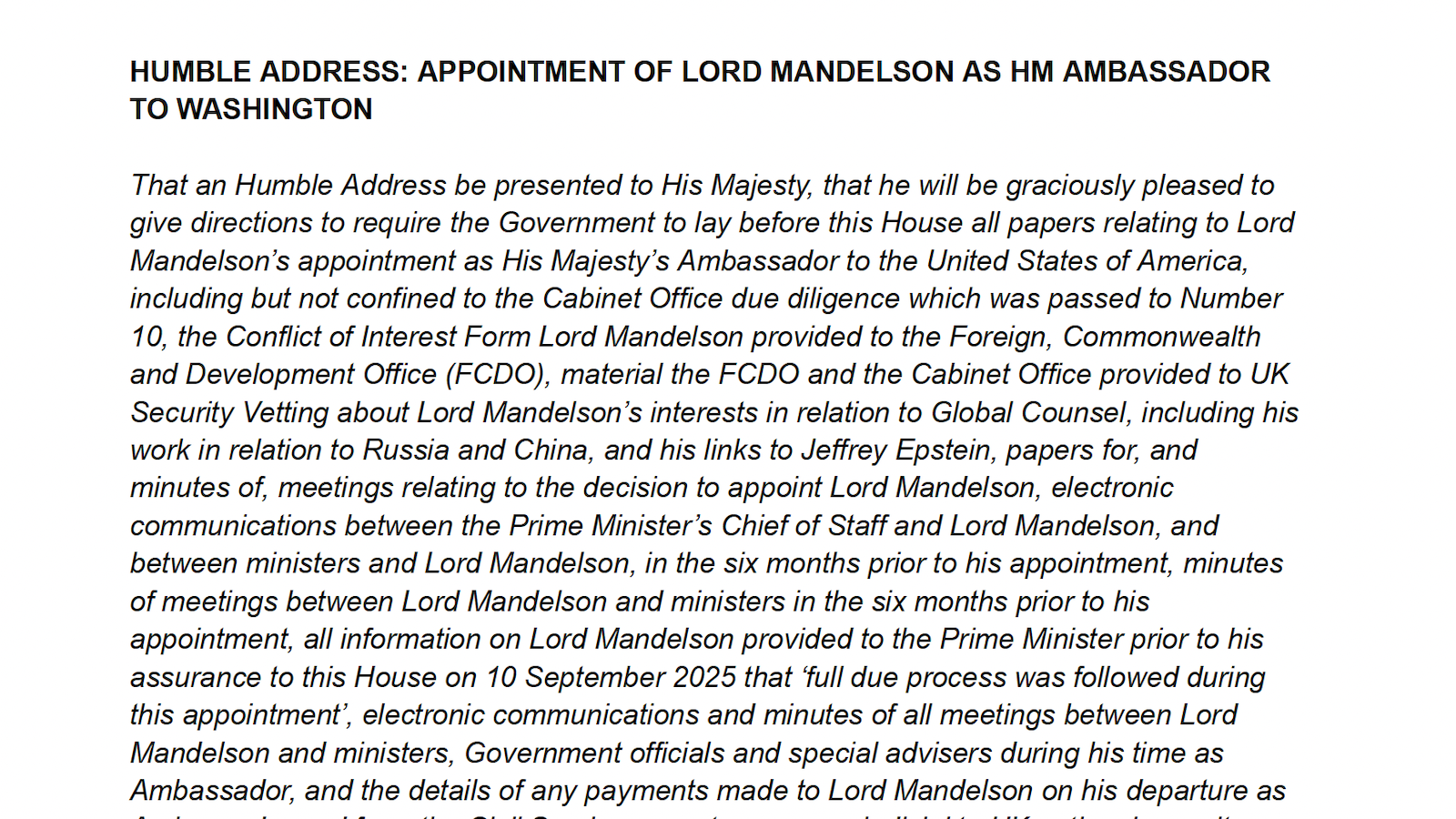
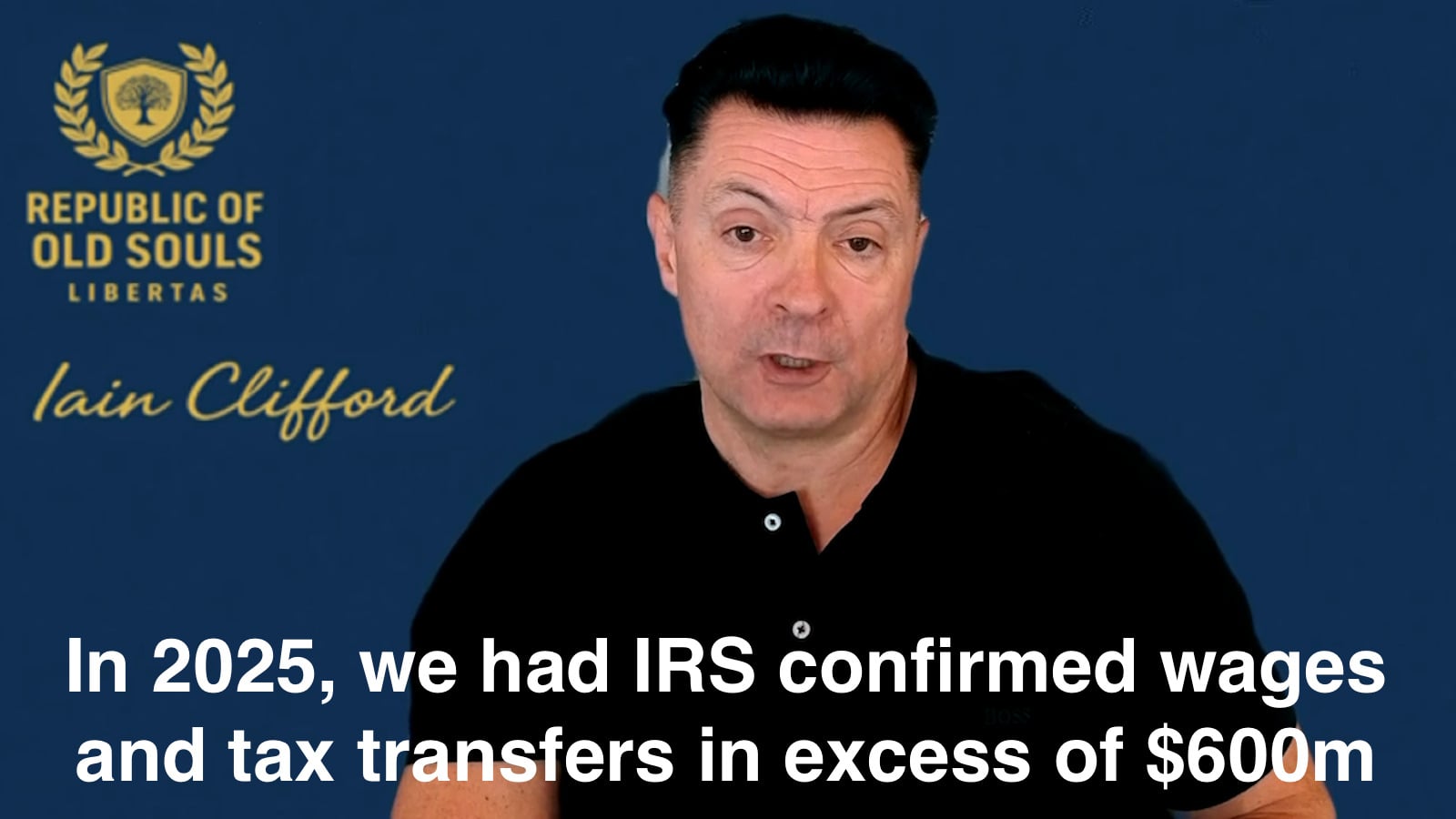
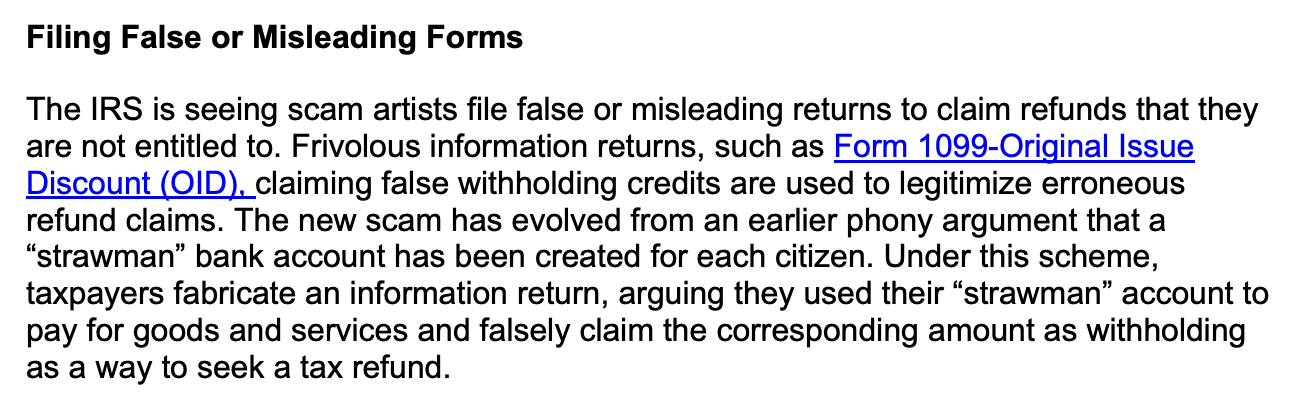
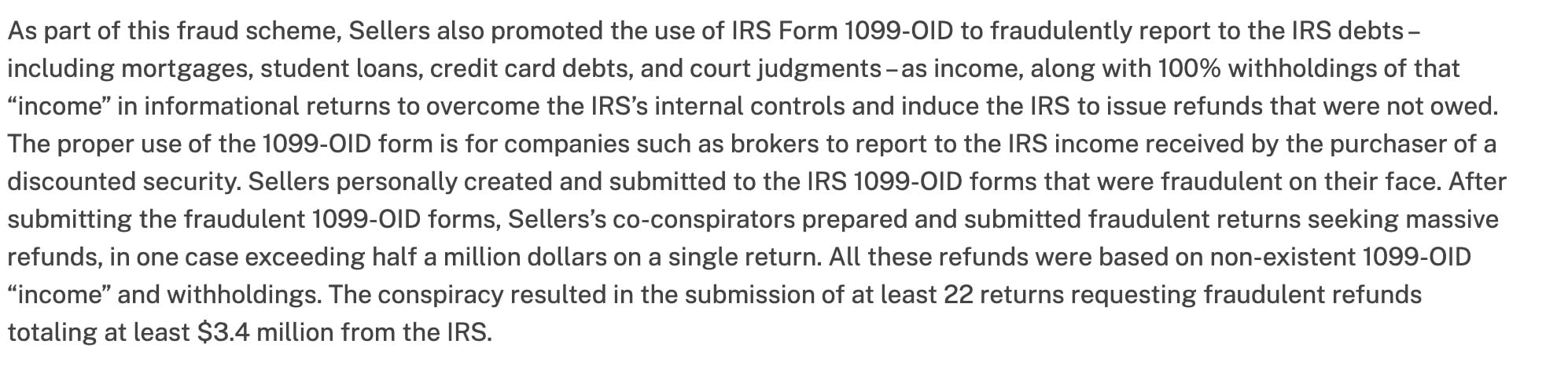
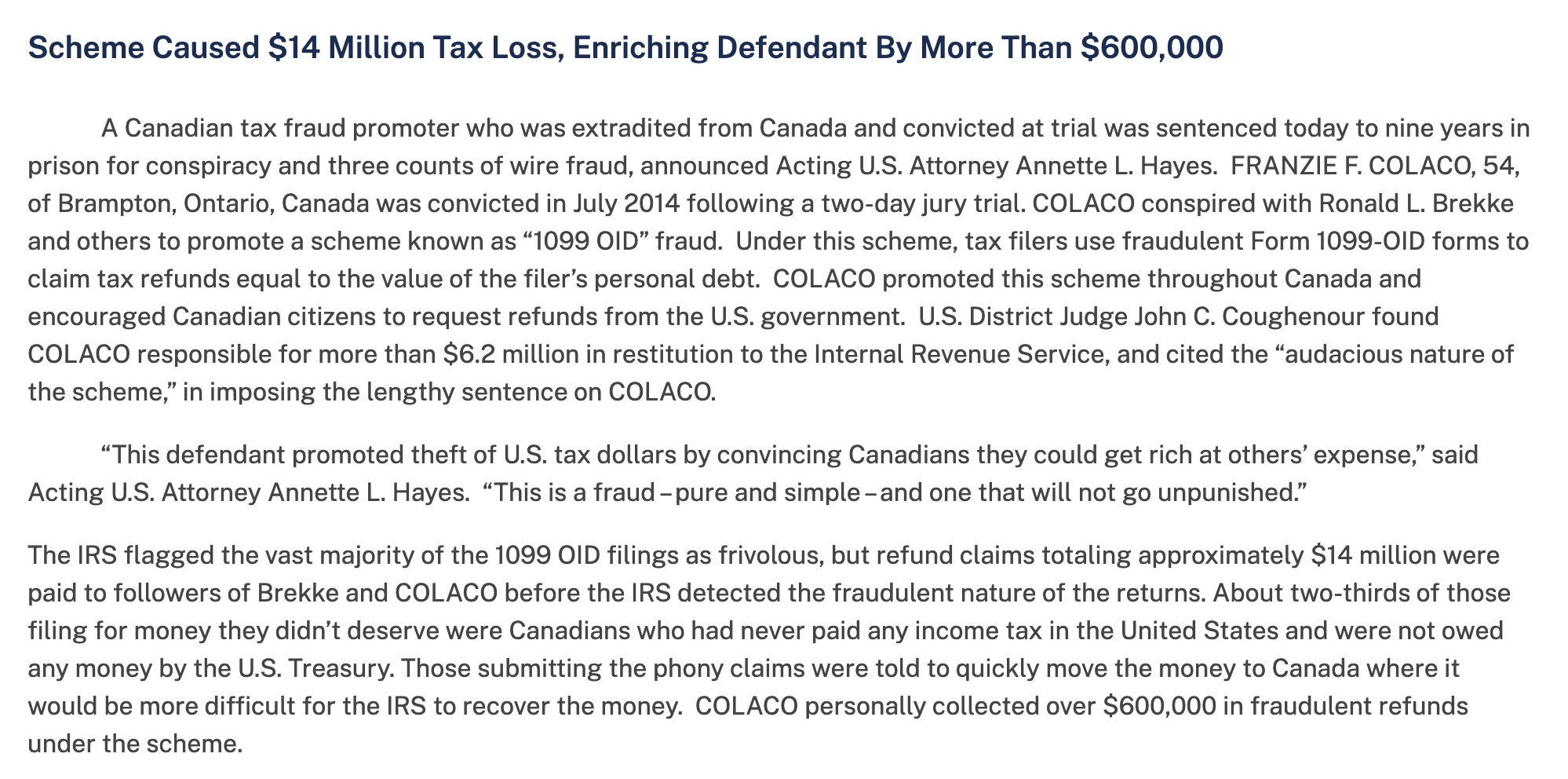

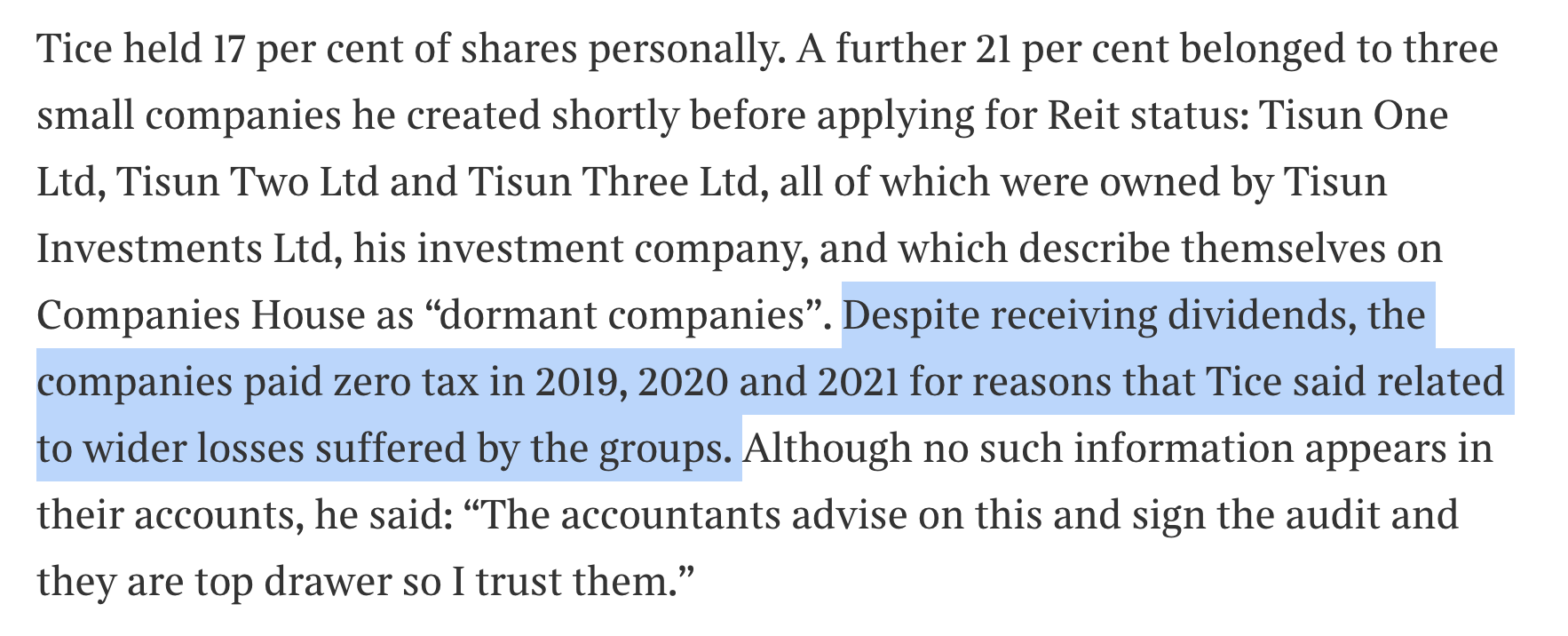

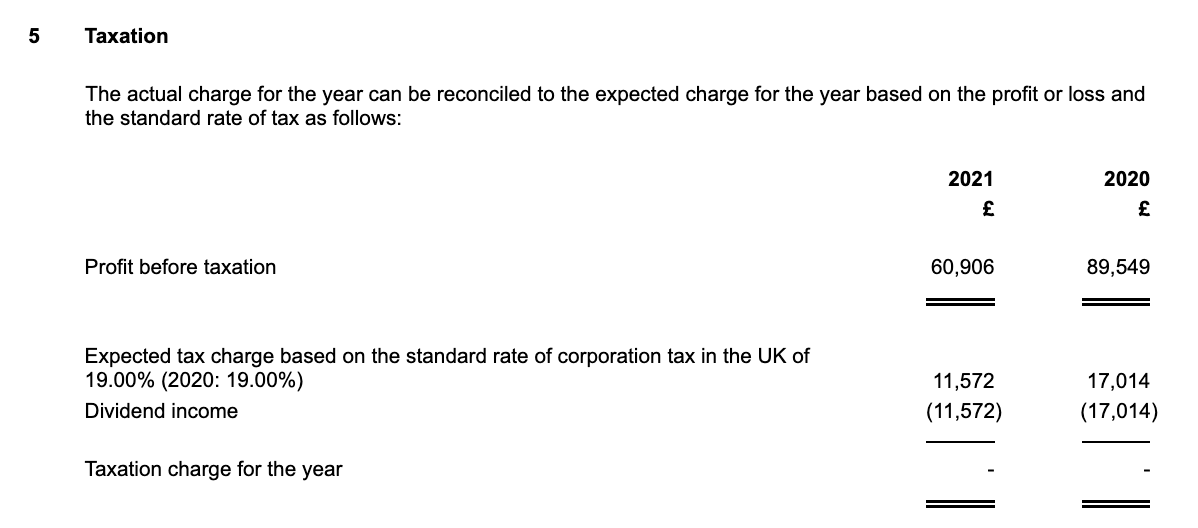

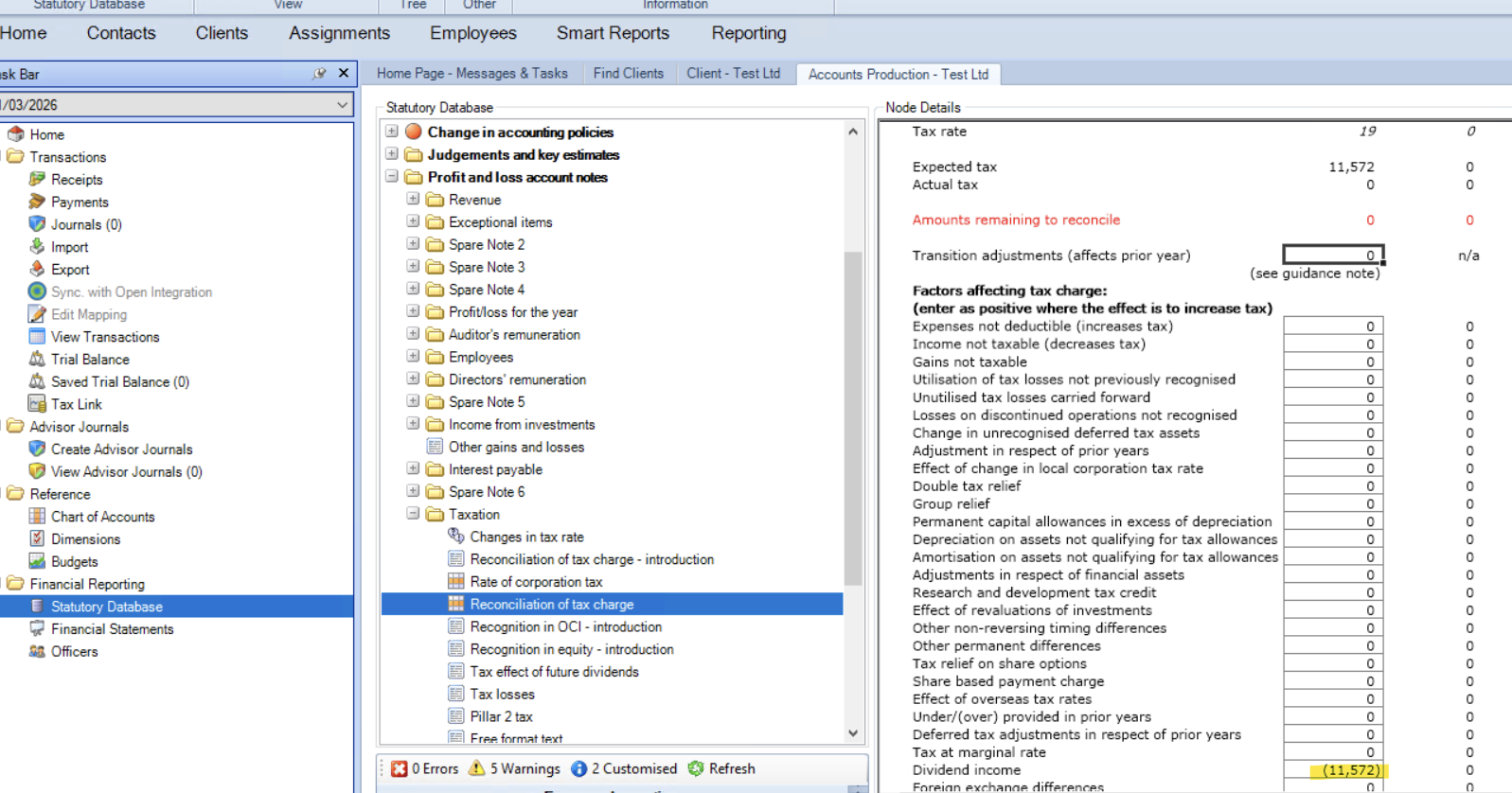
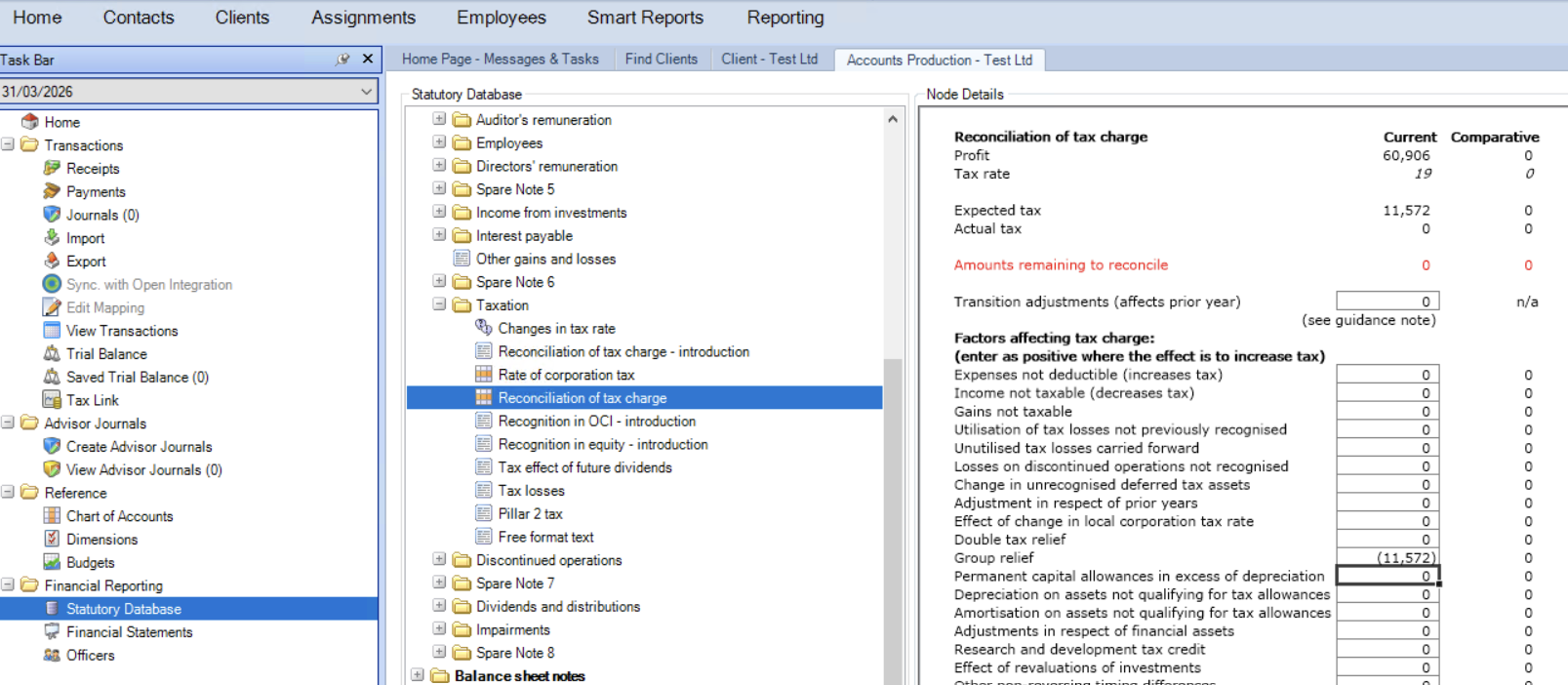
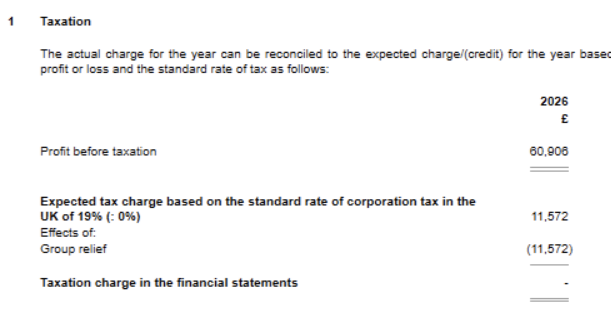
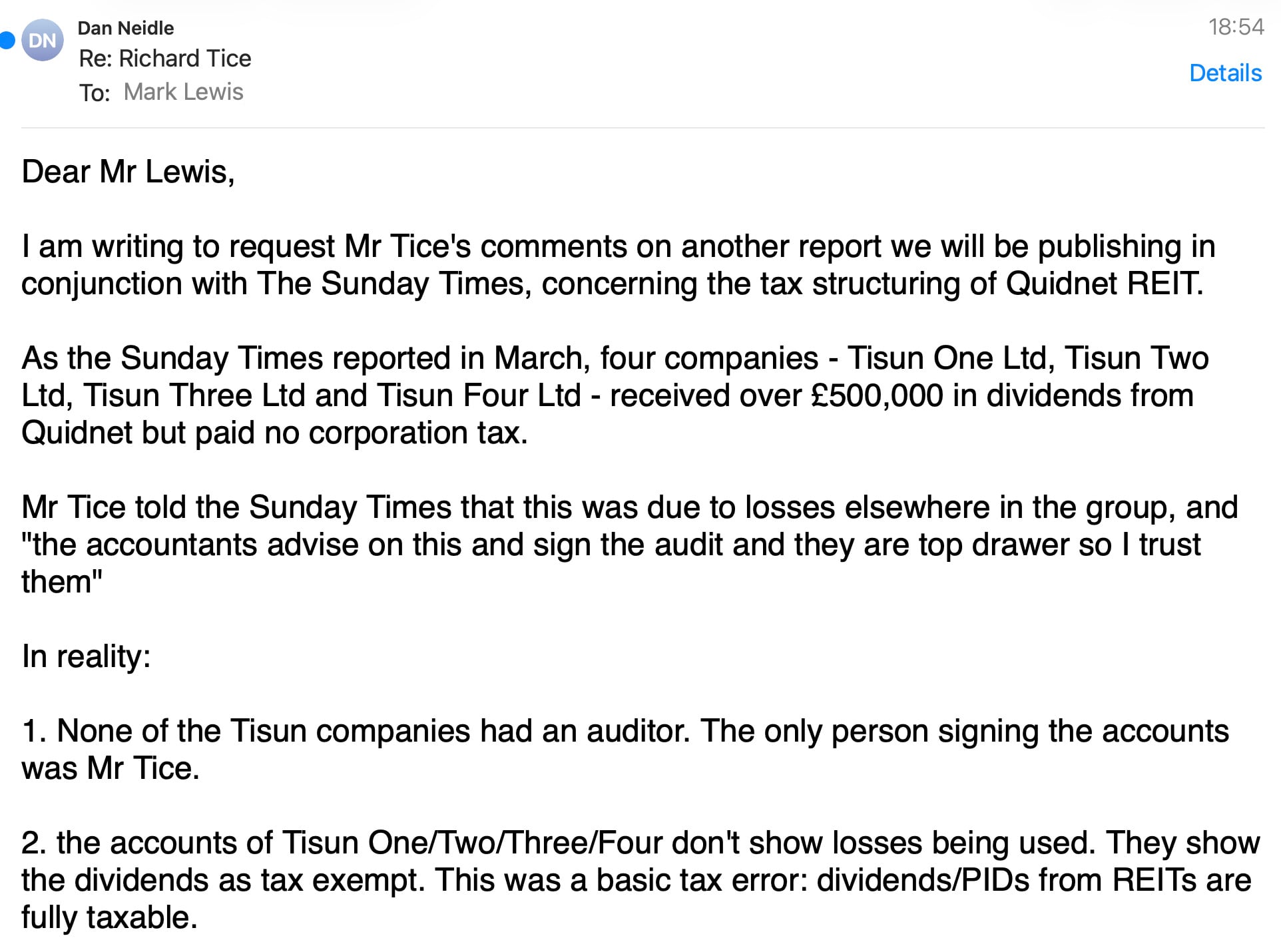
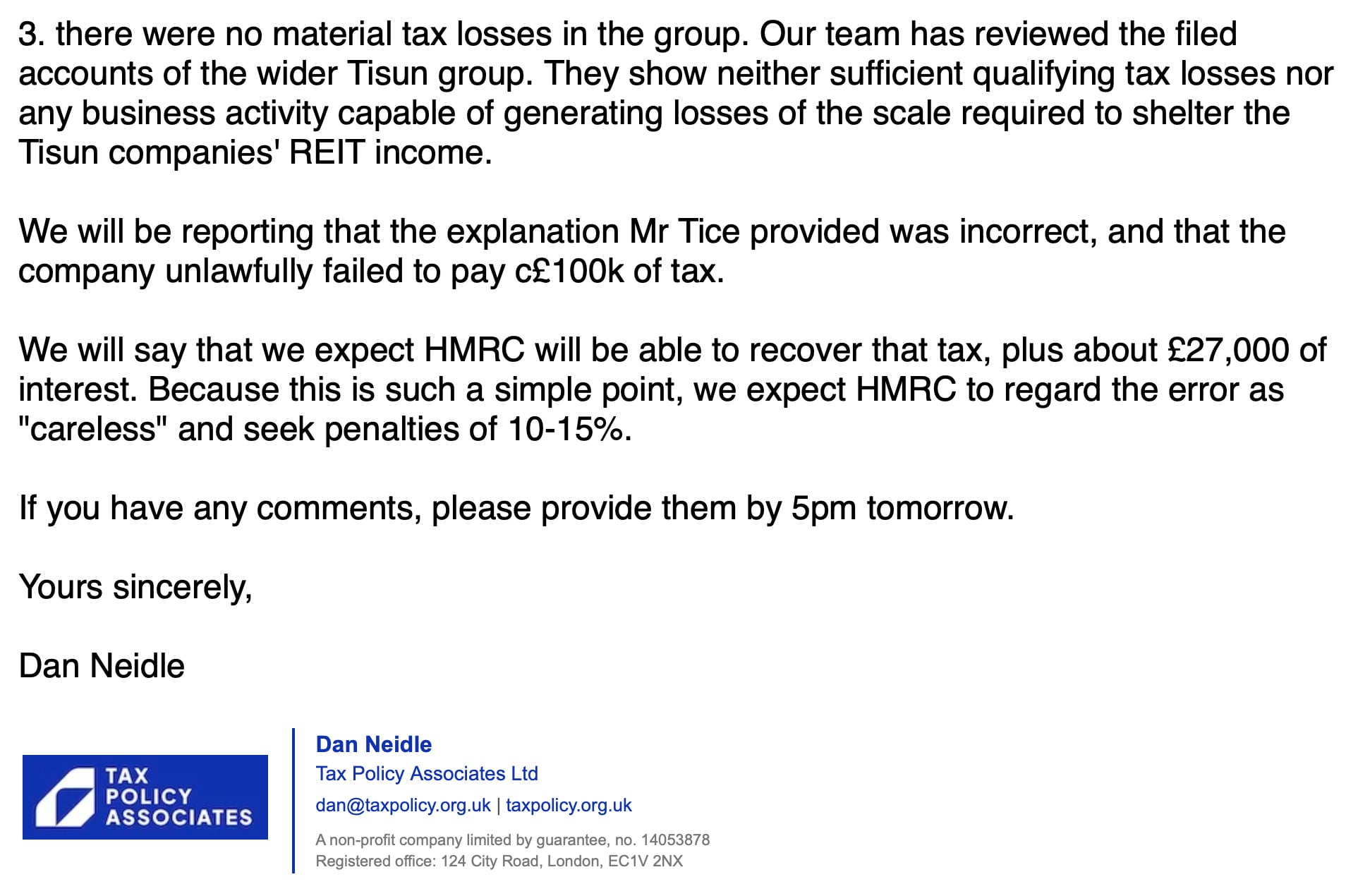
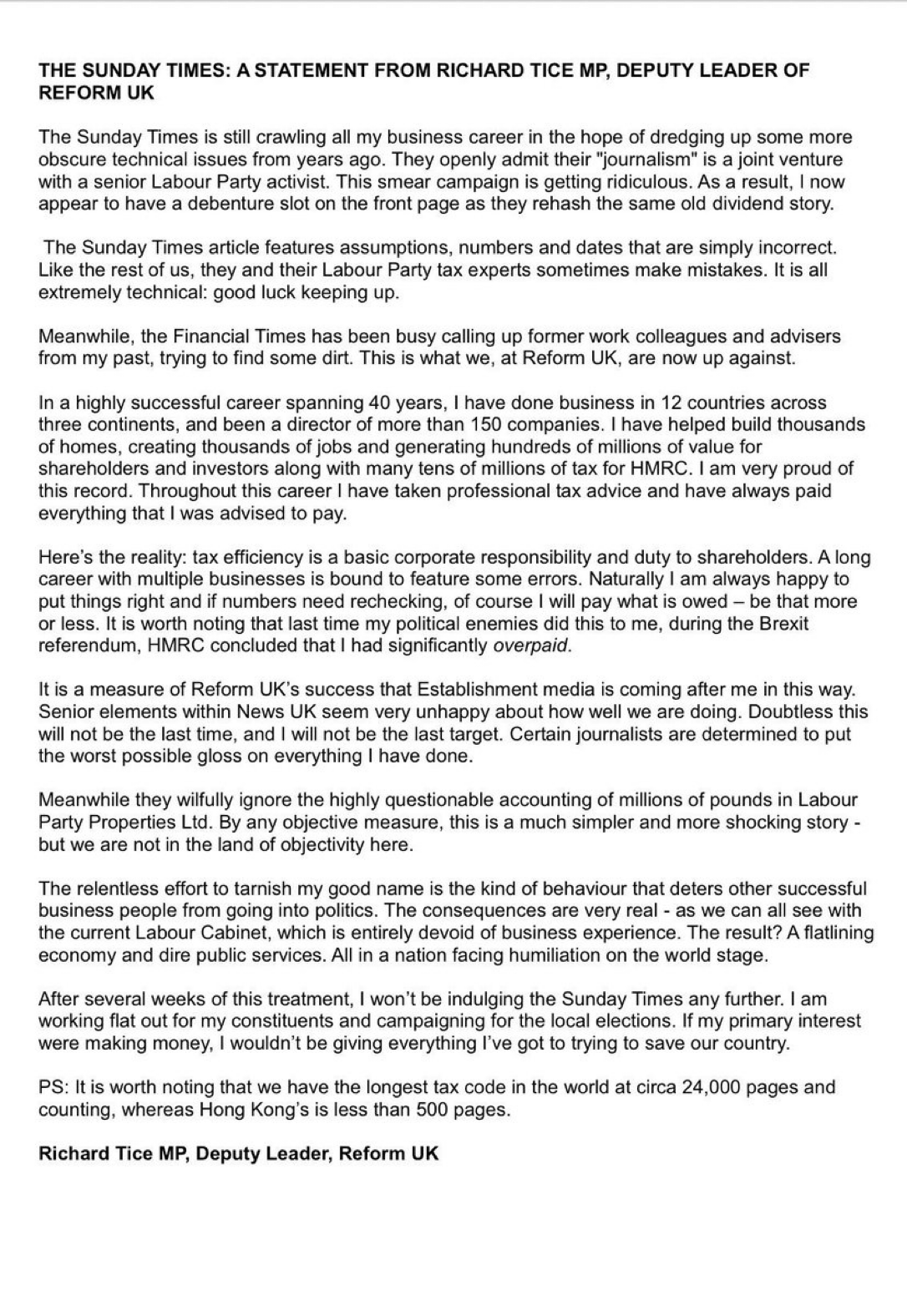


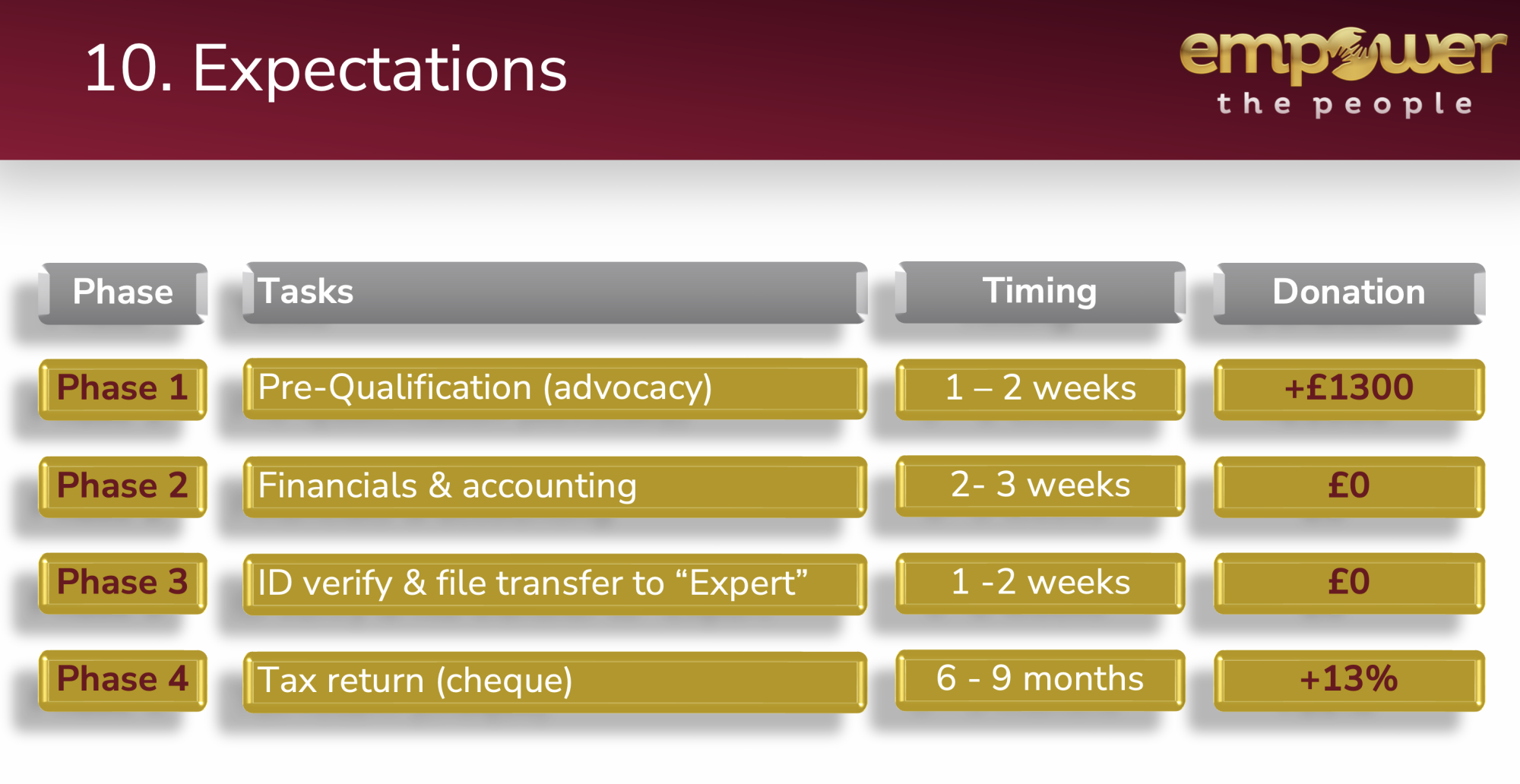

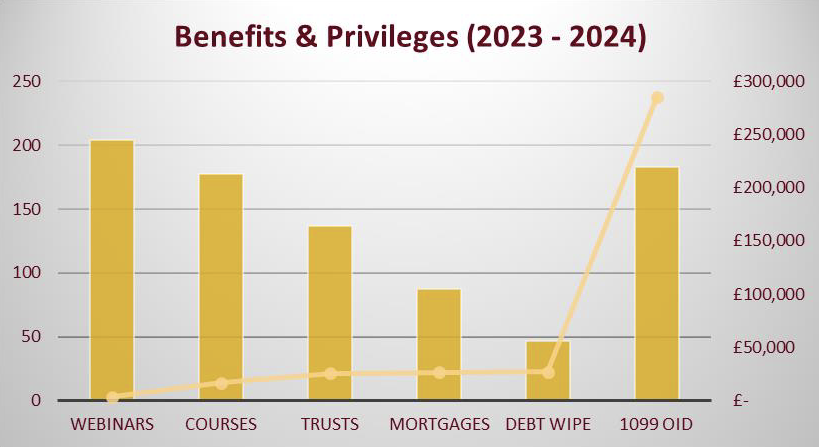

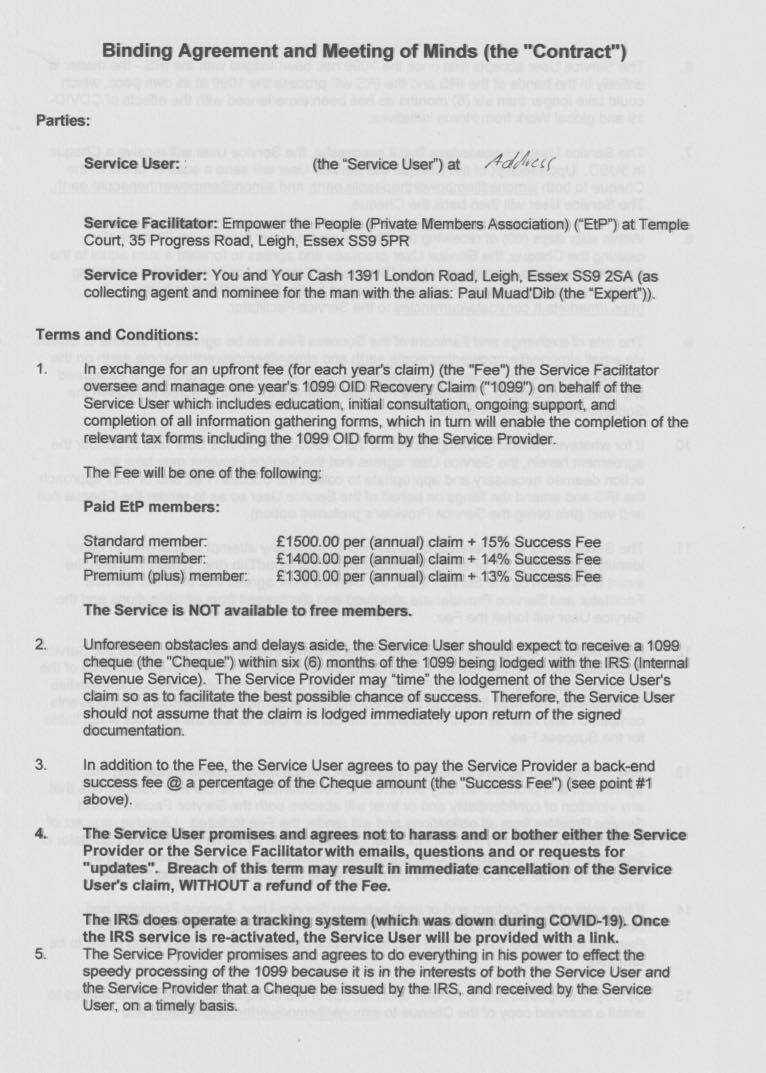
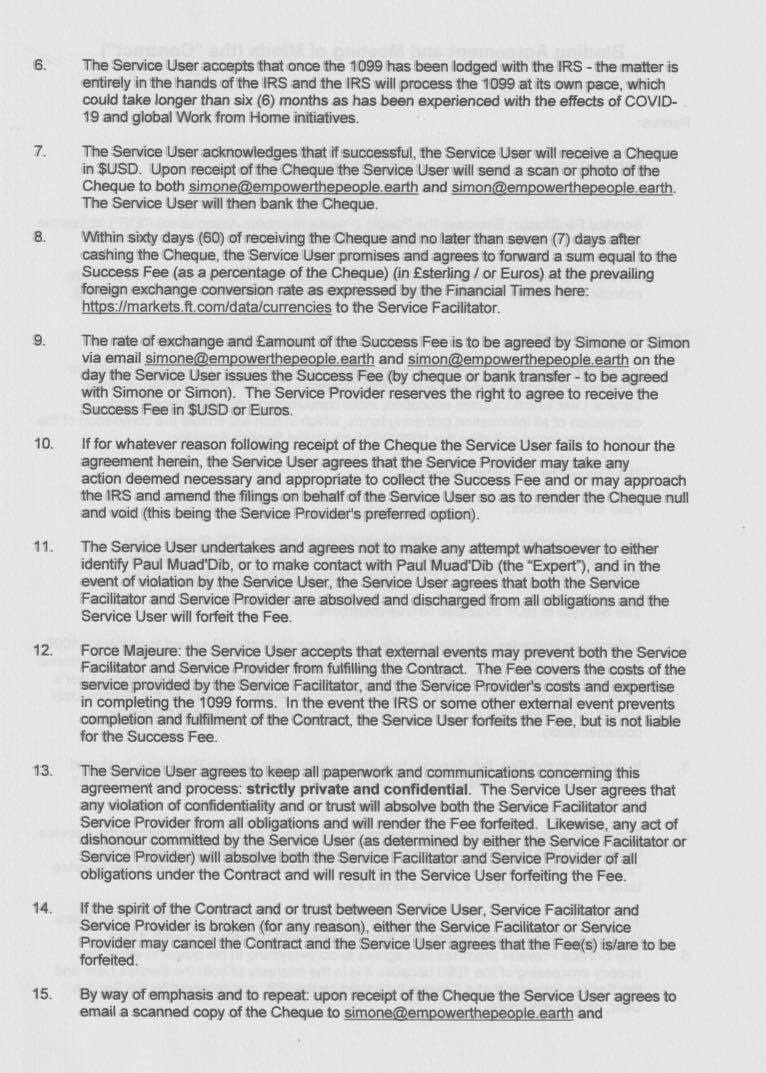
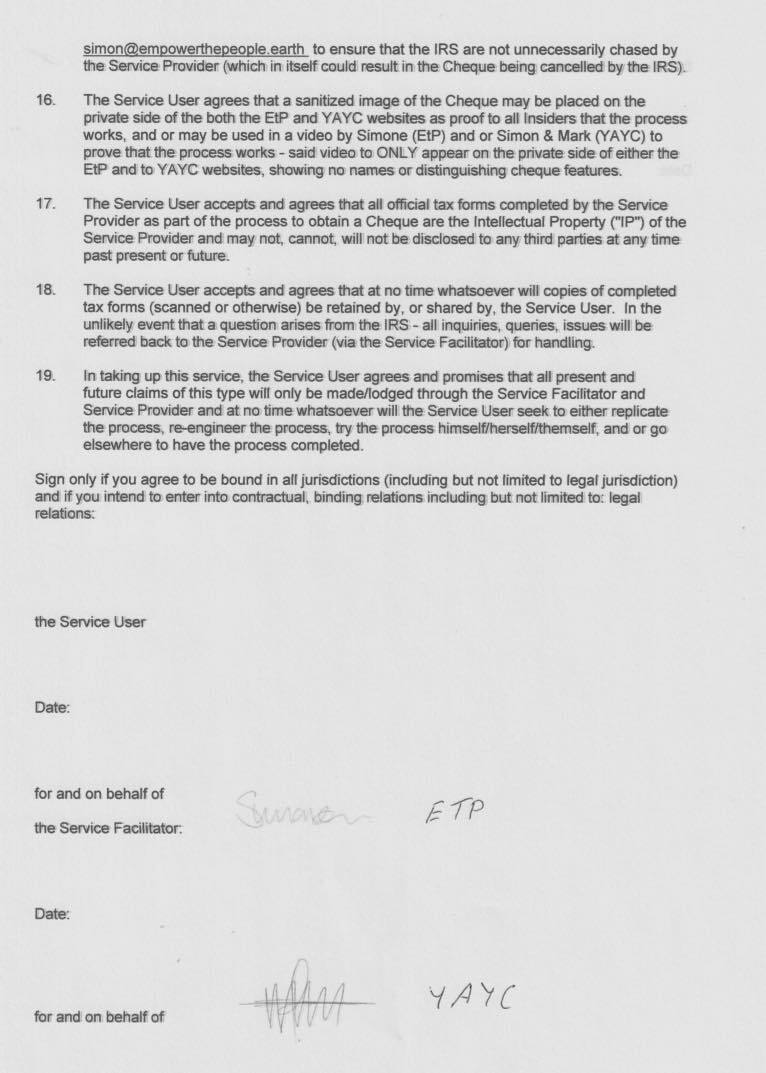
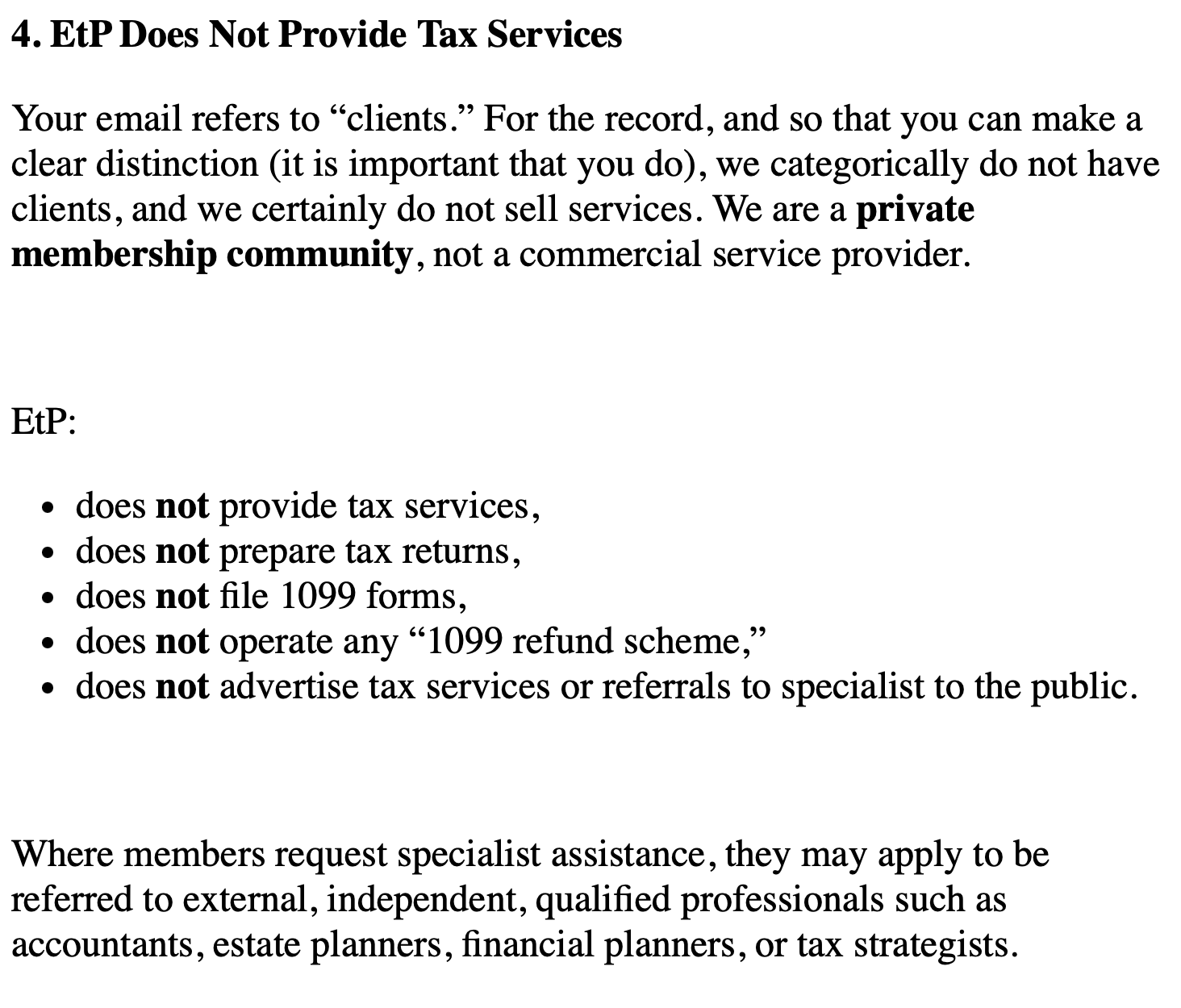
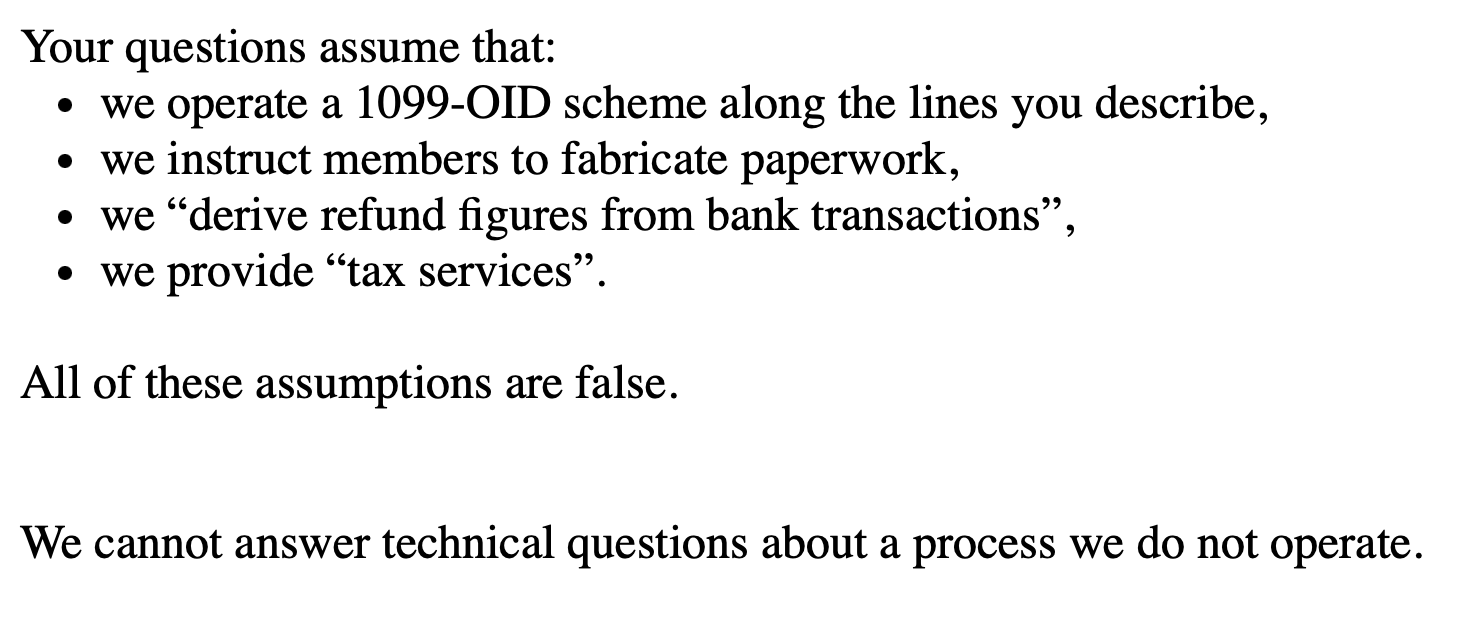



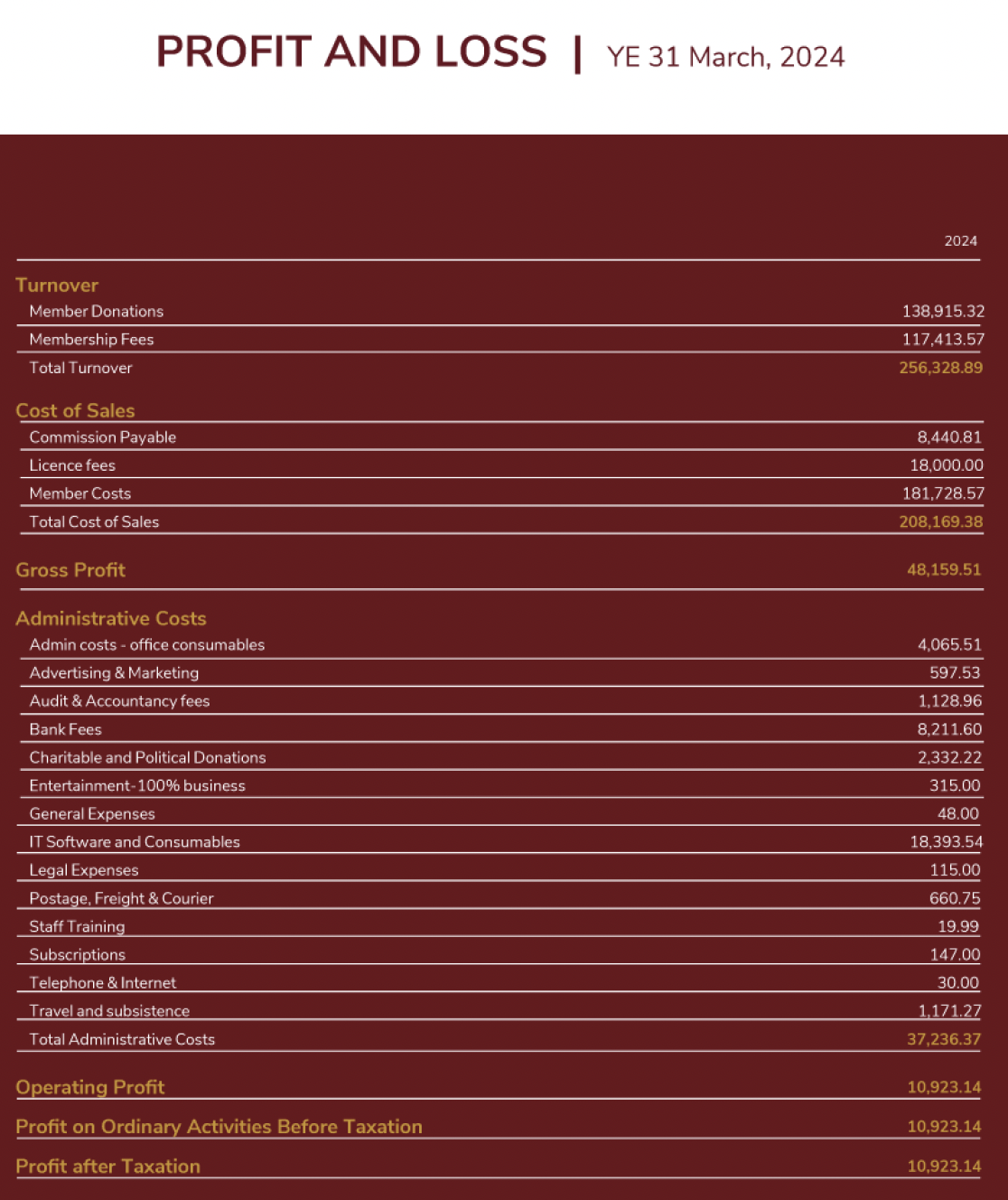


![To: jeevacation@gmail.com[jeevacation@gmail com]
From: Jes Staley
Sent: Sun 1/24/2010 4 22 38 PM
Subject! Re Fwd Fw MONITORING PA - DARLING WARNS US OVER WAR ON WALL STREET
You called t
From: Jeffrey Epstein
To: Jes Staley
Sent: Sun Jan 24 10:01:46 2010
Subject: Fwd: Fw: MONITORING PA - DARLING WARNS US OVER WAR ON WALL STREET
CONFIDENTIAL
Date’ Sun, Jan 24, 2010 at 9:59 AM
Subject: Fw: MONITORING PA - DARLING WARNS US OVER WAR ON WALL STREET
To: Jecsteation gmat com
Fyi
Sent from my BlackBerry® wireless device](https://taxpolicy.org.uk/wp-content/uploads/2026/02/Screenshot-2026-02-05-at-20.13.17.png)
![To: Jeffrey Epsteinjjeevacationg@gmail com]
From:
Sent: Sun 3/28/2010 6 48 06 PM
Subject: Re
Tecan say this to him: Fam feeling peculiar and going to have something to eat Do you want to
call at home in half hour 7
Sent from my BlackBerry ® wireless device
From: Jetires Epstein - jeevacation’a gmail com >
Date: Sun, 28 Mar 2010 14 34.57 -0400 ‘
To: PLIER MANDEL SN, SS
Subject:
I would like vou to ask Larry Summers if he would meet directly with Jes, and another jpm
person. re the proposed voleker rule. Fean't do it directly Larn is getting info third and fourth
hand trom senators who are getting it from lobbyists](https://taxpolicy.org.uk/wp-content/uploads/2026/02/image-13.png)
![To: yeevacation@gmail com[jeevacation gmail com]
From: petermandel
Sen: Tue 3/30/2010 8 08 15 PM
Subject: Fw
Sent trom my BlackBerry & wireless device
From: Jes Staley
Date: Tuc, 30 Mar 2010 14.26 24 -0400
To: Peter Mandelson [i -
Subject:
Peter, What follows are some brief speaking points that we would use in discussing the Volcker plan
with Summers. We can speak to them when we talk tonight.
The Federal government's guarantee of bank deposits enhances consumer confidence in our financial
system.
Although deposits play a lesser role as a funding source folowing decades of bank disintermediation, it
1s sensible for government (as any guarantor would want) to seek limits on how funds sourced from
their guaranteed deposits are exposed to risk.
Well-managed US banks with prudent controls to protect chent interests, including depositors’, already
do this respecting the intent of existing affiliate restrictions and with internal procedures separating
proprietary and fiduciary activities.
Updating regulation to the reality of global modern markets should not disadvantage U S institutions or
create structural conflicts in relation to their Asian or European counterparts.
Fiduciary: Asset Management
Regulations that protect clent investments from other banking activities have proven successful during
recent financial crises.](https://taxpolicy.org.uk/wp-content/uploads/2026/02/Screenshot-2026-02-03-at-13.38.37.png)

![Jeffrey Seal com]
Wed 3/31/2010 1:26 47 PM
Subject: Re Fw SummersiCX readout
AL [lam tomorrow
Sent from my BlackBerry # wircless device
From: Jetirey Epstein « jeevacation’¢ gmail.com>
Date: Wed. 31 Mar 2010 09-25°35 -0400
To:
ject: Rev Fw: Summers. CX readout
where will the bills language be changed to "may" from shall, - in Dodds markup by amanagers
amendment by Chris Dodd himself or an amendment on floor." are you still scemg LS for
breakfast
On Wed. Mar 31. 2010209. AM, - I ror.
Jamie sa CX. friendly No time for me but he did autograph the book | am reading about
himt
Sent from my BlackBerry « wireless device
From: Jeffrey Hpstein = jas Greet valent
Date: Wed. 31 Mar 2010 09:09:17 -0400
T
Subject: Re Fa: Summers. CX readout
Ownership of hedge tiznds secms of little risk as compared to proprivtary trading. if they were
o limit prop trading wouldnt that be enough. why limic the asset classes to mutual funds in a
complex environment? clients fect more comfortable know ing that the bunks are giving the
biessing lo certain alternative investments they will merch go offshore with no oversight
right in the uks lap. On another now did tony sce farey or jamiv .2 i know you asked to see
jamie is it mportant to you”
On Wed, Mar 31, 2010 3 9-03 AM, {I co:
Welcome any other fine tuned questions to him
Sent from my BlackBerry wireless deview
Fram: Jeffrey Epstein jeccucitt ro paar oem
Date: Wed. 31 Mar 2010 08:48°43 -0400
1
EFTA_R1_01496514
EFTA02427379](https://taxpolicy.org.uk/wp-content/uploads/2026/02/hedge-funds_Page_1.jpg)
![To: Jeffrey Epsteinjjeevacation@gmail com]
From:
Sent: un 5/9/2010 10 14 50 PM
Subject: Re
Just leasing NolQ. will call
Sent fromims BlackBerry ® wireless device
From: JeHrey Epstem : jecsacation’¢ gmail com *
Date: Sun. 9 May 2010 18 13°20- 0400
Subject: Re:
are you home
On Sun. May 9.201030 520 PM, I ot
Sd be announced tonight
Sent fromm BlackBerry & wireless device
From: Jettres Epstem iets a a eer
Date: Sun, 9 May 2010 Ve 3016 0400
To: PrT?R MAND? $0’
Subject:
sources tell me $00 b cure bailout , almost compelte](https://taxpolicy.org.uk/wp-content/uploads/2026/02/euro-bank-bailout.jpg)
![To: Jeffrey Epsteinjeevacation@gmail.com]
From: David Stern
Sent: Wed 2/10/2010 6:07:25 PM
Subject: Re: EMI
My friend is the right hand man to Guy Hands, boss of Terra Firma, the EMI owner.
Ihave a meeting scheduled with him for Friday.
Tomorrow [ will speak to fnends at morgan stanley and ingenious media (media focused
corporate finance yroup) who apparently have followed this situation quite closely.
In my view Ibis too early to get Mandelson involved before 1 know morc. It scems that the debt
mountain is too big, covenant breach is imminent and citigroup want to take control.
On 10 Feb 2010, at 18:01, Jeffrey Epstein wrote:
who ts your friend.. 1 am interested. Do we necd help -mandelson?
On Wed, Feb 10, 2010 at 3:57 AM, EE wrote:
Troubled industry but related to P:
EMI (music) necds approx USS 190m to sunive or may be taken over by Citigroup.
Terra Firma own EMI, my friend is in charge of this investment.
Should | talk to them ?](https://taxpolicy.org.uk/wp-content/uploads/2026/02/Screenshot-2026-02-03-at-14.35.55.png)
![To: Jeffrey Epsteinjeevacation@@gmail com]
From:
Sent: Fri 9/10/2010 10 32 25 AM
Subpect: Re
And meet a nice rich chinaman and live happily ever after talking of which, have you
permanently stopped the Reinaldo sub?! | may have to put him out to work on the streets
Sent from my BlackBerry ® wireless device
From: Jeftres Epstein - jeevacation‘’a gmail com >
Date: Fr. 10 Sep 2010 06.12.55 -0400
To: PLIER MAND! SN i
Subject: Re
after dancing with everyone at the party, hopetullly you will take someone home STAY . you
should move there for two years and associate with JPM. [ts a home run](https://taxpolicy.org.uk/wp-content/uploads/2026/02/Screenshot-2026-02-06-at-23.13.54.png)
![To: jeevacation@qmail com[jeevacationg@gmail com]
From: PETER MANDELSON
Sent: Sun 4/4/2010 9 31:40 PM
Subyect: Fw Nal
Hope Jes can send warm response to this informal email...
--- On Sun, 4/4/10, PETER SIANDELSON
From: PETER MANDELSON -
Subject. Nat
1 ee —
Date: Sunday. 4 April, 2010, 22:30
Jes,
I've been following my friend Nat Rothschild's plans to list a vehicle on the LSE
and i'm very happy that JPM are now planning to get involved as book runners
alongside CS. i think it's a great idea from what | see of the global mining business
(and their prices).
| hope it all goes well.
best Easter greetings to you and the family
Peter](https://taxpolicy.org.uk/wp-content/uploads/2026/02/Screenshot-2026-02-08-at-21.54.39-1.png)
![To: Jeffrey Epsteinfieevacation@gqmail com]
From:
Sent: un
Subect: Re
Think has to be bye GB
He has now gone to church !
Sent trom ms BlackBerry ® wireless device
From: Jettrey Fpstein - joes acation‘’y gmail.com:
Date: Sun, 9 May 2010 05:31:41 -Q400
Subject: Ke:
bye.bye smelly?
on Sun, Mey 9, 2010 « +10 1 SS ......
GB absolutel determined to forge ahead. Wants to know shat E want personally - stay in UK
or go back to Europe?
Sent from my BlackBerry &® wireless device
From: Jettrey Epstem = jectacae is ovaib cent”
Date: Sat. 8 May 2010 20:01:20 -0400
Subject:
jess view is that you must be seen as a statesman, and not a personal -man. of gh, supporting eb
will be seen as bad form commercially, he has lost the confidence of the public, jpm is vers
voncemed that the pound could be the next currency to falter. and big time. uncertainty 1s not
in Sour favar.](https://taxpolicy.org.uk/wp-content/uploads/2026/02/image-12.png)

![Jettrey Epstein[ieevacaton@gmail com]
PETER MANDELSON
Mon 7/12/2010 11 34.28 AM
Re
really, what was that 7?
read the limes
- On Mor
12/7/10, Jeffrey Epstein wrote:
From. fetliey Epstein jeevacationi gmail.com
Subject: Re.
To
Date, Monday
July. 2010, 12.33
F enjoyed the guardian spot
On Mon. Jul 12.2010 at oS 4M, - i ot:
Have you seen Times seral and new online + today *
Seat from my BlackBerry ® wireless device
From: Jefltey Fpstein ¢y..5 ws bot
Sum. Ti Jul 2010 1eeS3$3 -0400.
itis only in the begining. do nol Jet others know, you will take away all our negotialoin
posture
On Sun, Jul 11, 2010 at 4.24 PM. iii:
That wasn't DB offer, It was | plus an end sear share which may be 2-5
Sent from my BlackBerry # wireless device
From: felfiey kpstein io) Go ty mat vem
Date: Sun, 11 Ju 2010 15°S4-47 0200
Subject: Re
db s offer was | million but with a 4-10 million total., DO NOT CONFIDE other offers
sith Tim.
On Sun, Jul 11, 2010 at 341 PM, PETER MANDELSON
EFTA_R1_01479021
EFTA024 10312](https://taxpolicy.org.uk/wp-content/uploads/2026/02/underselling-and-ask-for-a-job_Page_1.jpg)


![To: jeevacationg@gmail comijeevacationg@gmail com]
From:
Sent: Thur 7/8/2010 2 14 37 PM](https://taxpolicy.org.uk/wp-content/uploads/2026/02/upload_cc17703a-efbf-423f-b478-086b01cca81d.jpg)
![To: yeevacation@gmail com{jeevacation@gmaii com]
From:
Sent: Tue 12/21/2010 9 55 32 AM](https://taxpolicy.org.uk/wp-content/uploads/2026/02/Screenshot-2026-02-03-at-20.09.41.png)

![T | Privacy and cookies | Jobs | Dating | Offers | Shop | Puzzles | Investor | Login ¥ | Register ¥ | Subscri
The Telegraph °
Thursday 11 July 2019
Home Video News world Sport Business Money Comment Culture Travel Life Women Fashion Luxury Tech Film
Politics Investigations Obits Education Science Earth Weather Health BRZIM Celebrity Defence Scotland
Queen Elizabeth II Prince Philip} PrinceCharles Prince William Duchess of Cambridge Prince George Prince Harry
HOME » NEWS » UK NEWS » ‘THE ROYAL FAMILY
Mystery over Jeffrey Epstein’s meeting with a Labour
minister The Telegraph ~,
Fi Caxncps Own = 4,4M owatynap
Asenior Minister in Gordon Brown’s Government arranged a meeting with
convicted paedophile Jeffrey Epstein while he was being held under house
Latest Video»
arrest at the end of an 18-month jail term.
The Royal Family Oo (>)
News » USA»
Politics »
Robert Mendick »
Jason Lewis »
Disabled great- Elderly wombat
in The Royal Family grandfather denied rescued after being
stairlift and forced to attacked
crawl
K>)
Joining forces: Harry e
in the US Sponsored
When media meets
medicine
Jeffrey Epstein
The Telegraph
Front
Bhs] =r Newsletter
Sign up to our Frontpage news email
By Jason Lewis, Robert Mendick and Jacqui Goddard
in Florida
9:00PM GMT 12 Mar 2011
Surpassing Victoria:
33 fun facts
The disclosure comes in the wake of the controversy over the Duke of
York’s close friendship with the disgraced financier. in December, the
Duke was photographed walking through central park with Epstein
following his release from jail, triggering demands for him to quit his post
as the UK’s Special Representative for International Trade and
Investment.
Sponsored Features»
A court transcript raises new questions about the reach of Epstein’s power
and influence.
The legal documents reveal that Epstein applied to a US judge for special](https://taxpolicy.org.uk/wp-content/uploads/2026/02/image-23.png)
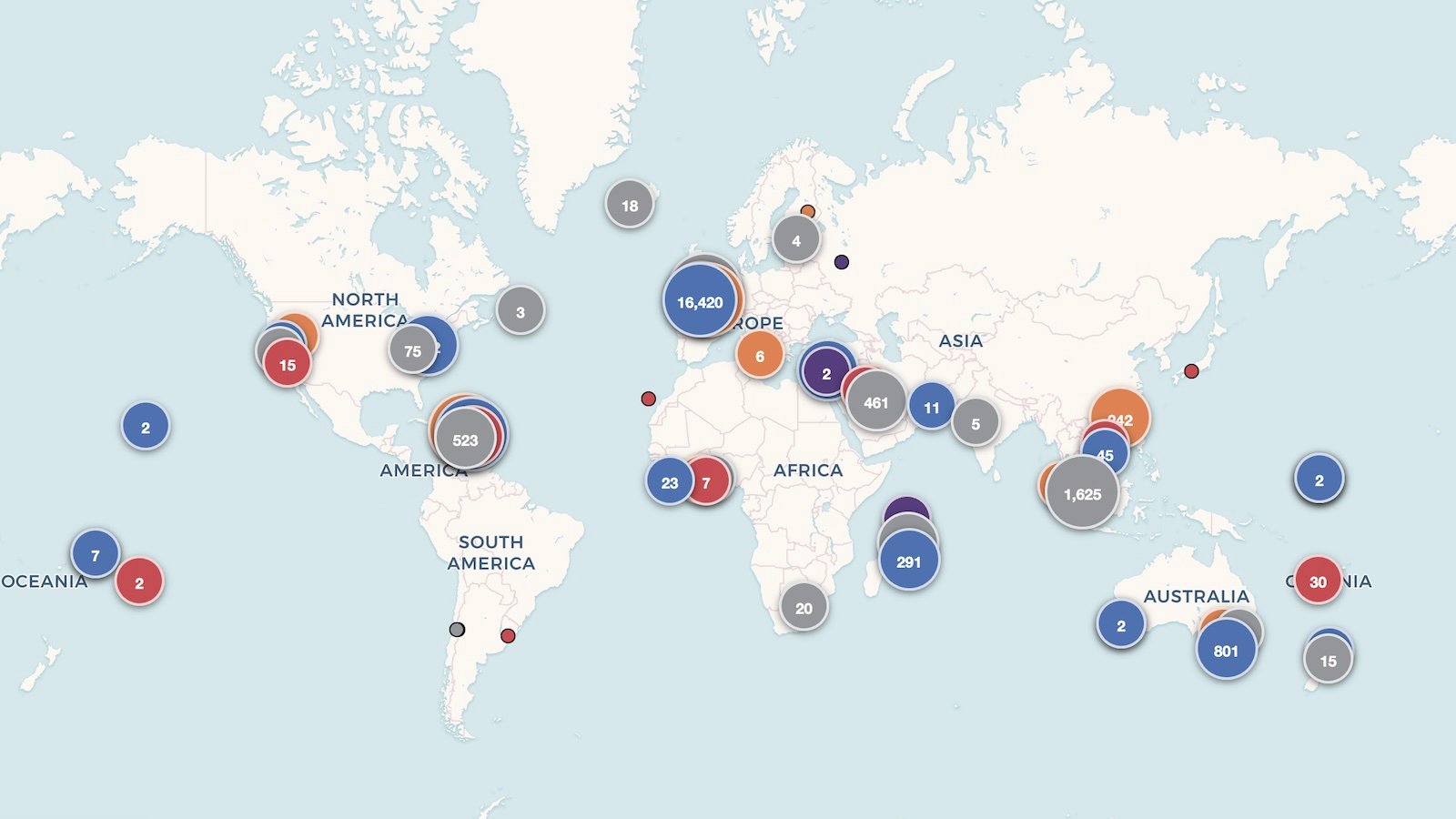


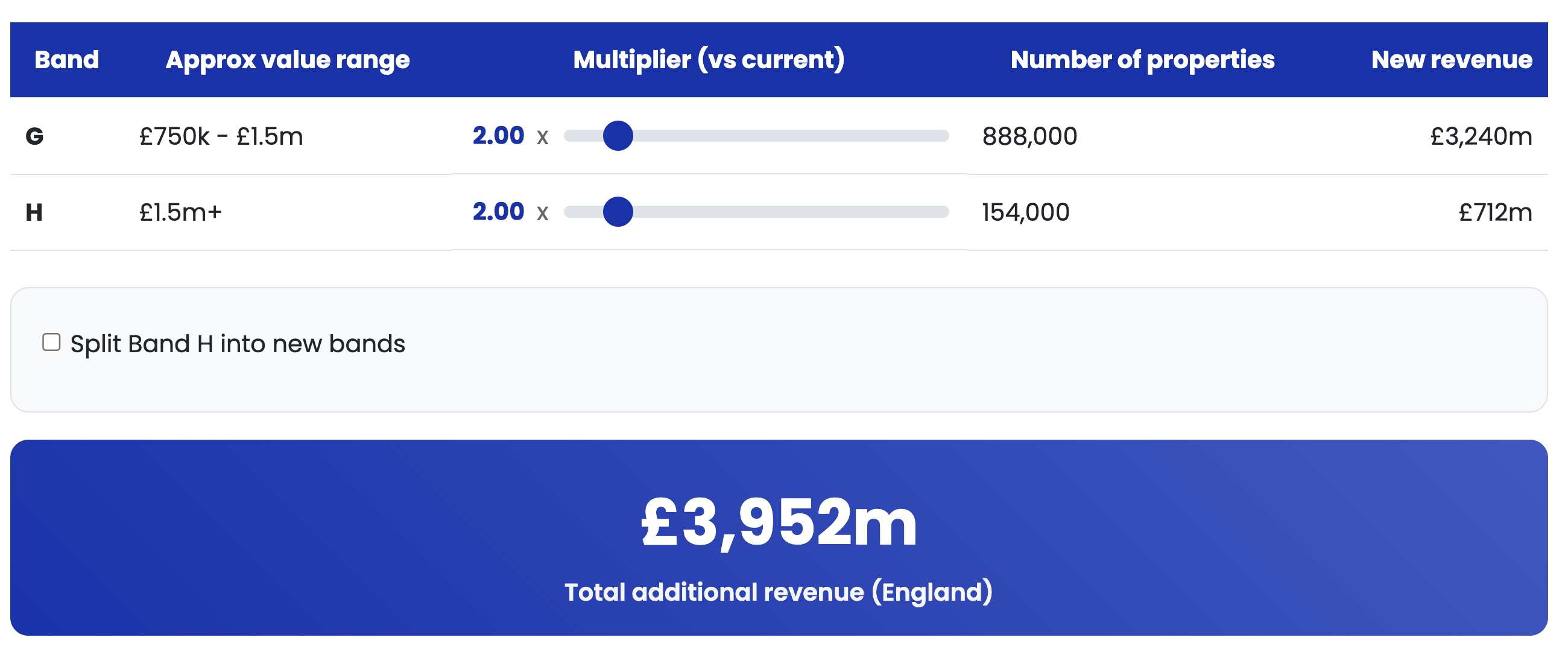
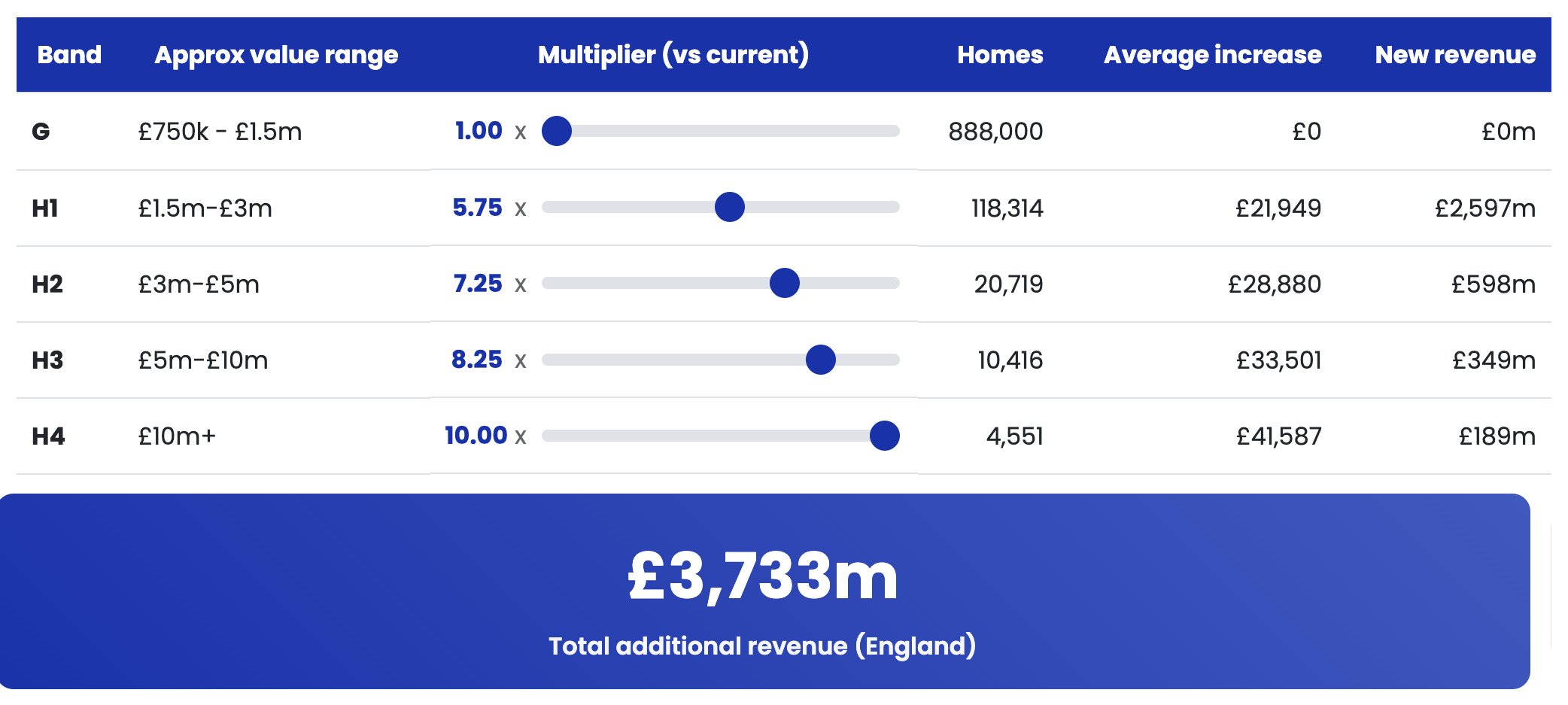
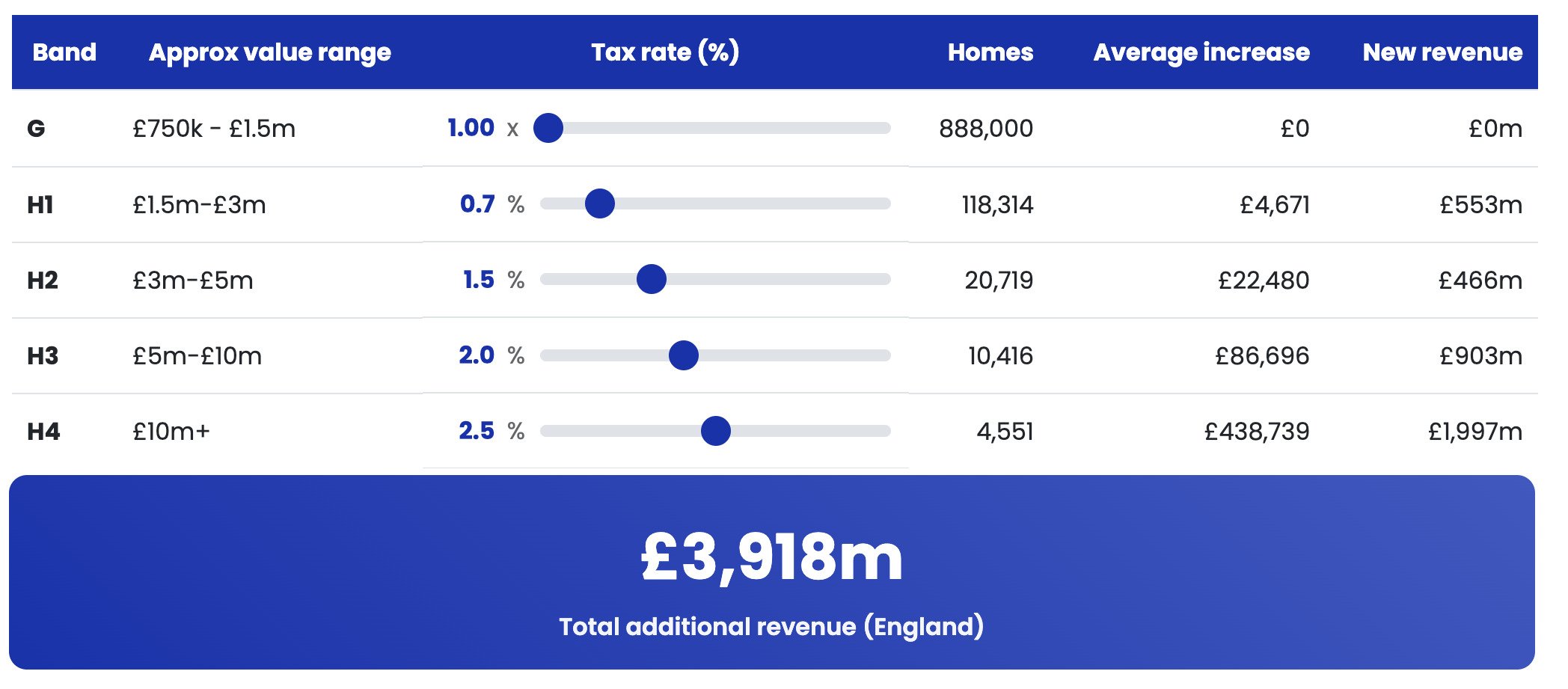
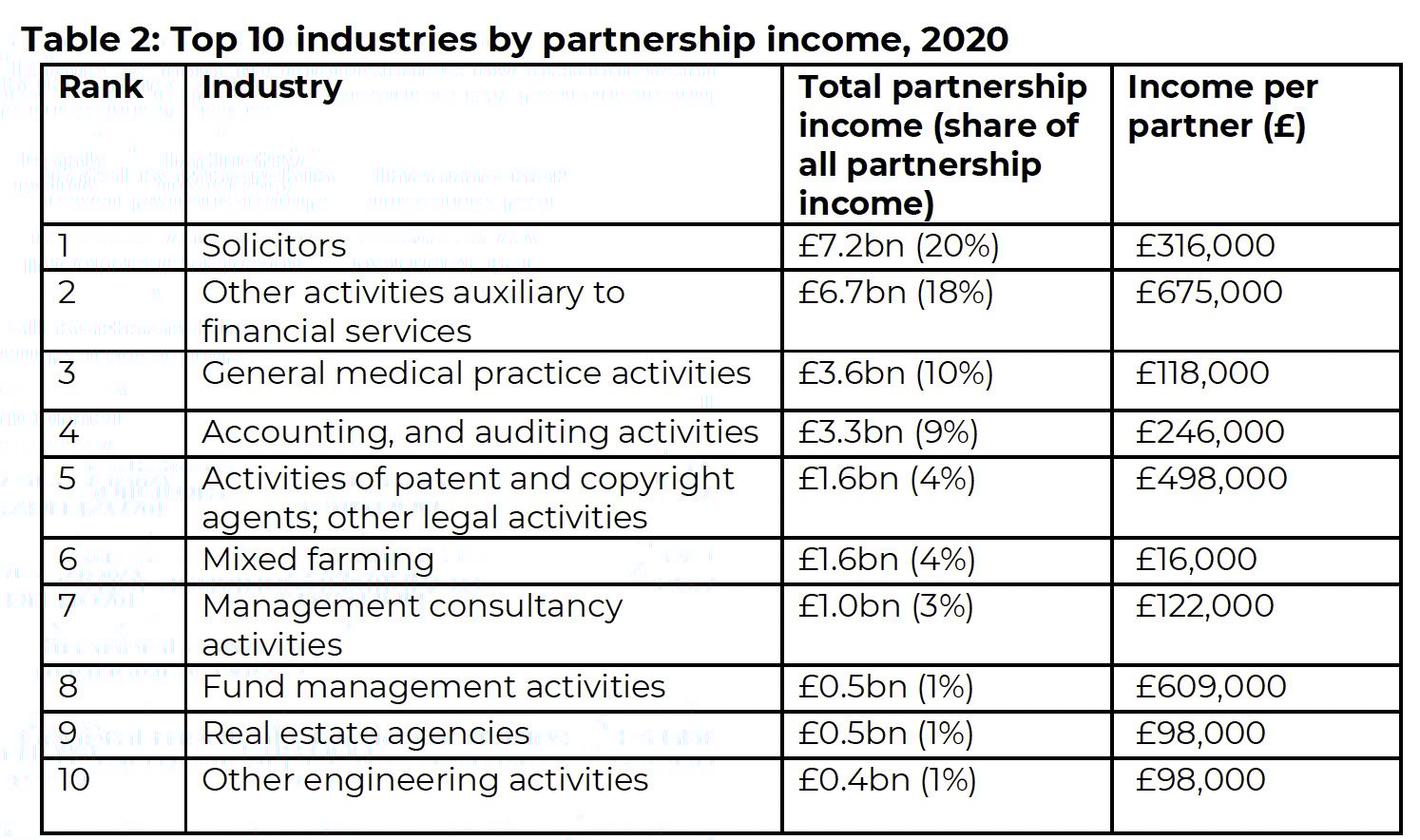

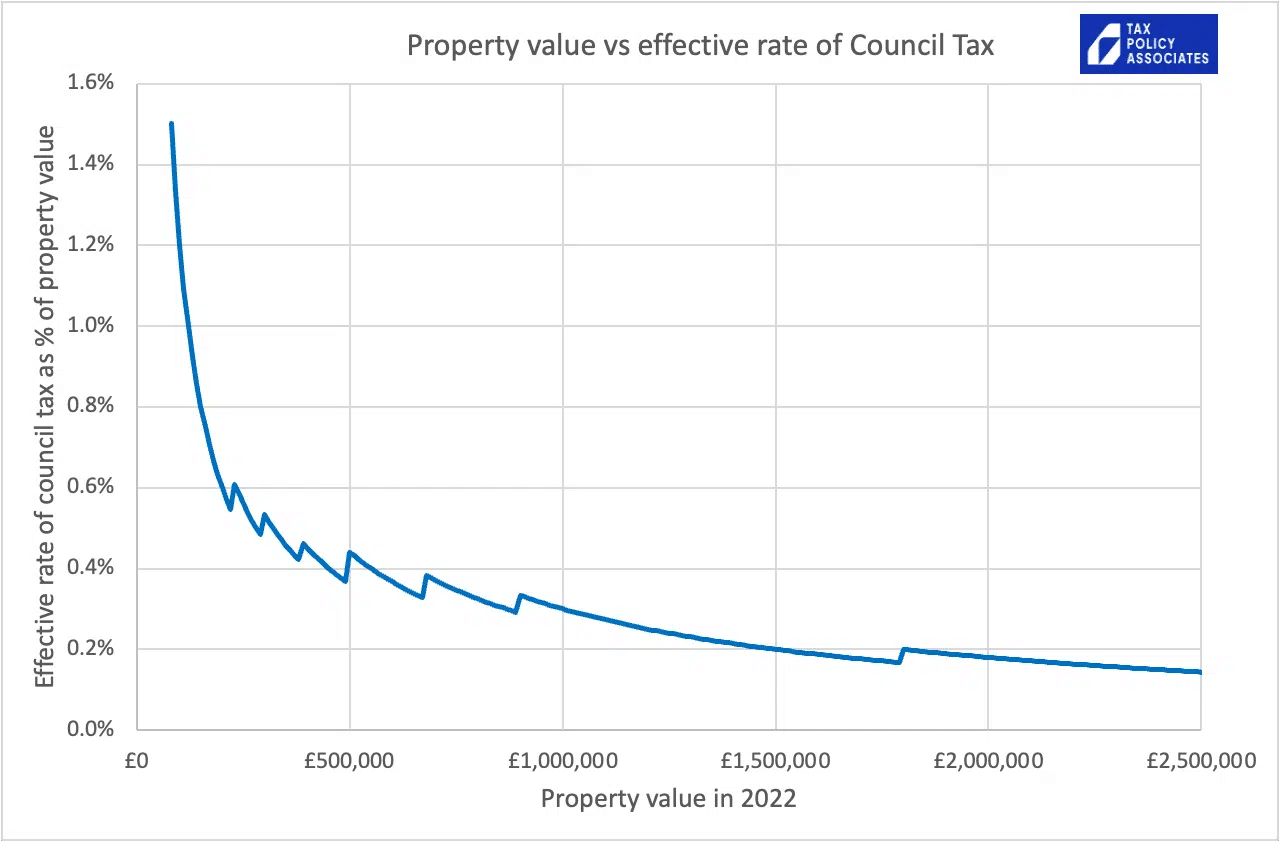
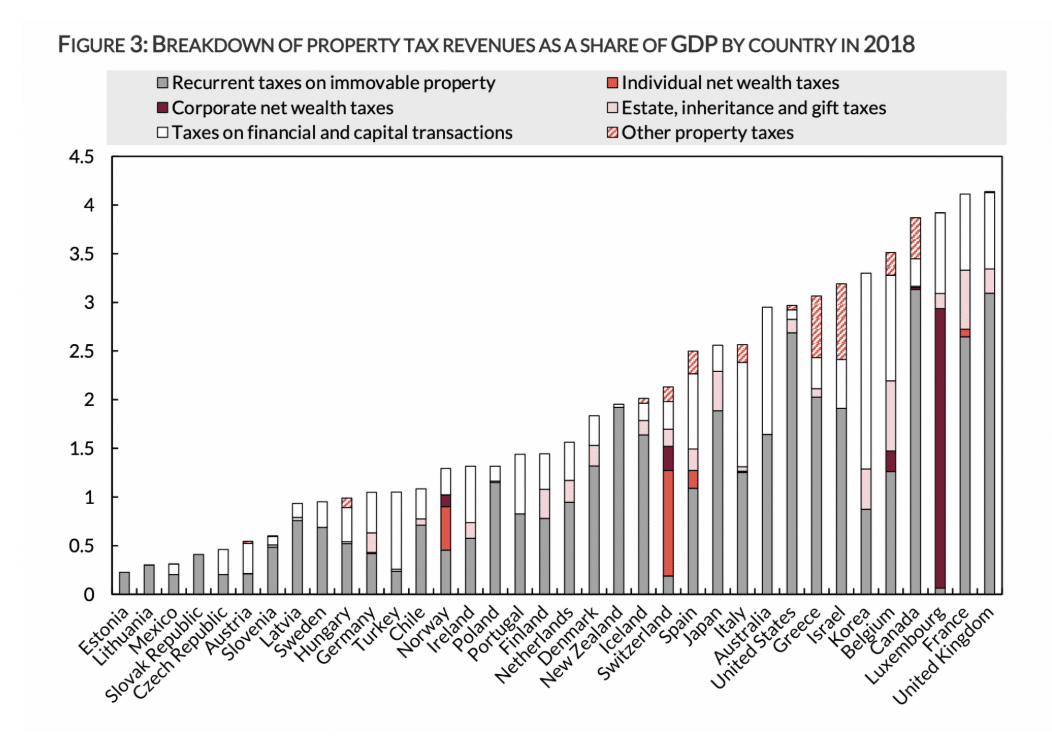




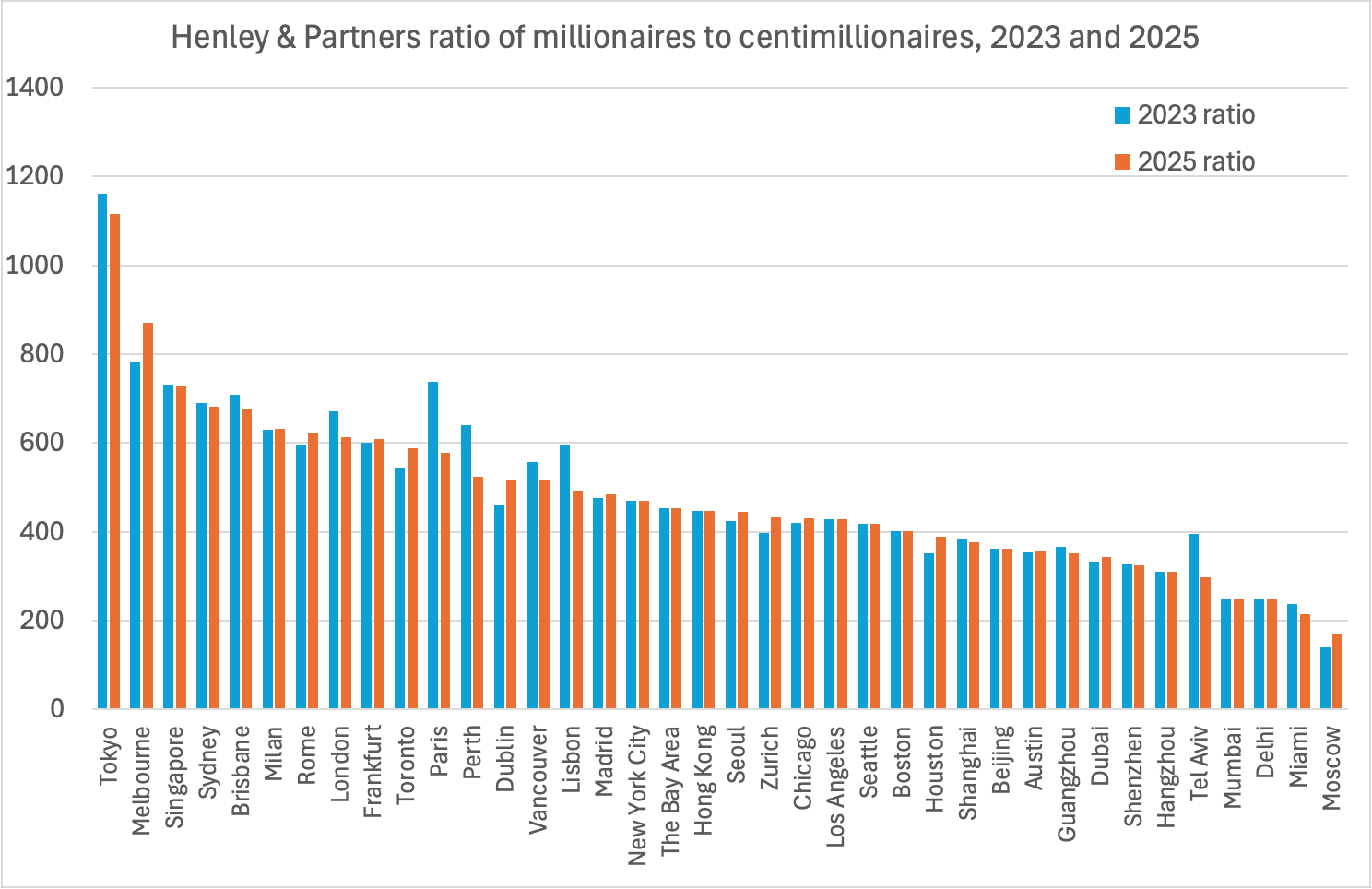
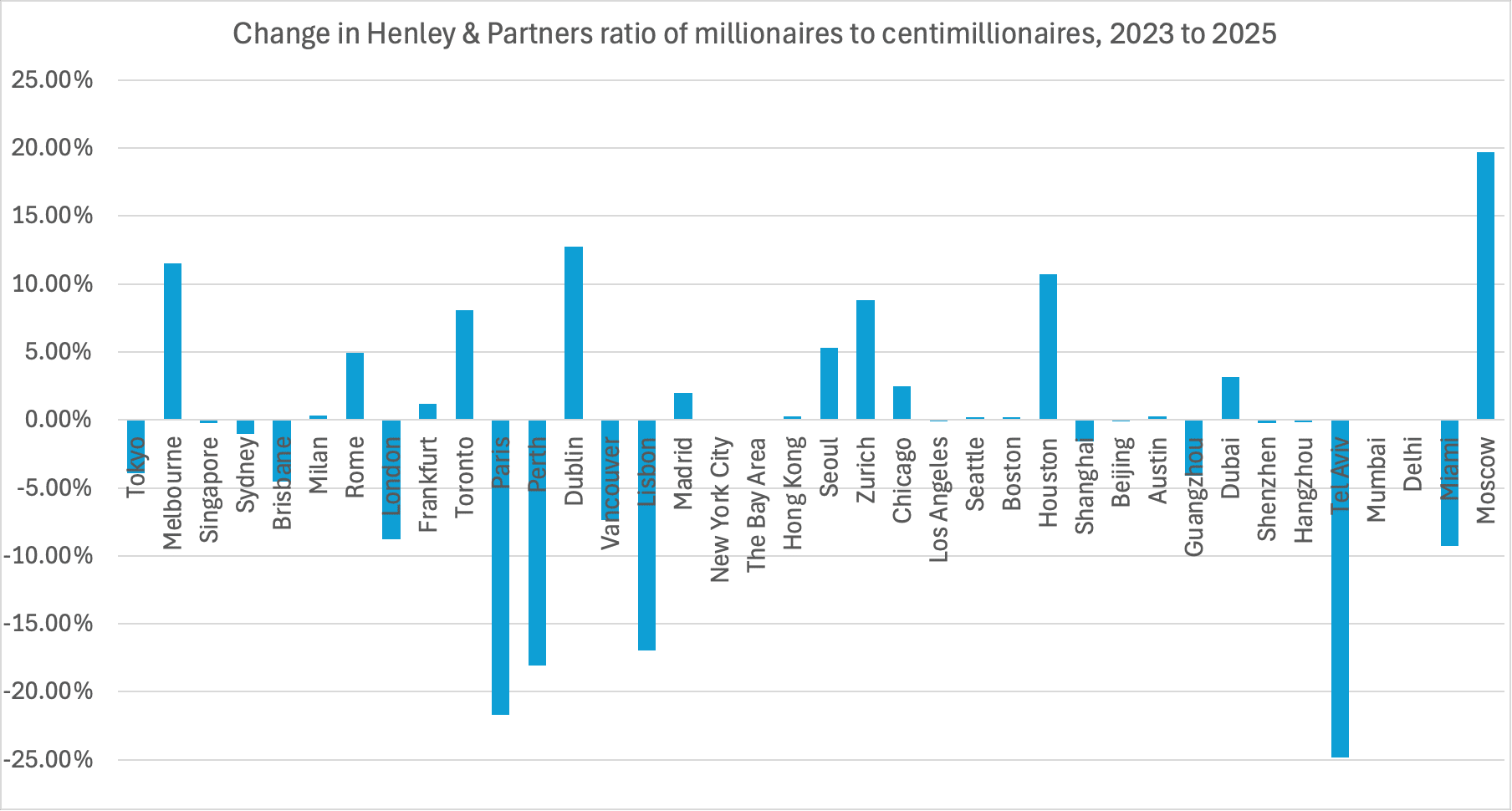

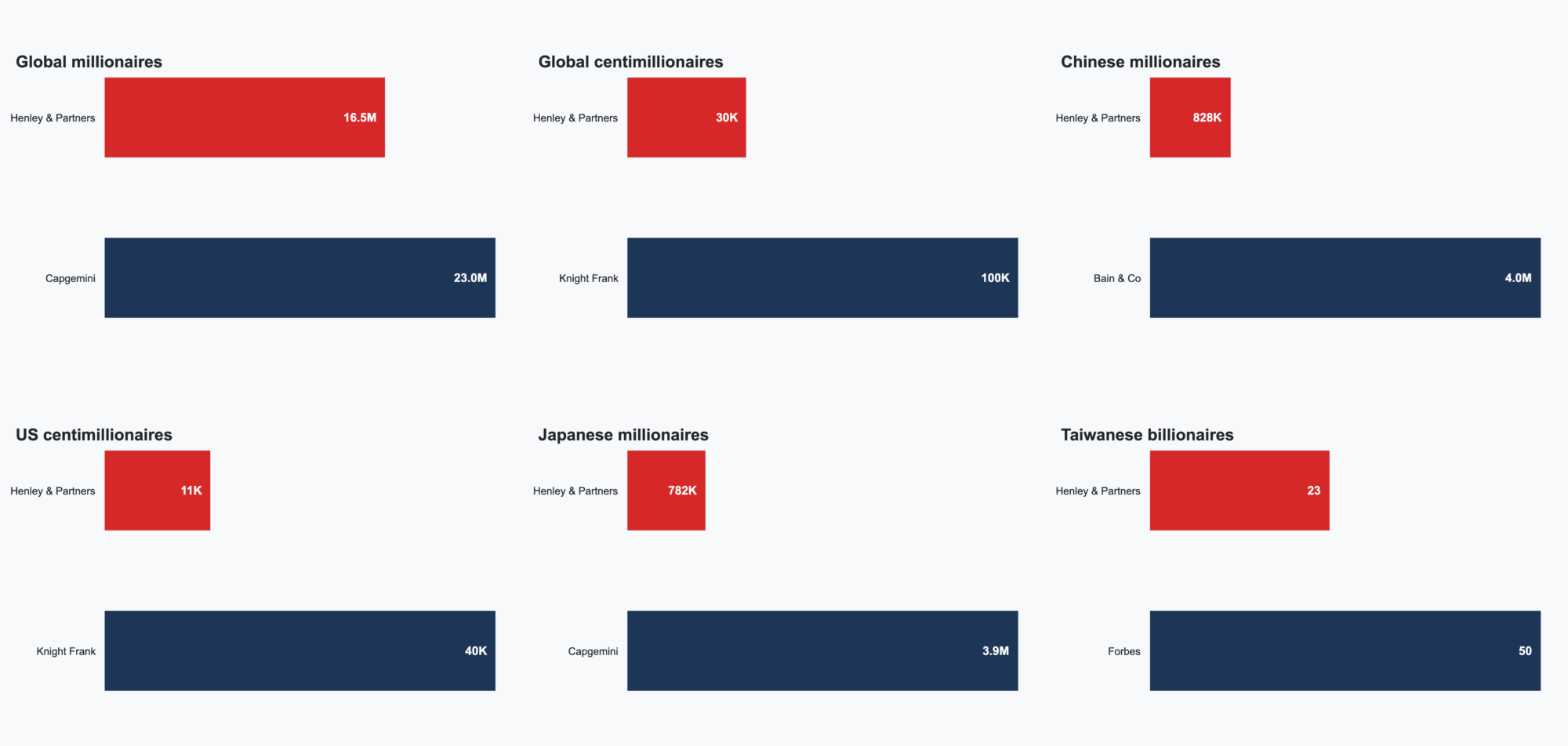


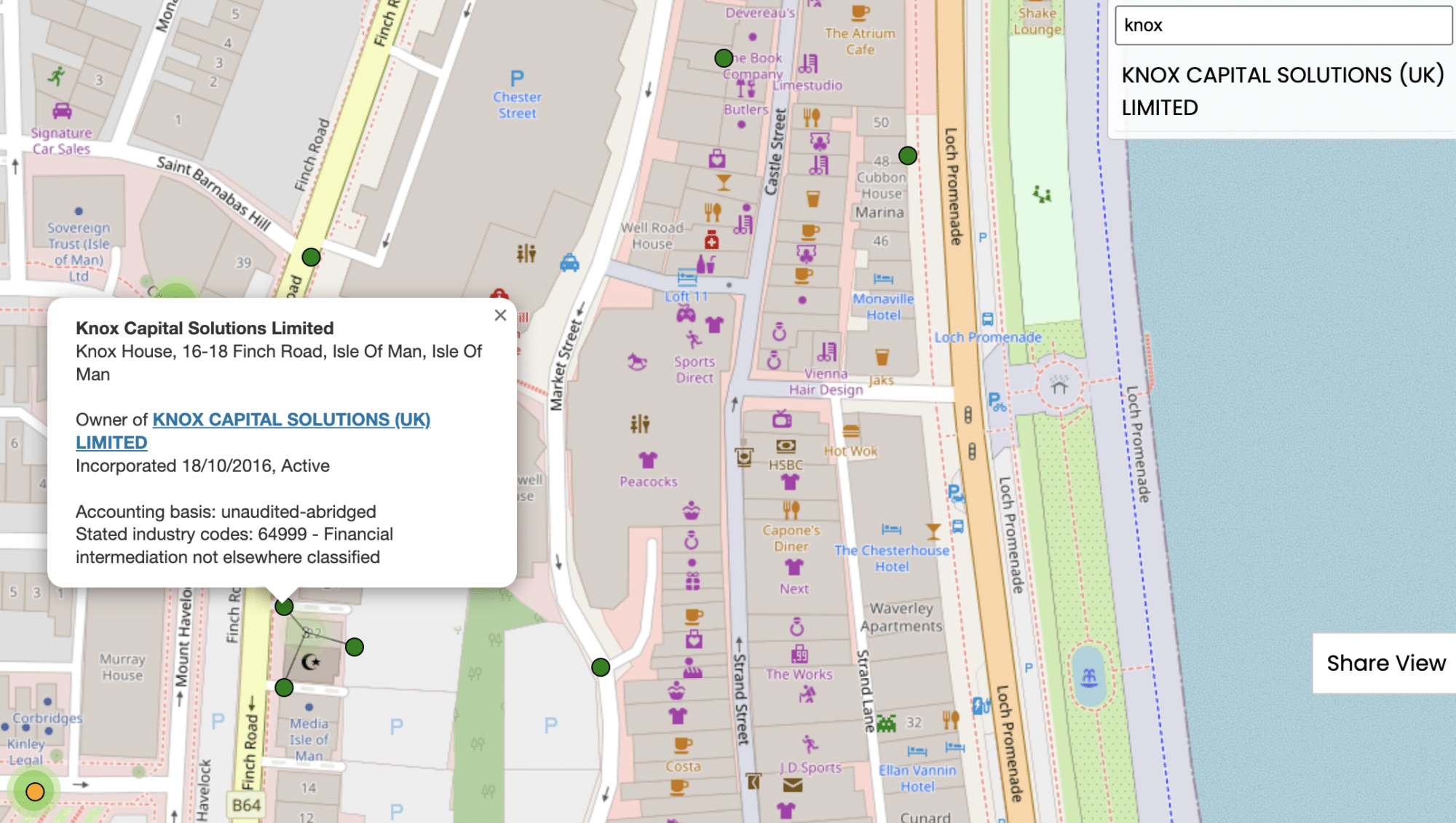
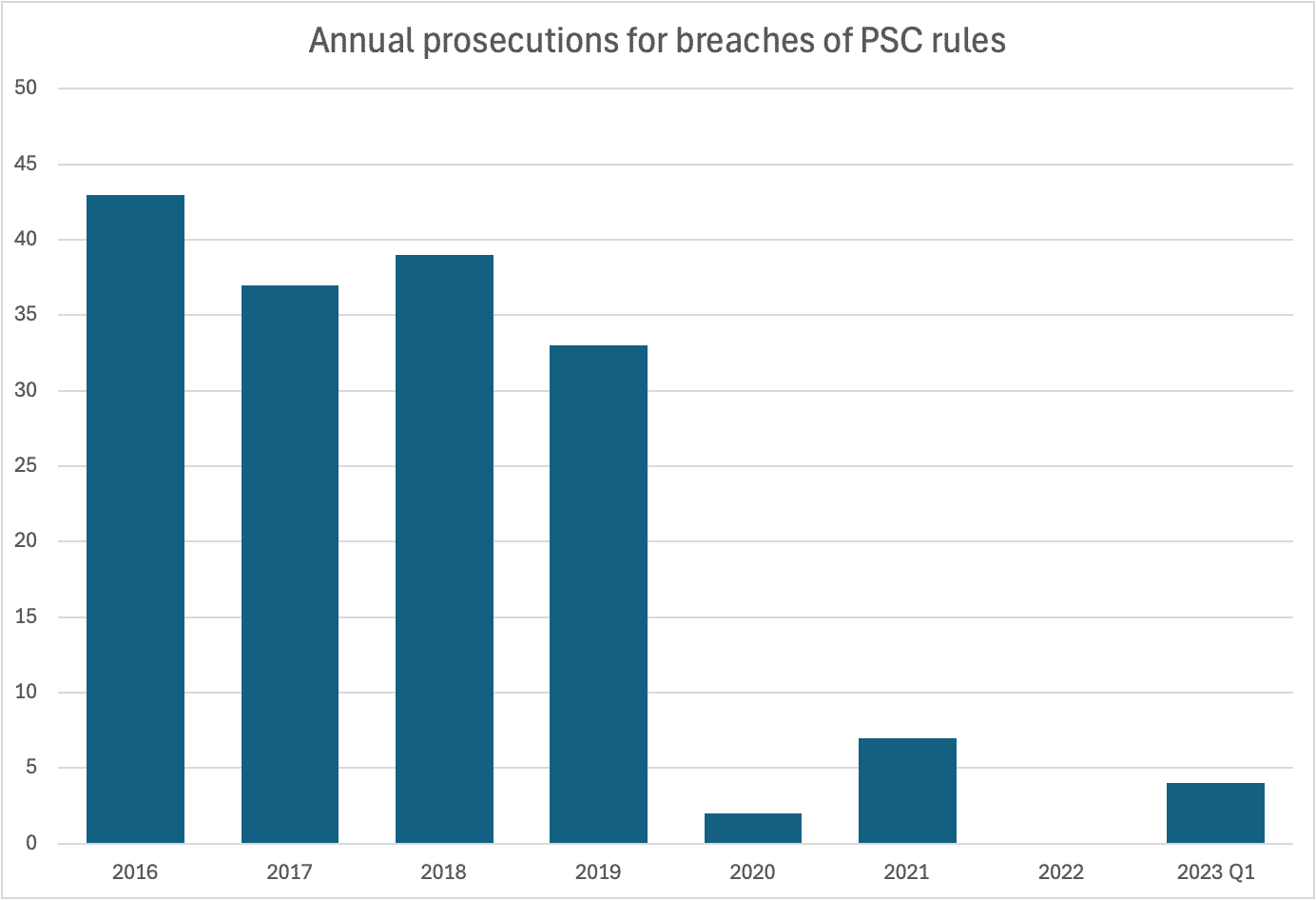
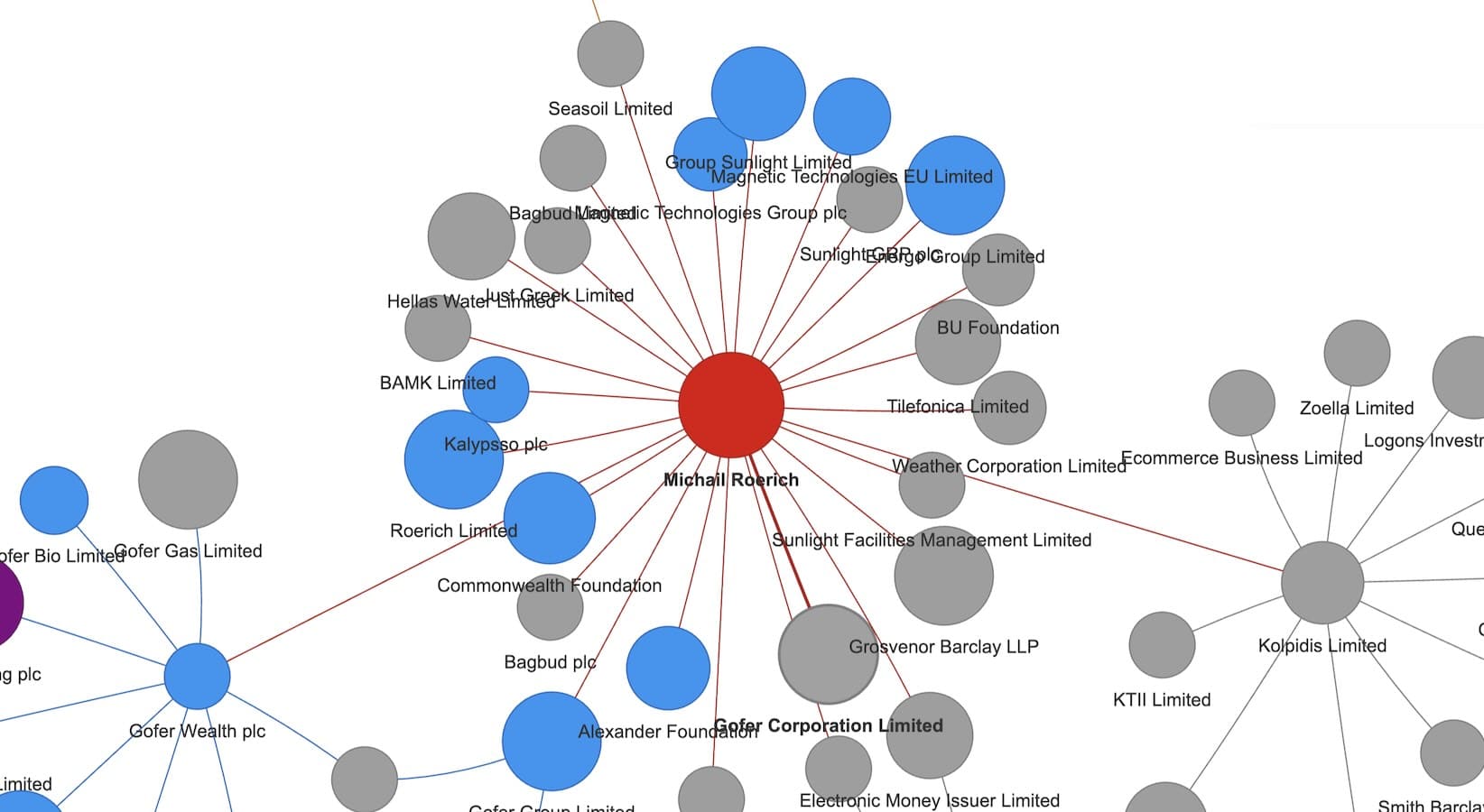


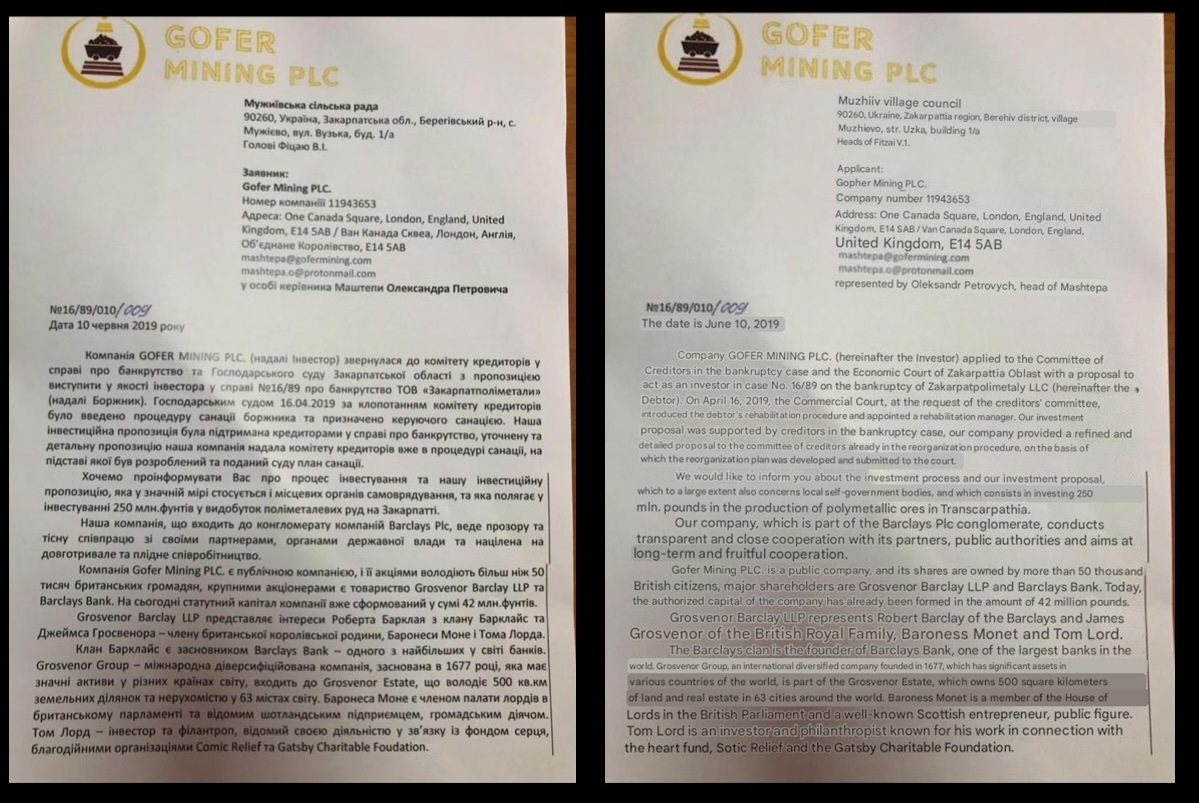

.jpg)
_(cropped).jpg)