There’s an enormous and largely invisible campaign to use fraudulent notices under the US Digital Millennium Copyright Act to remove critical articles from the internet. We don’t know who is running the campaign, but we do know it’s facilitated by Google’s amazingly trustworthy approach to DMCA complaints made by companies that don’t exist.
The notice was sent by “LMG Media Group” in the UAE. I don’t believe it exists – but Google rather brilliantly accepts takedown notices without checking if the person filing it exists.
Another identical notice was sent by “Lamar Media Corporation” in the US, which also doesn’t appear to exist:
The intended effect is to remove my article from Google searches.3
Note the unusual wording of the two notices: “completely infringing” (which reads like someone without legal training trying to sound like a lawyer).
With a duplicate from another made-up company (“Ventuky Media Corporation”), and another from “Bryan Media Corporation”, and another from “Yan Media Corporation”, and another from “Richards Media Corporation”, and another from “Venkata Media Corporation”. There are many more.
The fraudulent companies set up automated systems that can file zillions of complaints instantly. The victim, however, is unlikely to have any automated way to file counter-notices… they’ll have to do so individually. It’s also widely believed that the more reports Google receives, the greater the chance it downgrades the target website in its ranking.
And others have been at this. If you google the name of the solicitor and “striking off” you’ll see some search results, then this:
It claims to be sent by BR Law & Co in Abu Dhabi. BR Law does exist, and has an office in Abu Dhabi, but doesn’t style itself BR Law & Co. I asked BR Law for comment and didn’t hear back.
The former solicitor concerned, his old law firm and his current law firm all deny any involvement in these takedowns. I believe them; even if we ignore the ethics and legality, why take action in January 2024 to remove news from six months earlier? So the identity of those responsible remains a mystery.
Similar searches reveal more attempts to takedown inconvenient reports.
And this – it’s unclear why Alison Media Corporation (which again doesn’t exist) is trying to take down a Harris County court report (link now dead), but they are:
But clearly someone is trying to hide something in Harris County, because here the non-existent Smith Media Corporation is trying to take down another page of court reports:
The legal theme continues – here the non-existent Ranthom Media Corporation is trying to take down a Utah case report:
There also appear to be many attempts to take down gambling websites – perhaps by owners of rival websites?
Filing a bad faith takedown notice is a breach of the DMCA; in principle those affected could sue for damages (probably very small) plus attorney fees (potentially large). More seriously, attempting to gain a financial benefit through a fraudulent filing may amount to a criminal offence in the US (wire fraud) and the UK (false representation fraud and/or a breach of the Computer Misuse Act). In both cases, criminal liability could extend to the individual paying for the takedown service, if they were aware that the takedown would be fraudulent (and how could it not be?).
The problem here is that Google assists the frauds, by being amazingly trusting and not requiring any proof of the identity of people submitting takedown notices. I recently “took ownership” of the “knowledge panel” Google displays if someone googles my name. This required an image of my passport and a selfie. It is very unfortunate that Google has much less stringent procedures to file a DMCA takedown notice. Others are more careful.
A Google spokesperson provided this statement:
“We have robust tools and processes in place to fight fraudulent takedown attempts, and we use a combination of automated and human review to detect signals of abuse – including tactics that are well-known to us like backdating. We provide extensive transparency and submit notices to Lumen about removal requests to hold requesters accountable. Sites can file counter notifications for us to re-review if they believe content has been removed from our results in error. We track networks of abuse and apply extra scrutiny to removal requests where appropriate, and we’ve taken legal action to fight bad actors abusing the DMCA.”
Unfortunately this doesn’t seem to be working. Google is accepting takedown notices which have obvious signs of fraud (e.g. multiple companies claiming copyright over the same article, which is highly unlikely). Google could tighten up its existing processes. An additional step would be for Google to require ID verification for people submitting DMCA claims. It’s not at all clear to me why they can’t do that.
Many thanks to Lumen for providing access to their database.
Photo by DALL-E 3 – “a photo of an evil hacker in silhouette at a computer terminal, photorealistic”
Footnotes
Mogul Press’s website T&Cs purport to forbid most third party websites from linking to it, and say “You approve to immediately remove all links to our Website upon request”. Oddly there are a few other websites that contain the same unusual formulation. ↩︎
Everything on this website is licensed under a Creative Commons licence; it can be freely copied, but must be attributed. The fake website doesn’t contain any attribution, and is therefore breaching my copyright. I have therefore submitted a DMCA takedown notice. ↩︎
I filed a counter-notice, which restored my article. In this case that was straightforward; in other cases the sheer volume of automated DMCA takedown notices makes it hard for the victim to respond, particularly if they’re not a large media corporation. ↩︎
You need an account with Lumen to explore these requests in detail. Accounts aren’t generally available, given it’s a non-profit operating a massive database potentially open to abuse, but they do provide access to non-profits and researchers, and kindly provided us with login credentials. ↩︎
As an aside, I don’t understand why Eliminalia hasn’t been prosecuted by the Spanish authorities; its business model appears to rely upon fraud. ↩︎
I asked Mogul Press for comment and they didn’t reply, despite having been very chatty previously. I’m therefore seems reasonably likely that the takedown attempt was commissioned by them. ↩︎
Brooks Newmark & Co Ltd, run by former Conservative MP Brooks Newmark, lobbied for foreign PPE suppliers during the pandemic, but didn’t register under the Lobbying Act. It turns out this was entirely legal, thanks to a serious mistake in the drafting of the Act. This has created a loophole which means that lobbyists acting only for foreign clients don’t have to register their lobbying activity. That subverts the purpose of the legislation – the loophole should be closed.
Unfortunately the Lobbying Act turns out to have a significant loophole. The Registrar of Consultant Lobbyists has just ruled that, because Brooks Newmark & Co Ltd only has foreign clients, it doesn’t have to be registered.1
That create the perverse result that a consultant lobbying Ministers on behalf of UK clients has to register the clients, but a consultant lobbying on behalf of only foreign clients does not.
The Registrar’s ruling is, however, technically correct – because of a drafting mistake made back in 2014.
When the Lobbying Act was drafted, the Government took the defensible view that the Lobbying Act registration requirements should only apply to serious businesses, and not e.g. someone lobbying on an informal basis. The Parliamentary draftspeople clearly wondered how to define a “serious business”, and decided to refer to the existing concept of VAT registration. It’s well known that any business with an £85,000 turnover has to be VAT registered, and so they may have thought this was a neat shortcut:
It can, however, be dangerous to borrow legislation created for one purpose and use it for another, unrelated purpose. You run the risk of missing something important.2
One of the nice features of VAT is that it doesn’t discriminate.3 A lobbyist selling consultancy services to a UK business is subject to UK VAT whether the lobbyist is based in Manchester, Monaco or the Moon. A lobbyist selling consultancy services to a French business4 is not subject to UK VAT whether the lobbyist is based in London or Lyon (but in the latter case there probably would be French VAT).
This means that if you’re a UK lobbyist whose only clients are foreign companies, individuals or governments, then you will never charge VAT. You’d normally register for VAT anyway, because that enables you to recover VAT on your costs (“inputs”), but you don’t have to – even if you make many £millions in fees.
The Parliamentary draftspeople unfortunately appear to have missed this5 – they assumed the only scenario where a lobbyist wouldn’t be VAT registered would be where they have less than £85k turnover. This is from the explanatory notes:
And that creates a loophole for consultants who only advise people outside the UK.6 A loophole that Brooks Newmark & Co Ltd qualifies for: because it only has foreign clients, it doesn’t have to register for VAT.
That’s not tax avoidance at all – in fact by not registering, Brooks Newmark & Co Ltd will be over-paying VAT. That makes me think this might have been deliberate Lobbying Act avoidance by Brooke Newmark & Co Ltd (as otherwise, why would they have chosen to pay too much VAT?).7
This now makes it easy for people to secretly lobby for foreign individuals, companies and governments.
If there’s one thing we know from the history of tax, it’s that if a loophole is revealed, and not closed, it will be ruthlessly exploited. If I was a lobbying company thinking of taking on a controversial foreign client, I could establish a new company to act for this one client.8 I’d pay a bit more VAT as a result, but never have to register the lobbying or the client. I’d be amazed if this doesn’t now happen.
But that may be the naive view – it’s possible that the loophole is already understood and exploited in this way.
Many thanks to L for letting me know about this case, which I otherwise never would have come across.
Footnotes
Carter-Ruck were acting for Brooks Newmark; in this case they appear to have been very effective ↩︎
It’s a particularly danger with tax legislation, because it has so many defined terms that appear helpful and straightforward, but are actually anything but. An example I often saw in practice was where a commercial contract had a concept of a company that’s “connected” to one of the contract parties. Someone would inevitably suggest borrowing the corporation tax concept of “connection“. The response from tax lawyers would generally be negative, because of the extreme complication and uncertainty that the tax connection concept would introduce. ↩︎
In the jargon, it is “border-adjusted”, and therefore permitted by WTO rules (see page 144 here) in the way a tax that discriminated against foreign sellers, or in favour of local sellers, would not be. ↩︎
Sometimes the rules are different for non-business customers, but in this case they’re essentially the same↩︎
Richard Thomas has some very well-informed thoughts on this in the comments below; he thinks I may be being unfair ↩︎
The term “loophole” is generally used to mean an unintended result of legislation. The classical example would be where a devious taxpayer finds some way to exploit legislation in a way Parliament never intended, taking advantage of what in essence is a drafting defect. Modern anti-avoidance rules and common law doctrines mean tax loopholes are very unlikely to be found these days (or, more precisely, they are very unlikely to give you a tax advantage if you try to use them). Many thingsdescribed as “tax loopholes” may be viewed by some people as undesirable but they are not unintentional, and so not truly “loopholes” at all. The Lobbying Act loophole, by contrast, absolutely is a good old-fashioned “loophole”. ↩︎
Alternatively it is of course possible they didn’t think it was worthwhile to register for VAT (which feels unlikely, given they appear to have had over £85k in revenue), or alternatively they just simultaneously mistakenly failed to register for VAT and mistakenly failed to go on the lobbying register, and they lucked out that the first mistake cancelled the second. It’s often a good rule of thumb that someone paying too much tax is as noteworthy as someone paying too little. ↩︎
I’d have to keep it outside my VAT group, and there would be irrecoverable VAT costs, including on intra-group supplies – but I suspect in some cases the secrecy advantages will overcome such tax disadvantages… indeed some clients might pay over-the-odds just to obtain secrecy. ↩︎
One could amend the VAT reference to include cases which would be registrable if the supplies were all made within the UK, but it’s much more sensible to drop the link to VAT altogether, and just impose a simple financial de minimis, plus an aggregation rule to prevent lobbying businesses being split into multiple entities to avoid registration. VAT is complicated, and in the future could change unpredictably. And using the VAT rule likely creates other opportunities to evade lobbying regulation, e.g. as Steve Woodward pointed out, splitting a business to multiple VAT registered entities. One of our correspondents, W, has also made the excellent point that it’s not obvious how you apply the current rule to a foreign business. All of which goes to show: it’s best to avoid tying unrelated legislation to a VAT concept. ↩︎
Last year we revealed an inept and dangerous landlord tax avoidance scheme promoted by Property118 and Cotswold Barristers. They responded with a weird campaign of denial, threats and abuse. HMRC then started to investigate, but Property118didn’t tell their clients. HMRC’s conclusion? Property118 had unlawfully failed to notify HMRC they were promoting a tax avoidance scheme. Property118 and Cotswold Barristers’ response? Telling their clients this is a normal procedure for “innovative tax arrangements” and nothing to worry about.
UPDATE 16 February 2024: Property118 have published a defence of their position. Per their usual practice, the article doesn’t contain a single reference to legislation, just a series of irrelevant quotes from HMRC manuals. Competent tax advisers always start with the legislation. HMRC guidance can sometimes be of assistance, but it’s not the law, and legally and practically cannot be relied upon. What you certainly can’t do is try to reach your desired result by citing HMRC guidance as if it’s legislation.
Property118 run a popular landlord website and sell a series of incompetent tax avoidance schemes. Nobody at Property118 has any tax expertise, and they rely heavily on a peculiar barristers chambers (“Cotswold Barristers”) who also appear to have no tax expertise.
We subsequently discovered an even worse element to Property118’s scheme that involved throwing lots of money around in a circle and claiming it created a big tax saving – generating a total of £500k+ in “fees” to a YouTuber who then extensively promoted Property118 without revealing his financial interest.1 And then we went through Property118 client files and found a series of serious errors, as well as evidence that Cotswold Barristers was just “rubber-stamping” standard form advice without giving it any independent thought.
Property118’s initial response
Most of the tax avoidance scheme promoters we’ve reported on simply refuse to comment, and hope that if they stay silent then everything will work out.2
Property118’s response was very different.
They responded aggressively to our requests for comment, and seemed angry that we wouldn’t accept a recorded Zoom call instead of correspondence.
Next, they hired a tax KC to provide an opinion that their scheme worked. More conventional types would have hired a KC who says any old avoidance scheme works. Property118 instead hired a reputable KC, but asked her to advise on largely irrelevant questions instead of the ones that mattered. In particular: was the mortgage defaulted? Was this a tax avoidance scheme that should have been disclosed to HMRC under the “DOTAS” disclosure rules? Did anti-avoidance rules apply? What did Property118’s ineptly drafted documents actually do? None of this was covered.
They then made a series of weird, conspiratorial personal attacks on me, complete with spooky AI generated pictures. They accused me of being unqualified, and said that the many other advisers critical of Property118 were acting out of jealousy for not having thought of these brilliant ideas themselves.
Property118 then referred me to the Solicitors Regulation Authority for being mean to them. I’ve heard nothing further about this – I’d hope the SRA see the referral as an obviously vexatious abuse of the regulatory process to retaliate against a critic.
And finally there were a succession of supposed technical responses to our reports, none of which actually engaged with the substance of what we had said. The peak of this was an article by Mark Smith of Cotswold Barristers claiming that DOTAS didn’t apply (since deleted; this is an archived version), which would be disappointing if handed in by a work experience student.
Then, at some point in November 2023, Property118 went silent, and deleted their main technical response.
Why did they go silent? Because HMRC had started to act.
On 16 November 2023, HMRC announced that they’d started to investigate incorporation relief claims from as far back as 2017/18.3. “Incorporation relief” is a tax relief that Property118 relied upon to move landlords’ properties into the structure without capital gains tax. However they got the details badly wrong.
Here’s the key part of a letter which HMRC sent to taxpayers:
It was always reasonably clear that Property118’s schemes should have been disclosed to HMRC under DOTAS – the rules requiring disclosure of tax avoidance schemes. Property118’s denials of this revealed only that they and Cotswold Barristers had a very poor understanding of the rules. Ray McCann, who when at HMRC led the launch of DOTAS, described their responses as “hopelessly wrong“.
Property118 and Cotswold Barristers should have clearly explained what had happened, and what it means for their client. Instead they decided to mislead their clients with an email which manages not to mention the terms “avoidance” or “DOTAS”:
What is an SRN? What is the required action? Why did this happen? Cotswold Barristers don’t say. We’ve uploaded a full copy of the email here.
“You may have to complete form AAG4” is exceptionally unhelpful. Cotswold Barristers should be saying to their clients who used the schemes for past years that they will have to submit this form.
Instead, Cotswold Barristers provide reassurance which is comforting, sympathetic, and completely wrong:
No, the intention of DOTAS is not to enable HMRC to “comprehensively examine innovative tax arrangements”. It’s to enable HMRC to discover tax avoidance schemes as soon as they’re used, so it can decide whether to challenge them and/or ask the Government to enact legislation closing any loopholes. 8 This is well known to all practitioners, and was restated when DOTAS was amended in 2021 to enable SRNs to be issued to rogue promoters:
Anyone reading this will realise the truth: that it’s now likely that Property118’s clients will be the subject of HMRC enquiries, and face large tax liabilities, plus interest and potentially penalties.
It’s sweet that Property118 are appealing HMRC’s decision that the “substantial incorporation structure” is disclosable (good luck with that), but that suggests even they can’t defend the circular “capital account restructure”.9
So why did Cotswold Barristers and Property118 provide that those empty, sympathetic and wrong words of reassurance?
In other circumstances we’d say it’s deliberate deception, but we believe Cotswold Barristers and Property118 are simply unqualified and unable to advise properly on tax.
But whether it’s fraud or haplessness, the question is whether a barrister is permitted to act in this way. That is something we’ll be returning to soon.
Thanks to everyone who contributed to the original Property118 article, particularly those who were happy to be credited by name (when they knew Property118’s reputation for bullying and abuse).
Because, at the time, that was the furthest HMRC could go back. It’s a kind of triage, first attacking the oldest periods, and then (when they’re done and have time) moving onto the newer ones. The approach is absolutely rational for HMRC, but has the considerable disadvantage for taxpayers that it can be years before your avoidance scheme is challenged. The answer is: don’t do avoidance schemes. ↩︎
Our analysis goes further, and says that there are several good reasons to believe the Property118 scheme is completely disqualified from incorporation relief. We expect HMRC will take these points, in the fullness of time, but for now is applying the much easier calculation point, given that it’s just arithmetic. ↩︎
As an aside, there is a rather odd paragraph in the Finance Act 2021 legislation that created the new notice procedure. Subsection 311(9) says: “The allocation of a reference number to arrangements or proposed arrangements is not to be regarded as constituting an indication by HMRC that the arrangements could as a matter of law result in the obtaining by any person of a tax advantage”. Of course the intention is to stop promoters using SRNs as badges of approval from HMRC, but quite what the legal effect is of the subsection, we have no idea. Possibly it has none; possibly it would assist in fraud proceedings against dishonest promoters who did try to use SRNs as promotional material? ↩︎
The version of the Regulations on legislation.gov.uk is unfortunately out of date; however the subsequent amendments aren’t material to the scenario discussed here. ↩︎
DOTAS also means HMRC can, after issuing the SRNs, use its new powers to require Property118 to provide further information about their scheme, including documents and names of clients. We expect this will happen soon, if it hasn’t already ↩︎
It looks like at some point they changed their mind, and decided to appeal that too; quite hard to see what the basis for this will be. ↩︎
Less Tax for Landlords and The Bailey Group1 sold a landlord tax avoidance scheme involving an LLP “hybrid partnership”.2 We reported back in October that the scheme was technically hopeless; HMRC has written to the clients and invited them to settle. Everyone thought the game was up.
How did Less Tax for Landlords respond to being caught? They denied there was anything wrong with their scheme, paid £100,000 to a KC known for writing tax avoidance scheme opinions, obtained an opinion which appears to be worthless, and advised their clients to disregard HMRC’s offer to make a disclosure by 31 January 2024. We expect that, as a result, their clients will incur significant penalties.
At this point the big question is whether Less Tax for Landlords are recklessly incompetent, or conducting a deliberate fraud on HMRC and their clients. Tax advisers and others will form their own view after viewing the evidence we set out below.
It’s often said that the answer to rogue tax advisers is regulation. Less Tax for Landlords’ accounting arm is regulated, by the Institute of Chartered Accountants in England & Wales. But the ICAEW shows no sign of taking any action.
Regulation isn’t working. Rogue tax advisers are taking advantage of HMRC and their own clients. The question is: what can be done?
The LT4L scheme
On 4 October 2023 we published a detailed report into a tax scheme marketed by Less Tax for Landlords, the trading name of the One Consultancy Group (OCG). The idea was:
Landlords would declare a trust over their properties in favour of a limited liability partnership (LLP)
The landlord and their spouse would be members of the LLP; there would also be a newly incorporated company as member, owned by the landlord/spouse
The LLP diverts most of its profit to the company.
LT4L made some very impressive claims about the structure:
There was no need to tell the mortgage lender.
After two years, the structure is entirely exempt from inheritance tax thanks to business relief.3
The diversion of LLP profits to the company means rental income is taxed at the corporate rate of 19-25%.4
The trust means the landlords’ obligation to make mortgage payments “shifts to the LLP”, meaning the company as LLP member obtains full tax relief for mortgage interest. The “section 24” restriction on landlords claiming tax relief is avoided.
No CGT or SDLT on establishment, without needing to qualify for any special reliefs.
The properties are “rebased” for capital gains tax. In other words, when they’re sold, only the capital gain after incorporation of the LLP is taxed. Pre-incorporation gains disappear.
Instead of taking profits out of the LLP, you can take capital out instead, and you won’t be taxed.
There’s no need to disclose the structure to HMRC.
If the structure triggers unexpected tax, then their clients are protected by an unusual insurance arrangement – LT4L claim they have a “written note” from their insurers stating they are happy to cover all interest, penalties and extra tax payable if HMRC do not agree with the way the structure was set up.
How the LT4L scheme fails
We couldn’t believe the scheme when we first saw it. Every aspect fails:
Declaring a trust over the rental properties without the mortgage lender’s consent (or even telling them) will in most cases default the mortgage. The structure was described to us by an experienced broker as “almost unmortgageable”.
Rental property businesses almost never qualify for inheritance tax business relief. The LLP structure doesn’t change that.
The mortgage obligation doesn’t “shift to the LLP”. It remains with the landlords – who now lose their 20% credit.
The “mixed partnership” rules mean you can’t get a tax benefit by allocating profits to a corporate partner in an LLP.
The allocation of profits to the corporate partner means there will be up-front capital gains tax. There’s no CGT rebasing.
SDLT will be due at the point that income profits are allocated to the corporate member. LT4L’s unusual structuring potentially results in a higher SDLT liability than would result from a simple incorporation.
The structure can incur additional SDLT every time the profit allocation changes. LT4L’s clients could have unknowingly racked up years of SDLT liabilities.
The structure is disclosable under DOTAS, the rules requiring tax avoidance schemes to be disclosed to HMRC. That is obvious, given that the structure was mass-marketed and its main benefit is to avoid tax.
Members are taxed on profits as they are made; when and how they are taken out is irrelevant. This is a basic principle of LLP taxation.
HMRC do not in fact agree with how the structure was set up, but there is no automatic payout from LT4L’s insurers. That’s because there never was a special “written note”; they just have the usual professional indemnity insurance. To get any benefit from that, an LT4L client has to lose an argument with HMRC, sue LT4L (with the insurers arguing LT4L’s case, not the client’s), and win. This is not easy, even if (as we believe) LT4L’s advice is plain wrong.
Many tax avoidance schemes fail, indeed these days almost all of them do. The unique thing about Less Tax for Landlords is that nobody has been able to explain why they thought their structure worked. It’s not a case where they have an argument, and that argument is wrong. It’s that they don’t appear to have had an argument at all.6
We can illustrate this if we focus for the moment on the claim that the structure is exempt from inheritance tax after two years.
Here are six answers that Less Tax for Landlords provided to clients and advisers asking questions. People familiar with inheritance tax and the tax concept of “trading” will see immediately they are nonsense (The Chartered Institute of Taxation have published a clear summary of the actual position7). But we believe even a non-specialist will see that the explanations given are contradictory:
“[the business] is outside of your estate for inheritance tax, as long as you tick various boxes”
Why?
“because the HMRC recognizes that there is a trading relationship between you all, and that you’ve got a written business plan and that you’re managing it and that your sole purpose is not to avoid tax but to maximize your wealth to tax efficiently as possible, the whole thing becomes inheritance tax free.”
A trading relationship between the participants, a business plan, not having a tax avoidance purpose – all these things are irrelevant to whether inheritance tax applies. There are no “boxes” to tick.
2. The LLP turns into a trading business
If you don’t like that, here’s a completely different explanation:9
“The LLP structure that we set up is not investing in property. It does not own the property. The property is owned by the individuals. The LLP has taken advantage of that ownership and it is available… after two years, that LLP turns into a trading business according to HMRC, not according to us, according to HMRC. And at that point, after two years, the equity of those properties inside that LLP are then outside of the estate for inheritance tax after two years. “
Pure nonsense. The LLP does have beneficial ownership of the property. The LLP does not “turn into a trading business”. HMRC has certainly not said this, or anything like this.
Here’s another version of the same claim from a document LT4L sent to a client, with a badly drawn rectangle supposedly showing that something, somewhere, somehow is trading:10
3. The LLP turns rental income into trading income
Less Tax for Landlords often used this slide:
And sounded very confident:
In reality, an LLP doesn’t transform its income into trading income.
4. Gobbledegook about the equity
Some advisers asking LT4L to explain their structure received this explanation:
“The LLP holds the equity and not the properties – so it cannot be classed as investment. The owner of the properties does not qualify for BR on the properties, but on the equity.”
We have no idea what this means.
5. More trading activity is introduced
When we were researching our report, we asked LT4L how they justified their inheritance tax claims. This was their response:
“We do not work with all landlords, at least not in relation to a Mixed Partnership structure, and for those we do work with, we look to help them commercialise their operation and introduce more trading activity into their business model.”
You can’t “introduce more trading activity” into a rental property business and qualify for business relief.11 So this approach would fail; however we have been unable to find any LT4L clients who were helped to “introduce more trading activity”. This statement may just have been a lie.
6. Aggressive evasion
Over the years, many tax advisers asked Less Tax for Landlords how their scheme magically qualified for business relief. That often went like this:
That confidence has now disappeared, and Mr Gimple’s correspondence with us makes clear he never understood the technical tax basis for the structure. He tells us he relied on Vajahat Sharif who ran the associated law firm (which includes STEP qualified practitioners), and Chris Bailey, who ran the accounting and tax advisory side of the business.
Mr Sharif has told us that he and his staff don’t in fact have any tax expertise, and he never advised on any element of the hybrid partnership structure. We believe Mr Sharif when he says he has no tax expertise, because he promotes himself on LinkedIn as “Head of Terrorism, National Security, Political & Complex Crimes at Tuckers Solicitors”.12 It is impressive that he can combine this with being “Group Head of Legal” and head of compliance for OCG Group (which owns/runs Less Tax for Landlords). We’d assume it’s two different people with the same name, but it isn’t.
Mr Sharif says he had no involvement in the LT4L tax avoidance structure. A letter was recently sent to LT4L’s clients from Sharif and the other directors concerning the structure; Mr Sharif says he didn’t authorise that letter, but hasn’t taken any steps to correct it.
Mr Bailey is a qualified accountant, but from the videos and documentation we have seen, it is apparent that he either has no tax expertise or is lying (we do not know which it is). Bailey was disciplined by the Association of Chartered Certified Accountants in 2020 for failing to provide audit files when requested. He provided a series of excuses for this: he first said he needed more time, then claimed the clients were audit-exempt, then claimed the files were offsite, and finally blamed a software issue. He was found guilty of misconduct. The ACCA accepted that the failure to disclose was not deliberate; it is not clear how they came to this conclusion.
We believe Mr Gimple, and don’t think he was dishonest. However, he had no technical tax qualifications or experience, was selling a scheme he didn’t understand, and aggressively responded to criticism from people who were qualified (without, it seems, ever wondering what precisely was going on). This strikes us as reckless.13
The justifications for the other key elements of the structure were equally nonsensical, with no reasonable basis ever provided for thinking capital gains were rebased, or that the diversion of income to the corporate member would escape the mixed partnership rules. Over the years, many advisers queried the structure – nobody received a coherent explanation.
And the other people who never received an explanation were LT4L’s clients. As far as we are aware, not a single LT4L ever received a technical explanation of why business relief applied, or indeed a technical explanation of any other aspects of the structure.
It is, in short, astonishing.
Why?
The LT4L structure has been the subject of widespread comment by tax professionals. We are not aware of a single adviser, anywhere in the UK, who believes the LT4L structure had any prospect of success.
At this point there are three possibilities.
First, Less Tax for Landlords have alighted on a structure so brilliant that nobody else is able to understand it. They are right and we are all wrong.
Second, LT4L were incompetent and negligent to an astonishing degree.
Third, key personnel at LT4L either knew the structure didn’t work, or were wilfully blind to it not working, but sold it anyway. In other words: they defrauded both HMRC and their own clients.
We are going to discard the first possibility.
To assess the likelihood of the second and third possibilities, let’s look at how LT4L responded to the Spotlight.
LT4L’s response
Here’s what LT4L have been up to, since October, in their own words:
Less Tax for Landlords didn’t admit wrongdoing and continued to represent their clients. It’s an impossible conflict of interest.14
LT4L then admitted that the chosen counsel is Robert Venables KC.
This is an illuminating choice. Venables’ reputation is for providing opinions on avoidance schemes.15Jolyon Maugham once wrote an insightful and influential blog about the “boys who won’t say no” – the handful of tax KCs who frequently issue technically dubious opinions on avoidance schemes. Venables is generally considered to be one of those KCs. He’s not the man you go to if HMRC are unreasonably challenging your entirely commercial structure (not least because he has no credibility with HMRC).
We understand from a source that LT4L paid £100,000 for the Venables advice.
LT4L wrote to their clients last month summarising Venables’ opinion. We are publishing a copy of the LT4L letter; it is stated to be confidential, but we believe there is a public interest in publishing it, given it reveals highly unethical behaviour by LT4L. We also believe public scrutiny of LT4L’s actions is in their clients’ interests.
The first and most important thing Venables says is that clients can’t rely on his advice. If Venables gets it wrong, LT4L’s clients are stuffed:
This is standard practice for KCs writing avoidance opinions. The people who actually need to rely on the KC’s advice, can’t. This is why “the boys” happily issue opinions that other advisers wouldn’t touch – it can never come back to them.
The other key reason is that “the boys” will often make assumptions of fact which are unrealistic, and mean they are advising on a structure which is not quite the same as the actual structure. Like this:
This is not how the structure was sold to LT4L’s clients. The whole point was to allocate large amounts of income to the corporate member to obtain a tax benefit. LT4L presentations show almostall the rental income being allocated to the company, leaving the individual LLP members only enough to use up their 20% income tax bracket:
Other advisors, who are merely bad, think there is a 15% limit to the profit that can be allocated to the corporate member.16 LT4L think there is no limit:
So Venables is assuming away the actual structure, either because he has been mis-instructed, or because that’s the only way he can come to the “right” conclusion.17 Everything that follows is therefore worthless.
Mixed partnership rules
These are the rules which undo attempts to allocate income to a corporate member of an LLP/partnership which go beyond a fair return on services or capital provided. Less Tax for Landlords made a series of nonsense claims about these rules. What does Venables have to say?
HMRC have claimed that income which was in fact allocated to the corporate member is deemed to be taxable income of the individuals which should have been declared as such.
HMRC have mentioned the “mixed partnership” rules and the “income stream” rules.
Robert has advised us that he has seen nothing in HMRC’s arguments which justifies the view that taxable income has been under-declared and does not see how their claim can be established on either basis.
There is zero content here.
LT4L were previously very confident the rules didn’t apply as long as your “main reason” for the structure wasn’t tax avoidance and they are “used for business purposes”:
But Venables is silent on LT4L’s original justification, and provides no basis for thinking the structure works. It is possible, again, that he is misunderstanding/misdescribing the structure.
We have heard from a source that LT4L are in fact submitting client tax returns for 2022/23 on the basis there is no allocation of profits to the company. If that is correct it is very disturbing, because it suggests they know their structure is indefensible, and are conceding most/all of the benefit of the structure for future periods, but concealing this from their clients.
Any reallocation of profits can also trigger SDLT charges – more on that below.
Inheritance tax
The prospect of an inheritance tax exemption after two years was the big benefit of the LT4L structure. But on this, Venables provides no advice at all. We are aware of former LT4L clients where HMRC is asserting seven figure inheritance tax liabilities, but all LT4L have to say is:
HMRC have also raised the question of inheritance tax.
To the clients where this is a current issue, separate steps are currently ‘in progress’ with HMRC and unless you have made some gift of your rights over the LLP, Robert sees this as being currently academic. He notes that in any event your self-assessment return has nothing to do with inheritance tax.
Clients who paid thousands of pounds for advice from LT4L which claimed to enable an inheritance tax exemption, should be pretty unhappy that the issue is now described as “academic”. It’s a striking change from their breezy confidence of a few months ago.
Stamp duty land tax
Here’s what LT4L are saying about Venables’ advice:
HMRC have not claimed in their letters to us or to our clients, in the “factsheet” or in Spotlight 63 that any stamp duty land tax should have been paid on the transfers of the properties to the LLP.
Robert had advised us that no stamp duty land tax should have been due on such transfers, except perhaps in exceptional circumstances. We shall be contacting separately our clients whose circumstances may be exceptional.
It’s another bait and switch. The problem isn’t SDLT when the properties go into the structure; it’s SDLT when the profit-sharing ratios change. Every change potentially triggers a tax charge, and the changes are often large.
HMRC didn’t mention this point in Spotlight 63, but we understand they are currently investigating it.
Capital gains tax
Here’s LT4L/Venables:
HMRC appear to accept that there was no capital gains tax payable when the properties were transferred to the LLP.
Robert has advised us that in general that must be correct, although he adds that there may be a small number of our clients who may require more specific contact relating to their specific circumstances.
Once more, a failure to engage with the actual problem: LT4L promised that the structure would “rebase” assets so that, when you sell a property, you’re only taxed on gains since it went into the LLP:
They explained this through gobbledegook:
There is no rebasing when property is moved into an LLP.
One of Bailey’s many errors was to believe LLPs were treated as corporates for capital gains tax purposes:18
The “disclosure of tax avoidance scheme” (DOTAS) rules require promoters of tax avoidance schemes to notify HMRC. HMRC then provides a scheme reference number which the promoter has to give its clients to put on their tax return. This is the kiss of death if you’re trying to market a scheme, so promoters generally find bogus legal rationales for not disclosing.
The LT4L scheme plainly was disclosable, because its “main benefit” was obtaining a tax advantage, and the scheme was mass-marketed and highly standardised.
LT4L didn’t disclose, because they thought their LLP scheme (created wholly for tax reasons) was comparable to the kind of LLP commonly used by accounting and law firms (it isn’t) and “a business structure is not a tax avoidance scheme” (which just ignores the way the rules work).
Spotlight 63 is very clear that HMRC believe DOTAS applies. The LT4L/Venables advice doesn’t mention DOTAS. We would speculate that’s either because LT4L didn’t ask the question, or because they asked the question but didn’t like the answer.
Where does this leave LT4L’s clients?
In a terrible position. They are being advised to do nothing…
“HMRC have suggested that you should amend your self-assessment return for 2021/22.
Robert does not see how it could be to your advantage to do so. He can see that it would very probably be to your disadvantage and to the advantage of HMRC
…
HMRC have suggested that you should make a “declaration” to them and have threatened an enquiry into your self-assessment return for 2021/22 if you do not do so by January 31st 2024. They have not specified what the “declaration” should concern.
Robert does not see how it could be to your advantage to make such a declaration, even if you knew what it was you were supposed to declare. He sees the threat of HMRC making an enquiry into your self-assessment return if you do not do so by January 31st 2024 as a hollow one.”
… but being given no explanation that would let them form a reasonable belief this is a correct course of action.
The likely outcome will be penalties. Robert Venables KC has this to say about penalties:
HMRC have suggested that unspecified penalties might be due from you.
Robert does not see how that can presently be the case.
Again, there is zero content here. Penalties are very likely due for taking all the unsupportable positions we refer to above, and then for failing to correct returns when HMRC has given taxpayers an opportunity to do so.
Why won’t LT4L publish the full opinion?
Often people don’t publish opinions they receive from KCs because that would cause the opinion to lose legal privilege. HMRC could then obtain a copy of the opinion, the instructions and other supporting documentation.
But this ship has likely sailed. By publishing the summary, LT4L probably waived privilege in the opinion itself.19
Another possibility is that the full opinion is embarrassing, particularly if LT4L actually put Chris Bailey’s amazingly wrong technical claims to Venables.
Another is that the opinion would reveal how Venables is being instructed to not actually advise on the key questions.
A taxpayer cannot reasonably proceed on the basis of an empty summary of advice which reveals none of the reasoning, and may indeed be on an entirely incorrect basis. LT4L clients should be demanding the full instructions and opinion. LT4L will probably refuse.
However LT4L will likely be unable to refuse a formal request for the Venables papers from HMRC. Similarly we expect they will be unable to resist disclosing the documents in the (very likely) event they are sued for ngeligence by former clients.
So was it fraud?
We don’t know.
This may have been a case of people acting in good faith, but just getting the tax position extremely wrong. That is quite hard to credit given the number of apparently qualified people working for LT4L, the number of unrelated errors they have made, the number of people who pointed out their errors over the years, and the length of time they sold the structure. Nevertheless, it remains a possibility.
In our judgment the more likely scenario is “wilful blindness” – that Chris Bailey, the qualified chartered accountant who appears to be behind the scheme, had no real expertise in tax, somehow bluffed his colleagues into thinking he did, and pressed on despite all the criticisms made by other advisers. If that’s what happened, then it could amount to fraud against HMRC and LT4L’s clients – that depends on whether a jury would consider Bailey’s actions to be “dishonest”. We discussed how courts approach this question here. In this scenario, those around Bailey were not dishonest, just reckless/negligent.
The people who run LT4L are in greater legal jeopardy now. They have a detailed analysis of their structure which demonstrates it to be hopeless, and they know HMRC agrees. But, instead of admitting error and acting in the best interest of their clients, they are deep in denial, if not cover-up, and continuing to collect £450 per month in fees from around 450 LLPs – i.e. c£2.5m/year. This behaviour may amount to dishonesty even if the earlier behaviour did not.
There is an additional question around LT4L’s repeated claims that they had special insurance which provided complete protection for their clients, with coverage of “£2m per case”:
These claims are almost certainly false,20 and if LT4L knew the claims were false then that could amount to fraud by false representation. We asked LT4L to explain these statements; they declined.
What should LT4L clients do?
LT4L clients should urgently obtain independent tax advice to regularise their tax affairs, plus independent legal advice to preserve their ability to sue LT4L if (as is likely) they have suffered loss.
We can’t recommend individual advisers due to the risk of a conflict of interest, but there are now a number of reputable legal and tax advisers who are familiar with the LT4L scheme and able to act.
However we fear that most LT4L clients will have no way of knowing they are being badly misled.
Who can protect LT4L’s clients?
Right now there is nobody protecting LT4L’s clients from what we believe to be incompetent advice that will cause them significant financial harm.
Who could act?
Chris Bailey is regulated by the ICAEW. We reported him to their professional conduct department, and urged swift action to protect LT4L’s clients. It looks like no swift action is being taken. The ICAEW is in danger of completely undermining the concept of self-regulation.
HMRC are enabling LT4L’s behaviour by continuing to treat them as a normal adviser, and allowing or even encouraging them to coordinate their clients’ responses. HMRC should write directly to the clients, warning them that LT4L promoted an undisclosed tax avoidance scheme, and suggesting the clients obtain independent advice.
HMRC should commence a criminal investigation into Chris Bailey and Less Tax for Landlords.
The question is whether the ICAEW and/or HMRC will step up.
Tax Policy Associates is committed to accuracy and we will promptly correct any errors of fact or law in this article. We will not, however, retract our legal opinions in the face of abuse, legal threats and vague non-specific denials.
Thanks to M and L for a helpful discussion on fraud and dishonesty, P for a detailed analysis of the tax evasion caselaw, and K for advice on privilege and collateral waiver. Thanks to S for his insightful review of our original draft. And thanks again to the many people who helped with our original investigation into Less Tax for Landlords.
Footnotes
The Bailey Group was acquired by SKS in September 2020. We understand from SKS that Chris Bailey continued to run the practice until November 2022, and after that point other SKS personnel discovered the nature of the scheme Bailey had been selling. SKS tells us they obtained counsel’s advice and started trying to remedy the position for their clients before the publication of Spotlight 63. So SKS appear to be acting properly and in good faith (although that won’t remove the Bailey Group’s liability for its historic actions). ↩︎
We’ve heard anecdotally that other firms sold similar schemes, but we haven’t seen any evidence to support this. ↩︎
The relief used to be called “business property relief”, and many advisers still refer to it as BPR. This is, however, incorrect – it’s a mistake we made in our original LT4L report, but we will be using the correct nomenclature going forwards. ↩︎
The rate is 19% for profits under £50,000, with a “catch-up rate” of 26.5% on profits up to £250,000, so that the overall effective rate smoothly transitions into the full rate of 25%. ↩︎
This was no small step. HMRC don’t issue a Spotlight for every piece of tax planning which merely doesn’t work; HMRC only Spotlight what they see as particularly egregious and hopeless tax avoidance schemes ↩︎
In this respect Less Tax for Landlords are significantly worse than Property118, whose schemes are poor quality tax avoidance, and who clearly aren’t qualified to advise on tax structures – but we have no reason to suggest they are engaged in intentional fraud. ↩︎
Update 1 March 2024: for some reason the link is down, so we’re linking to an archived version ↩︎
This is from a June 2021 webinar, hosted by Benham & Reeves; they asked us to remove their logo from the video, and we agreed to that. Many people in the landlord real estate world cosseted and promoted Less Tax for Landlords; Benham & Reeves are a long way from being the worst offender. ↩︎
The way they phase the business relief test as referring simply to “trading” is not quite right. A business will usually qualify for business relief unless it consists wholly or mainly of of one or more of dealing in securities or shares, land or buildings, or making or holding of investments”. So what LT4L really need to show is that the insertion of the LLP means that the business no longer consists wholly or mainly of the business of making or holding of investments in land. That is in practice not something they will be able to do. ↩︎
Only in “exceptional” cases will a property rental business qualify for business relief. Taxpayers have failed to qualify for business relief even for an actively managed business of letting holiday cottages; in the words of the recent Grace Joyce Graham judgment, it is only “the exceptional letting business which falls on the non-investment side of the line”. In the Graham case, the deceased “lavished” personal care on guests, including making them home-made food, providing them with fresh crab and fish, arranging linen and towels, making cream teas, and organising weddings and other events. The Tribunal thought this was an “exceptional” case but that, even then, it only “just” qualified for business relief. ↩︎
It is important to note that Mr Gimple cannot be blamed for the actions of Less Tax for Landlords after Spotlight 63 was published, given he retired from the business in 2020. He now runs a firm called “Chancery Law and Tax” which claims to be “one of the UK’s leading providers of Legal Services” but employs no solicitors, barristers or qualified tax advisers. ↩︎
i.e. because it’s probably in their clients’ interests to say that they were mis-sold a scheme which had no technical basis – they may then be able to avoid penalties, or even argue that the scheme should be disregarded. Less Tax for Landlords are obviously not going to run that argument. They’ve a clear incentive to claim that HMRC are wrong and their scheme works, and so keep the clients on their books (paying an annual retainer of around £1,800, which for over 500+ clients is a significant sum) and reduce the risk of negligence claims, or even time them out. ↩︎
The contents of these opinions are generally not publicly available. One exception is the Hyrax case – see in particular paragraph 80 of the judgment. Venables provided an opinion the structure wasn’t disclosable to HMRC under the DOTAS rules. The tribunal had no difficulty coming to the opposite conclusion. ↩︎
The 15% figure used by Property118 and others is, we believe, meant to suggest that the allocation to the corporate member reflects an arm’s length return on services provided, and is therefore disregarded under section 850C(15) ITTOIA 2005. But where the services are personally provided by an individual member of the LLP then s850C(17) disapplies subsection 15. You can’t, in fact, allocate even 1% to the corporate member in such circumstances. ↩︎
There is a question whether it is appropriate for a barrister to advise on the basis of assumptions that are unrealistic, particularly when the barrister knows his advice will be shown to unrepresented individuals. It’s possible of course that Venables did not know the original purpose of the structure; but then, what did he think it was for? ↩︎
Bailey also ignores the fact that incorporation relief requires shares to be issued, which an LLP patently can’t do. ↩︎
Under the doctrine of “collateral waiver”, sometimes described as the “cherry-picking rule”, a summary of the content of advice will generally waive privilege in all of the advice and instructions. See the PCP Capital Partners case. ↩︎
In reality almost all professional indemnity insurance includes an “aggregation clause” which means that the coverage from one error, or series of errors, would be £2m across all their clients. That’s a huge difference. ↩︎
The chart above shows what happens if you plot UK capital gains tax revenues as a % of GDP since 1978. It looks mad.
Income tax revenues, by contrast, look much more sensible:
What on earth is going on?
Politicians fiddling with the rules. Again and again. We start to see it if we overlay the rates:
When the rate is about to go up, people accelerate their sales to benefit from the current lower rate. When the rate is about to go down, people delay their sales until the rate has dropped. I went into some of the history of CGT here.
But that doesn’t explain all the peaks in the chart. For that we have to overlay all the constant messing around with the details of the rules:1
At this point some people can get very excited about the Laffer curve, and how the lower rates incentivised economic activity. I’m unconvinced. Even out the peaks and troughs and it’s not obvious there was any net change between 1978 and 2016. And, given the constant changes, it’s not obvious how any rational businessperson could make decisions based on the rate at the time.
Some other people get very excited about the impact on inequality. I’m unconvinced. Put CGT and income tax onto the same chart, and we see quite how unimportant CGT is, and will always be (regardless of rate):
My view: the current system is dysfunctional. The large gap between the income and capital gains rates creates an unfortunate incentive to convert income (taxed at 45%) into capital (taxed at 20%). On the other hand, there’s no allowance for inflation, so long term investors find themselves taxed on a return that isn’t real. Rewarding avoidance and punishing long-term investment is not a rational outcome.
If some idiot made me Chancellor, how would I fix this?
I’d close or eliminate the gap between CGT and income tax rates, but bring back the “indexation allowance” that stops inflationary gains from being taxed. Nigel Lawson got this right in 1988.
I’d make the change immediate, to prevent a sudden spike in disposals.
And then the important bit: I’d make a big show of announcing I wasn’t going to change any of the CGT rules for the rest of the Parliament. I’d resist the urge to keep bloody changing the rules, and enable investors and entrepreneurs to plan for the long term.
I wrote in more detail about the dysfunctional history of CGT, and the approx £8bn that could be raised by equalising rates, here.
Footnotes
This is greatly simplified. The number of changes when Gordon Brown was Chancellor were particularly egregious ↩︎
I’ve written previously about a business called Mogul Press, which spams people on social media from fake profiles, often with stolen photos of real people. They claim to be a “PR agency” but their business appears to actually involve charging for paid placements in low quality media.
UPDATE 17 February 2024 – Mogul Press and its associates appear to be in the business of filing fraudulent copyright takedowns. We wrote about it here.
Mogul Press didn’t much like our article. At that point I thought they had several options:
Change their business practices: stop spamming people, stop using fake profiles, and be honest about what their business actually is.
Given they claim to be an “award-winning public relations and communications agency” they could communicate to the world why my article was inaccurate or unfair.
Threaten legal proceedings – although given that my claims were factual, this would always be challenging.
What I didn’t appreciate was that they had a fourth option – fraud.
I received this from Google:
It’s a “takedown notice” under the US Digital Millennium Copyright Act. The idea is that a copyright owner can submit an online form to a service provider, e.g. Google complaining that an indexed page on the internet breaches its copyright. Google will then delist the page and notify its owner. If the owner disagrees there’s a copyright breach then they can file a “counter-notice“. The complainant then has a couple of weeks to begin an actual legal action for breach of copyright; if it doesn’t, the service provider restores access.
I assumed they’d complained about my use of images of their website. These are copyrighted, but I’m perfectly entitled to use them for purposes of comment/criticism under the US “fair use” doctrine. In theory, I could sue Mogul Press for filing a bad-faith takedown notice.
But I was wrong. We can now see copies of the actual complaints and they aren’t incorrect, or bad faith. They’re simply fraudulent:
The “tribunepost.com” link (archived version here) is just a direct copy of our article. Mogul Press created it (naturally breaching our copyright) and then filed a DMCA notice claiming that we’d copied them. This is, very obviously, just fraud.1
Given the likelihood Mogul Press and its CEO, Nabeel Ahmad, are just scammers with no easily-traceable assets, it’s probably not worth spending time suing them. I’ll probably hurt them more financially by publishing this article – and that would be an entirely fair outcome.
I asked Mogul Press what they were up to, and they didn’t reply – so I think we can discard the possibility that someone else did this without telling Mogul Press ↩︎
Labour seems set to introduce VAT on private school fees. We thought it would be helpful to set out the ways some private schools might try to avoid VAT, and our assessment of their prospects of success. We’ve identified some approaches which we’ve categorised as “good” (likely to succeed), “bad” (likely to fail) and “ugly” (highly inadvisable and maybe even criminal).
Please note two important caveats:
We’ve written this to help advance the debate, and inform private schools and parents of the issues they may wish to consider. This is not legal or tax advice, and anyone considering implementing any of the approaches we discuss should speak to a suitably qualified tax professional.
The question as to whether VAT should be charged on private school fees is a political question on which we take no position. The question as to the wider impact of charging VAT on the private and state sectors is an education policy question where we have no expertise (we wrote about the issues here). This article focuses solely on the question of how the VAT could be avoided.
Why VAT planning is high risk for private schools
Here’s the big problem: if a school takes any steps to reduce the overall VAT it charges parents, and that goes wrong, the school would have a very large liability.
The reason is that, if a private school doesn’t charge VAT, and HMRC disagrees, then HMRC will have at least four years to challenge the position. HMRC can then assess the school to VAT and it will then immediately have to pay.1
The school would be able to appeal but, unlike income tax and other direct taxes, the school would have to pay up-front first, and then spend likely at least two years in an appeal process.
This creates a very significant practical risk for schools engaging in any VAT planning. The planning could appear to succeed and the school hear nothing for four years; then a sudden HMRC enquiry could result in it having to pay four years’ worth of VAT, plus interest, plus legal fees, all in one go. In other words, an amount broadly equal to one full year of fees (plus potentially penalties too).
In principle the school may be able to recover this from parents. That would however require specific wording in schools’ contract with parents, providing for an indemnity in the event HMRC asserts the school charged VAT incorrectly. The current standard form school contract doesn’t do this2.
Even if the contract in principle enabled recovery from parents, the practicalities would be difficult. Some parents would be abroad. Others may not be able to pay. Many would have left the school. All will likely be unhappy. Parents may be able to argue that they are not bound by an indemnity, for example because the school did not fully disclose the risks, and the indemnity is therefore unenforceable (the Consumer Rights Act applies to private schools’ contracts with parents).
We therefore conclude that it is imprudent for any school to engage in VAT planning beyond the extremely simple and vanilla (the “good” items we identify below). Anything further presents a risk that any prudent school should regard as unacceptable.
Note that it doesn’t matter what advice a school obtains – accounting firms, KCs, whatever. If HMRC challenge the arrangement (and if it’s one of the ugly ones below, they will) the tax will have to be paid up-front. And in our view HMRC will win any appeal on these structures.
The good – a year’s fees in advance
Say the election is held in October 2024. What if parents pay a full year’s fees in September 2024 rather than, as is more normal, paying for each term shortly before it starts?
From a VAT point of view, VAT will be charged at the point an early payment is made. So the applicable VAT rules would be those in September 2024, and there would be no VAT. If there was an October 2024 Budget imposing VAT on private school fees, then that wouldn’t ordinarily change the VAT chargeable the previous month.
We say “ordinarily” because, in principle, Government could legislate retrospectively, so that fees paid in advance prior to the Budget became subject to the new 20% rate. That would be unusual, and we would be surprised if it were to happen. A prudent school may, nevertheless, wish to explicitly reserve the right to charge VAT if the legislation is retrospective.
On the other hand we will almost certainly see “anti-forestalling” rules. The Government might announce very quickly after the election that it will apply 20% VAT to private school fees. However the actual legislation would take some time to finalise and pass, particularly if (as would be wise) there is a consultation on the detail.3 That creates a protracted period during which people could seek to pay months and even years of fees in advance. A wise Government would therefore announce that any payment of more than a term’s fees in advance, from the date of the announcement, will be subject to VAT. This approach has been previously adopted for other VATchanges.
Hence it would be sensible for any advance payment of fees to be made well in advance of any announcement.
The theoretically good – several years’ fees in advance
In principle paying several years’ fees in advance of an election should be just as good as paying one year’s fees in advance.
However it seems less likely to happen, for several reasons:
There will be a limited subset of people who can both afford to pay several years in advance, and care enough about the VAT cost to try to escape it.
Schools may be wary about locking in the current level of fees for several years, particularly in a relatively high inflation environment.
What if parents have to move out of the area, or otherwise withdraw their children from the school – would they get the fees back?
If that’s wrong, and we did see widespread payment of multiple years’ fees in advance, then the odds of retrospective legislation would increase. It may be unwise for private schools to push advance fee payments too far. It would certainly be a good idea for them to explicitly reserve the right to charge VAT if in fact legislation is retrospective.
UPDATE – November 2024. What we in fact saw was widespread prepayment but often structured really badly, so the “prepayments” in many cases weren’t actually prepayments at all. We wrote more about this here.
The also good
There are other reasonably uncontroversial ways schools can respond to VAT on their fees:
Schools will be able to recover VAT on their “input” costs, for example IT equipment, rent (not relevant to most schools) and the cost of building/maintaining buildings. This may require updating their accounting systems.
Under the “capital goods” scheme, schools will be able to recover some VAT for capital projects paid for in the previous ten years – previously these VAT costs would have been entirely non-recoverable.
Some school clubs have historically been run by external providers, invoicing separately (e.g. music lessons during school or after-school clubs). Where the providers aren’t subject to VAT (because they are exempt, zero rated, or their turnover is too small to attract VAT) then this will likely continue after school fees become subject to VAT. But see “unbundling” below.
There would be nothing wrong with schools responding to the VAT change by trying to increase parents’ charitable donations (as Labour do not currently plan to end charitable status). Charitable donations aren’t subject to VAT; they also provide school and parents with gift aid (effectively adding up to 80% to the donation). In principle, the more donations a school receives, the less fees it needs to charge.
None of these are avoidance.
The bad – legal challenges
We may see attempts to challenge the imposition of VAT on private school fees.
Provided the legislation is enacted competently, we see no realistic basis on which such a challenge could be made:
EU law would have made it unlawful to simply scrap the VAT exemption for private school fees.4 However, post-Brexit the UK faces no such constraints.
EU law principles such as fiscal neutrality might also have been used to argue that the imposition of VAT on private school fees is unlawful (we are sceptical); but post-Brexit such principles can no longer override UK law.
One might argue that the abolition of the private schools VAT exemption infringes the Human Rights Act/ECHR. However, even in principle, the Human Rights Act cannot override primary legislation – all a successful challenge would do is provide a “declaration of incompatibility“, asking Parliament to think again. And in practice, Courts have deferred to Parliament on tax questions, and no ECHR challenge has ever resulted in tax legislation behind held to be incompatible with Convention rights (even in the case of retrospective legislation). Any argument around private school fees would in our view be weaker than previous failed challenges.
We would therefore caution parents and schools against wasting large sums of money on legal challenges with little or no reasonable prospect of success.
The bad – unbundling
It’s been suggested some services such as boarding school accommodation, after-school clubs, sports activities and transport (e.g. school buses) could be “unbundled” and charged separately, and continue to be VAT exempt.
We are doubtful this will work. The technical question is whether there are two separate “supplies” for VAT purposes (e.g. accommodation with VAT at 0% plus education at 20%) or one supply (education at 20%). The courts have held that the key question is whether the two supplies are “distinct and independent”, but added that a single economic transaction should not be “artificially split”. HMRC have a useful summary of the issues here.
The issues are illustrated by the BPP case. One company provided tuition, with VAT charged at 20%. Another company in the same group provided textbooks intended to be used as part of the tuition, with VAT charged at 0%. BPP argued these were two separate supplies. It succeeded because the supplies were truly independent – a significant number of students bought the books without attending the course, and a significant number attended the course but bought the books elsewhere (and it would have succeeded even if the same company had provided both tuition and books).
Private schools will struggle to show that “unbundled” supplies are really independent – it is unlikely they will be purchased separately from the education. The most obvious example is boarding: it’s usually only available to pupils at the school, and is often part of the history and ethos of the school. Eton is not realistically going to open up boarding to people attending other schools (and if they did so in theory, with nobody taking it up, that would not assist them). Furthermore, any “unbundling” faces the significant challenge that it will clearly have been arranged in response to the VAT change.
There may be some cases where “unbundling” succeeds, but (as we note above) the risk will be on the school, and it’s a risk we believe prudent schools will not take.
Nevertheless, it may be wise for a Labour Government to introduce specific unbundling anti-avoidance rules, to serve as a clear “stay off the grass” warning sign.
The ugly – avoidance schemes
We can imagine a variety of different types of planning/schemes people might employ to avoid or reduce fees. We don’t believe any of these will work, and some could even result in prosecution:
Any attempt to tie donations to the provision of education would likely make that “donation” a fee, subject to VAT. If schools went further, and disguised a fee as a donation, then could potentially amount to criminal tax evasion.
For example, a school could try to game donations by quietly hinting that the children of people making large donations would receive full scholarships. But then the donation is, realistically, a fee, and subject to VAT. If the arrangement is hidden from HMRC then it could again be regarded as criminal.
A few people have suggested creating offshore entities owning the schools. That wouldn’t change anything. VAT is charged based on where the school “belongs” which impact means where the education takes place. So if a school actually moves to Ireland, with teachers in Ireland and children educated Ireland, then that would indeed escape UK VAT. But just moving the company achieves nothing.
A parent’s employer might think it could pay for their children’s education, and therefore recover the VAT cost. That doesn’t work, because the supply from a VAT perspective is from the school to the parent (reimbursed by the employer). The employer cannot recover the VAT. A variant on this would involve a company owned by the parents themselves – that risks heading into criminal territory.
A variant on this: school could hint that if a parent’s company sponsors an event or building then their children would receive full scholarships. The company would ordinarily be able to recover VAT when it buys advertising/sponsorship. However again it would be clear the “sponsorship” is really the payment of school fees for the benefit of the parents. If hidden from HMRC the arrangement could be regarded as criminal.
We don’t think unbundling is a very good idea, but an even worse idea would be to load a disproportionate amount of value into the unbundled items, for example charging thousands of pounds for textbooks or school uniforms, and asserting the 0% VAT rate applies. This again risks prosecution.
Schemes where parents appear to pay several years of fees in advance, but in reality don’t. They keep the money and the school only gets it slightly ahead of each term, as it normally would. For example, you pay say five years’ of schooling up front with no VAT, but funded with a loan from the school. You pay the loan back over time with interest, and the payments just happen to equal the fees you would have paid normally. Any such scheme would be highly vulnerable to challenge (particularly if, as may be inevitable, failing to keep up with the interest payments means that your child can no longer go to the school – it is then clear that this is not interest, but a fee).
We can imagine even more aggressive structures – for example a school moving to a model similar to hairdressers or a strip club, where each teacher/sports coach is an self-employed independent contractor sharing premises. The school provides billing and coordination services but the teachers don’t work for the school. Most of the teachers are under the VAT threshold (or the private tuition exemption applies), so all the teachers’ fees would be free of VAT. This, however, seems wildly impracticable – we doubt most schools could be run consistently with this model, although possibly very small schools could (e.g. with just two or three teachers).
Independent special schools would likely be exempt from the new rules. There is a designation process for these schools – it is possible some schools might try to obtain a special school designation that should not be applicable to them. Again that could amount to criminal tax evasion.
A school could split into multiple separate companies, each below the £85k threshold. There is specific anti-avoidance legislation to stop this, and it’s an area where HMRC is very active.
We might even see “structured” solutions, such as converting a school into an company with parents subscribing for shares – the subscription of shares is not normally subject to VAT. Or perhaps an LLP with teachers and parents as members. All such structures are highly unlikely to succeed given the obvious reality of the arrangement – that the parents are paying to receive a service.
We don’t think specific rules are necessary to prevent any of these schemes, as we believe all would clearly fail. There will probably still be some people who try them, but that would be the case regardless of what anti-avoidance is introduced.
The bottom line
Whenever engaging in any tax planning, or indeed any legal transaction of any kind, a good question to ask is: “What’s the worst that could happen, and what would my liability be?”. The answers in this case suggest that trying to avoid VAT on private school fees will almost always be a bad idea.
Thanks to C for the first draft of this article and V for HRA/ECHR input. Thanks to Q for reading through the final draft. Most of all, thanks to all the people who contributed avoidance ideas on my original Twitter and LinkedIn threads.
It’s slightly more complicated than this; taxpayers have the right to first seek an internal HMRC review, but in practice that almost never changes the outcome. ↩︎
There’s optional language saying fees are exclusive of tax, but that’s not enough to create a four year indemnity ↩︎
The usual timeline would be draft legislation published for consultation say in January, to go into the Finance Bill in March/April and obtain Royal Assent in July. ↩︎
Although the conditions in Article 133 of the VAT Directive could have been imposed, which in practice would probably have amounted to the same thing ↩︎
Douglas Barrowman describes himself as an “entrepreneur”. The reality is that his businesses made a fortune mis-selling tax avoidance schemes on an industrial scale to people on modest incomes. The schemes all failed, leaving their clients with huge tax bills – many went bankrupt; at least two killed themselves. The clients were then directed to a new company – Vanquish – with a new scheme that supposedly could make those tax bills disappear. That scheme was legally hopeless and relied upon false documents – we believe those involved should be prosecuted for tax fraud. And, whilst Barrowman has denied any connection to Vanquish, the evidence suggests he is lying.
The Times first reported on Vanquish in 2019. BBC File on Four carried a further, more detailed report in 2020. We’ve used these reports as a starting point, and obtained significant amounts of additional documentation and correspondence from AML’s former clients. That new evidence, plus the expertise of the tax specialists we work with, enables us to reach new conclusions.
We believe that the evidence shows that the AML and Vanquish schemes were fraudulent, that the Vanquish schemes relied upon a false document signed by key Barrowman personnel, and that Barrowman’s denial of any connection to Vanquish was a lie. Whether the criminal offences of fraud or tax evasion were actually committed are questions of fact, which ultimately a jury would have to decide, but we believe there is sufficient evidence for a prosecution.
To understand the nature of that evidence, we have to go back through some of the history. This report is therefore inevitably somewhat lengthy.1
Loan schemes – the history
There’s an obvious way to avoid tax on your income: replace it with a loan. Income is taxable; a loan isn’t. If you turn £80,000 of salary into a loan you’ll save £33,600 (40% income tax, 2% employee’s NIC).2
But the equally obvious problem is: you’ll have to repay the loan. This problem was solved in the 1980s3 with the invention of the offshore employee benefit trust (EBT). The idea was that if (for example) you normally earned £90,000, then £10,000 of that would be paid normally, but your employer would pay the other £80,000 to the EBT. The EBT would lend you £70,000 of it, saving you £23,600 each year, and retaining £10,000 as a fee. The claim was that the nature of the trust meant that the trustee wouldn’t, and perhaps even couldn’t, demand repayment of the loan. So the promise (rarely put in writing) was that the “loan” was a very funny kind of loan which would never be repaid, and would remain in existence forever.
In our view these schemes never worked – the uncommercial nature of the loan meant that it wasn’t a loan at all – it was simply remuneration, taxable in the usual way. HMRC was, however, slow to challenge the schemes, and they became widely adopted by large corporates. Eventually, in 2000, HMRC started a challenge against Dextra, a scheme used by John Caudwell, the founder of Phones4U.4 Caudwell and colleagues had avoided tax on about £17m of income,5 but the significance of the case was much wider than that. So it was unfortunate that HMRC lost – the failure of the court6 to step back and look at the reality of what was going on looks very wrong in retrospect.7
The Government’s response was to change the law (but only somewhat). That was insufficient – Dextra was seen as a green light by promoters of the scheme, who just slightly adapted their schemes to (they claimed) get around the new laws. The Revenue lost more cases, the law changed a bit more and the promoters responded by tweaking their schemes again. This “arms race” between Revenue and promoters continued for years, so in the last twenty years we have had eighteen different versions of the “employee benefit contributions” tax rules.8
In 2004, the Government warned that future game-playing would result in retrospective legislation. Retrospective legislation duly followed in 2006, but only a subset of schemes were targeted. From that point, it became standard practice for law firms issuing opinions on tax matters9 to add a caveat that retrospective legislation was a possibility. However we are not aware of any promoters of loan schemes ever warning about retrospection risk (or indeed of any risk).
HMRC lost another case – Sempra – in 2008. Again, it wasn’t appealed. To be fair to HMRC, at this point the courts seemed to be refusing to look at the “loans” realistically, which was peculiar given that in other contexts tax avoidance schemes were being merrily struck down where elements were artificial.10
These failures and half-measures just emboldened the promoters.
In 2010, the Government finally stopped fiddling with the details of the legislation, and introduced a broad anti-avoidance rule specifically designed to stop all the variants of the loan schemes – the “disguised remuneration” rules. As tax barrister Patrick Cannon says, it was clear from that point (at least to advisers) that anyone engaging in a disguised remuneration scheme would be acting contrary to the intention of Parliament, and that rarely ends well.
Large corporates and banks generally received sensible advice from specialists like Mr Cannon, and ended their loan schemes. But individual self employed contractors, typically working through their own services company or another intermediary, and earning relatively modest incomes, didn’t have the benefit of any of this advice. That created a huge opportunity for unscrupulous promoters, who could market schemes to individual contractors which supposedly got round the disguised remuneration rules, take highly aggressive positions, collect large fees, but suffer little or no downside if (as was always likely) the schemes failed to work.
Barrowman’s business, AML (UK) Tax Limited, had started up in 200911 – it was not in the least bit deterred by the new legislation.
Barrowman’s AML Tax business
Here’s their pitch – on the face of it’s exactly the EBT loan scheme we summarised above:12
Words that are missing: “loan”, “offshore”, “avoidance”, “risk”, “retrospective”.
And the following promises were made:
The marketing of these schemes appears to be false and deceptive in a number of respects:
Were the schemes really endorsed by a leading tax QC? We’ll probably never know. But even if they were, the opinions almost certainly provided no actual comfort to clients – we explained why here.
Was the scheme really “audited by a leading international accountancy firm”? Or was the only audit the standard audit of AML’s own accounts?
Where is the warning that the scheme creates a loan which is legally required to be repaid? We have reviewed the AML loan documentation, and it enables the lender to demand repayment, with no protection for the borrower – and that has recently had terrible consequences for some of AML’s clients. However the clients were, so far as we are aware, never warned of this. The assurances that the loan would never have to be repaid were critical to the scheme (because otherwise who would accept it?) but false.
Where is the warning that the Government had already threatened retrospective legislation to reverse remuneration tax avoidance, and had actually done so on one recent occasion? This was known to all competent advisers. But, as far as we are aware, AML never mentioned it to their clients – and the fact retrospective legislation was even technically possible came as a shock to most of them when (as we’ll come to shortly) the Government used exactly that route.
The “disclosed to HMRC” line is particularly troubling. There is usually only one way a structure gets disclosed to HMRC – under the “disclosure of tax avoidance schemes” (DOTAS) rules.13 Early iterations of the AML structure were disclosed to HMRC, later iterations weren’t.14 We even have an email from Arthur Lancaster (an AML director) using the lack of DOTAS disclosure as a selling point.15 So why did this brochure claim the opposite?
Contractors were assured in emails that the trustees who’d be making their loan were “independent”. In fact, all the trustees we’re aware of were companies in Barrowman’s group. We’ve more about the trustees later.
And who, really, was running this scheme? Were there appropriately qualified people advising on the tax and drafting the documents? We don’t know who provided the tax advice, but metadata16 in the loan documentation indicates who drafted it – John Hardman: a former solicitor, struck off for dishonesty, who acts as Barrowman’s legal adviser. There were various different lenders over the years; all the documents we’ve reviewed which have author metadata show Hardman, or his firm (“HC Legal Consulting“) as the author. 17
Contractors were also assured that AML “employed its own in-house barrister”. As far as we are aware, AML never employed any barristers; the only legally qualified individual we’re aware of was John Hardman.
There was no warning at all about the risks that the scheme was running. As the Chartered Institute of Taxation (CIOT) put it, loan schemes, whilst not illegal, were contrived avoidance schemes which were always likely to be robustly challenged by HMRC.
Nor was there any warning that if HMRC successfully challenged the schemes, or if there was a retrospective change of law, contractors could be solely responsible for paying the tax. The contractors we’ve spoken to had no idea this was the case – they assumed that AML would be responsible.
The failure to outline the risk, and who would be responsible if it crystallised, was in our view critical to the contractors agreeing to the scheme – we believe that, if it had been outlined, few if any would have signed up to it. And we believe the people marketing the AML scheme knew that.
The 2019 loan charge
HMRC could have aggressively challenged all of the contractor loan schemes using the disguised remuneration legislation, and made clear public statements (aimed at contractors, not advisers) that the schemes didn’t work. They didn’t do either of these things.18
It’s unclear why HMRC did not react more aggressively. It may have been chastened by the judgments against it. Possibly HMRC did not appreciate quite how many people were now using the schemes.19 But, regardless of the reason, by the mid-2010s there were around 67,000 users – the true number may be higher. Many were under HMRC enquiry (i.e. a formal tax investigation); many were not. When HMRC did open an enquiry, promoters often took control of correspondence and sent back obstructive replies. This, combined with the huge scale, made conventional HMRC challenges difficult and perhaps impossible.
One option would have been to change the law going forwards to put beyond all doubt that the schemes didn’t work. But it was highly likely the promoters would ignore any new rule in exactly the same way as they’d ignored the old rules.20 It meant HMRC would have to continue with the very difficult large-scale enquiry process. And there would be a big revenue loss from all the existing schemes that were not already under enquiry – well over £3bn.
The situation was out of control.
So HMRC and HM Treasury did something quite different: a return to the old tactic of retrospective legislation, but this time with much more impact. They created a one-off tax in 2019 for all loans made since 1999. People would have three years to repay the loans. If they were normal loans (like a standard season ticket loan) people would repay them and there would be no tax. But if the loans were really disguised salary then the loans would remain, and would be taxed.
Now imagine you took part in these schemes. You’ve been borrowing £70,000 a year for each of the last ten years. Perhaps HMRC has never opened an enquiry; perhaps they have but the promoter never told you; perhaps the promoter told you, but seemed confident HMRC would go away.
Now you’re facing a tax hit – the “loan charge”. £70,000 x 10 x 45% = £315,000 of tax. How are you going to pay that? HMRC will give you time to pay the tax – but you can’t afford it. Repaying the loan would eliminate the tax, but that requires an even-more-impossible £700,000 (plus interest). This retrospection was highly controversial and was described by the CIOT as a “blunt instrument“.
This might feel just if (in our example) the £315k just took you back to where you would have been if you hadn’t bought into the scheme. But it’s worse than that, because AML extracted their 16% fee, and you won’t be getting that back. You end up in a much worse position than if you’d never bought into the scheme at all. And of course, who earning £70k/year can afford a lump sum £315k payment?
This caused, and continues to cause, terrible financial and personal consequences for AML’s former clients. HMRC were warned about the hardship the loan charge would cause some people back in 2016, and the risk to mental health and even suicide was mentioned; but momentum had built up, and it was clear that the loan charge was coming regardless of opposition. To be fair to HMRC, by that point there were no good options – the mistakes of the past could not be fixed.
What would have happened if, instead of the loan charge, HMRC had properly pursued the schemes in the early 2010s, before they spiralled out of control? Many scheme users would have been put in equally dire financial straits. Escaping tax on all of your income inevitably creates a very large liability if the tax scheme fails, which most people will not be able to afford to pay.21 But earlier HMRC action could have reduced the numbers involved, and the number of years’ tax at stake.
This report won’t go into the rights and wrongs of the loan charge, and HMRC’s actions (and lack of action). Many AML clients/victims are understandably furious with HMRC. It is, however, our belief that primary responsibility rests with AML, and the others promoting and profiting from the schemes. At least two Barrowman/AML clients have killed themselves22: moral responsibility for that is on AML and Barrowman. It is their involvement that is the focus of this report.
AML’s first response to the loan charge
The loan charge was announced in April 2016. At that point it was clear to all that the loan schemes were dead, and the only effect of advancing additional loans was to increase the contractors’ liability.
But additional loans would also mean additional fees for Barrowman’s group. So the loans continued.
Astonishingly, we have evidence that Barrowman’s companies continued with the loan schemes until as late as December 2018, two-and-a-half years after the loan charge had been announced. We cannot understand how anyone would have regarded this as appropriate. In our view it approaches, and may have been, fraud.
This is a serious allegation to make, so we feel it is right we present the evidence. This is a letter from Smartpay Limited, signed by the Deputy Chairman of Knox (Barrowman’s business), showing they continued to make loans right up to December 2018:23
The letter was sent as part of AML’s other post-loan charge plan – to create another scheme that it claimed would rescue its clients from the loan charge. That was Vanquish.
The Vanquish scheme
AML and the other related Barrowman companies ceased trading around the time the loan charge came in. They sent their former clients an email like this:
When asked what precisely their “option” involved, Vanquish were reluctant to spell out the details.25 They described it as a “preferred loan repayment opportunity” which would mean that the contractor would “not be subject to the new Loan Charge legislation”. Payment should be made to a mysterious new Malta entity, Options 365:26
People kept pressing, and eventually they were able to extract some details from Vanquish. The “preferred repayment opportunity” turned out to involve taking another small loan to pay back the original large loan27. That doesn’t make much sense, so people who agreed to proceed were given a more detailed explanation – here from “Jack”:28
Thanks to File on Four we have the benefit of a recorded telephone call with one of Jack’s colleagues, “Jamie”.29 Putting all of this together, the Vanquish structure looks like this:
The EBT will split your loan into a 5% and a 95% bit.
You’ll then repay the 5%, bringing its balance to zero.
The 5% is then invested into a third-party investment company.
The third-party investment company takes on the remaining 95% loan.
The 95% loan would not be written off because that would trigger a tax charge.
But the 95% loan is no longer your problem – you won’t have to repay it, and you won’t have to pay the April 2019 loan charge.
So on our example numbers above: you owe £700,000. The loan is split into £35,000 and £665,000 sections. You repay £35,000 and the £665,000 disappears, with no loan charge.
But this isn’t what actually happened. Here are the documents Vanquish’s clients were given (PDF version here):30
All these documents do is:
Supposedly grant a new loan of the 5%, from the same lender (“to consolidate” the previous loan, which is nonsense). Contrary to the description by Jamie, it’s not a split of the original loan at all – it is (at least on its face) a new loan. But it’s a very curious loan, because no money is advanced by the “lender” to the contractor under this document. It’s not really a loan at all.
Create a “statement of no liability” – a letter saying that the original loan has been “repaid and provided for”. We don’t know what “repaid and provided for” is supposed to mean, but the original loan (£700,000 on our figures) certainly wasn’t repaid by the client.
What the documents don’t say, but what happens, is that the new 5% “loan” is repaid soon after it’s granted. The contractor never received the 5% from the lender, but they make a “repayment” of that 5% anyway. The “statement of no liability” then is issued. So the “loan repayment” is more realistically a fee, in return for which the contractor gets the “statement of no liability” to show to HMRC that the loan doesn’t exist.
How could this work? Jack’s email mentions paragraph 2 of the loan charge rules. This says that, when an old loan is replaced by a new replacement loan, then the April 2019 loan charge applies to the replacement loan. It seems Vanquish think that if the original loan was £700,000, but the replacement loan is for £35,000 then that £35,000 is all that’s taxed under the April 2019 loan charge rules (and if the £35,000 is repaid then there is no loan charge at all). That would be a wonderful result for the client. It is, however, indefensible as a matter of tax law:
For a start, as we say above, the “new loan” isn’t really a loan at all – realistically it’s just a fee for entering into a tax avoidance scheme to avoid the loan charge.
But if paragraph 2 does treat the new “loan” as a loan then the effect is that, for the purposes of paragraph 1, the replacement loan is deemed to be the original loan. That means that the replacement loan is brought into the April 2019 loan charge. But the amount taxed isn’t the £35,000 amount of the replacement loan – it’s the original £700,000 lent.31 In other words, replacing a loan for £700k with a loan for £35k doesn’t change the fact that the amount initially lent was £700k, and so doesn’t change the tax charge. The scheme fails.32
However the scheme does worse than fail. There’s a specific tax charge if someone “releases or writes off” a loan under the normal disguised remuneration rules (and perhaps under the normal rules for beneficial loans and general earnings charge as well). Jamie seems to think there isn’t a problem because the £665,000 now owed by the investment company is never released. The final structure doesn’t appear to have actually worked like that, as we can’t find evidence there was ever an investment company, but even if there was one behind the scenes, Jamie’s claim is false. The question is whether the £665,000 you owed was released – and clearly it was. You previously owed £665,000, and now you don’t. That’s a release, no matter how you describe it or dress it up.33 So the scheme doesn’t just fail to eliminate the loan charge, it triggers an additional 95% liability on the release.
It then gets worse still. There is a targeted anti-avoidance rule (“TAAR”) in paragraph 4 that says that a payment (e.g. the repayment of the 5% loan) is to be ignored if there is any connection (direct or indirect) between the payment and a tax avoidance arrangement. Vanquish is, needless to say, a tax avoidance arrangement. So even though the new 5% loan might actually be repaid, it is still outstanding for the purposes of the loan charge and tax would still be due. That’s an additional 5% liability. The repayment of the 5% achieves nothing except giving money to Vanquish. We don’t understand how anyone could think the TAAR wouldn’t apply.
There is also a General Anti-Abuse Rule (GAAR) which HMRC can apply to defeat schemes. The question then is whether entering into an artificial arrangement to defeat an anti-avoidance rule is a reasonable thing to do, when it involves artificially splitting a loan into two and somehow transferring 95% of the borrower’s liability to a random company solely for a tax avoidance purpose. Or, in the actually implemented version of the structure, whether pretending to “consolidate” a loan and then magicking the 95% away behind the scenes is a reasonable thing to do. Neither sounds reasonable to us. Contrived disguised remuneration schemes have been considered by the GAAR Advisory Panel many times, and failed each time. There is no reason to expect a different result here. The loan charge tax would be due and, in addition, the individual could be landed with a GAAR penalty of 60% on top.
All of this means that a client buying the Vanquish scheme would incur multiple tax charges, including (but not limited to) the original loan scheme charge, a disguised remuneration charge on the new loan, and a charge on the release of the old loan. The liability could more than double. 34
It was clear that HMRC would contest the scheme – only days earlier it had published a “Spotlight” (a public notification highlighting common tax avoidance schemes) saying that these kind of attempts to avoid the loan charge wouldn’t work.
In our opinion any reasonable adviser, even a non-specialist, would have known that the Vanquish structure would be challenged by HMRC, and that the structure would fail. This goes beyond normal negligence. Proceeding in the teeth of the HMRC Spotlight looks like madness.
But actually it made absolute sense for Vanquish, because (on our numbers) it made £35,000 in fees and took no risk. Vanquish then ceased trading soon after the loan charge kicked in. And, of course, HMRC did contest the structure, using some of the arguments above.
Clients buying the Vanquish scheme were asked to sign a letter authorising the transaction to proceed. But the letters weren’t with Vanquish35 – they were with the mysterious Maltese company, Options 365 Limited (which File on Four found was held by Barrowman’s Knox Group.36).
The false documents
The whole point of the Vanquish scheme was to make the loans disappear, and so eliminate the loan charge. That required something contractors could give to HMRC as evidence that the loan had been repaid. This was the “statement of no liability” (the last document in the above gallery and also this PDF).
The key paragraph is this:
This statement is a lie: the loans had not been repaid.37 This is a false document.
As we note above, the new 5% loan created by the Vanquish structure is not really a loan at all. This is what the Vanquish loan says is happening:
…
But this isn’t true – in no sense does the Borrower receive a loan advance from the lender.38 The purpose of the arrangement is to create something they can claim is a “replacement loan” which has been repaid (hopeless as that argument is technically), and then extract fees from the contractor dressed up as a repayment of the loan. This is another false document.
What kind of lawyer would draft such a document? We can look at the metadata:
Intentionally providing a false document to HMRC is very serious. HMRC commenced a criminal investigation against other loan scheme promoters for submitting false documentation to HMRC.
We have reviewed substantively identical “statements of no liability” and “loans” sent by six companies linked to Barrowman39 which acted as trustee lenders under contractor loan schemes:
Knox House Trustees Limited: signed by Anthony Page and Voirrey Coole. Page worked for Knox/Barrowman, and was a director of many Barrowman companies (including PPE Medpro) until he was sacked in disputed circumstances. Coole was a director of PPE Medpro and multiple other Barrowman-linked companies.
SP Management Limited, a Maltese company: signed by Timothy Blackburn (a senior member of Barrowman’s management team, and director of a number of Barrowman’s Maltese entities).
SP Management Limited, an identically named Isle of Man company: signed by Lisa Rowe.
These individuals include some of the most senior people in Barrowman’s organisation.
These documents are sent on the headed notepaper of the separate companies. However, one client received documentation from Smartpay, Knox House and Principal Contracts on the same day, and the metadata suggests all three companies created documents using the same computer:40
How responsible is Douglas Barrowman?
As is typical of Barrowman, he is not a director or shareholder of any of the companies involved, and the Companies House entries don’t list him as the “person with significant control” (PSC).
UK companies have to register their PSC at Companies House. AML’s registered PSC is Braaid Limited42, a BVI company.43 The rules don’t permit a BVI company to be a PSC – the entry should show the actual individual who has significant control or influence over AML – AML’s directors therefore broke the law.44
Many contractors were introduced to the scheme by “Principal Contractors” – registered in the Isle of Man as a “business name” of Principal Contracts Limited, one of Barrowman’s companies.
Here’s a financial projection prepared by “Principal Contractors” for a potential client:
Once clients signed up, the actual loans ended up being made by a variety of offshore company trustee entities, all connected to Barrowman. Many of the loans also show Hardman, or his firm (“HC Legal Consulting“) as the author.
Some of the early loans were made by AML Management Limited. Later loans were less easily traceable to Barrowman.
As noted above, letters supposedly written by Smartpay Limited, PCL and Knox House Trust have metadata suggesting they were all prepared on the same computer.
So we can confidently link Barrowman to AML and the other related companies selling the same scheme (as well as firms supposedly providing tax/accounting advice). It’s plausible that a large proportion of his fortune came from AML’s tax avoidance schemes.
The links between Barrowman and Vanquish
Whilst Barrowman doesn’t deny that AML is his company, he does deny a link to Vanquish Options Limited, possibly because he realises how very questionable, and potentially criminal, its actions were.
Barrowman’s lawyers told File on Four that neither he nor Knox48 have at any time owned or controlled Vanquish.
At the time Vanquish was selling its schemes, its personnel told clients that there was no link to AML or Knox House (which was important, because by that point most of the clients were very unhappy with AML). Here’s one contractor asking “Jamie” of Vanquish directly if the two companies share a director, or if Vanquish is a subsidiary of AML. The answer is a clear “no”:49
Our starting point is that there is no reason to believe any denial by Barrowman that he is linked to a particular company, because it is now a matter of public record that he and his wife have admittedlying about their ownership of another company controlled by Barrowman, PPE Medpro. A lawyer who relayed one of their lies has issued a public apology.
And multiple lines of evidence evidence suggests that in reality Vanquish was part of Barrowman’s Knox Group:
Vanquish, AML and other Knox companies used the same email server. Electronically signed Vanquish documents show that Vanquish sent the document from IP 89.107.1.218, which geo-locates to Douglas, in the Isle of Man, where Knox is based. Vanquish’s email headers50 show that its emails originate from the same IP address. Jamie denied being associated with AML, but his own emails come from the same server.51And AML emails also originated from that IP:52
Vanquish, AML and Knox companies all used computers on the same network. Email headers show that emails from Vanquish (including Jamie’s) were all sent by computers on the “aml.local” subnet. We see the same subnet in emails sent by AML and other Knox companies:
Vanquish shared a director with AML and its other directors are closely linked to Barrowman. Arthur Lancaster is a director of AML Tax; he is also a director of Vanquish Options Limited. “Jamie” in the audio clip above was straight-out lying. Lancaster was also Vanquish Options’ listed PSC at the time (he was also the PSC for PPE Medpro, but appears to have been (unlawfully) “fronting” that company for Barrowman. 53
Vanquish’s documents were written by AML/Knox personnel. Metadata in the PDF documents Vanquish sent to clients reveal that the authors included John Hardman (the struck off solicitor who acts as Barrowman’s legal adviser), HC Legal Consulting (Hardman’s firm), Sandra Robertson (at the time a director of Barrowman’s Knox Group) and Nerys Roberts/Rowlands (head of marketing for the Knox Group, covering all entities owned by the Knox Group).54. These documents on their face were prepared only by Vanquish.
AML Tax specifically recommended Vanquish Options to its clients (so far as we are aware, all of its clients). Barrowman’s other tax scheme companies did too. If Barrowman really had no interest in Vanquish, why would they do this?
Knox businesses were involved in the structure. A bona fide structure to repay the original loans would not have required any involvement from the original Knox lenders of the contractor loans. However, in this case, the lenders were deeply involved, supposedly making the new 5% “loans” (which were not really loans at all). The lenders were all Knox businesses – Smartpay, PCL and Knox House Trust.
AML admitted the link on one occasion. We have reviewed an email exchange between AML’s Isle of Man entity and a client. The client asked if AML was associated with Vanquish Options. AML replied that AML (UK) Tax “appointed” Vanquish Options “to assist with the loan charge once AML ceased trading”.
The link is made even clearer by Companies House filings. Vanquish was established in 2008 as “Aston Ventures Consultants Limited”. “Aston Ventures” was Barrowman’s first successful business endeavour, a private equity fund of sorts. The register of debentures (i.e. lenders), and later its registered office, was at the offices of John Hardman’s law firm at the time (before he was struck off). The company soon became dormant, before being revived in 2018 when its name was changed to Vanquish Options Limited. During the time Vanquish Options was most active, its registered office remained Hardman’s law firm – it only changed in March 2019.
There is a Maltese connection which also traces back to Knox. As File on Four reported, some of the Vanquish documentation creates a contract with Option 365 Limited, a Maltese company owned by Knox Limited, Barrowman’s company. Clients were also told to make their payments to Option 365. Barrowman’s lawyers told File on Four that the Option 365 shares were held for third parties (who they wouldn’t disclose). We note again that there are good reasons to be sceptical about such denials.
On the basis of this evidence, we believe that Barrowman’s denial of involvement in Vanquish was another lie.
How much money did Barrowman make from the schemes?
There are a large number of uncertainties here, but we can make a reasonably reliable lower-bound estimate based on the following figures and assumptions:
Most of the schemes ran for about nine years.
This case suggests AML’s fee was 16-18% of gross income (and that is consistent with what we hear from former AML clients).
Average contractor salary was around £75,000 (that’s consistent with HMRC’s figures and the data we’ve reviewed).
We’ll assume that at any given time only half of the 67,000 were using a scheme (on the basis that four or five years seems typical in the cases we’ve reviewed).
On this basis, the total fee revenue for all loan scheme promoters was approximately £3.6bn.56
We can test this estimate independently by looking at HMRC’s stated recoveries from the loan charge. HMRC say they settled 21,900 cases of either individuals or employers, and the total tax brought into charge as a result of that was about £3.9 billion. That implies total loans of approximately £9.8bn57. Scale this up to the total 67,000 users and we have total loans of £29.8bn. 16% of that is £4.8bn. This will be an over-estimate because around 25% of the original £3.9bn is likely to include interest; the figure also includes companies. On the other hand, the marginal rate will be lower in many cases. But overall this confirms that our £3.6bn estimate is in the correct ballpark.
How much of the approximately total £3.6bn did AML and the other Barrowman companies receive?
AML was one of many promoters selling these schemes, but had a large presence in the market – informed sources have told us at least 10% and perhaps much more. In March 2022, the Loan Charge & Taxpayer APPG issued a call for evidence to loan charge users – the responses from scheme users disclosed 1,006 contractor loans, of which 295 (29%) were from Barrowman’s companies. That figure should, however, be used with caution, because these were voluntary responses to a questionnaire and not a random sample, and there could be reasons why the responses over-represent or under-represent Barrowman.
We will therefore prudently use the 10% figure, suggesting fee revenue for Barrowman’s companies of £360m, but plausibly the true figure was much higher (over £1bn if the 29% figure is correct).
(20 January 2024 update – we’ve seen an email from a Knox Group company dated 2015 which boasts they have 7,500 contractors on their books. If that was a true statement at the time that implies Barrowman’s companies had at least 12% of the market by 2019, and likely more)
This certainly won’t all have been profit for Barrowman – he had all the fixed costs that come from running a medium-sized business, and was also paying commission to independent financial advisers (IFAs) and accountants who referred clients to AML.
There are many uncertainties, but we believe it is safe to say that Barrowman made comfortably north of £100m from the original contractor loan schemes, and potentially much more.
We currently have no reliable way of estimating the income/profit from the Vanquish scheme. Only about one in twenty of the AML contractors who’ve contacted us used the Vanquish scheme, but that could easily be unrepresentative of contractors generally (in either direction).
Evidence for a prosecution
We believe this report demonstrates there is sufficient evidence for a criminal investigation and, if that supports it, a prosecution of some of the individuals responsible for the AML and Vanquish schemes.
There are several key questions: did AML and the other companies defraud their clients? Did they defraud HMRC? Which individuals and companies should be prosecuted?
1. Did AML and the other companies defraud their clients?
Here’s how the Crown Prosecution Service summarises the offence of fraud by false representation:
This report identifies numerous instances where individuals working for AML, Vanquish and other Barrowman entities made false representations to clients to gain or retain their business, in circumstances where we believe they must have known those representations were false:
The implication that the original AML scheme had been “audited by a leading international accountancy firm”. We expect that was not true.
The assurances that the original AML scheme loans wouldn’t have to be repaid. These were untrue.
The assurances that the schemes were legally robust, when everyone in the sector knew that the Government had already threatened retrospective legislation to reverse remuneration tax avoidance, and had actually done so on one recent occasion.
The claim in marketing brochures that the scheme had been “disclosed to HMRC”, when at the same time AML were assuring people in private emails that the scheme had not been disclosed under DOTAS.
The claim that the schemes were “HMRC compliant”, which was understood by clients to mean that HMRC would not object to it – AML surely knew that HMRC would absolutely object to the scheme.
The claim in emails to contractors that the trustees who’d be making their loan were “independent”, when in fact all the trustees we’re aware of were companies in Barrowman’s group.
The claim that AML “employed its own in-house barrister”. We believe this was untrue.
The fact at least one of the AML companies continued making loans even after the loan charge had been enacted, when the only consequence of those loans was (inevitably) a large tax liability for the contractors (plus, of course, fees for Barrowman’s companies).
The claim that Vanquish was not linked to AML, including a specific claim by “Jamie” that AML and Vanquish had no directors in common. These claims were false; the companies had a key director in common; they used the same staff; they were on the same computer network and used the same email server.
The description of the Vanquish scheme as a “preferred repayment opportunity” when it reality it was a very aggressive tax avoidance scheme.
The claim, that the Vanquish scheme would work, when it had no technical prospect of working, and even a non tax-specialist would have realised that upon reading the whole of the legislation. That isn’t speculation – a (presumably) non-specialist on a web-forum took less than an hour to spot this point.58 A specialist – and Barrowman’s team hold themselves out as tax specialists – would also have appreciated that HMRC were easily able to counter it in any one of several different ways, with the potential for multiple tax charges plus penalties.59
Furthermore, Vanquish were proposing a scheme to avoid the loan charge just days after HMRC had said schemes of that type wouldn’t work, and that HMRC would challenge them.
Vanquish mentioned none of these issues to clients; their clear representation was that the scheme worked. This was enough to persuade some people, who couldn’t believe that an adviser would sell a scheme that didn’t work.
In addition:
AML and then Vanquish stood to gain significant fees by selling the schemes, but would have no liability if the schemes failed.60
The scheme Vanquish actually implemented was not the scheme it told clients it would implement.
Both the original contractor loans and the Vanquish loans were drafted by a former solicitor previously struck off for dishonesty.
Vanquish did not stick around to defend its position; it stopped trading right at the point when its structure would become visible to HMRC.
Were the AML/Vanquish individuals involved “dishonest”?
That means asking whether their conduct was dishonest by the standards of ordinary decent people (regardless of whether the individuals in question believed at the time they were being dishonest).61 The leading textbook of criminal law and practice, Archbold, says:
“In most cases the jury will need no further direction than the short two-limb test in Barton “(a) what was the defendant’s actual state of knowledge or belief as to the facts and (b) was his conduct dishonest by the standards of ordinary decent people?”
In our view it is plausible, even likely, that Barrowman’s team knew full well that what they were doing (particularly Vanquish) would not result in the advertised outcomes, would leave their customers exposed and yet create a profit for themselves. We expect most ordinary decent people would say that was dishonest; but ultimately that is something a jury would have to decide.
Given the terrible consequences of the schemes for AML’s clients, the clear public interest, we’d have hoped the CPS would have considered a prosecution. We don’t believe they did. We hope they reconsider in light of the evidence in this report.
There is no statute of limitation on criminal fraud.
2. Did Vanquish defraud HMRC?
There’s a good summary of the law on “cheating the revenue” (the technical term for “tax evasion”) from barrister Patrick Cannon:
There are also statutory offences, for example s106A Taxes Management Act 1970:
We can identify the following false statements made, or facilitated by Barrowman’s companies:
The scheme involved producing false documents, procured by Vanquish and signed by the directors of AML Management Limited, Smartpay Limited, Knox House Trustees Limited, Principal Contracts Limited, SP Management Limited (Isle of Man) and SP Management Limited (Malta). There were loans that said on their face that money was being lent, when it was not. There were statements that loans had been repaid, when they had not been (in either the usual meaning of the word “repaid” or its technical tax meaning in this context). These documents were produced for the purpose of leading HMRC to believe (incorrectly) that the loan charge would not apply.
Vanquish told clients to submit false tax returns, declaring no disguised remuneration loans, and including a note in the “white space” on the tax return reading “I did receive loans that were caught by the loan charge, but these were all repaid by 5 April 2019”. The loans were not repaid, so this statement would again be false.
Whilst we have not been able to verify this, there is one report that Vanquish told a client that, after the Vanquish structure had been executed, the trustee would report a zero loan balance to HMRC (and not disclose that the Vanquish structure had been used). Any such report would be false.
The stated technical basis for the Vanquish scheme, on the strength of which clients filed their tax returns, was false, and anyone reading the legislation (even a non-specialist) would have realised it was false.
Vanquish told its clients not to mention the arrangement to HMRC: “We do not want to weaken the position of the individual by giving out any information that could end up with HMRC”. That is not how normal tax advisers behave. Advisers have been prosecuted for failing to disclose material facts to HMRC.
Were these false statements made with the intention of defrauding HMRC? That again comes down to whether the individuals in question were being dishonest, by the standards of an ordinary decent person. On the evidence available to us, we expect an ordinary decent person would regard the making of these statements as dishonest, but ultimately that is a question for a jury to decide.
In our view, the evidence is strong enough, and clear enough, that a prosecution is in the public interest.
There is no statute of limitation for tax fraud. However, Vanquish will soon be wound up, complicating any investigation – HMRC and other interested parties may wish to act to prevent this.
(It possible that AML and the other loan scheme companies were responsible for false statements during the period when they were active, prior to Vanquish (particularly during the post-2016 period when it was very obvious that the loan schemes were doomed). However, our detailed analysis of scheme documentation for this report was limited to Vanquish.)
3. Who should be prosecuted?
A criminal investigation would be able to identify all the people involved in the false statements and potential frauds identified above, but from our research we can identify the following individuals:
False documents were signed by the six lenders who participated in the Vanquish arrangements. The signatories were the directors of those companies: Timothy Eve, Anthony Page, Voirrey Coole, Lisa Rowe and Timothy Blackburn. Eve and Rowe were, we understand, responsible for the day-to-day management of the tax business. The others may or may not have been familiar with every aspect of the Vanquish structure, but as directors we expect they knew that new loans were not really being made, and the old loans were not really being repaid. Yet they signed documents saying they were.
Metadata indicates that false documents were drafted by John Hardman.62
Metadata indicates that Sandra Robertson and Nerys Roberts/Rowlands were involved in the marketing of the Vanquish scheme. We do not know how much they knew about the details.
The directors of Vanquish were Arthur Lancaster (who we understand takes a key role in the design of the Knox Group’s tax products), Timothy Eve and Paul Ruocco. We do not know what role Ruocco had in the business.
Douglas Barrowman ultimately controls all of the entities named above. We do not know how involved he was personally in the actions of the entities and their personnel, but given the very large amount of money these businesses made for him, and the involvement of some of his most senior personnel, it is in our view unlikely that he was a mere passive investor.
False representations were made by more junior Vanquish personnel; it is possible that their understanding of the arrangements was such that they did not realise what they were saying was false, and they were just following a script, but the denial by “Jamie” of a connection between Vanquish and AML appears to have been intentional deceit (and it doesn’t seem from the recording as if “Jamie” was following a script).
Our findings raise the possibility that a civil claim could be made against various entities in Barrowman’s group, for example based on deceit, unlawful means conspiracy or negligent misstatement. There is also the potential to bring deceit/conspiracy claims against Barrowman himself, and the directors of his companies, on the basis that they were the real controlling minds behind the statements, or were party to a plan that others made.
Any such claim would not be straightforward, particularly given the passage of time and the difficulty of establishing what precisely was relied upon – nevertheless the evidence we’ve assembled, particularly in relation to Vanquish, suggests this is worth serious consideration.
As a practical matter, the initial challenge would be organising a group claim, and arranging funding and/or insurance – given the amounts that contractors have lost as a result of Barrowman’s schemes, they will rightly be reluctant to put their own money at risk. We hope that there are law firms willing and able to take this forward.
Why prosecute?
In our view, Barrowman is morally responsible for the damage caused by the AML and Vanquish schemes to thousands of people, including two suicides. Whether he’s legally responsible, and whether he knew about, was complicit in, or directed, the numerous false statements made by his associates, is something that should be considered by a jury.
If, on the other hand, the behaviour of Barrowman and his companies – the false representations, the impossible legal positions, the false documents, the obfuscation and lies – does not result in prosecutions, then Barrowman and other bad actors will know they can act with impunity, and make illicit fortunes without any accountability.
Barrowman’s response
We gave Douglas Barrowman the opportunity to respond to the serious, specific and evidenced allegations we make in this report. His lawyers, Grosvenor Law, initially responded with an entirely non-specific denial – “your outright and unqualified allegations of dishonesty, wrongdoing and misconduct are denied by our clients in their entirety.”
The only point of substance in their response was a claim that the AML and Vanquish arrangements were properly notified to HMRC. We believe that is untrue – it’s reasonably clear from the evidence we cite above that neither the original AML nor the Vanquish structures were properly notified to HMRC. So we’ve asked Grosvenor Law why they are relaying this false claim. They have so far refused to answer.
His lawyers also claimed to be acting for Barrowman and the “Knox Group”. Given Barrowman’s previous attempts to conceal the identity of his the members of his group, we asked specifically which companies Grosvenor Law were acting for. They have, again, refused to answer. It highly unusual, and may be improper, for a law firm to refuse to identify its clients.
The BBC asked Grosvenor Law specifically if Barrowman now accepted that his previous denial of links to Vanquish was misleading. The lawyers responded with another generic denial:
STATEMENT BY THE KNOX GROUP The Knox Group denies any and all allegations of dishonesty, misconduct and wrongdoing. HMRC has had disclosures of all relevant documents and information relating to the loan charge arrangements for a lengthy period and the parties have been engaged in an ongoing and extensive process of dialogue and disclosure with the HMRC for several years in relation to such schemes.
HMRC has had all relevant materials for several years during which time it has never even suggested, let alone alleged, that there has been any form of dishonesty or wrongdoing by the Knox Group.
For the BBC to allege otherwise is speculative and not justified.
The Knox Group deeply and sincerely regrets that any contractor or their families suffered any distress or anguish arising from tax charges levied by HMRC when it retrospectively and retroactively amended the relevant legal framework. This retrospective change in the law was a matter of industry-wide criticism at the time from bodies such as the Chartered Institute of Taxation and the Institute of Chartered Accountants.
This is a weak response, which fails to engage with the substance of our evidence and our accusations, and which notably fails to even defend Barrowman’s past denials of his link to Vanquish.
The claim that HMRC has not alleged wrongdoing is false. We do not know if HMRC has ever suggested dishonesty, but we also do not know if it has had access to the same information as us.
This is also a misrepresentation of the CIOT, which has said the loan schemes were contrived avoidance schemes which were always likely to be robustly challenged by HMRC. Advisers expected challenges, and the Government had expressly warned of retrospective legislation – the question is why Barrowman’s businesses hid this from their clients.
Grosvenor have since added:
By way of context, HMRC estimate that there are 50,000 tax payers in the UK who have used a loan scheme. My instructions are that a large number of companies and professional advisors promoted these (legally compliant) schemes at the time: the Knox Group accounted for a small percentage of this number overall.
The fact other promoters were pushing similar schemes is irrelevant; we are specifically identifying evidence of fraud by the Knox Group.
Many thanks to M, the remuneration tax guru who provided most of the technical content for this article on the schemes and the loan charge, and wrote the first draft. Thanks also to K and N for tax law input, to L and Michael Gomulka of 25 Bedford Row for the criminal mens rea and dishonesty content, to H for the “cheating the revenue” analysis, and to Y for general insight. Thanks to F and B for their invaluable review and research, and P for advice on metadata and email IP address tracing. Thanks to the advisers working with former Vanquish and AML clients who provided their expertise and experience (particularly T). Thanks to Ray McCann (former senior HMRC inspector and past President of the Chartered Institute of Taxation) for reviewing a late draft, and to YK for a critical review and her invaluable suggestions on how to best structure this report. Thanks to PS for a final read-through. And thanks, as ever, to J.
Thanks to The Times and File on Four for their journalism that originally exposed the Vanquish scheme.
Thanks to Simon Goodley at the Guardian, and Ben Chu and team at Newsnight.
Most of all, thanks to all of the the clients/victims of AML and Vanquish who spent time corresponding with us, and digging out old documents and emails – we can’t name them, but the evidence highlighted in this report would never have been found without them.
Footnotes
We nevertheless cover only a very small part of the history – a big omission is IR35. Anyone interested in the full background should start with the Morse Review↩︎
We’ll ignore the personal allowance to make the calculation easier ↩︎
One of the key originators of the scheme was Paul Baxendale-Walker – a barrister and solicitor who moonlit as a porn star, and eventually ended up struck off, bankrupt, and convicted of fraud. It’s very strange that someone so peculiar was responsible for so much damage to the tax system, to many peoples’ lives, and led to the downfall of a football team. There’s a good summary of much of this in the Wikipedia article on Baxendale-Walker, but be warned that the article is out of date and parts of it appear to have been written by him. ↩︎
Interestingly, in 2022 John Caudwell said he was “extremely proud” of paying tax in the UK and “absolutely wouldn’t” use loopholes to save money again. ↩︎
The old Special Commissioners, who heard first instance tax appeals until the modern tax tribunal system was adopted in 2009 ↩︎
HMRC did appeal on the question of whether the company was entitled to a deduction for its payment to the EBT, but didn’t appeal on the question of whether the individuals should be taxed on the loan amounts. ↩︎
i.e. mundane vanilla transactions, not tax-motivated transaction, as by that time major law firms would rarely if ever advise on tax avoidance arrangements ↩︎
As late as 2014, the First Tier Tax Tribunal (FTT) and (on appeal) Upper Tier Tribunal (UTT) found for the taxpayer in Murray Group Holdings (the Rangers case) on the basis that the repayment of the loans was not a “remote contingency”. This showed a remarkable failure by the tribunals to understand what was going on – these structures only make commercial sense if the loans aren’t repaid. The “loans” are, in reality, not loans at all. ↩︎
Although other AML entities appear to have started to run schemes as early as 2006 ↩︎
Barrowman had numerous companies selling what was always basically the same scheme. This video is badged “Principal Contractors”. A lawyer looking at their emails and website immediately sees something odd: no company name is ever stated, just “Principal Contractors”. We can find no evidence that company ever existed. However “Principal Contractors” is registered in the Isle of Man as a “business name” of Principal Contracts Limited, one of Barrowman’s companies. We can also tie Barrowman directly to documents sent out by Principal Contractors. ↩︎
The point being to identify avoidance structures early to “inform legislation to close loopholes” (see e.g. paragraph 2.2. here↩︎
AML has twicebeen found by a court to have unlawfully failed to disclose under DOTAS; those schemes were slightly different, but we believe all were disclosable. We’ve reviewed a email explaining AML’s basis for not disclosing under DOTAS in 2015, and in our view it’s clear AML was acting unlawfully. ↩︎
In theory the structure could have been disclosed on some informal basis, but that would be contrary to HMRC’s usual practice. Another possibility is that elements of the scheme were individually disclosed in response to preliminary HMRC enquiries. But we would very much doubt the whole scheme was confirmed, outside DOTAS. ↩︎
Metadata is the hidden information contained in computer document files. For example, if you open a PDF document in Adobe Acrobat, then click “File” and “Properties”, you will see the author of the document (or at least the person whose details were entered into the application that generated the original document) and the details of the application that generated the PDF ↩︎
Metadata needs to be viewed with caution. It can be changed, although here that would mean multiple former AML clients sent us documents with identically forged metadata, before they even knew we were looking at metadata (or, in many cases, before they knew that metadata existed). That is therefore very unlikely. More importantly, metadata does not tell you who wrote a document. The default setting is that the “author” is taken from the user of the machine on which the PDF was created, but this default can be changed. Someone else could be using that person’s computer. If we had one loan document with Hardman in the author metadata then that could easily be an accident, but multiple documents created over years for different lender entities, sent to us by unrelated people, is much less easy to dismiss. ↩︎
There was a Spotlight published in 2015, updated/replaced in 2016, but by then it was too late. Contractors would readily believe promoters who responded by claiming that their scheme was totally different from the Spotlight scheme, and the lack of HMRC challenge proved this. The industry probably could have been strangled at birth: it wasn’t. ↩︎
The schemes were not disclosed on tax returns but there were fairly obvious tell-tale signs: the sudden 90% drop in reported income, and the use of AML affiliates as the accountants submitting the tax return; query how fair it is to expect HMRC to have spotted this at the time. ↩︎
Which is why we believe no reasonably prudent adviser would ever advise someone on a relatively modest income to use a scheme of this type, even if it had good prospects of success ↩︎
Our source for this is the Loan Charge Action Group, who have identified that two of the reported cases of suicide were of former AML clients ↩︎
We are redacting the details to protect our source. ↩︎
This and many other links in this report are to the “Internet Archive“, which enables us to view websites as at particular dates in the past, even if they no longer exist. Note that many corporate networks block the Internet Archive (because it could otherwise let users circumvent restrictions on which websites they can view), so you may need to view these links on a mobile or home computer. ↩︎
We would not normally include publish bank account details, but the same information has been visible in forum postings for four years; furthermore there is a chance this information will be helpful to other researchers. ↩︎
We have not been able to positively identify Jack or any of the other individuals appearing in the Vanquish emails we have reviewed. This is surprising given that most people working in marketing, tax, accounting and business development are on LinkedIn. One possibility is that these were assumed names. We are not publishing the full names, because of the potential for innocent people to be wrongly identified (if the names are false) and the potential for junior employees to be unfairly blamed (if the names are real). ↩︎
When we first received Vanquish documents from a contractor we assumed that he had mislaid the document moving the loan to the third-party investment company. However when we received more sets of documents, we were still missing any document referring to the investment company. We spoke to advisers representing former Vanquish clients, and they’d had the same experience. We’ve also reviewed HMRC correspondence sent to former Vanquish clients, and it is apparent HMRC have also never seen any documents relating to a third party-investment company. A review of forum postings suggest that by early 2019 the scheme had changed. It is therefore our conclusion, as well as that of the advisers we spoke to, that Vanquish never implemented the “Jamie” structure.30Could the structure still have been implemented behind the scenes, with the lender entering into some kind of agreement with the third-party investment company? We think not, or at least not in a legally coherent manner. As a legal matter it’s not possible for the borrower’s side of a loan to be transferred (“novated”) to a company without the borrower signing a legal agreement (there is a nice explanation of novation from law firm Watson Farley Williams here). ↩︎
Because the charge is based on the amount that is “outstanding” on 5 April 2019. The term “outstanding” is defined in paragraph 3 as the “initial principal amount lent” (with some adjustments, including for amounts have really been repaid). This is not defined further but has nothing to do with the amount of the replacement loan and so would not change the amount taxed in April 2019. ↩︎
This was a failure common to a number of loan charge avoidance schemes. The leading practitioners’ textbook, Pett on Disguised Remuneration and the Loan Charge says that none of the loan charge avoidance schemes addressed this point, and follows this with a statement that criminal charges had been brought against a number of individuals in connection with the such schemes – see para 15.6. ↩︎
As a matter of English law and UK tax law you can assign the lender’s side of a loan, but you cannot assign the borrower’s liability. Anything that looks like the borrower is moving their liability to someone else is actually a release of the old debt and the creation of a new debt – often called a “novation“. The courts have always been clear on this. ↩︎
In practice HMRC doesn’t appear to take these points, but we believe technically multiple charges do apply (there are others in addition to those mentioned in this paragraph). ↩︎
There is an ancillary question as to whether Vanquish itself has properly accounted for corporation tax on its profits. It was introducing clients to a variety of offshore companies who were charging large fees; however from Vanquish’s accounts it appears as though Vanquish received no compensation for this. That is not the result one would expect.↩︎
The document says “repaid and provided for”. This is curious terminology. If a loan is “provided for” that usually means that the lender thinks it won’t be repaid, and so has written it off in its accounts, even though it remains in existence as a legal matter. “Repaid and provided for” is a non-sequitur. Possibly the authors thought this gave them sufficient cover to avoid any suggestion of fraud. It does not. The document says the loan was repaid, and it wasn’t. The other potential argument the authors might raise is that the loan was repaid, just not by the contractor. That may have happened (one can imagine a circular movements of funds behind the scenes, not involving the contractor at all), but it is not what most ordinary people would understand by the word “repaid”. And that ordinary meaning of “repaid” is expressly adopted by the loan charge legislation, which says a repayment must be a “payment in money” by the contractor. We don’t believe the authors of the letter can credibly claim that “repaid” was intended to have a meaning which both defies common sense and the legislation that the letter was created to thwart. ↩︎
It is of course not necessary for a borrower to actually receive cash themselves – for example in a typical mortgage, a person is borrowing to finance the purchase of a house, but the loan goes straight to the seller (via the solicitor) and the money is never received by the borrower. There is however no doubt that in that case the borrower is receiving the benefit of the loan advance, both in practical terms and legal terms – the way the money moves is a point of detail. By contrast, in Vanquish there is no loan advance in any sense. ↩︎
We trace the links below, in “How responsible is Barrowman”? ↩︎
i.e. a Mac using the same os/version of Preview. This looks like a one-off: the other documents we have were either exported from Word or are scans. ↩︎
The Panama Papers list Braaid as the road where Barrowman’s house is located. ↩︎
On 9 September 2016 the PSC was listed as “Knox Limited Ref Willowbarn Trust”; this was then changed to Braaid Limited on the same day. A mistake? Or an accidental reveal of the real ownership structure? ↩︎
Companies have to identify their actual human owners – they’re only permitted to identify companies as their PSCs/beneficial owners if those companies report their owners (preventing multiple duplicated filings). There are certain other cases where a PSC/beneficial owner can be a company which are not relevant here – there is helpful guidance in paragraph 2.2 here. So, for example, if I own UK company A which owns UK company B, then company B will declare that company A is the PSC, and company A will declare that I am the PSC. But if I own BVI company A which owns UK company B, then company B will declare that I am the PSC. ↩︎
We assume this was Barrowman’s assistant, or someone using Barrowman’s computer; it seems most unlikely that Barrowman prepared the financial projection himself. We’ve redacted some of the metadata, and the details from the PDF itself, to protect our source. ↩︎
It’s very unusual for groups to set up multiple companies with the same name in different jurisdictions – ordinarily one wants to avoid even similar names given the potential for confusion. We cannot think of a legitimate reason to do this – but Barrowman’s group often does. We do not know why. ↩︎
Oddly there is also a UK company called Smartpay Limited; its PSC is said to be Paul Ruocco. Most groups don’t register identically named companies in different jurisdictions, but Barrowman seems to make a habit of it, with one particularly well-known example. It is unclear what legitimate purpose this could have. ↩︎
This is part of the same recorded phone call covered in the File on Four broadcast, although they didn’t include this question/answer ↩︎
All emails include “headers” which contain information about the sender, the recipient, and the route that the email took through the sender and recipient’s network, and through the public internet. This data is usually hidden, but it’s easy to reveal and analyse it – there is a good explanation and analysis tool here.↩︎
i.e. 89.107.1.218 was specified in the Sender Policy Framework (SPF) for the Vanquish domain. SPF is a protocol designed to prevent email impersonation. The receiving server checks that emails claiming to come from a domain originate from the SPF IP address. So 89.107.1.218 isn’t just a random node on the internet; it’s the email server from which the Vanquish email was sent, and which Vanquish officially designated as their email server. ↩︎
The Roberts document contains no information identifying a particular contractor, and so we have made it available here, and you can view the metadata yourself. We have established Roberts’ role from two independent sources, but there is no confirmation of this in any public material. There is clear evidence Roberts ran the “AML 250” network which managed referrals by advisers to AML – see Chartered One – “the Quarterly Bulletin of the Liverpool Society of Chartered Accountants”, edition 10 from Autumn 2014 contains an interview with Roberts. That’s not available online, but there is a Google cache available here, which we have archived here. Roberts’ marketing role also included Barrowman’s PTS Tax/c business, which claimed to help AML clients with their HMRC enquiries. We can demonstrate that Roberts worked for PTS thanks to metadata in PTS documents ↩︎
This figure comes from the 21,900 loan charges HMRC has settled, plus the 45,000 that HMRC estimate have not settled – see these select committee minutes. The number will be higher than this, given that the loans were not disclosed on tax returns, and HMRC can only discover them if the taxpayer comes forward, the trustee/lender discloses the taxpayers’ identity (which they should, but may not), or HMRC’s own analysis of tax returns reveals that a taxpayer likely took a loan. However we have no idea how much higher the true number is. The Loan Charge Action Group believes the figure could be as high as 100,000 ↩︎
Vanquish claimed their scheme was “supported by tax counsel”. We’d be very surprised if the scheme they actually implemented was supported by tax counsel; if it was, that raises very serious questions for the tax counsel involved. And we would be amazed if an opinion didn’t include warnings about the TAAR, GAAR and further retrospective legislation. Saying “we have a KC opinion” is no defence – the question is, what does the opinion say, how was it obtained, and what precisely does it cover? There is more about KC opinions here. ↩︎
You might say clients could sue AML/Vanquish for negligence. In principle that’s right; in practice these claims have very rarely succeeded, not least because promoter companies tend not to stick around to face the music. We are not aware of any successful claims against AML, Vanquish, or any of Barrowman’s companies. ↩︎
The subjective element of the test for dishonesty (see Ghosh (1982)) was removed by Ivey [2017] for civil cases, and that decision was confirmed to apply to criminal cases in Barton [2020]. The fact that a defendant might plead he or she was acting in line with what others in the sector were doing, and therefore did not believe it to be dishonest is no longer relevant if the jury finds they knew what they were doing and it was objectively dishonest. ↩︎
Noting our caution above about reaching conclusions from metadata ↩︎
Fujitsu has indicated that it’s willing to help compensate victims of the Post Office scandal.But will this be a small voluntary contribution, or can the Post Office sue Fujitsu to recover some of the £1bn cost of the Horizon scandal?We’ve spoken to leading commercial litigation lawyers, and we’re concerned that the Post Office’s own failures mean that there is little legal prospect of recovering the £1bn from Fujitsu in the courts.
We have reviewed Post Office annual reports and accounts, and other publicly available documentation, and can see no mention of any potential claim against Fujitsu to recover some of its Horizon losses. This is surprising given the £1bn+ cost to the Post Office of the scandal, the fact that the ultimate cause was faulty software provided by Fujitsu, and the evidence that Fujitsu personnel were complicit.1 Horizon is still being utilised by the Post Office and we understand that the software is still producing faults.
The obvious route for any claim by the Post Office would be breach of contract.2 Fujitsu’s staff may also have been negligent, or even have deceived the Post Office, both of which could give rise to a claim in tort (the law of civil wrongs). Whether any such claim could be successfully made by the Post Office is undoubtedly a difficult question, particularly that the Post Office appears to have been complicit in Fujitsu’s failings. Establishing whether Fujitsu is liable, the quantum of its loss, questions of causation, contributory negligence, mitigation etc, would require an extremely lengthy and complex investigation and analysis, and any legal dispute would undoubtedly occupy the courts for years.3
Even if the Post Office concluded that its prospects of success were limited, we believe a normal company in that position would make a claim to protect its position, and that of its shareholders.4
The problem is that 2020 may well have been too late. The Post Office may be time-barred.5
The Limitation Act – the basic position
Claims will become statute-barred under the Limitation Act if an action is not started within the relevant period:
For contract claims this period is six years from the date of the breach of contract, but this can be extended to run from the time when the claimant realised or ought to have been aware that the claim existed.
For tort claims (i.e. negligence, and the tort of deceit and other economic torts) the period is six years from the date of the loss, potentially extended to three years from the date on which the claimant had the requisite knowledge and the right to bring such an action.6
For negligence there is an absolute long-stop date of fifteen years from the date of the breach of duty.
Let’s leave aside Fujitsu’s technical failures in building Horizon, because whilst these no doubt resulted in significant loss for the Post Office, the £1bn relates to the persecution of the postmasters, and the many costs that have resulted from that (the years of legal disputes, the compensation itself, the cost of the Inquiry, etc). Any prospect of recovering a significant part of this £1bn from Fujitsu requires establishing that Fujitsu personnel were responsible for the actual persecution of postmasters.7
The most serious actions of Fujitsu appear to be the evidence of its employees, Gareth Jenkins and Anne Chambers, in the trials of Lee Castleton, Seema Misra and others, who assured courts that Horizon was robust when they knew full well it was not. These trials took place in 2007 and 2010. Similar evidence was given in other trials until 2013.
That all stopped because, in 2013, the Post Office was advised by barrister Simon Clarke that there was a serious problem with Jenkins’ evidence:
Also in 2013, Second Sight published an interim report identifying serious bugs in Horizon.
It is plausible, even likely, that the Post Office was aware of these issues well before 2013, but in our view 2013 is the latest date that the limitation period clock will have started ticking. That means the limitation period ended in 2019 at the latest.8
Standstill agreements
In practice it’s fairly common for claims to be started after the normal limitation period has expired. Where, as may have been the case here, the nature and fact of the claim is known but the extent of it is not, parties typically enter into a “standstill agreement” at an early stage. The limitation period then stops running.9
We infer from the report in The Times that the Post Office entered into a standstill agreement with Fujitsu at some point around 2020. The Post Office would be able to claim against Fujitsu on the basis of how the position was in 2020, notwithstanding the amount of time that has passed since then (and waiting until the Inquiry has reported its conclusions would be sensible).
However if that the limitation period ended in 2019 (or earlier), then any 2020 standstill agreement was too late, and Fujitsu will be able to argue that the limitation period has expired.1011
Can the Government sue Fujitsu?
It is unlikely but possible that the Government was party to the Post Office’s contract with Fujitsu, or was given rights under that contract. In that case the Government might be able to bring a claim itself; however it would again be out of time unless a standstill agreement was signed.
Otherwise we see no basis for the Government bringing a claim in contract or tort – although of course it is possible there is some unique factor here which we are missing.
Can the Government force Fujitsu to pay?
In principle, Parliament could pass an Act requiring Fujitsu to pay up. This is, however, not how liberal democracies normally behave.
A more normative way to achieve the same result would be for the Government to require that Fujitsu make a “voluntary” contribution to the costs of the scandal, or be barred from Government contracts. Fujitsu is a “key strategic supplier” to Government and has been awarded 101 new government contracts worth over £2bn since 2019.
Either approach could have adversely impact the UK’s relationship with Japan; Japan might even be able to point to a breach of an international treaty (e.g. the UK/Japan Trade and Cooperation Agreement or WTO GATS).12
Of course the most consensual outcome would be the one that Fujitsu has suggested, involving Fujitsu doing the right thing (whether out of principle or pragmatism), and making a genuinely voluntary contribution without any action of Government. We are not aware of any precedent for a company acting in this matter, but these are extraordinary circumstances. The question then is whether Fujitsu would make be making a direct contribution to the £1bn bill, or (as many people might welcome) direct compensation payments to postmasters on top of, and not reducing, the compensation they are already receiving from the Post Office and the Government.
The key questions
We believe these are some of the key questions:
Has the Post Office signed a standstill agreement with Fujitsu?
If it did – when? And why isn’t this mentioned in the Post Office’s annual reports and accounts?
If not, why not? And does that mean there is now no possibility of a claim against Fujitsu?
If it was as late as 2020, then why was the matter left so long, given the grave potential consequences of delay?
Does the Government have a potential claim itself which is not time-barred? If so, what?
In normal circumstances these would be commercially sensitive questions on which we would not expect a company to comment. However, given the public and political interest, we feel the Government should require the Post Office to provide a clear statement on these matters.
Many thanks to AP for the initial draft of this article and to J for his invaluable litigation input. This article also benefited from review by K, a former general counsel of a FTSE 100 company.
We have not reviewed the contract between the Post Office and Fujitsu, but it would be surprising if so faulty a system was within contractual specifications. ↩︎
Fujitsu’s UK accounts don’t reveal any relevant liabilities, although that tells us no more than that Fujitsu (and/or their auditors) do not think liability is likely. ↩︎
Section 172 Companies Act 2006 requires that a director’s overriding fiduciary duty is to “act in the way he considers, in good faith, would be most likely to promote the success of the company for the benefit of its members as a whole”. Section 172 also sets out a list of non-exhaustive factors which a director must consider while evaluating what would be likely to “promote the success of the company”. ↩︎
This article does not discuss the actual contractual position, only the limitation period position. Generally in IT contracts there is a defects liability period after “completion” – typically 12 to 24 months for the contractor to remedy glitches at its own cost. If the glitches remain then a new contractor can be instructed to perform remedial action at the original contractor’s cost. However the contract is commercially confidential, and so any analysis of the contractual position would be pure speculation. This article therefore focusses on the limitation period point. ↩︎
This is a considerable simplification of an extremely complex legal position – see, for example, this excellent blog from the late David Sears QC. ↩︎
In other words, we see no way that the jailing of innocent people can be said to be a “reasonably foreseeable” consequence of the IT failures, let alone in the “contemplation of the parties” when the contract was agreed. Failed IT projects don’t usually lead to innocent people being jailed. ↩︎
Unless either (1) a longer time period was agreed in the contract, which is theoretically possible but unlikely, or (2) the Post Office can point to fraud by Fujitsu, e.g. in what we assume must have been lengthy correspondence between the parties over many years. ↩︎
You might wonder why a defendant would ever agree to such a document. That’s because the alternative is the claimant commencing a court action, and then applying for it to be stayed. The courts would likely be unamused by a defendant whose failure to sign a standstill created so unnecessary a use of court time, and therefore a sensible defendant agrees to a standstill (with the additional advantage that a court filing is public; a standstill is private). In this case, we would assume here there was no court filing and stay, or that would have become public by now. ↩︎
There is one further way the limitation period could be extended – the Civil Liability (Contribution) Act 1978. This says, very broadly, that if two people are liable to pay damages, but one actually pays, then they can recover a contribution from the other. The important thing is that a two year limitation period starts from the date the damages are paid. So if the Post Office is paying damages today then, on the face of it, it could have two years to claim a contribution from Fujitsu. However much of the compensation is being paid by the Government, not the Post Office; and the compensation paid by the Post Office is more political than legal (for example limitation period points are not being taken). And the Act wouldn’t be applicable to the Post Office’s own considerable costs/losses (aside from having to pay compensation). ↩︎
If the Post Office’s lawyers at the time didn’t advise it to agree a standstill then there may also be a question as to whether the Post Office has an action in negligence against them. Many thanks to G for spotting this point. ↩︎
We have not looked into these issues; a serious analysis would require input from a trade law specialist. ↩︎
We previously reported that Douglas Barrowman’s companies had unlawfully hidden their ownership of PPE Medpro and the companies holding Barrowman’s Belgravia house. We can now identify 25 additional companies where Barrowman’s group has unlawfully failed to disclose the ownership, abetted by what appears to be a rogue company verification agent.
(Update: the total is actually now 27, thanks to a tip received shortly after we first published)
The law
There are two separate regimes under which companies are required to report their true owner.
The details of the rules are a little different, but the principle is the same. Companies have to identify their actual human owners – they’re only permitted to identify companies as their PSCs/beneficial owners if those companies report their owners (preventing multiple duplicated filings).1 So, for example, if I own UK company A which owns UK company B, then company B will declare that company A is the PSC, and company A will declare that I am the PSC.
The evidence suggests that Barrowman’s group of companies completely ignores these rules. We can discard the possibility that they don’t understand them: Barrowman himself is a sophisticated businessman with years of experience in business, funds and corporate finance, and he runs a group of companies that provide technical tax and legal services to private offices. Understanding rules like these should be part of their core expertise.
1. The Belgravia townhouse
The FT reported in December 2022 that a company in Barrowman’s group, Chester Ventures, paid £9.25m for a townhouse in Belgravia.2
Under the Economic Crime (Transparency and Enforcement) Act 2022, foreign companies owning real estate have to register who their beneficial owners are. Here is the registration for Chester Ventures Limited as at last week:
This was wrong in several respects:
Soldaldo PTC Limited, company number 1814078 appears to be a typo for Soldaldo (PTC) Limited, company number 1814077. A sloppy error by Barrowman’s companies (and this is supposed to be their expertise).3
The other registered beneficial owner is Knox House Trustees Limited, an Isle of Man company.4 As it is regulated in the Isle of Man it (unlike most overseas companies) can be a registrable beneficial owner. However we expect that in reality Barrowman exercises significant influence over Chester Ventures (by some formal or informal arrangement with Knox House Trustees (UK) Limited) and therefore he should personally be listed as a beneficial owner.
The “verification agent” responsible for checking the registration for Chester Ventures was FCLS – the same agent that missed evident errors in the reporting for Barrowman’s house. This suggests that FCLS don’t in fact verify anything, even in an automated way – even a simple check would have revealed that Soldaldo PTC Limited doesn’t exist.
This was amended last week, with Knox House Trustees (UK) Limited shown as the only PSC:
The registered PSC of Knox House Trustees (UK) Limited is Arthur Lancaster. Lancaster is an accountant who is closelyconnected to Douglas Barrowman and the Knox Group – he was recently described by a tax tribunal as “seriously misleading”, “evasive” and “lacking in candor”.
Lancaster is also listed as the PSC for PPE Medpro – which Barrowman has now admitted is really controlled by him. It looks like they’re pulling the same trick here – Lancaster is a “front man”.
2. The dissolved company
Barrowman’s group is connected to an apartment in Chelsea, held by an Isle of Man company called Charleston Properties Limited.5
The land registry shows Charleston bought it in 2014 for £5.8m:
Perhaps for this reason, the company isn’t registered at Companies House at all.7
3. Eleven more offshore companies with false ROE registrations
We were able to identify eleven further companies connected with Barrowman which hold UK real estate 8. They are required to be on the “register of overseas entities”, and declare their beneficial owner. However in each of these cases the declared beneficial owner appears to be false.
F is an Isle of Man company which holds two titles in Hertfordshire. Its declared owners are one company with a properly declared ownership chain held by a third party, and Knox House Trustees, which doesn’t. We’re keeping this anonymous because it’s likely a bona fide business which has made the mistake of hiring Knox.
R is another Isle of Man company owning UK property, with the beneficial owner listed as Knox House Trustees Limited – an Isle of Man company cannot be listed as the beneficial owner. Again it appears to be a bona fide business which hired Knox.
Some of these may be beneficially owned by Knox’s clients, and not Barrowman himself – but in all these cases there has been a failure to comply with the laws requiring beneficial ownership disclosure. In each case the verification agent was FCLS (save R, where FCLS didn’t act).
4. Twelve more UK companies with false PSC registrations
There are a series of UK companies which are connected to Barrowman which have declared what appears to be a false “persons with significant control” to Companies House:
AML Tax (UK) Limited is a UK company which is involved in abusive tax avoidance schemes, and was fined £150,000 last year for unlawfully failing to comply with an information notice from HMRC. It has registered its PSC as Braaid Limited, a BVI company.13 The rules don’t permit a BVI company to be a PSC. This is a very material failing, given dubious nature of AML Tax (UK) Limited’s activities (for which its directors were severely criticised by a tax tribunal), and the tax and potentially other liabilities which we expect it will have accrued.
Denmedical UK Limited is another UK company involved in the same types of avoidance scheme. Its registered PSC was originally Barrowman himself, then this was changed to Anthony Page. Page who worked for Knox/Barrowman until he was sacked in disputed circumstances. It seems unlikely the ultimate owner of a group company is an employee – this is consistent with Page being a “PSC of convenience”, with Barrowman really exercising influence/control over the company.
Carnegie Knox Limited participated in the same avoidance schemes. It declared no PSC until 2021 and now declares Timothy Eve (Knox Deputy Chairman). Weirdly there is an Isle of Man company with the same name – “weird” because most corporate groups would never have two companies with the same name (even similar names create the potential for dangerous/expensive mistakes).
Q Tax Services Limited, previously Grosvenor Tax Limited, marketed the AML Tax scheme to contractors. Its PSC is listed as Knox Limited, an Isle of Man company. An Isle of Man company cannot be a PSC.
Carnegie Knox (Scotland) Limited had no PSC until 19 January 2021, then registered Douglas Barrowman as the PSC for precisely one day, and then registered Timothy Eve. Could it be that, by accident, this company was briefly compliant with the law?
Knox House Trustees (UK) Limited is a UK company. Douglas Alan Barrowman was listed as PSC for Knox House Trustees (UK) Ltd from 26 June 2020 to 10 February 2023, but since then it has declared Arthur Lancaster as the PSC. However, Lancaster is an employee of Barrowman. It seems most unlikely he is the true beneficial owner of a company in Barrowman’s group; Barrowman surely has “significant influence” and is therefore the PSC. Lancaster is also listed as the PSC for PPE Medpro – which Barrowman has now admitted is really controlled by him. It looks like they’re pulling the same trick here – Lancaster is a “front man”.
PPE Medical Protection Limited is another UK company which declares Lancaster as the PSC. The previous PSC was Anthony Page. That is consistent with Page and then Lancaster being a “PSC of convenience”, with someone else (presumably Barrowman) really exercising influence/control over the company.
Neo Space (Aberdeen) Limited is a UK company providing flexible office space. According to reports when it was founded, it is owned and funded by Barrowman and Mone, as a “collaborative business project” between them. So it’s a surprise that its listed PSC is Scott Paton, its managing director. The previous PSC was Anthony Page; again that’s consistent with Page and then Paton being a “PSC of convenience”, with someone else (presumably Mone and/or Barrowman) really exercising influence/control over the company.
Marclaud Limited was dissolved in 2017. It listed as its PSC Knox House Trust Limited, an Isle of Man company. That is, again, not permitted.
Klaba Limited has Anthony Page (former Barrowman employee) and Timothy Eve as directors. It is in the process of being liquidated. It lists as its PSC Omnia Group Limited, an Isle of Man company. Again, not permitted.
Also two more, courtesy of G (who alerted us shortly after we first published). it would be confusing to change the title of the article, but the total companies stands at 27 not 25
Criminal liability for Barrowman and his companies
There are potentially criminal consequences for Barrowman, his companies and his staff.14
Section 32 of the Economic Crime (Transparency and Enforcement) Act 2022 creates an offence for false registration of beneficial ownership of UK real estate held by foreign companies. It’s an offence for anyone, without reasonable excuse, to deliver (or cause to be delivered) a false or deceptive filing (even accidentally). On conviction they can be liable for an unlimited fine. The offence is “aggravated” if the person knew the filing it was false or deceptive – there is then also the possibility of up to two years’ imprisonment.
There are a variety of offences under the Companies Act 2006 for false registration of PSCs of UK companies. That includes specificoffences for breaches of the PSC rules, plus a general Companies Act offence of knowingly or recklessly delivering a false statement or document to Companies House, and another offence for a beneficial owner who knowingly fails to supply information. On conviction there’s an unlimited fine and up to two years’ imprisonment.
It seems clear that the section 32 offence has been committed – the filings were false, and it is hard to see how there could be a “reasonable excuse”. It is plausible that the offences were aggravated.
It also seems reasonably clear that Companies Act offences have been committed. The failures were, at a minimum, “reckless”.
The obvious question is whether any prosecution will take place.
Criminal liability for the agent, FCLS
Regulations made under the Act require that an agent (regulated under money laundering rules) must verify beneficial ownership and submit details to Companies House within 14 days of registration, using this form. They’re not just a post-box – they have a positive duty to verify, and can be liable if they get it wrong. The Law Society has published detailed guidance for lawyers acting as verification agents, and the risk of liability lead the Law Society to caution against lawyers agreeing to do so.
The section 32 offence of making a false or deceptive filing applies to verification agents as well as the companies/directors involved.
FCLS are responsible for a series of false/deceptive filings. The obviousness of the falsity means that we are doubtful there could have been a “reasonable excuse”. It therefore seems likely they are criminally liable.
The register of overseas entities relies upon verification agents. The entire enterprise falls apart if there are rogue agents, making not even the most straightforward of checks. That appears to be what FCLS is doing. A prosecution would be in the public interest.
Because they are not enforced, and Barrowman and his team likely perceive the risk of material fines/penalties, let alone prosecution, as non-existent. Barrowman and others will continue to behave like this until there are high profile prosecutions.
A law that is never enforced may as well not exist.
Thanks to V and P for their research on this, and to M for Companies Act and ROE advice. Thanks to G for spotting two more Barrowman connections shortly after we first published.
Footnotes
There are certain other cases where a PSC/beneficial owner can be a company which are not relevant here – there is helpful guidance in paragraph 2.2 here for PSCs, and paragraph 4.1 here for beneficial owners. ↩︎
Not the house he and Michelle Mone lived in; another property said to have been acquired for development. ↩︎
On the basis of this search, we can probably discount the possibility that there are two companies with almost-identical names and sequential registration numbers. ↩︎
It also holds two other smaller properties in the same building. Query if these properties are really owned by Barrowman or on behalf of a third party client, although the fact it has only one registered proprietor suggests it isn’t held on trust (i.e. because overreaching requires two trustees and therefore a single trustee cannot in practice deal in the land). ↩︎
If Charleston held as trustee then the terms of the trust should facilitate its replacement; if Charleston was not a trustee then the apartment may now be bona vacantia, i.e. go to the Crown. ↩︎
The Panama Papers list Braaid as the road where Barrowman’s house is located. ↩︎
And potentially Michelle Mone, if she is a PSC of the two Neo Space companies, although it is plausible that in her case this was an innocent error. ↩︎
The Post Office has claimed a £934m tax deduction for its compensation payments to the victims of the Post Office scandal. That’s outrageous – and also unlawful. The consequence is that the Post Office has underpaid its corporation tax by over £100m over the last five years, and may no longer be solvent.
We understand that HMRC are actively pursuing this point – and it’s just one of five major Horizon scandal matters where the Post Office has, we believe, materially underpaid its tax. The Post Office failed to declare these issues in its accounts until this year, when it included an obscure reference which failed to adequately disclose the point.
The Post Office’s report and accounts for 2022/23 suggest there is a serious potential tax problem that could result in it becoming insolvent:
And again on page 70:
and on page 82:
We’d expect so serious a contingent liability to be disclosed in the notes to the accounts – it is mentioned, but with nothing specific:
The only hint as to what the issue could be is in the small print on page 101:
So we know this relates to historic periods, that nothing was disclosed until this year (none of these disclosures were included in previous accounts), and that it is something to do with the provisions/expenses and funding income relating to the Post Office’s compensation payments to victims of the scandal.
We can also take from this that the Post Office is under investigation by HMRC (either an HMRC enquiry and/or a discovery assessment).1
What is the liability?
Our team of eminent tax and accounting experts has reviewed the Post Office’s accounts for the last ten years in detail and one issue stands out: it has treated the compensation it pays to postmasters as tax deductible. That is not correct.
A source at the Post Office has confirmed to us that HMRC is investigating this and asserting that the Post Office owes tax – in our view they are right to do so.
Background
Most payments made by a trading company are deductible for tax purposes. However, a deduction is only permitted for a payment made “wholly and exclusively” for the purposes of the trade. At this point we cannot say with certainty why the Post Office falsely accused 4,000+ postmasters of theft, but we can be sure it was not for any bona fide purpose of its trade. The Post Office’s actions were, as the Court of Appeal put it, an affront to the conscience of the court – unlawful and very plausibly criminal.
It follows that all expenses connected with the Post Office’s persecution of the postmasters are non-deductible – including (but not limited to) compensation and provisions for compensation. There are many cases on this point, but none with facts as extreme as the Post Office scandal2 – the position is, in the view of our team, reasonably clear.
We understand from our source that the Post Office is contesting HMRC’s position that the compensation payments are non-deductible. We believe the Post Office’s prospects of success are low.
The total deductions wrongly claimed by the Post Office
We can find the data on the deductions taken for compensation payments by looking the notes in the account for the last five years.3. The totals are shown below. All figures are £m.4
In other words, a total of £934m has been claimed – improperly.
There was a partial reversal of the provisions in the most recent year (2022/23), however that will not change the corporation tax liability for previous years.
The impact of reversing those provisions
Like most companies, the Post Office does not disclose its actual corporation tax liability for each year. However we can infer this by looking at the figures in its accounts for tax losses brought forward each year. The change in tax losses broadly reflects its taxable profit for each year (i.e. because a further tax loss increases brought-forward losses, and a taxable profit reduces them).
On that basis, we estimate the Post Office’s taxable profit for each year as follows (£m):
The next step is to adjust this inferred taxable profit to reflect the reversal of the tax deduction. That profit will then be reduced by the Post Office’s considerable carried-forward losses; but a change of law in 2017 means that no more than half of a current year profit can be sheltered by brought-forward losses.5 Interestingly, and probably not by coincidence, the Post Office’s accounts disclose the loss utilisation point this year, never having mentioned it in the past (despite having large losses).
So we can model the impact on the Post Office as follows:
However it seems likely that the Post Office has a corporation tax liability of over £100m.
There is also the question of penalties: the non-deductibility of compensation for unlawful acts is a well-known point, and the Post Office certainly knew that its actions had been unlawful. It was careless. Hence we would expect HMRC to consider penalties of up to 30%, with the precise figure depending on the facts, and in particular whether this was a “prompted” disclosure by the Post Office (i.e. whether the Post Office approached HMRC with this issue or whether, alternatively, HMRC identified it).
The Post Office’s response
We asked the Post Office for comment on a potential undisclosed £100m tax liability. They said:
“The disclosed information on taxation in Post Office’s Annual Report and Accounts for 2022/23, published on 20 December 2022, is appropriate and accurate. Discussions with HMRC and the Department of Business continue.”
(Presumably this is a typo, and they meant to say “20 December 2023”)
We read this as confirmation that our findings are accurate, and that the Post Office is under HMRC investigation. We also note that the Post Office is asserting that the disclosure in this year’s accounts is appropriate (we disagree) but not defending the accuracy of its previous years’ accounts.
The other tax liabilities
The Post Office likely has other significant underpaid corporation tax resulting from the scandal, in addition to the £100m we estimate above. We can identify four particular issues:
First, the “shortfalls” it recovered from postmasters, which supposedly represented the return of money they had stolen, but actually represented a windfall for the Post Office. This income should have been included in the Post Offices taxable profits7; was it?8
Second, the Post Office will have non-deductible costs dating back to the inception of the scandal, including the costs of falsely prosecuting postmasters between 2000 and 2015 (which we would say were unlawful/illegal actions carried outside the course of the trade and therefore are not deductible).
Third, the Post Office has claimed a deduction for all of its legal fees and other costs of fighting the postmasters’ claims, and of dealing with the Inquiry. We do not know the full amount, but we expect it is several hundred million pounds (given that the postmasters’ costs for the civil claim alone were £150m). Some of this may be deductible; other amounts (particularly for pursuing unjustifiable positions) may in our view not be. We await the Inquiry’s conclusions on the appropriateness of the Post Office’s actions in this regard.
Finally, and most significantly, the Post Office has been receiving funding from Government in a form which may be taxable. If a shareholder pays cash to a company to subscribe for shares, the cash isn’t taxable for the company. If a shareholder makes a cash loan to a company, the loan advance isn’t taxable. But if the shareholder just gives money to a company, to supplement its trading receipts and enable it to carry on in business, then that will be a taxable trading receipt. HMRC guidance on this is clear – and so businesses typically never obtain funding in the form of simple gifts. But, for unknown reasons, that’s what happened here (again suggesting a basic lack of competence at the Post Office).
Possibly the Post Office can argue that the funding from Government is a special case which doesn’t give rise to a profit;9 but our understanding from the accounts disclosure and a source at the Post Office is that HMRC believes the amounts are taxable. This was confirmed by the Post Office yesterday – the FT asked the Post Office if it had written to HM Treasury to complain about HMRC and they responded:
“We have regular conversations with Government who are our sole shareholder. Our correspondence in respect of this issue was about ensuring that the tax treatment of compensation was treated in the same way as other government funding that we receive.”
This suggests the Post Office is very confused.10 The tax treatment of gifts will not be “treated in the same way” as funding by way of share capital or loans, because a gift is not the same as a share subscription or loan. It is, furthermore, not appropriate for the Post Office to write to the Government to lobby for HMRC to treat it differently from other companies – the Post Office is supposed to be managed at arm’s length.
Ordinarily HMRC cannot recover tax from more than (broadly speaking) six years ago, but it can go back 20 years where an action was deliberate. That may be the case here.11 It may be difficult in practice to quantify the amounts in question, particularly given what appears to be poor record-keeping on the part of the Post Office. That would (rightly) not stop HMRC pursuing the point against a normal commercial taxpayer – HMRC would require that the Post Office provide the best figures available for the potentially taxable and non-deductible items we identify.
We would hope HMRC will pursue all these points, and that it will disregard any attempt at political interference from the Post Office.
The interest is likely to be a significant amount and, again, penalties may be chargeable (particularly if the misappropriated “shortfalls” were not taxed as income).
Does it matter?
Taxes go to HMRC, a non-ministerial Government department. The Post Office is wholly owned by the Government. Does it matter how much tax the Post Office pays?
We would say it does:
The Post Office should follow the law, just like every other company.
The Post Office has boasted about finally making a trading profit. Our findings show that it has in fact made a very substantial loss.
Bonuses have been paid to the executive team based on an apparent level of profitability which does not exist.
The existence of a £100m+ hole in the accounts suggests that the Post Office has an alarming lack of the usual financial controls one would expect from a business of this size.
It is inappropriate that the point was not disclosed at all in previous years’ accounts, and was disclosed only very elliptically in the most recent accounts.
Has the Post Office informed the Government, as its shareholder, as to the true state of its accounts and tax position?
It is possible that this liability means that the Post Office is in fact insolvent.
This all raises the question of whether, in accordance with the Post Office’s published policies, bonuses paid to its executive team should be reduced or returned:12
It also raises the question: if the management team can miss a £100m black hole, what else are they missing?
Thanks to K1 for asking the question which led to this analysis, Heather Self (one of the UK’s most respected corporate tax advisers) of Blick Rothenberg, together with K2, D, and X for generously providing their expertise on non-deductibility of compensation payments, and to C for his invaluable tax accounting input. And many thanks to Emma Agyemang at the FT for her help developing this report.
Footnotes
The term “investigation” is often used, but technically that is not a term of art – any query from HMRC as to the accuracy of a recent corporation tax return is technically an “enquiry”; a discovery assessment is the process for re-opening previous years that would otherwise be past the point of correction. Both have legal consequences. ↩︎
The leading case is probably still Strong & Co of Romsey Ltd v Woodifield. A customer sleeping at an inn was hurt when a chimney collapsed on him, because the company had breached its duty to maintain the property. The company had to pay costs and damages, and the House of Lords ruled this was non-deductible. Here, whatever the precise reasons for the Post Office’s actions, to say it “breached its duty” would be a significant under-statement. Other relevant cases include Cattermole v Borax Chemicals Ltd [1949] (payments to settle potential fines in the US were non-deductlble) and Fairrie v Hall [1947] (libel damages are ordinarily not deductible, although newspapers are different). ↩︎
We’re following the accounts convention that positive numbers here are losses booked in the accounts for the compensation provisions, and negative numbers are reversals of the provisions. ↩︎
After an allowance of £5m which can be entirely sheltered by losses. Note that as the Post Office’s losses end up being exhausted by the reversal of the provision, the loss restriction rule ends up having little effect (other than to decelerate loss utilisation and therefore slightly increase the interest charge). ↩︎
In particular, it doesn’t take account of loss surrenders (although that likely means the same amount of tax would be collectable, but from other entities). ↩︎
The demand for payments of shortfalls was unlawful, and potentially a criminal offence, but unlawful/illegal income is taxable if (very broadly) it forms part of a systemic activity – there is helpful HMRC guidance here. So, for example, a drug dealer’s profits were taxable. We are confident the Post Office’s “shortfall” receipts were taxable too. ↩︎
By analogy with BBC v Johns – however the facts here are different. ↩︎
We believe the statement means to say “the tax treatment of funding for compensation” ↩︎
The point is not straightforward. The Post Office’s actions were clearly deliberate, but we expect they paid no heed to tax at all. Was the loss to tax “brought about deliberately“? ↩︎
This is an update of this article from June 2023. We now know more, and the Post Office’s victims are receiving an even worse deal than we thought.
It was this Daily Mail story that made me realise something was deeply wrong with the Post Office’s compensation scheme. And, in particular:
How could that happen? How did Mr Duff end up with only £8,000? Indeed how come one postmaster applied for only £15.75 compensation? I didn’t forget to add “thousand” or “million” – the Post Office revealed to me1 that they received one application for £15.75 compensation. That indicates a very serious problem with the application process.
This article answers that question. Our conclusion: the Post Office has adopted a strategy to minimise compensation for the worst miscarriage of justice in British history. It does that by minimising the initial claim postmasters are making. The Post Office can then point to all the procedures in place to ensure claims are handled fairly – but the unfairness happened right at the start.
Now, finally – eleven years after the Post Office almost certainly knew 3 that it had wronged these people, it is paying compensation – but in a way that guarantees the wronged postmasters receive derisory sums. This article focuses on the “historical shortfall scheme” (HSS), which compensates postmasters who were not actually convicted of theft, but who were accused of theft, lost their jobs, threatened with prosecution, and forced to repay cash “shortfalls” which in fact were entirely fictitious. There are about 2,750 HSS claims. The average settlement payment so far is only £32,0004
The Post Office say this about the HSS claim process:
I would invite anyone to read the below and then return to this paragraph, and decide for themselves how “simple and user friendly” the scheme is, and how fair and reasonable it is for the Post Office to not cover the legal costs of applying.
There are nine elements of the HSS scheme that in my view amount to a strategy to minimise the initial HSS claims. In other circumstances, I would willingly accept that this was a series of good faith mistakes; but given the history here, I don’t think we can assume good faith.
Here are the nine:
1. Force postmasters (mostly in their 70s and 80s) to go through a complex legal process.
The Post Office could have proactively investigated what had happened, identified and interviewed the people it wronged, and proposed full and fair compensation. After all, it’s the Post Office that required postmasters to repay the phoney “shortfalls” – it surely has at least some data that it could be using to estimate the compensation due, and “pre-complete” forms for postmasters.
But instead, the postmasters are required to complete a lengthy and very legal form, with the Post Office providing absolutely nothing in the way of information or assistance. Even where the Post Office writes to a postmaster saying they identified an issue that may have caused a shortfall, they make no attempt to pre-populate the form with that issue.
I have heard (but do not know for sure) that the Post Office’s systems and recordkeeping were such a disaster that it in fact has little useful data. If so, it is outrageous that the Post Office expects elderly postmasters to have better recordkeeping than a large corporate, and – if they don’t – that this reduces the compensation they receive.
I put this point to the Post Office. Their reply is as follows:
This is all irrelevant, as it’s about the process after postmasters send in claims. None of it is about the claims themselves. The forms are lengthy and complex, and the key elements (dates, amounts of “shortfalls” repaid) should be in the possession of the Post Office. The onus should not be on the memory of elderly postmasters. The fact it is ensures that claims are for far less than they should be. Nothing in the later processes can fix that initial injustice.
2. Ensure the postmasters don’t receive legal advice when they complete the form
The HSS claim form is in reality a complicated legal claim, and nobody should be completing it without detailed legal advice.
That legal advice will need to consider all the facts specific to the individual’s treatment by the Post Office, and the financial, health and reputational consequences over the subsequent years/decades. I understand from discussions with experienced lawyers that, for all but the simplest cases, this would require at least a week’s work by a couple of experienced claimant lawyers, so ballpark fees of £10,000.
Few postmasters could afford anything like that. So how much is the Post Office covering?
Zero.
The Post Office provides no cover for legal costs in completing the form. None. It doesn’t even suggest they should obtain legal advice.
Postmasters are being asked to assert their legal rights, and their legal claims for compensation, without legal advice. The intention was that this would be an informal process for which legal advice would not be necessary. However, that is not remotely how it has worked out.
After the Post Office receives the form, it will send the postmaster a settlement offer. At that point the Post Office will cover some legal costs. But it’s too late – the offer has been framed by the form, and the postmaster received no legal advice in completing the form. And only 10% of postmasters took legal advice even at that late point.5
So aged and vulnerable postmasters applying for compensation are required to complete lengthy and complex legal documentation without legal advice.
Here is the Post Office’s response. They say that applying for the scheme is straightforward. Postmasters disagree, and I think most people (lawyers or laypeople) would share that view.
If I was the Post Office, and someone had submitted a claim for £15.75, I would have thought something was very seriously wrong with the claims process.
3. Write the form to prevent claims for damage to reputation
That complicated form seems designed to limit compensation to financial loss – principally loss of earnings, and the fake accounting “shortfalls” which postmasters were required to repay the Post Office if they wanted to avoid prosecution.
Any lawyer – I think any right-minded person – would say that financial loss is the least of it. Stress, suffering, damage to reputation – all of these should be compensated for. But the form goes out of its way to stop this.
Claimants are surely entitled to compensation for damage to their reputation. In many cases that was significant – everyone in the village where they lived and worked became convinced that the postmaster was a thief, with many postmasters forced to move.
But the design of the form means that claimants are unlikely to realise they can claim for this. Here’s the relevant box:
A lawyer would know this is referring to consequential loss, and would think (amongst other things) about damage to reputation. I doubt many 80-year-old postmasters would do that.
But I suppose a particularly assiduous postmaster might go into the detail of Appendix 1, where we see an acknowledgement that damage to reputation can be included…
… but only where it causes financial loss – which is notoriously hard to quantify.
I paused when I read this, as I wasn’t aware of a legal principle that a person could recover for damage to reputation only where it causes financial loss. I called a few much-more-qualified lawyer contacts. Their answer: there is no such legal principle. The Post Office invented it, to minimise compensation claims.6
I put this point to the Post Office. Their response:
But that is absolutely not what the Post Office’s own guidance says. It says: “Where a postmaster has incurred a financial loss as a result of damage to their reputation, they may be able to claim… The Postmaster would need to explain… why the damage to the postmaster’s reputation caused financial loss”. This is a statement that damage to reputation can only be claimed where a financial loss is incurred, and that is absolutely a misrepresentation of the legal position.
So even if a layperson goes deep into the small print, they won’t realise that they are entitled to compensation for damage to reputation which goes beyond mere financial loss. They have been misled by the Post Office, and that will mean they end up claiming for much less than they should.
Of course, this issue would be spotted by a competent lawyer, but the Post Office ensured that the form would always be completed by an unadvised layperson. So a postmaster would, almost inevitably, claim less compensation than he or she is due.
4. Write the form to minimise compensation for stress
The postmasters spent years and often decades crushed by the experience they’d been through. It’s a level of stress and unhappiness that most of us can fortunately never imagine.
The courts often provide compensation for stress and related psychological injury. If you are wrongly arrested and spend a night in the cells, you’ll receive several thousand pounds compensation. If you are sacked in an unfair or repressive manner, you will receive compensation. So how much compensation are the postmasters receiving for the stress that they suffered?
The Post Office’s HSS claim form contains no indication that postmasters should be claiming for stress. There is one reference in the Q&A provided by the post office:
How is an unrepresented postmaster supposed to even realise what this means?
Most HSS claimants are receiving no more than £5,000. The very top end we’re aware of is one postmaster who had a stroke as a result of the stress of the Post Office’s false allegations, and is receiving £15,000.
To put this in to context, these are the Court guidance for the “vento bands“, which apply to awards for injury to feelings in discrimination claims:
So it seems incomprehensible that any postmaster is receiving compensation for stress of less than £33,000.
5. Write the form to prevent exemplary damages claims
When a wrongdoer causes harm intentionally, recklessly, or with gross negligence, then a court can award “punitive” or “exemplary” damages. This seems a model case where such damages would be awarded – so where on the HSS form is the box for a claimant to assert exemplary damages? Where is that mentioned in the Appendix?
Nowhere.
Both of these omissions would be spotted by a competent lawyer; but are unlikely to be spotted by a layperson. And the Post Office ensured that the form would always be completed by an unadvised layperson. So a postmaster would, almost inevitably, claim less compensation than he or she is due.
This is how the Post Office responded:
Again, this doesn’t address the point – the Post Office’s own form, and (lack of) guidance means that unrepresented postmasters will not make these claims.
And the Post Office appear to be saying that punitive damages have only been offered in malicious prosecution cases, and perhaps not even all of those. That cannot be right.
I would suggest exemplary damages should be the rule, not the exception. It seems beyond doubt that the Post Office acted oppressively and unlawfully (and very plausibly criminally) towards the HSS postmasters.
6. Intimidate postmasters into silence, to stop them discussing their settlement offers with each other, friends, family, or the media
As already reported by us and The Times, each postmaster receiving an HSS offer was warned by the Post Office that legally they were not permitted to mention the compensation terms to anyone. This had consequences. They weren’t able to compare compensation terms with each other. They weren’t able to speak to family or friends (who might have suggested they speak to a lawyer). And they weren’t able to go public about the way they were being treated.
The Post Office refused to respond to this point, saying:
7. Run every possible argument to minimise payouts
The Post Office’s litigation strategy in the 2010s was described by the Court of Appeal as evidencing a “desire to take every point, regardless of quality or consequences”. The Post Office has never apologised for that approach – and seems to be continuing it.
What I’m hearing from postmasters is that the Post Office is running every possible argument to minimise its payouts:
responding to claims for loss of earnings by arguing that the Post Office would have shut down the Post Office in question under its “transformation programme”, so compensation is limited to the 26 week notice the Post Office typically gives. In strict legal terms that it is a legitimate argument, but (1) it is inconsistent with the informal approach the Post Office should be taking, (2) the Post Office is not running a proper counter-factual but simply asserting the argument, even in cases where the transformation programme would not have applied.
responded to postmasters who entered bankruptcy by arguing that the bankruptcy was caused by other factors (whilst providing no evidence of what those other factors might be)
The Post Office appears to be completely ignoring Sir Wyn’s initial finding that “normal negotiating tactics often found in hard-fought litigation in the courts should have no place in the administration of any of the schemes for compensation”.
The Post Office’s response to me does not address the key point here – that the Post Office is running aggressive arguments to minimise payouts:
Where it runs these arguments against unrepresented postmasters – and, remember, 90% of postmasters are unrepresented, the Post Office is in my view taking advantage of unrepresented individuals.
8. Provide a token amount to cover a lawyer reviewing the settlement
Once the postmaster sends the form to the Post Office, the Post Office responds with a draft settlement agreement, and the postmaster is invited to sign it. At that point, the Post Office will pay for the postmaster to engage a lawyer.
It’s too late. The advice should have been right at the start, to enable the postmaster to construct their claim in a sensible manner, and work out how much tax is due.
And the Post Office is paying an amount which won’t begin to pay for a lawyer actually looking at the fundamentals of the claim. In a Freedom of Information Act response, the Post Office confirmed to me they have paid 1,924 HSS settlements totalling £62m, but in only 198 cases did they cover legal fees, amounting to £217k (i.e. an average of £1,100 each).7
£1,200 of legal advice (for the few people receiving it) would realistically cover a “sense check” of whether the settlement terms themselves are reasonable. It will not cover an assessment of whether the right amount of compensation is being paid.
So this is a fig leaf which enables the Post Office to tell the world it is paying postmasters to receive legal advice, without taking the consequences of postmasters actually receiving legal advice (i.e. having to pay out the compensation that it realistically should be paying).
Back in August 2022, Sir Wyn’s initial report said that reasonable legal fees should be paid where the Post Office’s initial HSS offer was rejected by a postmaster. The evidence suggests that didn’t happen between August 2022 and April 2023, when a large number of settlements were agreed.
9. Dump the claimants into a complex tax position
The Post Office made no attempt to assist the postmasters’ tax position, and didn’t adjust the compensation upwards to reflect tax. So postmasters ended up losing far too much of their compensation in tax – in some cases up to half.
This was supposed to be fixed by the Post Office making “top-up” payments to postmasters to cover the tax. But it’s been so slow at doing this that 1,100 postmasters won’t receive a top-up payment in time for the 31 January 2024 tax filing deadline. We wrote more about this here.
What should happen now?
The HSS compensation scheme isn’t fit for purpose, and has become just one more entry in the sordid list of Post Office failures and obfuscations.
Ideally, it would be replaced, but it’s too late for that – out of 2,400 original applications only 23 are awaiting offers, and 200-300 have pending offers. Time is running out for many of the postmasters, and we can’t have more months and years of delay.
So I would let the scheme let it run its course, but establish a quango empowered to review every single Post Office compensation payment, from all the different schemes/settlements, and make whatever additional payments to the postmasters as it thinks is fair and just under all the circumstances. The usual paradigm of legal claims would be replaced with an informal inquisitorial process. It would, of course, be funded by the Post Office (although the Post Office is insolvent, and so ultimately every £ would come from the Government).
And what about the individuals responsible?
It remains to be seen whether individuals will be held to account for having destroyed thousands of lives.
When Sir Wyn’s Inquiry is complete, and his findings published, I hope prosecutions follow against key individuals for perjury and/or perverting the course of justice.
I also hope we see Solicitors Regulation Authority proceedings against the Post Office’s internal and external lawyers. That means the lawyers involved in the original prosecutions, and the lawyers involved in sustaining meritless litigation for years (including those making a hopeless recusal application which they must have known would fail, and was no more than a cynical delaying tactic).
It should also mean Solicitors Regulation Authority proceedings against those lawyers who constructed a compensation process which has the effect of taking advantage of vulnerable people who the Post Office knew were not legally advised.
The compensation process itself is a scandal, and there should be consequences for those involved.
Thanks to Anthony Armitage for his expertise on the SRA Standards, to P and F for their input on the tort law elements of the above, and all the postmasters who have contacted me with their practical experience of the HSS process. And thanks to Tom Witherow and the Daily Mail for their original story which inspired/infuriated me to look into the Post Office scandal in more detail.
Footnotes
See below, and the Post Office’s response to allegation number 2 ↩︎
I have previously written that this was between 2000 and 2013, but I have now spoken to postmasters who faced false allegations of theft as late as 2017 ↩︎
Although important people at the Post Office surely knew well before 2013, albeit that the details of “who knew what when” remain unclear ↩︎
The HSS scheme doesn’t cover the 980+ postmasters who were wrongly convicted, or the 555 postmasters who claimed under the Bates group litigation order (GLO) – and there are certainly others who haven’t claimed under any scheme. So the total number of affected postmasters is unknown, but certainly over 4,000 ↩︎
The source for this is that, as of 4 April, 1,924 settlements had been entered into, of which the Post Office had covered legal fees of only 198 (see our FOIA correspondence, linked here). Given the age and limited resources of most of the postmasters, it is reasonable to take from these figures that around 90% of the postmasters had no legal representation. ↩︎
See the helpful summary set out by Warby J in Barron v Vines, paragraph 21. ↩︎
Apparently the Post Office pays £400 for small claims and £1,200 for larger claims. ↩︎
We reported earlier this year that, when the Post Office finally paid compensation to some of the victims of the Post Office scandal, it left many postmasters with large unforseen tax liabilities. The Post Office agreed to fix this by making “top-up” payments to postmasters to cover the tax. But it’s been so slow at doing this that 1,100 postmasters won’t receive a top-up payment in time for the 31 January 2024 tax filing deadline. They’ll have to work out the filings and pay the tax themselves – an average of £10k – with no help from the Post Office. Many won’t even know they owe tax, and will go into default with HMRC.
Now, finally – ten years after the Post Office almost certainly knew that it had wronged these people, it is paying compensation. However, the way the compensation is being paid to 2,000 postmasters under the “horizon settlement scheme” (HSS) has left them with tax problems.
The Post Office promised to solve the tax issues back in June. So one postmaster, who knew he had tax to pay by 31 January 2024, was very surprised to receive this email:
The Post Office landed him with a large unnecessary tax bill, and won’t help him financially or with the accounting before the 31 January deadline.
The problem with tax on compensation payments
Postmasters have received compensation under various schemes for loss of earnings.
Imagine a postmaster who, as a result of the scandal, lost their £30k annual earnings over ten years. How should compensation deal with this?
The competent way
Some postmasters received compensation under the GLO scheme, run by the Government. The Government calculated the payments competently, by reference to the postmasters’ after-tax income. So, in the above example, the postmasters’ after-tax annual salary would have been about £25k, so ten years’ compensation would be £250k. The Government anticipated creating a special tax exemption so that the payments themselves would not be taxed, and that happened.
There would be interest payable, a large amount in some cases (potentially six figures). The tax exemption covers the interest too.
That was a sensible way to deal with tax.
The incompetent way
Other postmasters received compensation under the HSS scheme. This was run by the Post Office incompetently. They took no account of tax, and so calculated compensation for loss of earnings on a before-tax basis, so ten years’ compensation would be £300k. They didn’t think about the fact the compensation payment would be massively taxed (because £300k all at once falls into high tax brackets), leaving the postmasters with (1) an unexpected bill, and (2) only about £170k net. So an HSS postmaster would (on these example figures) be £70k worse off than a GLO postmaster.
The worst thing is that it’s hard to fix. If the Government stepped in and enacted an exemption then the postmasters would be receiving an unfairly large amount compared to their GLO brethren.
And no exemption was created for tax payable on interest. The Post Office deducted 20% tax from the interest payments (technically correct) but then failed to provide a clear warning that in most cases there would be significant further tax. This would be easy to fix with an exemption: I’m not clear why that wasn’t done.
The fix
After we identified the issue, the Post Office agreed to make “top-up” payments to postmasters, to compensate them for the additional tax they suffer from receiving the compensation in one go. In the above example, that would be £70k. The Government enacted an exemption so the top-up payment would not itself be taxed.
I believe the top-up payments were intended to also cover the tax on the interest payments, but that unfortunately isn’t clear.
Affected postmasters would receive a letter explaining the tax calculation, and offering £300 to cover an accountant’s fee for preparing the tax return (I’m not confident this is sufficient).
What has gone wrong
This should not have been a difficult task. The Post Office knew what the HSS compensation payments were, and what years they covered. So calculating the amount of the top-up payment should have been a spreadsheet exercise. I’ve spoken to accountants familiar with this kind of exercise (from other compensation schemes), and they think a small team could have calculated the appropriate top-ups in a few weeks.1
However the Post Office has been unable to do this after six months.
As of 4 April 2023, 1,924 HSS settlement payments had been made, totalling £62m.2
However the Post Office tells me that only 831 tax top-up payment letters, with individual calculations, have been sent. They’re issuing 130 per week and expect all the letters to have gone out by end March 2024.
The self assessment deadline is 31 January 2024. We’re almost at the point where it’s realistically too late to engage an accountant to sort this before the deadline. So over 1,100 postmasters will hit the deadline with a tax liability they probably don’t expect and don’t understand, and may not be able to afford. Some will be distressed by this. Others won’t realise they have any tax to pay, and will fall into default with HMRC.
Failure to consider the postmasters’ tax position at all when the HSS scheme was created. These are not subtle points. A trainee accountant would have spotted them.
Failure to competently manage the top-up payments, so that 1,100 postmasters miss the self assessment deadline
Failure to properly communicate this to affected postmasters. The email above doesn’t explain the consequences of the delay – that the postmaster will have to pay and file tax by 31 January 2024 without any help. Naturally it doesn’t apologise.
It’s important to be clear that the fault lies with the Post Office. It was solely the Post Office running this scheme, not DBT or HMRC.
But the more important point is to ask: what can be done now?
Whilst HMRC isn’t to blame for this mess, HMRC is now the only body that can fix it. They should issue a statement that HMRC will not charge penalties on affected postmasters, and will accept late payment of tax until top-up payments have been received.
We also need clarity on whether postmasters receiving HSS compensation payments will receive “top-up payments” to cover tax on the interest they received. Fairness requires that they do.
A few would have been trickier, for example where the postmaster operated their business through a partnership or company; but reasonable simplifying assumptions could have been made. ↩︎
In 2016 and 2017, libel firm Carter-Ruck acted for a business called OneCoin, and threatened defamation proceedings against people who alleged OneCoin was a Ponzi scheme and a fraud. In fact OneCoin was a giant Ponzi fraud – second only to Madoff. Plenty of people realised this at the time. So why were Carter-Ruck helping OneCoin keep the fraud going?
Ed Siddons and Matthew Valencia reported on Carter-Ruck and OneCoin for The Bureau of Investigative Journalism. We’ve now conducted a detailed review of Carter-Ruck’s actions, and what they should have known at the time. We conclude that Carter-Ruck recklessly acted for a client it should have known was a fraud, and recklessly made accusations Carter-Ruck should have known were false. It’s likely that Carter-Ruck’s actions caused more people to lose more money to the fraud – and this was foreseeable at the time.
UPDATE: 6 August 2025. Following this report, we referred Carter-Ruck to the Solicitors Regulation Authority (SRA). The SRA announced today that they would be prosecuting the solicitor responsible, Claire Gill, before the Solicitors Disciplinary Tribunal.
OneCoin was founded in 2014. It presenteditself as a cryptocurrency, akin to BitCoin, which was “mined” by computers, held on a blockchain, and traded on an exchange. OneChain was aggressively marketed online and offline.
Everything was a lie – OneCoin was one of the biggest scams in history. There was no “mining”. There was no blockchain. The “exchange” presented fake prices, designed to make investors think the price of OneCoin was rising when, in reality, there was no price at all. OneCoin was a fraud from the start – a Ponzi scheme, where new investors’ money was used to pay old investors. It also had pyramid scheme features – existing investors were incentivised to sell packages to new investors, who’d pay up to €118,000 for worthless “training courses” accompanied by “tokens” that could be exchanged for OneCoins1
Carter-Ruck is possibly the UK’s most well-known libel-specialist law firm. At some point in 2016 it decided to act for OneCoin and Ruja Ignatova. How did it make that decision?
I was a partner in a large law firm for many years. Before a partner could act for a new client, a team went through procedures to check the bona fides of that client and their business. This included searches of the internet and other open source materials, as well as searches of private databases. Partly this was about protecting the firm’s reputation. But also it was about the serious consequences for a law firm which facilitated criminal activity or received money that was the proceeds of crime. I am not giving away any secrets by saying this, because these are procedures followed by all UK law firms.3
What would reasonable due diligence have found in mid-2016, if we limit ourselves to material available on the public internet?
First, OneCoin’s own publicly available promotional material should have alerted any reasonable person to the likelihood that this was a fraud:
A widely circulated projection prepared by OneCoin in 2016 claimed to show that in its “base case”, the value of each OneCoin would increase 200 times in two years. That should raise an immediate red flag.
In 2015, OneCoin claimed it had been audited by a firm called Semper Fortis.4 At that point OneCoin had a market capitalisation of around $2bn. Semper Fortis was a small and unknown firm with no obvious credentials. As at January 2016, its website consisted of one page saying “under construction”. The comparison with Madoff’s obscure auditor is obvious (although there aren’t many other similarities; the warning signs Madoff was running a Ponzi were much more subtle than those for OneCoin, and Madoff likely started off running a real investment fund).
At a lavish event at Wembley Arena in June 2016, Ms Ignatova had said that OneCoin would double the number of coins in circulation, but the price of each coin would not change. That is not plausible.
Second, one glance at OneCoin’s price showed that it did not behave like any cryptocurrency, or indeed any asset with a market price:
No real asset goes up over time so inexorably (noting of course that the bar chart has no scale and so the steps are not actually as regular as the chart suggests).
For comparison, here is the Bitcoin price on each of those dates:5
Third, The reported history of Ms Ignatova and OneCoin revealed additional signs of fraud:
Ms Ignatova and her father had been accused of fraud in 2012 in connection with an acquisition of a foundry in Waltenhofen, Germany, which they asset-stripped and then bankrupted.6
In February 2016, the Daily Mirror had reported on a cult-like recruitment rally where OneCoin representatives presented a pyramid scheme-style fee structure, with some unbelievable claims about the price:
In March 2016, the Swedish and Norwegian police had started investigating OneCoin. The Norwegian Direct Selling Association warned that OneCoin was a Ponzi scheme and a fraud.
That same month, the Finnish Broadcasting Company reported (in English) that local police had interviewed OneCoin staff, and – more seriously – that the business was turning over €3bn, with cash paid by OneCoin “investors” going through a chain of companies that ended up with Ms Ignatova’s mother.
There were numerous articles and postings online by cryptocurrency experts (like this, this, this, this, this and this) making a compelling case that OneCoin was not a cryptocurrency, but rather was a Ponzi fraud. In fact I’ve been unable to find a single article at the time by anyone with cryptocurrency expertise expressing a different opinion. This itself was evidence of fraud: cryptocurrency was a small world, and everyone knew which developers were developing which blockchain. Nobody knew anyone who’d developed a blockchain for OneCoin.
Should Carter-Ruck have agreed to act for OneCoin in mid-2016 given all these warning signs?
Coin Telegraph
Coin Telegraph is a website publishing news on the cryptocurrency industry. An indication of its prominence is that its Twitter account has 1.9 million followers.
On 8 July 2016, Coin Telegraph received a letter from Carter-Ruck (PDF version here):
There are some very questionable elements to this letter.
1. False labelling
The letter is labelled “private and confidential” and “not for publication”. Nothing in the letter constituted confidential information. The claim it was “confidential” was false. In my view, these false claims are included to mislead non-legally qualified recipients, in an attempt to prevent libel threats from being published.
The letter threatened legal action if Coin Telegraph did not comply within seven days; it was a pre-action letter. It should, therefore, have complied with the pre-action protocol for defamation. This requires that a claimant should explain why a defamatory statement is incorrect. But, whilst the letter asserts that the allegation OneCoin was a Ponzi scheme was “false and seriously defamatory”, indeed so egregious as to amount to a malicious falsehood, at no point does the letter explain why the statement is incorrect.
It makes an attempt to do so which betrays a complete lack of understanding by Carter-Ruck:
If new investors’ money is being used to pay out bonuses and commissions to existing investors then that absolutely is a Ponzi scheme. Carter-Ruck just admitted the very thing they were trying to deny.
The charitable interpretation is that Carter-Ruck had no idea what pyramids or Ponzis were, and didn’t understand the accusation being made. “Money earned being paid to fulfil overdue financial commitments” is not a correct definition of either a Ponzi scheme or a pyramid scheme.
The denial that OneCoin was a Ponzi scheme was, therefore, completely without merit, and refuted by the facts set out in Carter-Ruck’s own letter. They had, it seems, failed to speak to anyone with knowledge of financial fraud. This was reckless, incompetent, or both.
3. False claim about Greenwood and Allan
Second, Carter-Ruck’s letter makes a factual claim which five minutes’ research would have revealed was false and misleading.
The Coin Telegraph article says this:
Carter-Ruck doesn’t deny the dubious history of the two individuals, but denies (or, at least, appears to deny) any connection between them and OneCoin:
This is a very peculiar paragraph. Coin Telegraph didn’t say they were “directors”. It said they were “working in various capacities” and that Allan was the “ex-president” of OneCoin. A Google search in 2016 would have immediately revealed that these statements were true:
This was, therefore, a false and misleading statement by Carter-Ruck, and one which even cursory investigation would have shown to be misleading. The claim that Coin Telegraph’s accusation was false and defamatory was completely without merit.
Either Carter-Ruck knew the statement was false, and made it anyway, or (more likely) was given the statement by their client and made no attempt whatsoever to check it.8
Either way, the statement should not have been made.
4. Abuse of data privacy law
The letter seeks to use the Data Protection Act as a weapon to silence Coin Telegraph:
Introducing a data privacy angle into what is really a defamation claim is a classic SLAPP tactic, designed to overload the defendant and obtain information on their sources. A similar tactic, also involving Carter-Ruck, was recently criticised by the High Court in the Amersiv Lesliecase.
Jen McAdam lived in Scotland and had worked as an IT B2B sales consultant. She’d invested her life savings in OneCoin, and encouraged her family to invest. By 2017 she had become convinced that OneCoin was a Ponzi scheme, in part based upon accusations made by Bjørn Bjercke, a Norwegian cryptocurrency expert.
Ms McAdam discussed the accusations with Mr Bjercke in this webinar in April 2017:
Mr Bjercke made two key allegations:
First, that he and others had undertaken extensive testing, and found that when OneCoins were sold from one account to another, the transactions were not visible on OneCoin’s supposed blockchain. Mr Bjercke went into some detail as to what he had found. Given that the whole point of a blockchain is to be a robust and unalterable record of transactions, the obvious conclusion was that the blockchain was being faked.
Second, that he (and other blockchain specialists he knew) had been approached by recruiters for OneCoin at the end of September 2016 to build a new blockchain for OneCoin. That contradicted OneCoin’s claim that it had switched over to a new blockchain on 1 October 2016.
Mr Bjercke and Ms McAdam featured again in this Youtube video, and then another webinar10. The videos were posted by an account called “Crypto Xpose”, but Ms McAdam linked to the videos on her Facebook page.
Why was Carter-Ruck still acting for OneCoin in April 2017?
By this point there were considerably more signs that OneCoin was a fraud:
Ms Ignatova had appeared on a promotional video in July 2016 claiming that anyone buying a €118,000 training course would receive 1,311,111 tokens, worth around $5m, which would turn into even more (around $14m) after OneCoin launched their “new blockchain”. These are, again, not credible claims.
As Ms Ignatova had promised at the London event (reported by The Mirror), the supply of OneCoins doubled on 1 October 2016, but the price per-coin didn’t change. This should not be possible.
On 26 September 2016, the FCA published a warning that consumers should be wary about OneCoin, and that the City of London Police was investigating it:
In December 2016, the Italian Anti-Trust Authority suspended all promotion of OneCoin on the basis that it was a Ponzi/pyramid scheme, the Hungarian Central Bank warned that OneCoin was similar to a pyramid scheme, and the Austrian Financial Markets Authority issued a specific warning about OneCoin.
Also in December, a Bulgarian newspaper reported that Ms Ignatova had transferred her legal ownership of the business to a 25 year old with a past history of selling his identity. This followed a previous article about Ms Ignatova’s pattern of suspicious transactions.
In March 2017, the Croatian Central Bank issued a warning about OneCoin, referring to the warnings issued by other European authorities and regulators.
Semper Fortis, the firm which had “audited” OneCoin in 2015 didn’t publish an audit for 2016 or 2017. As at April 2017 its website still consisted of one page saying “under construction”.
The OneCoin Wikipedia page by this point stated OneCoin was a Ponzi scheme, and linked to multiple sources questioning OneCoin’s bona fides.
British Muslims were a particulartarget for OneCoin sales (together with other minority groups). In November 2016, a paper was published by Wifaqul Ulama, a body representing Islamic scholars in Britain – it concluded that OneCoin involves fraud and deception, and therefore it was impermissible for Muslims to invest in the product. The value of the paper for non-Muslims is its careful and detailed analysis of the history and workings of OneCoin, and its extensive footnotes and links. The paper presents the clearest and most complete picture I can find of OneCoin as at late 2016 (although many of the links are now dead).
I found the materials listed above, and those in the pre-2016 section, after about two hours of basic internet research, using only Google, looking only at pre-April 2017 materials, and using only simple search terms11. I expect an experienced KYC professional would have done a better job, faster. A KYC professional would also have had access to newspaper archives, credit reports, corporate ownership databases and other private resources.
But we don’t need to speculate on what Carter-Ruck’s due diligence could have uncovered in 2017, because we can see the actual actions of two other firms.
First, thanks to a US civil judgment – we can see the findings of Bank of New York’s compliance team in December 2016. BNY had processed large transfers for a OneCoin affiliate, and so their compliance team was tasked with researching OneCoin. Using only standard internet searches, they concluded that OneCoin was operating a pyramid/Ponzi scheme (see page 7 of the judgment).
Second, thanks to testimony in a US criminal trial, we can see how Apex Fund Services, a UK investment fund administrator, reacted when they saw OneCoin’s name. Apex was administering a fund for a lawyer, Mark Scott. Paul Spendiff, a managing director at Apex, was concerned about the identity of Scott’s proposed investors. He spent the weekend of 30 June 2016 looking through the Apex team’s historic emails – and found one where Scott had accidentally included a previous email instructing him how to proceed, sent to him from an address at onecoin.eu. Paul Spendiff started Googling OneCoin and, when he saw the Mirror story and various online investigations into OneCoin, he reacted by calling an emergency meeting with his risk and compliance teams, and filing a “suspicious activity report” with his anti-money laundering regulator.12
Note that Spendiff and BNY made their conclusions in 2016. It was on 1 January 2017 that OneCoin blocked its “investors” from withdrawing their money – a significant additional warning sign.
Why did Carter-Ruck reach a different conclusion to Spendiff and BNY’s compliance team?
Carter-Ruck’s decision to act as a PR firm
We know that Carter-Ruck was aware of at least some of what was going on, because they issued a statement responding to the decision of the Italian Competition Authority. This is from The Mirror, 17 February 2017:
A law firm is not a PR agency, and needs to be careful when it acts like one. There’s nothing that stops a PR agency from simply repeating the claims of its client, regardless of their apparent truth. Indeed there is nothing that stops a PR agency from misleading the public. But lawyers remain bound by ethical standards and the SRA Principles – they have a duty not to mislead, and acting as an uncritical mouthpiece for claims made by their client is not acceptable.
Did Carter-Ruck really have a legitimate basis for saying that the Italian authorities had misunderstood the business and had their facts wrong? What did Carter-Ruck think they had misunderstood?
Carter-Ruck’s letter to Jen McAdam
Here is the full text of the letter, which Ms McAdam has kindly permitted us to publish for the first time (PDF version here):
There are, again, a number of curious elements to the letter:
We once more see the false “confidential” labelling, which I believe was intended to intimidate Ms McAdam into not publishing the letter. It succeeded in this.
The curious reference to Mr Bjercke “holding himself out as having links to Bitcoin, a competitor cryptocurrency”; perhaps the author thought that Bitcoin was a company or organisation?
The letter denies Ms McAdam’s accusations that OneCoin is a scam, illegal pyramid scheme or a Ponzi scheme. However it does not say these statements are defamatory. That is very surprising.
The letter also fails to engage with, or even mention, Mr Bjercke’s evidence that the OneCoin blockchain was faked.
Mr Bjercke had claimed that OneCoin had attempted to hire him to build a blockchain; he concluded that their “new blockchain” did not exist. Carter-Ruck completely misunderstand or misdescribe his claim:
Instead, the letter focuses on Mr Bjercke’s conclusion that OneCoin was a criminal network, without referring to his reasons for that conclusion.
The letter threatened legal action if Ms McAdam did not comply within seven days; it was a pre-action letter. However it failed to comply with the pre-action protocol for defamation. In particular, it objected to the “criminal network” accusation but did not “give a sufficient explanation to enable [Ms McAdam] to appreciate why the words are inaccurate or unsupportable”. That explanation could have consisted with quoting Mr Bjercke’s reasons for concluding that OneCoin was a criminal network, and explained why those reasons were wrong. But instead there was nothing. The letter makes no reference to the evidence cited by Mr Bjercke.
So this was a highly ineffective letter on its face; pursuing ancillary points of detail, missing the main “sting” of the accusations against OneCoin, and breaching the pre-action protocol. Carter-Ruck would have known this.
My view, and that of libel experts I’ve spoken to, is that the letter was not sent as a precursor to legal action. And indeed, when Ms McAdam (impressively) refused to back down, there was no legal action.
So why was it sent? To intimidate an unrepresented person of limited means, and to bluff them into a retraction. It failed.
Legal action against Bjørn Bjercke
There was a parallel attempt in Norway to bring a claim against Mr Bjercke, which went as far as an application to the Norwegian equivalent of a county court. The county court rejected the claim on grounds of complexity, and OneCoin never took the matter further.13
Mr Bjercke believes that Per Danielsen was instructed by Carter-Ruck. I don’t know if that’s correct, or if there’s a wider relationship between Carter-Ruck and Mr Danielsen, but he is featured on Carter-Ruck’s website, despite having been struck off.
Carter-Ruck write to the FCA
The warning notice that the FCA had placed on its website on 26 September 2016 had been highly effective, warning both potential investors and regulatory/enforcement authorities around the world.
Carter-Ruck wrote to the FCA in late July 2017, demanding that it take down the warning notice. By that time, OneCoin was very near its catastrophic end:14
In January 2017, Italian authorities banned the promotion and distribution of OneCoin.
On 27 April 2017, Germany’s financial regulator issued a “cease and desist” order to OneCoin, requiring the companies to dismantle the OneCoin system, and stop sales and promotion in Germany.
Malta joined the other countries whose regulators were issuing warnings about OneCoin.
On 9 May 2017, the Hungarian Central Bank published a statement announcing that it would be taking action against OneCoin in coordination with the police, tax authorities and prosecutors.
On 31 May 2017, the Atlantic published a lengthy article describing OneCoin as a “criminal conspiracy” and detailing the enforcement actions that had been taken against it worldwide. The author wrote “it’s easy to see the lie in OneCoin’s fictional blockchain” which was “led and promoted by known fraudsters waving fake credentials”.
In June 2017, the Vietnamese authorities announced that the claim by OneCoin’s CEO that OneCoin was licenced in Vietnam was based on a forged document.
On 9 July 2017, OneCoin’s CEO was accused by the Indian authorities of defrauding investors. The Indian authorities arrested 23 people associated with the business, and issued a warrant for Rjua Ignatova herself.
Again the question should be asked why Carter-Ruck continued to act.
The FCA responded to Carter-Ruck’s letter by taking down its warning notice.
According to the BBC, the initial FCA explanation was that “it had been on our website for a sufficient amount of time to make investors aware of our concerns”. The subsequent explanation was that the decision to take it down had been made in conjunction with the City of London Police, and that – because the FCA does not regulate crypto-assets – it couldn’t take it further.
The FCA is now leaning further into that last explanation, telling TBIJ this was because OneCoin’s activities “did not require regulation”. I don’t understand that explanation; it certainly doesn’t prevent the FCA publishing other warnings about Ponzi and pyramid schemes, or initial coin offerings.15
It seems a reasonable inference from the timing, and the changing explanations, that the FCA notice was in fact removed as a result of Carter-Ruck’s letter. Carter-Ruck themselves appear happy to take credit for the removal.
Jen McAdam was able to stand up to Carter-Ruck – why wasn’t the FCA?
In January 2018, OneCoin’s headquarters in Bulgaria was raided by the Bulgarian authorities, following a request from the German authorities. The Bulgarian authorities said that the company was being investigated in the UK, Ireland, Italy, the United States, Canada, Ukraine, Lithuania, Latvia, Estonia and elsewhere.
In March 2019, prosecutors in New York announced charges against Ignatova, and others in OneCoin’s executive team, and arrested its then-CEO, Konstantin Ignatov (Ms Igantova’s brother).
Other executives have since been arrested; Ms Ignatova remains a fugitive – on the “most wanted” lists of the FBI and EUROPOL.
This was not a Madoff-style situation where a business starts off legitimate and (for one reason or other) ends up as a fraud. This was a criminal operationright from the start, and emails revealed by US prosecutors make clear that the fraud was not an accident, but Ms Ignatova’s intention.
Why did Carter-Ruck act for OneCoin?
Why did Carter-Ruck feel it was appropriate, or even legal, to act for OneCoin given that:
OneCoin claimed to be a cryptocurrency like Bitcoin but all the evidence suggested it was not.
Its advertising promised returns which were impossible.
There was no evidence of any blockchain (and the supposed blockchain entries on its website had been convincingly shown by Bjork Bjercke and others to be fake).
The supposed “audit” of a $2bn business by an obscure firm (whose website had disappeared) was redolent of Madoff.
All of this had led Apex and Bank of New York to conclude in 2016, solely on the basis of public internet searches, that OneCoin was a fraud.
Events since then made it even more obvious, particularly OneCoin’s blocking of investor withdrawals in January 2017, and the various regulatory and criminal investigations/enforcements across the world.
There are two important reasons why this is different from the usual scenario where a law firm is acting for (or defending) an individual or business accused of behaving unethically or illegally.
First, this was a case where the accusations were that the entire business of OneCoin was a fraud. If the allegations were true, then Carter-Ruck would be receiving the proceeds of crime.
Second, Carter-Ruck would not be conducting a criminal defence of OneCoin – it would be assisting its business by silencing its critics.
Here are some possible hypothetical scenarios for how Carter-Ruck came to act:
Carter-Ruck might have told OneCoin it was happy to act in principle, but was concerned about the multiple accusations from regulators, journalists, and others that OneCoin was a Ponzi scheme. Carter-Ruck therefore asked OneCoin to provide sufficient documentation to provide Carter-Ruck with assurance that it was a legitimate investment. OneCoin provided documentation that, at least at the time, provided a reasonable answer to the accusations that had been made, and on that basis Carter-Ruck thought it was appropriate to act.
Carter-Ruck might have asked OneCoin if the accusations against it were true. OneCoin said they weren’t, and denied it was a Ponzi scheme (without any justification or evidence). Carter-Ruck accepted that assertion and proceeded to act.
Carter-Ruck might have decided that it was in the business of advising controversial clients, and it was not for it to make any judgment about whether the accusations against OneCoin were correct.
Carter-Ruck might have conducted no due diligence, or inadequate due diligence, and was not aware of the widely reported allegations against OneCoin.
The first of these scenarios could – in principle – have been a perfectly proper way for a law firm to act. No law firm can be expected to undertake a full-scale investigation of a potential client, but there should be a serious assessment undertaken, proportionate to the level of risk. In this case, the high level of risk and the seriousness of the accusations suggest that Carter-Ruck should have applied its procedures robustly. It is conceptually possible that this is what happened but, given the surrounding facts and circumstances, I find it very difficult to see how the conclusion of robust procedures could have resulted in a decision to act for OneCoin.
In my view, the other three scenarios above would represent ethically unacceptable behaviour, and possibly unlawful behaviour. In these scenarios, Carter-Ruck acted recklessly and, as a result, abetted a fraudster.
Of course the reality may have involved a completely different scenario from the four above, but the same question arises in each case: why, given everything that was known about OneCoin, did Carter-Ruck think it was appropriate to act? Did Carter-Ruck miss what BNY and Apex spotted? Or did Carter-Ruck not care?
Carter-Ruck’s decision to threaten defamation proceedings
The decision to act is one thing. The decision to threaten defamation proceedings against Coin Telegraph and Ms McAdam is another.
At this point, Carter-Ruck went beyond merely acting for a potentially criminal business. It was sending an aggressive communication to unrepresented individuals. If OneCoin was a fraud, its motivation in instructing Carter-Ruck to send these letters would be to protect its fraud from scrutiny, and enable it to continue to defraud investors. This should have been regarded by any law firm as a very high risk situation.
A meritless factual claim
What steps, if any should Carter-Ruck have taken to establish that the accusations were false?
One view is that Carter-Ruck had no duty to take any steps. If a client instructs it to make a factual assertion in correspondence to the other side, it may do so, and perhaps is even required to do so. In many ordinary cases this may be a respectable position to take; I don’t think it’s defensible in this case.
I’d suggest that the extent to which a firm is required to check factual points depends upon the likelihood that, by making those points, it will be misleading a court or a third party (such as Ms McAdam or Coin Telegraph). In this case there was, at the time, a high risk that the factual claim by OneCoin (“we are not a Ponzi scheme”) was false, and therefore a high risk that Carter-Ruck would be misleading Coin Telegraph and Ms McAdam (and, indirectly, the wider public). A solicitor’s duty to uphold the rule of law, act with integrity, and maintain the public trust meant that Carter-Ruck should have considered the matter extremely carefully before writing as it did.
The evidence of those letters, and the content of those letters, suggests that Carter-Ruck did not consider the matter carefully. It seems reasonably likely they did not conduct even basic background research into cryptocurrency, OneCoin, or the accusations. If that’s right, then Carter-Ruck’s decision to send the letters was even more reckless than its original decision to act.
Everyone has a right to a criminal defence, and a criminal lawyer is perfectly entitled to run a factual defence that the lawyer may privately regard as far-fetched (provided the lawyer does not positively know the defence is false). That does not apply to civil litigation. SRA guidance is clear that lawyers may not run meritless claims. This applies to meritless factual claims in the same way as meritless legal claims.
The FCA letter
More serious issues arise from Carter-Ruck’s decision, three months after their letter to Ms McAdam, to write to the FCA to request that it take down its warning notice. I say “more serious” for two reasons:
First, by this time it should have been clear to a reasonable observer that OneCoin was fraudulent – countries were starting to arrest OneCoin employees, and India had an arrest warrant out for Ms Ignatova herself.
Second, the letter to the FCA had more impact. Ms McAdam and The Coin Telegraph did not take down their postings; but the FCA did take down its warning notice. That plausibly facilitated the continued fleecing of “investors” by OneCoin until the whole enterprise exploded three months later. This was a very foreseeable outcome, and presumably OneCoin’s intended outcome. Carter-Ruck’s recklessness had consequences.
Carter-Ruck’s response
I asked Carter-Ruck why they acted for a client which public sources, at the time, indicated was likely involved in criminal activity. They refused to comment, citing legal privilege:
Carter-Ruck say they acted based on information available at the time. If that included the information set out above then Carter-Ruck’s decision to act is hard to defend. If it didn’t, then Carter-Ruck’s client due diligence procedures were inadequate.
Their other points are unconvincing:
Nobody has accused Carter-Ruck of setting up the scheme. I’m not sure why they think this is relevant.
The fact other firms may have acted is problematic for those firms, and hardly a defence for Carter-Ruck. However, as far as I’m aware, Carter-Ruck was the only UK firm which sent letters to unrepresented individuals threatening libel proceedings for accusing OneCoin of being a fraud.
The content of the “legal opinions in this jurisdiction and elsewhere” is a mystery. I doubt very much they were opinions that considered the allegations of fraud (legal opinions cover the law, not factual matters). More likely they were opinions that OneCoin’s pretended business of offering training courses and a cryptocurrency did not fall foul of securities rules and/or prohibitions on pyramid schemes. If so, this is again not relevant – Carter-Ruck should have been on notice of OneCoin’s actual business of defrauding its investors.
The reason why the FCA agreed to remove its warning notice is important but once more not relevant: the impetus for the removal was Carter-Ruck’s letter to the FCA, and Carter-Ruck should not have sent that letter.
Finally, the usual prohibition on commenting on client matters does not apply here. OneCoin was a fraud, right from the start. Even if Carter-Ruck had done nothing wrong, and had no way of knowing that they were furthering that fraud, that wouldn’t change the fact that they were furthering the fraud. Legal privilege and confidentiality do not apply in such circumstances. Unlike other recent cases, this isn’t just one transaction which is alleged to be fraudulent; it’s a business where the entire executive team is now either in jail or has disappeared. The man who instructed Carter-Ruck, Frank Schneider, is himself on the run.
Lawyers understandably don’t disapply privilege and confidentiality whenever an accusation of fraud is made, but this is the rare case where there is no doubt that OneCoin’s business was entirely fraudulent. Carter-Ruck’s refusal to comment is therefore in my view self-serving.
The consequences for Carter-Ruck
I cannot recall a case where a law firm acted for a client whose business was entirely fraudulent, where that was widely understood at the time , and where the effect of the law firm’s involvement was to assist the fraud. It seems inconceivable Carter-Ruck knew that OneCoin was fraudulent, but all the signs were there. Carter-Ruck’s actions throughout were reckless, and that had serious consequences.
Carter-Ruck appears to have breached the SRA Principles on multiple occasions. In particular:
The original decision to act, given the available evidence that OneCoin was fraudulent (evidence that warned off BNY and Apex).
The decision to continue to act, as evidence piled up that OneCoin was a fraud.
The lack of thought and research that went into the letter to Coin Telegraph showed a high level of recklessness. The fact that Carter-Ruck didn’t know what a Ponzi was, and so didn’t see that their own facts showed OneCoin to be a Ponzi. The denial that OneCoin was connected to Messrs Greenwood and Allan (which one Google search would have revealed was false and misleading). The inclusion of a false “confidentiality” heading in the letter.
The decision to write to Jen McAdam, an unrepresented individual of limited means, with a false “confidentiality” heading that served to intimidate, when their letter breached the pre-action protocol and failed to engage with the actual evidence presented by Mr Bjerke that OneCoin was fraudulent. Did Carter-Ruck at that point have any legitimate basis for contesting Mr Bjercke’s allegations?
Carter-Ruck’s decision to act as a PR firm and claim that actions of the Italian Competition Authority was based on a misunderstanding and incorrect facts. It wasn’t – it was based on an entirely correct understanding. What led Carter-Ruck to think otherwise? Or did they just issue their statement without any consideration of whether it was correct?
The decision to write to the FCA at a time when the evidence OneCoin was a fraud was overwhelming. What was the content of that letter?
All of this showed a lack of integrity. It also breached the specific rule that a solicitor “can only make assertions or put forward statements, representations or submissions to the court or others which are properly arguable”. The statements in Carter-Ruck’s letters were not properly arguable.
There are also uncomfortable questions for two other firms, Locke Lord16 and Hogan Lovells17 It is important to note that these two firms were not making accusations of defamation against people criticising OneCoin – Carter-Ruck should be held to a higher standard.18
I’ll be asking the SRA to consider these issues.
I’ll also ask the SRA to provide guidance to solicitors on the general question of the extent to which lawyers are required to verify factual matters before asserting them in civil litigation, or correspondence relating to potential civil litigation.
It appears from a number of recent cases that some defamation lawyers believe that they have no responsibility to verify factual claims by their clients, even when the claims are far-fetched. There’s a strong case for reforming defamation law, but on its own that won’t solve the problem. Lawyers would continue to make meritless legal and factual claims, with a reckless disregard as to whether they are true. There is a strong public interest in changing this behaviour; a high profile SRA intervention is the only way I can see this happening.
I’m very grateful to Jen McAdam and Bjørn Bjercke, who generously spent time talking me through their experiences.
As ever, I am completely reliant on the expertise and goodwill of legal experts across the profession. Thanks to Y and T for defamation law advice, P for criminal law input, A for data privacy advice, and G for an invaluable discussion on law firm client due diligence. Professor Richard Moorhead kindly reviewed an early draft from a legal ethics standpoint.
For anyone interested in reading more about OneCoin, I strongly recommend The Missing Cryptoqueen by Jamie Bartlett, and Devil’s Coin by Jen McAdam. There’s plenty more to be said – those books came out too early to pick up the latest New York trial evidence (Jamie has added an addendum-of-sorts here). We may see some of that in a documentary on OneCoin which Bjørn Bjercke has been working on, and is due to be released in 2024 – trailer here.
Thanks also to Trustnodes for their article, and for kindly fixing what was previously a dead link to the Carter-Ruck letter to Coin Telegraph.
The “training courses” being an attempt to evade prohibitions on pyramid schemes that don’t actually sell products, and securities regulations that in many countries would prohibit direct sales of OneCoin ↩︎
A side note: Ms Ignatova claimed to have studied European law at Oxford University. A poor quality scan of a degree certificate is available, which purports to show her having studied at St Hilda’s, and received a Magister Juris. There’s an open question if her Oxford qualification is genuine; media reports generally report her degree uncritically, but sources from St Hilda’s are sceptical she was there. I’ve asked St Hilda’s if they can confirm, and I’ll update this if I hear back. ↩︎
The nature of many law firms’ work means they are also covered by anti-money laundering rules, which require more onerous procedures. I expect Carter-Ruck are not in scope of the AML regulations, and therefore this article assumes they were only required to undertake more basic due diligence. ↩︎
Source: data from Yahoo Finance, chart by Tax Policy Associates Ltd. You can see a more conventional chart of the Bitcoin price here; no amount of cherry-picking dates will create a result like the OneCoin chart. ↩︎
There is much more about this in Jamie Bartlett‘s book, however the Kreisbote article is probably all that would have been easily found by a desktop search exercise in 2017. That should have been enough to raise a red flag. ↩︎
which we’ve made available in more readable form as a PDF here↩︎
I suppose a possible defence is that “we just said they weren’t directors and that is correct – they weren’t directors”. But if that was indeed the rationale, then this was a deliberate attempt to mislead. ↩︎
As this was 2016, the pre-GDPR position applied ↩︎
“onecoin ponzi”, “onecoin fraud” and so on. I didn’t use any terms which relied upon post-2017 knowledge, e.g. the names of the entities later discovered to be laundering the funds ↩︎
My source for this is a discussion with Mr Bjercke. ↩︎
In March 2017 law enforcement agencies from around the world had met at Europol’s offices in The Hague to discuss OneCoin. This wasn’t public at the time, but it explains the subsequent acceleration in worldwide enforcement actions. ↩︎
It is also not necessarily the case that OneCoin did not require regulation. Cryptocurrency usually falls outside UK regulatory rules, but in reality OneCoin had no connection to cryptocurrency aside from marketing. Plausibly the correct legal analysis is that OneCoin was a transferrable token issued by a company (OneCoin) – in which case it could well have been regulated in the UK, in the same way as some ICOs. Andrew Penman at The Mirror made this point back in 2020 and I’ve never seen it answered. ↩︎
The SRA may already have investigated Locke-Lord following the conviction of Mark Scott (although I don’t believe he was a partner in their UK firm) and following the revelation that a UK corporate lawyer from Lock Lorde was still writing to Ms Ignatova as late as June 2018 (see chapter 32 of The Missing Cryptoqueen). ↩︎
These extracts from a Hogan Lovells opinion (if genuine) show a disappointing failure to step back and appreciate the “big picture” of what was going on – this was March 2017, and there was already good reason to be highly suspicious of OneCoin. Some of the recommendations in the opinion were unreal; and signs that OneCoin was a pyramid/Ponzi were noted, but then there was a failure to realise what this meant. ↩︎
On the other hand, it is unclear how both firms’ due diligence failed to identify the obvious problems with OneCoin (both firms are AML-regulated). ↩︎
I have just filed a complaint with the Institute of Chartered Accountants in England & Wales (ICAEW) regarding Chris Bailey, who co-founded Less Tax for Landlords, and appears to have been responsible for the inexplicable, and perhaps fraudulent, tax positions it took.
This is an unusual complaint for two reasons.
First, it seems unusually obvious that Mr Bailey took indefensible positions, contrary to the ICAEW Code. ICAEW would not ordinarily wish to second-guess technical positions taken by advisers, particularly before a court has reached a judgment. However in this case it should be able to conclude, without any difficulty, that Mr Bailey’s advice fell well below the expected standard – the positions he took were inexplicable. The most obvious example is Mr Bailey’s claims that his structure facilitated an inheritance tax exemption for landlords – see, for example, this video:
We have many more examples of indefensible positions taken by Mr Bailey in our report.
Second, the matter is now urgent. HMRC have written to LT4L’s clients, suggesting they withdraw from the scheme, make a disclosure by 31 January 2024, and settle their tax affairs. Mr Bailey is continuing to act for those clients, and it looks very much like he will be advising them to fight what is a hopeless case. This is a disgraceful conflict of interest.
LT4L told clients they had “peace of mind” because they were regulated by the ICAEW: the question is whether the ICAEW will act to protect those clients’ interests, and indeed the ICAEW’s own reputation.
I should add that Tony Gimple and Malcolm Rose, the other two LT4L founding directors, have denied that LT4L acted fraudulently. Neither has, however, been able to provide any explanation for why LT4L took positions that all the tax advisers we’ve spoken to regard as inexplicable. Mr Gimple says he relied upon Mr Bailey. Mr Bailey has not responded to our queries at all.
Complaint re. Christopher Neil Bailey and Less Tax for Landlords
I am the founder of Tax Policy Associates Ltd, a think tank established to improve tax policy and the public understanding of tax.
I wish to make a complaint about Mr Christopher Neil Bailey, who is a member of the ICAEW. Mr Bailey founded and provided tax and accounting advice to Less Tax for Landlords Ltd (LT4L). The accounting and tax work for LT4L was undertaken by OCG Accountants Ltd, of which Mr Bailey is a director. OCG Accountants Ltd does not appear to be an ICAEW member firm, but we have seen accounts in which it stated that it was.
LT4L promoted a tax avoidance scheme – the “hybrid partnership structure”. The scheme was promoted for years, and sold to over 400 clients. LT4L told potential clients they had “peace of mind” because their staff and businesses were regulated by (amongst others) the ICAEW. However the scheme had no reasonable prospect of success, and has now effectively been shut down by HMRC Spotlight 63.
We set out full details in our report on LT4L, which is available at https://taxpolicy.org.uk/lt4l. Spotlight 63 was published the same day; it says the hybrid partnership scheme does not work and should have been disclosed under DOTAS. The following week, HMRC sent a “one to many” letter inviting users of the scheme to make a disclosure by 31 January 2024.
I would refer to you our report for the full background and analysis, but in short there are strong grounds for believing Mr Bailey breached the Code in several respects.
First, Mr Bailey and his firm took a series of positions that anyone with tax expertise would have known were indefensible.
At best, Mr Bailey failed to act with integrity, professional competence and due care; at worst, he may have committed fraud:
The main supposed benefit of the “hybrid partnership” structure was to reallocate rental property income from an individual member of an LLP to a corporate member, therefore achieving a lower tax rate and interest deductibility. The obvious problem is that the “mixed partnership” rules were introduced in 2014 to counter this, and the transfer of income stream rules also likely apply. In this video, Mr Bailey misdescribes the mixed partnership rules and a recent case on those rules; similar errors/misdescriptions were made in numerous LT4L materials (documented in our report). These are errors that would not be made by anyone with a cursory knowledge of the rules, or who had read the case he cited.
Mr Bailey promoted the LT4L scheme on the basis it could make a rental property business qualify for business relief from inheritance tax. In this video he says that the LLP would “turn into a trading business according to HMRC”. This claim is false, and anyone with even a cursory knowledge of inheritance tax or the “trading” concept would know that it was false. There are numerous other examples in our report of Less Tax for Landlords making the claim that their structure qualifies for business relief.
LT4L make a claim, which we find incomprehensible, that the CGT base cost of assets entering an LLP are rebased. These claims are false, and anybody with elementary knowledge of partnership taxation would know they are false. You can see an example of the claims in this video; there are more examples in our report.
LT4L did not disclose their scheme under DOTAS. When we queried this, they responded with arguments that suggested they had no understanding of DOTAS. We set this out in more detail in our report.
Each of the above failings: inheritance tax, mixed partnership rules, transfer of income stream rules, CGT, and DOTAS, is specifically identified by HMRC in Spotlight 63 as a failing of the “hybrid partnership” scheme.
It should be noted that these are not merely technical errors in publicity material; there is good reason to believe LT4L implemented over 400 LLP structures on the basis of these misapplications of the law (we explain this in our report).
We do not understand how a senior professional could have advanced, for years, a series of technical positions that anyone with tax expertise would have known were false, and to have implemented hundreds of structures on that basis. We have asked LT4L why they took these positions; they have declined to answer. One possibility is that Mr Bailey failed to act with professional competence. Another is that he knew the positions were false, and was committing a fraud on HMRC and on his clients. We do not know which is the case, and there may be other explanations.
Second, even if the scheme had worked, it would be an artificial tax avoidance scheme contrary to the Code.
As you are aware, the PCRT Fundamental Principles and Standards for Tax Planning requires that Members must not create, encourage or promote tax planning arrangements or structures that (i) set out to achieve results that are contrary to the clear intention of Parliament in enacting relevant legislation and/or (ii) are highly artificial or highly contrived and seek to exploit shortcomings within the relevant legislation.
If the hybrid partnership scheme had worked as intended, and provided an inheritance tax exemption and the other claimed benefits, that would have been contrary to the clear intention of Parliament.
Third, LT4L made a series of false claims about their professional indemnity insurance.
LT4L claimed they were insured “up to £2m per case”.
However, as is usual practice, their insurer’s standard terms include an “agglomeration” provision which means that, if LT4L make the same error across all their clients, the £2m will not be “per case”, but will be shared by all the clients.
Furthermore, their insurer’s standard terms exclude “tax avoidance schemes”, and so it may be that their clients are completely uninsured.
Finally, LT4L claimed in their marketing that their insurance would pay out if LT4L “lost in court with HMRC”. That is, as you will appreciate, not at all how professional indemnity insurance works.
These false claims about insurance were specifically used to attract clients with the assurance that the structure carried no risk. We provide examples of the false claims in our report. No ICAEW member should make such false claims.
Fourth, Mr Bailey and LT4L have an impossible conflict of interest and should cease to act for their clients
Mr Bailey and LT4L are continuing to act for the clients to whom they sold the hybrid partnership structure. This is an impossible conflict of interest, of the type forbidden by the ICAEW guidance on identifying and managing conflicts.
We expect it is in their clients’ interests to argue that they were mis-sold a hopeless tax scheme that never had any prospect of success, to disclose to HMRC before the 31 January 2024 deadline, and to reach a swift settlement with HMRC with minimal interest and penalties. It is, however, obviously not in LT4L’s interest to concede any of this.
At this point an ethical accountant would decline to act, tell their clients that they should obtain independent advice, and assist in handing over files to successor firms.
A further conflict is raised by the (at best) incompetent nature of LT4L’s prior advice; LT4L clearly do not have the technical tax ability to advise their clients, and should cease to act.
The deadline
The upcoming 31 January 2024 deadline makes this complaint urgent. If Mr Bailey and LT4L are permitted to continue mis-advising their clients and, as a consequence, the clients do not reach a favourable settlement with HMRC by 31 January 2024, then many of those clients will suffer significant financial loss.
I would be grateful if you could acknowledge receipt of this letter. Do please let me know if you would like any further information.
We recently wrote about two landlord tax avoidance outfits: Less Tax for Landlords and Property118. They together advised thousands of landlords, and avoided £100m+ of tax; we believe both firms, and their clients, are now the subject of HMRC investigations.1
Property118
Property118 sell a scheme that involves landlords declaring a trust over their rental properties (likely in breach of their mortgage) in favour of a newly incorporated company.
the highly artificial “bridge loan” element of the structure, which involves undisclosed payments of £500k+ to a prominent YouTuber who promotes Property118,
We believe the Property118 structure not only fails to achieve the intended tax savings, but likely triggers significant additional tax for its clients.
In the last few weeks, Property118 have been completely silent, with no response to our recent serious allegations that their documents and advice appear to be defective (or indeed to any specific point that we have made).
Around this time, they deleted an article defending their approach to capital gains tax “incorporation relief” (archived version here). Incorporation relief is used by Property118 to enable their clients to move their rental properties into a company without paying capital gains tax.
It seems likely this change in approach follows a 16 November announcement from HMRC that they have started to investigate incorporation relief claims from as far back as 2017/18. They’re initially writing to taxpayers and inviting them to make a voluntary disclosure:
HMRC isn’t usually able to open an investigation (a “discovery assessment”) more than four years after the event. But they can go back six years when a taxpayer (or their agent) has been “careless”. If we are right that Property118 did miss this fundamental point, then that would probably constitute “carelessness”, and that may explain why HMRC believe they can go back to 2017/18.
We therefore believe, on the basis of the HMRC letter coinciding with the silence from Property 118, that they are under HMRC investigation, or expect to be shortly. If that’s right, this will probably be the start of a long process of HMRC picking apart Property118’s structure. They’ll start with 2017/18 and then roll forward to later years (probably rather slowly, but making sure they don’t miss the six year deadline).4
I expect this letter will be going to many people who claimed incorporation relief in 2017/18, even if not a client of Property118, and even if not a user of a “scheme” of any kind. Anyone receiving it should obtain tax advice, although if this was a “normal” incorporation then they shouldn’t need specialist tax investigation advice in the first instance.
What clients should do
Property118 failed to alert its clients that their structure carried any risk5, prepared documentation that had serious errors, made false claims that their in-house barrister’s insurance meant clients were “shielded from financial risk”, and got the fundamentals of incorporation relief badly wrong.
Affected clients should sack Property118 and appoint an appropriately qualified independent accountant or lawyer.
Less Tax for Landlords
Less Tax for Landlords sold a scheme that involved landlords declaring a trust over their rental properties in favour of a newly incorporated limited liability partnership.
The background
We published a report on 4 October 2023 saying that, in our view, the structure failed to achieve its objectives and likely triggered additional tax. Like Property118, it also likely triggered a breach of their clients’ mortgages; Less Tax for Landlords’ response to this was bizarre.
More than that, the structure was inexplicable. Property118 made mistakes, but we could see how they made those mistakes. Less Tax for Landlords took positions with, it seems, no justification at all. It is possible that the structure was fraudulent. We will be writing more about this soon.
On the same day we published our report, HMRC took the unusual step of issuing a “Spotlight” saying that the scheme doesn’t work.
The HMRC investigation?
The week after the Spotlight, HMRC started writing to affected taxpayers and agents advising them to fully disclose their position by 31 January 2024 and withdraw from the scheme.
Less Tax for Landlords are not admitting wrongdoing and are continuing to represent their clients. It’s an impossible conflict of interest.6 It’s probably in their clients’ interests to say that they were mis-sold a scheme which had no technical basis – they may then be able to avoid penalties, or even argue that the scheme should be disregarded. Less Tax for Landlords are obviously not going to run that argument. They’ve a clear incentive to claim that HMRC are wrong and their scheme works, and to keep the ball rolling for years.
So it’s no surprise that they’ve written to their clients saying they’ve approached a KC for an opinion:
We are very sceptical that this is a genuine attempt to establish the correct position. That position is very obvious, and wouldn’t require “hundreds of pages” of analysis. Most likely the KC is being asked to construct a series of desperate arguments to bolster a scheme which never had any prospect of success. Other promoters of failed schemes have spent years in hopeless litigation, funded by the same clients they mis-sold their schemes to. If that’s what Less Tax for Landlords are planning, it’s a disgrace.
What clients should do
Less Tax for Landlords failed to alert its clients that its structure carried any risk, and got a series of tax pointsutterly wrong in a way that nobody has been able to explain. They should be helping their clients exit the structure as painlessly as possible; instead they are scrabbling around, trying to defend their hopeless position.
Affected clients should sack Less Tax for Landlords and appoint an appropriately qualified independent accountant or lawyer. The looming 31 January 2024 deadline means this is now urgent.
Which adviser should landlords trust?
I made some suggestions here as to how to pick an adviser for a straightforward incorporation, and avoid the cowboys – the same holds true for any normal business transaction. Unfortunately in this case it’s a bit more specialised; there are advisers who’d be brilliant at a normal incorporation, and advisers who’d be brilliant at unpicking a disastrous structure; often they are not the same people.
I can’t recommend any particular adviser – it feels like a potential conflict of interest – but here are some suggestions:
HMRC suggest that affected taxpayers contact them directly. They have to say this, but it’s not a good idea. I would strongly advise speaking to a tax adviser first.
You may improve your position if (after taking advice) you approach HMRC yourself, rather than waiting for HMRC to contact you. In particular, it can reduce penalties.
The adviser should be familiar with technical tax and also HMRC investigations. Not necessarily a litigator (the matter is unlikely to end up in court), but certainly someone who’s familiar with representing clients through the investigation process.
Your adviser will have to become familiar with the details of the Property118/LT4L scheme – it will be easier, cheaper and faster if they’ve already been through this with another client.
It therefore makes sense to find a law firm or accounting firm that’s already advising other Property118/LT4L clients and, ideally, that has already achieved success in helping clients extricate themselves from the structures.
If you are financially/legally sophisticated you could consider directly instructing a barrister from a tax set but, again, it should be someone familiar with the issues.
Either way, only instruct advisers who are regulated (principally that means CIOT or ICAEW accountants, or solicitors or barristers).
If your phone call is answered by a salesman, put down the phone. You should be speaking to an actual qualified adviser.
If anyone tries to sell you a complicated structure then you should be very suspicious. People who bought into avoidance schemes in the past have then been sold schemes that supposedly escape HMRC attacks on the original schemes. Those new schemes, inevitably, also failed.
If your properties are in Scotland your advisers will need to consider the different nature of Scottish land law. I would use a Scottish firm, or at least a firm very familiar with Scottish real estate tax.7
And if your properties are in Scotland or Wales then your advisers will need to consider the equivalents of stamp duty land tax – LBTT and LTT. Again, it makes sense to instruct either a Scottish/Welsh adviser, or someone very familiar with Scottish/Welsh land tax.
As with any professional, you should ask for references (in this case clients may be unwilling to give references, but it’s still worth asking).
Tax investigations are slow, with HMRC often taking many months to reply to correspondence. Affected landlords could well be in a difficult and uncertain position for several years.
Can landlords sue Property118/Less Tax for Landlords?
On the face of it, the hopeless nature of the LT4L scheme, and the defective documents in the Property118 scheme, suggest landlords have a potential claim for negligence against the two firms.
There are already several reputable firms pursuing this.
Some important notes of caution:
There are many “claim handling” firms who are adept at self-promotion and chasing ambulances but have little or no legal expertise. I’d strongly recommend only instructing a firm with experience suing tax avoidance scheme promoters and, again, one where you are speaking to an actual adviser and not a salesperson.
Many (perhaps most) legal claims against promoters of tax avoidance schemes have failed because they were made too late. So it is important you don’t wait until everything is resolved with HMRC – it’s likely a good idea to assert a claim now (or at least very soon).
It’s ideal if a firm is willing to act on a “no win no fee” basis. If that’s not possible, please do make sure their fees are affordable, or you risk throwing good money after bad.
The best case is that you could recover wasted fees and any additional taxes/costs the landlord incurred. You are unlikely to be able to obtain compensation for the tax benefit you were promised.
Footnotes
HMRC’s obligation of taxpayer confidentiality means that it will never say that a person is under investigation. HMRC can undertake an enquiry and collect large amounts of tax and penalties, and this won’t become public. Usually it is only if the taxpayer appeals, and the matter reaches a tribunal, that the name of the taxpayer becomes publicly known. However in some cases, as here, we can infer from surrounding circumstances that an HMRC investigation is likely to be underway. ↩︎
Our analysis goes further, and says that there are several good reasons to doubt incorporation relief applies at all. We expect HMRC will take these points, in the fullness of time, but for now is applying the much easier calculation point, given that it’s just arithmetic. ↩︎
If Property118 tell us they’re not aware of any active investigation we will of course update this article; but Property118 would then have to explain why they believe the 16 November HMRC letter doesn’t impact their director loan structure. ↩︎
Normal legal and tax advisers always tell you about the risk of a structure going wrong, even when it’s a simple and straightforward arrangement. In 2017, the Court of Appeal found an adviser negligent for failing to warn of the risk of a structure, even when the advice was not itself negligent. ↩︎
Most of the people who run Less Tax for Landlords are unregulated, and the concept of a “conflict of interest” is likely unproblematic for them. ↩︎
Note that where you are, and where your company is, isn’t relevant – just the location of the properties. It is unclear Property118/LT4L ever considered Scots law issues. ↩︎
No tax angle here, just a warning about a businesses that spams Twitter, LinkedIn and Instagram users, and engages in deceptive advertising practices that may be illegal in the UK, EU and US.UPDATED as of 7 January 2024.1Further update 27 January 2024, following a fraudulent attempt to abuse copyright law to take down this article– that behaviour makes clear the true nature of Mogul Press and its CEO.
In November 2023, I received a Twitter direct message:
I sent a polite response that we’re a non-profit and have a PR budget of £0.
Over the next few weeks I received three more identical messages:
That was weird enough to pique my interest. I particularly liked the claim from an outfit without a Wikipedia page that they can get you a Wikipedia page.
I asked PR/media contacts – nobody had heard of Mogul Press.
The Mogul Press website (I won’t link) didn’t inspire confidence:
The case studies are all a bit odd – Mogul adds a reassuring caveat that they’re “derived from actual clients”:
So I asked the helpful Mogul people if this was a scam, and received three identical responses assuring me that it wasn’t:
Being the suspicious type, I then ran some reverse-image searches on the profile photos. They’ve been stolen from stock image libraries and from real peoples’ Twitter and LinkedIn profiles:
I asked Agatha, Ana, Verna and Polly about this, and didn’t receive a reply.
I’m guessing their names are fake too – they don’t show up as Mogul employees on LinkedIn. There are some Mogul employees on LinkedIn but, inevitably, the first two I checked also have fake profile photos:
At which point I called it a day.
If I’d done some research first, I would have found that lots of other people on Twitter, LinkedIn and Instagram have received similar messages. Some subsequently received threats of dire consequences for being mean about Mogul (the force of such threats being slightly blunted by coming from gmail accounts).
I gave Mogul the opportunity to respond. They sent me a strange answer which fails to explain why all their employees have fake profiles, and offers the odd defence that the fake pictures “can be found on Google”. They assured me the photos would be taken down – they haven’t been.
Needless to say, normal people working for normal businesses don’t use stolen profile photos, or send threats from gmail accounts. My assumption was that Mogul Press was some kind of scam, and I thought it would be helpful to put a page up to assist anyone else who runs across them.
January 2024 update
On 26 December 2023 I received an email from the CEO of Mogul Press, Nabeel Ahmad, asking me to take down this article, and then eventually threatening me with UK libel proceedings if I don’t.
He said he would tell his team to stop using pictures of real people, and only fake AI generated images (which is apparently “common practice”. He said “You have my word that I will be strictly enforcing this going forward.”
So I was amused to see that, on that day, the first LinkedIn profile I found of a Mogul Press employee:
stole a photo from this very real UK tax adviser:
The rest of the correspondence isn’t very interesting, but I’ve uploaded a copy here. In short, Ahmad:
Admits that his employees use fake names and fake photos on social media, with some photos AI generated, some stolen from real people. He can’t explain why this continued after I called them on this in November. He says they won’t steal photos again, but it’s clear they will continue to use fake names and AI generated photos. He thinks that is fine and “common practice”.
Admits to spamming users on Twitter, LinkedIn and Instagram. He says this practice “can be breaking laws of specific regions” which is correct, if “can” means “is definitely” and “specific regions” means the US, EU and UK.
Admits to renting fake LinkedIn profiles with fake names for “mass outreach”, including from a business called Akountify (which has also been criticised for their business practice). He says this is “common practice”. Akountify, in the comments below, claim that they told Mogul Press to stop using fake profile photos, and sacked them as a client when they kept doing it.
Admits that all of this breaks the terms of service of LinkedIn etc, but says that’s between him and LinkedIn. The use of fake sender names in marketing messages is specifically outlawed in the US, EU and UK.
Didn’t respond when I asked if his business was really a PR business, or a mostly automated business which spams people to get clients, and then charges them to place paid advertorials in poor quality media.
Didn’t respond when I suggested this was a very different proposition from the story told on their website and in their marketing messages.
Ahmad is adamant that his business is genuine and not a scam, and claims that this article is costing him $450k in lost revenue per month. He says I have “no real proof” Mogul is a scam, and that “just because you think we are one does not give you the right to publicly declare us as a scam, and damage our business this way.”
I’m afraid Ahmad is wrong. It’s my opinion that spamming2 people with deceptive marketing, allowing your staff to steal photos from real people, and pretending to be one kind of business when you’re actually something different, is somewhere between “deeply shady” and “scam”. That is legally protected speech in the UK and the US. And it’s an opinion that seems fairlywidelyheld.
Suing me for libel would be entertaining for everyone involved, but I’ve suggested to Ahmad that he may wish to obtain legal advice on some other points first:
I’m not a US-qualified lawyer, but I spoke to a couple this morning who suggested that marketing cross-border using fake identities may amount to “obtaining money or property by means of false or fraudulent pretenses, representations, or promises”, and therefore constitute the Federal crime of “mail fraud“.
I’m also not an EU/UK privacy law specialist, so I asked one what the EU/UK GDPR consequences would be for a business stealing profile photos of multiple individuals and using those photos in fake profiles for approaching potential customers. The answer was “hilariously bad”.
I’ve told Ahmad I’ll be happy to change my mind if he stops spamming people, stops using fake profiles, and starts accurately describing his business in his marketing. I’m optimistic I’ll hear back from him on this soon.
Another January 2024 update
Mogul have revamped their website, and it now gives the game away that this isn’t PR at all – it’s paid placements in low media outlets:
That is not at all what their direct marketing says.
Mogul’s response to this article was astonishing. They created a fake copy of this article, and then filed a copyright complaint (DCMA takedown request) with Google claiming this article was a copy of their article. In other words: fraud. I wrote to Mogul Press asking why they did this and didn’t receive a reply.
Shortly after publishing this article, the Tax Policy Associates website suffered a substantial “distributed denial of service” (DDoS) attack – using hacked servers from around the world to overload our website:
We expect this attack was initiated by Mogul Press – thanks to technical help from T Star Tech and others, this was easily overcome.
Footnotes
The original title of this post said Mogul Press “appears to be a scam”. I have now replaced that tentative conclusion. ↩︎
This is the first TikTok link on the Tax Policy Associates website ↩︎
If I were a Conservative Chancellor of the Exchequer, I’d want a tax system that delivers growth and doesn’t hold back families and businesses from achieving success. These would be my seven priorities:
1. An end to marginal ratesthat punish work
A marginal rate of 50% is unacceptable, but there are social workers earning £50k paying marginal tax rates of 80%. No Conservative should stand for this:
Many of the problems can be immediately fixed with abolition of the child benefit taper (and the Child Benefit High Income Charge) and the personal allowance taper. The cost is likely less than HM Treasury has historically believed, given the widespread taxpayer response of controlling working hours and/or making additional pension contributions. The residual cost could be covered by a small change to the rate and/or thresholds for the highly paid (e..g. by slightly lowering the additional rate threshold).
The impact of student loan repayments on marginal tax rates should be reviewed, together with the impact of the benefit system on marginal rates.1
2. Fix a VAT system that holds business back
No Conservative should accept a VAT threshold which abundant evidence suggests is a brake on the growth of small companies:
There is a well-known solution to this that is both neat and plausible: to increase the threshold. That would, however, only make the problem worse – the threshold would become a brake on the growth of larger companies. The real answer is to drop the threshold, and use the revenues raised to reduce the rate of VAT for everybody.
The practical difficulty for small and micro businesses shouldn’t be understated, in terms of both financial challenges and compliance headaches. The threshold should be frozen for now, with a review and consultation on the way forward, ready for legislation in Finance Act 2024.
3. Slash the rate of inheritance tax for the middle class
Time to fix both problems. Small business and small agricultural holdings should continue to be protected, but there’s no reason why the middle classes should be paying twice the effective rate of inheritance tax as the seriously wealthy:
The answer: radically cut the rate, paid for by capping exemptions and reliefs.
4. Make full expensing permanent
Last year, the Government introduced “full expensing” – up-front tax relief for investment in plant and machinery. There’s a powerful argument for this – the UK tax system currently has a bias against business investment.
The problem is that, for essentially bureaucratic reasons, full expensing was introduced as a temporary three year measure. Currently it only has two and half years left. This renders it pointless – no business is going to base its long term investment planning on a relief which will disappear by the time spades hit the ground. The Tax Foundation, which has campaigned for full expensing in the US and UK, says this means full expensing currently has no long term impact on UK growth. A missed opportunity.
The Chancellor should have the courage of his convictions, and make full expensing permanent. Then challenge Rachel Reeves to say that Labour will keep it. A long term bipartisan commitment to maintaining full expensing would give business the confidence to invest, boosting wages and economic growth.
The first to go? Stamp duty – not SDLT, but the ancient tax on documents, which still works in much the same way as it did in 1671.
Stamp duty costs business a small fortune in compliance, and likely raises little or no actual revenue. We have modern taxes on securities and land, and we don’t need anything else. I wrote more on that here.
6. Simple simplification
Everyone agrees the tax system is too complicated. But that complication is itself an obstacle to simplification. The Office of Tax Simplification had less impact than many hoped because its recommendations were often too politically difficult to implement.
So we need to look for ways to simplify the tax system which are more modest but still high impact. One is to identify “fossils”: remnants of another area which now serve no real purpose other than complication and cost.
So the Finance Bill should contain a power for tax rules and even entire taxes to be repealed by Regulations, where the OBR agrees that this can be done without a material loss of tax revenue. HMRC and HM Treasury could create a small team working on this full time.
7. Protect the public from tax scams
Tax avoidance used to be the preserve of the wealthy. When it failed – as in recent times it almost always did – the taxpayers could afford to pay the bill.
These days, the wealthy are mostly too well-advised to buy tax schemes. But there’s a largely unregulated industry flogging dodgy tax schemes to people with modest earnings and assets. When it goes wrong, the advisers disappear, often leaving the taxpayers with life-changing bills. It’s a scandal – a mis-selling scandal as much as a tax scandal.
The Government should criminalise unregistered mass-marketed tax schemes (including “refund” schemes such as those discussed here). Promoters (and their directors and owners) should be liable to penalties of twice the fees collected. I’ll be writing more about the details of this soon.
The UK’s high marginal tax rates on people earning £50k are a disincentive to work. They’re made worse by the way a large chunk of the tax is collected – the “high income child benefit charge” (HICBC).
The HICBC creates a “tax trap” for employees who usually wouldn’t file a tax return. If they earn £50k, and they or their partner claims child benefit, they have an immediate requirement to file and pay the HICBC. It’s easy to get that wrong. In the last four years 19,000 did, and were hit with a penalty of up to 30%.
Tax systems shouldn’t have marginal rates of over 70%, and shouldn’t have “traps” that can catch the unwary. The HICBC should be abolished.
UPDATE: note that the income point where child benefit starts to be clawed back was moved from £50k to £60k in the Spring 2024 Budget. That’s an improvement – but all the problems of HICBC we discuss in this article stil remain.
The chart above shows the marginal rate of income tax paid by a UK taxpayer with three children under 18. That’s a 71% marginal tax rate between £50k and £60k.1
The high marginal rate results from George Osborne’s 2013 decision to withdraw child benefit from people earning a “high income” – £50,000. If the £50k threshold had been upgraded with inflation it would be £67,000 now – but it wasn’t. Around one in three households now include someone earning £50,000 – it’s not a “high income”.
How the HICBC works
Whatever we think of the politics of withdrawing child benefit from “high earners”, the way that it was done was a mess.
UK tax generally applies to individuals.2 I’m taxed on my income; my wife is taxed on hers. The benefits system on the other hand, looks at overall household income and capital. The decision was taken to withdraw child benefit based on a mixture of both – if the highest earner in a household hit £50,000 then child benefit would start to be clawed back, and if it hit £60,000 then all child benefit would be withdrawn.3
The challenge was that, whilst HMRC knows how much I earn, it doesn’t have a way to see how much the highest earning person in my household earns. So child benefit couldn’t “automatically” be clawed back.
The highly bureaucratic answer to this challenge was to outsource all the work to taxpayers. Osborne created a new tax – the HICBC – and required people to self-assess it in their tax return. It’s a bad answer because most people earning £50,000 are employees, and don’t file a tax return. So people would have to realise they had to start filing a tax return just because they claimed “too much” child benefit, and notify HMRC.
If your household has children under 18 and someone earning £50k, then you have three choices:
Don’t claim child benefit.
Register for child benefit but opt not to receive it.
Register for child benefit, receive it, and then pay some/all of it back through a special tax, the High Income Child Benefit Charge.
These are difficult choices with not-at-all-obvious outcomes:
The first choice – not claiming child benefit – seems the easiest thing to do, but is actually a mistake, because it means a non-working parent can lose their national insurance entitlement.4 It’s a mistake I made – and as a result my wife lost some pension entitlement. The Government pledged to fix this back in April, but nothing’s happened since.5
The second is the “correct” answer if the highest earner in a household makes £60k+ but not so great an answer if they earn £50-60k, because they’re then giving up all their child benefit unnecessarily.
The third is a pretty bad answer, but if the highest earner makes between £50k and £60k then it’s the only way to receive some child benefit. If you’re already on self assessment and filing online, then paying the HICBC is fairly easy – you just tick a box and type in the amount of child benefit claimed. But if, like most employed people, you’re not on self assessment, then you’ll have to register for self assessment. If you don’t, you’re breaking the law.
These choices all get more complicated if income unexpectedly changes during a year, or a couple separate, or a couple move in together.
And lots of people get it wrong. Sometimes in the Dan’s-wife-loses-some-of-her-pension way. And sometimes in failing to realise you now have to register for self assessment and file/pay the HICBC.
How many people get it wrong?
Almost 20,000 people who weren’t on self assessment were hit with penalties from 2019/2020 to 2022/23 for not realising6 they should be paying the HICBC:7
We don’t have data on the amount of the penalties, but likely it was several hundred pounds.8
This is after an HMRC review of HICBC penalties in 2018 – before then, there were about twice as many penalties issued.9
HMRC has sent millions of letters to people warning them about the HICBC, but not everyone affected has received one. HMRC has pursued people for penalties even when they weren’t adequately informed; tax tribunals have been reasonablysympathetic to taxpayers.10
What should happen?
Marginal rates of over 60% should be regarded as unacceptable. I’d abolish the HICBC on this ground alone.
But the way the HICBC was implemented is an illustration of how a tax system shouldn’t work. A wholly disproportionate level of complication for people on not-very-high incomes doing something as ordinary as having children, where the total amount of tax at stake is so small (likely around £1bn).
The Government has promised to improve things by enabling HICBC to be collected through PAYE, removing the need to file a self assessment form. But taxpayers would still have to notify HMRC this, and still have to make surprisingly difficult choice as to how to proceed.
I’d hope abolishing the HICBC would appeal to both a Conservative Party that regards high marginal rates as an anathema, and a Labour Party that’s always supported the principle of universal child benefit. The amount of money at stake is small, and if the government wished to recoup the cost from people earning £50k, that could be easily done in a less damaging way (for example by upgrading the higher rate income tax threshold slightly more slowly than it otherwise would).
There are a number of cases where it’s more complicated than this. For example: where the high earning parent doesn’t know if the other parent claims child benefit, or where child benefit is claimed by someone outside the household but who provides the household with financial support. I’m going to ignore these issues for now, but they’re important for the people affected. ↩︎
It also means the child won’t automatically receive a national insurance number when they turn 16 ↩︎
Thanks to Miro in the comments for reminding me of this. ↩︎
My assumption is that it was almost always an accident, because I think it would be obvious to most people who understood the system that they would be caught ↩︎
We’ve reviewed multiple Property118 client files to investigate how they implement their tax avoidance scheme. We’ve found that the scheme is implemented so badly that our previous criticism is beside the point – a key drafting error means that the scheme fails immediately. It also appears that their clients receive templated “advice” which fails to identify key issues, or warn clients about the legal and tax risks they are running.
We previously concluded that the structure had significant technical flaws which meant that it likely did not work. However, this analysis assumed the structure was correctly implemented. It isn’t. We have now reviewed complete sets of Property118 advice and documentation, and there are very significant failings in both legal implementation and in Property118’s advice.1
The key problems
Here are the key problems:
The most important document implementing the structure appears to be defective. A trust deed that is supposed to create a bare trust actually reserves rights for the landlord, and so likely creates a taxable settlement. This has complex and highly deleterious consequences for the landlord.
There is another series of drafting errors around the indemnity which supposedly enables a company to claim mortgage interest tax relief. The documents are contradictory, and either don’t create an indemnity at all, or accidentally create a stream of taxable interest payments.
A key tax consequence is whether the structure is disclosable to HMRC under DOTAS. It appears that Property118’s associated barristers chambers, “Cotswold Barristers” never considered this point until we raised it. The head of Cotswolds Barristers, Mark Smith, then published an article that the HMRC official who introduced DOTAS described as “hopelessly wrong”. Our view is that anyone who wrote that article is not competent to advise on tax.
Cotswold Barristers appear to never advise on the application of anti-avoidance rules to their structure.
Cotswold Barristers don’t appear to review their clients’ mortgage terms and conditions, despite promoting their scheme on the basis it is compliant with mortgage T&Cs.
Cotswold Barristers have provided entirely incorrect technical advice to clients they’ve advised to use a “mixed partnership” structure. The advice missed a key section of the legislation.
The documents and advice are almost identical for all clients – Mark Smith and Property118 use very standardised templates.
Cotswold Barristers appear to mostly “rubber stamp” advice provided by unqualified “tax consultants” working for Property118. Nevertheless, fees of £30-70k are typically charged for implementing the structure.
Tax advice usually draws clients’ attention to risks, whether large or small. Cotswold Barristers never mention risks of any kind, legal or tax.
Instead, the clients are told that the barristers have £10m of insurance “per client” and therefore the clients are “shielded from financial risk”. This is not true. It’s not £10m “per client” – it’s effectively £10m across all 1,000+ clients. And in any case, professional insurance does not “shield clients from financial risk”. To access the insurance, clients have to successfully sue the barrister for negligence – which is far from straightforward.
It is unclear whether Mark Smith, the only named member of Cotswold Barristers, has the qualifications or experience to advise on tax.
We explain these points further below.
If Property118 have really sold their scheme 1,000 times, and the documents are as standardised as they appear to be, then all 1,000 schemes will have failed. Not just failed because of the technical analysis in our previous article, but failed because of incompetent implementation. We believe many of the clients entered into the scheme on the basis of assurances about Mark Smith’s insurance which were false.
Given the scale of the problem, we believe it’s important that taxpayers and HMRC resolve these issues now, rather than years later, when the situation could become a loan charge-style crisis. We will also be asking the Bar Standards Board to investigate.
Central to the Property118 scheme is that the landlords declare a trust over their rental properties in favour of a newly incorporated company. Here’s the description of the deed of trust in Mark Smith’s advice:
So this is intended to be a “bare trust” – the company/beneficiary holds absolutely and the landlords are mere trustees. The company would then be taxed more-or-less as if it held the properties directly.
The first operative clause in the trust deed intends to achieve that:
But then, three clauses later, we see this::
This clause has astonished every lawyer who’s seen it. It enables the landlords/trustees to reacquire the property for no payment – but that’s entirely incompatible with a bare trust, where beneficiary absolutely owns the property.2
We have spoken to a range of trust and trust tax experts, and we believe there are three principal possibilities:3
Clause 2.4 gives the landlord/settlor an interest in the trust, which means it is a settlement for tax purposes. This seems the most likely outcome.4
The trust is a bare trust, but Clause 2.4 gives the landlord/trustee an option to reacquire the beneficial interest at any time. We believe this is unlikely given that clause 2.4 is part of the trust, not an ancillary contract.
The trust could be void and/or ineffective for tax purposes. We believe this is unlikely, given that the meaning of the document is clear, even if its tax effect is undesirable.
The first two scenarios result in an up-front capital gains tax charge as if the properties were sold for market value, with no possibility of incorporation relief.5 A settlement would also give rise to complex ongoing tax issues.6. The third scenario might be a welcome one, as possibly it provides a way to take the position that the whole transaction had no effect.7 In all three scenarios there is no possibility of the company claiming a tax deduction for mortgage interest, because you don’t “look through” a settlement in the way you look through a bare trust.
However, regardless of which of these three scenarios apply, none result in the structure intended by Property118 and Cotswold Barristers. The scheme is dead on arrival, and our previous analysis of the structure is no longer necessary (or indeed relevant);8
It is not uncommon for tax avoidance schemes to fail because of incorrect implementation. For example, the Vardy stamp duty/SDLT avoidance scheme involved an unlimited company paying a dividend ‘in specie’ of the real estate itself, and claiming that the dividend was outside SDLT. This was probably destined to fail, but it didn’t even get that far. The dividend wasn’t properly declared and was unlawful.
So far as we are aware, on the basis of the Property118 documents we’ve reviewed and the documents reviewed by advisers we’ve spoken to, this error is present in all Property118 documentation.
We do not believe a reasonably competent tax lawyer would have drafted a trust deed in this manner – it is basic trust law that the beneficiary of a bare trust has an absolute entitlement to the trust property, and no other party has any entitlement. The drafting therefore suggests that Cotswold Barristers may have been negligent.
The misdrafted indemnity
The central point of the structure is to solve the “section 24” limitation on landlords claiming mortgage interest tax relief. The idea is that the landlord continues making interest payments to the mortgage lender, but these are funded by the company, which can claim a tax deduction.
Here is how Mark Smith describes this in the “client care” letter he sends to accompany the draft documents:
The drafting to achieve this is a mess of confused and contradictory provisions.9
First, the Business Sale Agreement contains no indemnity. Instead it says:
The definition of “Liabilities” lists the outstanding mortgages. But law students usually learn in their first contract law class that English law doesn’t permit the purchase of liabilities. In some circumstances you can buy assets in consideration for an assumption of liabilities – but that won’t work here, because the mortgage lender won’t permit the company to assume the liabilities.10
The sale contract for the properties contradicts this:
In other words, the landlords continue to owe the mortgage to the lender (as they must), but the company now owes an equivalent debt to the landlords. That is a sensible approach, but legally different from an indemnity. It creates an obligation for the company to pay a principal amount to the landlord, but doesn’t create any obligation for the company to cover the landlord’s interest payments
There are then three very confusing clauses:
First, an attorney/delegation clause in the trust deed, under which the landlords appoint the company as their attorney to make interest payments on their behalf:
This normally won’t be permitted by the terms of the mortgage; only the borrower can make payments, and as a practical matter a lender would usually reject payments from another party. We don’t know why it’s included.
Then an indemnity in the trust document:
Does this cover the landlord’s mortgage interest payments? Unclear.11
There is then an “agency agreement” with recitals as follows:
Unusually, recital B is the only operative term in the contract12
So, to recap: under the original mortgage, landlord has an obligation to pay interest to the mortgage lender. Under Clause 2.2 of the trust deed, the landlord delegates the making of these mortgage payments to the company. Under the agency agreement, the company then appoints the landlord as its agent to make the same payments – back where it started. We have no idea what the point of this is. Neither provision will have any tax effect – agency/delegation doesn’t normally change the tax character of a payment (because a payment by an agent or delegate is, for most tax purposes, regarded as made by the principal).
It’s a mess.
However, landlords may be better off if these provisions don’t create an obligation for the company to make indemnity payments in respect of the mortgage interest. First, given the debt created by the sale contract, the payments are likely to be “interest”13 for tax purposes, subject to 20% withholding tax, and additional income tax in the hands of the landlord. Second, the payments are unlikely to be deductible for the company (they are probably not payments under a loan relationship; if they are, the existence of a tax main purpose means they will be non-deductible).
In our view, a reasonably competent lawyer would not have drafted such a web of contradictory and confused clauses.
Incompetent advice on DOTAS
As we will discuss below, Cotswold Barristers rarely provide any advice on any tax issue. One of the many issues they do not discuss is DOTAS – the rules requiring a promoter of a tax avoidance structure to disclose it to HMRC.
We criticised this in our original analysis. Six weeks later, Mark Smith responded with an article that provided technical justification for a claim that DOTAS does not apply (link is to an archived version; it’s no longer on the Property118 website). This is important, because it is the only technical analysis we or any of our sources have seen from Mark Smith, and it therefore lets us assess his competence.
Smith’s article was reviewed by Ray McCann, a retired senior HMRC official. When Ray was at HMRC, he led the introduction of DOTAS. Ray described Smith’s article as “hopelessly wrong”.
Smith made the following serious mistakes, which call into question his basic competence.
The article contains a lengthy argument that the scheme is not “tax avoidance”. This is technically irrelevant. DOTAS turns on whether an arrangement’s “main benefits” include obtaining a tax advantage. It is reasonably clear that tax is one of the main benefits of the Property118 structure; indeed it is not obvious what the other benefits are.14 Smith conceded that there is a tax main benefit, but in such a way that a layperson will not notice the importance of the concession.15
Mark Smith said Property118 was not a promoter because “CB is solely responsible for the design of the [structure], in the sense that any issues arising from the design would lead solely to CB being held accountable”. This is not correct. Property118 makes an initial structural proposal to clients, and therefore is “to any extent” responsible for the design of the scheme. Who is “held responsible” is irrelevant (although why Smith thinks Property118 wouldn’t be legally responsible for their own actions is a mystery).
It appears Mark Smith believed that he could not be a promoter because of legal privilege. But there is no absolute DOTAS exemption for lawyers; the question is whether the “prescribed information” required to be delivered under DOTAS would breach legal privilege. Given the generic nature of the scheme, it is possible (depending on the precise facts) that DOTAS reporting would not in fact breach legal privilege, and Cotswold Barrister and/or Mark Smith is a promoter.
Property118 markets, online and in person, a scheme that has a well-established design – and that makes them a promoter. Smith refers to the Curzon case, but that involved a mere administrator – it’s irrelevant. Anyone marketing a scheme will almost always be a promoter for DOTAS purposes.
Smith then concluded the scheme is an “in-house” scheme. This is a complete misunderstanding of the term. An “in-house” scheme is where a company devices and implements its own avoidance scheme. That is not at all what is happening.16
Mark Smith’s analysis therefore contained a series of elementary but serious mistakes. We believe it was incompetent. If Smith’s article is the basis on which he concluded DOTAS didn’t apply, or indeed if he had never previously considered DOTAS, then in our opinion he fell well below the standard of a reasonable tax barrister, and was negligent. It also leads us to believe he is not competent to advise on tax.
Smith’s article was heavily criticised by Ray McCann and others. At some point Smith reacted to this by silently rewriting his article, and removing the hopeless arguments that the scheme had no promoter and was an “in-house” scheme. Smith now relies upon three claims:
The confidentiality hallmark doesn’t apply because they publish the scheme details widely. That’s not what Property118 told us – when we asked about the details of the structure we were told it was “valuable intellectual property”
It isn’t a “standardised tax product” because they look at each case individually. But the documents and advice we’ve seen from Property118 and Cotswold Barristers have been completely standardised.
There isn’t a “premium fee”. That is clearly incorrect for the “bridge loan” structure, where they charge a 1% “arrangement fee”. It also seems incorrect for the rest of their structure, where the fee varies from £30k to as high as £90k based upon the size of the landlord’s portfolio.
HMRC have never raised this point across at least 20 “compliance checks”. We expect that is because they were not presented with the full facts.19. Less Tax for Landlords told us their structure had been seen by HMRC on 40 occasions – but when HMRC became aware of the structure, they concluded it should have been disclosed. In any event, “nobody else has complained” is not a defence in law.
Smith doesn’t mention the “financial product” hallmark. This is a serious error. The bridge loanobviously is a financial product. The indemnity enabling the company to achieve a tax deduction is intended to give rise to a financial obligation for accounting purposes (or there would be no deduction) and is therefore a financial product. The loan and indemnity have the main benefit of creating a tax advantage, and wouldn’t have been entered into but for the tax advantage. The bridge loan and trust/indemnity are contrived and abnormal steps. The financial product hallmark therefore likely applies. We expect Smith failed to consider it because of his misunderstanding of the hallmark (evidenced in his original article).
This is therefore significantly less incompetent than Smith’s original article, but still contains bad errors of fact and law.
The consequence of DOTAS applying is serious for Property118 and (if he is a promoter) Mark Smith – penalties of up to £1m. There are also serious consequences for their clients: HMRC may have up to 20 years to investigate their tax affairs.
There is no 15% rule in that Act or in any HMRC guidance of which we are aware.
The mixed partnership rules also apply – broadly speaking, they counteract the diversion of income to corporate members of partnerships and LLPs. The 15% reference is perhaps meant to suggest that the allocation to the corporate member reflects an arm’s length return on services provided, and is therefore disregarded under section 850C(15) ITTOIA 2005. But where the services are personally provided by an individual member of the LLP then s850C(17) disapplies subsection 15. You can’t, in fact, allocate even 1% to the corporate member.
The failure to consider subsection 17 was in our view incompetent. A reasonable adviser reading the legislation would surely not have made that mistake.20
Advice which is “templated” and fails to cover key points
Cotswold Barristers (which in practice means Mark Smith) advise their landlord client directly under the Bar’s public access scheme.
We have seen no evidence of any of this. The pattern we have seen, again and again, is that Property118 and Cotswold Barristers use standardised documents and provide highly standardised advice.22 In the cases we have reviewed, the written advice consists of four standardised communications:
The initial proposal
The client pays £400 for an initial consultation.
They then receive a document from a “tax consultant” at Property118 (not a lawyer, accountant or CIOT/CTA qualified tax adviser) entitled “Incorporation and Smart Company structuring”.
This is a glossy document setting out the proposed structure, in a standardised form, including recommendations almost identical to this:23
It adds:
The document then sells the benefits of the structure, which are almost entirely tax benefits:
The fact there is an obvious tax “main purpose” means a multitude of anti-avoidance rules should be considered; there is no evidence they are considered at all.
The only tax advice contained in the document is a short and generic summary of CGT and SDLT relief upon incorporation.
2. Cotswold Barristers confirmation
If the client proceeds to instruct P118, they receive a letter from Mark Smith at Cotswold Barristers saying that he agrees with the recommendations in the initial proposal:
The letter then sets out a generic description of the structure and Smith’s terms of business.
There is no advice on any additional points beyond those in the original communication. We are not aware of any case where Mark Smith departs from the original Property118 advice – he appears to always “rubber stamp” the advice of the unqualified “tax consultant”.
3. Draft documents
The client then receives draft transaction documents, plus a one page cover letter entitled “Model client care letter” written by Mark Smith of Cotswold Barristers.
It explains the documents but contains no advice on the tax consequences of the arrangement. We excerpted above the incorrect descriptions of the trust deed and business sale agreement. Similar short descriptions are provided of the other documents.
4. Post-completion letter
After the documents are signed, Mark Smith sends the client another “client care letter” confirming that the transaction has completed. The letter contains a FAQ and an explanation of the structure for conveyancers.
The letter is standardised, and it appears from the documents we have seen that only the salutation at the top of the page changes from client to client. The name of the new company is written as “(company name and number)”. The letter mentions the requirement to submit an ATED return “If any of the properties are worth more than £500,000”, even though Cotswold Barristers know that (in the cases we saw) they are worth significantly more than that.
The most hilarious example of standardisation is:
No advice is provided to the client in this letter.
Missing advice
It’s useful to look again at the original promises for the Property118 structure, made in the first communication:
Very little of this is covered by advice from Property118 or Cotswold Barristers. As far as we are aware, they never provide proper advice on the following key points:
Does the trust default the mortgage?
This is a hugely significant point for landlords. Property118 are very reassuring when making presentations, but when it comes to specific clients we have seen no evidence of any advice on this point. Most of their clients have multiple mortgages over different properties. There is no evidence of any review of the mortgage T&Cs in either the original Property118 advice or the Mark Smith letters. Mark Alexander now seems to concede that the structure legally defaults their clients mortgages:
A “technical” breach of mortgage T&Cs will in most cases entitle the bank to call a default and demand repayment.
Does CGT incorporation relief apply?
The first letter, from Property118, says it does, based upon a simple analysis of the facts. We would expect a barrister to then consider the technical analysis and, in particular, whether the fact legal title is not transferred means that there is a “sale of a business as a going concern”, and whether ESC D32 can be relied upon given that the transaction is tax-motivated.
There is no evidence of consideration of these points.
Cotswold Barristers make the serious error of advising clients to include incorrect disclosure in the client’s self assessment return:
This is an entirely incorrect description of the sale agreement, because it is a sale in consideration for shares plus the assumption of debt. That is highly material, because on the face of the legislation it prevents incorporation relief from applying. Reliance could then be placed on an HMRC extra-statutory concession, but that isn’t available in tax avoidance cases.
The description also fails to mention that the business is not being sold conventionally, but rather a trust is being declared.
The most favourable interpretation is that this is a serious error. The less favourable interpretation is that this is intentionally providing incomplete disclosure to HMRC to avoid alerting HMRC to the fact that incorporation relief may not apply.
In any event, the intended incorporation relief position is of merely academic interest given that the trust appears to be a settlement, which means an up-front CGT charge with no prospect of relief.
Does SDLT “partnership relief” apply?
Property118 and Cotswold Barristers claim that in many cases where a married couple jointly run a property rental business, they can retrospectively claim that a partnership always existed, and therefore incorporation benefits from SDLT rules that can provide relief for partnerships incorporating.
Technically it is very doubtful a partnership exists in most normal circumstances.
We see no evidence of Property118 and Cotswold Barristers ever carrying out a fact specific analysis before the strategy is recommended. The “strategy” is always set out in the first standardised advice note prepared by Property118, before Cotswold Barristers are engaged, and before any substantive work is undertaken. We have not seen any evidence of any legal analysis of this point subsequently.
Can the company claim a tax deduction for the mortgage interest?
The first letter, from Property118 says it can (see the second tick mark in the excerpt above). But the basis for this is never explained (and, for the reasons we explain around the misdrafted indemnity, in fact the company can’t claim a deduction).
The fact the trust appears to be a settlement further complicates this; naturally none of the advice from Property118/Cotswold Barristers considers that.
Is it correct that the “growth shares” issued by the company have a valuation of zero?
Property118’s structure involves issuing “growth shares” which carry an entitlement to all future capital gains of the company. The claim is that they initially have a valuation of zero. That is highly questionable. However neither Property118 nor Cotswold Barristers appears to undertake any valuation exercise to justify the claim.
Does the “director loan” structure work?
It’s the director loan which creates the “ability to draw down capital tax free”. It’s achieved using this astonishing structure – a bridge loan that’s put in place for a few hours immediately prior to incorporation, and moves between two escrow accounts without ever being available to the landlord or their business.
In our view the structure prevents incorporation relief applying, with an additional risk that “loan repayments” become taxable. Cotswold Barristers provide no advice at all on the effect of the structure.
Does anti-avoidance legislation apply?
There are a plethora of anti-avoidance rules that are engaged if, as here, a transaction has a “main purpose” or “main benefit” of obtaining a tax advantage: DOTAS, rules denying interest deductibility, GAAR, settlor-interested trust rules etc. Advisers would usually cover these issues even on simple and innocuous structures. We would also usually expect advisers to cover the Ramsay common law anti-avoidance principle.
However, there is no evidence that either Property118 or Cotswold Barristers have considered or advised on any of these issues. As we note above, Mark Smith’s DOTAS article demonstrated a complete lack of understanding of the rules.24
To be clear, most clients don’t want or need detailed technical advice. However in our view a reasonable tax lawyer should always provide advice as to the tax consequences of a transaction, particularly when it is an unusual one – even if the advice is highly summarised.
We cannot explain the templated advice and lack of advice on key points. It is possible that there is detailed advice which all of our sources either missed or have mislaid. However, if that is wrong, it raises serious questions as to Mark Smith’s actions – the clients certainly believe they are receiving specific advice from a barrister.
So why aren’t they?
Inappropriate attitude to risk
Good tax advice on complex structures always contains a discussion of risks, both under current law and the risk of change of law. In 2017, the Court of Appeal found an adviser negligent for failing to warn of the risk of a structure, even when the advice was not itself negligent. This had the obvious effect of making risk warnings more common, even when tax advisers are looking at straightforward arrangements.
There are no risk warnings in the Cotswold Barristers (or Property118) advice we have seen.
Indeed, the claim is made that their clients are “shielded from financial risk” because the barristers carry £10m of professional indemnity insurance per client.
This is highly misleading.
To access professional indemnity insurance, clients have to successfully sue the barrister for negligence, and that is not straightforward.
David Turner KC, an insurance specialist, was doubtful that Cotswold Barristers really carry £10m of insurance “per client”. His view was that the standard Bar Mutual policy’s “aggregation” clause meant that it would be £10m per “originating cause”. If the Property118 structure is defective then that would likely be one “originating cause”, and the £10m would therefore be shared by all 1000+ clients. Cotswold Barristers subsequently confirmed that David Turner was correct (but tried to stop him publishing that confirmation).
The failure to warn clients of risks may itself amount to negligence. The false claims made about the insurance appear to make the situation more serious.
The only barrister named in the advice sent to clients, or on the Cotswold Barristers website, is Mark Smith26. Smith is a generalist whose practice ranges from general business law, to copyright, to tax, to criminal defence work, to private prosecutions (including one where he was suspended by a month by the Bar Standards Board for acting negligently and “failing to act with reasonable competence“). His profiles in 2017 and 2020 didn’t include tax in his areas of practice.
Tax barristers usually train and practice in a “tax set” – a chambers entirely or partly dedicated to tax law. Mr Smith did not; indeed, in a discussion on LinkedIn, it was not clear Mr Smith had heard the term “tax set”.
On the basis of the documents we have reviewed, it seems plausible that the Property118 scheme fails because of poor implementation, leading to a failure to achieve the intended tax benefits, and significant additional up-front tax. It also seems plausible that Mark Smith and Cotswold Barristers have been serially negligent.
Thanks to SH and D for their trust expertise, and J and K for their invaluable input and review. Thanks to David Turner KC for investigating the insurance position. Thanks to C for input on the indemnity/interest points. Thanks to F and N for technical accounting input. Thanks to G and S for helping locate Property118 advice and documentation, and for their assistance with the technical analysis. Thanks, as ever, to S2 for specialist SDLT input and reviewing after publication. Thanks to James Robertson for the s284 point. Finally, thanks to Ray McCann for his original comments on the DOTAS analysis, and to Patrick Way KC for his insights on a Bell Howley Perrotton LLP podcast (recorded 8 November 2023; not yet broadcast).
Footnotes
It’s relevant to note that a court or tribunal would not necessarily approach the Property118 structure point by point, in the way that we have analysed in our reports. In a recent podcast discussion on the Property118 structure, Patrick Way KC made the important point that, when a structure looks like tax avoidance, the modern judicial approach is to find against it on principled grounds and not undertake the full technical analysis. ↩︎
This is the only meaning we can see “vest absolutely and immediately in the Trustees” can have. It is unclear what “in accordance with their various legal and equitable interests” means, given that a trustee obviously has no equitable interest. Possibly it means that the Trustee takes the same % beneficial ownership as they had before the trust was originally declared.
We have considered whether this could simply be a typo, and 2.4 should be read as meaning that the Property vests “absolutely and immediately in the Beneficiary“, but we don’t think that can be right. First, the property has already vested in the Beneficiary, so it doesn’t make sense to say that the Trustee can by notice vest it again. Second, it would be odd for the Trustee by notice to trigger its own loss of legal title. Third, the “or” clause at the end of the paragraph deals with the scenario where the Beneficiary has called for legal title; why would there be two subclauses doing the same thing? We therefore don’t believe the wording can be ignored, no matter how inconvenient it may be. The drafting is clearly a mistake from a tax perspective, but that doesn’t mean it can be ignored – there is, after all, commercial utility to enabling the landlord to unwind the structure at any time. It might be possible to make an application to the court for rectification on the basis there was a mistake of law and/or mistake of tax law, but this would be far from straightforward. ↩︎
James Robertson added another point we missed in our initial analysis: the potential for an up-front market value CGT charge under s284 TCGA (sale with a right to reconveyance). The interaction between the different provisions would require considerable thought, but likely there would be only one up-front market value CGT charge, whether under the settlement rules, s284 or on the grant of an option. ↩︎
This is the view of our team (including a KC specialising in the tax treatment of trusts), but should not be regarded as the final word; a definitive analysis would require consideration of the full facts and circumstances, and it would be wrong at this stage to preclude the other two possibilities. ↩︎
Including the settlor interested trust rules effectively reversing any potential income tax benefit, and a 6% inheritance tax charge every ten years. Possibly also a 20% entry charge, and the application of the gifts with reservation of benefit rules, although this would need a careful analysis which we have not undertaken. If a settlement arises then it would have to be registered with the Trust Registration Service. Mark Smith takes the view that the intended “bare trust” is not registrable – we are not sure that is correct, but it’s irrelevant if in fact the trust is not bare. ↩︎
This would, however, need careful thought. It would be very inadvisable and perhaps improper to simply proceed on this basis without detailed and case-specific legal analysis. ↩︎
i.e. because our previous analysis was on the assumption that Property118 correctly implemented their structure. We also note that, when Property118 briefly hired a tax KC in an attempt to threaten us with a libel suit, it seems likely that she did not review the transaction documents, as she said specifically that her views were on the basis that the structure was “properly implemented” – see paragraph 13 here. The KC did add that she had reviewed client files, but we expect this was advice and correspondence with HMRC, not transaction documentation – if the KC had reviewed transaction documentation then we believe her opinion would have been very different. ↩︎
In the interests of simplicity, this analysis in this section of our report ignores the first drafting error – the fact the trust is probably a settlement and not a bare trust. In reality the interaction of the two issues would need to be considered, and that is not at all straightforward. ↩︎
And is likely entirely unaware of the transaction. ↩︎
Our team had different views. Some of us believe the clause could be read broadly, given that the trust anticipates the existence of the mortgages. Others don’t agree, because the mortgage payments are not “chargeable on the Property” (rather, they are personal obligations of the landlord), and the mortgage payments do not “arise out of the settlement” (also, what does “payable to them” mean? The word “to” looks like a typo, but it’s included in all the versions of this document we’ve seen). ↩︎
Usually lawyers never put operative provisions into recitals, but where a contract is silent on a point, an operative provision in the recitals will be effective – see the old case of Aspdin v Austin (1844). ↩︎
The fact the indemnity payments are not termed “interest” in the documents is irrelevant (see the Re Euro Hotel case) – economically they are interest on the principal amount created by the sale contract and therefore are interest for tax purposes (see Bennet v Ogston). Probably they would not be interest even if there was no principal amount – our original view (prior to having reviewed the document set) was that they would be either taxable annual payments or capital payments (i.e. sale consideration). ↩︎
This is not the case for a normal incorporation, which achieves other objectives: e.g. segregating liability and obtaining commercial financing – however the Property118 structure does not achieve this ↩︎
And Smith did not then consider any of the many anti-avoidance rules which will be engaged if there is a tax main benefit or tax main purpose ↩︎
Smith misses that there are several ways in which there can be no promoter: (1) in-house schemes, clearly not relevant; (2) the promoter is outside the UK, not relevant; and (3) no promoter. If Smith was right that Property118 wasn’t a promoter then this would be the third scenario, not the first. He makes a bad mistake and is then badly wrong on the consequences of his mistake. ↩︎
And DOTAS looks at the “proposed arrangements”, and therefore the fact that Smith accidentally omits the indemnity is no defence ↩︎
The confidentiality hallmark would also likely apply, given that Property118 refused to disclose details of their scheme on the basis that it is “valuable intellectual property” ↩︎
A “compliance check” is not a tax term, but we are assuming these were “aspect enquiries” and not full enquiries. ↩︎
As an aside, Smith tends to refer almost exclusively to HMRC guidance, and in this case the first guidance appearing on Google doesn’t mention the subsection 17 rule (probably because the guidance pre-dates the legislation). That is speculation; however it is notable that reliance on this out-of-date guidance was one of Less Tax for Landlords’ big mistakes. ↩︎
The reference to HMRC manuals is curious – advisers should be advising on the basis of the law, particularly when a transaction is tax-motivated (as HMRC guidance cannot be relied upon in such circumstances). ↩︎
Which is why we are confident we will not reveal our sources by publishing extracts from Property118 advice and documentation ↩︎
Note in passing that “a discretionary trust controlled by you” is not how discretionary trusts can work if they are to be respected for inheritance tax purposes. ↩︎
It is also notable that Mark Alexander, who runs Property118, appeared completely unaware of Ramsay, thinking a reference to “WT Ramsay” was a mistaken reference to the recent Upper Tier Tribunal Elizabeth Moyne Ramsay case ↩︎
There is no suggestion that Cotswold Barristers was aware of his actions, but Cotswold Barristers does appear to have been responsible for listing him as part of its team. ↩︎
Not to be confused with Mark Smith, the respected extradition barrister. ↩︎


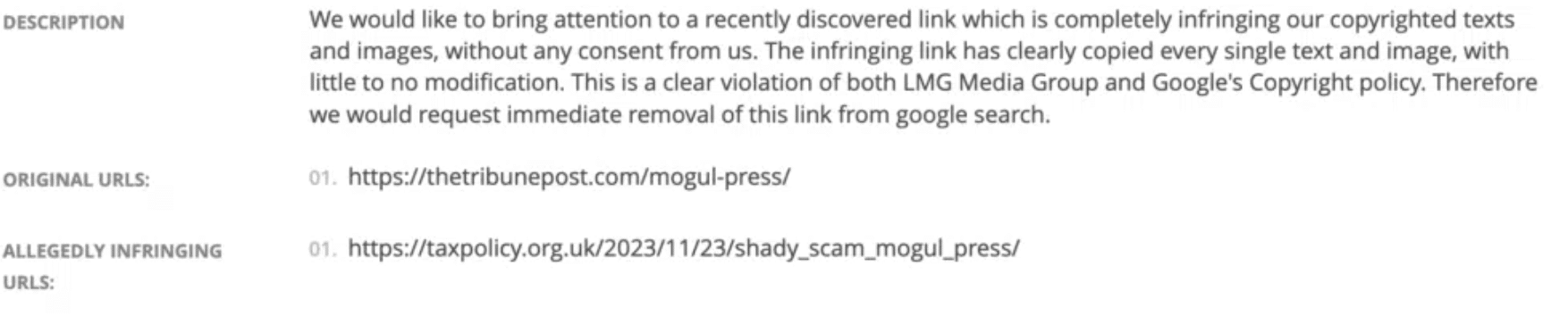
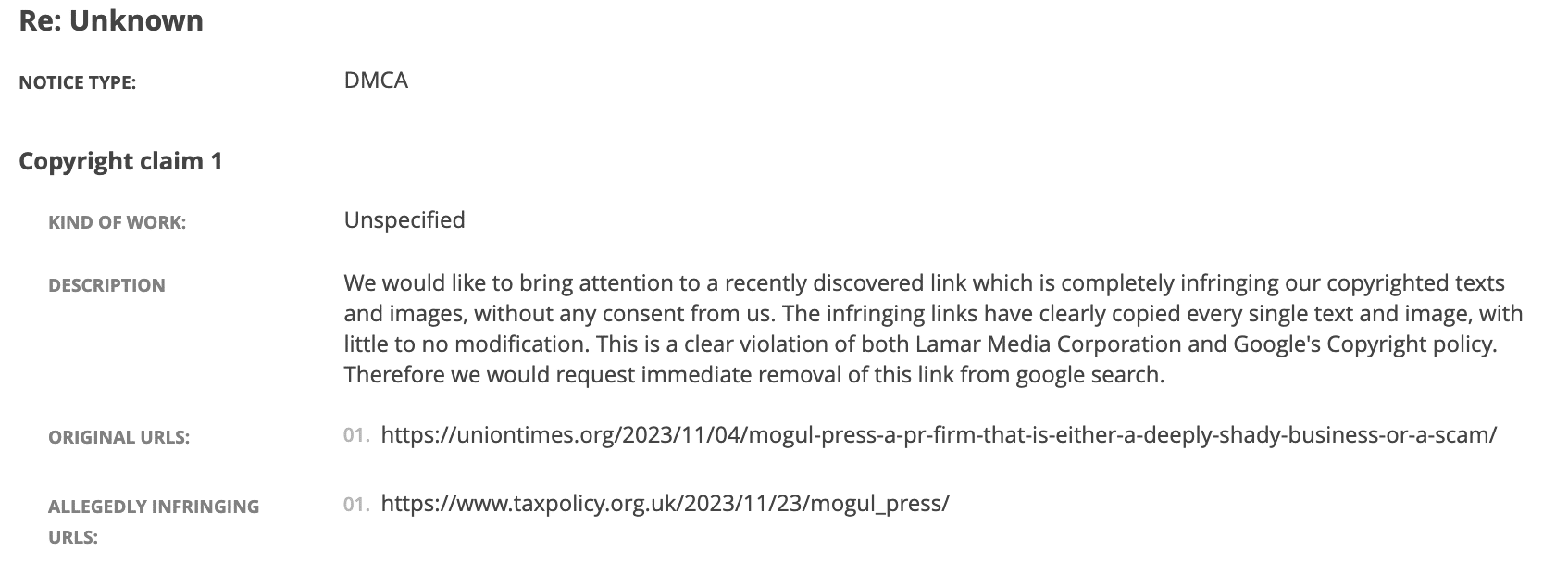
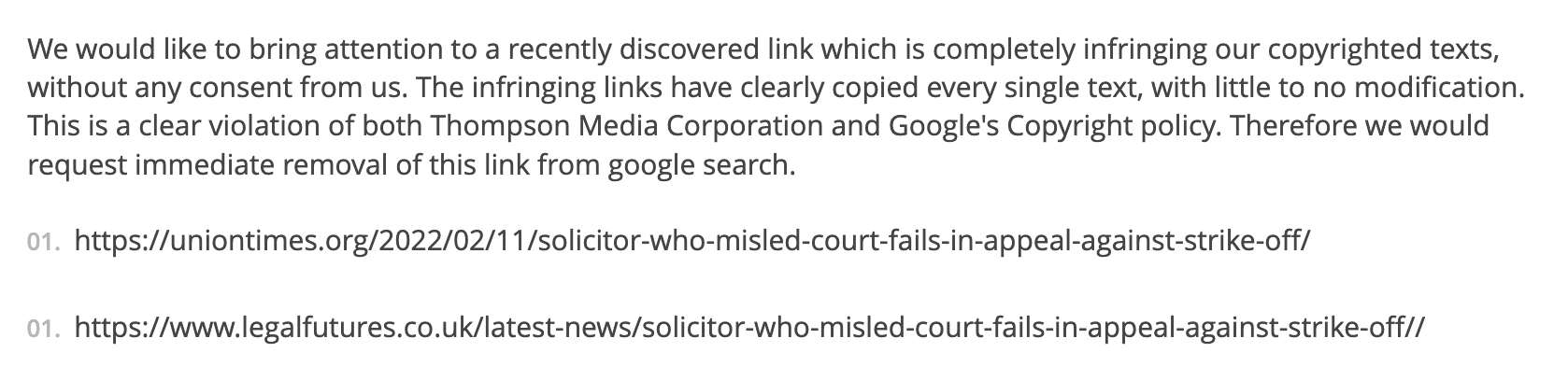
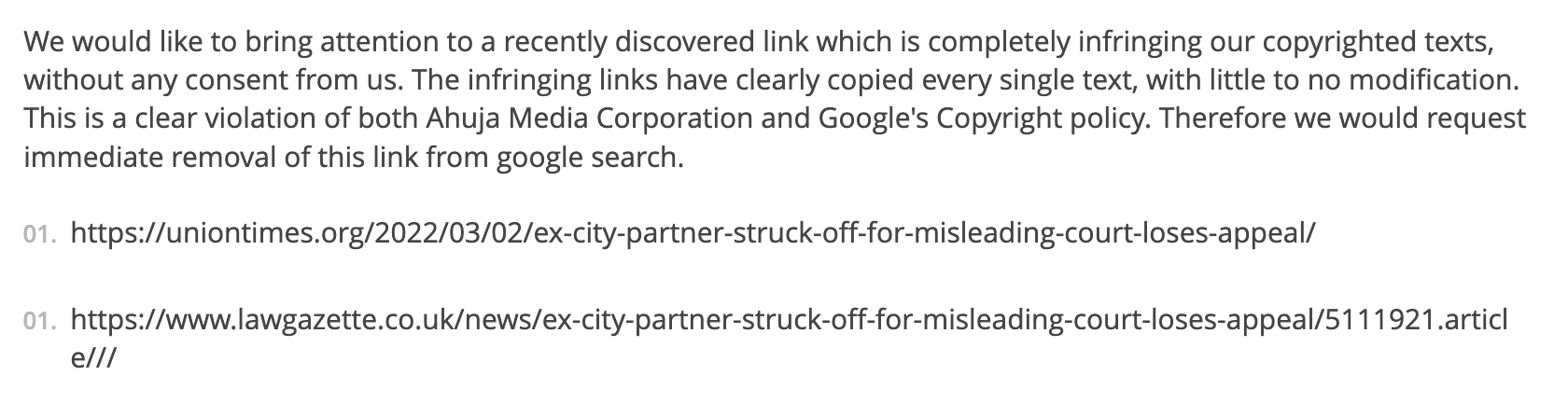


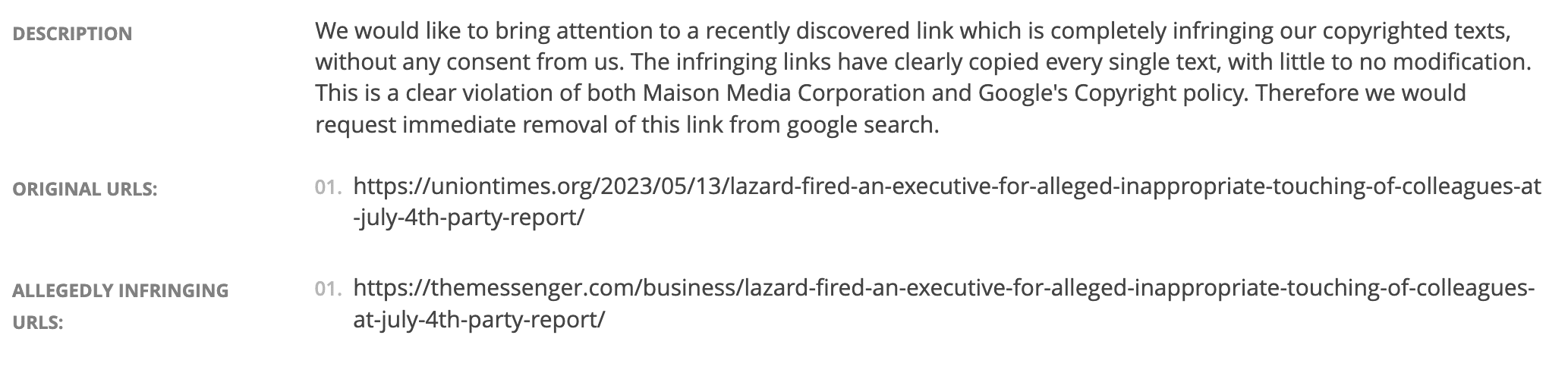
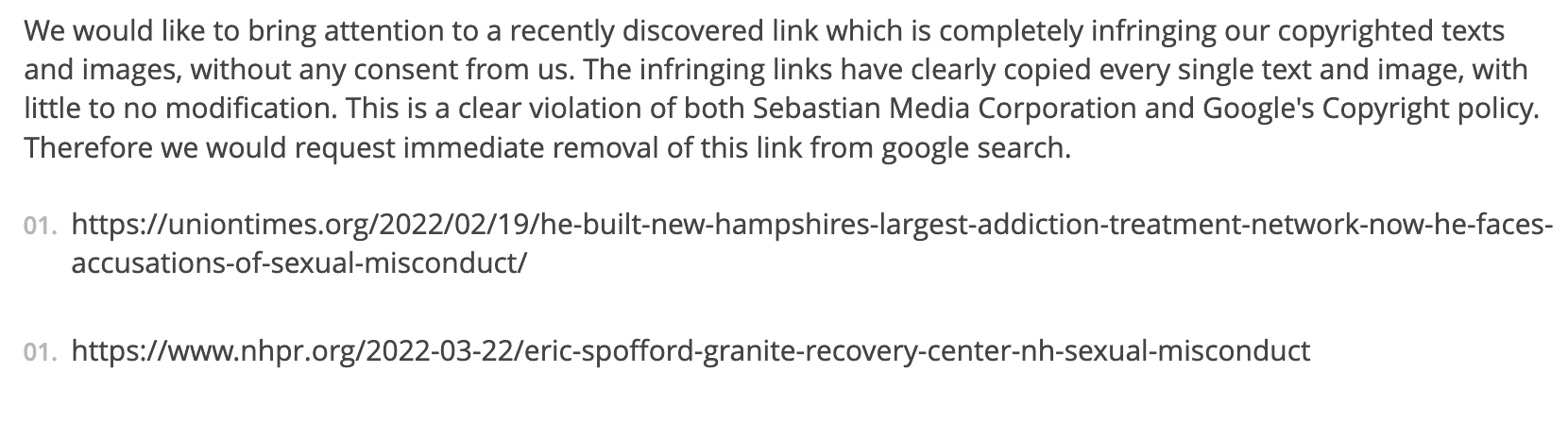
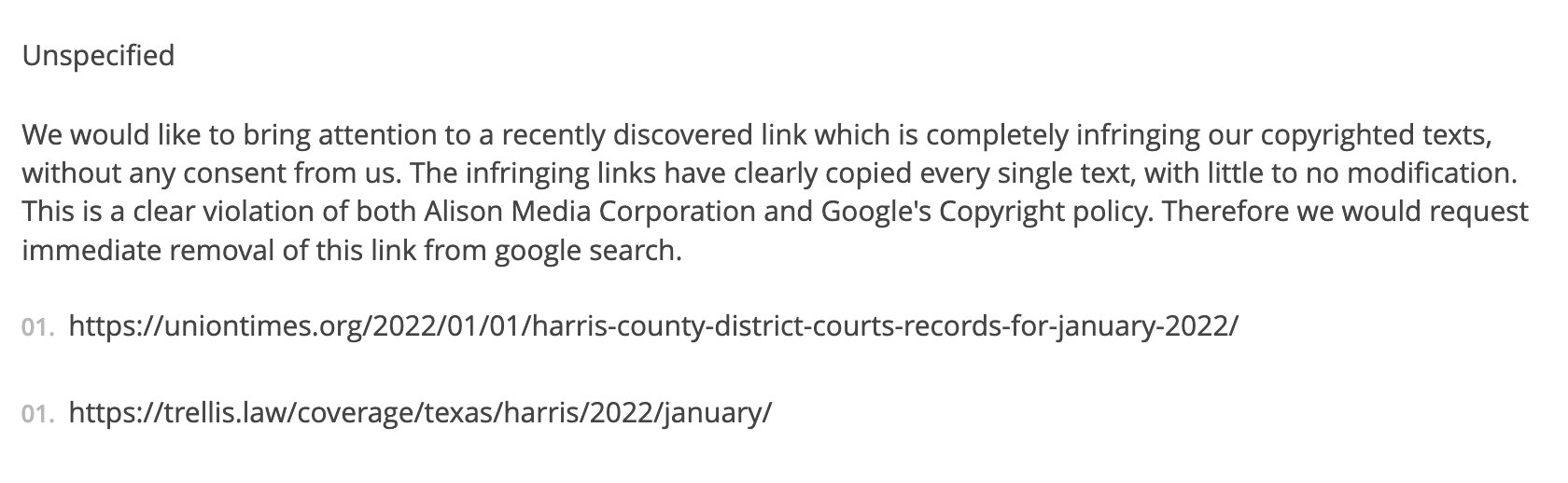
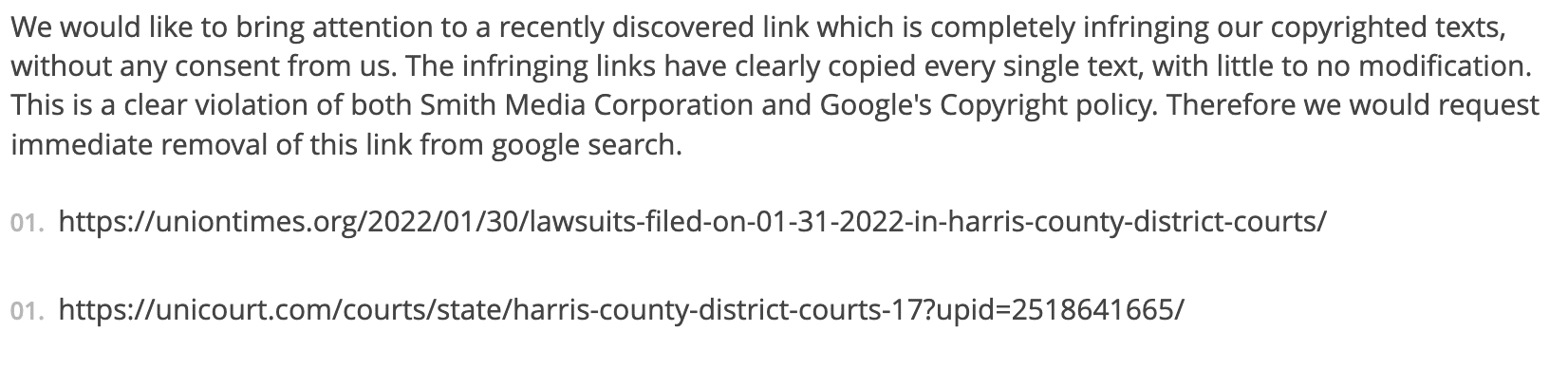
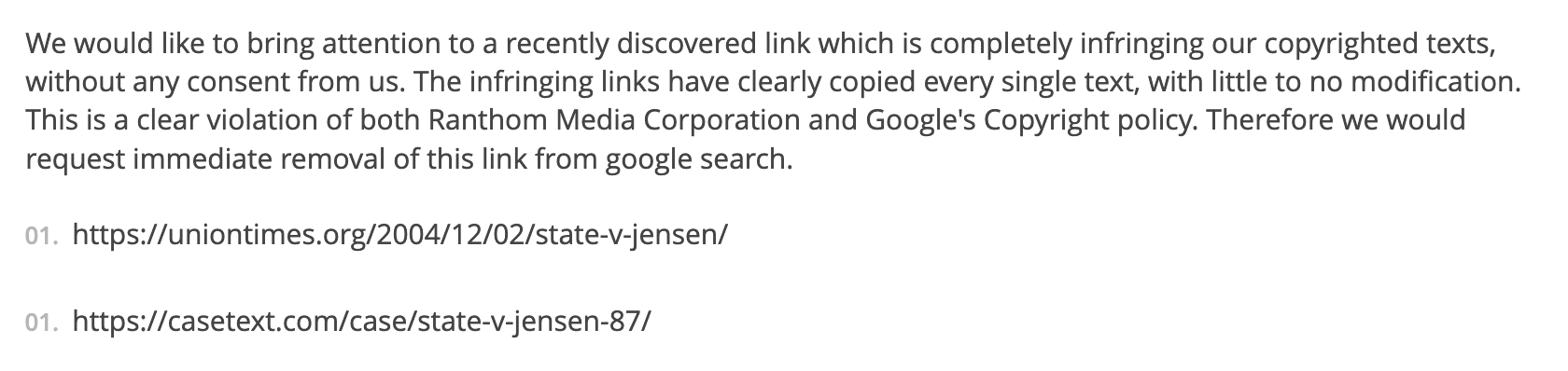
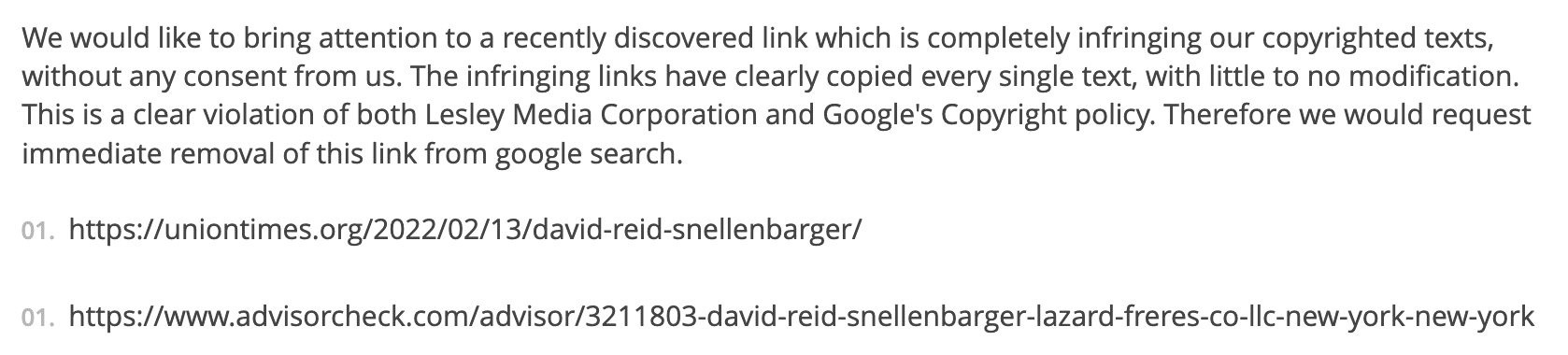



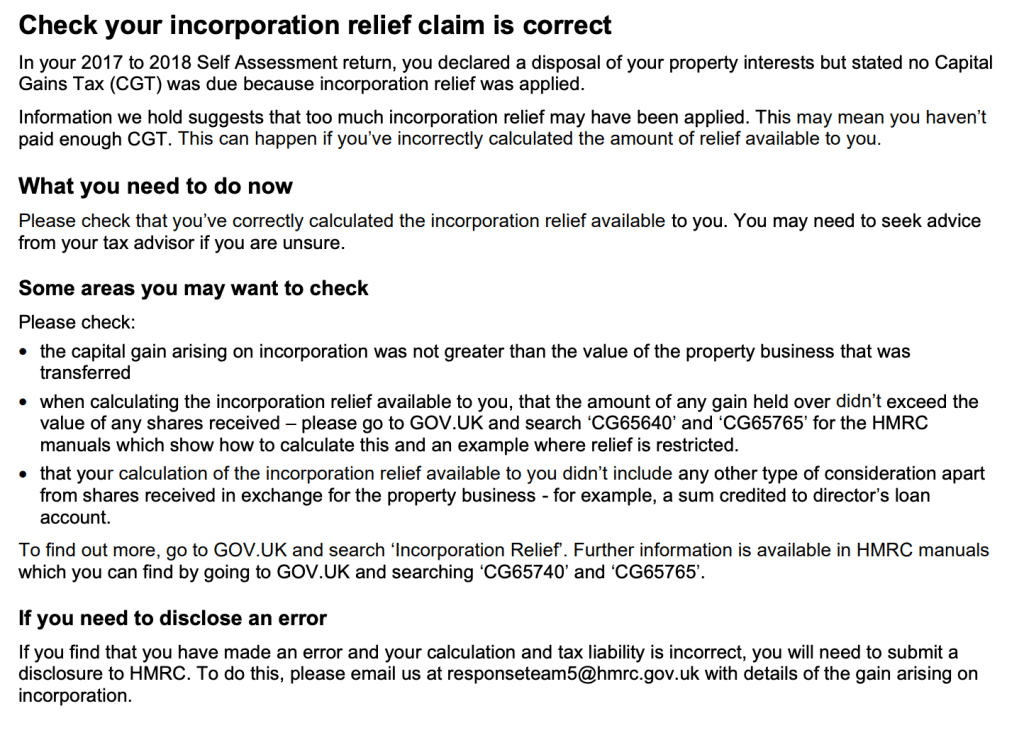
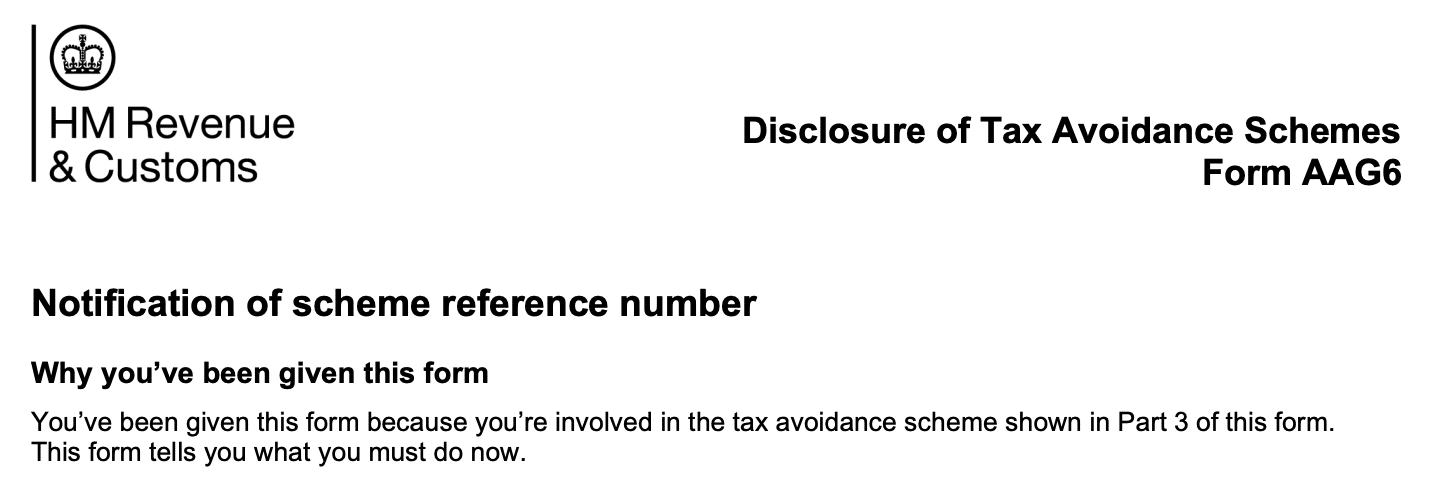
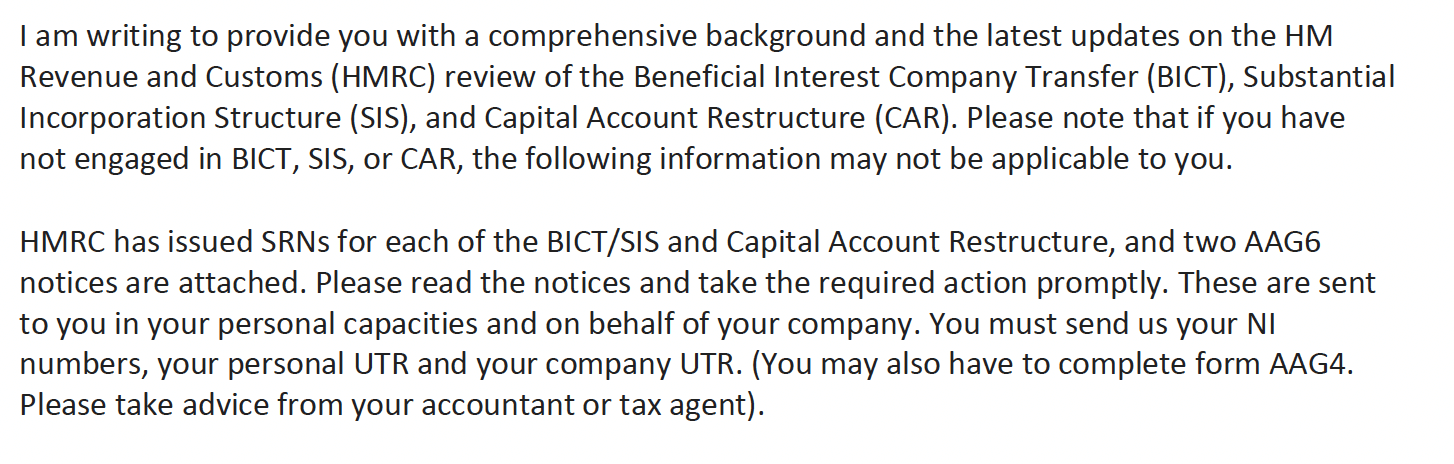
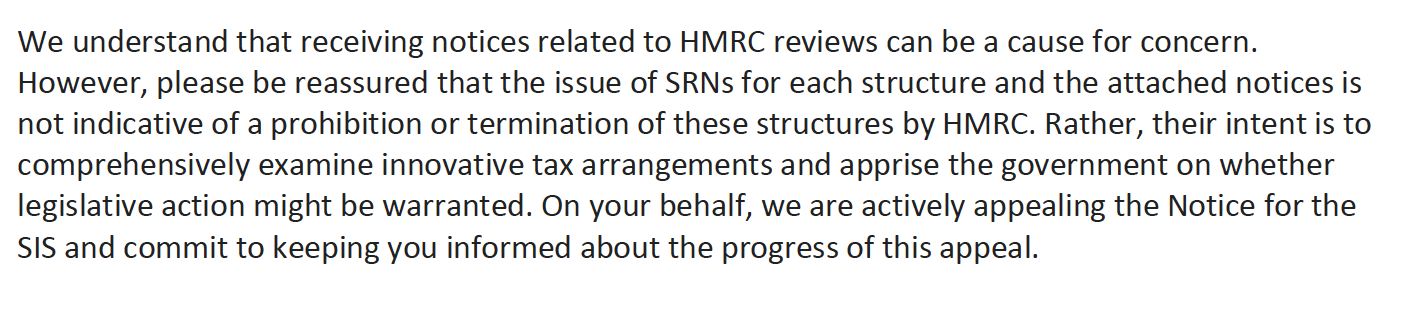
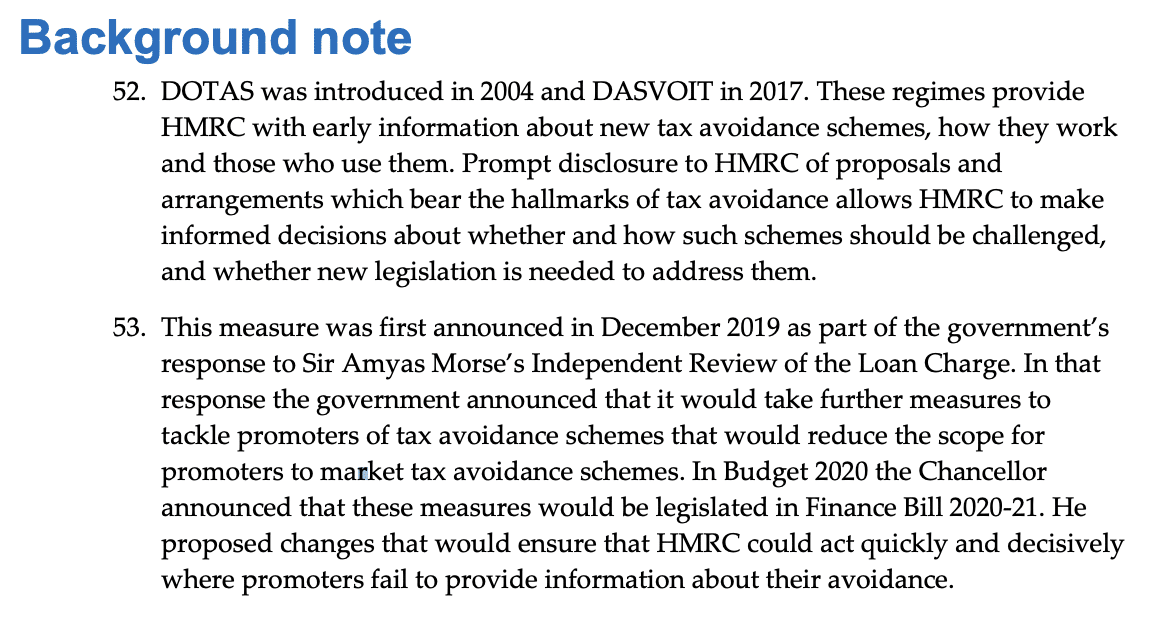
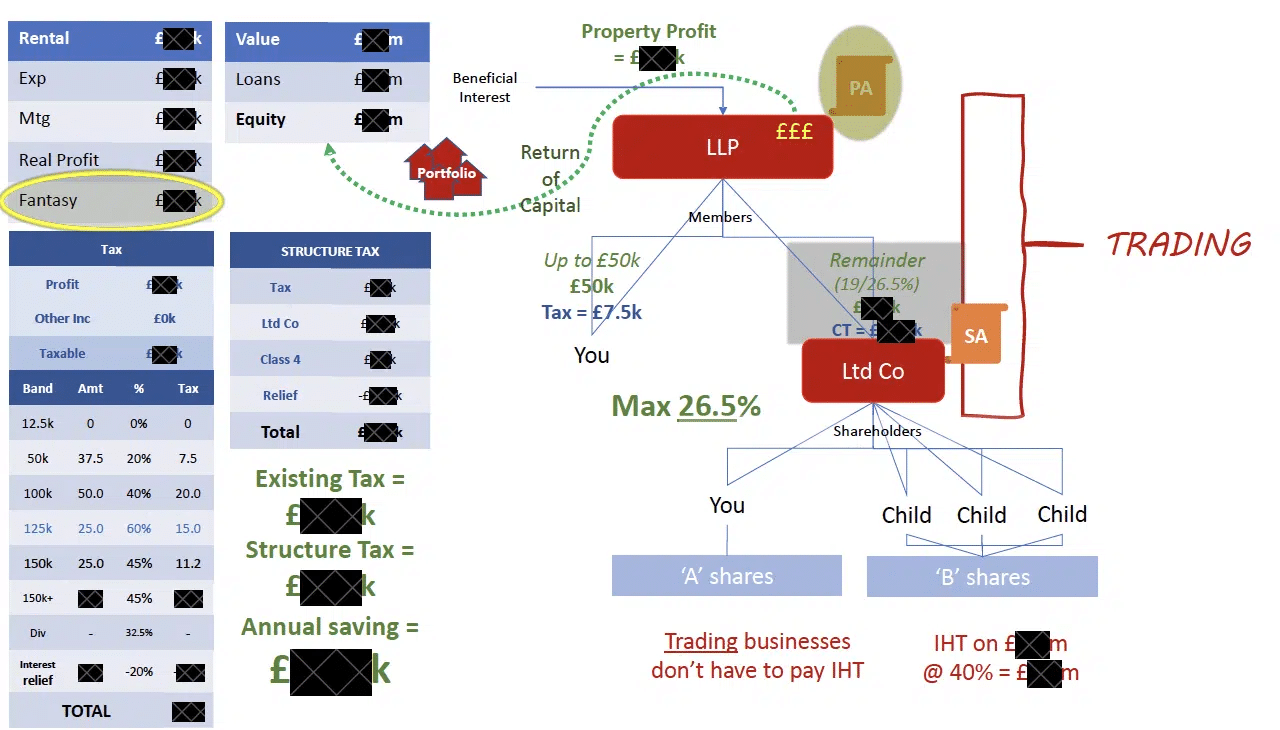
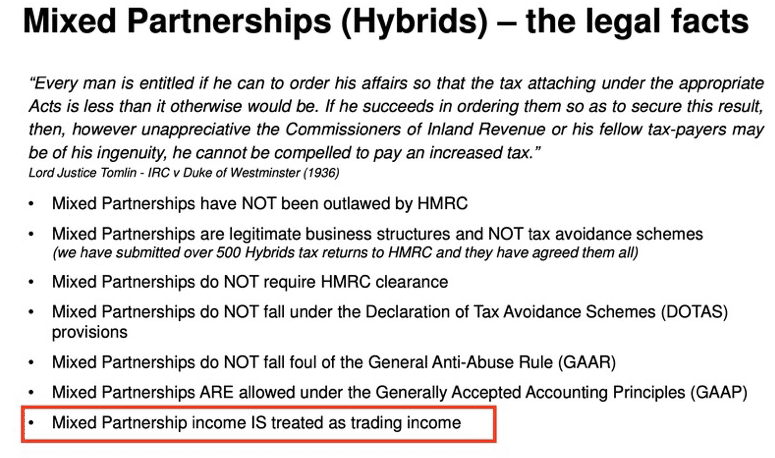
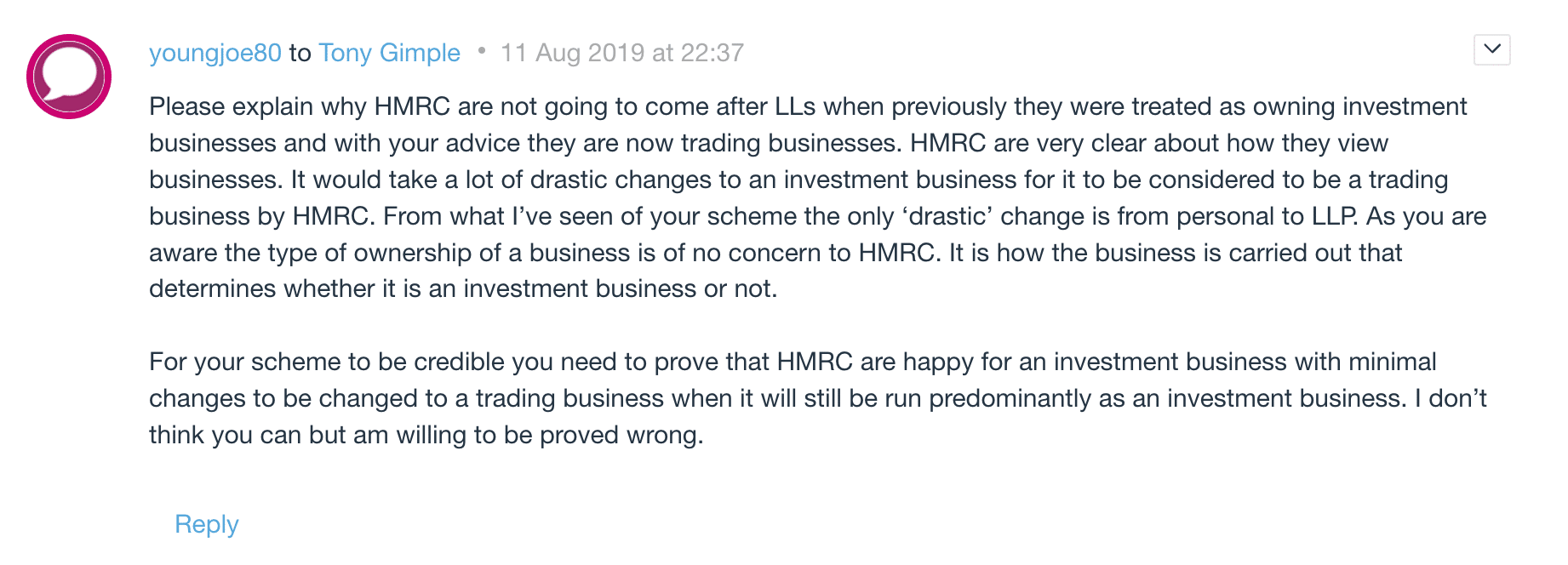
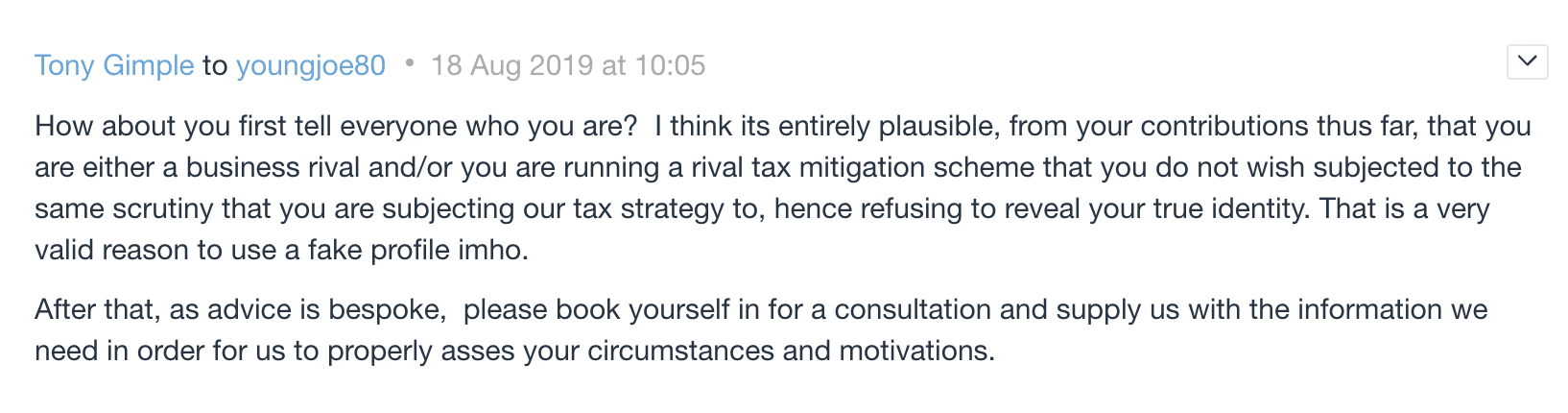



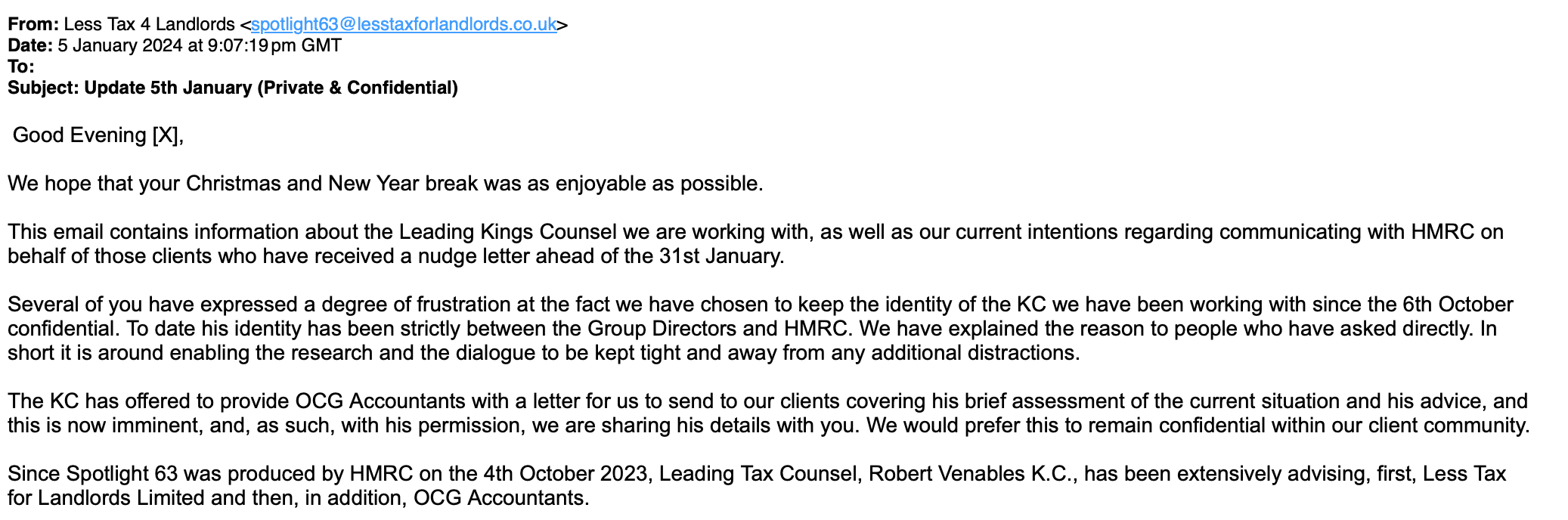

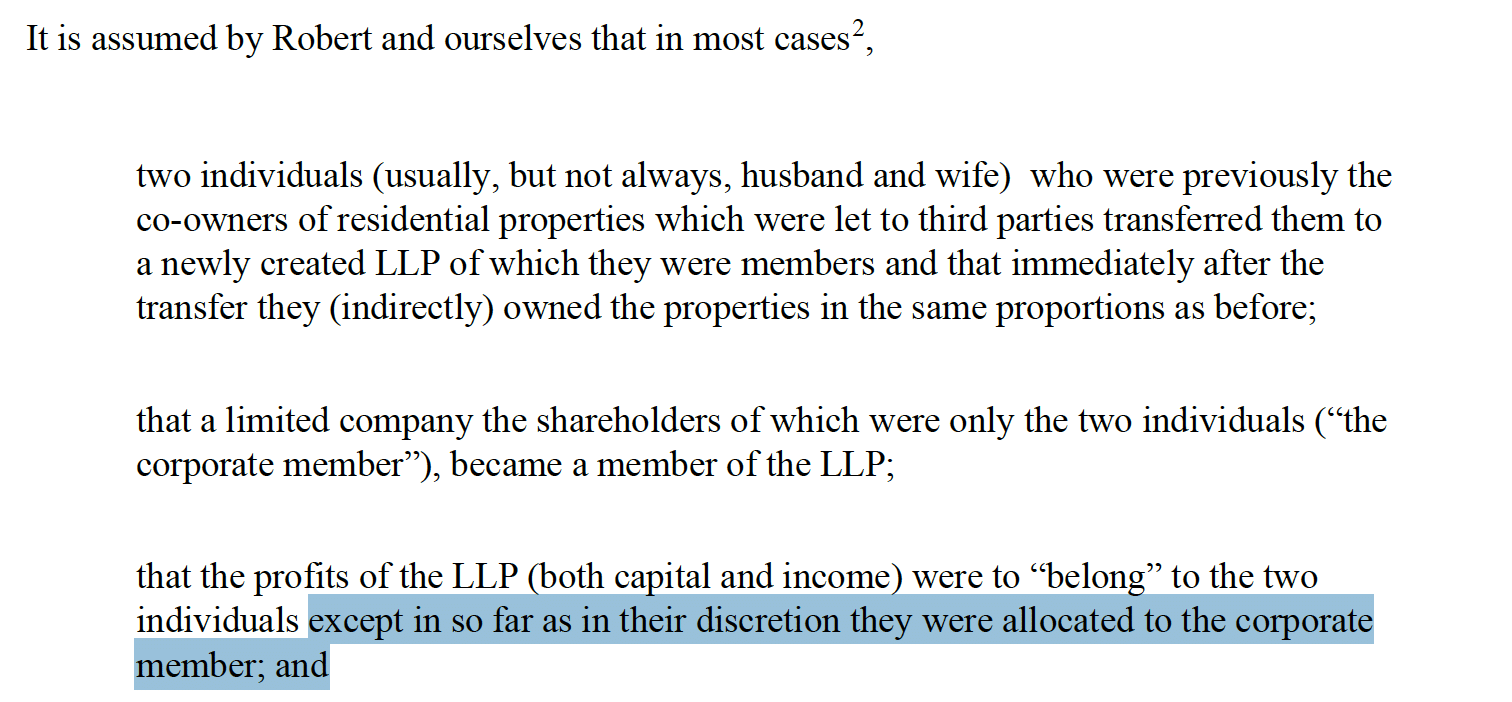
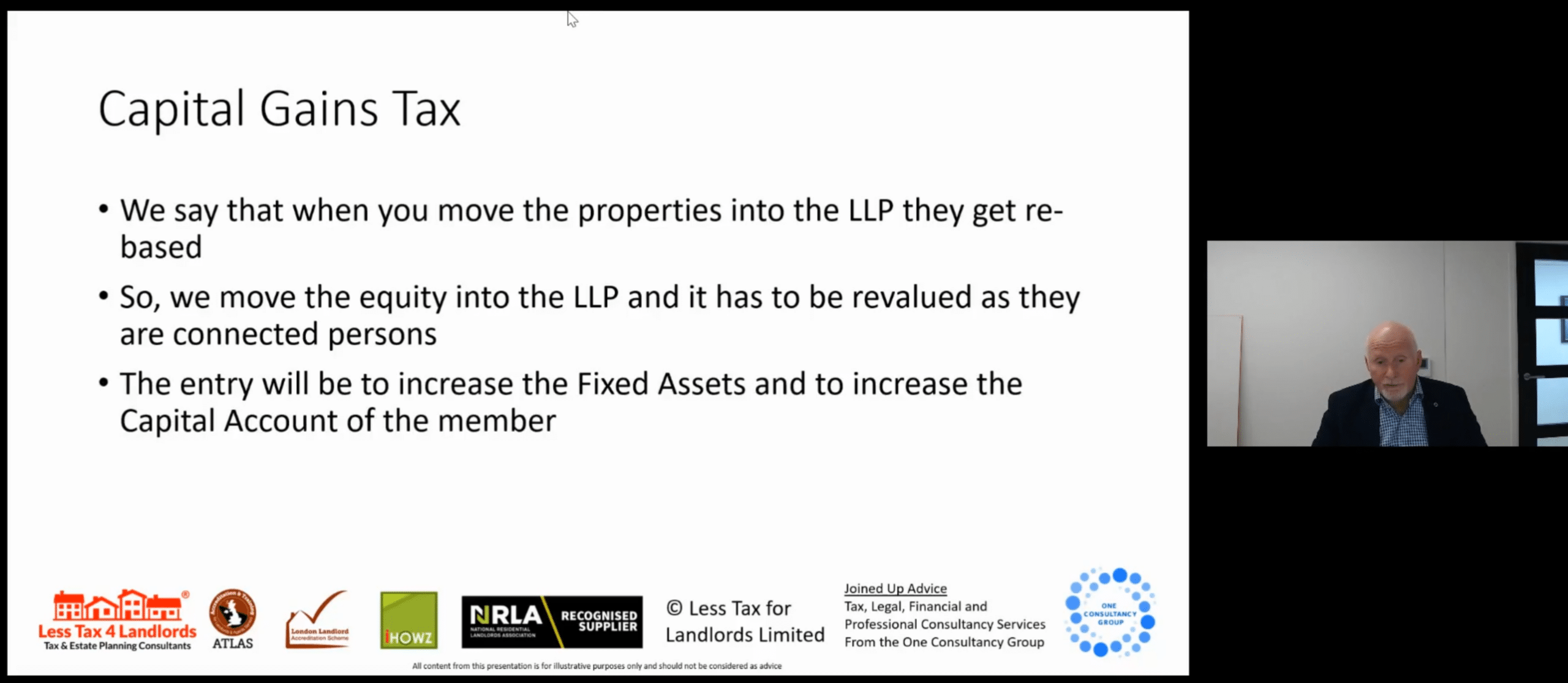
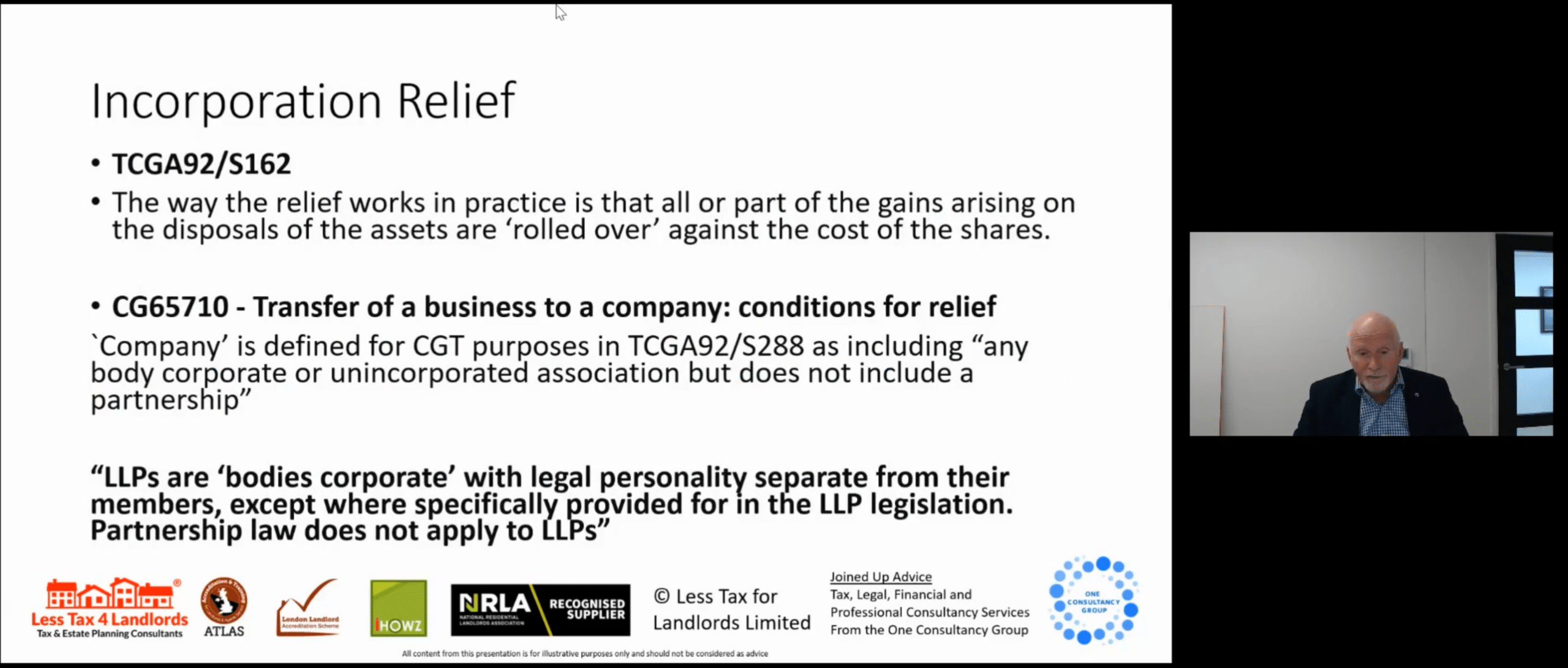
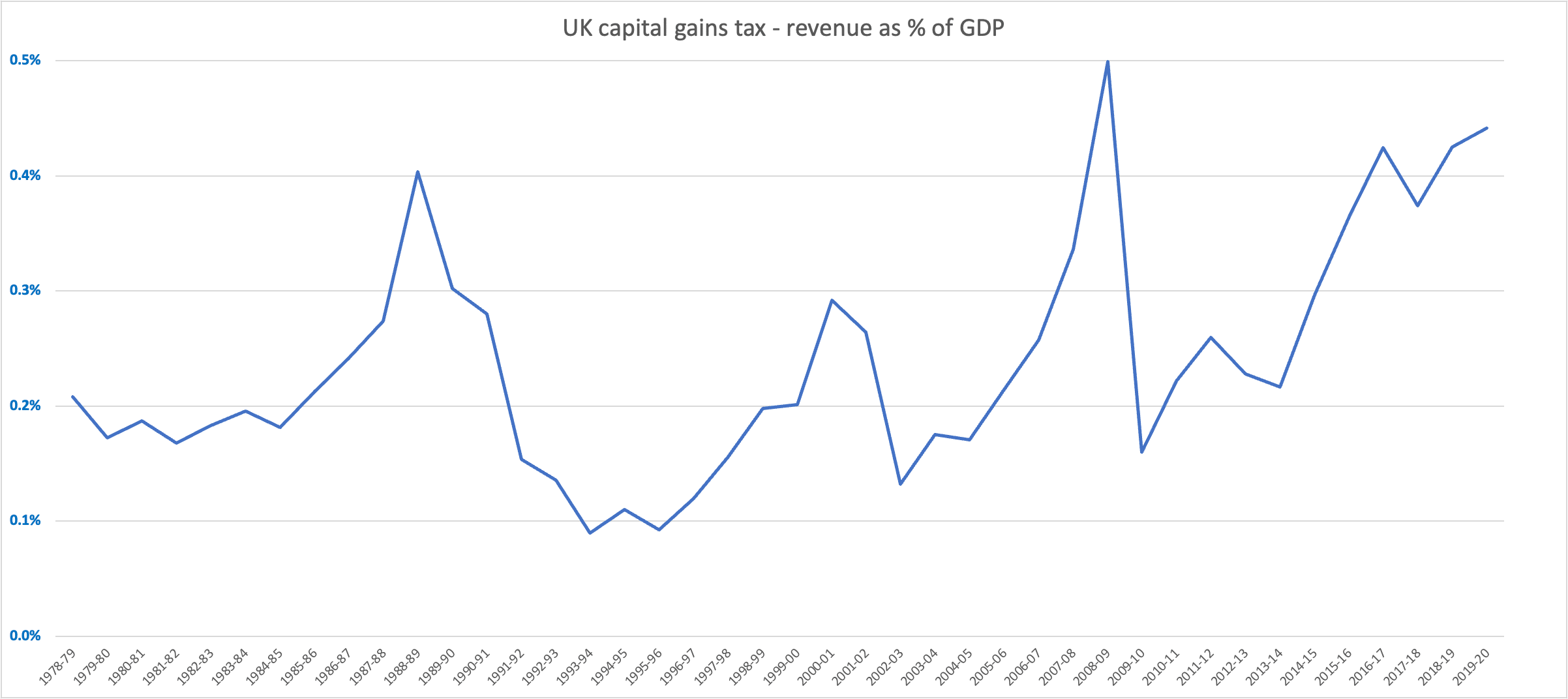
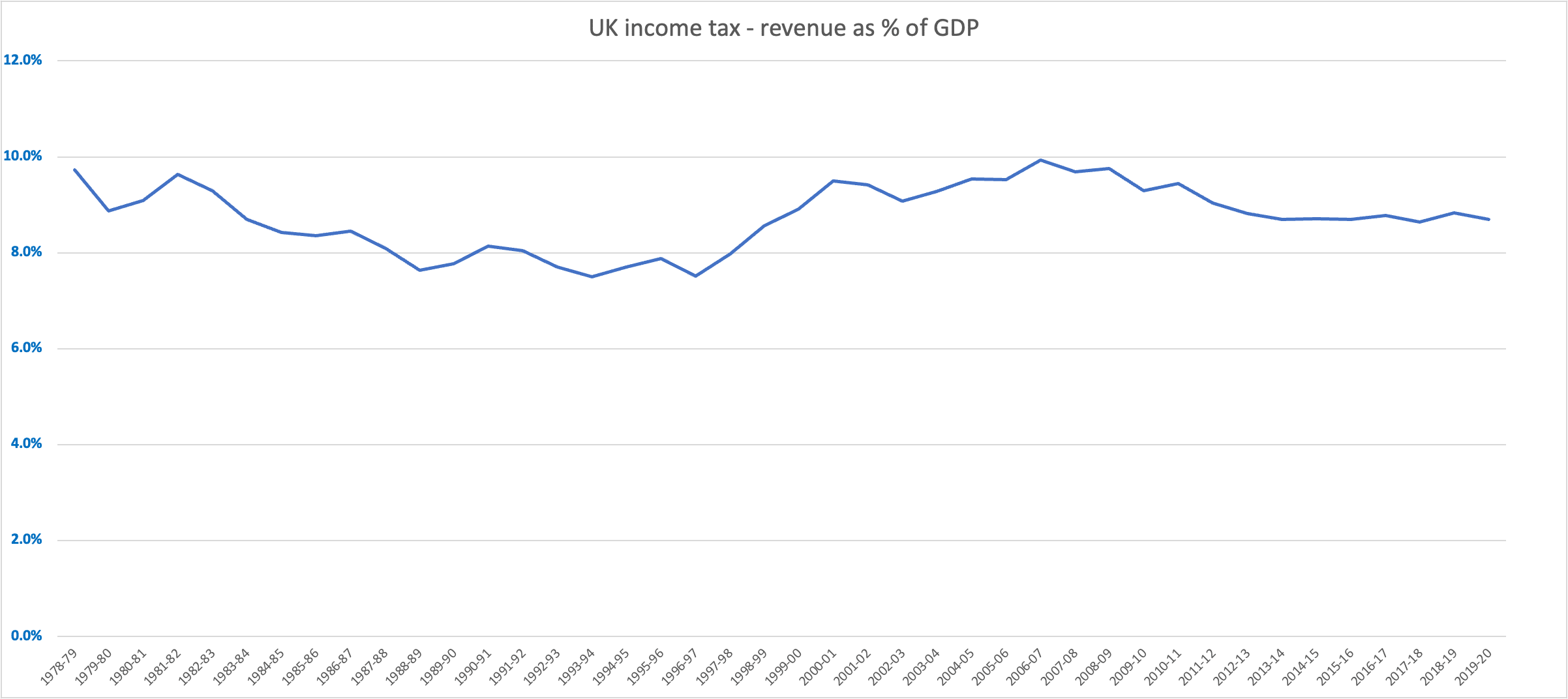
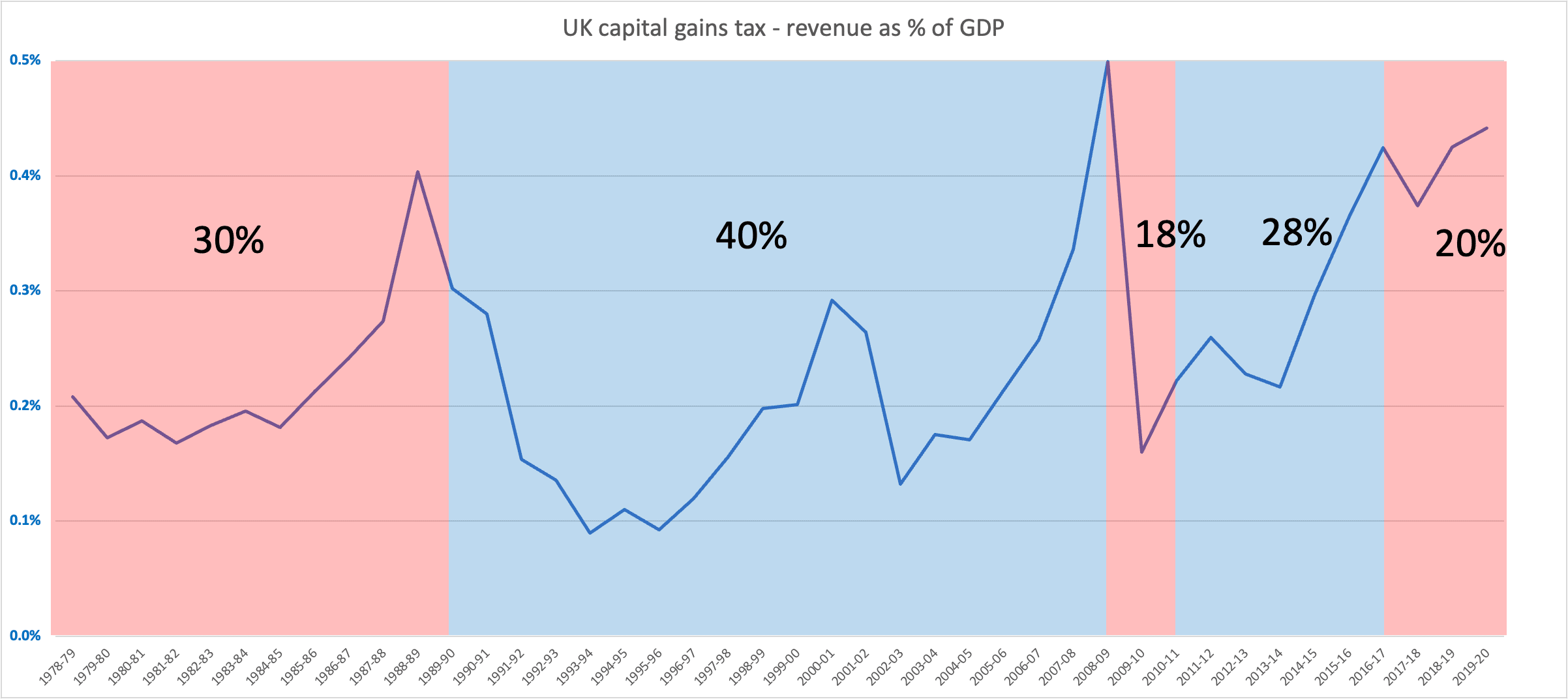
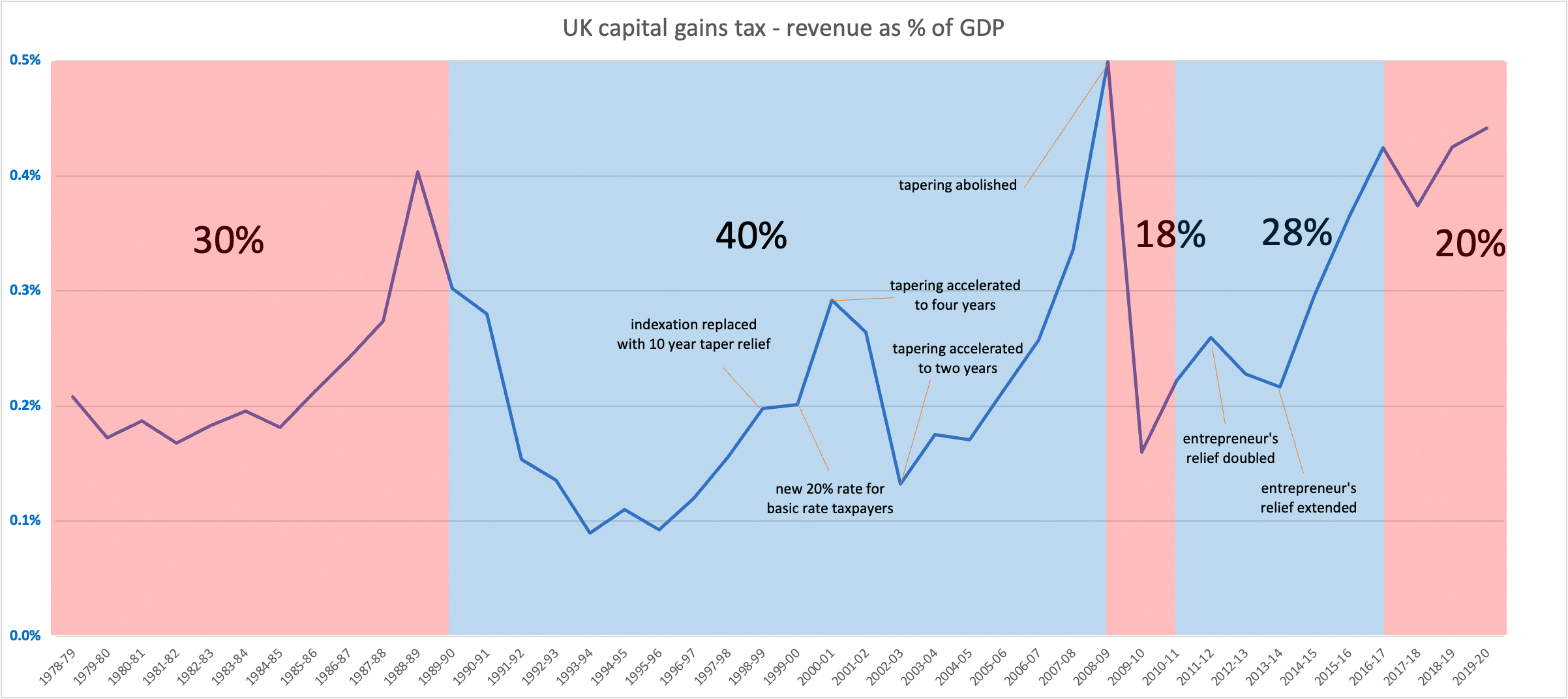
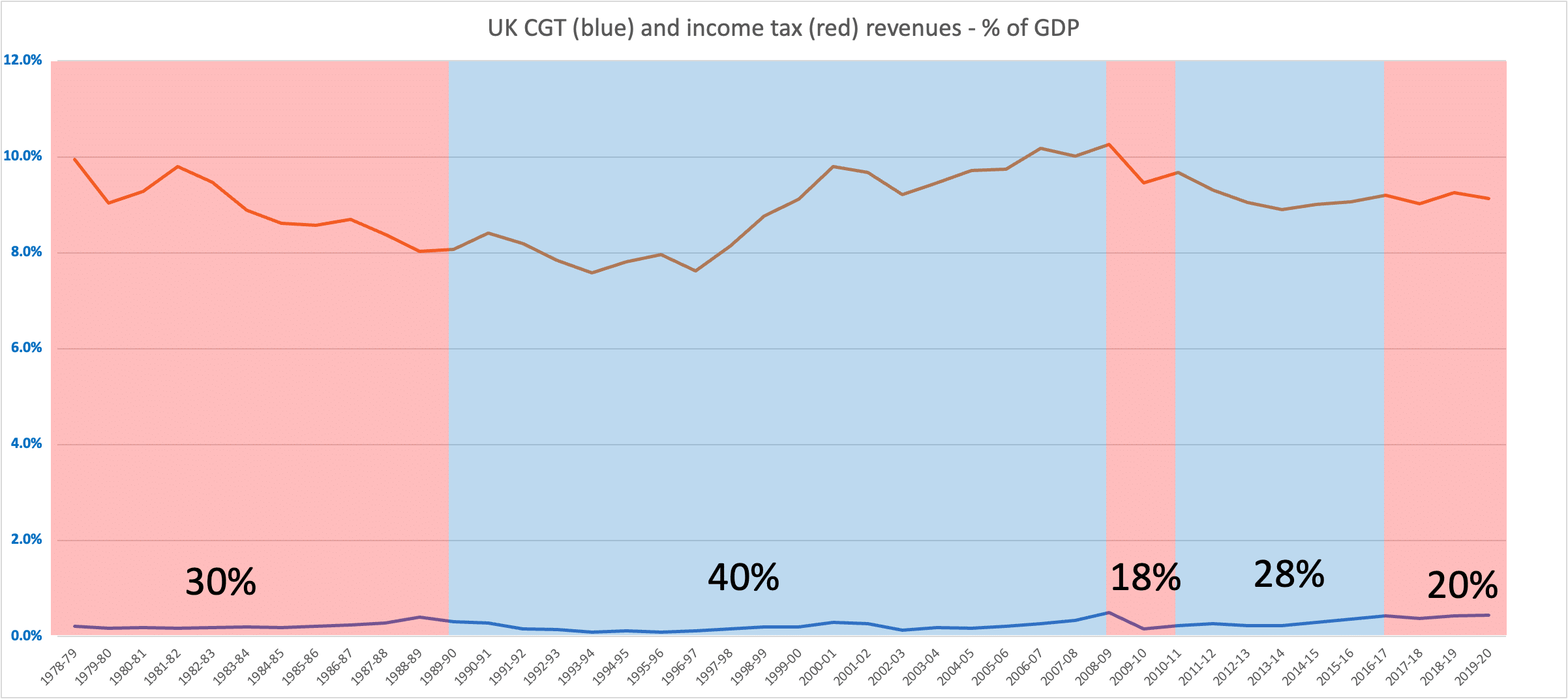

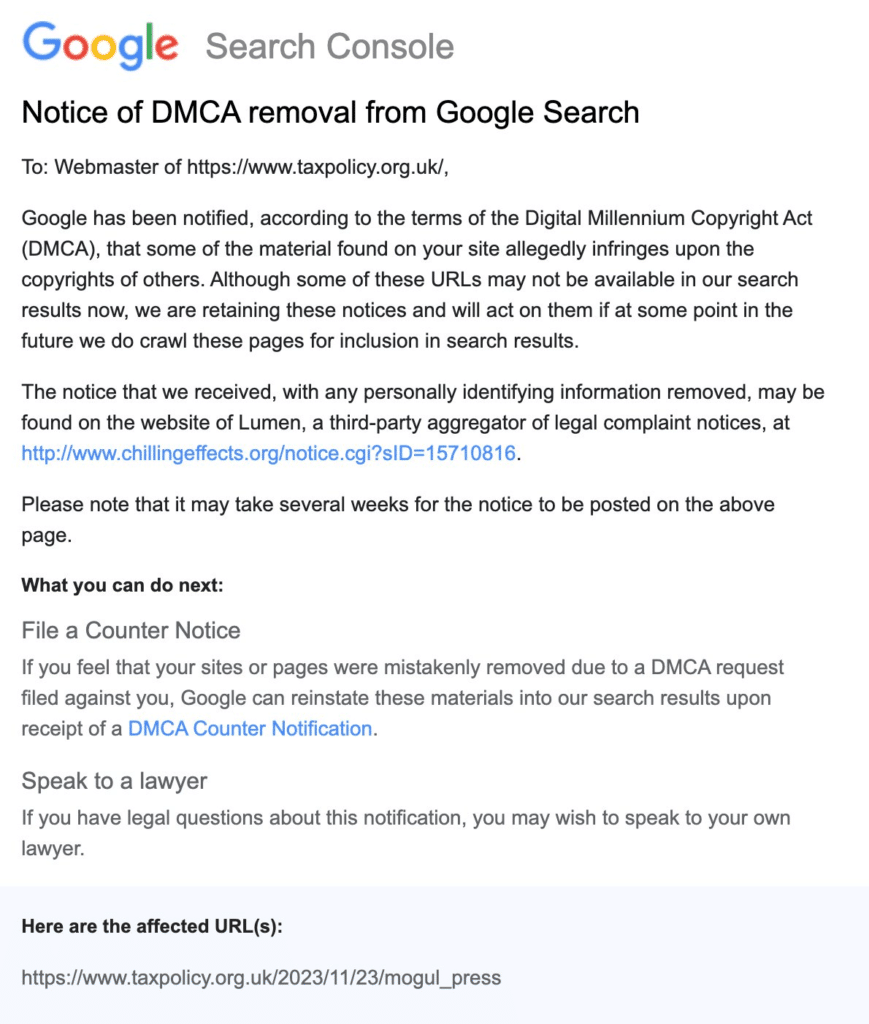
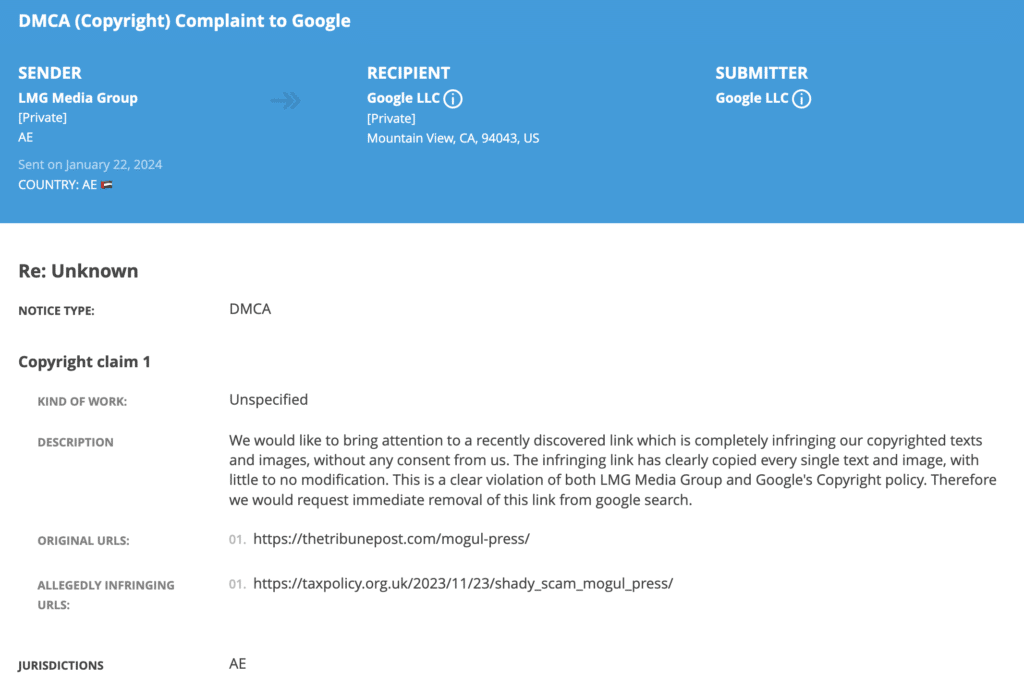



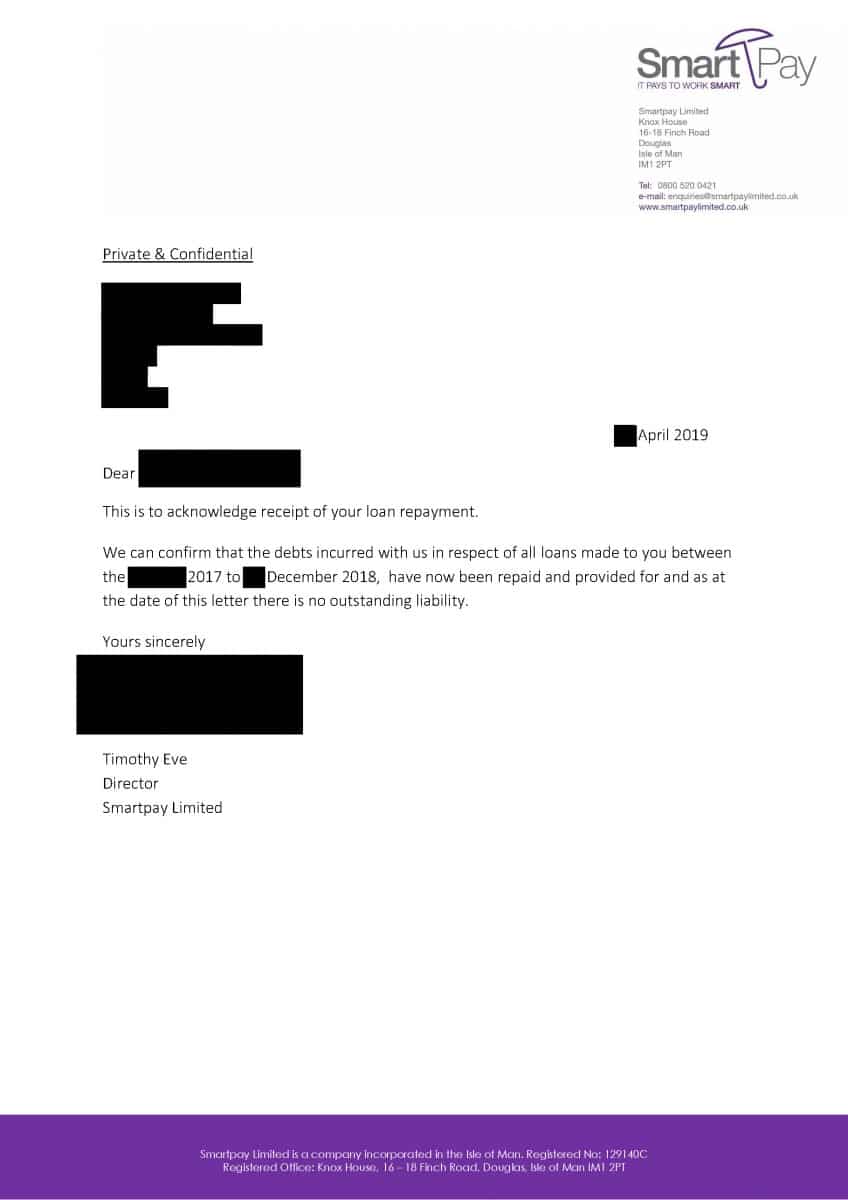


![106AOffence of fraudulent evasion of income tax
(1)A person commits an offence if that person is knowingly concerned in the fraudulent evasion of income tax by that or any other person.
(2)A person guilty of an offence under this section is liable—
(a)on summary conviction, to imprisonment for a term not exceeding [F212 months] [F2the general limit in a magistrates’ court] or a fine not exceeding the statutory maximum, or both, or
(b)on conviction on indictment, to imprisonment for a term not exceeding 7 years or a fine, or both.](https://taxpolicy.org.uk/wp-content/uploads/2024/01/Screenshot-2024-01-18-at-11.07.20-1024x202.png)

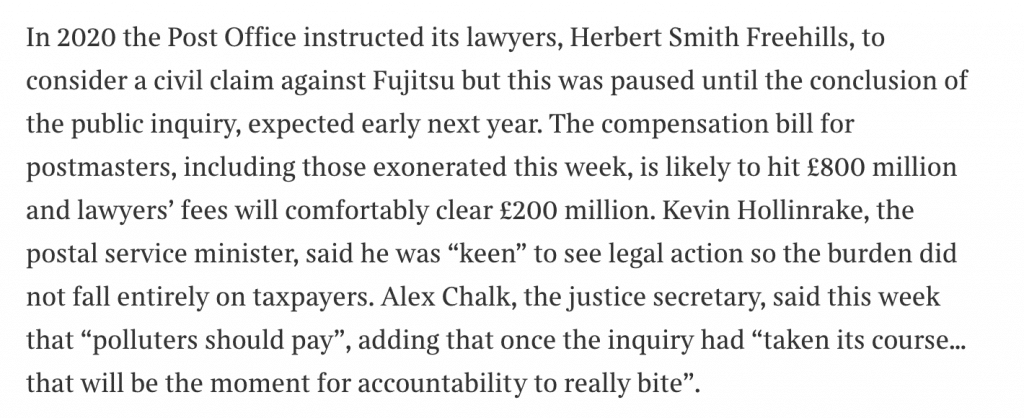





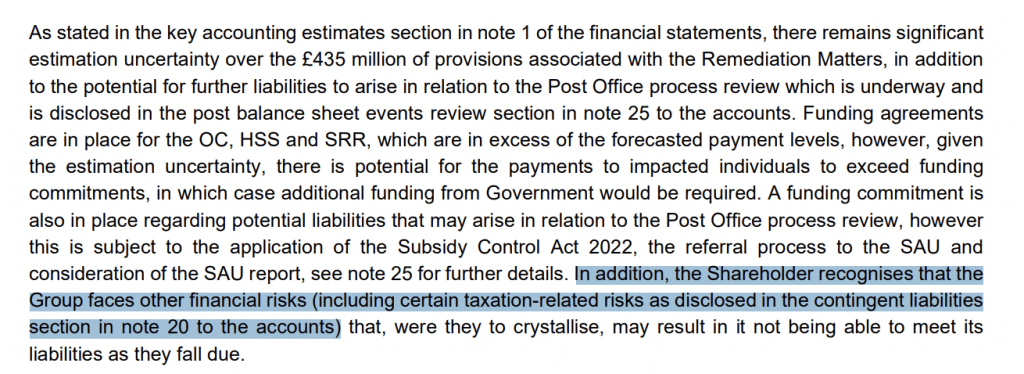

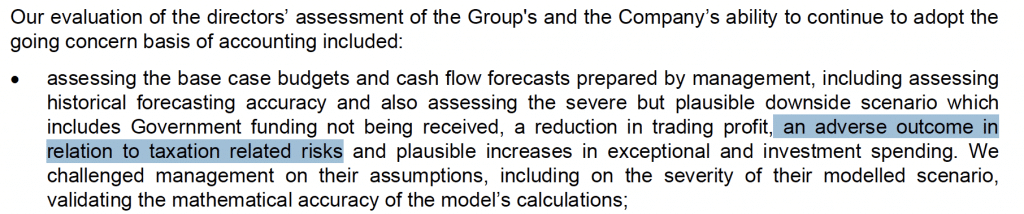












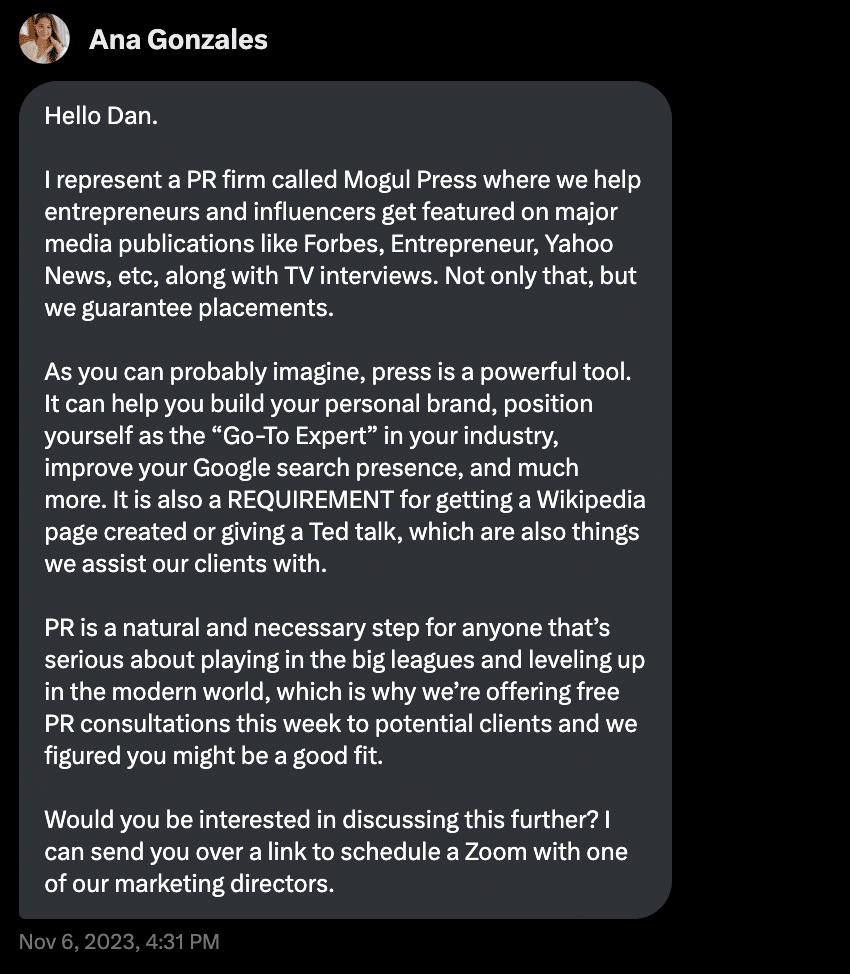
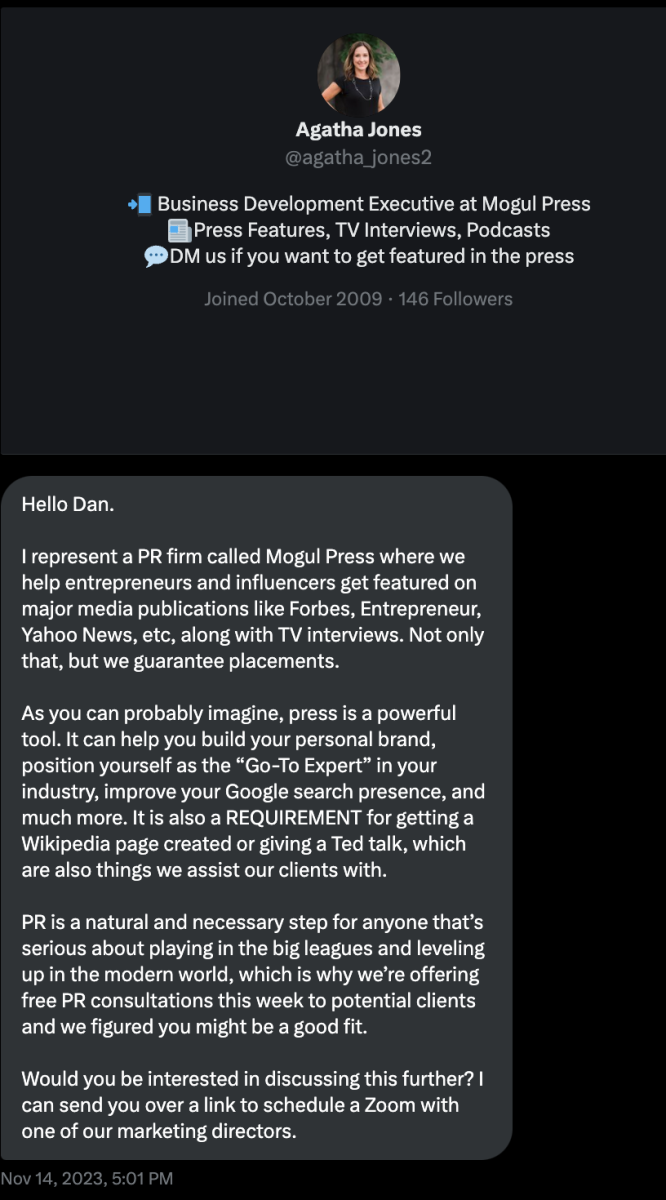



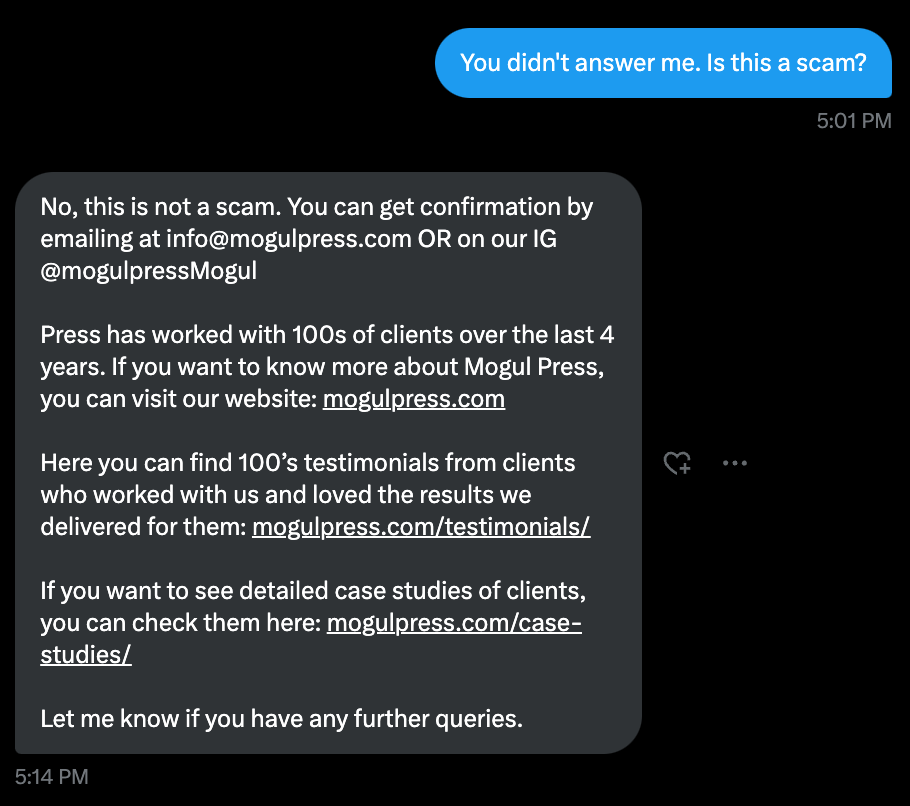
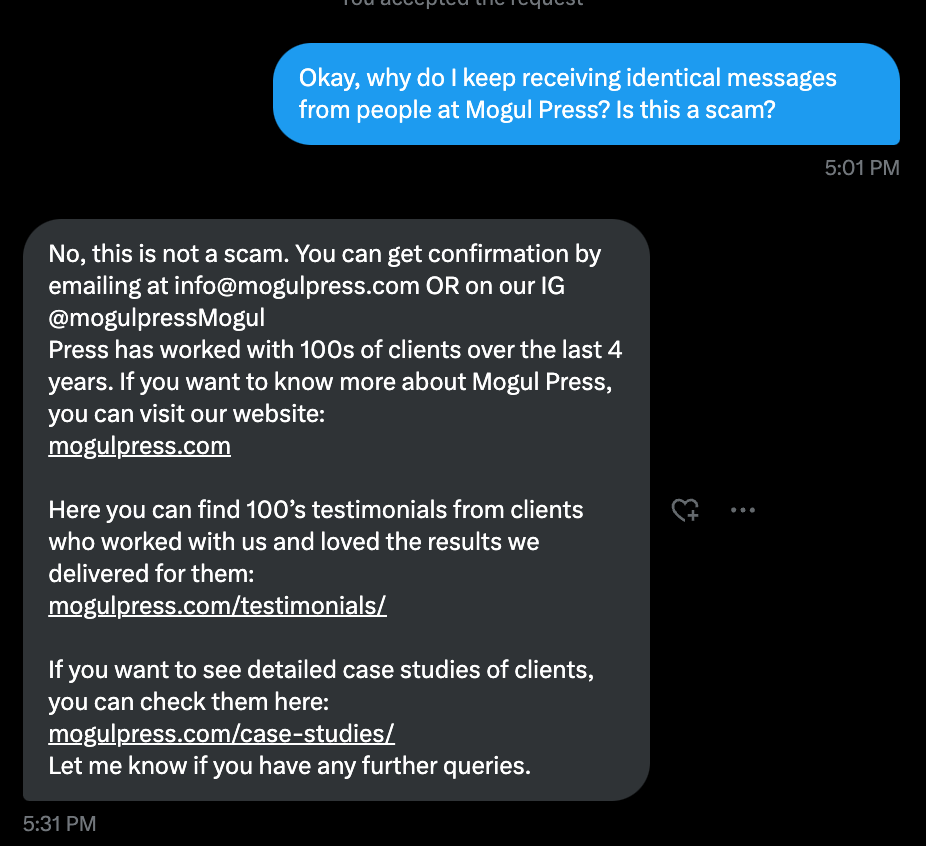
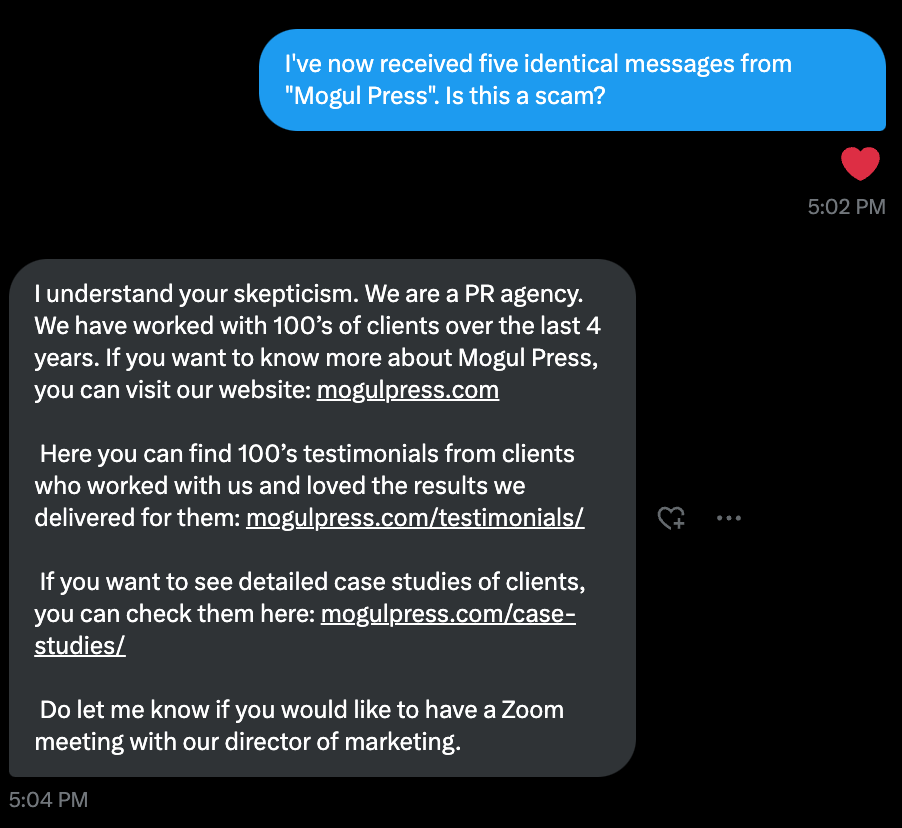








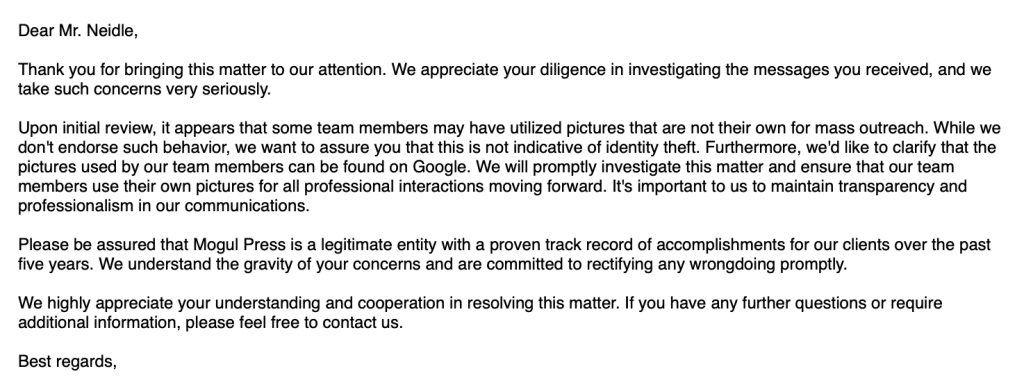


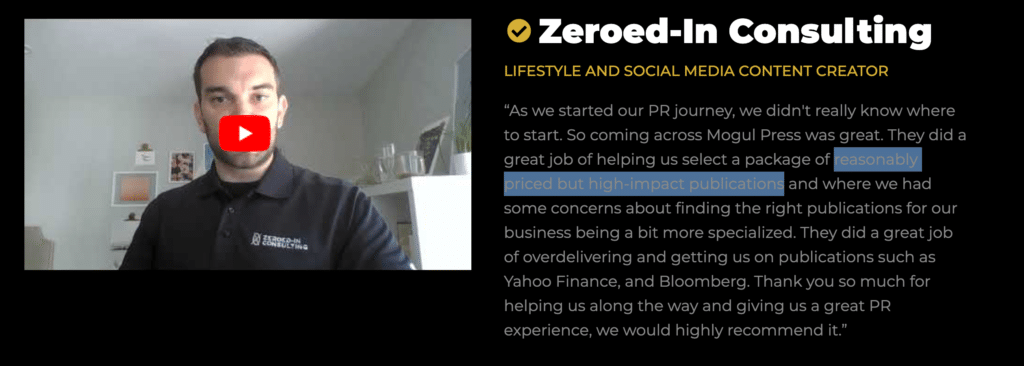

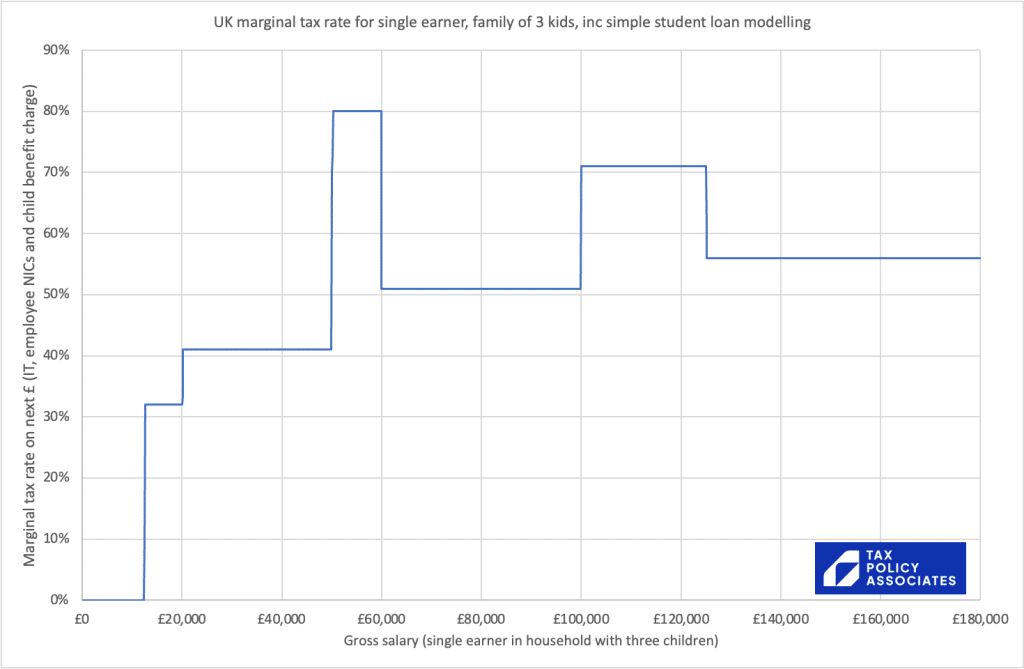
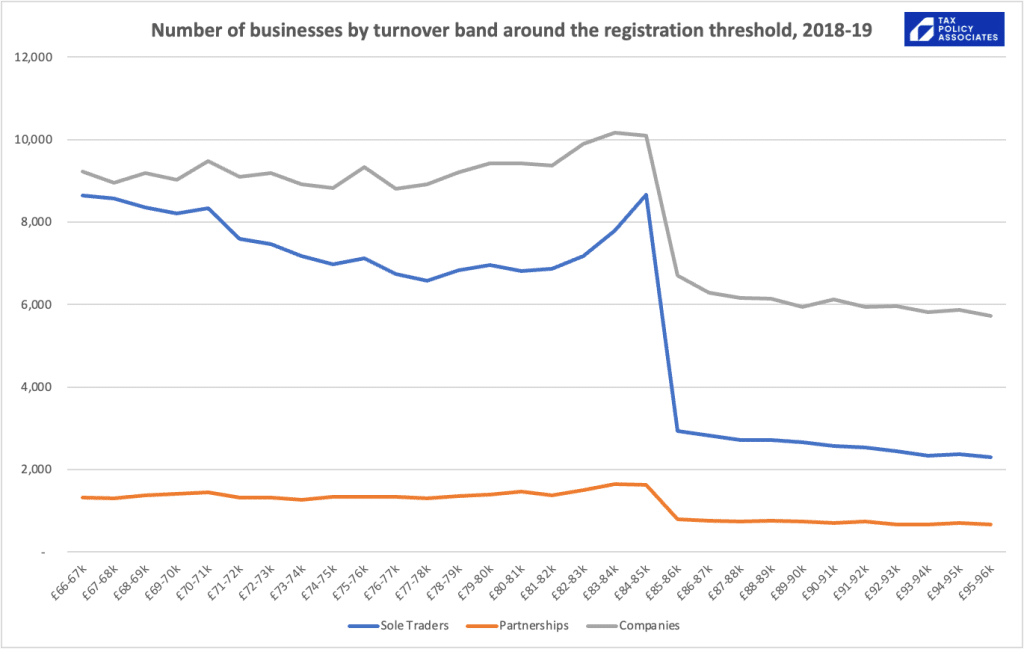
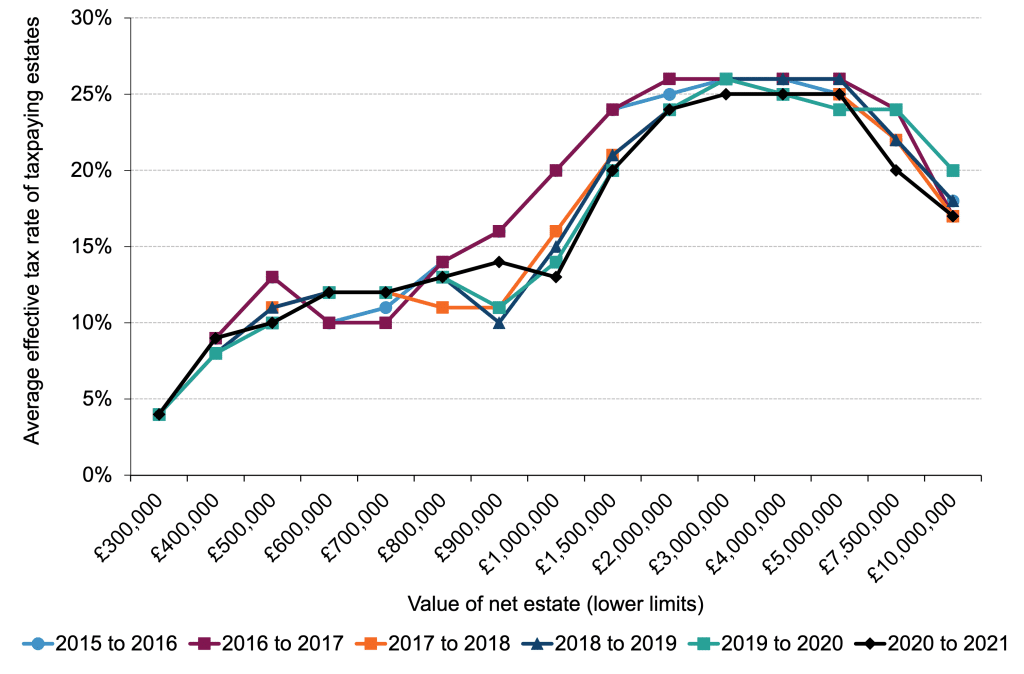

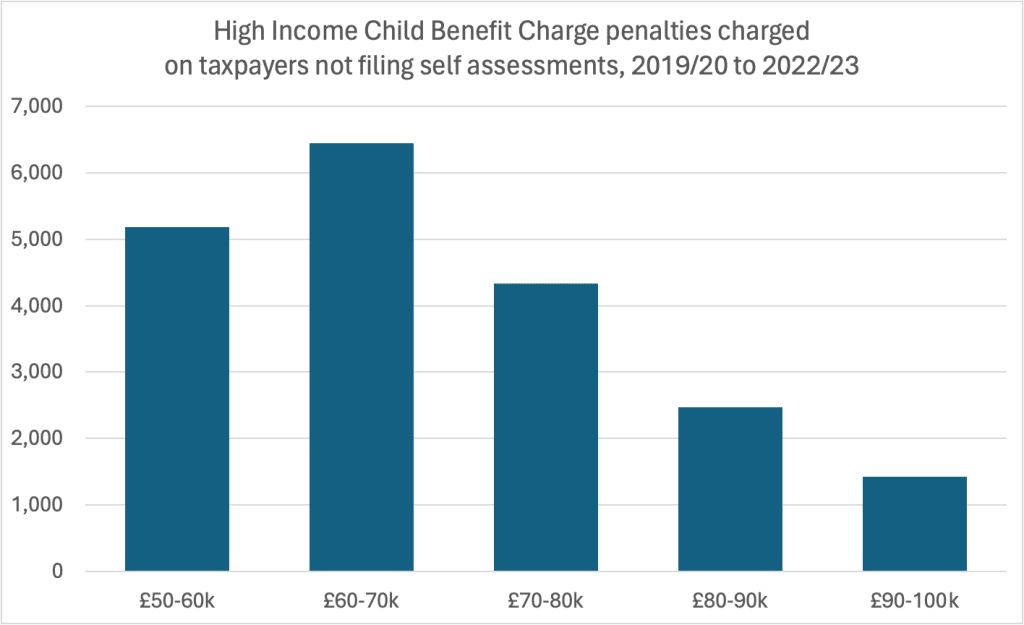
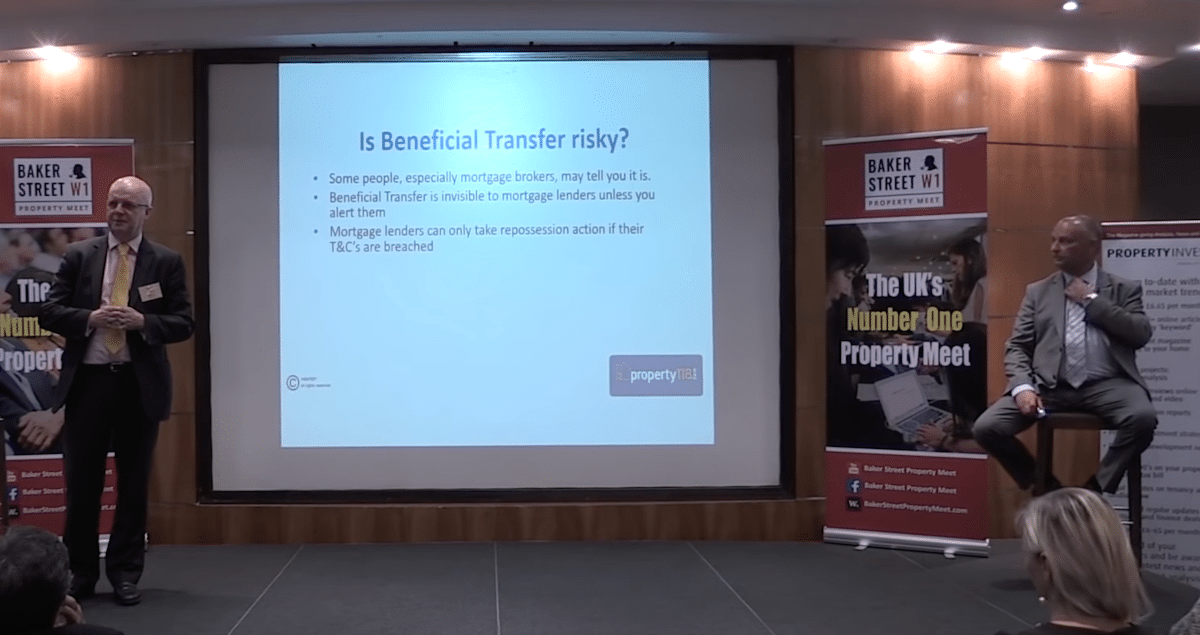
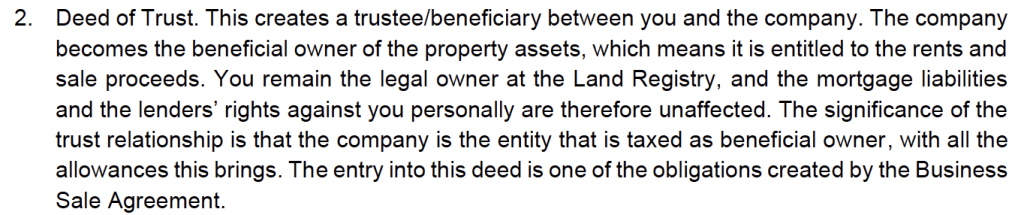







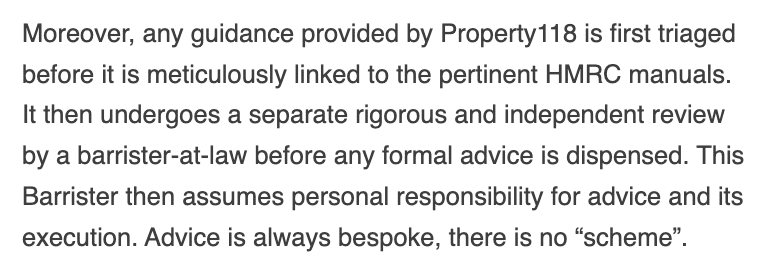

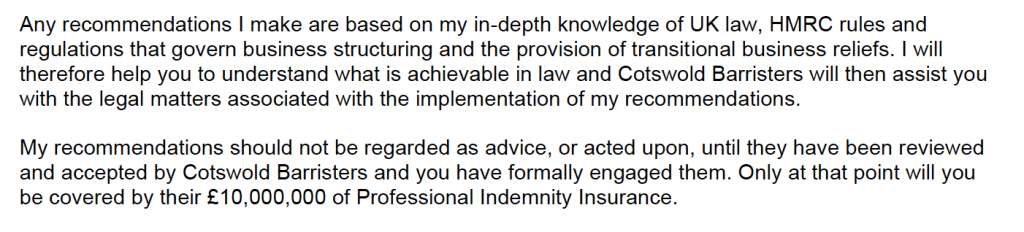

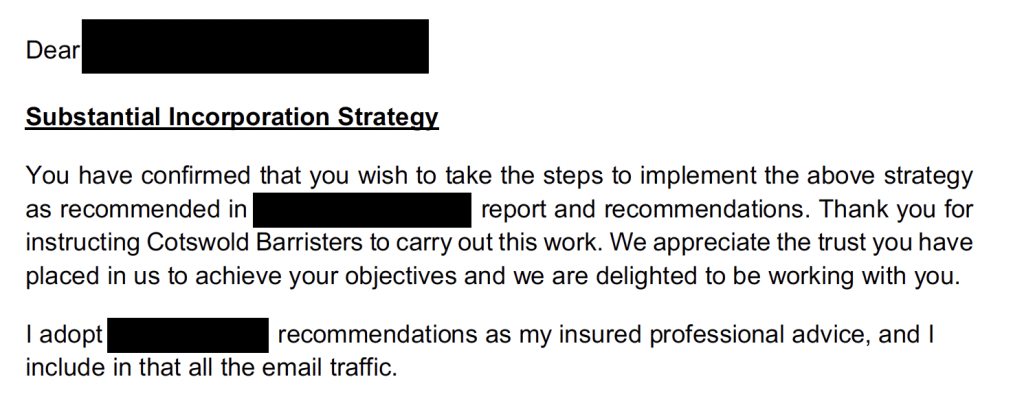


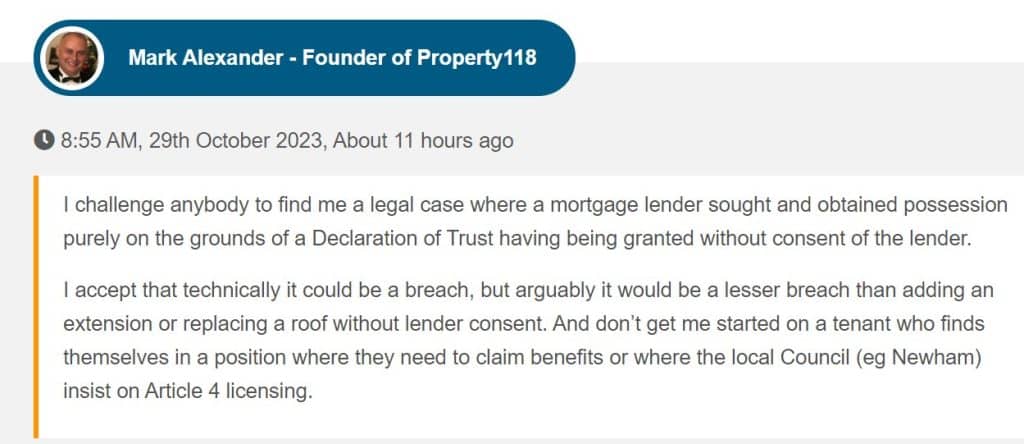
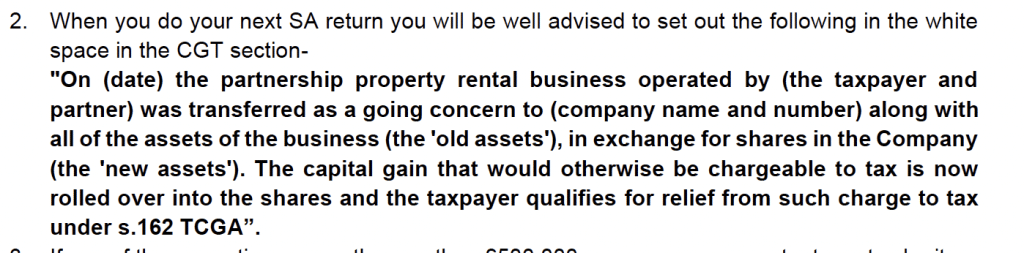
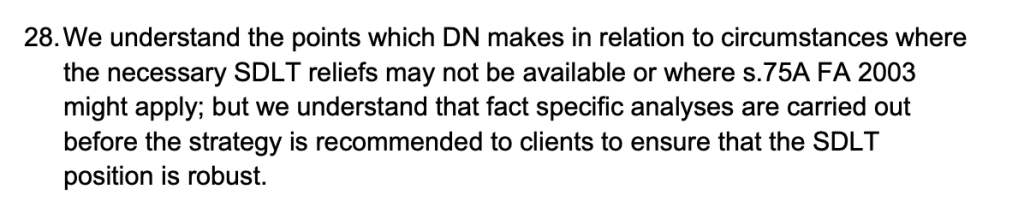


.jpg)