I posted some charts yesterday on how the UK tax system compares to other countries when we look at tax as a % of GDP. One response was to say: “well, I don’t care about tax as a % of GDP… I care about the tax I pay”. Which is fair enough.
How can we fairly compare the tax actual people pay?
Tax wedge
The “tax wedge” is the tax paid by the average single worker divided by the gross wages.1 It’s the best way I know to make a fair (or somewhat fair) comparison of the burden on tax on wages across the world.
I think many people will be surprised, even disbelieving, at where the UK places here.
Clearly there are some very different social models, with Belgium (for example) having a much more expansive welfare state than Chile. So it’s useful to add in that wider context (again from OECD data):
So in general terms, if you’re an average worker, you get what you pay for.
Or, if we want to annoy lots of people, we can point out that there’s no country where the average worker pays less tax than the UK on their wages, but which has higher government spending.
What about VAT?
If we just look at the standard rate of VAT in each country:
On the face of it the UK again looks very average.2
But we can’t just compare the standard rate. Some countries apply the standard rate to almost everything; others have widespread exemptions and special rates.
We can get a sense of this if we plot the rate of VAT against the amount of tax VAT collects, as a % of GDP:3
The chart suggests the UK collects a bit less VAT (as a % of GDP) than you might expect from its rate.4
The bottom line is that there is no evidence that the average Brit is over-taxed by international standards.
The spreadsheets with the data and charts are available here.
Footnotes
In other words, this takes into account the income tax and national insurance/social security paid by the worker him or herself, and also the national insurance/social security paid by the employer (because there is good evidence that in the long run this is economically paid by the employee in the form of reduced wages). ↩︎
There’s no USA on the chart, because the US has no VAT. Many states have sales taxes, but they’re nothing like VAT – the rate is much less (averaging around 5%) and the goods/services covered are much more limited. ↩︎
Bear in mind the usual caveats about comparing different systems in different countries, and (as usual) ignore Ireland, because its reported GDP is distorted by multinational [HQ locations]/[tax avoidance] (delete per your preference). ↩︎
Actually it’s worse than that, because VAT compliance in the UK is pretty good, and so masks what is a very limited VAT base (i.e. wide exemptions/lower rates) by international standards. Rita de la Feria, perhaps the world’s leading VAT academic, has written convincingly on this. ↩︎
We now have the latest OECD tax data, showing tax as a percentage of GDP across the developed world.
The UK looks rather average:
If we order by personal tax (income tax and national insurance etc), we see that UK income tax/NI is a somewhat lower % of GDP than average:
If we order by property/wealth tax, the UK surprisingly raises one of the highest %s of GDP in the world (although we should be careful about comparisons here; please see caveats below):
Corporate tax, the UK raises a bit less than average (although this is before the increase from 19% to 25%, which will put the UK in the top quartile):
Another way to look at the data is each tax as a % of overall tax revenues. Then the UK looks rather unexceptional, raising proportionately a bit less in personal tax than most of the world, but a bit more in property tax.
So many of the loudest voices in the tax debate are wrong. The UK is not horribly over-taxed. Wealth in the UK is not horribly under-taxed. We have a pretty typical tax system. We could tax a bit more, or tax a bit less, and there are certainly plenty of aspects of the system we could and should improve. But the case for revolutionary change often relies upon an inaccurate picture of how things are now.
These figures include all national, state, local taxes.
This is OECD data, and so (whilst I’m not certain) I don’t believe it will pick up the significant recent UK corrections. There may be similar data issues with other countries.
It’s OECD only, so no Singapore (not an OECD member because it’s not a democracy).
“Property/wealth” is a combination of capital gains tax, inheritance tax, stamp duty/land transfer taxes, council tax, and other recurrent and transaction taxes on property. This won’t quite be an apples-to-apples comparison, because property taxes in some countries pay for services which in other countries you pay for privately (e.g. garbage collection).
“NI/SS/payroll” includes employee and employer taxes (because the economic burden ultimately falls on employees). Also includes such things as the UK apprenticeship levy. Comparisons need to be done with care because some countries have greater private pension provision, and others achieve an economically similar result with income-linked state pensions.
Oil/gas taxation is included in “corporate tax”. You could argue it shouldn’t be; the inclusion is less a point of principle, and more because disentangling it from this dataset is hard.
Small countries like The Netherlands, Luxembourg and Ireland (some would say “tax havens”) somewhat distort the data. Their corporate tax looks high; their GDP (particularly in the case of Ireland) is artificially inflated, so the overall level of tax looks low.
Mexico, Colombia and Chile suffer from a large informal economy and so their personal tax revenues are relatively low, and they are disproportionately dependent on corporate tax and indirect taxes.
Plenty of other factors complicating simple comparisons between countries, e.g. US private healthcare provision being economically akin to taxation but not showing in this dataset.
A few countries haven’t provided recent data yet – Australia, I’m looking at you – and so are missing from the first charts. The animated chart replaces missing data with the previous year (to avoid it looking like the country has disappeared).
GDP data is frequently subject to revisions, both corrections and changes in methodology. The OECD has kindly confirmed that the data we use here reflects all these revisions, and so it is appropriate to e.g. compare the 2021 GDP figures with the 1990 GDP figures.
Following our report on Property118, landlords have been getting in contact and asking what they should be doing. Tax Policy Associates doesn’t, and can’t, provide tax advice – but it’s a fair question. Here’s a quick summary of how we see things:
A landlord whose business looked like this in 2015:
Now looks like rather different – after tax, he’s making a loss:
That’s a huge deal for buy-to-let landlords, and it’s understandable that many are desperate for a structure that fixes the problem. There is no such structure.
There are three choices, and only three choices.
Choice 1: incorporate
Instruct a proper tax adviser, incorporate a company, and move the business to that company. The mortgage interest will then be fully deductible against the company’s corporation tax.
There, however, are several important complications:
Your current mortgage lender is very unlikely to agree to carry your existing mortgage over to the new company. You’ll need a new mortgage, and it will almost certainly be more expensive (higher interest and higher fees). This may add up to more than the tax benefit of interest deductibility. Do the math very carefully.
There will almost certainly be stamp duty/SDLT at up to 15% on the transfer to the company (and another 2% if you’re a non-resident).
Some people claim that married couples can retrospectively claim to be a partnership, and escape SDLT on incorporation using the partnership rules. The recent SC Properties case makes clear this has very little likelihood of working, because of the complete lack of evidence of the married couple in question acting like partners in a business partnership :
“For these reasons we have concluded that the Partnership has no legal reality. It existed as a planning idea in the minds of the Appellants’ advisers and Mr Cooke, but had no substance beyond the forms which were completed in order for it to obtain the tax result suggested by the Appellant’s advisers.”
There may be capital gains tax when you transfer the properties to the company. CGT incorporation relief is potentially available, but you have to demonstrate you have a “business”, something that HMRC do not always accept. Be aware that “clever” structures (such as declaring trusts, creating loans, using LLPs etc) risk blowing up incorporation relief, and costing you much more tax than they save.
The company is taxed on its profit, with a deduction for its interest costs. You then have a second level of tax when the company returns that profit to you, as dividends, wages or (in some limited circumstances) as a capital gain. Again, you need to do the math carefully to make sure you fully take this into account.
Choice 2: don’t incorporate
Continue as you are, bearing the cost of the section 24 non-deductible interest.
Your could reduce your leverage, so you don’t make an after-tax loss (but of course you’ll then need to deploy more capital).
Choice 3: sell-up
It may be that neither of the first two options work – section 24 simply makes your rental business uneconomic. That seems to have been Osborne’s intention.
In which case, you may need to sell-up. It’s not an admission of failure – it’s an admission that investors have to adapt when circumstances change.
What is the fourth choice?
There isn’t one.
Trusts, LLPs, offshore arrangements… not only are they very likely to fail when challenged, but the consequence could be much much worse than if you’d done nothing at all. SDLT plus CGT could easily be a six figure sum. And complex structures can easily have complex, and expensive, additional tax consequences.
Whether you’re a multinational executing a £10bn M&A transaction, or a landlord considering incorporating a one-property business, the key tax question is always the same: “how much do I benefit if this goes right, and how much do I lose if this goes wrong?”.
Even if the Property118 structure probably worked (which it doesn’t!) the downside risk of it going wrong is much, much larger than the benefit.
Unsurprising, if HMRC have never been properly told what precisely the scheme is. Typically promoters are careful to only discuss limited aspects of their schemes with HMRC. Rarely, if ever, is the whole structure explained.
Responds to all technical queries with confident assertions that HMRC has accepted the structure.
Again, it’s doubtful full details were given to HMRC. But, if the scheme doesn’t work technically, then any HMRC clearance is worthless, and the fact they may have sneaked it past one sleepy inspector doesn’t stop HMRC re-investigating it at any time in the next 20 years.
“Our unique system”, “our proprietary strategy”, “our IP”, etc.
I used to advise the largest businesses in the world, doing deals of many £bn. If I’d told them I planned to use anything “unique” or “proprietary”, I’d have been out the door in seconds.
When it comes to tax, sensible people do what everyone else is doing. Be boring.
Any adviser proudly touting their “unique IP” is accidentally revealing a “hallmark” that means the structure may well be disclosable to HMRC as a tax avoidance scheme.
“We have a KC opinion”
Normal people shouldn’t be doing anything so complicated and uncertain that it requires a KC opinion (I’d certainly never put myself in that position).
The fact a KC opinion was obtained is an alarm bell that something high risk is going on. That’s particularly the case if the KC opinion was obtained by the adviser for the adviser. Then you can’t rely on the KC opinion – if everything goes wrong you can’t sue the KC. Worse still, the fact the adviser obtained the KC opinion may make it harder for you to sue the adviser (as they’ll blame the KC). So a KC opinion can actually make your position worse.
“We’ve glowing testimonials from dozens of clients”
This is how a salesman talks.
No discussion of risks and downsides
Any client – whether an individual or the largest corporation – should ask two important questions of a tax adviser. What’s the result if this goes according to plan? What’s the risk if it doesn’t? And how much will it cost me if it doesn’t?
Many of these structures have a relatively small benefit (tax relief on interest) but risk a massive up-front SDLT and CGT cost. Not worth the gamble even if the odds were 70% in your favour (which they won’t be).
Pressure to go ahead/sign a contract
That’s how a (bad) double glazing salesman behaves.
“We’re fully insured”
That’s great – for them.
Professional indemnity insurance protects an adviser against being successfully sued. It’s useful to a client because it gives you assurance that you will still have someone to sue if the adviser disappears/goes bust. But it doesn’t make it easier to sue them, and it certainly isn’t your insurance..
“Your normal advisers won’t be familiar with these obscure rules”
A common tactic to pull clients away from trusted existing advisers, and often said by people who don’t in fact have any tax qualifications.
Property118 is an unregulated adviser which works in a “joint venture” with a barristers chambers called Cotswold Barristers. They promote a tax avoidance scheme aimed at buy-to-let landlords. But nobody involved appears to have any tax qualifications and in our view the scheme fails spectacularly.
This report explains the scheme, and explains why in our view, and that of the mortgage lenders’ industry body, it is likely to default the landlord’s mortgage. We also set out a detailed analysis of the serious tax problems with the structure. We are going into more technical detail than usual given the widespread promotion of this scheme in the market. Anyone who has entered into these arrangements should seek independent advice.
UPDATE: 16 September. Property118 have responded to this report. Despite having two months’ notice of our findings, their response contains no response to any of the points we’ve made, just assertions that their structure is fully compliant, and that HMRC and lenders have never challenged it. As we note below, we doubt the structure has ever been properly disclosed to HMRC or lenders. Now HMRC and lenders is aware of the structure we expect challenges over the coming months and years.
UPDATE: 22 September. We’ve a further report on another aspect of Property118’s planning.
UPDATE: 5 October. See also our report on Less Tax for Landlords. A different scheme, but with some commonalities; in many senses an even worse scheme than Property118’s.
UPDATE: 24 October. Mark Smith of Cotswold Barristers published a response on the s162 point, but one which does not address the key problem with the structure. We’ve updated the text below.
UPDATE: 9 November. The analysis below is of the structure Property118 intended to implement. Our review of their actual documentation reveals several critical implementation failings which means the actual position of their clients is likely significantly different, and significantly worse. We analyse this here. This means that much of what follows below is likely academic.
UPDATE: July 2024: HMRC have issued a “stop notice” making it a criminal offence for Property118 to continue to promote the structure.
The sales pitch
Most buy-to-let landlords hold their properties personally. So they pay income tax at 40% or 45% on the rental income. Until 2017, their mortgage interest was deductible, meaning a result something like this:
Many landlords view this as unfair, because the £2,400 tax is more than their £2,000 net income (although the purpose of the rules was expressly to discourage buy-to-let mortgages, so this rather punitive outcome is actually the point).
The obvious move is to hold the properties in a company. Corporation tax is less – below 25%, for a small company1 and companies get full tax relief for mortgage interest.2
But it’s not easy for a buy-to-let landlord to move their properties into a company. There can be capital gains tax and stamp duty land tax (SDLT) on the way in. And – most seriously – the mortgage lender won’t allow the existing individual mortgage to move to a company. You could get a new mortgage, but mortgages for companies are significantly more expensive than buy-to-let mortgages. 3
Advisers therefore frequently caution clients that the increased interest cost of moving properties to a company can easily exceed the tax saving. It’s often a mistake to be over-focused on tax savings.
The Property118 solution
Wouldn’t it be wonderful if you had all the tax benefits of moving to a company, but could keep your existing bargain-price mortgage?
Property118 say you can, with what they call the Substantial Incorporation Structure:
The landlord – let’s call him X – sets up a new company (which I’ll call the Company), and sells the properties to it, getting shares in return
But “completion” of the sale is deferred – X remains the registered owner of the properties. A trust is created, with the landlord as trustee, and the company as beneficiary.
This is invisible to the world – and to the mortgage lender. So X doesn’t ask the mortgage lender for consent, or even tell the mortgage lender about it.
Property118 claim that, because the transaction creates a trust, it’s not a breach of X’s mortgage.
They claim that “incorporation relief” applies so there’s no capital gains tax.
Often they say that X and their spouse were in a partnership, so SDLT partnership rules apply and there’s no SDLT to pay either.
X continues to make mortgage payments to the lender but, behind the scenes, the Company agrees to reimburse/indemnify X. The Company claims tax relief for those payments. So – claim Property118 – it’s just as good as if the Company had borrowed itself.
But it’s better – because they say this isn’t just a company – it’s a “Smart Company“. The idea is that the Company issues shares to X’s children which supposedly have no initial value, but will grow in value over time. So future increase in the value of the property portfolio will fall outside X’s inheritance tax estate.
The end result is that, by signing a piece of paper, X gets a dramatically better tax result with no downside:4
What actually happens – the short version
The structure doesn’t work.
The sale likely puts the mortgage into default. The mortgage terms usually require consent for the sale to the Company, and that wasn’t obtained.
We asked UK Finance, the trade association for mortgage lenders, and they said:
“Transferring ownership of a property into a trust without informing your lender and seeking their consent would most likely be a breach of a mortgage’s terms and conditions.”
The tax will also go badly wrong.
Property118 have forgotten that X is still there, still paying £8k to the bank, but now receiving £8k of new income in the form of the indemnity payments. Those indemnity payments are fully taxable, but the bank interest isn’t deductible for him (because X no longer has a property business; he has no basis to claim any tax relief).5
So the structure increases the overall tax bill by 50%.
It gets worse. There is potentially also a large up-front tax hit of a large amount of CGT and SDLT when the structure is established. That could amount to hundreds of thousands of pounds.
And then an ongoing requirement to file an annual tax on enveloped dwellings (ATED) return, which is easily missed – failure to file creates late-filing penalties of £1,600 per year.
In our opinion this structure is a disaster.
We’ve set out the legal analysis of these issues in detail below.6
Is this tax avoidance?
Yes.
The “Substantial Incorporation Structure” has no benefit to the landlord other than (supposedly) saving tax. It will therefore be regarded as tax avoidance by a number of statutory anti-avoidance rules, which will potentially negate the tax benefits (if there are any, which there probably aren’t).
This is by contrast with a normal incorporation, which absolutely does have other benefits for the landlord. In particular, it segregates legal liability: if the landlord is sued by the lender or by a tenant, then if the properties are held in a company, that liability will normally not attach to the landlord personally. A normal incorporation is not usually tax avoidance, even if it has tax benefits.
However, the substantial incorporation structure does not achieve legal segregation. As far as the lender, the tenants, and the world are concerned, the landlord remains personally the owner of the properties and therefore as a legal matter remains personally liable.7
Property118 and Cotswold Barristers
Property118 and Cotswold Barristers often charge fees of over £40,000 to relatively small landlords earning less than £100k/year. They’re set up to get referrals from other websites, paying £2,000 for a click that results in new business – meaning that they’re widely promoted by other firms (for example here).
For £40,000 you could expect to instruct a well-known accounting or law firm, staffed by qualified tax lawyers/accountants.
But neither Property118 nor Cotswold Barristers appear to have any members or employees with tax qualifications or experience. Property118 is entirely unregulated. I had a very confusing exchange of emails with Mark Alexander, head of Property118, in which he didn’t appear to have even heard of the two main tax qualifications: ATT and CTA.8
The head of Cotswold Barristers, Mark Smith9, is a generalist whose practice ranges from business law, to tax, to criminal defence work, to private prosecutions (including one where he was suspended by a month by the Bar Standards Board for acting negligently and “failing to act with reasonable competence“). His profiles in 2017 and 2020 don’t include tax in his areas of practice.
Barristers chambers usually list their members – the members being the whole point of the chambers. Cotswold Barristers is unusual in not doing this. It did at one point – and included as part of its team a fake barrister with a dubious past who was jailed for conning a dying woman out of her life savings. There is no suggestion that Cotswold Barristers was aware of his actions, but Cotswold Barristers does appear to have been responsible for listing him as part of its team.
The reference to “delegated authority” is strange. The claim that a non-barrister could be bound by Bar professional standards and be subject to the Bar Standards Board has perplexed all of the barristers we’ve spoken to.
We put this to Mark Smith of Cotswold Barristers. He said:
“Barristers must disclose, to the BSB and clients, any associations they have with people or entities in their provision of legal services. This is a code of conduct requirement. This was complied with at the outset of our relationship with Property 118 (P118). It has recently (Jan-Mar 2023) been re-examined by the BSB as part of a routine audit of Cotswold Barristers (CB) following an update of the BSB’s Transparency Rules. We had correspondence with the BSB about this, and they were and are satisfied our association is compliant. We did review the wording relating to ‘delegated authority’ at that point, as it was ambiguous. P118 has since amended this portion of their materials, so it makes it clear their consultants only work under delegation when the client has engaged with CB. Again, so long as it is made clear to the client, and the barrister is ultimately responsible, sub-contracting of work is permitted under the Code of Conduct.”
We don’t see an ambiguity: we think the claim that Property118 are bound by Bar professional standards, and subject to the BSB, is false. We asked Mr Smith to explain this claim, and he did not respond.
We’re writing to the Bar Standards Board to see if they can cast any light on these issues. We are also asking them to look into the wider question of why Cotswold Barristers are giving legal and tax advice that is obviously wrong.
Professional indemnity insurance
Property118 say that their barristers’ professional indemnity insurance means their clients are “shielded from financial risk”:
That’s not at all how professional indemnity insurance works. If the tax structure turns out to be the disaster we think it is, and the client wants to recover their loss, they have to successfully sue the barrister for negligence. That’s never a straightforward undertaking; not least because the barrister would presumably deny causation on the basis that you would have followed Property118’s advice even if Cotswold Barristers hadn’t been involved. And Property118 aren’t regulated, are unlikely to have any insurance, and probably aren’t good for the money (its owner lives in Malta).
The mortgage problem
Property118 say their structure is “fully compliant for mortgage purposes”:
However this appears to rely significantly on not telling lenders that their security has become the subject of a trust:
We asked UK Finance, the representative body for mortgage lenders, what they thought of the structure. They said:
“If someone wishes to transfer ownership of a buy to let property they should contact their lender to discuss whether this is permitted under the terms of any mortgage on the property. Transferring ownership of a property into a trust without informing your lender and seeking their consent would most likely be a breach of a mortgage’s terms and conditions.”
We believe UK Finance are clearly right on this. But even we didn’t agree, we’d suggest that it’s not a good idea to enter into a structure which your lender believes most likely breaches the terms of your mortgage.
Property118 and Cotswold Barristers seem to be in denial. They tell their clients:
The idea a lender can’t require repayment of a mortgage when it is in default is very strange. The 2016 Court of Appeal case they cite concerned whether a lender could require repayment of a mortgage when there was no default. We don’t understand how Property118 can make this claim when their own founder was the claimant in the case.
The problem with the trust
Property118 do seem aware there could be an issue with declaring a trust that shifts beneficial ownership to a company without telling the mortgage lender. They say:
There’s a similar theme on the Property118 website:
Is this an accurate reflection of most mortgage T&Cs?
One of our team undertook a very fast and incomplete review of major mortgage lender BTL T&Cs, carried out in about one hour.11
So the specific claim there are only two lenders with prohibitions is false.
But the larger problem is more basic. This is the key claim made by property118 (highlighted in blue):
The “Barrister-At-Law” will be Mark Smith of Cotswold Barristers. He takes the same approach: “as a matter of law, unless it says specifically in the terms and conditions [that] you can’t do it, then you can”.
This is not how English law security documentation works. The mortgage terms don’t need to have a specific prohibition on declaring a trust. All that’s required – and this is common – is to simply prohibit the sale or transfer of the property, and define “property” so it includes all interests, meaning the beneficial interests that would be transferred by a trust.
Other lenders have a general transfer of ownership prohibition which is drafted broadly enough to capture trusts and sales of beneficial interest. For example, TSB:
After undertaking this review, we spoke to a series of experienced real estate finance lawyers, who act for lenders and borrowers on everything from small domestic conveyancing transactions to the largest commercial real estate transactions. It was their unanimous view that, one way or another, a trust would be prohibited by most and possibly all mortgage T&Cs.
We put this point to Property118 and Cotswold Barristers, and specifically gave one of these mortgage terms as an example. They declined to explain their position as a legal matter, instead asserting that large conveyancing companies agreed with them, and that no bank had ever raised the point. That, again, does not answer the question. The large conveyancing firms are built to handle straightforward conveyancing at scale, not to answer technical queries on unusual trust arrangements. Mortgage lenders will not raise the point unless they become aware of it. Until now, we don’t believe they were. However, we briefed the mortgage lenders’ representative body, UK Finance, on the structure, and their view is now clear:
“Transferring ownership of a property into a trust without informing your lender and seeking their consent would most likely be a breach of a mortgage’s terms and conditions.”
It is therefore reasonably clear that entering into this arrangement without the consent of the lender likely defaults the mortgage.12
Legal and tax analysis – capital gain
X probably has a large latent capital gain in the properties. For example, if X’s acquisition cost of the portfolio was £4m, and X sold it now for current market value of £8m, X would have a £4m capital gain, and pay £1.12m CGT.
But Property118 claim their Substantial Incorporation Structure means that CGT incorporation relief applies.
That would have two very nice outcomes for X. First, there’s no CGT at all to pay on the transfer to the Company. Second, the capital gain is “rolled over” into the shares in the Company, so that any sale of the shares is subject to CGT broadly as if X had held them all along. The latent capital gain of the properties themselves is eliminated – the properties are “rebased” to current market value. So if the Company sold the properties for £8m, there would be zero tax to pay.
However, there is considerable doubt whether incorporation relief will apply.
The legislation requires that “the whole of the assets of the business” move to the Company. And that’s not happening13
The problem here is that legal title in the properties is being left behind. This is not some minor legal formality; legal title over real estate has reality and value to it. You can’t borrow without legal title. You can’t refinance. You can’t sell. In many “bare trust” cases this is a distinction without a difference, because the beneficiary can call for legal title at any time. Here they cannot, because the consent of the mortgage lender would be required. The Company’s inability to acquire legal title is a real constraint on its business – and that demonstrates that it did not in fact acquire the “whole assets of the business”.14
Another way of putting the same point is that there is no transfer of a “business as a going concern”, just an economic transfer under a trust. The “business” is operated by the person with the legal title, as it’s that person who has all the dealings with the tenant, bank, service providers, etc. This “business” isn’t moving at all.
So our view is that incorporation relief likely does not apply.15
(In many cases there will also be doubt as to whether X’s activity as a landlord is enough to constitute a “business”.16)
UPDATE: Mark Smith finally published a specific response to this point on 20 October 2023. He makes the obvious point that capital gains tax normally looks to beneficial ownership, not legal ownership, when considering whether a disposal has been made. But section 162 is not looking at whether a CGT disposal has been made – it uses the terms “whole assets of the business” and “transfers… a business as a going concern”. We read these as factual tests. And, factually, significant elements of the business remain with the landlord. Only the landlord can deal with the lender, the tenants, letting agents, and other contractual parties. The business of the company is very different – it’s just a passive investor. We made this point above; Mr Smith does not attempt to respond to it.
Mr Smith again makes the claim that HMRC have accepted the position. This would only be relevant if the true nature of the structure was disclosed to HMRC, and the s162 point above specifically drawn to HMRC’s attention. We doubt that is the case, but even if it was, it would only provide comfort to the taxpayers specifically covered by that correspondence. HMRC would not be bound for other Property118 clients.
There is therefore, as ever, no substitute for properly considering the legal position.
Legal analysis – SDLT
On the face of it, SDLT17 is due on the transfer of the properties by X to the Company, on the full market value at a marginal rate of up to 15%.18 That’s potentially a huge up-front cost. There’s a relief for partnerships incorporating, but not for individuals incorporating.
In many cases, SDLT would make the Substantial Incorporation Structure uneconomic, with a large up-front tax cost. Here’s the Property118/Cotswold Barristers solution:
It’s to claim that, where a husband and wife run a property rental business together, in fact they’ve always been a partnership, and partnership relief is available. They do this, even in cases where there was no partnership agreement, no partnership tax returns, and no extraneous evidence of any kind that a partnership existed. Technically that does not make it impossible that there was a partnership – it’s a question of fact. But the recent SC Properties case shows just how difficult is to establish a partnership in such circumstances – and the burden of proof is on the taxpayer. It is usual for a married couple to manage their financial affairs together, but that does not normally mean there is a partnership in the legal sense. Relations between spouses are very different from the business relations of partners in a partnership.19
If SDLT were payable (because the properties are not partnership property), then interest and penalties for late filing would be due. Although multiple dwellings relief would usually be available to reduce the SDLT charge, this relief is unavailable if it is not claimed in a return or an amendment to a return. And an SDLT return cannot be amended more than one year after the filing date for the transfer. If any of the properties were occupied by X or his relatives (or not held for a qualifying business purpose) the SDLT rate on that property would be 15%.20
In our view, it will only be in rare cases that this strategy succeeds, and SDLT relief applies – and HMRC guidance suggests that HMRC are likely to contest the point.21
Finally, although no annual tax on enveloped dwelling (ATED) would be payable to the extent that the properties are let out to third parties, ATED relief must be claimed. It is unclear to us if Property 118 advise their clients to file ATED returns (our sources have not seen such advice). Failure to file triggers late-filing penalties of up to £1,600 per return per year. For companies that used these arrangements over five years ago, it might come as quite a shock that they are liable to £8,000 of penalties even though no ATED is due.
Legal and tax analysis – taxation of the interest payments
Property118 and Cotswold Barristers say:
They make a slightly different claim in the video below: that the “legal owner continues to make mortgage payments (as nominee of the beneficiary) and claims the payments back from the beneficiary as out of pocket expenses, which are tax free”.
But that is not right at all. X, the legal owner, is not the “agent” or “nominee” of the Company under the loan – X remains the borrower under the loan in their own right. You cannot declare a trust over obligations. What is actually happening is that the Company is making indemnity payments to X, which pays the mortgage lender (and this is the case as a legal matter even if, as I suspect, there are never any cash payments from the Company to X). X therefore remains taxable.
When we look at the actual legal and tax analysis that follows from this, the entire structure falls apart.
Deductibility of interest paymentsfor the Company
Mark Smith says in this video that the payment is “deductible in accordance with normal corporation tax principles”. That’s not correct.
The corporation tax treatment of debt is governed by the loan relationship rules in Part 5 of Corporation Tax Act 2009. For these rules to apply, the Company must have a “loan relationship”, for which it has to be “standing in the position of debtor under a money debt” which must “arise from a transaction for the lending of money“. But the Company doesn’t have a money debt and never borrowed any money – it’s just making indemnity payments. There is only one loan, and that was from the mortgage lender to X – and it’s still there.22
So the Company doesn’t have a loan relationship and will not achieve a deduction under the loan relationship rules.23
It might achieve a deduction under the general rules for a company carrying on a UK property business. That requires the indemnity payments to be recognised in the accounts and for the indemnity payments to be regarded from a tax perspective as income of the property business and not as further consideration for the capital transaction of the original acquisition of the beneficial interest. We don’t think either is a straightforward point. 24
So it cannot be assumed that the Company will achieve a deduction for its indemnity payments. If it doesn’t, we are in a worst-case scenario for X which looks like this:
More than doubling X’s original £2,400 tax bill. Not a good result.
Even if the Company does achieve a deduction, the result is still worse than the original £2,400 of tax:
We put this point to Cotswold Barristers. They asserted that the payment was deductible but were unable to explain how or why.
Taxability of indemnity payments
We can immediately dismiss the explanation in the video – that X is receiving tax-free out-of-pocket expenses. That would be the case if the loan had been entered into by X as trustee for the Company. But it wasn’t – the loan was simply entered into by X and X alone, and the trust can’t change that). The payments X makes to the lender are not trust expenses – they’re X’s personal expenses. And no agreement X signs with the Company can change this – you can’t transfer an obligation, or create a trust over an obligation.
That’s a big problem. X no longer has a property business (because he is a mere trustee). So X has zero basis for claiming a deduction on the interest he pays the bank. But he is now receiving a stream of indemnity payments under a legal obligation. They will be taxable (perhaps as “annual payments“, perhaps as “miscellaneous income“). That creates a large tax charge for X – it’s the worst-case outcome we show above.
We see only one potential counter-argument: to say that the indemnity payments actually form part of the consideration for the original sale,25 and so are capital and not revenue items. If so, and the original sale was exempt from CGT, then there’s no additional tax to pay; but the consequence of this argument is that the Company absolutely won’t get a tax deduction for its indemnity payments (because they must be capital payments too). That results in this, which we think is the best-case outcome of the Substantial Incorporation Structure:
Note that the best-case outcome here (which we’d expect HMRC to resist) is still worse than the original £2,400 tax bill. You’d have been better off doing nothing.
Or, if the original sale was subject to CGT then probably26 each indemnity payment is subject to CGT at 28%, resulting in this bad-but-not-quite-worst-case outcome:
We put this point to Cotswold Barristers. They were unable to explain why the indemnity receipts weren’t taxable, but said that HMRC had never raised the point. We expect that is because the issue has never been properly disclosed to HMRC.
Back in 2019, Mark Smith gave a mystifying explanation in a now-deleted video:
“Finance costs accrue to the beneficiary, the company pays the expense of running the mortgage and it’s deductible on normal corporation tax principles. You don’t even have to change your direct debit or standing order payments, because you are allowed to receive the money for the mortgage repayments from the company as their agent without it being taxable in your hands, as long as at some point it flows through the company books, the company bank account, it’s only taxable by the company. You only receive the money as their agent, you make the payment as the company’s agent. And there’s a fallback position. Even if HMRC tried to tax you on it, you only pay tax at trustee rates, which basically washes out any impact of having to pay tax on it because you get the tax credit back again at 20% basic rate.”
This is gobbledygook. The individual is not the company’s agent when making mortgage payments – the individual entered into the mortgage as principal. The mortgage doesn’t form part of the trust – you can’t declare a trust over an obligation. The trust rate (and associated credit rules) apply to settlements, not bare/simple trusts – they cannot apply to this structure (and if the arrangement was a settlement there would be an array of other consequences, mostly adverse).
Legal and tax analysis – inheritance tax
Cotswold Barristers send clients materials presenting them with extraordinarily large (and unrealistic) inheritance tax calculations. We’ve seen one projecting that a client’s portfolio of under £10m would be worth £200m in ten years’ time, so with a potential inheritance tax bill of £80m. This is, at best, sharp practice and, at worst, misselling.
They say that the advantage of their Smart Company solution is that:
So you say the property portfolio is currently worth £10m, and issue shares which are worth the value of the portfolio minus £10m. Those shares are therefore worth £0 today (you claim), and you can give the shares to your children with no inheritance tax or capital gains consequences. But if the portfolio did become worth £200m in ten years’ time, the shares would be worth £190m. More magic.
The flaw in this is that the shares plainly aren’t actually worth £0 when created. It’s easy to test this: would they sell them to Tax Policy Associates for £1,000? That’s a fantastic deal for them, if the shares are really worth nothing. But obviously, nobody would take up that offer – because there’s a large expected capital appreciation embedded in the value of the shares. And that’s the tax conclusion too: the shares have a large current value equal to the discounted expected capital appreciation. We’re aware of two cases where shares of this kind have been litigated, and the contention that the shares were valueless failed (with, in one case, the Tribunal actually giving the shares a seven-figure value).
That means this structure probably has immediate inheritance tax and capital gains tax consequences (possibly also consequences under the “employment related securities” rules).
A further twist:
Cotswold Barristers and Property118 often advise putting these shares in a discretionary trust. We’ve seen them recommend “Creation of a Discretionary Trust controlled by you via a Letter of Wishes to shelter all future capital growth in the portfolio from Inheritance Tax”.
A “discretionary trust controlled by you” isn’t a trust – it’s a sham.
And another twist:
Part of the idea seems to be that shares are being created for children, so they can receive dividends and pay less tax than the parents (because of their allowances and lower tax rates). But there are specific rules that stop this.
DOTAS
Given that the main (and perhaps sole) purpose of Property118’s scheme is tax avoidance, it seems likely that their structures should be registered with HMRC under DOTAS – the rules requiring disclosure of tax avoidance schemes.
Cotswold Barristers told us that HMRC considered this point in 2021 and did not take it forward.
We would query if Cotswold Barristers made HMRC aware of the size of their fees. A “premium fee” (being a fee which is more than the time value of the work carried out) is one of the hallmarks which can trigger DOTAS.
Another DOTAS “hallmark” is where it is reasonable to expect a promoter would wish an element of the arrangements to be kept confidential from any other promoter. Property118 sent us correspondence refusing to explain elements of their structure, because it was “valuable intellectual property”. That may amount to an (accidental) admission that the confidentiality hallmark applies.
Failure to comply with DOTAS can result in fines of up to £1m.
More strange Property118 advice
The Property118 website has other examples of tax planning that raises alarm bells, because it has no reasonable prospect of success. We’ll mention just two examples:
Capital gains value shifting
The capital gains tax avoidance below ignores the existence of a specific anti-avoidance rule:
An entirely artificial step is used to reduce the capital value of the shares, and then immediately re-inflate it. There are very longstanding rules to counter such “value-shifting” transactions (as well as a plethora of other statutory rules, plus common law anti-avoidance principles).
The structure as presented in our view has no reasonable prospect of success.
UPDATE 22 September: after this report was published we found more details of this scheme, and it turns out to be rather different from the description above, and much worse. We’ve written a short analysis of this here.
SDLT avoidance
This page suggests that SDLT can be reduced when acquiring a “house in multiple occupation” (HMO), i.e. where many people have separate bedrooms but there is one front door and usually one living room. The idea is that “multiple dwellings relief” applies.
That is, however, wrong – MDR applies only where there are separate dwellings, and a bedroom is not a dwelling. That was fairly obvious when the page was written in 2020. It is more obvious now, as an Upper Tier Tribunal has ruled on the point.27
What if you’ve entered into a Property118 scheme?
We would strongly suggest you seek advice from an independent tax professional, in particular a tax lawyer or an accountant who is a member of a regulated tax body (e.g. ACCA, ATT, CIOT, ICAEW, ICAS or STEP). Given the potential for a mortgage default, we would also suggest you urgently seek advice from a solicitor experienced with trusts and mortgages/real estate finance (e.g. a member of STEP).
We would advise against approaching Property118 given the obvious potential for a conflict of interest.
Property118 and Cotswold Barristers’ response to this article
It is common practice to give the subject of a report or investigation 24 hours to respond. The response we received from Property118 was unusual in several respects. We set it out below in full.
The initial response was a request from the CEO of Cotswold Barristers to join a recorded Zoom call: “Why won’t you come on video and ask your questions? The public deserve to make their own assessment”.
Property118 then failed to respond to any of the technical questions we asked.
Cotswold Barristers responded, but leant very heavily on the claim that their approach has been accepted by HMRC and other accounting firms. We are sceptical that full disclosure was ever made to HMRC; if you approach HMRC for a clearance but don’t mention all the facts, or all the technical issues relevant to the clearance, then any clearance you get cannot be relied upon.28 And HMRC clearances can never be relied upon where there is tax avoidance.
The final response was a vague legal threat: “Your continued blackmail is noted and our response to any damages caused to our businesses by your future actions will be dealt with accordingly.”
In the interests of transparency, we set out the correspondence in full below. The thumbnails should expand when you click on them. Alternatively, the correspondence can be downloaded as a PDF here.
Our original query:
The initial response from Property118, including HMRC correspondence29, customer testimonials, a complaint about the timescale and a vague legal threat:
The clerk/CEO of Cotswolds Chambers responded by suggesting a recorded Zoom call, because that’s “what the public would expect in 2023”:
We then received a letter from Mark Smith. This responds to our queries about the unusual relationship between Property118 and Cotswolds Barristers by referring to a recent BSB audit (discussed further above). Mr Smith responds to our CGT incorporation relief criticism by misunderstanding the s28 deeming rule; otherwise there is little in the way of technical content. For the most part, the response is “no one else has complained“:
We asked for a specific response to the technical points we had made:
Smith asks for two weeks to respond to our email. When we say that’s not realistic, and these are points they should already know the answers to, Mark Alexander sends a somewhat intemperate response:
Then a more detailed response, with a long list of people he works with (names redacted out of fairness to the individuals):
And finally a vague legal threat and accusation of blackmail:
Many thanks to G and S for bringing this to our attention. Thanks to J, T, F and BM for their help with the mortgage aspects, as well as UK Finance. Thanks to E for trust law expertise, T for insurance law input, H, S and O for the barrister conduct issues, A and Sean Randall for the specialist SDLT input, and C for advice on the direct tax/indemnity point. Thanks to Pete Miller, who wrote on the incorporation relief point three months ago, and independently reached the same conclusion as us. Pete and Sean also kindly reviewed a draft of this report, and provided invaluable feedback. J kindly provided some technical corrections after the initial version of this report was published. And thanks to Ray McCann (former senior HMRC inspector and past President of the Chartered Institute of Taxation).
We rely upon the goodwill and expertise of a large number of tax professionals, only some of whom we can name. As ever, Tax Policy Associates takes sole responsibility for the contents of this report.
The rate is 19% for profits under £50,000, with a “catch-up rate” of 26.5% on profits up to £250,000, so that the overall effective rate smoothly transitions into the full rate of 25% ↩︎
Obviously you will want to get the money out at some point, but being able to defer and roll up low-taxed income is valuable in itself ↩︎
Because a landlord can walk away from a company in a way that they cannot walk away from a personal mortgage ↩︎
We have established this is their structure from published information on the Property118 and Cotswold Barristers websites (e.g. this brochure, and here, here, here, and here) as well as copies of their advice we received from our sources. ↩︎
This is perhaps the most likely of a number of possibilities, all discussed further below ↩︎
In the interests of concision, we don’t go into one somewhat difficult point: the effect of a sale when that sale is prohibited by another contract (the mortgage). The Don King v Warren case is general authority for the proposition that such a sale will still be effective in equity, and we expect that will be the case here. However the issues are not straightforward; and if we’re wrong, and the sale is not effective in equity, then essentially nothing has happened from a tax perspective, and it’s as if the transaction never happened. No tax benefit, but also none of the unfortunate results we go into below. ↩︎
the landlord may be able to recover from the company under the indemnity, but if the companies’ assets are insufficient, the landlord will remain on the hook. There are, therefore, no liability advantages from the substantial incorporation structure, compared to, if the landlord just held the properties personally. ↩︎
In an earlier (and unrelated) LinkedIn discussion, Mark Smith, head of Cotswold Barristers, hadn’t heard of the term “tax set” – i.e. he was unaware that there were specialist tax barristers’ chambers. ↩︎
Not to be confused with Mark Smith, the respected extradition barrister. ↩︎
This is from a document they sent to a client a few months ago ↩︎
Caveat: our team only had English expertise; the law is different in Scotland and Northern Ireland and therefore none of the analysis in this section applies to it; however given that Property118’s English lawyers get the English law position wrong, it would be optimistic to assume that they have the Scots and Northern Irish position right ↩︎
The original version of this report also discussed the potential for the trust to invalidate the buildings insurance of freehold property, which would be another mortgage default. Our was undertaken by insurance specialists but has been questioned by others with expertise in insurance law. This report is intended to reflect a consensus view of relevant experts, and therefore (given there is at least some doubt as to the position) we have removed that text. The general point about mortgage defaults (for both freehold and leasehold property) remains, and it is this point that UK Finance are referring to. ↩︎
An additional problem is that the liabilities of the business are not being transferred; rather they are being covered by an indemnity from the Company, and that means the consideration does not just consist of shares (which s162 requires). On the face of it, that prevents incorporation relief applying. There is an HMRC concession that HMRC do not take this point (ESC D32). That is very convenient (and necessary) for the Substantial Incorporation structure. But two important niggles: (1) there is no technical basis for ESC D32 and therefore, following the Wilkinson case, it’s unclear how HMRC can continue to apply it, and (2) a taxpayer engaged in tax avoidance cannot rely upon any HMRC concession or published practice (a point HMRC go out of their way to stress in their guidance). ↩︎
Similar issues may arise with other assets of the business which are staying put as a legal matter but (presumably) purportedly being assigned in equity: e.g. buildings insurance policies, tenancy agreements, letting agent agreements, the right to recovery of . The legal title that is being left behind is an asset, and not a valueless one. A business that only has equitable title to the core elements of its business is not the same as a normal business. A landlord is also subject to a large number of regulatory requirements around deposit protection, fire safety, etc – and these obligations will remain with the landlord as legal owner. ↩︎
Cotswold Barristers’ response was that there was a deemed CGT disposal of legal and beneficial title day one, and so the whole assets of the company were deemed to be transferred. We don’t think that’s defensible. Section 28 is a rule which sets the time of a disposal for CGT purposes. It is not some wider deeming rule which deems an asset to have been actually transferred on a different date. Incorporation relief refers to “transfer” (the legal/commercial concept) and not “disposal” (the CGT concept). This is therefore a misreading of section 28. The courts havealways held that deeming rules should be restricted to their statutory purpose.) UPDATE: Property118’s own KC ended up agreeing with us on this point ↩︎
or the equivalent devolved taxes if one or more of the properties is in Scotland or Wales ↩︎
That’s including the 3% surcharge for purchases of dwellings by companies. In some cases we would also need to add the 2% increased rate for non-resident transactions. ↩︎
Section 2(1) of the Partnership Act 1890 is clear that joint ownership is not enough, and sharing profits is not enough. It’s the relationship between the parties that is key. This is something that Smith and Property118 appear to overlook. ↩︎
Plus the 2% increased rates for non-resident transactions, if applicable). ↩︎
There may be other potential attacks on the “retrospective partnership” strategy using anti-avoidance legislation and principles ↩︎
The obvious way to test the loan relationship point is to ask whether the Company can be sued by the mortgage lender; the obvious answer is that it cannot. Note that whether there is a “loan relationship” or not is a legal test, not an accounting test – even if the accounts here show the Company as party to a loan, it won’t have a loan relationship ↩︎
One correspondent raised a plausible argument to the contrary: condition C in s330A CTA 2009 applies on the basis that there was a “transaction which [had] the effect of transferring to the company all or part of the risk or reward” of the mortgage (this is not an argument Property118 has made; there is no evidence they are aware of any of the provisions of the loan relationships rules). We are, however, doubtful that an indemnity has that effect – it is cashflows which are (economically) transferred, not risk/reward. An indemnity is economically and legally distinct from defeasance. Financing cost indemnities are often seen on commercial transactions, and the idea s330A applies to such arrangements would be novel. It is, furthermore, unclear if X would benefit even if s330A applied. It seems likely that the main purposes of the arrangement are to enable the Company to obtain a tax advantage; on that bass, s455C would apply to deny the deduction ↩︎
A better argument Property118 could make is that the company doesn’t need a deduction for the indemnity payment, because under the trust it’s only entitled to the net rent (after mortgage payments are made). That, however, is contrary to the nature of a bare trust – see e.g. the HMRC guidance here↩︎
Property118’s actual implementation is unclear. We have seen some documentation which states that the indemnity payments are consideration (which we expect is the intended outcome). However we have also seen a legal advice note from Mark Smith in which he says that the consideration is the issue of shares equal to the market value of the property (i.e. with no deduction for the debt) – we do not know if this was a on-off mistake, or reflects a general confusion as to the legal character of the transaction ↩︎
“Probably” because we think the uncertainty as to how long the mortgage will remain in place probably makes the stream of indemnity payments “unascertainable future consideration”, charged to CGT when each payment is made. But there’s a risk that, at least in some cases, it’s not unascertainable (for example, if the mortgage doesn’t have long to run). In that case, the stream of indemnity payments would have to be calculated and added to the original disposal consideration, with no discount applied – potentially a really bad result ↩︎
There is also a technical problem with the claim on this page, which Sean Randall (an experienced SDLT adviser and Chair of the Stamp Taxes Practitioners Group) explained here – with an unconvincing response from Property118. ↩︎
The Sunday Times has a remarkable story that Lord Sugar tried to avoid tax by leaving the UK for Australia. The idea was that he’d cease to be UK resident, and so would escape £186m of tax on some very large UK dividends.
Somehow neither Sugar, his team, or his advisers ever thought to do a simple Google search:
Which would have led them to this:
So the answer as to why Lord Sugar failed to become a tax exile is easy. The CRGA means that, as a member of the House of Lords, he would have been UK tax resident whether he lived in Basingstoke, Sydney or on the Moon.
It’s a fun story (not for Alan Sugar, and not for his advisers, who the Sunday Times says he’s now suing 1). But there’s a bigger question: why does the UK make it so easy to become a tax exile?
Looking at the Sunday Times “Rich List”, I’m struck by how few of those listed still live in the UK. Most of these people left the UK for a very specific reason. They built up a successful business, and were about to make a large amount of money from that business (perhaps by selling it; perhaps through a large dividend). They left the UK, sold the business (or received the dividend) and made a large tax-free gain/profit. They became a tax exile.
How tax exile works
There isn’t a loophole or trick – its just that, like almost all4 other countries, the UK only taxes people who live here – who are “UK tax resident”.5
A Frenchman in Paris won’t be subject to UK tax on dividends from UK companies. If he moves to the UK, he’ll become UK tax resident, and be subject to tax on that income6.
A Brit living in London is of course UK resident, and subject to UK tax on her UK dividends. But if she leaves the UK, she’ll no longer be taxed on those dividends.
This is sensible and uncontroversial. The UK has no business taxing people who don’t live here.
It becomes more controversial if that Brit has spent her life in the UK growing a business, and is (say) sitting on an offer from someone to buy the business for £50m. The UK has, by international standards, a pretty low rate of tax on capital gains – 20%. But if she leaves the UK and moves to a country that doesn’t tax capital gains then she’ll escape all tax on the £50m. That used to mean going to a tedious tax haven like Monaco, but there are an increasing list of non-tax havens that don’t tax recent immigrants on their foreign gains – e.g. Australia, Portugal7 and Israel.8
Could we stop tax exiles?
Absolutely. Many countries try to stop tax exiles, or limit the tax they avoid, with “exit taxes”.
Typically how this works is that, if you leave the country, the tax rules deem you to sell your assets now, and if there’s a gain then you pay tax immediately (not when you later come to sell). Sometimes you can defer the tax until a future point when you actually sell the assets or receive a dividend.9 And if your new home taxes your eventual sale, then your original country will normally credit that tax against your exit tax. Of course, it works out more complicated than this in practice because it’s tax, but the basic principle is both straightforward and commonly implemented in other countries. For example:
France has a 30% exit tax on unrealised capital gains, with a potentially permanent deferment if you’re moving elsewhere in the EU, or to a country with an appropriate tax treaty with France.
Germany has a 30% exit tax on unrealised capital gains. If you’re moving elsewhere in the EU you used to get a deferral; from the start of 2022 you instead have to pay in instalments over seven years.
Australia has an exit tax on capital gains tax – unrealised gains are taxed at your normal income tax rate for that year. There is a complicated option to defer.
The US has an exit tax for people leaving the US tax system by either renouncing their citizenship, or giving up a long-term green card. Unrealised gains in their assets, including their home, become subject to capital gains tax at the usual rate. No deferral.
Canada is of course much nicer than the US. Unrealised gains are taxed, but there’s a deferral option, and your home isn’t taxed at all.
Why didn’t the UK create an exit tax years ago? We didn’t have capital gains tax at all until 1965, and it was easy to avoid until the 90s. After that, we ran into a big problem with EU law, which greatly complicates exit taxes – in particular by requiring an unconditional interest-free deferral of exit tax until an actual disposal of the assets. That enables a massive loophole for taxpayers to leave a country, and then extract value through dividends, rather than a sale. Germany is attempting to ignore this, and I expect that will not end well.
So one new freedom the UK has post-Brexit is the ability to impose our own exit tax that has no leaks, and which the CJEU can’t stop. 10
(The UK has some exit taxes already. Companies migrating from the UK pay an exit tax. Stock options are subject to a mini-exit tax. Some trusts are subject to an exit tax. I’m sure there are a few more. But we currently have no general exit tax on individuals).
Should we stop tax exiles?
There are, inevitably, two opposing views:
One is that everyone is free to live where they wish, and if they move somewhere with lower tax, that’s up to them. No Government has a right to tax people for leaving. The knowledge that high-earning individuals can skip the jurisdiction, imposes a useful pressure on governments not to raise tax too high. It’s a useful form of tax competition.
The other view is that if you spend years in the UK building up your business, it’s only right that the UK should have the right to tax the gain you make on selling that business. More pragmatically, it seems counterproductive for the tax system to incentivise people to leave. This kind of “tax competition” is an undesirable infringement on countries’ right to raise taxes, particularly on the wealthy.
So what should we do?
I’m not sure. I’d want to see more evidence and analysis of the real-world impact of an exit tax. A poorly designed tax could put people off coming to the UK, or even accelerate departures (i.e. by causing entrepreneurs to flee to Monaco as soon as things start going well, rather than waiting until just before their big payday). And even just talking about an exit tax is dangerous, because it could prompt tax exiles to skedaddle immediately.11 Any exit tax would also need to be carefully designed to have no impact on people genuinely leaving the UK for other “normal” countries in which they’ll be fully taxed on their future gains – it should be targeted specifically at those who leave for tax havens (but targeting specific tax results, not specific countries).
In the interests of fairness, if we’re introducing new rules for capital gains when people leave the UK, we should also look again at the capital gain rules when you arrive in the UK. Right now if (for example), you build a business worth £100m from nothing, come to the UK and sell your business the next day, the UK will tax you on all £100m of gain. Even though little or none of that gain was made in the UK. That feels unfair; and there is anecdotal evidence that it deters some entrepreneurs from moving here. So we should have an entry adjustment – “rebasing” the asset to its market value at the date you arrive in the UK.
So there is a case to be made for changing the law in both directions, and establishing a principle that the UK taxes gains made when you were in the UK, and doesn’t tax gains made when you weren’t. But any change needs to be implemented cautiously and with great care.
Footnotes
Most professional negligence claims settle well before reaching a court, but on on the face of it this looks like a slam-dunk. However, we don’t know all the circumstances, what questions were asked, and whether advice was preliminary or definitive. The advisers may also be able to point to limitations of liability in their standard terms – accountants often limit liability to £1m (or thereabouts), even on very large transactions, and whether these limitations apply in a particular case is often a difficult question. Sugar would also have to show that, if he had been properly advised, he would have resigned his seat in the Lords, and then remained non-UK resident for five years – and demonstrating these kinds of counter-factual questions isn’t always easy ↩︎
The original version of this article included Toto Wolff, the motorsport executive. I don’t think he really belongs in it – he left the UK for tax security reasons, but given he wasn’t born here, and didn’t make his money here, he shouldn’t be on the list. ↩︎
Dixon’s Wikipedia article says he voluntarily pays tax in the UK. I doubt it. ↩︎
“almost all” meaning “everyone except the US”. There’s a reason the US is an outlier here. ↩︎
There used to be a huge loophole – you could leave the UK on 4 April 2020, become non-resident for the 2020/21 tax year and receive your massive gain tax-free, then fly back into Heathrow on 5 April 2022. That no longer works. There’s a special rule to tax “temporary non-residents”. If you leave the UK but become UK resident again within five years, any capital gains you made during the five years are immediately taxable. ↩︎
But not his unremitted French income/gains, because he will be a “non-dom“. ↩︎
Correction: Portugal would tax gains, but not dividends. So obvious ploy is to keep hold of the shares, but extract all the value via a dividend. Which amounts to the same thing, subject to a bit of messing around with distributable reserves ↩︎
And the UK is in a similar category in the reverse case – the UK non-dom rules means that a foreigner coming to the UK is not taxed on their foreign gains, unless they remit them to the UK. That is less generous than Australia, Portugal and Israel, where the gains are exempt even if brought into the country. ↩︎
Often you have to provide some form of guarantee so you can’t just promise you’ll pay in future, and then scarper ↩︎
Some tax nerds will worry that the UK’s many double tax treaties make this hard, because we often give up our right to tax non-residents on their capital gain. To which I say: easy, deem the tax to apply on the last day they were UK resident, so the treaty isn’t relevant. And then expressly override the treaty anyway, just to be safe. After all, treaties are supposed to be used to prevent double taxation, not to avoid taxation altogether. ↩︎
It follows that any exit tax would have to be announced suddenly and with great fanfare, and made retrospective to the date of the announcement. This would be controversial, but introducing a non-retrospective exit tax would be *massively damaging* – there would be a mass exodus of the super-wealthy ↩︎
Comment policy
This website has benefited from some amazingly insightful comments, some of which have materially advanced our work. Comments are open, but we are really looking for comments which advance the debate – e.g. by specific criticisms, additions, or comments on the article (particularly technical tax comments, or comments from people with practical experience in the area). I love reading emails thanking us for our work, but I will delete those when they’re comments – just so people can clearly see the more technical comments. I will also delete comments which are political in nature.
6pm update: St James’s Place sent me a statement saying “We are currently investigating this matter, including the nature of the planning outlined and how the marketing material was published on the website. While we work with clients to consider the tax efficiencies of their financial plans, SJP does not endorse the use of tax avoidance schemes.”
No response from Apollo, although their website has been “down for maintenance”since this afternoon.
Back in May, we reported on a widely promoted tax avoidance scheme for funding private school fees. The basic idea was to create a trust in favour of your children and put valuable assets in it (e.g. shares in a family company). The return on those shares would then be taxed at the children’s lower tax rate and benefit from the children’s tax allowances – potentially saving tens of thousands of pounds.
These schemes don’t work. There’s a specific tax rule that says that, if a parent puts assets, directly or indirectly, in the name of their children, then the assets are taxed as if still owned by the parents. HMRC subsequently confirmed this in a “Spotlight” update.
The firms we wrote about were all fairly minor players, which is what we’d expect.
The schemes were, as you’d expect, promoted by small firms – surely no serious adviser would touch such nonsense. It turns out that the country’s largest private client firm, Apollo Private Wealth, absolutely is promoting this nonsense.
Apollo Private Wealth may be the country’s largest private wealth firm,1 and is a “senior partner practice” of St James’s Place, the FTSE listed wealth management business. These are significant businesses, with large numbers of high net worth clients.
The scheme
This LinkedIn post looks like it’s promoting something boring and sensible like an ISA.
The link goes through to a pretty brochure (archived here) which does indeed mention ISAs, but also includes this proposal:
The meaning is clear: that parents can use a trust to “divert” their own assets/income to their children, and benefit from the children’s lower rate and higher allowances.
Tax law can be complicated, with unclear and highly contestable boundaries between good tax planning, failed tax planning, and tax avoidance.
In this case, it’s easy.
Here’s section 629 of the Income Tax (Trading and Other Income) Act 2005:
The terms “settlement” and “settlor” are defined exceedingly broadly:
Applying these rules to the Apollo proposal: the trust is a “settlement”, the parents are “settlors”, and income is paid under the settlement for the benefit of the settlor’s children. Section 629 then applies and the parent, not the child, is taxed on the income. Whatever layers and complexity are added won’t make a difference, given the breadth of the legislation.
Any client entering into the arrangement Apollo suggests would, once HMRC become aware, have to repay the tax, plus interest, plus (very likely) penalties for carelessness. Any tax adviser should know this – there’s no grey area or uncertainty here.
The questions for Apollo
It’s pretty worrying that a large advisory firm is promoting something that just can’t work, and after HMRC issued a Spotlight on the same subject. More worrying if they’ve actually advised anyone to do this. The obvious question is: if they get something this simple wrong, and are happy to put something this rubbish in a glossy brochure, what on earth are they recommending to clients behind closed doors?
I’ve asked Apollo and St James’s Place for comment.
Many thanks to Sam Brodsky for bringing this to our attention.
Footnotes
Apollo Private Wealth has no connection with Apollo Global Management, the asset management giant ↩︎
The “grandparent” variation they mention would work, if the assets start out truly owned by the grandparents and not the parents. But then you don’t need a trust – the grandparents could just pay the school fees directly. ↩︎
During the pandemic, Baroness Mone referred a company called PPE Medpro to the Department of Health and Social Care to supply PPE equipment. PPE Medpro was awarded £200m of contracts, in circumstances which are now the subject of litigation and a fraud investigation by the National Crime Agency.
BaronessMone at the time did not disclose any connection to PPE Medpro, and in 2020 her lawyers denied “any suggestion of an association”. However, new evidence suggests that PPE Medpro’s true ownership was hidden by a company controlled by her husband, Douglas Barrowman. If that was intentional, then criminal offences were committed.
Our full analysis is below, and the Sunday Times is carrying a report on our findings here.
The Department of Health and Social Care has commenced legal action to recover the £122m paid under the second of the two contracts. PPE Medpro is also the subject of an ongoing fraud investigation by the National Crime Agency, and Mone’s actions are the subject of an investigation by the House of Lords Commissioners for Standards’ Office1.
Mone has said she is in no way associated with PPE Medpro. Lots of press coverage has been highlysceptical of this.
Who really owns PPE Medpro?
At the time, PPE Medpro’s shares were owned by an Isle of Man resident, Anthony Page.
Sometimes the true owner of a company – the “person with significant control” (PSC) – can be different from the shareholder. For example, if one person owns shares in a company, but there is a formal or informal understanding that they always act on the instructions of another person, then both people should be listed as PSCs.
But the Companies House register showed Mr Page as the sole PSC:
At the same time, Anthony Page was the managing director of the Knox Group.
Another director of PPE Medpro was Voirrey Coole – who was the director of another Barrowman company.
This suggests three possibilities:
PPE Medpro was a private venture of Mr Page, and nothing to do with Mr Barrowman.
Mr Barrowman’s Knox Group was engaged to provide corporate services for an unknown third party, and Mr Page was the shareholder in his capacity as employee of the Knox Group.
Mr Barrowman was the true owner of PPE Medpro. The Guardian says it has a document listing PPE Medpro and LFI Diagnostics as “entities” of the Barrowman family office (but Tax Policy Associates has not seen that document, and so we cannot independently assess this claim).
How plausible are the three scenarios?
Scenario 1: Mr Page owned PPE Medpro in his own right
New evidence means that this scenario can now be ruled out.
The Sunday Times reported last week that Anthony Page was dismissed from the Knox Group for “gross misconduct”. If Mr Page owned PPE Medpro in his own right then his ownership of PPE Medpro would have been unconnected with his employment by the Knox Group. Page would have remained the PSC of PPE Medpro when the Knox Group fired him.
The obvious inference is that Mr Page held the PPE Medpro shares as part of his employment by the Knox Group and, when that employment ceased, he was required to transfer his ownership of those shares. He was not the true owner, and should not have been registered as the sole PSC.
Scenario 2: Mr Page and the Knox Group are acting for some unknown third party
There are, however, two problems with this explanation.
First, Mr Page and Ms Coole are not acting at all like typical corporate service providers.
Mr Page actually holds the shares in PPE Medpro himself. This is highly unusual. Employees of corporate service providers (CSPs) are often directors for their clients’ companies, but rarely, if ever, shareholders – for the very good reason that this creates unacceptable risks for the client. What if the employee leaves the company? What if they die? Or decide to commit fraud? The best case is that a court order would be required. The worse case is that valuable assets could be lost. We asked one of our contacts, very familiar with the ultra-high net worth world, whether he had ever seen a fiduciary business put a client’s company’s shares in an employee’s own name – he described the suggestion as “insane”.
CSP businesses therefore don’t put shares in their client’s companies in the name of the CSP’s employees. The usual practice is that the CSP business has a nominee company to hold shares when required. For example (to pick two reputable corporate services businesses), Equiom Corporate Services Limited and Intertrust Fiduciary Services Ltd.2
Importantly: the client is a client, and the CSP will do what the client asks. That means that the client and not the CSP is the “person with significant control”.
You can see numerous examples of this if you look at companies where, for example, Intertrust or Equiom, provides one of its employees as director. That employee is never a shareholder, and never listed as the PSC.
Second, Mr Barrowman’s behaviour is hard to explain if in fact the Knox Group was acting as a CSP for some other party
Douglas Barrowman and Baroness Mone are facing serious allegations, and PPE Medpro is being investigated for fraud by the National Crime Agency. It is strongly in his interest to demonstrate that he is in fact not the controller of PPE Medpro. So why wouldn’t Mr Barrowman clear his and his wife’s name by revealing who the true owner of the company is? There is no obligation of confidentiality here – in fact the reverse, because the PSC rules require the true owner to be disclosed.
Hence the suggestion that Mr Page was acting in the ordinary course of his CSP business does not, we believe, fit the facts. It is also an inadequate explanation for those involved because, even if it were correct, the Knox Group will covered-up the identity of the true owner of PPE Medpro, and that has potentially serious legal consequences. We explain this further below.
Scenario 3: Mr Page was acting for Douglas Barrowman
This seems the most plausible scenario, even if we disregard the Guardian report. Mr Page is acting either informally on behalf of Mr Barrowman, as his agent, or as his nominee/trustee – in all these cases, Mr Barrowman should have been disclosed as the PSC.
If that is correct then, again, the Knox Group has covered-up the identity of the true owner of PPE Medpro, with potentially serious legal consequences.
The legal framework
The “people with significant control” rules
Until 2016, Companies House showed who the shareholders of a company were, but stopped there. So if, for example, a company had a “nominee” shareholder, acting at the direction of the real ultimate beneficial owner, then only the nominee would be shown in Company House’s records. There would be no way to find out who the real owner was.
That all changed with the Small Business, Enterprise and Employment Act 2015, putting rules in place requiring companies to identify their “people with significant control” – meaning the actual humans who were able to tell the company what to do.3.
The definition of “person with significant control”
The definition is set out in Schedule 1A of the Companies Act 2006, which sets out conditions that will each result in a person being a PSC. In our case, the relevant condition is in paragraph 5:
If, as appears to have happened, the Knox Group had the power to remove Mr Page as shareholder/director of PPE Medpro and replace him with Mr Lancaster, then the Knox Group (and Douglas Barrowman, as the person who controls the Knox Group) had “significant influence or control” over PPE Medpro. Mr Barrowman should have been listed as the PSC. If the Knox Group was acting for some other unknown party then they should also have been listed as a PSC.4
Either way, there has been a breach.
How the PSC rules work
A company is required to identify and then register its “people with significant control”.
Section 790D of the Companies Act requires a company to take reasonable steps to find out who controls it:
In some cases, a company may not know who its ultimate controller is, and so there are procedures for the directors to notify the immediate shareholder and require them to identify their owners. But in the PPE Medpro case there are no such complexities – Anthony Page and Arthur Lancaster are surely both aware of the circumstances in which they became shareholders of the company, and whose instructions they follow.
A company is then required by section 790M to keep and update a register of its PSCs:
And section 790VA requires entries in the company’s own PSC register to be notified to the Registrar of Companies (i.e. Companies House):
The criminal offencesfor directors
There are specificoffences for breaches of sections 790D, 790M and 790VA, committed by the company itself, and every director responsible. On conviction, the director faces up to two years in jail and an unlimited fine.
There is also a general Companies Act offence of knowingly or recklessly delivering a false statement or document to Companies House. Again, up to two years in jail and an unlimited fine:
If Messrs Page and Lancaster were responsible for PPE Medpro delivering statements which listed them as the PSCs, when they knew they were acting at the direction of one or more other people, then they potentially committed both offences.
What are the criminal offencesapplicable to Mr Barrowman?
Mr Barrowman may be a “shadow director” of PPE Medpro – i.e. a person who is not formally a director but who in practice calls the shots. If that is correct, then the specific criminal offences mentioned above will potentially apply to him, in the same way as the registered directors.
There is also a specific requirement in section 790G that, where someone knows they control a company, but they haven’t received a notice from the company requiring them to provide information, then they have to inform the company:
Failure to comply with section 790G is an offence under paragraph 14 of Schedule 1B of the Companies Act 2006, again punishable with up to two years’ imprisonment, and an unlimited fine.
It follows that Douglas Barrowman may have committed a criminal offence if (as is plausible) he was the PSC of PPE Medpro, knew that he wasn’t correctly registered as the PSC, but took no steps to remedy that. Often someone in this position would run the defence that they didn’t understand the rules. For Mr Barrowman that may be difficult, given that he is a sophisticated businessman with years of experience in business, funds and corporate finance, who runs a group of companies that provide technical tax and legal services to private offices. All the more so given that he knows his links with PPE Medpro have been widely reported, and that PPE Medpro is under criminal investigation.
If Knox was acting on behalf of some unknown third party then that action may also constitute a criminal offence.
Will there be a prosecution?
Companies House only prosecutes the most serious offences; in other cases a civil fine is typically levied.
Here there is a possibility that the offence was very serious indeed: i.e. if Mr Barrowman was the true owner of PPE Medpro, and that fact was hidden to enable his wife to recommend the company to the Department of Health and Social Care.
Response from Messrs Barrowman, Page and Lancaster
We wrote to Douglas Barrowman, Anthony Page and Arthur Lancaster on Friday and asked them to comment; we received no reply. That is most unusual for accusations this serious.
We are, as ever, keen to understand if there are any facts we have misunderstood, or any explanation we have missed, and we will update this report as and when we hear anything further.
Next steps
Arthur Lancaster is a member of the Chartered Institute of Taxation and the Institute of Chartered Accountants of England and Wales. The CIOT and ICAEW require their members to follow high professional standards. Involvement in an apparent breach of the PSC rules breaches those standards. We have, therefore, written to the Taxation Disciplinary Board and the ICAEW, asking them to investigate Mr Lancaster. Mr Lancaster was previously the subject of a referral to the TDB for the “seriously misleading” evidence he gave to a tax tribunal.
Anthony Page is a member of STEP, the Society of Trust and Estate Practitioners, which has a Code of Professional Standards. Mr Page’s involvement in an apparent breach of the PSC rules breaches that Code, and we have therefore reported him to STEP.
We have provided the information in this report to the Metropolitan Police, and they are currently assessing the information to establish the appropriate investigative body.
Thanks to D and C for their help with the Companies Act and PSC analysis, and G for his insights into ultra-high net worth planning.
Comment policy
This website has benefited from some amazingly insightful comments, some of which have materially advanced our work. Comments are open, but we are really looking for comments which advance the debate – e.g. by specific criticisms, additions, or comments on the article (particularly technical tax comments, or comments from people with practical experience in the area). I love reading emails thanking us for our work, but I will delete those when they’re comments – just so people can clearly see the more technical comments. I will also delete comments which are political in nature, or which are potentially legally problematic.
Footnotes
Currently stayed pending the outcome of the criminal investigation ↩︎
We should stress that Intertrust and Equiom are businesses with good reputations and we are listing them as examples of what we consider good practice. ↩︎
The legislation starts here, and is fairly easy to read – there’s also useful (statutory) guidance↩︎
With a few exceptions, for example if the unknown party was a consortium in which no person held more than 25% of the company ↩︎
Uber’s latest financial reports, filed yesterday, reveal that HMRC is challenging its VAT position and claiming £386m. Uber is appealing but has had to pay the disputed VAT up-front.
Uber historically charged no VAT. It said it was just an app, with its drivers supplying the service to customers. As most drivers‘ income fell below the VAT threshold of £85,000, that meant Uber rides were free from VAT. That was challenged by HMRC in 2022, with Uber paying £615m. Many people expected Uber to then charge 20% VAT on its fares, but it instead used the Tour Operators Margin Scheme to pay a low effective rate of VAT HMRC is now challenging that.
UPDATE: Uber just got in touch to confirm that I’m correct that the new dispute is about TOMS; but I was wrong to think the 2022 settlement was on the basis of TOMS – it wasn’t.
Most businesses charge VAT at 20% on their goods and services. But the UK has an unusually high VAT threshold of £85,000 and, as most taxi drivers earn less than that, most taxis don’t charge VAT.
That was historically the case for black cabs, and for most private cabs. They might be coordinated by booking service, but realistically the drivers are independent businesses and the booking service is just their agent. Each driver pays a fee (say 10%) to the booking service, and that would be subject to VAT, but the fee the driver charged the customer is the fee for his services, and so no VAT applies.
Uber’s position was more interesting:
Uber said it was the same as a normal taxi booking service, and was just an agent for the drivers – so the fares were not subject to VAT1
But in tax terms, Uber was pushing their luck. Uber controls many aspects of their drivers’ business; it’s more than a mere agent, and so it always seemed more plausible that Uber was the “principal”.2 That meant they should charge VAT.
Uber’s position became hard to defend after, in a March 2022 employment law judgment, the High Court confirmed that Uber was indeed the principal, following a Supreme Court decision that Uber drivers were “workers” and not self-employed.
A normal person, or even a normal tax advisor, might think that Uber having to charge VAT meant a 20% increase on all fares. Uber would be able to recover VAT on its expenses (“input VAT”), but this won’t be much – Uber’s main expense is paying drivers, and they mostly/all earn too little to charge VAT.
But there is something called the “Tour Operators Margin Scheme” (TOMS).
Say I am a travel agent. I put together a package holiday involving a whole bundle of different services: hotel, flights, coach services, restaurants, train tickets, etc. Potentially across multiple different countries. In theory, I should be charging my client 20% VAT on the package holiday, and recovering input VAT on those costs are incurred that were subject to VAT. But all the different countries mean my VAT position would be an unholy mess. TOMS says: yeah, it’s all too difficult. Let’s not bother with the usual VAT accounting. Instead, I’ll just account for 20% VAT on my profit margin. That’s TOMS.
Uber takes the position that TOMS applies to it. It is buying the drivers’ services, and no doubt other ancillary services as well, and then supplying a bundle to the customer in the form of their ride. You might well say; hang on, Uber is not a tour operator. However, TOMS does more than it says on the tin, and even the HMRC guidance goes out of its way to say that it can apply in cases where outside a classic tour operator.6
The consequence is that it is only Uber’s profit from each ride which is subject to 20% VAT. That is probably why Uber paid only £615m, and why Uber’s fares did not noticeably increase after it started charging VAT.7
The other consequence is that a business hiring an Uber taxi cannot recover VAT on the fare. That stands to reason because VAT is not the normal 20%, but some smaller amount which the business cannot know.
The new £386m claim
The disclosure doesn’t say, but my understanding from a well-informed source is that HMRC is claiming that Uber can’t use TOMS, so that Uber has to pay an additional £386m. This is very plausibly the difference between TOMS and standard VAT on one year of Uber’s revenue.8
The conditions are pretty simple:
Uber must be a “tour operator”
it must buy in supplies from another person (the drivers)
those supplies must be “resupplied without material alteration or further processing”
and Uber must supply them from an establishment in the UK, for the direct benefit of a traveller
All of these are easy, except the third. The most likely HMRC challenge is that Uber is not at all like a travel agent, because it shapes every aspect of the taxi driver’s services, so that there is “further processing” or “alteration” of those services. Importantly, the driver doesn’t control his or her pricing, and may not even know how much Uber charges.
HMRC recently made a challenge on a similar basis to a business that leased apartments and then let them to tourists. The “alteration” here was that the taxpayer painted the apartments and provided furniture. The taxpayer won; these alterations were found to be “superficial and cosmetic”. The case is Sonder Europe, and the judgment is here.
There’s another more ambitious and fundamental way in which HMRC could challenge Uber’s use of TOMS. It could argue that the drivers are in fact employees of Uber. In that case, there are no supplies bought-in, and TOMS cannot apply. The whole taxi fare becomes subject to VAT.
If I was HMRC I would run both arguments.
Is this tax avoidance?
There is no single legal definition of tax avoidance. I’ve written more about that here. But, for what it’s worth, I think Uber’s original approach was tax avoidance, because they were artificially taking a position that VAT was not due, when on the face of it, it was. The fact Uber backed down without a fight adds strength to this.
However, the question of whether TOMS applies is a dry technical question which does not relate to any particular structuring or act of Uber. Uber’s approach seems legitimate to me, whether or not it ultimately turns out to be correct. If we don’t like TOMS being used in this way, we can change the law.
Who will win?
That is hard to say. This is a difficult area with little relevant authority, and neither I nor our regular team of experts have sufficient experience to be able to call it. Both Uber and HMRC may think they have good arguments.
Given that, and the amounts involved, we can probably expect it to be appealed at least once, and possibly several times. It’s not unusual for this kind of dispute to take ten years. But, with VAT, you “pay to play”. Uber had to pay the £386m upfront. As time goes on, without the dispute being resolved, Uber will have to pay additional amounts upfront, reflecting the position that TOMS does not apply. Only if Uber eventually wins does it get its VAT back.9
An Uber spokesperson told me “Uber is seeking clarity for the whole industry in order to protect drivers and passengers.”
Update 3 August: I belatedly remembered the way US accounting works for indirect tax disputes. We can deduce from the way the Uber disclosure is phrased that Uber has been advised that it is “more likely than not” to win the dispute, and recover the VAT back. It has therefore booked a receivable in its accounts to reflect that eventual recovery – that’s why the statement says there is a cash impact, but no impact on the income statement (because the £386m debit for the VAT is cancelled by a £386m credit for the receivable). Uber has confirmed to me that this is indeed the position.
In my experience, US corporations take these issues very seriously, and require clear advice before their accounting personnel and auditors permit such a receivable to be booked. Of course that doesn’t necessarily mean Uber will prevail – HMRC may also be confident of its position. But it does mean this is much more than a try-on. Asking around, there’s no clear view amongst VAT experts on who will win here.
What’s the consequence for the taxi industry, and our fares?
The outcome of the Sefton case means that the entire private taxi industry (i.e. not black cabs) will be affected by the result.
If Uber win, then we will continue with most of the taxi fare being outside VAT, and only the taxi firms profit margin being subject to VAT at 20%.
if Uber lose, then, unless I am missing something, the entire fair charged by taxi firms will be subject to 20% VAT. But, if you book a private car directly with the driver, there won’t be VAT. That seems a very distortive result, that would drive economic inefficiency. We all benefit from being able to book taxis in a centralised way, i.e. over the phone or on apps, and it seems crazy for tax to push in the other direction.
What about black cabs?
individual black cab riders usually earn less than £85,000, and so don’t charge VAT.
The centralised black cab booking services appear to use the same structure as Uber used before 2022, with the booking service, saying it is merely the agent for the driver. The judgements that stopped Uber and other private taxi services from operating in this way don’t apply to black cabs.
So, when I booked a taxi with FreeNow yesterday, I received two receipts.
First, the platform’s fee, with VAT.
Second, the driver’s fee, with no VAT:
The paragraph at the bottom gives away that the agency structure is being used.
Should the Government change the law?
This all seems very odd. There’s a plausible case that the TOMS rules should be amended, so that TOMS only applies in cross-border cases where there is a real need for it to apply (and, post-Brexit, the UK can easily make changes of this kind to our VAT system). That wouldn’t change Uber’s historic position, but would ensure full VAT applied going forward. Changing the law would be very easy; it looks like HMRC can just designate taxi firms as outside TOMS. There’s even an argument for abolishing TOMS – in the modern world it looks less like a simplification, and more like a hand-out.
But that would just formalise the distortive economic result that booking a taxi directly results in no VAT, and booking through an app means 20% VAT.
But the real problem here is the high VAT threshold, which (if Uber lose) will be responsible for a 20% cost difference between booking a taxi directly and booking one through an app/phoneline. That is, in my view, unjustifiable – it’s economically distortive and drives tax, evasion, tax avoidance, and uncertainty/tax disputes. The threshold should come down (enabling a VAT rate cut at the same time).
So I have to say that, from a policy standpoint, I hope Uber wins (so that there’s mostly no VAT on any taxi fare), or that the threshold is cut (so there’s VAT on all taxi fares).
Let’s just hope we don’t end up with other fudges, like a 0% rate for taxis, which would further erode the tax base and create opportunities for avoidance (e.g. by combining other VATable services with a taxi ride)
Thanks to B for the tip-off and expert input on this.
in principle, they should’ve been if the driver earned over £85,000; I’m not sure how this was dealt with in practice, and it may never have happened. ↩︎
The original version of this paragraph said that Uber was an outlier compared with other taxi firms; StuartW in the comments below gives good reasons to doubt that was correct. ↩︎
Uber has been stupendously loss-making for most of its existence, but from a VAT perspective that doesn’t matter, because VAT looks only at the income and costs attributable to a particular ride. Other elements responsible for Uber’s losses (such as all those coders and their expensive coffee, servers, marketing, cost of capital, etc) won’t be relevant here ↩︎
To ballpark this: Uber’s fee income is c£800m and its gross income is c£2.6bn. So the difference between TOMS and normal VAT for one year will be around 20% x (£2.6bn – £800m) = £360m. ↩︎
Corporation tax and income tax don’t work this way at all. You almost always get to keep the tax while you dispute it, and only have to pay it to HMRC (plus interest) if you lose your final appeal. There is, needless to say, no rational basis for the distinction. ↩︎
The Tax Justice Network claims the world will lose $5 trillion in tax abuse over the next 10 years. They say $301bn of tax is lost each year to cross-border corporate tax abuse by multinationals, and £171bn is lost each year to tax evasion by wealthy individuals using tax havens.
Both claims are false. The corporate tax abuse calculation measures fictitious tax avoidance. The “tax haven” calculation has been falsified by actual cross-border tax reporting. TJN have used the same methodology for years, and ignored criticisms of it. Nobody should take these numbers seriously.
I’ll look at the tax haven accounts and multinational profit-shifting claims separately.
Wealthy individuals and tax havens
The claim is that the world loses $171 billion each year to wealthy individuals putting funds in tax haven bank accounts, which are not disclosed to the tax authorities, and therefore tax is evaded:
Historically, it was very easy for a wealthy individual to do exactly this. If I opened a bank account in Monaco in 2002, in my own name, or the name of my dog, it would be very hard for HMRC to find out. That all changed with various international agreements in the 90s and 2000s, culminating in the US enacting FATCA, and most of the rest of the world adopting the OECD Common Reporting Standard. If I open a bank account in Monaco today, it will be reported straight back to HMRC. It is still certainly possible to evade tax using offshore accounts, or indeed onshore accounts, but it’s significantly more difficult.1
CRS and FATCA have been extremely successful.
The OECD reports that information on EUR 11 trillion of financial accounts was exchanged in 2021:2
US taxpayers’ accounts are reported separately under FATCA:3
So that’s about $16 trillion in cross-border accounts, reported to each accountholder’s home tax authority. The days of anonymous offshore tax evasion are over.
The TJN figure of $171bn of tax lost to tax haven accounts is based on a figure of $10 trillion of undisclosed offshore accounts. 4.
What adjustments do TJN make to the $10 trillion to reflect reporting to tax authorities, voluntarily and under FATCA/CRS? Absolutely none. How do they incorporate that FATCA and CRS data? They don’t.5
Astonishingly, the report doesn’t mention FATCA or CRS, even in passing. The research cited in the report all pre-dates FATCA and CRS. They are trying to estimate a problem (offshore tax evasion) without taking any account of the central measure introduced to solve that problem. It’s as if someone came up with a theoretical estimate for the number of burglaries in the UK, on the assumption that all doors and windows were left open and unlocked.
The $171bn figure is simply $10 trillion, multiplied by an assumed 5% return on investments, multiplied by an average top personal income tax rate of 34%. There is nothing else in the calculation.6
How do TJN reconcile it with the data, when we know for a fact that $16 trillion of financial accounts were reported to taxpayers’ home tax authorities under CRS and FATCA? They don’t even try. To believe the $10 trillion figure is correct would require an enormous worldwide conspiracy to undermine FATCA/CRS, involving all the world’s largest tax authorities. It’s not credible.
Now FATCA/CRS clearly isn’t perfect. Some percentage of the $16 trillion will be accounts which were never reported under FATCA/CRS, which were wrongly reported (intentionally or not), or where the tax authority failed to act on the reporting. There will be wealth which is entirely outside FATCA/CRS (for example many cryptocurrency accounts). What percentage of the $16 trillion is that? That’s a fascinating question which will be the subject of a later article. By comparison with known tax non-compliance effects, if it was 1% we should be pleased; if 10% we should be disappointed; more than 10% would (at least to me) be shocking.
The $10 trillion figure for undisclosed offshore accounts, and hence the $171bn figure for evaded tax, assumes non-compliance of 66%. That’s not credible.
This has been pointed out many times. A couple of years ago, I had an exchange with one of the authors of the report, who it turned out was not even aware of FATCA/CRS. He said he’d incorporate their effects in a future report. He didn’t.7
The continued publication of this report, and the use of a $171bn figure which cannot be right, is inexplicable. The authors know it’s wrong, and don’t care. One of the founders of the Tax Justice Network, Richard Murphy, says that the “State of Tax Justice” report is “hopelessly misleading”. He’s being kind.
Multinational profit shifting
The Tax Justice Network claim is that $301bn of tax is lost each year to cross-border corporate tax abuse by multinationals, “shifting” profit from highly taxed countries into tax havens.
Nobody should deny that some/many multinationals do avoid tax by shifting profits into lower tax jurisdictions. This is about to become much less effective, when the OECD 15% global minimum tax is implemented. But until then, whilst there are many anti-avoidance rules intended to stop profit shifting, it undoubtedly happens. And the OECD global minimum tax will certainly not eliminate profit-shifting altogether.8
There are a variety of ways in which profit shifting can be estimated. However, the Tax Justice Network do not try to do this.
This is the claim:
And here’s the methodology:
The methodology (“misalignment”) and the claim (“tax abuse”) are not remotely the same thing.
The methodology is looking at the amount of theoretical tax that would be paid if there was an international corporate tax system that allocated each country taxing rights based on the wages paid in that country and the number of employees in that country.
That is, however, not the way international tax works. No country taxes on this basis. I’m not aware of any proposal that any country should tax on this basis. Any company that actually paid tax on this basis would be breaking the law in every country in which it operates. It’s a fictitious calculation.
The Tax Justice Network then calculate the difference (“misalignment”) between the tax actually paid, and the tax that would be paid in their fictitious calculation. This could be fairly described as the potential tax revenue if their model was adopted (assuming no behavioural change). However, it is not a measure of profit-shifting, and absolutely not a measure of tax avoidance or tax abuse.
To give an example, take a German real estate investment company which has all its employees in Germany, but which owns real estate across Europe via local subsidiaries. It will pay corporate income tax only in the countries where it holds real estate, and not in Germany.9. That’s a perfectly sensible result. But the TJN methodology sees this as a “misalignment” from its fictitious calculation, and labels it as tax abuse.
The disparity between what the methodology does, and what TJN claims it does, is indefensible.
Footnotes
For example you could find a bank that is both corrupt and brave, use a normal bank but provide it with fraudulent identification documents (which it does not challenge), or bank in a country, which has not signed up to CRS (but those are generally countries where your bank account would not be particularly safe). ↩︎
That’s the total of the second column of table 5.2, on page 46 of the report. It is unclear how this figure is derived – the explanation in the methodology document is convoluted, and the calculation spreadsheets are not published ↩︎
TJN claim that “the State of Tax Justice does not assume all offshore bank deposits are related to tax abuse and goes to great lengths to account for this.” But whatever (unclear) steps they take, plainly do not take account of FATCA and CRS ↩︎
There is more to say about the way they allocate the $10 trillion between different countries; they calculate a regression based on cherry-picking, and make the unexamined (and false) assumption that financial centres only exist because of tax abuse. But that is a sideshow; everything goes wrong once they start with a $10 trillion figure, and don’t adjust for reporting. ↩︎
Subsequently, TJN justified their conclusions on the basis that the data showed little change in offshore wealth since FATCA/CRS had been introduced. The obvious explanation is that TJN’s methodology has always been wrong, and FATCA/CRS merely reveals this. TJN, however, prefer to believe that their methodology is correct and the actual measurable outcomes of FATCA/CRS should be discarded. ↩︎
Multinationals will still be able to obtain an advantage by shifting profits from a country with a tax rate of over 15% into a tax haven (or a country with a corporate tax rate of 15% or less). And companies with a global turnover of less than €750 million will not be subject to the OECD global minimum tax, and so their profit shifting will be unaffected. ↩︎
Technically this is because the dividends from the subsidiaries will be exempt from German corporate income tax and trade tax. There will be some German tax, as transfer pricing rules will require the German headquarters to be remunerated on an arm’s length basis, in a way that reflects the contribution of its German personnel. That will in most real-world scenarios be much less tax than is due on rental/gains on the real estate ↩︎
Interest withholding tax is easily avoided by sophisticated businesses, but a hassle for everyone else. Time for it to go.
I’m keen to identify taxes that don’t serve a purpose, don’t raise much money (or can be easily replaced) and add nothing except complication and economic distortion. The first two were stamp duty and the bank levy. The third is withholding tax.1
We’re all familiar with withholding taxes. The basic idea is: the government doesn’t trust us. In particular, it doesn’t trust us to pay tax on our earnings. So our employer is required to withhold tax on our salary, at more or less the right rate.2.
There’s another type of taxpayer the government trusts even less than employees, and that’s foreigners. If a foreign person receives interest paid by a UK person, then, in theory, the foreign person is subject to UK income tax at 20%.3. Realistically they’d often not pay it. So the UK charges a 20% withholding tax on interest paid to foreigners. 4
How withholding tax works in practice is a hot mess. Most big-firm tax practitioners are used to dealing with it (it’s standard fare for junior tax lawyers/accountants), which means we sometimes under-appreciate how cumbersome it is for everyone else. The length and wonkishness of this article is itself an argument for abolition.
How things work now
There are many exemptions from interest withholding tax. The most important ones are:
Payments which aren’t interest at all, but are “discount”. For example: I could lend you £100 for five years and charge you 5% interest per year, with the interest rolling-up and repayable in five year’s time. Or I could buy a bond from you for £100, repayable in five years at its face value of £128. These transactions are economically identical, but the first is subject to interest withholding tax and the second isn’t.6
So when does withholding tax apply in practice? Between very sophisticated parties: never. Between less sophisticated parties: sometimes, when the lender is in a tax haven. But it can still cause a disproportionate amount of hassle.
Some examples:
Scenario 1 – Marks & Spencer plc issuing bonds to investors
Many larger companies choose to raise funds on the capital markets, by issuing bonds, instead of borrowing from banks. It’s often cheaper (i.e. lower rate of interest) and can come with fewer restrictions. The bonds are usually listed on a stock exchange, to ensure liquidity.
But the way modern capital markets work, at least in Europe, means that Marks and Spencer has literally zero idea who the ultimate holders of its bonds are.
Bonds are held in a “clearing system”. That makes it very easy for people to trade bonds electronically. So M&S issues bonds to the “common depositary” for the clearing system. Financial institutions are members of the clearing system, and the clearing systems records will show which financial institution holds which percentage of the bonds. But these financial institutions will mostly not hold the bonds for themselves – they hold them for their clients. Often these clients will be another institution (think someone like Hargreaves Lansdowne) who will themselves hold on behalf of the ultimate investors.
So there’s a chain of payment. M&S pays the clearing system. The clearing system pays its members. Its members pay their clients. Their clients pay the ultimate investors. There’s full tax reporting at each link in the chain, so the complexity of the chain doesn’t create tax avoidance/evasion possibilities. But it does make it impossible for M&S to withhold tax – it doesn’t know who and where the ultimate recipients are, and so can’t apply the correct rate.
Fortunately, as I mentioned above, the UK has a nice simple withholding tax exemption for payments on a “quoted Eurobond”:
And if M&S’s bond is listed on the London Stock Exchange, it will be a “quoted Eurobond“:
The outcome is that Marks & Spencer plc doesn’t have to worry about withholding tax. That’s sensible.
Scenario 2 – Doctor Evil
You’re an evil supervillain, living in a volcano in a tax haven. You have an evil UK subsidiary, and you’d love to receive interest from it – but there’s a 20% withholding tax.
Fortunately, there is an easy solution. Create a listed bond, almost exactly like Marks & Spencer’s.
“Almost” doing quite a lot of work, because your bond differs from M&S’s bond in two important respects:
You, Doctor Evil, are always going to be the only bondholder. You don’t care about liquidity. The listing is solely for tax reasons.
M&S had to do all kinds of tiresome disclosure to satisfy London Stock Exchange rules and get a listing. Supervillains aren’t very keen on disclosure. Fortunately, you can just list on the Channel Islands Stock Exchange. It will cost about £20,000 all in, and pretty much no information will ever be public. Your villainous UK subsidiary will never even have to tell HMRC what you’ve done.
Clearly tax avoidance, but the quoted Eurobond exemption doesn’t care. HMRC have no prospect of challenging the arrangement.
The outcome is that Doctor Evil doesn’t have to worry about withholding tax. That’s deeply silly.
Scenario 3 – UK widget-maker borrowing from a large US bank
You’re a UK widget-maker looking to expand with a cheap loan from a US bank.
Problem is, you have to withhold tax at 20%. Fortunately, there’s a treaty between the US and the UK, which says that actually the rate is zero. And the UK has treaties with most countries (with the important exception of tax havens), which do the same thing.
If you’re borrowing from Citibank then you’re in luck – Citi has a “treaty passport”7 which means that HMRC have preapproved it. So all you, the borrower, have to do is complete HMRC online form DTTP2 and then wait for HMRC to issue with a “direction” to pay the interest without withholding – which should take a couple of weeks, but in recent years has been taking months. This is all under the Double Taxation Relief (Taxes On Income) (General) Regulations 1970, perhaps the oldest piece of direct tax legislation still in force.
In the meantime, you have to withhold tax. Citi will make you eat the cost of that – another 20% on your interest payments. Then, when the “direction” arrives, Citi can apply to HMRC for a refund of the tax withheld, and pay it back to you. Pure hassle for you, Citi, and HMRC – as millions of pounds go around in a circle for no reason.
Or, if you’re brave, you can pay without withholding, betting that the “direction” will come through – but then you’ll be on the hook to HMRC if something’s wrong and HMRC decide not to issue a direction.
In theory, you could issue Citi a bond, but if you’re a small company you would probably regard that as a bit racey. And even if you’re a large company, you’ll probably find Citi’s bank loan team want a loan, not a bond.
The outcome is pointless bureaucracy and delay. HMRC knows exactly who Citi is, and shouldn’t be putting obstacles in the way of people borrowing from Citi. There is no tax at risk here. We trust companies to self-assess their corporation tax. Why have an old-fashioned 1970s system for withholding tax?
Scenario 4 – UK widget-maker borrowing from a small US bank
You’re a UK widget-maker looking to expand with a really cheap loan from an obscure US bank.
Problem is, Kentland Federal Savings and Loan doesn’t have a treaty passport. So it has to complete HMRC form US-Company (an actual paper form). Then complete US tax form 8802 and mail both forms to the IRS in Philadelphia (not email; actual mail mail). Then after a random amount of time (supposedly 45 days, but six months is not uncommon) the IRS will send the HMRC form with a US residency certificate to HMRC in the UK. Or – as seems to happen about 10% of the time – lose the form.
Then HMRC takes a random amount of time to consider the form and issue a “direction” to you to pay without withholding tax.8
All this means months and months, and sometimes over a year, before HMRC authorise you to pay without withholding tax. In the meantime, you’re paying the withholding tax, and eventually all that money will (hopefully) come round in a circle back to you.
Again, you could pay the interest before the “direction” without withholding tax, and chance your luck. But it’s a risk.
The outcome is that an entirely commercial arrangement runs into a maze of pointless bureaucracy, for no reason at all.
Scenario 5 – Private fund making a loan
You’re a private fund, looking to make a loan:
Perhaps you’re a private equity fund, and you’re using the loan to juice up one of your own portfolio companies’ tax position, by getting additional interest tax relief. These days that’s hard.
More likely debt is just a more efficient way to extract profit from your businesses than equity (don’t need to declare dividends, don’t need accountants to confirm sufficient distributable profits).
Or perhaps you’re not a private equity fund at all, but a debt fund making a loan to a third party?
You’re a partnership, which means that for tax purposes you don’t exist9. Your investors are taxed as if they made the fund investments themselves – and all of your investors are probably in countries with 0% treaties with the UK. So in theory you can just make treaty claims for those investors, and any investors that are in “wrong” countries suffer the withholding tax. Simple!
Nope.
Getting treaty forms off all your different investors will be a right faff. Particularly if your investors are themselves funds with multiple investors. And then what happens when investors in your fund change (or investors in the fund investing in your fund)?
So absolutely standard practice is that the fund doesn’t lend itself. It sets up a subsidiary special-purpose company, often in Luxembourg, and therefore in the jargon, “Luxco“. Luxembourg has a tax treaty with the UK, which reduces interest withholding tax to zero.
Luxco then obtains a treaty passport, which is a slow and annoying process (but the Luxemboug tax authorities are way faster than the IRS). But once it has the treaty passport, it can lend relatively straightforwardly. When making the application, Luxco should provide HMRC with full details of its ownership structure and, in particular, promise that all of the fund investors are in “good” tax treaty jurisdictions.
Hang on! Luxembourg SPVs? Tax-motivated transactions? Some would say “tax avoidance”!
I don’t agree.
If we ignore the detail, the tax result is in substance the “correct” one: investors in good countries are receiving UK interest without withholding tax.
And if we want to be tedious lawyers and obsess over the detail, the tax result is also correct, because Luxco benefits from a tax treaty.
This is tax hassle avoidance, not tax avoidance.
But it’s also clearly daft. All the investors are in “good” jurisdictions. There’s no tax risk here for the UK. So why are we forcing the fund to waste time and money setting up a pointless Luxembourg subsidiary?
Scenario 6 – fund can’t use Luxco
The facts are the same as in scenario 5. But everything is moving quickly, and you just have no time to make a treaty claim. Or, for obscure technical reason, you cannot use a Luxco (investors in some countries may not be permitted to invest in a fund that sets up this kind of subsidiary).
So you take a page out of Doctor Evil’s book, and lend to the borrower using a kinda-fake listed bond. Now it’s not really tax avoidance (because all your investors are in a “good jurisdiction”). It’s not as evil as Doctor Evil, because the bond is (probably) being issued between genuine third parties. But it’s a weird outcome.
Scenarios 7 through to 100
There are lots of other ways that sophisticated people can “work round”, “mitigate” or “avoid” withholding tax:
Lend from a tax haven, then at the last minute before interest is paid, flip the loan to someone in a nicer country with a tax treaty. Serious avoidance territory, but I believe some people do this.
You can have a UK bank make the loan, but then have a back-to-back arrangement between that bank and a tax haven lender, such as a hedge fund. This happens a lot. Is it tax avoidance? Depends on whether the ultimate owners of the hedge fund are in a tax haven, or in nice tax treaty countries.
The short version
For sophisticated businesses, and sophisticated tax avoiders, withholding tax is optional.
For less sophisticated businesses, and sometimes even larger ones, withholding tax is a hassle.
How much money does withholding tax raise?
We don’t know.
HMRC does not have statistics on withholding tax that take into account the significant amount of withholding tax that ends up being refunded.
HMRC told me, in an FOIA response, that £230m in interest withholding tax was withheld in 2021-22. But much of this will be cases where there were delays obtaining authorisation to pay without withholding, and so the lender will in due course obtain a refund of the tax. HMRC does not keep track of those refunds. So we don’t know the true figure for the net amount withholding tax raises, after withholdings and refunds. My expectation, and that of most other advisers, is that it will be very small.
What do other countries do?
The UK is an outlier these days in both having interest withholding tax, and having such a cumbersome procedure to access tax treaty exemptions.
Most of Europe now has no interest withholding tax at all (save on payments to some tax havens). That includes France, Germany, Austria, Denmark, The Netherlands, Sweden and others (some of which are typically regarded as high tax jurisdictions).
Other countries still have interest withholding tax in theory, but exemptions and/or wide tax treaty networks, with straightforward procedures so that it rarely becomes a business impediment. That includes for example United States, Ireland, Denmark, Norway, Spain, Australia.
If these countries manage without a complex interest withholding tax regime, why can’t the UK?
The best solution
My preferred solution is to abolish all withholding tax for payments between companies.
If that’s all we did, it could facilitate erosion of the UK tax base by payments to tax havens by people who aren’t sophisticated enough to use one of the many existing ways to “get around” withholding tax. So we probably do need some kind of backstop. My suggestion would be to create a new prohibition on corporation tax interest relief, where interest is paid (directly or indirectly10) to a related party in a tax haven.11
My instinct is that these two changes would be broadly revenue-neutral, or even raise a small amount of additional tax (i.e. because some existing structures which facilitate deductibility with no withholding tax would now lose deductibility). Given the lack of statistics around the real cost and benefit of the current withholding tax framework, considerable analysis would be required before abolition.
And the quoted Eurobond exemption would now serve no purpose, and would be scrapped.
The less good solution
We probably can’t abolish withholding tax on payments by individuals, because that could lead to a material revenue loss.12 So, whatever we do with corporate interest withholding tax, we in practice likely need to find another solution for interest payments by individuals.
And, if you think total abolition of withholding tax on payments to companies is a step too far, we need a less good solution for companies too.
In both cases, I think there’s an obvious answer: abolish withholding tax on everything except the payments we really care about – payments to tax havens.
So no withholding tax, and only a very simple procedure, for withholding tax paid abroad, provided that the ultimate beneficial owner of the interest is not in a “bad jurisdiction” – i.e. a tax haven or other country where the UK doesn’t have a tax treaty with an interest provision.
This needs to be done very carefully, to prevent large-scale evasion and avoidance whilst still ensuring it’s workable for normal businesses. Here’s one way it could work:
To take advantage of the new rule, a lender completes a simple online form, confirming – for the benefit of the borrower and HMRC – that its ultimate beneficial owners are not in a bad jurisdiction.
The lender could be a financial institution or a “fiscally transparent” fund. Doesn’t matter. The rule looks to the ultimate beneficial owners.
The borrower can then immediately pay without withholding.
Alternatively, the lender could confirm that say 5% of its beneficial owners are in a bad jurisdiction, and then withholding applies at 5% times 20%.
The form has scary wording ensuring that people take it seriously – for example when you sign a US withholding tax form, you sign a statement that you are certifying under “penalty of perjury“.
If it turns out the lender statement was wrong, then withholding tax becomes retrospectively due, plus 100% penalties. HMRC can collect the tax (but not the penalties) from the borrower, or the tax and penalties from the lender, the “bad” ultimate beneficial owner, or anyone between them in the ownership chain.
If HMRC collects from the borrower, then the borrower has a statutory indemnity right against those same people (which it is entitled to deduct from future interest payments13).
Any contractual provision which in substance makes the resultant tax the cost of the borrower (e.g. counter-indemnity or gross-up) is void.
To prevent tax haven lenders doing an end-run round these rules by using listed bonds, we’d need to tighten up the quoted Eurobond exemption:
We could, for example, create an exclusion where it is the parties’ expectation that the bonds will at all times be predominantly held by a related person.
And at the same time create a simple reporting regime for payments on quoted Eurobonds – HMRC currently doesn’t track these at all.
Again, my instinct is that this change would be revenue-neutral, or perhaps even slightly revenue positive. But HMRC would need to undertake a proper analysis.
The bottom line
The UK’s existing corporate interest withholding tax is easily circumvented by bad actors. It’s an unnecessary complication for large businesses. It can be an impediment to smaller businesses.
And we can probably abolish it, or greatly liberalise it, at zero cost.
Thanks to all the bank, private equity and corporate borrower people who spoke to me about this.
Obvious caveat: nothing in this article, or indeed anything on the Tax Policy Associates website, is legal or tax advice.
Image by Stable Diffusion – “a man with a tangled ball of string as a head”
Footnotes
I’d love to hear more ideas on pointless taxes that should be abolished. The only rule is that, given the current state of the public finances, the tax must either raise zero revenue, or be easily replaced by a simple expansion of an existing tax. So “let’s abolish VAT!” is a non-starter, I’m afraid. ↩︎
Actually almost everybody wins from this. Employees don’t have to worry about tax. Government doesn’t have to worry about employees not paying tax. Government gets paid the tax much earlier than it would under self assessment. Everybody except the poor old employer, who has to operate the system ↩︎
The “in theory” hides a lot of complexity which is fascinating, but I won’t go into now ↩︎
The basic rule is in section 879 of the Income Tax Act 2007. Strictly it’s a “requirement to deduct income tax at 20%” but most people call it “withholding tax”. ↩︎
Not strictly an exemption, but it may as well be ↩︎
Again not strictly an exemption, but it may as well be ↩︎
Full disclosure: I played a small role in the creation of the treaty passport scheme, many years ago, acting for the Loan Market Association. Believe it or not, it’s a huge improvement on how things had been before. ↩︎
You could persuade the Kentland Federal Savings and Loan to apply for a treaty passport – but that still necessitates the US form 8802 process. ↩︎
This is a simplification, but a pretty good one ↩︎
i.e. we’re looking at the ultimate recipient, not entities in the middle of a structure ↩︎
This would need to be legislated with care. For example, in many structures (both commercial and avoidance-driven), a loan to a tax haven is derecognised for accounting purposes, so in fact there is no tax relief to deny. Debits and credits would have to be re-recognised in a tax haven/related party case, and the debits then disallowed. ↩︎
For two reasons. First, individuals can’t use the listed bond exemption, and so it’s currently not so easy for an individual to escape withholding tax… thus abolition could represent an absolute tax loss. Second, individuals don’t usually get a tax deduction for their interest payments, so we can’t use deductibility as a backstop ↩︎
that’s not a radical change – it’s already there in the 1970/488 SI ↩︎
There’s a Youtube video doing the rounds on Twitter which claims that Muslims don’t have to pay stamp duty when they buy a house. The claim is false, and most likely racist disinformation1.
I couldn’t see an explanation of this point on the internet, so thought I’d quickly put one together:
Normal mortgage finance
If I buy a house in a normal way then I pay stamp duty2 at 5% (or more). I pay a deposit of say 20% up-front. I borrow 80% from the bank under a mortgage loan, and use that plus the deposit to buy the house. Then over the next 25 years I pay interest, and repay the loan, one small piece at a time. After 25 years the mortgage is repaid and I own the house outright.
I pay stamp duty when I buy the house. Obviously I don’t pay it again when the mortgage ends, and I own the house outright.
Islamic Financing
Observant Muslims believe interest is unethical. But they still need to buy houses. So there are a variety of Islamic finance structures that look very similar to a normal mortgage in cash terms, but where the payments are structured differently.
A common one is “diminishing shared ownership” or “diminishing Musharakah”. I pay cash to buy 20% of the house. The bank buys the other 80%. I pay the bank rent for its share of the house, and over time I pay the bank to buy back the rest of those, one small piece at a time. After 25 years, I own the house outright.
Wouldn’t you know it, the rent and purchase prices add up to be very similar to interest and repayments on a normal mortgage, but almost always more expensive (because it’s more complex, and there’s less competition in the UK Islamic finance world).
But, on the face of it, there are two stamp duty charges. One when I and the bank buy the house. And then another series of charges (or single up-front charge) when I buy the slices. That seems unjust, given that both cases are (economically) the same transaction.
So there are specific tax rules that most treat most3 Islamic Finance the same as normal mortgage finance. In this case, a specific exemption for the second stamp duty charge, so that people using Islamic Finance (whether they are Muslims or not) pay the same amount of tax as everyone else.
There is a practical difference, which is that in the normal case I pay the stamp duty, and in the Islamic Finance case the bank pays it. The bank of course passes the cost to its customer. Often that is paid out over time, which might look like a better deal than a typical mortgage (where the stamp duty must be paid up-front). But that benefit is more than cancelled out in the higher deposit that’s required for an Islamic Finance product – rarely, if ever, less than 20%, and in the fact that payments overall are considerably higher.
Who uses Islamic Finance?
Payments under an Islamic Finance arrangement are economically similar to those under a normal mortgage loan, but typically significantly higher. In part because the products are complicated and riskier for the bank; in part because the market is much less competitive.
Non-Muslims absolutely could use Islamic Finance if they wanted to – although, given the increased cost, there’s no reason they would. There were some cases years ago of non-Muslims using Islamic Finance because they thought they’d found a way to escape stamp duty. They were wrong.
Scotland
Land law and mortgages all work differently in Scotland, and there’s Land and Buildings Transaction Tax instead of stamp duty/SDLT. I don’t have expertise on any of this. But my understanding is that the end result is the same: someone buying the house using Islamic Finance is in the same tax position as someone borrowing using a conventional mortgage.
Initially I thought it might be an innocent error, but the poster blocked me, and has a history of repulsive racist posts, so it’s reasonably clear he knows he’s lying ↩︎
Technically stamp duty land tax, but most people call it “stamp duty” so I will use that term in this article ↩︎
but not all; it’s a difficult area, and surprisingly easy to accidentally end up with a double stamp duty charge ↩︎
Here’s Oxfam’s press release from earlier this month:
To Oxfam’s credit, they now link to the methodology from the press release:
So a company has made a “windfall profit” – and gets taxed at 90% – if its 2021-2022 average profit is 10% above the 2017-2020 average profit.
Here’s a simple math question: how fast would a company’s profitability have to grow over those six years before it has a 10% profit increase, and therefore a “windfall”?
Let’s start by assuming no real terms profitability growth at all, and see what happens. Starting with $100 profit in 2017, and using a very simple model that just uprates each year’s profit by global average inflation in the previous year:
Now let’s keep going, and see where zero real terms profitability growth takes us in 2021-22:
That 11.2% increase is, in Oxfam’s terms, a windfall – and the 90% tax applies (because they only use nominal figures). But in real terms, there’s been no profit increase at all.
So the answer to the simple math question is: Oxfam forgot about inflation, and compounding. so its methodology will always consider a company to have a windfall unless its profit has shrunk in real terms. They didn’t actually find 722 multinationals that had made a windfall; they found 722 multinationals whose profits hadn’t fallen in real terms (or at least hadn’t fallen much).
I wrote to Oxfam pointing this out and received a disappointing response (full copy here) which justifies reporting profits in nominal figures (which is fine, indeed commonplace), but doesn’t justify using nominal figures/ignoring inflation to calculate “windfalls”. I don’t think it can reasonably be defended.
I don’t think this was intentional. Oxfam used to write thoughtfulpieces about the role of taxation in development. Now they just throw out endless identikit windfalltax and wealthtaxproposals; how and whether such proposals could actually be implemented doesn’t seem terribly important to them anymore.
It’s a shame. Oxfam have considerable resources and a large research team. If they turned back to serious tax policy they could do a lot of good.
Here’s an interactive map showing incomes in each parliamentary constituency in 2020/21, shaded by median incomes. You should be able to zoom around with your mouse/fingers, and if you hover/touch a constituency you’ll see the full data, broken down by employment income, self-employment income and total income tax paid:
If we shade by mean income, instead of median, the map turns entirely white (and you have to zoom into central London to see any colour). Which tells us something about income inequality:
There are some big caveats here. It’s data from income tax only, so won’t include capital gains. The sample size per constituency is small, so the accuracy won’t be great. Both these reasons mean that very high earnings likely won’t be captured.
Here’s an interactive map showing inheritance tax paid in each parliamentary constituency in 2019/20, and shaded by the number of estates paying inheritance tax. You should be able to zoom around with your mouse/fingers, and if you hover/touch a constituency you’ll see the data:
It’s easy to forget quite how few estates pay inheritance tax these days, given that most households will need £1m of net assets before they start paying the tax, and old age naturally depletes the assets we were saving in our life. Looking around to see how many households have £1m+ now is a poor guide to how many will end up paying inheritance tax (particularly given that many people will give assets to their children before they die).
So even in Richmond Park, only 159 estates paid inheritance tax.
And of course many of those that do pay inheritance tax will have a small bill. For example, if your estate has £1.5m of net assets, the inheritance tax is only on amount over the threshold/allowance – so an IHT bill of roughly £200,000.
(Note that the reason is absolutely not “the very rich don’t pay inheritance tax”. They do: they just pay a significantly lower effective rate than the merely comfortable off.)
So is there some political pattern in inheritance tax that makes it a big political draw? What if we look at the seats the Conservative Party has to hold to stay in power, say the 100 seats with the smallest Conservative majority? Many of those have less than 30 estates paying IHT, but of those with 30 or more:
No particular pattern, other than almost all of them have less than 100 estates paying inheritance tax (the Excel file is available here).
So, why does inheritance tax matter politically?
I’m not sure we know, but it won’t stop me guessing: it’s because of a widespread perception that the rich don’t pay the tax, but the merely comfortably off can be landed with large bills. (I think that’s consistent with this fascinating research from Demos).
That perception is basically true. Check out this chart, from HMRC, looking at the 2016/17 figures on what estates are actually paying in inheritance tax. There’s a spectacular drop-off in the effective rate for large estates (£9m+):
And look at what an outlier the UK is in international terms, with a relatively high rate but relatively low revenues:
There’s an obvious answer: we should fix inheritance tax so the green curve above is more flat, and the seriously wealthy pay the same effective rate as the merely reasonably wealthy. We should be able to do that by capping reliefs that are meant for small farms and small businesses, but end up providing a massive tax reduction for multi-millionaires. Then we can lower the rate to something more like 20% or 25%, without reducing revenues, and put the UK closer to The Netherlands, Denmark and Germany.
I think that would be the right thing to do, and treat both the seriously wealthy and the reasonably wealthy more fairly. I’ll leave others to judge how politically popular it would be.
The bank levy is a highly complex and distortive tax which serves no purpose other than raising money from banks – and there’s a much better and more efficient way to do that, without any loss of revenue.Time for it to go.
I’m keen to identify taxes that don’t serve a purpose, don’t raise much money (or can be easily replaced) and add nothing except complication and economic distortion. The first was stamp duty. The second is the bank levy.1
We create taxes for a variety of reasons. For example:
Most obviously: to raise money. But we want to raise money in the simplest and least economically distorting way that we can. Better to have one tax which raises £10bn than ten taxes, each raising £1bn
Fairness/redistribution. We often (but not always) want a tax to be mainly paid by those with more income/assets.
To discourage behaviour that we regard as undesirable and/or ensure the person responsible bears the cost. Many activities have a “negative externality” – they impose costs on third parties for which no compensation is paid. For example, creating pollution. A good answer is to create a tax (a “Pigouvian” tax) which will hit (in this case) the polluter and ensure the cost of the pollution are visited on it. Perhaps the polluter won’t pollute; but if they do, we now have enough tax to clean it up.2 We’re correcting a market failure.
To protect other taxes. For example, most economists agree that taxing capital gains is inefficient. The problem is that, if we don’t tax capital gains, people will use various tricks to shift taxable income into capital gains. So we have a capital gains tax – but its primary purpose is really to defend income tax. 3
After the financial crisis, there was a general desire for more bank taxes. There were at least three purposes – governments needed money, it felt fair to tax/punish the banks, and we could try to discourage behaviour which (it turned out) had had a very large negative externality.
The bank levy emerged from all that.
In concept, it’s very straightforward. Banks caused the financial crisis by having out-of-control balance sheets, with too many short-term liabilities. So we should tax balance sheet liabilities (excluding equity and “tier one” capital), taxing short-term liabilities more than long-term liabilities. Simply tot-up the balance sheet, and apply a percentage tax to it. That all sounds simple and very rational.
In practice, not so much:
First, that was a terrible explanation of the financial crisis, or at least a terribly incomplete one.
A better explanation: loose monetary policy leading to a housing market bubble and poor quality lending (residential and corporate). Then complex financial instruments created out of that poor quality lending which created risks that were not correctly priced/understood, and ended up being widely disseminated in non-transparent ways across the financial system. All being leveraged up thanks to the loose monetary policy.
A good answer (at least to the lending, financialization, transparency and leverage elements) is better regulation.
Tax is not a good answer, particularly when it only very vaguely relates to the actual causes of the GFC. It’s doubtful that the bank levy, or anything like it, would have changed the outcome of the financial crisis one iota.4
Second, the incentive doesn’t work
A four-word summary of the cause of the financial crisis goes “banks bought risky assets”. But the bank levy creates no disincentive on buying risky assets. It actually creates an incentive to buy high-risk assets.
Why?
I’m a bank. I raise £1bn of short-term liabilities to buy some extremely low-risk assets, giving me an annual profit of £2m (on which I’m taxed at 25%5). The bank levy is charged at 0.1% of the £1bn liabilities. My effective tax rate on the profit is therefore 75%.6
I’m a more aggressive bank. I raise the same £1bn but use it to speculate wildly and buy risky assets, earning an annual profit of £100m. The bank levy is still 0.1%. My effective tax rate is 26% (Total tax is £100m x 25% plus 0.1% x £1bn = £26m, divided by £100m profit)
This understates the problem. Banks, particularly international banks, are very complex beasts, and applying the bank levy consistently to their assets and liabilities turns out to be really hard.
Probably the hardest technical problem I ever saw as a tax lawyer involved one paragraph of the bank levy rules. No caselaw. No pages of dense interweaving legislation. Just one paragraph. The bank levy is so obtuse that in practice most people follow HMRC guidance and ignore the legislation. No tax should work that way.
This all means that banks have had to create, and constantly update, highly complex systems to manage and report their bank levy liabilities. The rules are so complex and uncertain that the cost of this is significant, even for the largest banks. Worse, the nuances of the bank levy, particularly around hedging, can nudge banks into structures that aren’t economically efficient.
Fourth, the bank levy is anti-growth
The bank levy only applies to bank balance sheets over £20bn. On the face of it, this shouldn’t deter a bank from growing above £20bn, because only liabilities above £20bn get taxed (i.e. it’s not like the infuriating way stamp duty land tax used to work, where if you got a penny over one of the thresholds, absolutely everything became taxable at a higher rate).
But the complexity of the bank levy, and the need to build/maintain/manage complex systems means that, if you’re a foreign bank with a branch in London, reaching £20bn of liabilities is highly undesirable. The way liabilities are calculated for branches means that, to control the branch-allocated liabilities, you have to control the branch assets – in other words, prevent the UK branch from growing. The unpredictability of exchange rates and asset prices means you’ll want to be a comfortable distance off £20bn.
There’s also the human factor – do you want to be the bank executive that approves growth above £20bn, and sign off on all the compliance and system costs the bank levy then requires, only to look a right Charlie a year later when the balance sheet drops below £20bn and it turns out to have all been a big waste of time?
I’m personally aware of two cases where foreign banks took significant decisions to redirect growth away from London – because of the bank levy. There are likely many more.
Fifth, in large part it’s paid by bank customers
When businesses are taxed on their profits, the burden is borne by some mixture of shareholders and employees (the precise balance depends upon the wider economic environment).
However when businesses’ pre-tax costs are increased, for example by a tax like the bank levy, we can get a different result. Banks usually price their interest/lending as the cost of their own funding plus the “spread” – their profit. Anything that increases their costs therefore will potentially increase the interest they charge customers. And this is what a study by the European Bank of Reconstruction and Development found when they looked at the effect of the Hungarian bank levy: “the tax is shifted to customers with the smallest demand elasticity8, such as households”.
Sixth, if we want to tax banks, there are better ways
How about just making the banks pay a higher rate of corporation tax?
We did that – it’s called the bank surcharge.9 It’s a fairly simple tax – an additional percentage on top of normal corporation tax. The rate used to be 8% and is now 3%10
And the advantage of the surcharge is that it shouldn’t be passed onto customers.
Why have both the bank levy and the bank surcharge? Unclear.
So what’s the answer?
It’s easy. Repeal the bank levy.
That would create about a £1.5bn hole in government revenues.
Fortunately, there’s an easy way to fill it – just raise the bank surcharge back up to 8%.11
That should be revenue-neutral overall for the Government (plus some small cost savings for HMRC, likely around £10m12).
It would be revenue-neutral for the UK bank sector overall (but with some significant administrative/systems cost savings, probably approaching seven figures for the larger banks).
There would be winners and losers as between different banks. Broadly, lower risk/lower return banks would benefit, and higher risk/higher return banks would lose out (i.e. because of the shift to taxing profits). We might see potential losers lobbying heavily against any change. That shouldn’t stop us. But, having spoken to people within the industry (including two heads of tax at large banks), my feeling is that even the “losing out” banks may welcome the simplification.
There aren’t many opportunities to abolish an entire tax, and nudge UK tax policy in a pro-growth direction, at no net cost to the Exchequer. This is one – we should take it.
Thanks to all the bank people who spoke to me about this.
Image by Stable Diffusion – “tangled ball of string, insanely detailed”
Footnotes
I’d love to hear more ideas on pointless taxes that should be abolished. The only rule is that, given the current state of the public finances, the tax must either raise zero revenue, or be easily replaced by a simple expansion of an existing tax. ↩︎
Another more pure example is the diverted profits tax, which was designed as the “Google tax” to punish Google for its international tax structuring. The intention is that the tax is so horrible that people would change their structure, and pay more corporation tax – and nobody would actually pay diverted profits tax. It did not work out like that.↩︎
More generally, we should be very cautious about jumping on tax as a solution to complex problems (outside of Pigouvian cases, where we can price an externality and then apply a tax to it) ↩︎
Yes, the rate isn’t right, but it makes the numbers easier ↩︎
i.e. £2m x 25% plus 0.1% x £1bn = £1.5m tax in total, divided by the £2m profit. This is a very simplified example, and I’m ignoring the regulatory capital cost entirely, as well as the way liabilities are determined for UK branches of foreign banks, but I’m aware of cases alarmingly like this in the early 2010s. In one instance the bank discovered, after the event, that the bank levy ended up giving them an effective tax rate of over 100%. Most banks ended up building systems to ensure this couldn’t happen by accident. ↩︎
The bank levy rules are kludged so that the really low-risk stuff (e.g. government bonds) doesn’t have this effect, but other low-risk commercial activity absolutely does. ↩︎
i.e. because households can’t go somewhere else for their mortgage. Businesses can. ↩︎
I also have problems with the surcharge – there are better and less distortive ways to tax banks. But it’s a whole lot better than the bank levy ↩︎
Because the surcharge was created to prevent banks getting any benefit from the cut in corporation tax down to 19%, so it’s rational to partially reverse it when corporation tax rates go back up to 25% ↩︎
The bank surcharge raised about £2.4bn when it was 8%. So, in broad terms, we can abolish the bank levy, and raise an additional £1.5bn from the surcharge by taking the rate back to 8% i.e. because 3% + (1.5/2.4 x 8%) = 8% ↩︎
HMRC report the average cost of administering the tax system is 0.5% of taxes collected; the bank levy probably costs rather more than that to administer, given the small number of taxpayers (and so no economies of scale), but I’ll use that figure in the interest of prudence. On the other hand, adding 5% to the bank surcharge should not add any material administration cost for HMRC ↩︎
Companies House’s rules were created in an era of trust, where incorporating a company took time and expertise. Automation made incorporating a company much faster and easier – but the rules didn’t change. That means Companies House ends up facilitating large-scale frauds.
The Economic Crime and Corporate Transparency Bill introduces ID verification requirements, and creates a new investigative and enforcement role for Companies House. Much will depend on how Companies House adapts to that new role. But there are also key vulnerabilities that the Bill does not remove: the “false registered office” fraud, the “dissolve within a year” loophole and the “muppet director” fraud.
Companies House is just a robot
Blaming Companies House for its failings is like blaming a traffic light for turning red. It’s just following its programming.
The programming is in the Companies Act 2006 – here’s the key section stating what you have to provide to create a company:
Note what’s missing here: any requirement to prove identity, or prove that the company actually owns the registered office address (or has the right to use it). Compare, for example, with the information banks require before you can open a bank account.
And, once someone has complied with the registration requirements, Companies House is required to accept them:
The obvious missing piece: any requirement on Companies House to follow anti-money laundering procedures. Here’s 118 pages of guidance on how financial institutions are expected to prevent, identify, and report financial crime. Banks, law firms, estate agencies… all kinds of businesses are expected to comply with AML rules. Companies House isn’t.
Nor can Companies House voluntarily comply with AML rules, make sensible checks, or say “this doesn’t feel right” and refuse registration. The word “shall” in sections 14 and 15 above means that Companies House is a robot – if it receives the registration information, it creates the company.
Companies House has worked this way pretty much unchanged since 1856 – behaving like a robot, incorporating companies without asking any questions. That more-or-less worked when incorporating companies was reasonably slow and complicated – there were certainly frauds, but the numbers were limited, which made it easier for authorities to track what was going on.
The big change was automation, and the decision in 2001 to allow online filing… but without changing any of the rules. That suddenly enabled very large-scale fraud.
The exact same fraud continues. Just last Thursday, 74 new companies were simultaneously put into ownership of Filipino directors:
These are, in principle, completely lawful transactions. There’s nothing wrong with setting up a company with a Filipino director, or appointing a Filipino director to an existing company. Doing so en masse is, however, extremely suspicious. A bank would which didn’t flag and query (or report) these kinds of transactions would be in deep trouble. But Companies House has no procedures for identifying suspicious behaviour.
2. Companies House believes everything it’s told
You can submit literally almost anything to Companies House and it will accept it.
A fake name for a director (surely a joke):
A fake registered office (surely a fraud):
and:
Even less of a joke, Graham Barrow has shown that a UK company with a fake address was used by North Korea to breach sanctions.
These are not isolated incidents. 10,000 people had to apply to Companies House last year to fix companies being wrongly (probably meaning fraudulently) registered at their home and businesses addresses. Likely there are many more that aren’t noticed.
All of these have the same cause: there is no checking of your ID when you incorporate a company, or become a director. And no checking that the registered office address is in fact yours.
3. The optionality of the PSC register
Companies are supposed to identify the actual humans who control them – the “people with significant control”. But the rules are widely ignored, and there appears to be no enforcement.1
4. The “dissolve within a year” loophole
You don’t have to file any accounts if you dissolve a company within a year of creating it. It’s a loophole that fraudsters exploit at a large scale. Tens of thousands of mini-umbrella companies use it every year. Here’s a typical example:
5. The accounts opt-out
Companies filing accounts at Companies House usually have to include their profit and loss account, with details of revenues and expenses for the year. However, “micro-entities” – broadly meaning companies with revenues of less than £10m – can opt out of this:
Instead, they can just file what are sometimes called “filleted accounts”, containing only basic balance sheet information. That’s fantastic for anyone looking to hide what they’re up to.
6. The muppet director fraud
Being a director of a company is a serious role, with fiduciary duties and potential liability if things go wrong. You are also immediately associated with the company in a permanent public record.
These are bad things if you’re running a fraud, or expect the company to go bust with unpaid debts and/or unpaid tax. As the director, those debts could transfer to you.
So the obvious move is to not be a director at all, but be a puppeteer for a bunch of muppet2 “nominee directors” who you hire off social media, either in the Philippines…
… or in the UK:
It’s a fraud because it relies upon concealment: if everybody discovers what’s going on, it doesn’t work. There’s no such thing as a “nominee director” as a matter of UK company law. A puppeteer will be a “shadow director”, just as liable as a real director. The muppet director strategy is a fraud from start to finish.
But it’s an easy fraud, because there’s no shortage of people willing to sign up as a director for a few hundred quid, and Companies House realistically has no way to know if a director is real, or a muppet.
The new Bill
All these problems have been written about for some time – nothing above is new or original. There is, however, finally some action – a host of new measures in the Economic Crime and Corporate Transparency Bill. That will end some of the frauds and loopholes, but not others.
Stopping the robot
Probably the most important element in the Economic Crime and Corporate Transparency Bill are a host of new powers for Companies House to require information from companies, modify company information at its discretion if it thinks it’s incorrect, and ultimately even strike off companies if false information was provided to Companies House:
This is a big change – Companies House is no longer a robot.
But will Companies House have the resources to use its shiny new powers? The Autumn 2021 Spending Review pledged £63m:
The SR21 period is 2022/23 to 2024/25 – so this is about £20m per year. Presumably that’s enough to establish the new ID verification systems. However it’s not intended to cover ongoing running costs – Companies House is supposed to be self-funded, by means of the incorporation and other fees it charges companies. Currently, online incorporation costs a rather derisory £12. Companies House has dropped unsubtle hints this will be going up.
How high should it go? UK Finance suggested £50 to £100; but there’s a good argument that incorporating a company should be more expensive. Back in 1990, it cost £50 to incorporate – that’s £120 in today’s money. When online incorporation was created, the costs for Companies House were greatly reduced, and so fees were cut commensurately. That looks like a mistake in retrospect – no genuine business would be deterred by a £120 fee, but it would damage the economics of some large-scale frauds. So we should consider ending the principle that the only purpose of Companies House fees is to fund Companies House.
In any case, it’s plausible that a £120 fee would be the right amount to create an effective and proactive compliance and enforcement team. It would raise around £60m per year,3 which doesn’t feel excessive. For context, UK financial institutions report an average annual anti-money laundering and compliance cost of £186m (that’s per financial institution, not the sector overall), and these are now very mature systems. Companies House would be starting from scratch.
Over the twelve months after the Bill comes into force, as each company files its annual confirmation and accounts, every company will have at least one person whose identity has been confirmed. That should end Adolf Tooth Fairy Hitler.
But nothing to stop Cardiff flat owners receiving 11,000 tax bill
So far as I can see, the ID verification requirements won’t stop the “fake registered office” frauds.
Provided I verify that I am Dan Neidle, nothing stops me from putting a random Cardiff address as my registered office address. That would be a foolish thing for me to do, as (in theory) I could easily be found and prosecuted. But prosecution is going to be little deterrent for people on the other side of the world.
How could registered office be verified?
Usual KYC checks involve e.g. a bank statement addressed to that office. But a company that is about to be incorporated will, by definition, not have any bills addressed to it.
A direct legal connection between a director and the proposed address; for example the director being registered as the owner of the real estate. Will often not be the case.
Authorisation by the legal owner of the real estate that the new company can use the address as its registered office. The authorisation would be via the Companies House portal for the company owning the real estate. In principle That would require building a system that links Companies House and the land registry; given the complexity of land titles this may not be a straighforward task.
Or a simple fallback: Companies House send an automated letter to the registered office address, including an authorisation code, and requiring that the authorisation code be entered before incorporation can proceed. That’s how HMRC secures registration for self assessment – it’s not obvious why incorporating a company should be easier.
Nothing to close the “dissolve within a year” loophole
I’m not aware of any plan to require companies to file accounts before they dissolve. That will continue to make UK companies attractive for people trying to hide their tracks.
Nothing to end “muppet” directors
To be fair, it’s not clear how this could be done.
The splendid automation of Companies House procedures, and the fact there are lots of people happy to receive a few hundred quid for clicking buttons, means it’s hard to identify or stop “muppet” directors.
It may be worth considering a “nudge” – a page on the Companies House website, which new directors have to click through, warning them that, if they’ve been asked to become a director of a company by people they don’t know, then it could be a scam, or it could involve them in organised crime, and could result in liability for unpaid tax etc, or even criminal prosecution. How effective would such a “nudge” be? I don’t know. But it may be worth trying.
Almost nothing in this report is original; it draws on research by Graham Barrow and others.
Image: Stable Diffusion “giant looming over a pile of money” (thanks to my nine-year-old)
Footnotes
There’s a procedure for people at an AML-regulated firm to report discrepancies in PSC data (although it’s not clear if that is ever acted on), but no procedure for the rest of us. ↩︎
I didn’t invent the term for this article – it’s been used for decades. Possibly credit goes to Chris, the brilliant Clifford Chance tax partner who trained me. ↩︎
Assuming a 1/3 fall in the 750,000 incorporations we currently see each year. ↩︎
There are currently high-profile campaigns to scrap VAT on sunscreen, and scrap VAT on public electric vehicle (EV) charging. The proposals would waste public money, and fail to achieve their objectives.
One of the benefits of leaving the EU is that the UK is no longer bound by EU VAT law, and we can create, or abolish, whichever VAT exemptions and special rates we wish. One of the downsides is that a large number of lobbyists and campaign groups are currently pushing for VAT cuts.
And here’s a 2021 study prepared by Transport and Environment for the Climate Change Committee:
Transport and Environment is a serious organisation, and Melanoma Focus is a serious charity. They are right to identify a public benefit in increased takeup of EVs and increased usage of sunscreen. But their proposals make three serious mistakes.
They assume that cutting VAT will result in a price cut for consumers. Unfortunately, the evidence is that most of the cut will be retailed by retailers/suppliers, and only some (and perhaps none) “passed-through” to consumers.
They don’t consider the deadweight cost – only a small part of the benefit of the VAT cut is going to the “new” consumers, enticed to buy the product by the VAT cut. The rest is being given to people who would have bought the product anyway.
They don’t consider the opportunity cost – was there another way to achieve the aims (increased product take-up) more effectively/efficiently than the VAT cut? What about directly subsidising the product?
It’s worth looking at these issues in detail:
Most of the benefit won’t go to consumers
There’s a common intuition that a reduction in a producer’s cost (like VAT) will result in the producer lowering its prices. After all – the argument goes – the price of a product is made up of the cost of production plus a profit markup. So if the cost drops, the price will drop. And VAT is a cost, so if we reduce VAT, the price will drop.1
But that’s wrong. In a market economy, economic actors charge what the market will bear. Hence, in principle, there is no reason to assume that prices will reflect the level of VAT; each case must be looked at on its own facts.
IMF researchers analysed 14 years’ VAT changes across seventeen countries, and were able to identify clear patterns in when changes in VAT rates (up and down) were “passed-through” to consumers, and when they were not. They found that the degree of “pass through” was strongly related to the percentage of overall consumption (the “consumption share”) that is affected by the change. There is no significant pass through when the consumption share is less than 10%. And when a VAT cut is targeted on one specific product or service (EV charging or sunscreen), the consumption share will always be much less than 10%.2
The National Bureau for Economic Research looked at an even larger dataset a couple of years later, and concluded that pass through is even lower for VAT cuts than it is for VAT increases.
So we should start out very sceptical of claims that VAT cuts will be passed to consumers.3
Promises from suppliers to pass on the benefit of VAT cuts are worthless
In a free market, it’s not realistic to expect suppliers to charge less than the market will bear. Promises may be made in good faith, but months later, commercial imperatives will be hard to resist.
There were two recent VAT cuts resulting from high-profile campaigns where industry pledged that consumers would benefit: the May 2020 abolition of VAT on ebooks, and the January 2021 abolition of VAT on tampons.
And here’s what actually happened. Comparing ebooks with other electronically-supplied products, as well as with paper books, there’s no evidence of any price cut being passed to consumers.4
Many retailers promised to pass on the abolition of VAT on tampons. Here’s what actually happened: perhaps 1% of the 5% cut was passed to consumers.5
It’s common for suppliers to lobby for VAT cuts, and I expect many of the VAT cuts included in the IMF and NBER research were accompanied by promises that consumer prices would fall. We therefore shouldn’t be surprised that these two UK examples are consistent with the general evidence on pass through.
Deadweight cost
The UK sunscreen market is worth £169m, implying that a VAT cut would cost about £30m.
Imagine if we could use that £30m to put high SPF sunscreen directly in the hands of the people that should use it, but don’t, and then persuade them to use it. That would be perfectly efficient, with zero “deadweight cost”. Of course real world programme to provide free sunscreen wouldn’t be perfectly efficient, and there would be material deadweight costs as we hand free suncreen to people that would have bought it anyway. However we would certainly not expect a deadweight cost of £30m.
The deadweight costs of a VAT cut are much more serious . First, a big chunk of the £30m will be kept by retailers, and not passed to consumers – on the basis of the evidence above, that’s probably most of the £30m; approaching a 100% deadweight cost right away. Even if we imagine that somehow all the benefit went to consumers, there would be an immediate £30m deadweight cost as we give a VAT cut to people who were buying sunscreen already. Only when we attract new purchasers are we incurring a non-deadweight cost, and this will almost inevitably be a small fraction of the overall cost of the VAT cut. 6
The same goes for public EV charging. Suppliers will pocket most of the benefit of any VAT cut. Then most of what’s left will go to people who already own EVs. An immediate large deadweight cost. Only a small fraction will go to people who were enticed to buy an EV by the VAT cut. The rest, again, is deadweight cost.
The bottom line: we can expect the deadweight cost to be very high, and plausibly close to 100%.
This is a problem inherent in VAT. It’s why, whilst VAT cuts often appear a simple and obvious way to achieve social aims, VAT is usually a poor tool for this purpose.78
Opportunity cost
The opportunity cost is: what else could we have done with the money? Are there options that would reach more people, more efficiently than a VAT cut? (Or, another way to put it, with a lower deadweight cost?)
Some obvious alternatives:
Simply giving sunscreen away to people who we identify as being particularly at risk of under-using sunscreen. We could buy a lot of sunscreen for £30m – probably six million bottles. Then give it away at food banks, schools, beaches, airports…
An education campaign. Is cost really the main reason behind low sunscreen usage? Published figures suggest usage levels are too low to be explained by affordability.
More targeted campaigns. Some Australian state governments hire people to patrol beaches, spotting people who are not using sunscreen, giving them free sunscreen, and even trying to persuade them to use it.
Should we also be learning from the Australian experience educating children to cover up? Should we be subsidising/giving away sunhats as well as sunscreen?
I am not a health policy expert. I don’t know which of these would be most effective, or what other solutions might exist. But it’s hard to imagine how any alternative would be worse than a VAT cut, where almost all the benefit goes to retailers, and most of the rest to people who don’t need it.
Writing to the CCC
The Climate Change Committee took forward Transport and Environment’s recommendation, and have recommended a VAT cut to Parliament.
Professor Rita de la Feria and Professor Judith Freedman are two of the world’s leading tax policy academics. The three of us have written an open letter to the CCC, asking it to reconsider – thumbnails below, and PDF copy available here.
Professors Rita de la Feria and Michael Walpole wrote written about this intuition and its consequences in a compelling paper – highly recommended. ↩︎
Counter-intuitively there is also no passthrough when the consumption share exceeds 60%. That might explain the IFS’s surprising finding that the temporary 2.5% VAT cut in 2008 was only passed-through for the first few months ↩︎
We can expect even worse pass-through for public EV charging than sunscreen, given that the public EV market is much less competitive ↩︎
Inevitably we see campaigners running surveys asking people leading questions about whether they’d use more sunscreen if the price was reduced by 20%. That tells us little or nothing about what people would actually do. ↩︎
The deadweight cost problem with VAT also kiboshes the much better argument for a VAT cut on EV charging: that it increases the profitability of suppliers, and so incentivises more construction of EV chargers. The deadweight cost here is large, because you are cutting the VAT, and enhancing the profitability, for existing chargers, not just new ones. Much better to directly subsidise new EV chargers. ↩︎
There is also a distributional problem: most VAT cuts will benefit those who consume more, i.e. those on higher incomes. Period products are unusual in that this effect is limited. ↩︎
Many “tax avoidance schemes” are in fact just tax fraud. We’ve been investigating “mini-umbrella company” (MUC) schemes, where a recruitment business is split between thousands of companies, with Filipino individuals hired as shareholders/directors to hinder HMRC counteraction. Each company then fraudulently claims to be an independent small company, and claims small company tax incentives.
Donna seems a nice person, but has a tendency to promote “get rich quick” internet promotions to her friends:
Or:
Those posts didn’t get much attention – I don’t know if anyone clicked, but nobody commented.
This one is different:
With comments like this:
What is this thing that you can do up to four times, but not if you’re Scottish, and if you’ve done one then you can’t do another?
It’s acting as the initial UK director/shareholder for a mini-umbrella company, before it is put into the name of someone from the Philippines, used as part of a MUC tax fraud, and then dissolved when HMRC catch up with it.
For example:
Josefina is a resident of the Philippines:
Donna’s done this at least 23 times – usually, she’s a director for a few months, then replaced by a Philippine resident individual, and then the company is dissolved:2
Kelly
Kelly seemed interested in the Facebook comment thread on 15 March:
And, sure enough:
Kelly hasn’t been replaced as Philippine director just yet.
What’s going on?
When I was a trainee, back in 1998, it took ages to set up a UK company. So my firm set up a few dozen companies ahead of time, with a couple of senior partners as shareholders and directors. Then, if a client needed a company sharpish, we would “pull it off the shelf” (literally, its documents would be on the shelf) and change the directors and shareholders to the new owner. This was perfectly proper and very sensible. They were “shelf companies”.
Donna and Kelly are unwittingly3 helping establish criminal shelf companies. Some unknown person sets up companies in advance. Not dozens, but many thousand. And then, when they find a criminal client, they pull the company off the shelf.
HMRC has been frantically trying to close down these mini-umbrella schemes. Our earlier pieces looked at two of the earlier schemes: the director behind one admits it was a fraud, and has been financially ruined and disqualified; the director behind the other has also been disqualified, in highly suspicious circumstances.
But the schemes continue. No longer the preserve of “legitimate” contractor businesses, armed with KC opinions, but now sometimes run by organised crime. We’ve seen estimates that total UK losses from the scheme are over £1bn.4
Is it Companies House’s fault?
If a bank didn’t spot someone opening thousands of bank accounts with Philippine directors then there would be an enormous scandal. Heads would roll. Enormous fines would be levied. So banks have sophisticated systems to identify suspicious transactions and report them. These systems are, as with all human systems, imperfect – but they are mostly very effective.
Companies House doesn’t have any power to check the companies it creates.5 It’s not much more than a robot, doing what the Companies Act requires of it.
So the MUC disaster is not the fault of Companies House.
Should the law change, so that Companies House is required to build bank-style systems to identify suspicious transactions and report them, or block or delay company formation? How much would it cost? How long would it take? How much impediment would it create for legitimate transactions? How much impediment would it create for fraudulent transactions? We don’t have answers to these questions, but we think they are questions policymakers should be asking.
And there are other, more modest, changes that could be made. These companies are usually dissolved within a year, before HMRC catches up and before any accounts have to be filed. There should be a requirement to file accounts before dissolution. And the current rules for small company accounts are too lax – small is actually pretty big (£10m) and there’s no requirement to even disclose revenue. Further simple financial disclosure could be required, still falling well short of requiring audited accounts.
So what’s the solution?
We think the answer is on the “demand” side, not the “supply side”. Close down the easy fraud opportunities which the MUCs are created to exploit.
A Government consultation document last month proposed some sensible solutions. In particular:
Making recruitment companies and/or end-users of MUCs (legitimate businesses like Tesco) responsible for MUCs’ unpaid tax. Thus effectively forcing people to carefully consider their supply chain, and (in their own interest) ensure it is free from fraud
Restricting or ending the tax reliefs for small businesses which, ultimately are just too juicy a target for fraudsters.
We think the consultation document is very promising, and have responded supporting its proposals (and asking for some to go further):
MUCs are a disaster. They have no purpose other than tax. They often leave the workers stranded in a tax and employment law hell, caused by a completely unknown company with untraceable foreign owners. They’ve been exploited in schemes that could have cost the UK £1bn. Ending MUCs would be a good policy outcome of the consultation.
Thanks to Simon Goodley at the Guardian for the original reporting on this, and Richard Smith, Gillian Schonrock for their amazing investigative work (again noting that they draw no legal conclusions; the legal conclusions are the sole responsibility of Tax Policy Associates Ltd).
Thanks to CompanyWatch for giving Tax Policy Associates free access to their excellent software for free (there was no quid pro quo; they didn’t even ask to be name-checked).
I am masking the name and identifying details of the individuals caught up in this scheme because I very much doubt they know what they’ve fallen into, and the attention their Facebook pages might attract if I did identify them would be unfair. If any authorities, journalists or researchers are interested in following-up on the original links/names then please do get in touch ↩︎
The software that extracts this data from Companies House is CompanyWatch – it’s much more sophisticated than the Companies House website, which often shows one person (even with a unique name) as multiple several people, making it hard to see all the companies they’re involved with. CompanyWatch has kindly given us a free licence to use their software free. Richard and Gillian don’t use CompanyWatch – they’ve developed their own, much more specialised, software for tracking MUCs and other Companies House frauds ↩︎
This is not far-fetched. We conservatively estimated the Contrella scheme lost £50m in tax. That was one scheme, in one year. Schemes have been running since 2014, with tens of thousands of companies created each year. ↩︎
Companies House will soon be introducing identity requirements for directors and persons with significant control. That will certainly make some frauds more difficult, but these UK and Philippine individuals really exist (as far as we know). So that won’t make a difference. ↩︎
We now are publishing an earlier opinion from another KC, issued around the time the scheme was created. We believe the opinion is improper, as it proceeds on the basis of stated and unstated assumptions which the KC should have realised were fictional. However, it is less clear to us that this KC could or should have identified that the scheme was fraudulent – we are therefore not publishing the KC’s name (and we don’t believe it can be guessed from the opinion text).
The Goodfellow opinion related to the Contrella scheme. The director behind that scheme admits it was a fraud, and has been financially ruined and disqualified. It is not entirely clear who the commercial party behind the scheme was.
This second KC opinion relates to the MyPSU scheme, which The Guardian convincingly linked to the (now defunct) Anderson Group – and the opinion itself identifies Anderson. It is important to note that this defunct Anderson Group has no connection whatsoever to the current Anderson Group, or the many other businesses called Anderson/Andersen.
The opinion is remarkably short, and light on technical content. Most of the tax conclusions follow immediately from key assumptions, presented to the KC by the client. Those assumptions are highly questionable.
Implausible stated assumptions
The opinion is in some respects more questionable than the Goodfellow opinion, as it disposes of most of the analysis by accepting a far-fetched claim in the instructions that the structure is commercially motivated.
This is the key section:
This assumption is absolutely key: the structure was commercial because it “enables the agencies to de-risk the whole employment proposition”. That is gobbledegook. There is no purpose or benefit to the structure other than obtaining the employment allowance (and VAT flat rate scheme). Agencies liked it because they shared in some of the economic benefit of this tax avoidance.
The various explanations in paragraph 5 are window-dressing. Recruitment companies had operated for decades with numerous employees in one company. MUCs make management more difficult, not easier.
Essentially all the opinion analysis then follows from this assumption.
It would surely be improper to advise on the basis of instructions that a barrister knows are false. But the KC is an experienced barrister – why did he think these claims were credible?
Once opinions can be given on the basis of false instructions, tax opinions become a game. All difficulties can be assumed away. The opinion becomes of no technical value; it is merely window dressing that enables the parties to say they have a “KC opinion”, and provides a valuable potential defence against HMRC penalties and any attempt at a prosecution for tax evasion.
This was obviously a tax avoidance scheme, and a properly independent KC should have advised on that basis.
Implausible unstated assumptions
The Giles Goodfellow KC opinion had a lengthy analysis on whether the MUCs were under common control. This opinion disposes of the point in two paragraphs:
This evidences no independent thought by the KC. How did he think the companies would be coordinated? How did he think the shareholders/directors would be recruited and managed? We do not know if the KC was aware of the agent arrangement and director/shareholder portal. But he should have realised that the tax benefit of the structure for any one MUC was much too small to justify independent management activity. Indeed if the MUCs behaved independently then the structure would not work commercially.
The problem is that the coordination required for the structure to be commercially viable presents a “control” problem. Mr Goodfellow was aware of that (although we think his analysis was clearly wrong). This KC missed the point entirely, making an implicit assumption there would be no control as a matter of fact. He was wrong – and he should have known better.
Were there fraud “red flags”?
That is not clear. The opinion does not have several of the “red flag” elements present in the Goodfellow opinion:
It is not clear from the opinion that the KC knew the plan was to appoint Philippine directors of the MUCs. Mr Goodfellow did know that. He also knew that an effect of this was to make it impossible in practice for HMRC to recover unpaid tax from those directors.
Mr Goodfellow answered a series of questions about what happens if HMRC assess the MUCs for tax and it is not paid, and whether the tax can then be collected from those behind the structure. This KC does not appear to have been asked these questions.
Mr Goodfellow advised that (in essence) the existence of his opinion provided a defence against any allegation of criminal tax evasion. This opinion contains no such advice.
Mr Goodfellow knew that a bank account would be held for the benefit of a large number of companies with unknown Philippine individuals as directors, and he should have realised that the bank would not be informed.
We believe that Mr Goodfellow could and should have identified (from the information before him) that the structure would end up fraudulent. It is not clear to us that this KC could have done so.
We are therefore not naming this KC. Any authorities, barristers or researchers who wish to know his name, or have a copy of the original PDF opinion, should contact us; under the right circumstances, we will provide these details, subject to appropriate confidentiality agreements.
The problem with KC opinions
This opinion and the Goodfellow opinion had consequences. They enabled promoters to sell the scheme to people (read the comments of David Smith here). The schemes ended up fraudulent, costing the UK many tens of millions of pounds in lost tax. There are plausible estimates that, since 2014, all the various mini-umbrella schemes have cost the UK over £1bn.
However, there is currently no consequence for KCs issuing opinions based on highly dubious factual assumptions, and highly questionable legal theories – even when the KCs could and should have suspected fraud. In normal commercial transactions, lawyers have strong incentives to provide prudent and correct advice. In these tax avoidance schemes, they do not. That has to change – we need incentives and proper accountability.
Thanks to Simon Goodley at the Guardian for the original reporting on this, and Richard Smith, Gillian Schonrock and Graham Barrow for their amazing investigative work (again noting that they draw no legal conclusions; the legal conclusions are the sole responsibility of Tax Policy Associates Ltd).
Thanks to R, P, T, C, M and B for their help with our tax analysis, to K for assistance with the confidential information and privilege elements, to Michael Gomulka for a useful discussion of the barristers’ Code of Conduct, and to A for finding the reference to umbrella schemes in recent tax tribunal data. Thanks to JK for her insight on umbrella companies
Our report yesterday revealed the scheme: it used 10,000 UK companies, supposedly owned by 10,000 Philippine individuals, to claim at least £50m in tax incentives. A central player admits the scheme was fraudulent. Today we identify the KC who gave the scheme the green light, publish his opinion, and explain why we regard it as improper.
The KCs issuing these opinions do so knowing they face no downside, and no accountability – that has to change.
Our view is that the opinion was clearly wrong as a technical matter – no court would realistically have thought it succeeded in claiming the intended tax benefits. More seriously, the opinion ignored “red flags” that suggested those involved were not merely engaged in tax avoidance, but that criminal tax evasion/fraud was a likely outcome.
If you haven’t read Part 1 of our report, please do – but to recap: one business was split into 10,000 “mini umbrella companies” (MUCs), with 10,000 Filipino individuals recruited using social media to act as “directors” and “shareholders”. Those behind the scheme then claimed the 10,000 companies were independent, and each one claimed small business incentives – amounting to at least £50m in total. But, behind the scenes, the Filipino individuals were just clicking buttons on a web portal – they weren’t independent at all. The whole thing was a fraud.
We have no reason to believe Mr Goodfellow knew the implementation of the transaction would be fraudulent (and possibly was already fraudulent at the time of the implementation). But why didn’t he spot the obvious red flags? Why did his analysis fail to take into account any relevant caselaw? How did he conclude that the scheme worked, when almost every tax avoidance scheme the courts saw in the last twenty years had failed? And when this was perhaps more egregious than any scheme that had come before a court?
We are calling for the Bar Standards Board to investigate.
Mr Goodfellow did not raise a red flag at the proposal to create large numbers of UK companies with Philippine individuals as directors. Indeed Mr Goodfellow expressly notes that an effect of the structure is that HMRC would have difficulty recovering tax from the Philippine individuals (para 40.3). It is a reasonable inference that this is the sole purpose of appointing them in the first place – indeed we cannot see any other purpose. But that is an improper purpose. Why did Mr Goodfellow not say so?
Mr Goodfellow may not have known quite how many MUCs would be created – at least 10,000. But he should have appreciated that the economics of the scheme required there to be a large number (i.e. given the small tax benefit from each one).
Nor did Mr Goodfellow raise a red flag on being asked whether, if the structure failed technically, HMRC would be able to recover tax from participants in the structure (para 40) and prosecute them for tax evasion (para 41). Such questions are in our view highly unusual and suspicious. Why did Mr Goodfellow not identify this?
Mr Goodfellow did not think there was anything improper in hiring Philippine individuals as directors solely on the basis they spoke English and had a mobile phone and email, and then leaving them with liability to HMRC if the structure did not work. He was surely aware that the individuals would not receive any legal or tax advice. Why did Mr Goodfellow not query this?
The opinion proceeded on the basis of the unrealistic assumption that the Philippine directors of the companies would make independent decisions, so that they were not “controlled” by those behind the scheme. The terms of the arrangement should be “explained” to the Philippine shareholders/directors and “approved” by them (para 20). How did Mr Goodfellow think this could be done thousands of times, without turning the directors into mere glove puppets? For the structure to work commercially, the directors had to be coordinated on some automated basis, so that they did not depart from the plan. The assumption was, therefore, impossible in practice (and the reality can be seen here). But the entire opinion depended on it. How did Mr Goodfellow think it could work?
The opinion also assumes that each Philippine individual would subscribe for shares in their companies from his or her own resources, and provide it with “sufficient working capital”. That was unrealistic, in terms of the likelihood of such individuals having sufficient resources, the attractiveness of the “offer” being made to them, and the practical difficulty of receiving payments from thousands of individual Filipinos. In reality, that didn’t happen – the directors were hired on the basis that “we will never ask you for a single centavo”. The funds came from a participant in the structure. That meant that the structure immediately failed, even on its own terms. Mr Goodfellow should have appreciated that was the inevitable outcome.
Mr Goodfellow concludes that the “main purposes” and “main objects” of the arrangement do not include the avoidance of tax. He says that each participant in the structure only has an eye to its own commercial profits. This is unreal. Realistically, stepping back and looking at the artificial nature of the structure, its sole purpose is to avoid tax. Why did Mr Goodfellow not refer to a single case? Why did he think it appropriate to adopt an approach which implies the “main purpose/object” tests can never apply to special purpose vehicles?
The opinion does not refer to a single case or other authority. It ignores common law anti-avoidance principles (which the courts have used to strike down almost every avoidance scheme in the last twenty years). It ignores the Halifax VAT anti-abuse principle. This would be puzzling for an opinion on an ordinary commercial structure. It is astonishing for an opinion on an aggressive tax avoidance structure. Why did Mr Goodfellow do this?
The opinion doesn’t mention the general anti-abuse rule – the GAAR – enacted in 2013, and extended in 2014 to apply to national insurance. In our view, it would have nullified the transaction, even if the specific anti-avoidance rules did not. This is another startling omission. Why did Mr Goodfellow not mention the GAAR.
The job of a lawyer writing an opinion is to predict how a future court would behave: to put themself in the place of a judge, and ask what the judge would do. And that lawyer will be keenly aware of the dismal recent history of tax avoidance schemes when they come before tribunals and courts.
Mr Goodfellow never does this. He approaches each element of his analysis in isolation, never stepping back and considering the complete picture. That picture is an unedifying one: thousands of UK companies, with Philippine directors, each claiming to be independent when realistically they are not. In the words of a senior lawyer who reviewed the opinion, it’s like someone trying to describe a murder scene without mentioning the dead body, the kitchen knife, or the blood all over the floor.
The opinion has now been reviewed by a dozen senior tax professionals – KCs, tax accountants, retired HMRC officials and solicitors. The view is unanimous: no court would have found that the structure worked, and a competent and independent barrister should have known that. Furthermore, the “red flags” raised by several key elements of the structure should have been challenged by Mr Goodfellow, and/or he should have refused to act.
Why did Mr Goodfellow advise in the way that he did?
Why Mr Goodfellow’s opinion was important
KC opinions can give a very significant advantage to promoters and others engaging in aggressive tax avoidance. In practice, a KC opinion can make it impossible for HMRC to pursue a criminal prosecution against those involved
People entering into complicated commercial transactions will sometimes seek the opinion of a KC. They are typically doing so either because the KC is particularly expert in the area of law, or because the KC is as a practical matter more familiar than the solicitors with how courts assess questions of fact and law.
Tax avoidance scheme participants typically obtain KC opinions for three completely different reasons.
First, as a marketing tool – to persuade other people (potentially retail “investors”) to enter into the scheme.
Second, as a defence against HMRC penalties – if taxpayers took advice from a KC then it will be hard for HMRC to show that they were negligent/careless so that penalties apply. This was relevant here.
Third, as a defence against prosecution for tax evasion/fraud. These offences require dishonesty and, even if the scheme fails, the existence of a KC opinion surely means the taxpayers were proceeding in good faith?
The first reason doesn’t seem to have been the case here – there was nobody to market to. The second and third reasons absolutely were the case.
And note the timing of the opinion: the MUCs started up in 2015, but the opinion was dated 2016, when HMRC started to wind some of the companies up. That is strange, because the opinion is written in the future tense. Why was this?
One potential answer is that the parties sought the opinion to provide a shield against prosecution. Perhaps HMRC had started to attack the structure, the promoters were getting worried about personal and criminal liability, and that’s why Mr Goodfellow was approached? Was Mr Goodfellow told of this background? Or was he lied to?
The consequence of Mr Goodfellow’s opinion
The structure continued until HMRC eventually wound it up. The cost to the taxpayer was at least £50m, and potentially much more.
It is possible (but we do not know) that the opinion prevented penalties being assessed on some of those responsible for the structure, and prosecutions being brought against them. That certainly appears to have been a significant motivation for commissioning the opinion.
Smith admits the scheme was a fraud, but cites the KC opinion as the reason for believing the structure to be legal at the time:
That is Mr Goodfellow’s responsibility.
Smith also gives another explanation – that they departed from the KC’s advice:
It’s interesting that the description of the structure as “highly aggressive and high risk tax avoidance scheme” is absent from Mr Goodfellow’s opinion. Was this a different opinion? Or was this a discussion that did not make it into the written opinion document?
We do not know the nature of the “decisions on how the model was run” that departed from the KC’s advice, or who was responsible. It is unclear if Mr Smith was prosecuted, and we are not aware of any other prosecutions. The big unanswered question is: were these “departures” in fact elements that we identify above, where it was, realistically, inevitable that the KC’s assumptions were incorrect, and his advice would not be followed?
Why there was no incentive for Mr Goodfellow to give a correct opinion
Lawyers normally have a strong incentive to give correct advice: if they do not, and their client loses out, they will face significant liability – potentially personal and professional ruin. Tax lawyers face particular risk here, given that they are often opining on very difficult points, with large amounts of clients’ money at stake. In our experience, they almost always do so responsibly – solicitors and barristers/KCs. Not because they are saints, but because of the powerful incentives.
But in this instance, what incentive did Mr Goodfellow have to provide correct advice?
The companies exposed to the failure or success of the tax planning were the MUCs, with their Philippine directors. But the MUCs, and the directors, were not advised by anyone. Mr Goodfellow was only advising Contrella, and he is careful to say at the start that the opinion is only for the benefit of Contrella and its directors.
Mr Goodfellow had a powerful incentive to say “yes” – otherwise he would presumably receive no further instructions from the promoter. He had an ongoing relationship with Aspire, having acted for its principal, Alan Nolan at an appeal tribunal in 2012 (where Nolan was found to have “sought to avoid telling the truth”). We understand that this relationship continues.
On the other hand, Mr Goodfellow had very little incentive to say “no”. His client would take a large benefit from the structure even if HMRC successfully challenged it – the MUCs would just be allowed to sink to the bottom of the proverbial harbour. And that is exactly what happened. Even when the director of Contrella admits a fraud, Mr Goodfellow can credibly say that it is because his advice was not followed.
The many recent mass-marketed tax avoidance schemes have evidenced a similar problem. The KC was the client of the designer of the scheme, not the ultimate taxpayers. Even when the scheme goes wrong, and the KC’s advice was on its face reckless, the taxpayers have no recourse. The Court of Appeal had no answer to this in the recent McClean v Thornhill case (excellent article about the case here).
We are sure Mr Goodfellow is a decent man, and that he did not set out to provide a wrong opinion. But all of us are driven, consciously and unconsciously, by our incentives. Did those incentives compromise Mr Goodfellow’s independence and competence? Why did he issue an opinion that (in our view) was wrong.
The key problem: if (as we believe) Mr Goodfellow issued an opinion that was wrong, and that caused loss to HMRC and others, that should have consequences for him. But it does not.
One answer is regulation. But it’s unclear that would make a difference: after all, KCs are already regulated.
A better answer, simultaneously easier to implement and more ambitious, is to create a statutory standard on tax practitioners:- accountants, barristers, solicitors… everybody.
That standard would look something like the old IRS Circular 230 from the US:
A tax practitioner must base all written advice on reasonable factual and legal assumptions, and consider all relevant facts that the practitioner knows or should reasonably know.
In circumstances where the GAAR would apply (i.e. a structure so unreasonable that no reasonable person would have thought it a reasonable course of action), any practitioner who advised on the “unreasonable” elements of the structure, and departed from the statutory standard, would be jointly liable for the lost tax to HMRC and/or the ultimate taxpayer.
So that the statutory standard can be applied, the taxpayers and HMRC would need to be able to see the advice in question – currently, legal privilege means they often cannot. So the existing iniquity exception to legal privilege should be expanded to tax avoidance schemes that are subject to the GAAR.
This is based on Maugham’s original proposal, but with additional protection to ensure that only the most egregious schemes are subject to the rule – otherwise, fear of liability could drive good advisers out of the profession. But the important element is that, in those most egregious schemes, KCs and other advisers can no longer evade responsibility to HMRC and to taxpayers.
It’s time to change the incentives.
Why we are publishing the opinion
We would never normally name a barrister just because we disagreed with their advice. This is an exceptional case. We are publishing the opinion, and naming Mr Goodfellow, because we believe the scheme was outrageous, ended up costing HMRC at least £50m, and a central figure in the scheme has admitted fraud. We believe the opinion was improper, and that the fact such opinions are given raises an important matter of public interest.
We are strong supporters of the Tax Bar, the vast majority of whom prize their independence and are technically rigorous. However, there is a very small minority, of perhaps half a dozen individuals, who habitually issue opinions that facilitate tax avoidance schemes that realistically have no prospect of success. But those opinions enable the schemes to proceed, at society’s cost.
We see no prospect of changing the law unless the reality of these opinions becomes clear to policymakers – and the nature of the opinions is such that they are usually invisible. Now one, at least, is publicly available – and we think other tax practitioners will be as shocked by it as we were.
Mr Goodfellow’s response
Mr Goodfellow initially responded by suggesting he couldn’t comment because of his professional duty of confidentiality. He also cast doubt on whether the opinion existed, saying:
That was a surprising answer. Most lawyers would remember so unusual a structure, particularly if it had then been the subject of press coverage and the lawyer’s actual client had admitted it was a fraud.
Given the possibility that the opinion was a hoax, we subsequently sent Mr Goodfellow a copy of the opinion, together with detailed explanation of our criticisms. Mr Goodfellow has not confirmed that the document is indeed his, but neither has he denied it (and we expect that a barrister presented with a hoax opinion in his name would immediately say that it is a hoax).
Mr Goodfellow’s more significant response is that it is unfair for us to criticise him, because client confidentiality prevents him from responding. We are unconvinced that client confidentiality prevents any response at all: a technical response to a technical point does not breach client confidentiality. There is also the real possibility that Mr Goodfellow’s opinion was commissioned in the course of a fraud – the people instructing Mr Goodfellow had already put the structure in place, and knew for a fact that Mr Goodfellows assumptions were false. If that is right, the opinion may not be confidential at all.
However, even if Mr Goodfellow is indeed unable to comment, we cannot accept that this renders him immune from any public criticism. It does put a particular onus on us to act fairly, and we believe we have done so. The material in this report, and our previous summary of the structure, reflects careful consideration over several months, and input from a large team of legal and tax experts.
We will immediately correct any error that is brought to our attention.
Thanks to Simon Goodley at the Guardian for the original reporting on this, and Richard Smith, Gillian Schonrock and Graham Barrow for their amazing investigative work (again noting that they draw no legal conclusions; the legal conclusions are the sole responsibility of Tax Policy Associates Ltd).
Thanks to R, P, T, C, M and B for their help with our tax analysis, to K for assistance with the confidential information and privilege elements, to Michael Gomulka for a useful discussion of the barristers’ Code of Conduct, and to A for finding the reference to umbrella schemes in recent tax tribunal data. Thanks to JK for her insight on umbrella companies

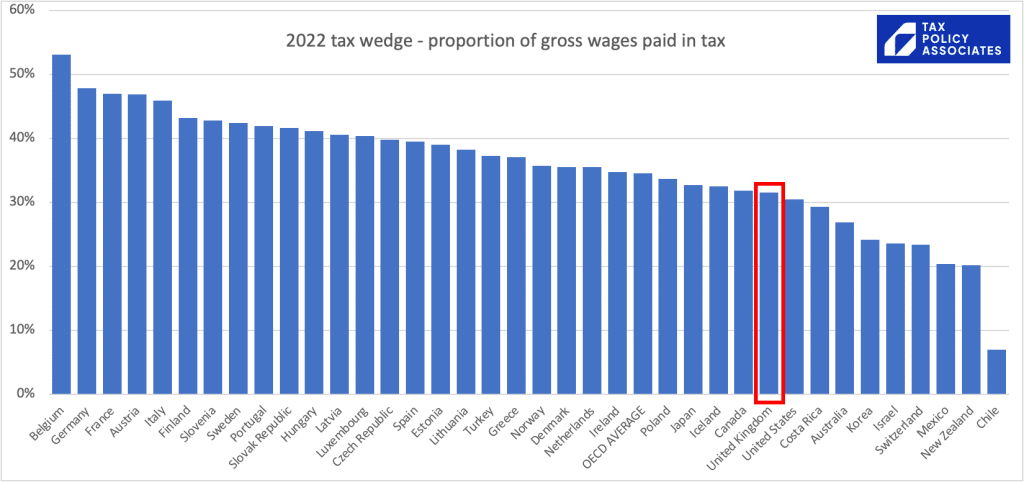
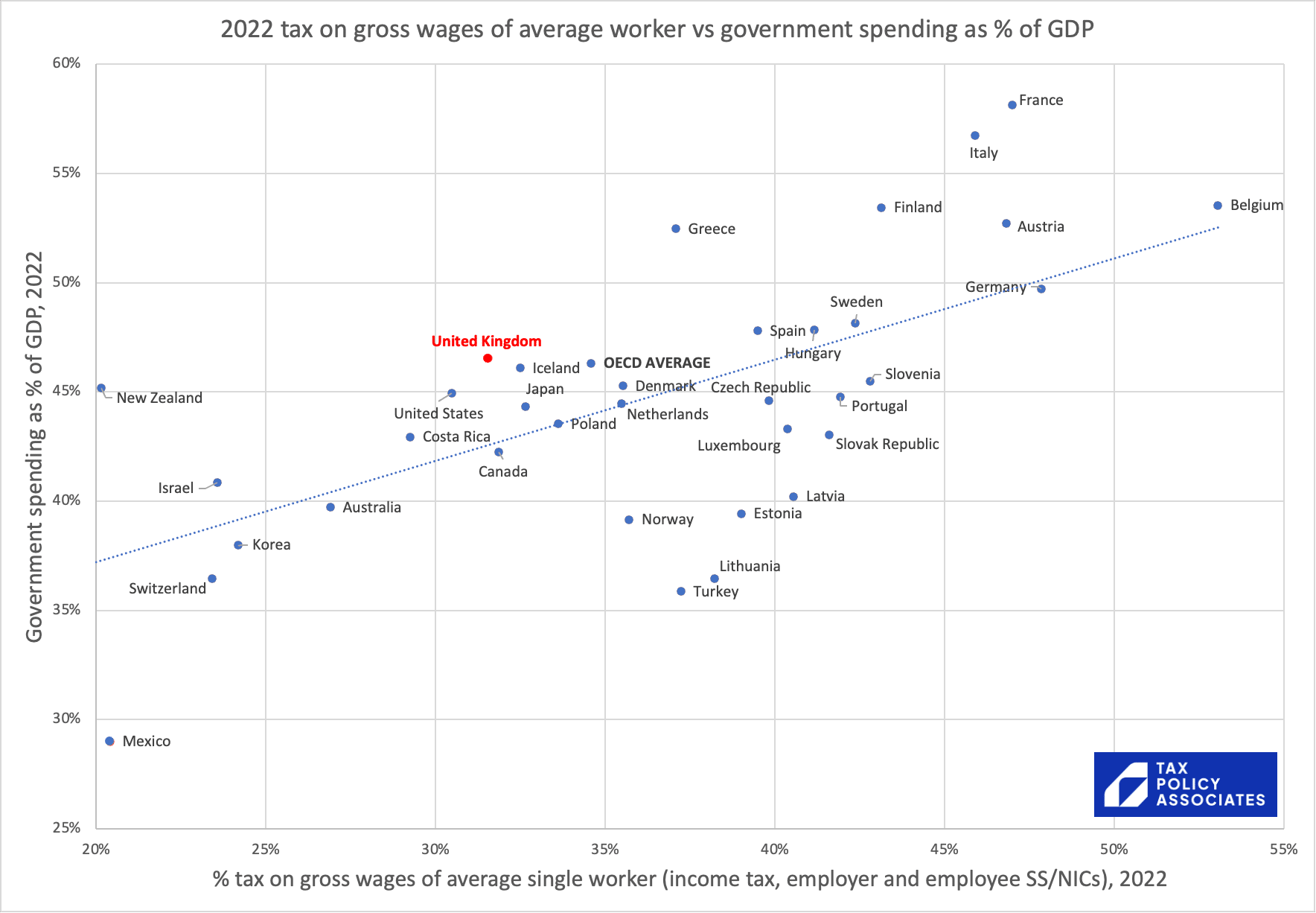
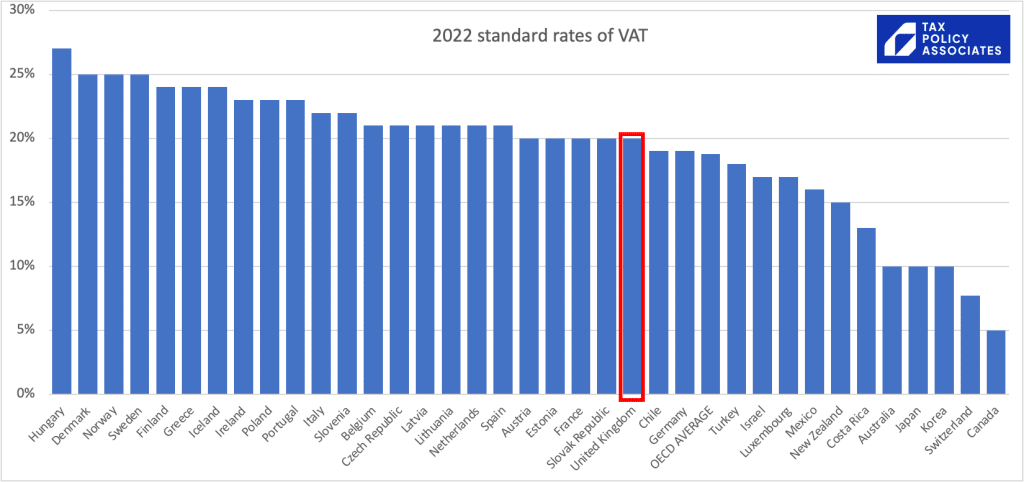
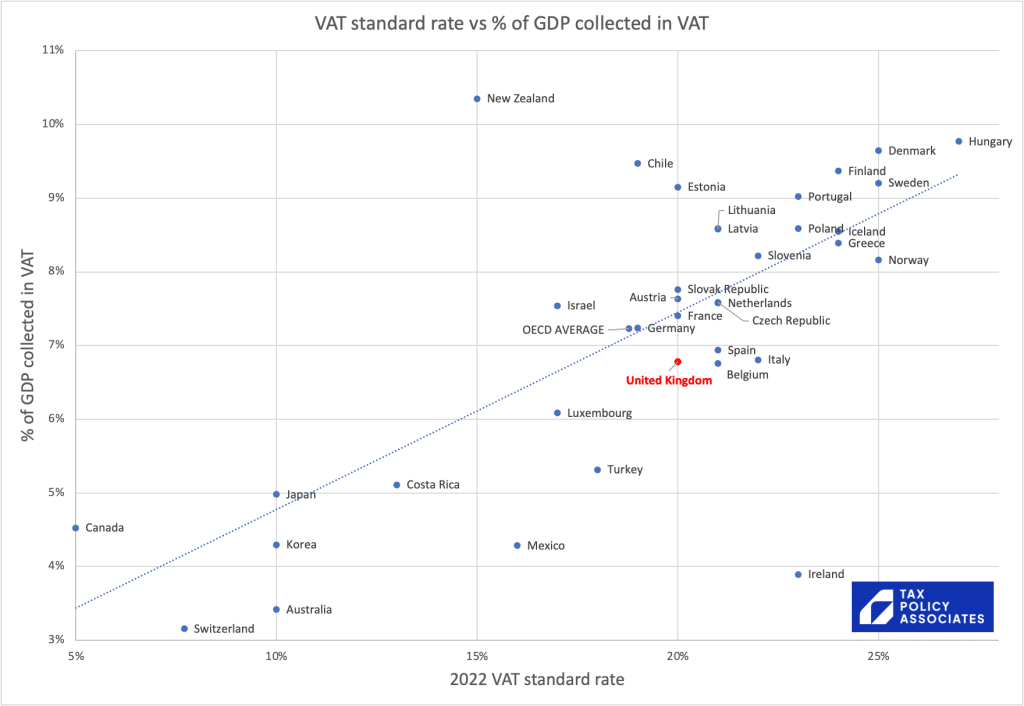
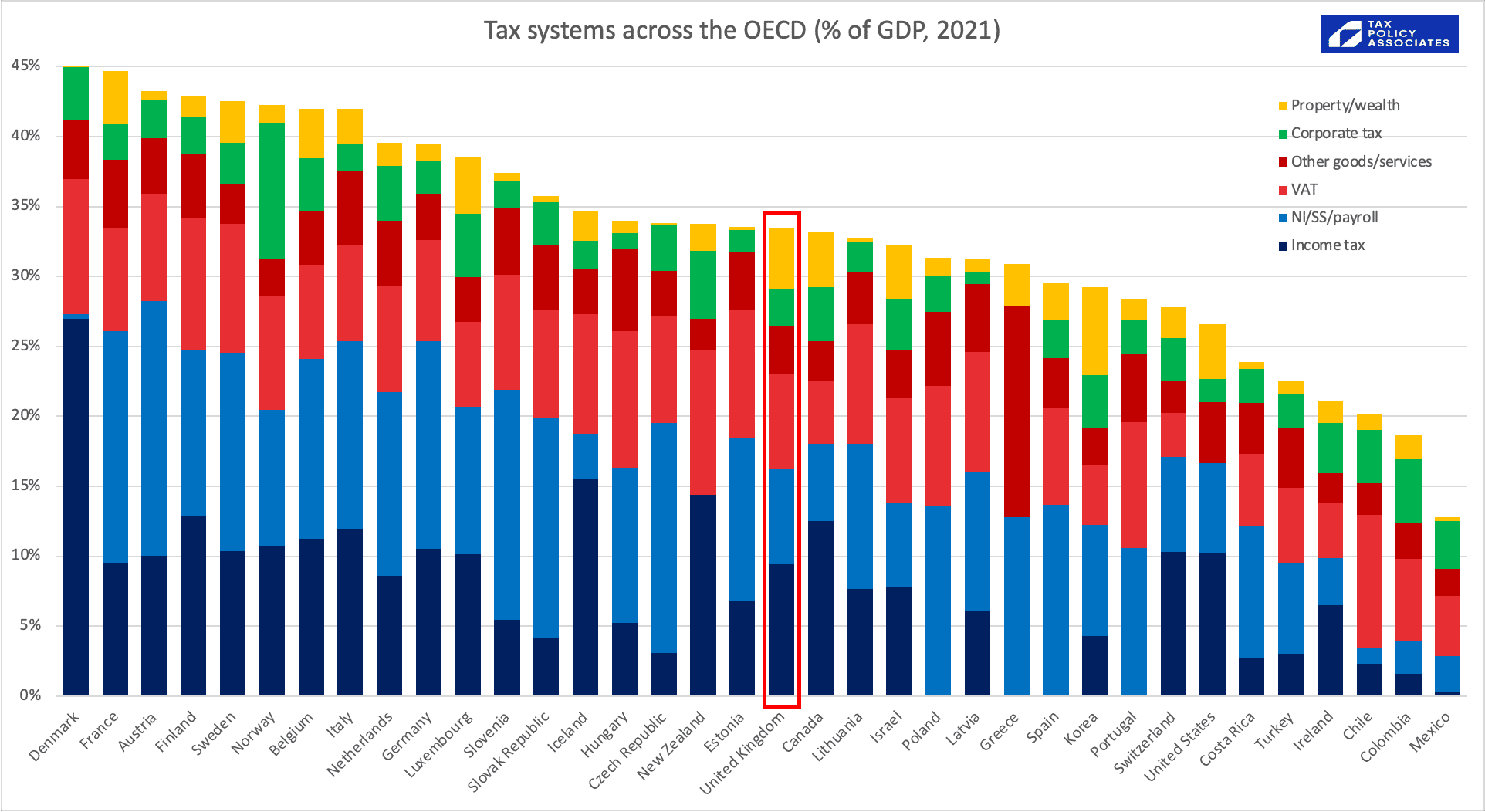

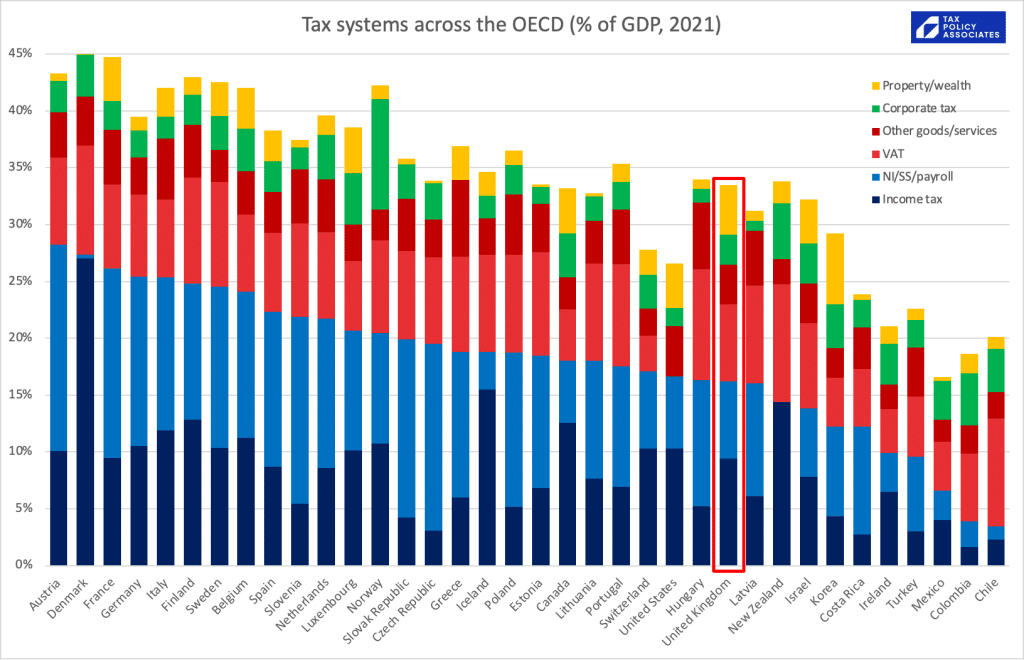
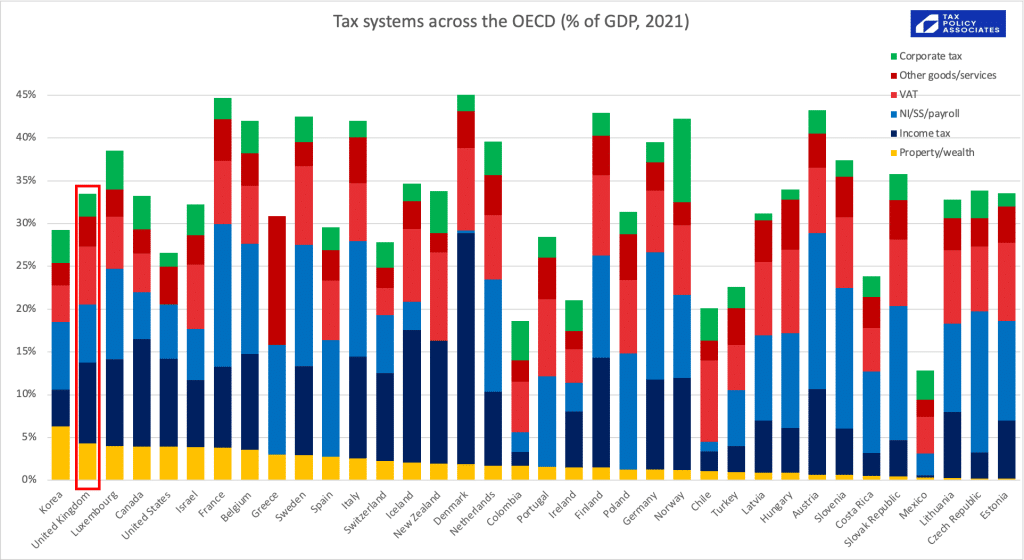
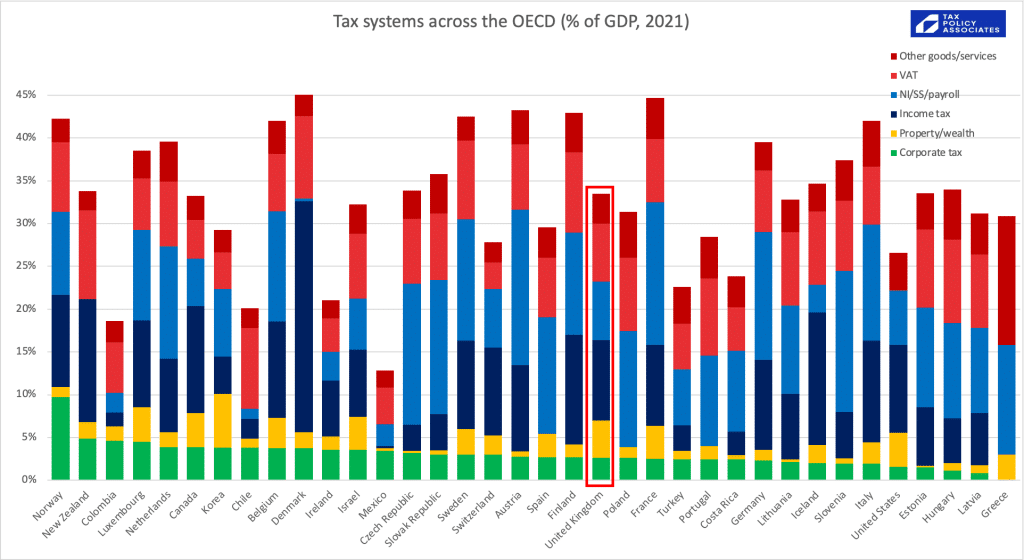
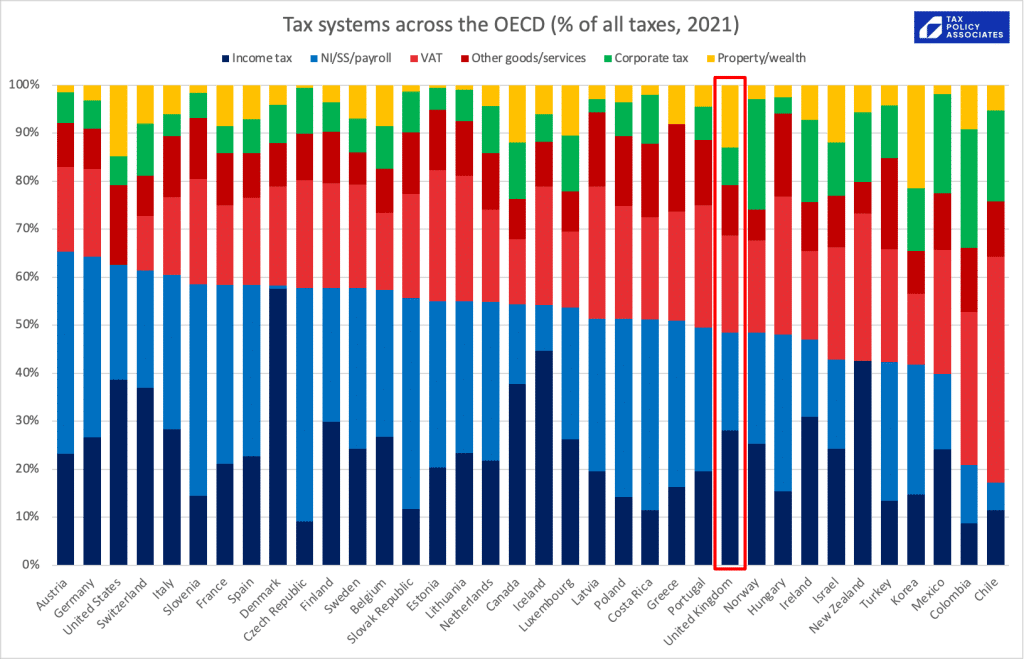
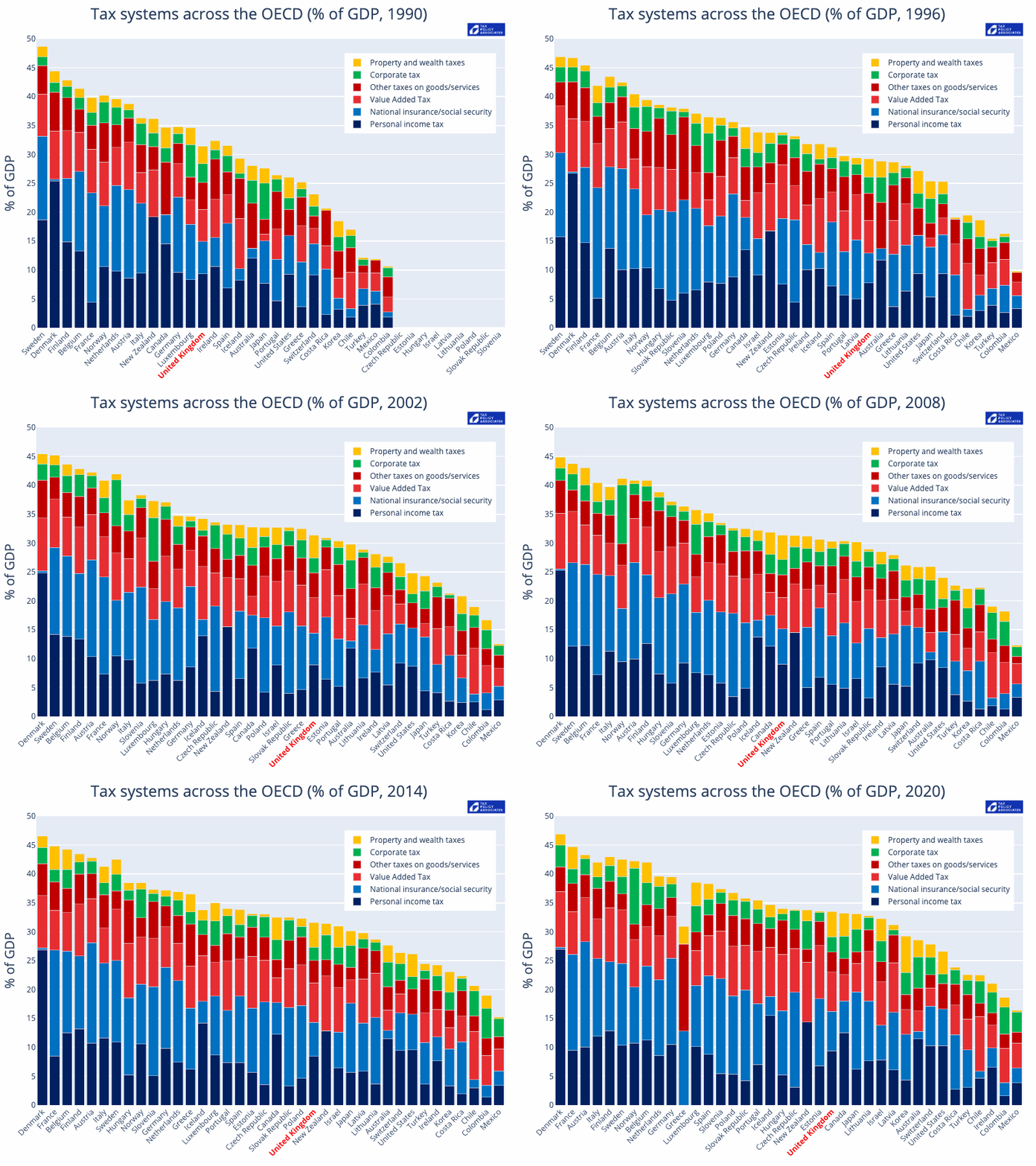
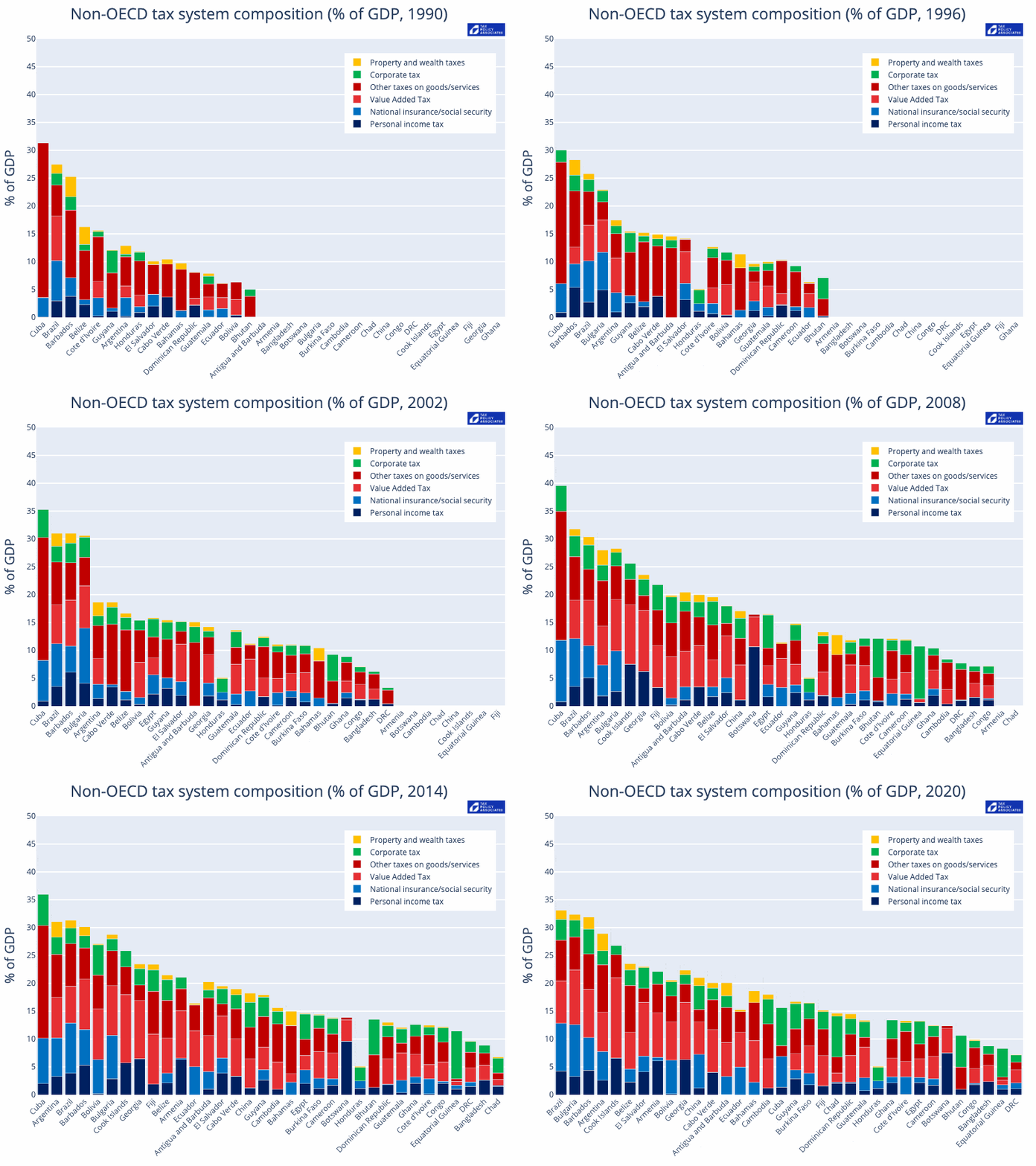
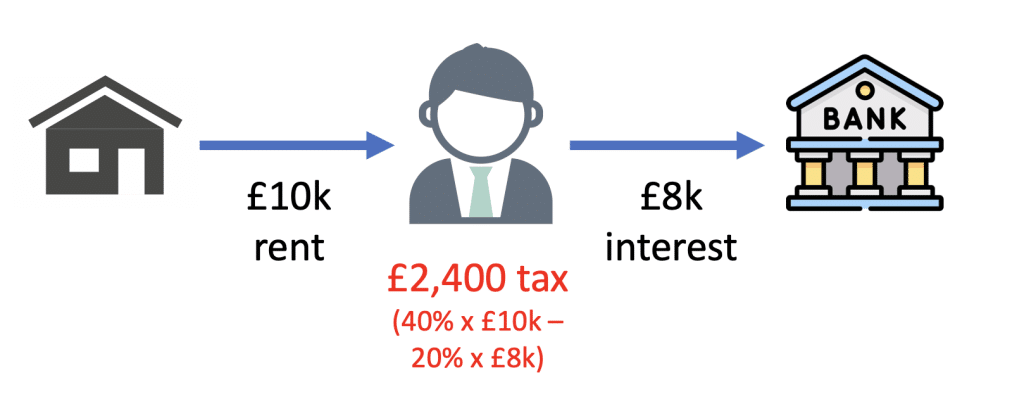
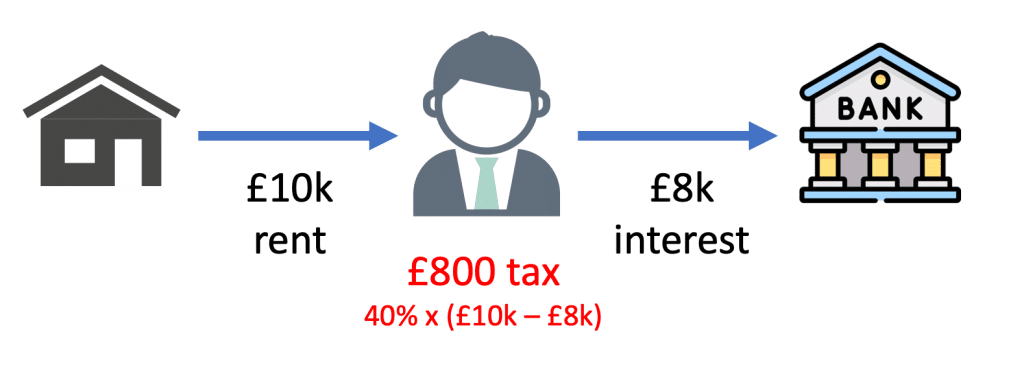


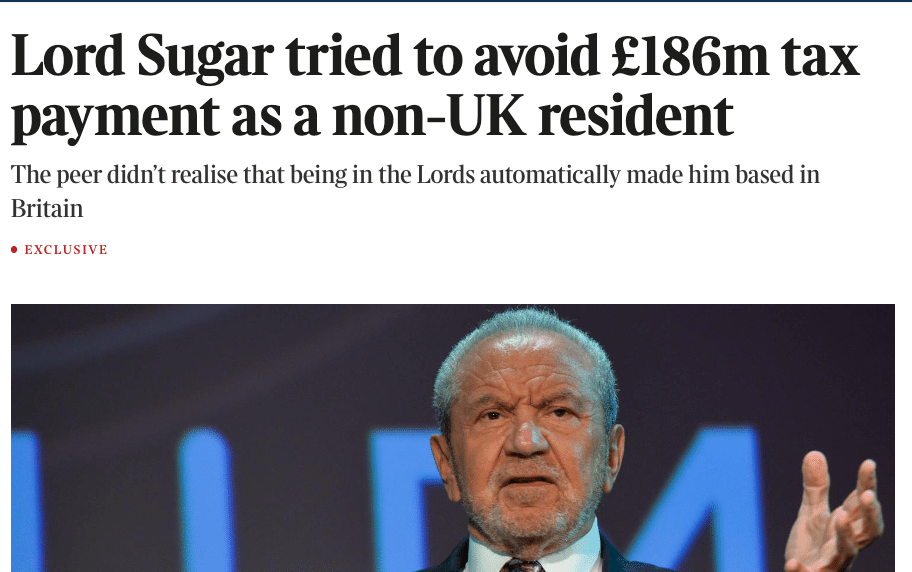

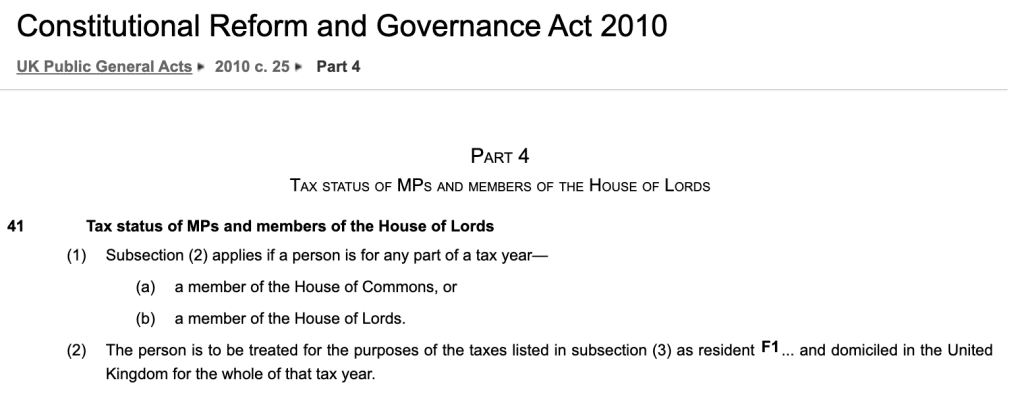


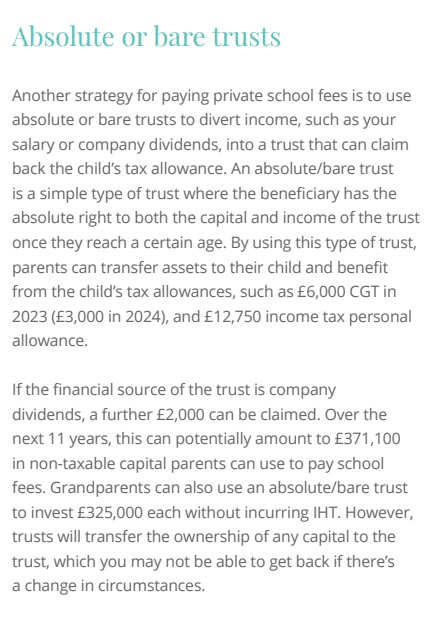
![629Income paid to [F1relevant] children of settlor
(1)Income which arises under a settlement is treated for income tax purposes as the income of the settlor and of the settlor alone for a tax year if, in that year and during the life of the settlor, it—
(a)is paid to, or for the benefit of, [F2a relevant] child of the settlor, or
(b)would otherwise be treated (apart from this section) as income of [F2a relevant] child of the settlor.](https://taxpolicy.org.uk/wp-content/uploads/2023/09/Screenshot-2023-09-07-at-20.39.08-1024x162.png)
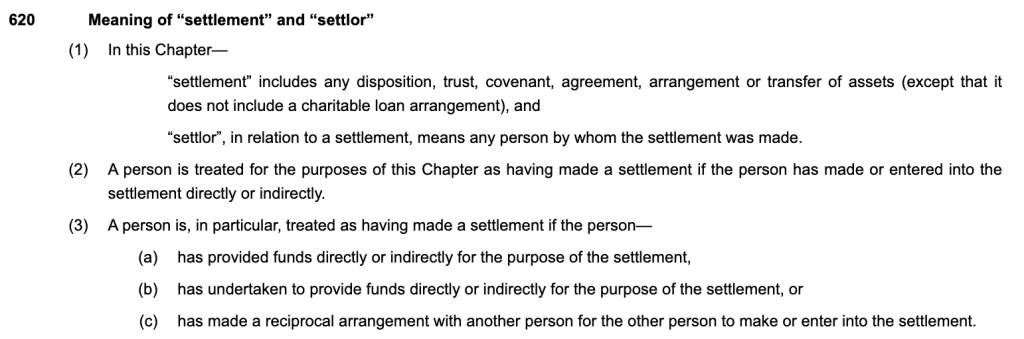



![Duty to keep register
(1)A company to which this Part applies must keep a register of people with significant control over the company.
(2)The required particulars of any individual with significant control over the company who is “registrable” in relation to the company must be entered in the register [F17before the end of the period of 14 days beginning with the day after all the required particulars of that individual are first confirmed].
(3)The company must not enter any of the individual's particulars in the register until they have all been confirmed.
(4)Particulars of any individual with significant control over the company who is “non-registrable” in relation to the company must not be entered in the register.](https://taxpolicy.org.uk/wp-content/uploads/2023/08/Screenshot-2023-08-11-at-13.06.44-1024x236.png)


![14(1)A person commits an offence if the person—
(a)fails to comply with a duty under section 790G or 790H, or
(b)in purported compliance with such a duty—
(i)makes a statement that the person knows to be false in a material particular, or
(ii)recklessly makes a statement that is false in a material particular.
(2)Where the person is a legal entity, an offence is also committed by every officer of the entity who is in default.
(3)A person guilty of an offence under this paragraph is liable—
(a)on conviction on indictment, to imprisonment for a term not exceeding two years or a fine (or both);
(b)on summary conviction—
(i)in England and Wales, to imprisonment for a term not exceeding twelve months or to a fine (or both);
(ii)in Scotland, to imprisonment for a term not exceeding twelve months or to a fine not exceeding the statutory maximum (or both);
(iii)in Northern Ireland, to imprisonment for a term not exceeding six months or to a fine not exceeding the statutory maximum (or both).]](https://taxpolicy.org.uk/wp-content/uploads/2023/08/Screenshot-2023-08-09-at-18.23.57-1024x482.png)







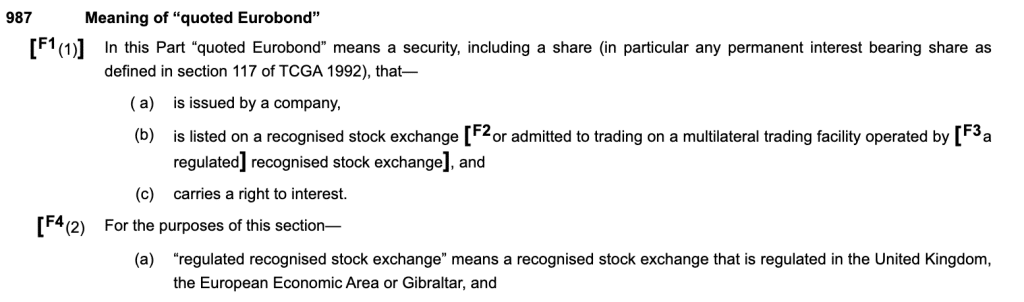


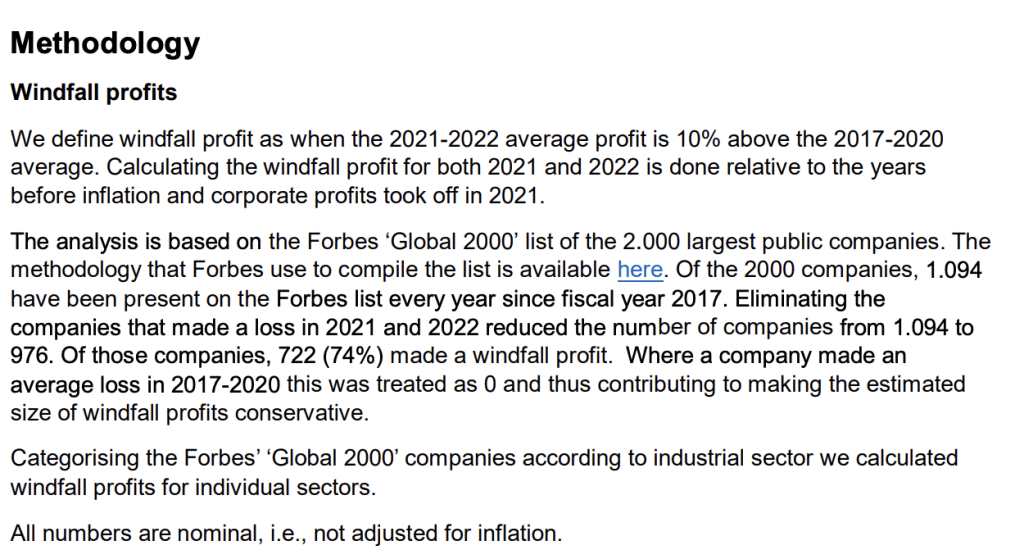
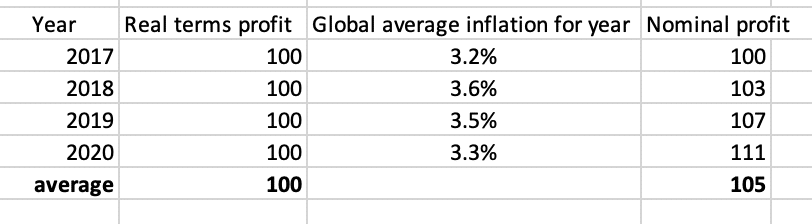

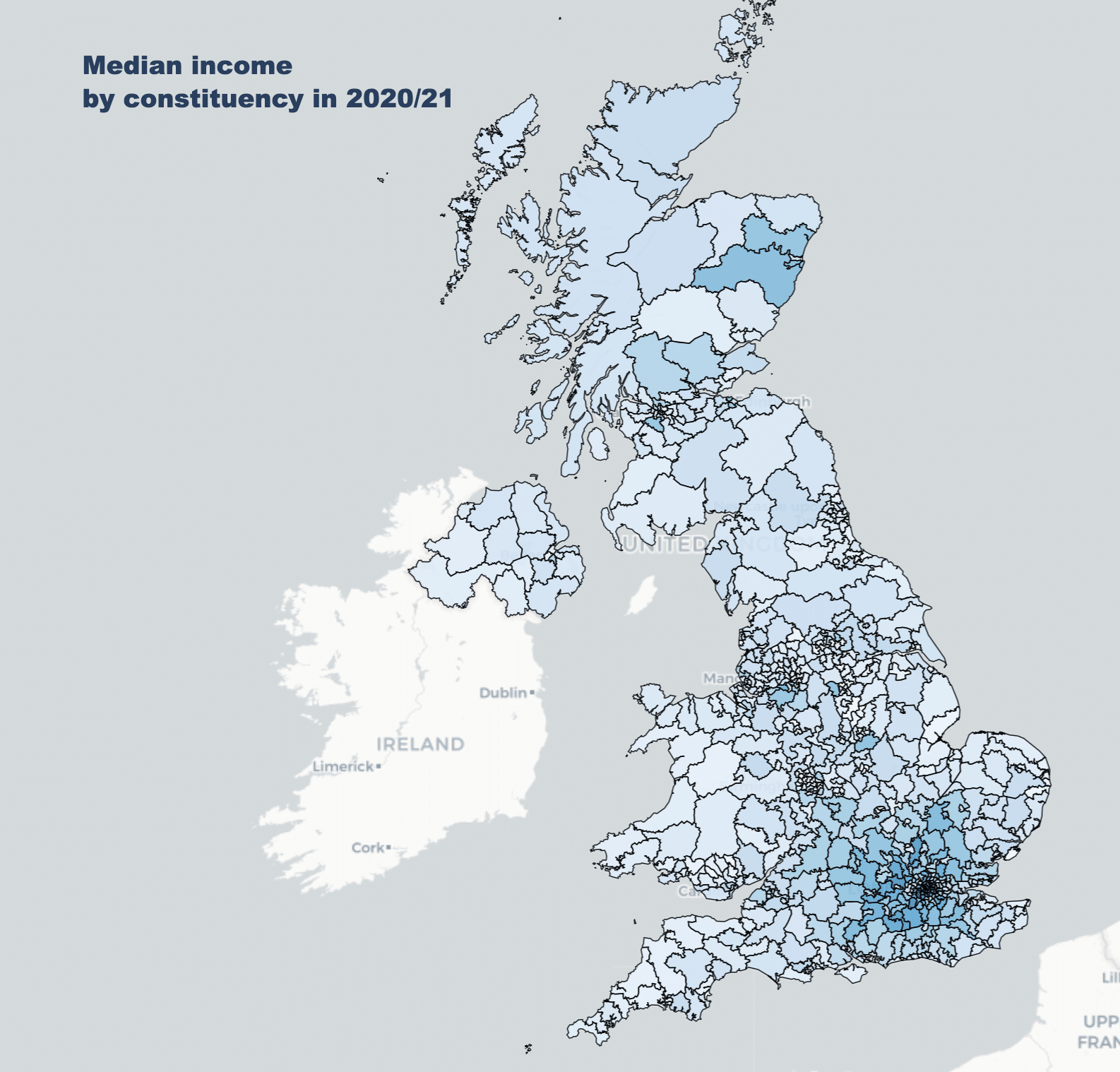
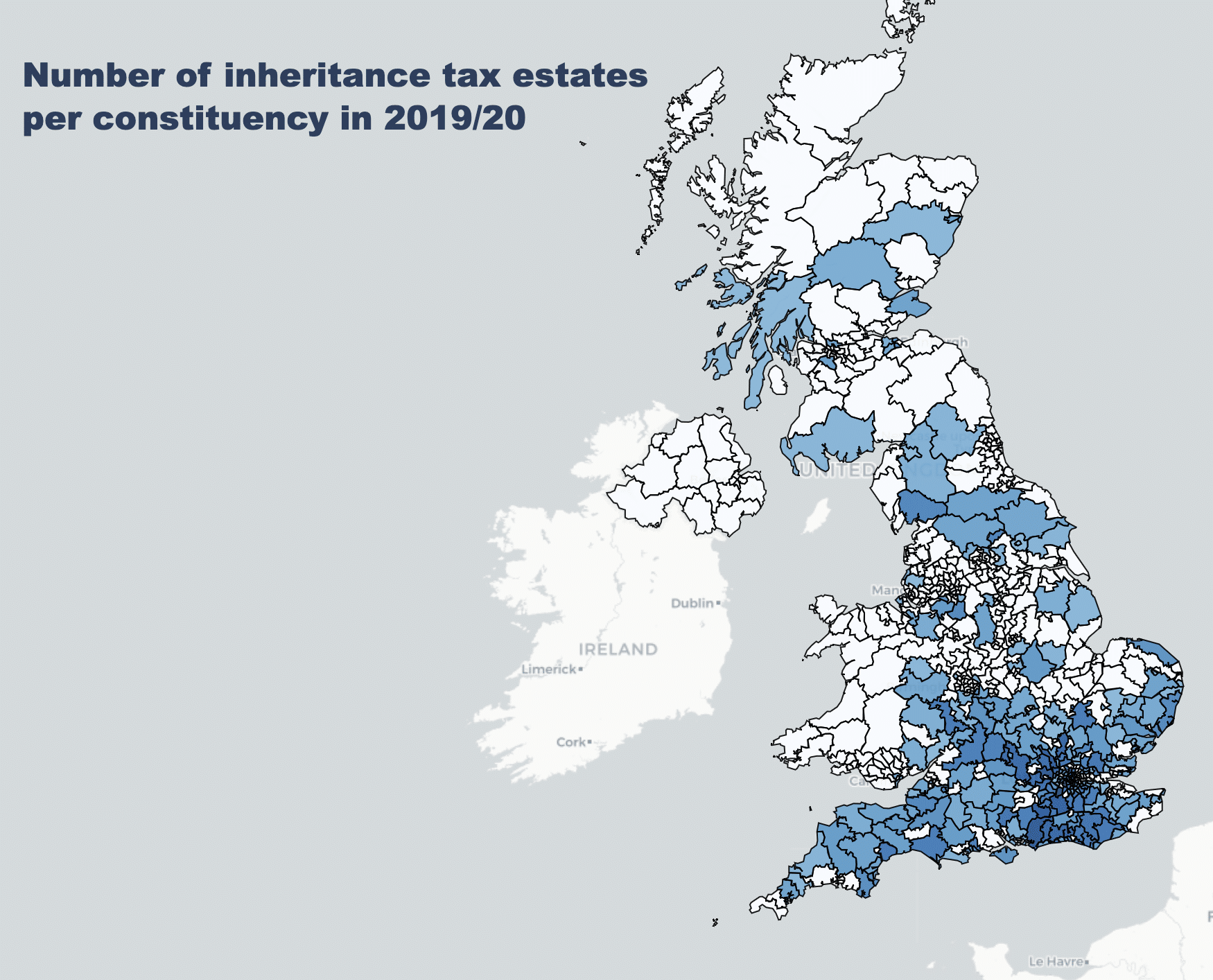
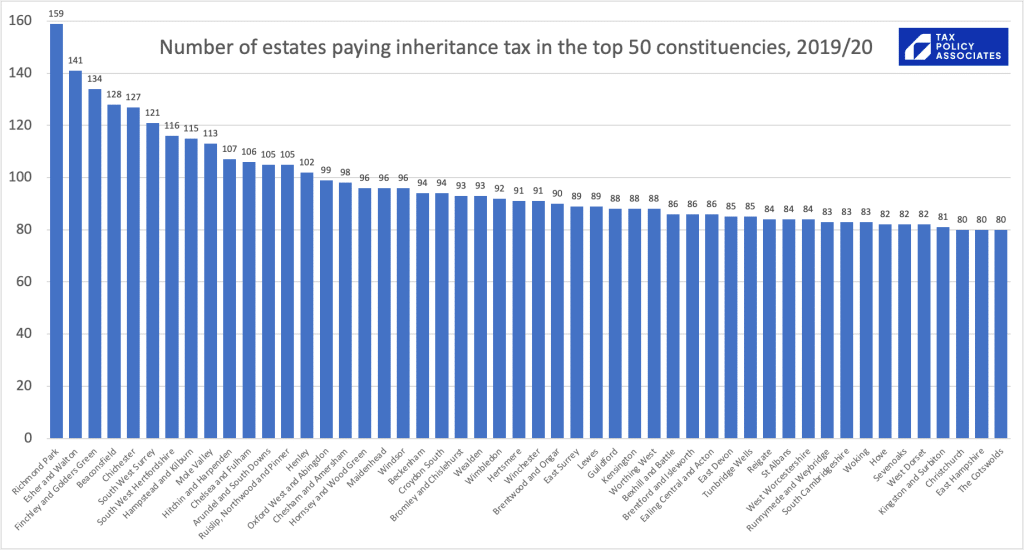


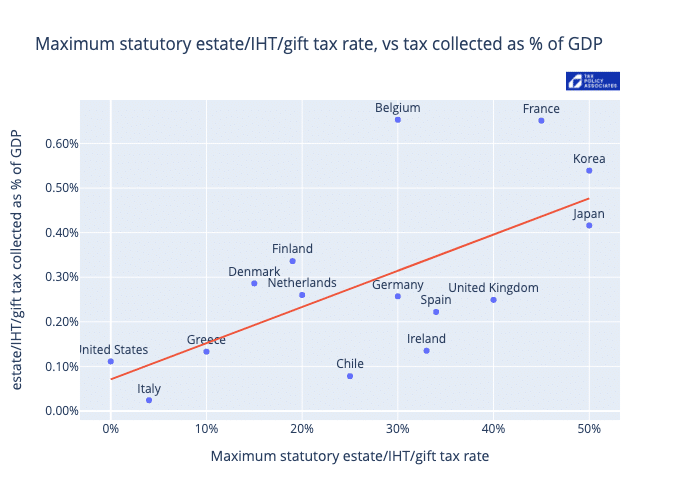


![9Registration documents
(1)The memorandum of association must be delivered to the registrar together with an application for registration of the company, the documents required by this section and a statement of compliance.
(2)The application for registration must state—
(a)the company's proposed name,
(b)whether the company's registered office is to be situated in England and Wales (or in Wales), in Scotland or in Northern Ireland,
(c)whether the liability of the members of the company is to be limited, and if so whether it is to be limited by shares or by guarantee, and
(d)whether the company is to be a private or a public company.
(3)If the application is delivered by a person as agent for the subscribers to the memorandum of association, it must state his name and address.
(4)The application must contain—
(a)in the case of a company that is to have a share capital, a statement of capital and initial shareholdings (see section 10);
(b)in the case of a company that is to be limited by guarantee, a statement of guarantee (see section 11);
(c)a statement of the company's proposed officers (see section 12)[F1;
(d)a statement of initial significant control (see section 12A).]
(5)The application must also contain—
(a)a statement of the intended address of the company's registered office; F2...
(b)a copy of any proposed articles of association (to the extent that these are not supplied by the default application of model articles: see section 20)[F3; and
(c)a statement of the type of company it is to be and its intended principal business activities.]
[F4(5A)The information as to the company's type must be given by reference to the classification scheme prescribed for the purposes of this section.
(5B)The information as to the company's intended principal business activities may be given by reference to one or more categories of any prescribed system of classifying business activities.]
(6)The application must be delivered—
(a)to the registrar of companies for England and Wales, if the registered office of the company is to be situated in England and Wales (or in Wales);
(b)to the registrar of companies for Scotland, if the registered office of the company is to be situated in Scotland;
(c)to the registrar of companies for Northern Ireland, if the registered office of the company is to be situated in Northern Ireland.](https://taxpolicy.org.uk/wp-content/uploads/2023/07/Screenshot-2023-07-10-at-10.08.49-1024x964.png)