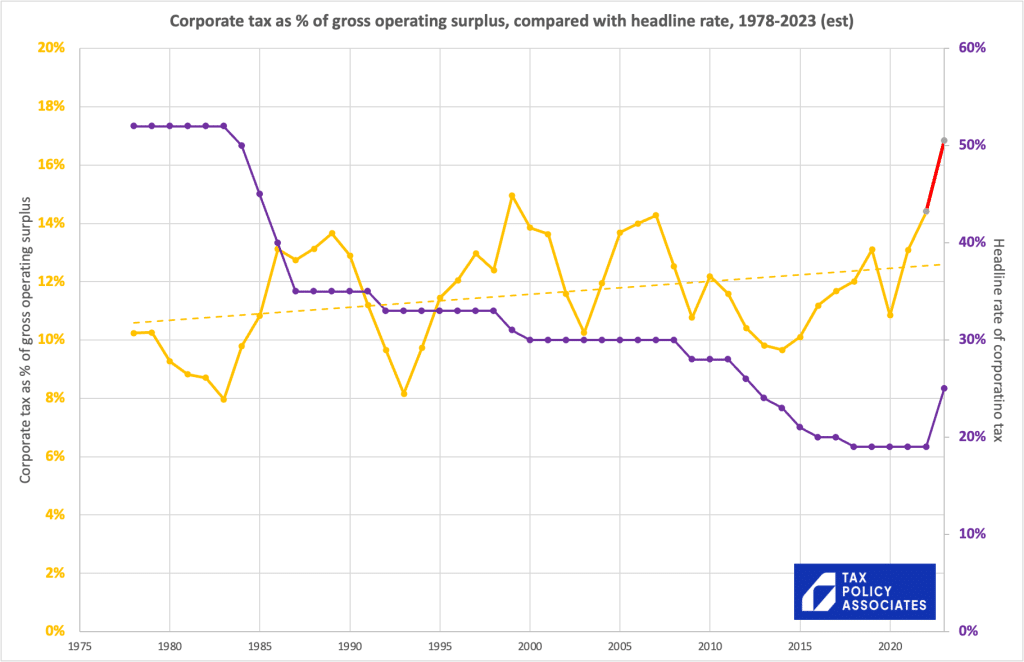
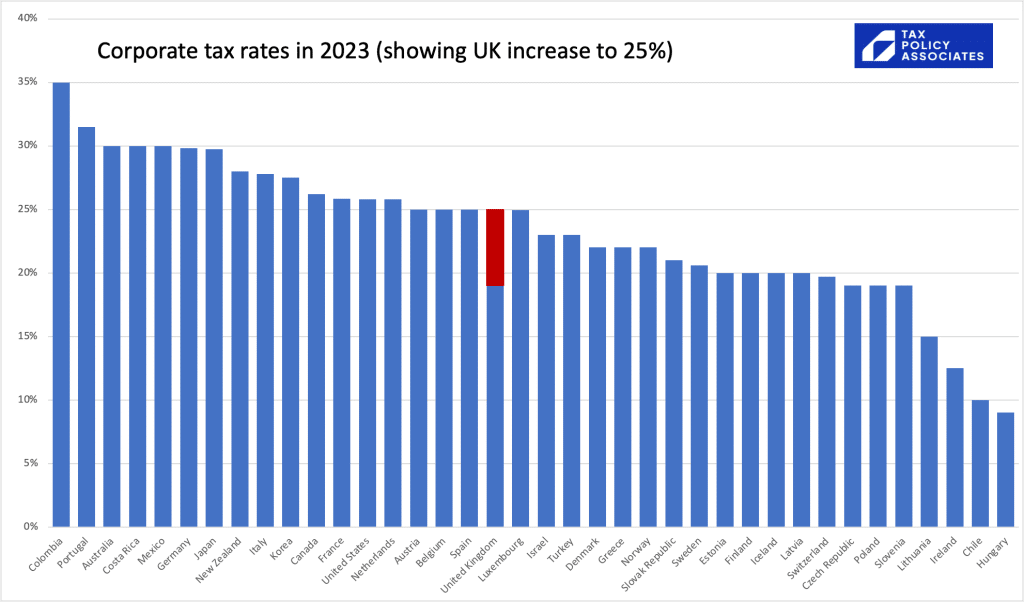
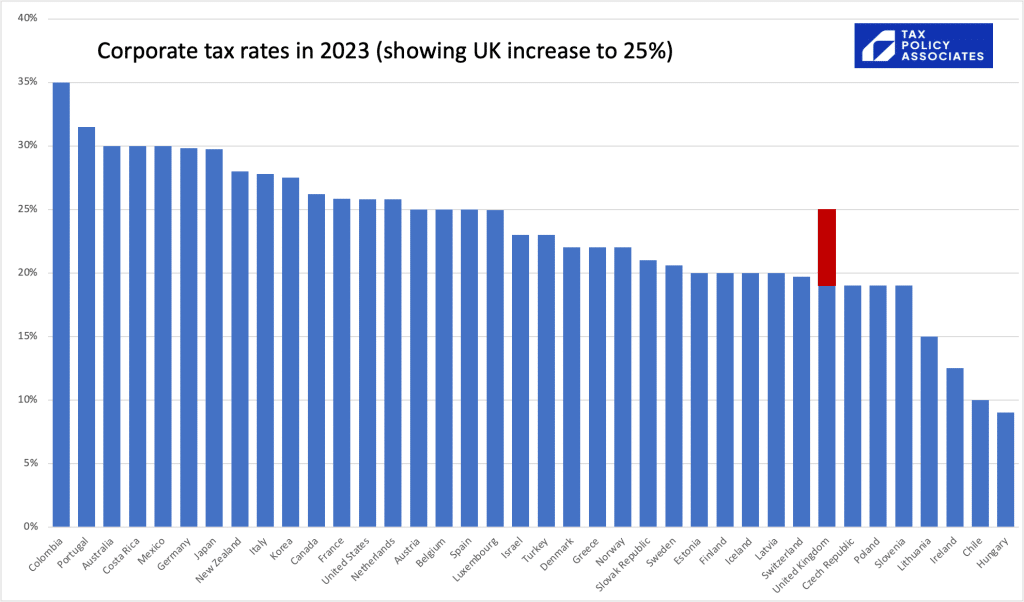
If I were a Conservative Chancellor of the Exchequer, I’d want a tax system that delivers growth and doesn’t hold back families and businesses from achieving success. These would be my seven priorities:
1. An end to marginal ratesthat punish work
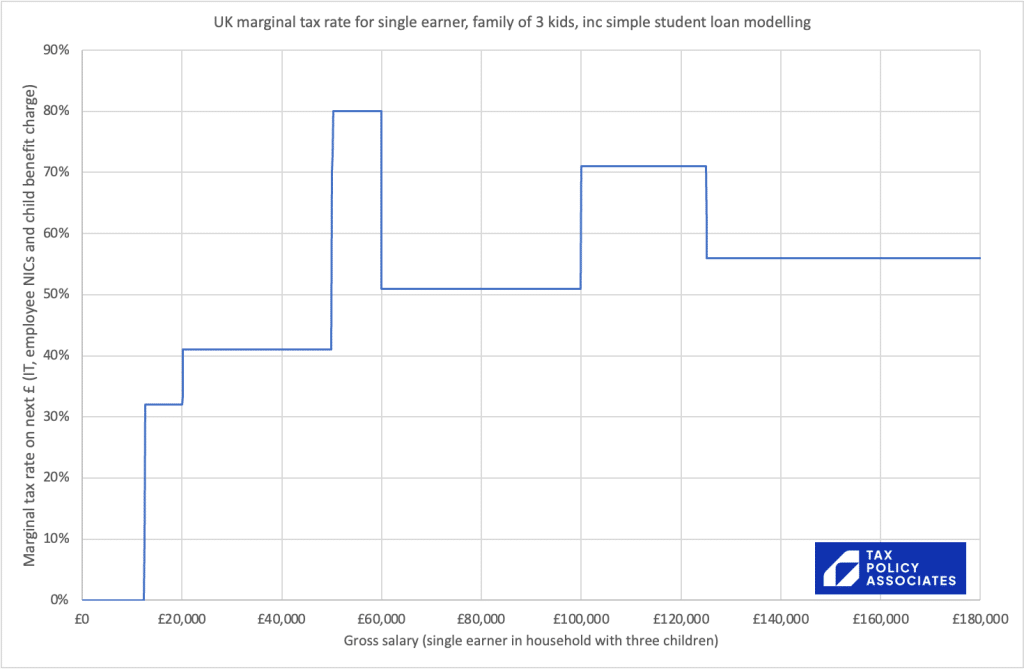
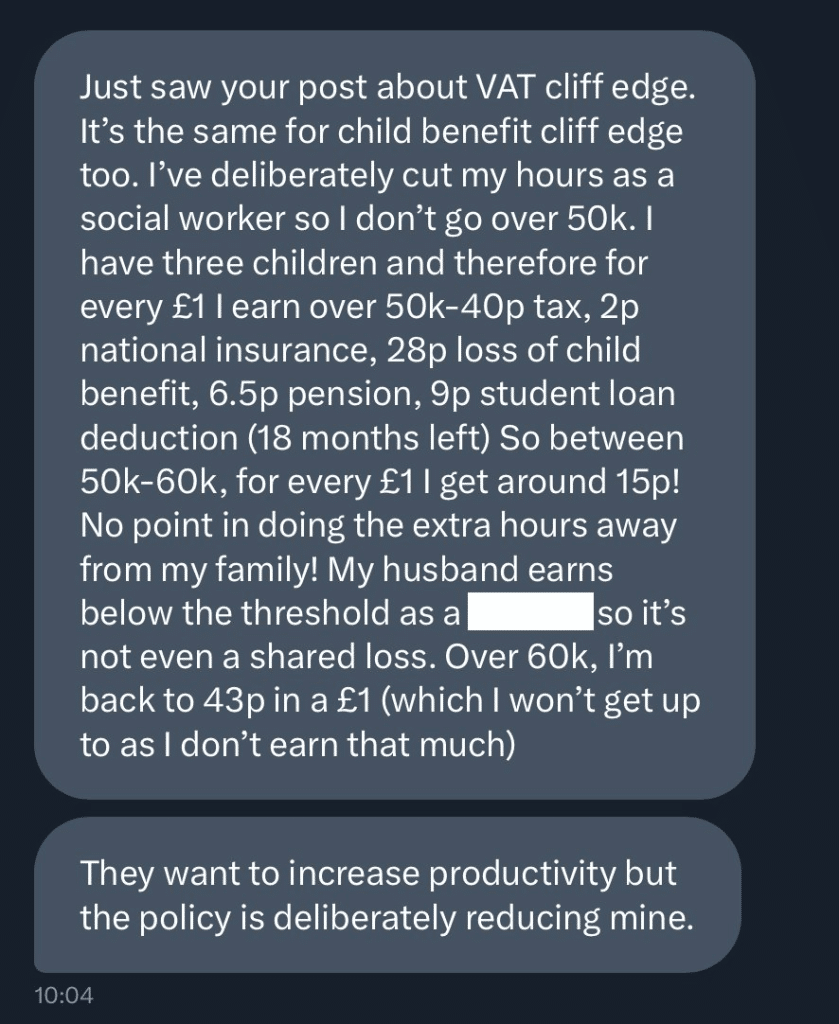
A marginal rate of 50% is unacceptable, but there are social workers earning £50k paying marginal tax rates of 80%. No Conservative should stand for this:
Many of the problems can be immediately fixed with abolition of the child benefit taper (and the Child Benefit High Income Charge) and the personal allowance taper. The cost is likely less than HM Treasury has historically believed, given the widespread taxpayer response of controlling working hours and/or making additional pension contributions. The residual cost could be covered by a small change to the rate and/or thresholds for the highly paid (e..g. by slightly lowering the additional rate threshold).
The impact of student loan repayments on marginal tax rates should be reviewed, together with the impact of the benefit system on marginal rates.1
2. Fix a VAT system that holds business back
No Conservative should accept a VAT threshold which abundant evidence suggests is a brake on the growth of small companies:
There is a well-known solution to this that is both neat and plausible: to increase the threshold. That would, however, only make the problem worse – the threshold would become a brake on the growth of larger companies. The real answer is to drop the threshold, and use the revenues raised to reduce the rate of VAT for everybody.
The practical difficulty for small and micro businesses shouldn’t be understated, in terms of both financial challenges and compliance headaches. The threshold should be frozen for now, with a review and consultation on the way forward, ready for legislation in Finance Act 2024.
3. Slash the rate of inheritance tax for the middle class
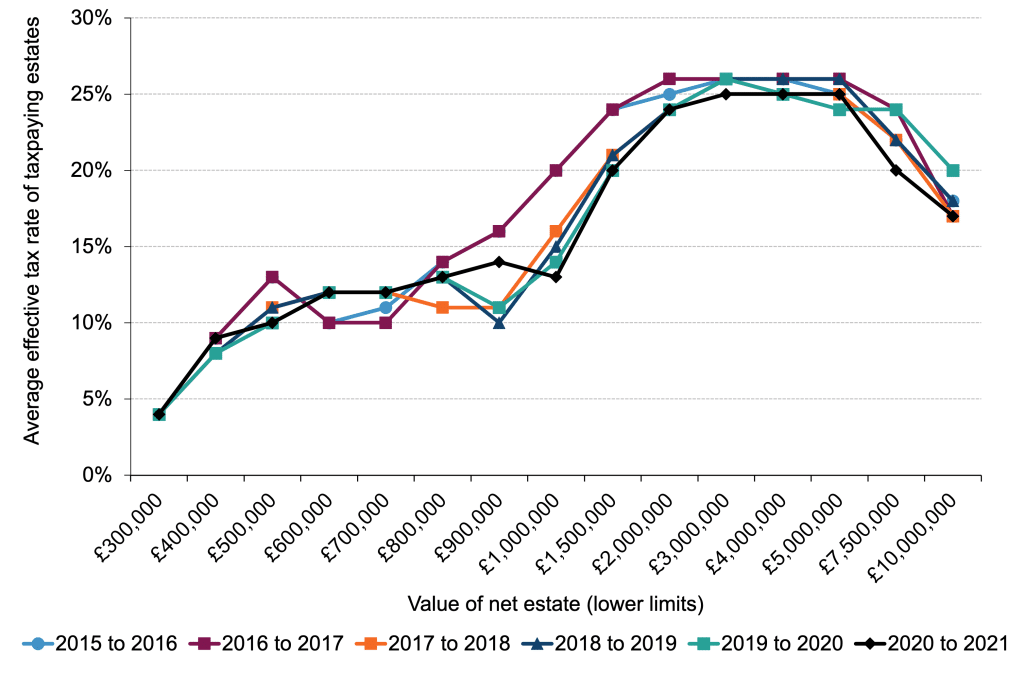
Time to fix both problems. Small business and small agricultural holdings should continue to be protected, but there’s no reason why the middle classes should be paying twice the effective rate of inheritance tax as the seriously wealthy:
The answer: radically cut the rate, paid for by capping exemptions and reliefs.
4. Make full expensing permanent
Last year, the Government introduced “full expensing” – up-front tax relief for investment in plant and machinery. There’s a powerful argument for this – the UK tax system currently has a bias against business investment.
The problem is that, for essentially bureaucratic reasons, full expensing was introduced as a temporary three year measure. Currently it only has two and half years left. This renders it pointless – no business is going to base its long term investment planning on a relief which will disappear by the time spades hit the ground. The Tax Foundation, which has campaigned for full expensing in the US and UK, says this means full expensing currently has no long term impact on UK growth. A missed opportunity.
The Chancellor should have the courage of his convictions, and make full expensing permanent. Then challenge Rachel Reeves to say that Labour will keep it. A long term bipartisan commitment to maintaining full expensing would give business the confidence to invest, boosting wages and economic growth.
The first to go? Stamp duty – not SDLT, but the ancient tax on documents, which still works in much the same way as it did in 1671.
Stamp duty costs business a small fortune in compliance, and likely raises little or no actual revenue. We have modern taxes on securities and land, and we don’t need anything else. I wrote more on that here.
6. Simple simplification
Everyone agrees the tax system is too complicated. But that complication is itself an obstacle to simplification. The Office of Tax Simplification had less impact than many hoped because its recommendations were often too politically difficult to implement.
So we need to look for ways to simplify the tax system which are more modest but still high impact. One is to identify “fossils”: remnants of another area which now serve no real purpose other than complication and cost.
So the Finance Bill should contain a power for tax rules and even entire taxes to be repealed by Regulations, where the OBR agrees that this can be done without a material loss of tax revenue. HMRC and HM Treasury could create a small team working on this full time.
7. Protect the public from tax scams
Tax avoidance used to be the preserve of the wealthy. When it failed – as in recent times it almost always did – the taxpayers could afford to pay the bill.
These days, the wealthy are mostly too well-advised to buy tax schemes. But there’s a largely unregulated industry flogging dodgy tax schemes to people with modest earnings and assets. When it goes wrong, the advisers disappear, often leaving the taxpayers with life-changing bills. It’s a scandal – a mis-selling scandal as much as a tax scandal.
The Government should criminalise unregistered mass-marketed tax schemes (including “refund” schemes such as those discussed here). Promoters (and their directors and owners) should be liable to penalties of twice the fees collected. I’ll be writing more about the details of this soon.
Thanks to WeThink (formerly Omnisis), we’ve conducted some opinion polling on inheritance tax. The polling confirms that inheritance tax really is deeply unpopular, and this isn’t driven by ignorance of how it works. But our polling also suggests that most of the unpopularity is driven by the details, and not the principle, of inheritance tax.
I’ve been curious how much of this polling is led by people not understanding the current over-complicated inheritance tax threshold, which means that inheritance tax in practice usually only applies to a married couple’s assets over £1m. I’ve also been curious whether we’re seeing a principled opposition to inheritance tax in any form, or opposition to inheritance tax as it currently works.
WeThink (formerly Omnisis) very kindly offered to conduct a poll for us without charge. We devised a series of simple questions about inheritance tax that attempted to probe peoples’ views in a reasonably neutral way.
The fairness of the tax
WeThink split the panel into two statistically identical groups.
The first set was asked – without any context – a simple question: “Do you think IHT is fair currently?”. The answer was pretty overwhelming:
Surprisingly, Labour voters are even more likely than Conservative voters to believe inheritance tax is unfair.1 Possibly that’s because some of them believe the tax is too low.2
“For most married couples, inheritance tax is only charged where their net assets exceed £1m. The rate is 40%. Do you think IHT is fair currently?“4
That lets us test the hypothesis that people oppose IHT because they wrongly think it will apply to them.
We did indeed see an increase in the percentage believing inheritance tax to be fair, but not a terribly significant increase:
We still see a large majority against the tax; only Lib Dem voters thought inheritance tax fair, even when provided with that context.
I’d conclude from this that we should discard the idea that inheritance tax’s unpopularity is caused by a lack of understanding of the system.
Options for change
Where a respondent said IHT was unfair, we went on to ask what they thought the inheritance tax threshold should be, giving options ranging from no threshold to a £10m threshold. We also included an option for abolition. The intention was to test whether opposition to inheritance tax reflects an absolute principle, or a dislike of the way inheritance tax currently works.
A slim majority – 56% – of the “no context” group preferred changing the threshold to abolition.
An even more slim majority – 53% – of the “context” group preferred changing the threshold to abolition:5
We can draw two conclusions from this. First, some of those saying inheritance tax is unfair believe it unfairly under-taxes estates. Second, at least on this evidence, it’s plausible that if the threshold was set to £2m then only a minority of people would believe inheritance tax to unfairly over-tax.
Finally, for those who said IHT was unfair, but were open to keeping it at a different threshold, we then tested different rates, ranging from 20% to 80%. There was overwhelming support (almost 80%) for reducing the rate to 20%. That was unexpected, and in retrospect we should have given more options below 20%.
Conclusions
Inheritance tax is deeply unpopular – not a surprise.
Some of that unpopularity is caused by a misapprehension as to the level of wealth at which the tax applies. But most of it isn’t – there’s a large majority who believe the tax is unfair even when told that it only applies (broadly speaking) to wealth over £1m.
A much more significant factor appears to be unhappiness with the threshold and/or the rate. It’s plausible that a majority would believe inheritance tax to be fair if the threshold was increased and/or rate reduced. I wouldn’t put it more strongly than that given the limitations of this exercise.
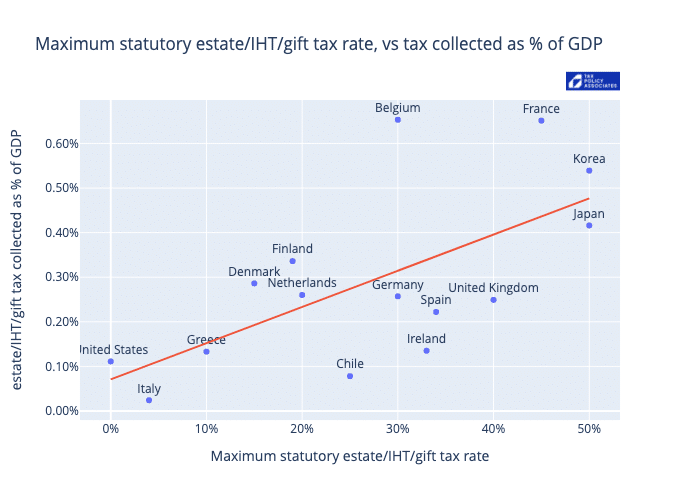
My view remains that we should cut/cap the over-generous reliefs from inheritance tax, and use the revenues to cut the rate. We didn’t ask that in the polling, because I’m unconvinced the complexity of these issues, and the inevitable trade-offs, can be condensed into a one sentence question without pushing an agenda (one way or another). I would prefer that to raising the threshold, because the high (by international standards) 40% rate drives avoidance. A low rate and wide base is the standard boring tax policy response to most problems – and it’s the right one here.
Many thanks to Brian Cooper and Mike Gray at WeThink/Omnisis for their generosity.
Footnotes
I’m not including the breakdowns for the other political parties because the numbers are too small for statistical significance; even the Lib Dem figures should be treated with caution. You can see all the details here. ↩︎
There’s some support for that in the polling detail; about 10% of Labour voters support a rate of inheritance tax of 60% or more; no Conservative voters do. However the statistical validity of individual answers is very low, so I don’t think it’s safe to draw conclusions from this. ↩︎
Note that YouGov gives a “not sure” option and we did not. The question of whether “forced choice” is the best approach has a long history… I have no expertise in this, and was happy to be guided by the experts at WeThink. ↩︎
It’s a very simplified presentation but compressing an explanation of inheritance tax into a sentence is not easy. One obvious criticism is that the question could give the impression that all the assets are taxable the second they hit £1m, and this is a fairly common folk belief about tax thresholds. That was perhaps a mistake on my part. ↩︎
Presumably because people who think inheritance tax is unfair after being presented with the context have already considered and dismissed a £1m threshold ↩︎
In the last few months we may have given the impression that someone earning £50k, with three children under 18, faced a marginal tax rate of 68%. We may have suggested that this was a disincentive to work, contributed to a shortage of key workers and even held back economic growth. We may have used words like “indefensible” and “disgrace”.
We now realise that our analysis failed to take into account the uprating of child benefit, and in fact the marginal rate in this scenario will be 71%, not 68%. A graduate in this position repaying a student loan can face a marginal rate of 80%.
We also wrongly suggested that someone earning £50k and with six children under 18 faced a marginal rate of 90%. The correct marginal rate is 96%.
We can only apologise for what is an unacceptable error, and would like to make clear for the record that a marginal rate of 71%, 80% or 96% is absolutely fine, and the effect on the individuals involved and the economy as a whole is completely unimportant.
The corrected chart showing the child benefit withdrawal/CBHIC effect:
And including student loan repayments:
The spreadsheet model is available here. Note these figures are for the UK excluding Scotland. The Scottish rates are higher.
The UK’s high marginal tax rates on people earning £50k are a disincentive to work. They’re made worse by the way a large chunk of the tax is collected – the “high income child benefit charge” (HICBC).
The HICBC creates a “tax trap” for employees who usually wouldn’t file a tax return. If they earn £50k, and they or their partner claims child benefit, they have an immediate requirement to file and pay the HICBC. It’s easy to get that wrong. In the last four years 19,000 did, and were hit with a penalty of up to 30%.
Tax systems shouldn’t have marginal rates of over 70%, and shouldn’t have “traps” that can catch the unwary. The HICBC should be abolished.
UPDATE: note that the income point where child benefit starts to be clawed back was moved from £50k to £60k in the Spring 2024 Budget. That’s an improvement – but all the problems of HICBC we discuss in this article stil remain.
The chart above shows the marginal rate of income tax paid by a UK taxpayer with three children under 18. That’s a 71% marginal tax rate between £50k and £60k.1
The high marginal rate results from George Osborne’s 2013 decision to withdraw child benefit from people earning a “high income” – £50,000. If the £50k threshold had been upgraded with inflation it would be £67,000 now – but it wasn’t. Around one in three households now include someone earning £50,000 – it’s not a “high income”.
How the HICBC works
Whatever we think of the politics of withdrawing child benefit from “high earners”, the way that it was done was a mess.
UK tax generally applies to individuals.2 I’m taxed on my income; my wife is taxed on hers. The benefits system on the other hand, looks at overall household income and capital. The decision was taken to withdraw child benefit based on a mixture of both – if the highest earner in a household hit £50,000 then child benefit would start to be clawed back, and if it hit £60,000 then all child benefit would be withdrawn.3
The challenge was that, whilst HMRC knows how much I earn, it doesn’t have a way to see how much the highest earning person in my household earns. So child benefit couldn’t “automatically” be clawed back.
The highly bureaucratic answer to this challenge was to outsource all the work to taxpayers. Osborne created a new tax – the HICBC – and required people to self-assess it in their tax return. It’s a bad answer because most people earning £50,000 are employees, and don’t file a tax return. So people would have to realise they had to start filing a tax return just because they claimed “too much” child benefit, and notify HMRC.
If your household has children under 18 and someone earning £50k, then you have three choices:
Don’t claim child benefit.
Register for child benefit but opt not to receive it.
Register for child benefit, receive it, and then pay some/all of it back through a special tax, the High Income Child Benefit Charge.
These are difficult choices with not-at-all-obvious outcomes:
The first choice – not claiming child benefit – seems the easiest thing to do, but is actually a mistake, because it means a non-working parent can lose their national insurance entitlement.4 It’s a mistake I made – and as a result my wife lost some pension entitlement. The Government pledged to fix this back in April, but nothing’s happened since.5
The second is the “correct” answer if the highest earner in a household makes £60k+ but not so great an answer if they earn £50-60k, because they’re then giving up all their child benefit unnecessarily.
The third is a pretty bad answer, but if the highest earner makes between £50k and £60k then it’s the only way to receive some child benefit. If you’re already on self assessment and filing online, then paying the HICBC is fairly easy – you just tick a box and type in the amount of child benefit claimed. But if, like most employed people, you’re not on self assessment, then you’ll have to register for self assessment. If you don’t, you’re breaking the law.
These choices all get more complicated if income unexpectedly changes during a year, or a couple separate, or a couple move in together.
And lots of people get it wrong. Sometimes in the Dan’s-wife-loses-some-of-her-pension way. And sometimes in failing to realise you now have to register for self assessment and file/pay the HICBC.
How many people get it wrong?
Almost 20,000 people who weren’t on self assessment were hit with penalties from 2019/2020 to 2022/23 for not realising6 they should be paying the HICBC:7
We don’t have data on the amount of the penalties, but likely it was several hundred pounds.8
This is after an HMRC review of HICBC penalties in 2018 – before then, there were about twice as many penalties issued.9
HMRC has sent millions of letters to people warning them about the HICBC, but not everyone affected has received one. HMRC has pursued people for penalties even when they weren’t adequately informed; tax tribunals have been reasonablysympathetic to taxpayers.10
What should happen?
Marginal rates of over 60% should be regarded as unacceptable. I’d abolish the HICBC on this ground alone.
But the way the HICBC was implemented is an illustration of how a tax system shouldn’t work. A wholly disproportionate level of complication for people on not-very-high incomes doing something as ordinary as having children, where the total amount of tax at stake is so small (likely around £1bn).
The Government has promised to improve things by enabling HICBC to be collected through PAYE, removing the need to file a self assessment form. But taxpayers would still have to notify HMRC this, and still have to make surprisingly difficult choice as to how to proceed.
I’d hope abolishing the HICBC would appeal to both a Conservative Party that regards high marginal rates as an anathema, and a Labour Party that’s always supported the principle of universal child benefit. The amount of money at stake is small, and if the government wished to recoup the cost from people earning £50k, that could be easily done in a less damaging way (for example by upgrading the higher rate income tax threshold slightly more slowly than it otherwise would).
There are a number of cases where it’s more complicated than this. For example: where the high earning parent doesn’t know if the other parent claims child benefit, or where child benefit is claimed by someone outside the household but who provides the household with financial support. I’m going to ignore these issues for now, but they’re important for the people affected. ↩︎
It also means the child won’t automatically receive a national insurance number when they turn 16 ↩︎
Thanks to Miro in the comments for reminding me of this. ↩︎
My assumption is that it was almost always an accident, because I think it would be obvious to most people who understood the system that they would be caught ↩︎
We’ve reviewed multiple Property118 client files to investigate how they implement their tax avoidance scheme. We’ve found that the scheme is implemented so badly that our previous criticism is beside the point – a key drafting error means that the scheme fails immediately. It also appears that their clients receive templated “advice” which fails to identify key issues, or warn clients about the legal and tax risks they are running.
We previously concluded that the structure had significant technical flaws which meant that it likely did not work. However, this analysis assumed the structure was correctly implemented. It isn’t. We have now reviewed complete sets of Property118 advice and documentation, and there are very significant failings in both legal implementation and in Property118’s advice.1
The key problems
Here are the key problems:
The most important document implementing the structure appears to be defective. A trust deed that is supposed to create a bare trust actually reserves rights for the landlord, and so likely creates a taxable settlement. This has complex and highly deleterious consequences for the landlord.
There is another series of drafting errors around the indemnity which supposedly enables a company to claim mortgage interest tax relief. The documents are contradictory, and either don’t create an indemnity at all, or accidentally create a stream of taxable interest payments.
A key tax consequence is whether the structure is disclosable to HMRC under DOTAS. It appears that Property118’s associated barristers chambers, “Cotswold Barristers” never considered this point until we raised it. The head of Cotswolds Barristers, Mark Smith, then published an article that the HMRC official who introduced DOTAS described as “hopelessly wrong”. Our view is that anyone who wrote that article is not competent to advise on tax.
Cotswold Barristers appear to never advise on the application of anti-avoidance rules to their structure.
Cotswold Barristers don’t appear to review their clients’ mortgage terms and conditions, despite promoting their scheme on the basis it is compliant with mortgage T&Cs.
Cotswold Barristers have provided entirely incorrect technical advice to clients they’ve advised to use a “mixed partnership” structure. The advice missed a key section of the legislation.
The documents and advice are almost identical for all clients – Mark Smith and Property118 use very standardised templates.
Cotswold Barristers appear to mostly “rubber stamp” advice provided by unqualified “tax consultants” working for Property118. Nevertheless, fees of £30-70k are typically charged for implementing the structure.
Tax advice usually draws clients’ attention to risks, whether large or small. Cotswold Barristers never mention risks of any kind, legal or tax.
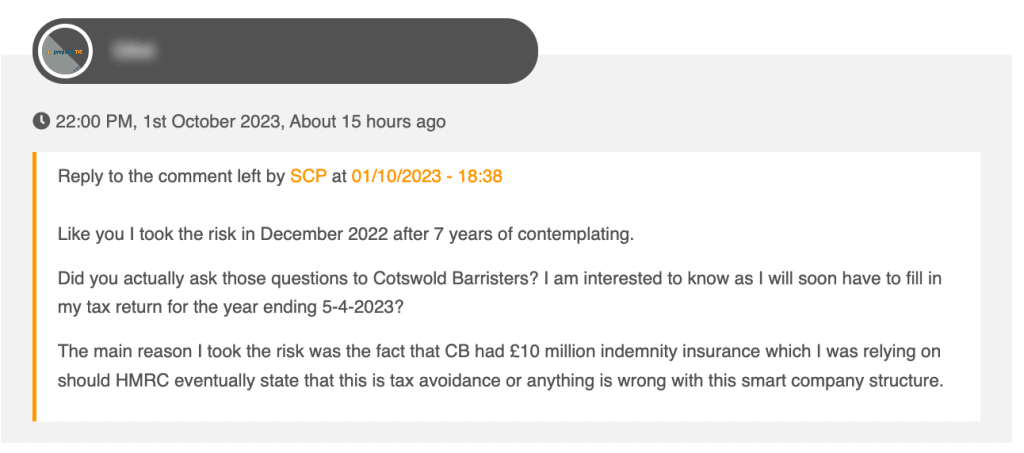
Instead, the clients are told that the barristers have £10m of insurance “per client” and therefore the clients are “shielded from financial risk”. This is not true. It’s not £10m “per client” – it’s effectively £10m across all 1,000+ clients. And in any case, professional insurance does not “shield clients from financial risk”. To access the insurance, clients have to successfully sue the barrister for negligence – which is far from straightforward.
It is unclear whether Mark Smith, the only named member of Cotswold Barristers, has the qualifications or experience to advise on tax.
We explain these points further below.
If Property118 have really sold their scheme 1,000 times, and the documents are as standardised as they appear to be, then all 1,000 schemes will have failed. Not just failed because of the technical analysis in our previous article, but failed because of incompetent implementation. We believe many of the clients entered into the scheme on the basis of assurances about Mark Smith’s insurance which were false.
Given the scale of the problem, we believe it’s important that taxpayers and HMRC resolve these issues now, rather than years later, when the situation could become a loan charge-style crisis. We will also be asking the Bar Standards Board to investigate.
Central to the Property118 scheme is that the landlords declare a trust over their rental properties in favour of a newly incorporated company. Here’s the description of the deed of trust in Mark Smith’s advice:
So this is intended to be a “bare trust” – the company/beneficiary holds absolutely and the landlords are mere trustees. The company would then be taxed more-or-less as if it held the properties directly.
The first operative clause in the trust deed intends to achieve that:
But then, three clauses later, we see this::
This clause has astonished every lawyer who’s seen it. It enables the landlords/trustees to reacquire the property for no payment – but that’s entirely incompatible with a bare trust, where beneficiary absolutely owns the property.2
We have spoken to a range of trust and trust tax experts, and we believe there are three principal possibilities:3
Clause 2.4 gives the landlord/settlor an interest in the trust, which means it is a settlement for tax purposes. This seems the most likely outcome.4
The trust is a bare trust, but Clause 2.4 gives the landlord/trustee an option to reacquire the beneficial interest at any time. We believe this is unlikely given that clause 2.4 is part of the trust, not an ancillary contract.
The trust could be void and/or ineffective for tax purposes. We believe this is unlikely, given that the meaning of the document is clear, even if its tax effect is undesirable.
The first two scenarios result in an up-front capital gains tax charge as if the properties were sold for market value, with no possibility of incorporation relief.5 A settlement would also give rise to complex ongoing tax issues.6. The third scenario might be a welcome one, as possibly it provides a way to take the position that the whole transaction had no effect.7 In all three scenarios there is no possibility of the company claiming a tax deduction for mortgage interest, because you don’t “look through” a settlement in the way you look through a bare trust.
However, regardless of which of these three scenarios apply, none result in the structure intended by Property118 and Cotswold Barristers. The scheme is dead on arrival, and our previous analysis of the structure is no longer necessary (or indeed relevant);8
It is not uncommon for tax avoidance schemes to fail because of incorrect implementation. For example, the Vardy stamp duty/SDLT avoidance scheme involved an unlimited company paying a dividend ‘in specie’ of the real estate itself, and claiming that the dividend was outside SDLT. This was probably destined to fail, but it didn’t even get that far. The dividend wasn’t properly declared and was unlawful.
So far as we are aware, on the basis of the Property118 documents we’ve reviewed and the documents reviewed by advisers we’ve spoken to, this error is present in all Property118 documentation.
We do not believe a reasonably competent tax lawyer would have drafted a trust deed in this manner – it is basic trust law that the beneficiary of a bare trust has an absolute entitlement to the trust property, and no other party has any entitlement. The drafting therefore suggests that Cotswold Barristers may have been negligent.
The misdrafted indemnity
The central point of the structure is to solve the “section 24” limitation on landlords claiming mortgage interest tax relief. The idea is that the landlord continues making interest payments to the mortgage lender, but these are funded by the company, which can claim a tax deduction.
Here is how Mark Smith describes this in the “client care” letter he sends to accompany the draft documents:
The drafting to achieve this is a mess of confused and contradictory provisions.9
First, the Business Sale Agreement contains no indemnity. Instead it says:
The definition of “Liabilities” lists the outstanding mortgages. But law students usually learn in their first contract law class that English law doesn’t permit the purchase of liabilities. In some circumstances you can buy assets in consideration for an assumption of liabilities – but that won’t work here, because the mortgage lender won’t permit the company to assume the liabilities.10
The sale contract for the properties contradicts this:
In other words, the landlords continue to owe the mortgage to the lender (as they must), but the company now owes an equivalent debt to the landlords. That is a sensible approach, but legally different from an indemnity. It creates an obligation for the company to pay a principal amount to the landlord, but doesn’t create any obligation for the company to cover the landlord’s interest payments
There are then three very confusing clauses:
First, an attorney/delegation clause in the trust deed, under which the landlords appoint the company as their attorney to make interest payments on their behalf:
This normally won’t be permitted by the terms of the mortgage; only the borrower can make payments, and as a practical matter a lender would usually reject payments from another party. We don’t know why it’s included.
Then an indemnity in the trust document:
Does this cover the landlord’s mortgage interest payments? Unclear.11
There is then an “agency agreement” with recitals as follows:
Unusually, recital B is the only operative term in the contract12
So, to recap: under the original mortgage, landlord has an obligation to pay interest to the mortgage lender. Under Clause 2.2 of the trust deed, the landlord delegates the making of these mortgage payments to the company. Under the agency agreement, the company then appoints the landlord as its agent to make the same payments – back where it started. We have no idea what the point of this is. Neither provision will have any tax effect – agency/delegation doesn’t normally change the tax character of a payment (because a payment by an agent or delegate is, for most tax purposes, regarded as made by the principal).
It’s a mess.
However, landlords may be better off if these provisions don’t create an obligation for the company to make indemnity payments in respect of the mortgage interest. First, given the debt created by the sale contract, the payments are likely to be “interest”13 for tax purposes, subject to 20% withholding tax, and additional income tax in the hands of the landlord. Second, the payments are unlikely to be deductible for the company (they are probably not payments under a loan relationship; if they are, the existence of a tax main purpose means they will be non-deductible).
In our view, a reasonably competent lawyer would not have drafted such a web of contradictory and confused clauses.
Incompetent advice on DOTAS
As we will discuss below, Cotswold Barristers rarely provide any advice on any tax issue. One of the many issues they do not discuss is DOTAS – the rules requiring a promoter of a tax avoidance structure to disclose it to HMRC.
We criticised this in our original analysis. Six weeks later, Mark Smith responded with an article that provided technical justification for a claim that DOTAS does not apply (link is to an archived version; it’s no longer on the Property118 website). This is important, because it is the only technical analysis we or any of our sources have seen from Mark Smith, and it therefore lets us assess his competence.
Smith’s article was reviewed by Ray McCann, a retired senior HMRC official. When Ray was at HMRC, he led the introduction of DOTAS. Ray described Smith’s article as “hopelessly wrong”.
Smith made the following serious mistakes, which call into question his basic competence.
The article contains a lengthy argument that the scheme is not “tax avoidance”. This is technically irrelevant. DOTAS turns on whether an arrangement’s “main benefits” include obtaining a tax advantage. It is reasonably clear that tax is one of the main benefits of the Property118 structure; indeed it is not obvious what the other benefits are.14 Smith conceded that there is a tax main benefit, but in such a way that a layperson will not notice the importance of the concession.15
Mark Smith said Property118 was not a promoter because “CB is solely responsible for the design of the [structure], in the sense that any issues arising from the design would lead solely to CB being held accountable”. This is not correct. Property118 makes an initial structural proposal to clients, and therefore is “to any extent” responsible for the design of the scheme. Who is “held responsible” is irrelevant (although why Smith thinks Property118 wouldn’t be legally responsible for their own actions is a mystery).
It appears Mark Smith believed that he could not be a promoter because of legal privilege. But there is no absolute DOTAS exemption for lawyers; the question is whether the “prescribed information” required to be delivered under DOTAS would breach legal privilege. Given the generic nature of the scheme, it is possible (depending on the precise facts) that DOTAS reporting would not in fact breach legal privilege, and Cotswold Barrister and/or Mark Smith is a promoter.
Property118 markets, online and in person, a scheme that has a well-established design – and that makes them a promoter. Smith refers to the Curzon case, but that involved a mere administrator – it’s irrelevant. Anyone marketing a scheme will almost always be a promoter for DOTAS purposes.
Smith then concluded the scheme is an “in-house” scheme. This is a complete misunderstanding of the term. An “in-house” scheme is where a company devices and implements its own avoidance scheme. That is not at all what is happening.16
Mark Smith’s analysis therefore contained a series of elementary but serious mistakes. We believe it was incompetent. If Smith’s article is the basis on which he concluded DOTAS didn’t apply, or indeed if he had never previously considered DOTAS, then in our opinion he fell well below the standard of a reasonable tax barrister, and was negligent. It also leads us to believe he is not competent to advise on tax.
Smith’s article was heavily criticised by Ray McCann and others. At some point Smith reacted to this by silently rewriting his article, and removing the hopeless arguments that the scheme had no promoter and was an “in-house” scheme. Smith now relies upon three claims:
The confidentiality hallmark doesn’t apply because they publish the scheme details widely. That’s not what Property118 told us – when we asked about the details of the structure we were told it was “valuable intellectual property”
It isn’t a “standardised tax product” because they look at each case individually. But the documents and advice we’ve seen from Property118 and Cotswold Barristers have been completely standardised.
There isn’t a “premium fee”. That is clearly incorrect for the “bridge loan” structure, where they charge a 1% “arrangement fee”. It also seems incorrect for the rest of their structure, where the fee varies from £30k to as high as £90k based upon the size of the landlord’s portfolio.
HMRC have never raised this point across at least 20 “compliance checks”. We expect that is because they were not presented with the full facts.19. Less Tax for Landlords told us their structure had been seen by HMRC on 40 occasions – but when HMRC became aware of the structure, they concluded it should have been disclosed. In any event, “nobody else has complained” is not a defence in law.
Smith doesn’t mention the “financial product” hallmark. This is a serious error. The bridge loanobviously is a financial product. The indemnity enabling the company to achieve a tax deduction is intended to give rise to a financial obligation for accounting purposes (or there would be no deduction) and is therefore a financial product. The loan and indemnity have the main benefit of creating a tax advantage, and wouldn’t have been entered into but for the tax advantage. The bridge loan and trust/indemnity are contrived and abnormal steps. The financial product hallmark therefore likely applies. We expect Smith failed to consider it because of his misunderstanding of the hallmark (evidenced in his original article).
This is therefore significantly less incompetent than Smith’s original article, but still contains bad errors of fact and law.
The consequence of DOTAS applying is serious for Property118 and (if he is a promoter) Mark Smith – penalties of up to £1m. There are also serious consequences for their clients: HMRC may have up to 20 years to investigate their tax affairs.
There is no 15% rule in that Act or in any HMRC guidance of which we are aware.
The mixed partnership rules also apply – broadly speaking, they counteract the diversion of income to corporate members of partnerships and LLPs. The 15% reference is perhaps meant to suggest that the allocation to the corporate member reflects an arm’s length return on services provided, and is therefore disregarded under section 850C(15) ITTOIA 2005. But where the services are personally provided by an individual member of the LLP then s850C(17) disapplies subsection 15. You can’t, in fact, allocate even 1% to the corporate member.
The failure to consider subsection 17 was in our view incompetent. A reasonable adviser reading the legislation would surely not have made that mistake.20
Advice which is “templated” and fails to cover key points
Cotswold Barristers (which in practice means Mark Smith) advise their landlord client directly under the Bar’s public access scheme.
We have seen no evidence of any of this. The pattern we have seen, again and again, is that Property118 and Cotswold Barristers use standardised documents and provide highly standardised advice.22 In the cases we have reviewed, the written advice consists of four standardised communications:
The initial proposal
The client pays £400 for an initial consultation.
They then receive a document from a “tax consultant” at Property118 (not a lawyer, accountant or CIOT/CTA qualified tax adviser) entitled “Incorporation and Smart Company structuring”.
This is a glossy document setting out the proposed structure, in a standardised form, including recommendations almost identical to this:23
It adds:
The document then sells the benefits of the structure, which are almost entirely tax benefits:
The fact there is an obvious tax “main purpose” means a multitude of anti-avoidance rules should be considered; there is no evidence they are considered at all.
The only tax advice contained in the document is a short and generic summary of CGT and SDLT relief upon incorporation.
2. Cotswold Barristers confirmation
If the client proceeds to instruct P118, they receive a letter from Mark Smith at Cotswold Barristers saying that he agrees with the recommendations in the initial proposal:
The letter then sets out a generic description of the structure and Smith’s terms of business.
There is no advice on any additional points beyond those in the original communication. We are not aware of any case where Mark Smith departs from the original Property118 advice – he appears to always “rubber stamp” the advice of the unqualified “tax consultant”.
3. Draft documents
The client then receives draft transaction documents, plus a one page cover letter entitled “Model client care letter” written by Mark Smith of Cotswold Barristers.
It explains the documents but contains no advice on the tax consequences of the arrangement. We excerpted above the incorrect descriptions of the trust deed and business sale agreement. Similar short descriptions are provided of the other documents.
4. Post-completion letter
After the documents are signed, Mark Smith sends the client another “client care letter” confirming that the transaction has completed. The letter contains a FAQ and an explanation of the structure for conveyancers.
The letter is standardised, and it appears from the documents we have seen that only the salutation at the top of the page changes from client to client. The name of the new company is written as “(company name and number)”. The letter mentions the requirement to submit an ATED return “If any of the properties are worth more than £500,000”, even though Cotswold Barristers know that (in the cases we saw) they are worth significantly more than that.
The most hilarious example of standardisation is:
No advice is provided to the client in this letter.
Missing advice
It’s useful to look again at the original promises for the Property118 structure, made in the first communication:
Very little of this is covered by advice from Property118 or Cotswold Barristers. As far as we are aware, they never provide proper advice on the following key points:
Does the trust default the mortgage?
This is a hugely significant point for landlords. Property118 are very reassuring when making presentations, but when it comes to specific clients we have seen no evidence of any advice on this point. Most of their clients have multiple mortgages over different properties. There is no evidence of any review of the mortgage T&Cs in either the original Property118 advice or the Mark Smith letters. Mark Alexander now seems to concede that the structure legally defaults their clients mortgages:
A “technical” breach of mortgage T&Cs will in most cases entitle the bank to call a default and demand repayment.
Does CGT incorporation relief apply?
The first letter, from Property118, says it does, based upon a simple analysis of the facts. We would expect a barrister to then consider the technical analysis and, in particular, whether the fact legal title is not transferred means that there is a “sale of a business as a going concern”, and whether ESC D32 can be relied upon given that the transaction is tax-motivated.
There is no evidence of consideration of these points.
Cotswold Barristers make the serious error of advising clients to include incorrect disclosure in the client’s self assessment return:
This is an entirely incorrect description of the sale agreement, because it is a sale in consideration for shares plus the assumption of debt. That is highly material, because on the face of the legislation it prevents incorporation relief from applying. Reliance could then be placed on an HMRC extra-statutory concession, but that isn’t available in tax avoidance cases.
The description also fails to mention that the business is not being sold conventionally, but rather a trust is being declared.
The most favourable interpretation is that this is a serious error. The less favourable interpretation is that this is intentionally providing incomplete disclosure to HMRC to avoid alerting HMRC to the fact that incorporation relief may not apply.
In any event, the intended incorporation relief position is of merely academic interest given that the trust appears to be a settlement, which means an up-front CGT charge with no prospect of relief.
Does SDLT “partnership relief” apply?
Property118 and Cotswold Barristers claim that in many cases where a married couple jointly run a property rental business, they can retrospectively claim that a partnership always existed, and therefore incorporation benefits from SDLT rules that can provide relief for partnerships incorporating.
Technically it is very doubtful a partnership exists in most normal circumstances.
We see no evidence of Property118 and Cotswold Barristers ever carrying out a fact specific analysis before the strategy is recommended. The “strategy” is always set out in the first standardised advice note prepared by Property118, before Cotswold Barristers are engaged, and before any substantive work is undertaken. We have not seen any evidence of any legal analysis of this point subsequently.
Can the company claim a tax deduction for the mortgage interest?
The first letter, from Property118 says it can (see the second tick mark in the excerpt above). But the basis for this is never explained (and, for the reasons we explain around the misdrafted indemnity, in fact the company can’t claim a deduction).
The fact the trust appears to be a settlement further complicates this; naturally none of the advice from Property118/Cotswold Barristers considers that.
Is it correct that the “growth shares” issued by the company have a valuation of zero?
Property118’s structure involves issuing “growth shares” which carry an entitlement to all future capital gains of the company. The claim is that they initially have a valuation of zero. That is highly questionable. However neither Property118 nor Cotswold Barristers appears to undertake any valuation exercise to justify the claim.
Does the “director loan” structure work?
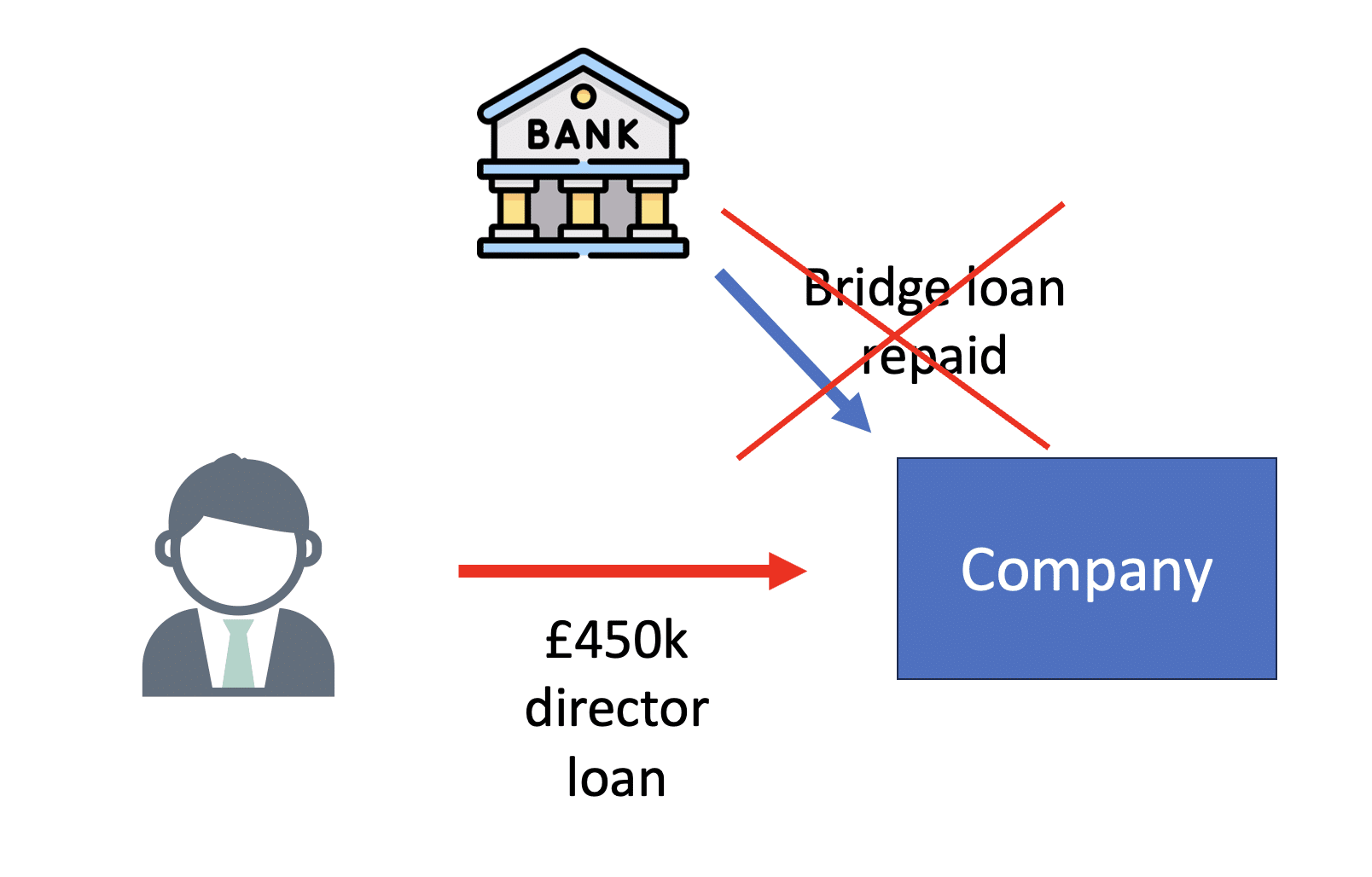
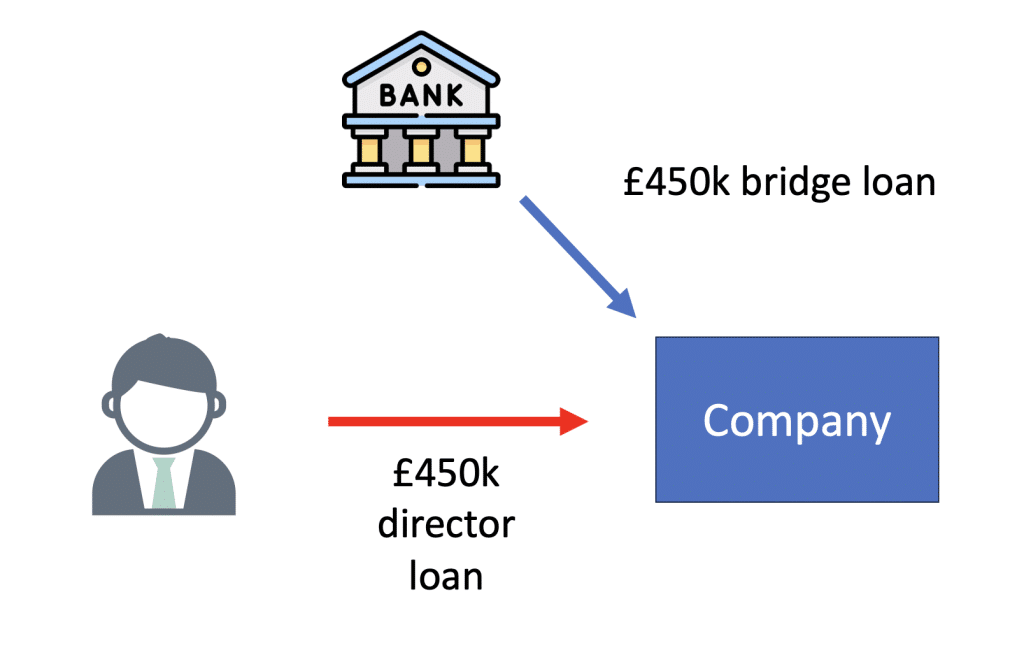
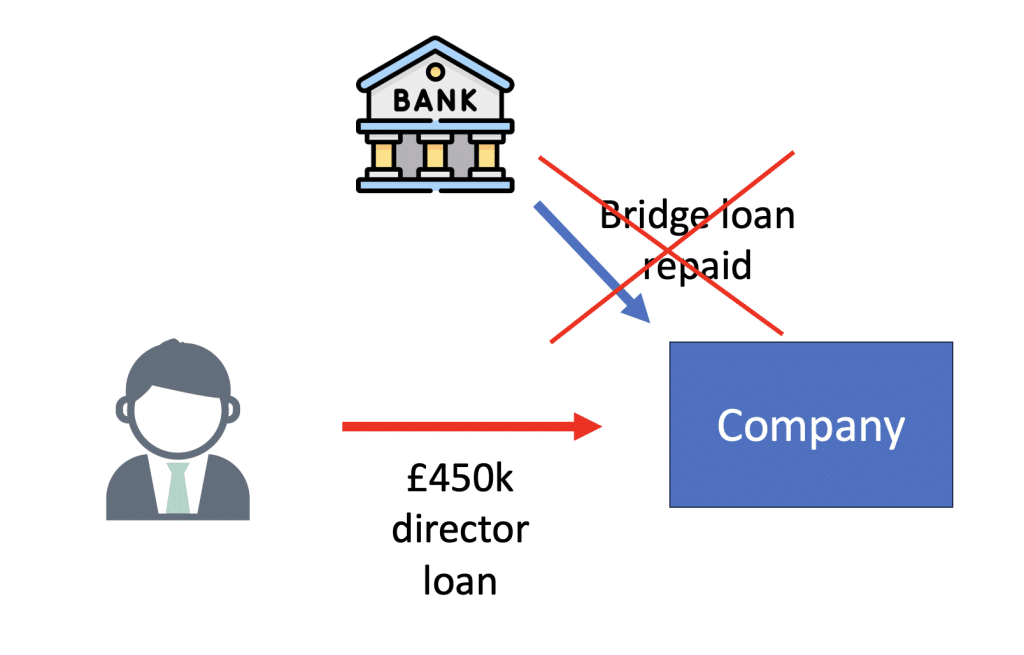
It’s the director loan which creates the “ability to draw down capital tax free”. It’s achieved using this astonishing structure – a bridge loan that’s put in place for a few hours immediately prior to incorporation, and moves between two escrow accounts without ever being available to the landlord or their business.
In our view the structure prevents incorporation relief applying, with an additional risk that “loan repayments” become taxable. Cotswold Barristers provide no advice at all on the effect of the structure.
Does anti-avoidance legislation apply?
There are a plethora of anti-avoidance rules that are engaged if, as here, a transaction has a “main purpose” or “main benefit” of obtaining a tax advantage: DOTAS, rules denying interest deductibility, GAAR, settlor-interested trust rules etc. Advisers would usually cover these issues even on simple and innocuous structures. We would also usually expect advisers to cover the Ramsay common law anti-avoidance principle.
However, there is no evidence that either Property118 or Cotswold Barristers have considered or advised on any of these issues. As we note above, Mark Smith’s DOTAS article demonstrated a complete lack of understanding of the rules.24
To be clear, most clients don’t want or need detailed technical advice. However in our view a reasonable tax lawyer should always provide advice as to the tax consequences of a transaction, particularly when it is an unusual one – even if the advice is highly summarised.
We cannot explain the templated advice and lack of advice on key points. It is possible that there is detailed advice which all of our sources either missed or have mislaid. However, if that is wrong, it raises serious questions as to Mark Smith’s actions – the clients certainly believe they are receiving specific advice from a barrister.
So why aren’t they?
Inappropriate attitude to risk
Good tax advice on complex structures always contains a discussion of risks, both under current law and the risk of change of law. In 2017, the Court of Appeal found an adviser negligent for failing to warn of the risk of a structure, even when the advice was not itself negligent. This had the obvious effect of making risk warnings more common, even when tax advisers are looking at straightforward arrangements.
There are no risk warnings in the Cotswold Barristers (or Property118) advice we have seen.
Indeed, the claim is made that their clients are “shielded from financial risk” because the barristers carry £10m of professional indemnity insurance per client.
This is highly misleading.
To access professional indemnity insurance, clients have to successfully sue the barrister for negligence, and that is not straightforward.
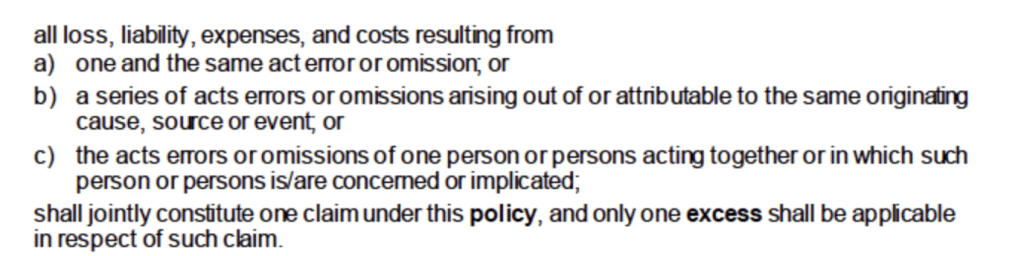
David Turner KC, an insurance specialist, was doubtful that Cotswold Barristers really carry £10m of insurance “per client”. His view was that the standard Bar Mutual policy’s “aggregation” clause meant that it would be £10m per “originating cause”. If the Property118 structure is defective then that would likely be one “originating cause”, and the £10m would therefore be shared by all 1000+ clients. Cotswold Barristers subsequently confirmed that David Turner was correct (but tried to stop him publishing that confirmation).
The failure to warn clients of risks may itself amount to negligence. The false claims made about the insurance appear to make the situation more serious.
The only barrister named in the advice sent to clients, or on the Cotswold Barristers website, is Mark Smith26. Smith is a generalist whose practice ranges from general business law, to copyright, to tax, to criminal defence work, to private prosecutions (including one where he was suspended by a month by the Bar Standards Board for acting negligently and “failing to act with reasonable competence“). His profiles in 2017 and 2020 didn’t include tax in his areas of practice.
Tax barristers usually train and practice in a “tax set” – a chambers entirely or partly dedicated to tax law. Mr Smith did not; indeed, in a discussion on LinkedIn, it was not clear Mr Smith had heard the term “tax set”.
On the basis of the documents we have reviewed, it seems plausible that the Property118 scheme fails because of poor implementation, leading to a failure to achieve the intended tax benefits, and significant additional up-front tax. It also seems plausible that Mark Smith and Cotswold Barristers have been serially negligent.
Thanks to SH and D for their trust expertise, and J and K for their invaluable input and review. Thanks to David Turner KC for investigating the insurance position. Thanks to C for input on the indemnity/interest points. Thanks to F and N for technical accounting input. Thanks to G and S for helping locate Property118 advice and documentation, and for their assistance with the technical analysis. Thanks, as ever, to S2 for specialist SDLT input and reviewing after publication. Thanks to James Robertson for the s284 point. Finally, thanks to Ray McCann for his original comments on the DOTAS analysis, and to Patrick Way KC for his insights on a Bell Howley Perrotton LLP podcast (recorded 8 November 2023; not yet broadcast).
Footnotes
It’s relevant to note that a court or tribunal would not necessarily approach the Property118 structure point by point, in the way that we have analysed in our reports. In a recent podcast discussion on the Property118 structure, Patrick Way KC made the important point that, when a structure looks like tax avoidance, the modern judicial approach is to find against it on principled grounds and not undertake the full technical analysis. ↩︎
This is the only meaning we can see “vest absolutely and immediately in the Trustees” can have. It is unclear what “in accordance with their various legal and equitable interests” means, given that a trustee obviously has no equitable interest. Possibly it means that the Trustee takes the same % beneficial ownership as they had before the trust was originally declared.
We have considered whether this could simply be a typo, and 2.4 should be read as meaning that the Property vests “absolutely and immediately in the Beneficiary“, but we don’t think that can be right. First, the property has already vested in the Beneficiary, so it doesn’t make sense to say that the Trustee can by notice vest it again. Second, it would be odd for the Trustee by notice to trigger its own loss of legal title. Third, the “or” clause at the end of the paragraph deals with the scenario where the Beneficiary has called for legal title; why would there be two subclauses doing the same thing? We therefore don’t believe the wording can be ignored, no matter how inconvenient it may be. The drafting is clearly a mistake from a tax perspective, but that doesn’t mean it can be ignored – there is, after all, commercial utility to enabling the landlord to unwind the structure at any time. It might be possible to make an application to the court for rectification on the basis there was a mistake of law and/or mistake of tax law, but this would be far from straightforward. ↩︎
James Robertson added another point we missed in our initial analysis: the potential for an up-front market value CGT charge under s284 TCGA (sale with a right to reconveyance). The interaction between the different provisions would require considerable thought, but likely there would be only one up-front market value CGT charge, whether under the settlement rules, s284 or on the grant of an option. ↩︎
This is the view of our team (including a KC specialising in the tax treatment of trusts), but should not be regarded as the final word; a definitive analysis would require consideration of the full facts and circumstances, and it would be wrong at this stage to preclude the other two possibilities. ↩︎
Including the settlor interested trust rules effectively reversing any potential income tax benefit, and a 6% inheritance tax charge every ten years. Possibly also a 20% entry charge, and the application of the gifts with reservation of benefit rules, although this would need a careful analysis which we have not undertaken. If a settlement arises then it would have to be registered with the Trust Registration Service. Mark Smith takes the view that the intended “bare trust” is not registrable – we are not sure that is correct, but it’s irrelevant if in fact the trust is not bare. ↩︎
This would, however, need careful thought. It would be very inadvisable and perhaps improper to simply proceed on this basis without detailed and case-specific legal analysis. ↩︎
i.e. because our previous analysis was on the assumption that Property118 correctly implemented their structure. We also note that, when Property118 briefly hired a tax KC in an attempt to threaten us with a libel suit, it seems likely that she did not review the transaction documents, as she said specifically that her views were on the basis that the structure was “properly implemented” – see paragraph 13 here. The KC did add that she had reviewed client files, but we expect this was advice and correspondence with HMRC, not transaction documentation – if the KC had reviewed transaction documentation then we believe her opinion would have been very different. ↩︎
In the interests of simplicity, this analysis in this section of our report ignores the first drafting error – the fact the trust is probably a settlement and not a bare trust. In reality the interaction of the two issues would need to be considered, and that is not at all straightforward. ↩︎
And is likely entirely unaware of the transaction. ↩︎
Our team had different views. Some of us believe the clause could be read broadly, given that the trust anticipates the existence of the mortgages. Others don’t agree, because the mortgage payments are not “chargeable on the Property” (rather, they are personal obligations of the landlord), and the mortgage payments do not “arise out of the settlement” (also, what does “payable to them” mean? The word “to” looks like a typo, but it’s included in all the versions of this document we’ve seen). ↩︎
Usually lawyers never put operative provisions into recitals, but where a contract is silent on a point, an operative provision in the recitals will be effective – see the old case of Aspdin v Austin (1844). ↩︎
The fact the indemnity payments are not termed “interest” in the documents is irrelevant (see the Re Euro Hotel case) – economically they are interest on the principal amount created by the sale contract and therefore are interest for tax purposes (see Bennet v Ogston). Probably they would not be interest even if there was no principal amount – our original view (prior to having reviewed the document set) was that they would be either taxable annual payments or capital payments (i.e. sale consideration). ↩︎
This is not the case for a normal incorporation, which achieves other objectives: e.g. segregating liability and obtaining commercial financing – however the Property118 structure does not achieve this ↩︎
And Smith did not then consider any of the many anti-avoidance rules which will be engaged if there is a tax main benefit or tax main purpose ↩︎
Smith misses that there are several ways in which there can be no promoter: (1) in-house schemes, clearly not relevant; (2) the promoter is outside the UK, not relevant; and (3) no promoter. If Smith was right that Property118 wasn’t a promoter then this would be the third scenario, not the first. He makes a bad mistake and is then badly wrong on the consequences of his mistake. ↩︎
And DOTAS looks at the “proposed arrangements”, and therefore the fact that Smith accidentally omits the indemnity is no defence ↩︎
The confidentiality hallmark would also likely apply, given that Property118 refused to disclose details of their scheme on the basis that it is “valuable intellectual property” ↩︎
A “compliance check” is not a tax term, but we are assuming these were “aspect enquiries” and not full enquiries. ↩︎
As an aside, Smith tends to refer almost exclusively to HMRC guidance, and in this case the first guidance appearing on Google doesn’t mention the subsection 17 rule (probably because the guidance pre-dates the legislation). That is speculation; however it is notable that reliance on this out-of-date guidance was one of Less Tax for Landlords’ big mistakes. ↩︎
The reference to HMRC manuals is curious – advisers should be advising on the basis of the law, particularly when a transaction is tax-motivated (as HMRC guidance cannot be relied upon in such circumstances). ↩︎
Which is why we are confident we will not reveal our sources by publishing extracts from Property118 advice and documentation ↩︎
Note in passing that “a discretionary trust controlled by you” is not how discretionary trusts can work if they are to be respected for inheritance tax purposes. ↩︎
It is also notable that Mark Alexander, who runs Property118, appeared completely unaware of Ramsay, thinking a reference to “WT Ramsay” was a mistaken reference to the recent Upper Tier Tribunal Elizabeth Moyne Ramsay case ↩︎
There is no suggestion that Cotswold Barristers was aware of his actions, but Cotswold Barristers does appear to have been responsible for listing him as part of its team. ↩︎
Not to be confused with Mark Smith, the respected extradition barrister. ↩︎
The Law Society has played an exemplary role in calling for libel law reform to prevent abusive SLAPPs – “strategic lawsuits against public participation”. In other words, the use and abuse of legal processes to silence allegations of wrongdoing.
The Society of Media Lawyers is unhappy with this. They’ve written to the President of the Law Society asking the Law Society to stop advocating against SLAPP. Indeed the Society of Media Lawyers don’t seem to accept SLAPP exists – they say there is “not a significant SLAPP problem in the UK”.
They go further: they want Society of Media Lawyers members to be involved in the implementation of the anti-SLAPP provisions of the Economic Crimes Bill, and to be appointed to the Department for Culture, Media and Sport’s SLAPP taskforce.
The Society’s members include the likes of Carter-Ruck – described by David Davis MP as “the go-to law firm for every bad actor seeking to undermine or misuse British justice”. It is clear why Carter-Ruck and friends would want to shape anti-SLAPP rules. It is much less clear why the rest of us would agree to this.
Letter to the President of the Law Society
Dear Nick,
I am a solicitor and the founder of Tax Policy Associates, a think tank established to improve tax and legal policy.
I am aware of a recent letter sent to you by the Society of Media Lawyers. criticising the Law Society’s position on SLAPPs.
The Society of Media Lawyers say there is “not a significant SLAPP problem in the UK” and are unhappy that the Law Society is taking a stand against SLAPP. They ask to be involved in the implementation of the Economic Crimes Bill, and to have a representative on the Department for Culture, Media and Sport’s SLAPP taskforce.
The assertion there is not a significant SLAPP problem in the UK is deeply unserious. To take just a few examples from the last few years:
Schillings acted for Russell Brand, attempting to make the Metro newspaper retract a clearly factual report about a “joke” about sexual assault which Brand had made on live television. Asserting defamation with no legal or factual basis is characteristic of a SLAPP.
An unnamed law firm acted for Russell Brand, and sent an aggressive and intimidating email to an alleged victim of Brand’s, which included an entirely inappropriate allegation of blackmail. The making of unevidenced criminal accusations in correspondence is characteristic of SLAPPs.
Archerfield Partners acted for Russell Brand in an attempt to prevent reporting of accusations of sexual assault by Szilvia Berki. This included defamation letters to newspapers and ultimately a successful application for an an anti-harassment restraining order. If Ms Berki’s allegations were correct (which now seems at least plausible) then this was an outrageous abuse of the legal system to silence her.
Several unnamed law firms acted for PPE Medpro, Michelle Mone and Douglas Barrowman, and wrote to the Guardian saying that any claim that Mone/Barrowman were linked to PPE Medpro was defamatory. The parties have subsequently admitted that Mone/Barrowman are in fact linked to PPE Medpro. Aggressive correspondence based on an untruth is a key characteristic of a SLAPP.
TT Law Ltd acted for William Hay in a defamation claim against Nina Cresswell, who had alleged Hay had sexually assaulted her. Mrs Justice Williams found that Cresswell’s allegations were substantially true. This is part of a very disturbing trend of perpetrators of sexual assault using SLAPPs to silence their victims.
An unnamed law firm acting for an individual accused of sexually assaulting Lucy and Verity Nevitt. The law of confidence was used in a successful attempt to prevent him being named. This is another very disturbing case. Parliament has expressly not given anonymity to those accused of sexual offences, and to attempt to achieve this through secret threats of litigation is an affront to the rule of law.
An unnamed law firm acted for Wirecard against the FT in a defamation action following the FT’s reporting that Wirecard was engaged in fraud. That reporting turned out to be entirely correct. The use of defamation proceedings to silence correct accusations of criminality is characteristic of a SLAPP.
Carter-Ruck acted for Mohamed Amersi in a defamation claim against former MP Charlotte Leslie. Mr Justice Nicklin found for Leslie, and said he had “real cause for concern” that the litigation had an “impermissible collateral purpose”. That is a textbook definition of a SLAPP. It is relevant to note Carter-Ruck’s claim that it has not encountered any SLAPP cases
Discreet Law acted for Yevgeny Prigozhin in a case against journalist Eliot Higgins of investigative website Bellingcat for claiming that Prigozhin ran the mercenary Wagner Group. At the time of Higgins’ report, Prigozhin had been widely reported as running the Wagner Group and had been sanctioned by the US and UK for his role in it. The case was abandoned after Russia invaded Ukraine, and Prigozhin subsequently admitted running the Wagner Group. It is hard to imagine a more obvious SLAPP than bringing a defamation action for a claim that was in fact true, and was widely known to be true at the time.
Taylor Wessing acted for Eurasian Natural Resources Corporation Limited against journalist Tom Burgis. Mr Justice Nicklin found that the passages complained about in Burgis’ book were not defamatory, but noted that the very serious other allegations in the book (that ENRCL was a “corporate front” for criminal activities) were not the subject of a defamation claim. This is a typical SLAPP technique – ignoring the core allegation made and pursuing defamation allegations on an ancillary issue.
Carter Ruck acted for the President of Malaysia’s PAS Islamic Party, Abdul Hadi Awang, in an extraordinarily far-fetched case against Clare Rewcastle Brown with the apparent aim of preventing her reporting about corruption in Malaysia. The case was eventually withdrawn and a settlement agreed in her favour. The far-fetched theory run by Carter Ruck, and the eventual concession, is characteristic of a SLAPP.
An unnamed law firm acted for Jeffrey Donaldson in a defamation claim against OpenDemocracy for their reporting on political donations. The action eventually timed out. Commencing and then eventually withdrawing proceedings is characteristic of a SLAPP.
An unnamed law firm acted for Javanshir Feyziyev against Paul Radu, a Romanian reporter for the Organized Crime and Corruption Reporting Project in relation to allegations of involvement in the Azerbaijani Laundromat. The case was settled in the reporter’s favour shortly before the court date. The decision to bring a claim against an individual journalist rather than the news organisation who published the accusations is characteristic of a SLAPP.
Taylor Wessing acted for Al Wazzan, an investment advisor currently on bail in Kuwait for his role in the 1MDB scandal. Taylor Wessing attempted to prevent Clare Rewcastle Brown from even mentioning that Al Wazzan was on bail. Taylor Wessing abused the law of confidence in an attempt to keep their correspondence from being published.
And from my personal experience:
ACK Media Law wrote to me alleging defamation after I “retweeted” a newspaper article claiming Nadhim Zahawi was under investigation by HMRC. The firm said Nadhim Zahawi was unaware he was being investigated by HMRC. Zahawi had indeed been under investigation, and at that point was in the process of settling the matter. The Prime Minister’s ethics adviser concluded that Zahawi should have understood he was under investigation. Threatening defamation against a member of the public “retweeting” a news article, and not against the newspaper that published the article is characteristic of a SLAPP. Alleging defamation where an accusation is in substance true is characteristic of a SLAPP.
Osborne Clarke acted for Nadhim Zahawi, and accused me of defamation for allegations about Zahawi’s tax position which turned out to be correct. In the course of correspondence, Osborne Clarke stated repeatedly that Zahawi’s taxes were fully declared and paid, a statement that was false, and that Zahawi must have known was false. Osborne Clarke abused the law of privilege and confidence in an attempt to keep their correspondence from being published. Pursuing a defamation claim where the underlying accusation is true; attempting to keep the claim secret; and making false statements in correspondence – all features of a SLAPP.
Brett Wilson LLP acting for a tax avoidance boutique called Property118, accused me of defamation for stating opinions on tax law which are shared by the majority of the profession. A libel action on that basis never had any prospect of success, and the Brett Wilson letter was therefore a SLAPP. Brett Wilson abused the law of copyright and confidence in an attempt to keep their correspondence from being published. Another characteristic of a SLAPP.
All of this presents a disturbing pattern of law firms acting for clients who are using defamation law to inappropriately stifle free discussion and, in many cases, to prevent publication of allegations that are in substance correct. In a number of these cases the lawyers had good reason to know or suspect that the allegations were correct. And these are likely just a small minority of cases: the intention behind most SLAPPs is that they never become public. The stifling of debate by lawyers, through the use of abuse of pseudo-legal arguments and the making of false factual claims, represents a threat to free expression and (in my view) to the rule of law.
I would therefore urge you to continue your current approach to SLAPP, which I am confident has the support of the vast majority of the profession, as well as the general public.
A final point: many of these examples involve members of the Society of Media Lawyers. To say they have a conflict of interest would be a considerable understatement. It would therefore, in my view, be highly inappropriate for the Society of Media Lawyers to involved in the implementation of the Economic Crimes Bill, or to be appointed to the Department for Culture, Media and Sport’s SLAPP taskforce. I would urge you to reject this request.
Baroness Mone introduced a company, PPE Medpro, to the “VIP fast lane” for supplying PPE to the Government during the pandemic. There was copious evidence that she and/or her husband, Douglas Barrowman, ran the company. In December 2020, a lawyer instructed by Mone and Barrowman told the Guardian that “any suggestion of an association” between the Tory peer and PPE Medpro would be “inaccurate”, “misleading” and “defamatory”.
But now a representative of Mone and Barrowman has admitted that Barrowman funded and ran PPE Medpro.
In both cases, a libel threat was made based upon a falsehood.
Were they lying?
I cannot read Mone, Barrowman or Zahawi’s minds, and it is conceptually possible that all were being honest. For example, Mone and Barrowman may have thought that Barrowman’s deep connection to PPE Medpro was not an “association”.3 Zahawi may have not realised he was under investigation.4 It is also possible that they were not aware of the statements being made by their lawyers.5
In my judgment these explanations are less likely than the alternative: Mone, Barrowman, and Zahawi intentionally instructed their lawyers to make false statements, in order to prevent people publishing unfavourable stories about them – stories they knew were substantively true. In my opinion, they likely lied.6
If a libel case proceeds to court, and the claimant lies on the witness stand, then that is perjury, and prominentpeople have been prosecuted for it. But if a claimant lies in libel correspondence, directly or through their lawyers, and the matter never reaches trial, then there is no consequence. Except one: often the lie will be effective, and the story quashed, without ever seeing a courtroom.
This is the “mathematics of libel”.
If you’re faced with a wealthy litigant then it’s usually rational for you to withdraw it and avoid defamation proceedings, even if you’re certain your story is true. Why? Because if you win you will devote perhaps a year of your life to the litigation, and end up out of pocket by a few £100k;7 if you lose, you could be on the hook for £1m or more. Or you could give up now, and hopefully pay nothing. This is the rational choice which – appallingly but inevitably – is forced on people by our defamation law.
So if you want to stop people writing the truth about you, you just need two things: money to pay the lawyers, and the willingness to lie. The mathematics of libel will then do the rest, and force that annoying journalist to back down.8 And in the – usually unlikely – event they don’t, you can just walk away, free from consequence. It’s a one-way bet.
We need to change this calculation.
How?
Any “letter before action” threatening defamation proceedings could be required to be accompanied by a “statement of truth”. The claimant would have to say, under threat of perjury, that the statements in the letter are correct, and that the defamatory statement complained of is false. Lying in correspondence would then have a consequence.9
The new anti-SLAPP law is welcome, but only applies to cases involving economic crime. It wouldn’t have applied to Zahawi, and it’s doubtful it would have applied to Barrowman/Mone. The law could easily be extended to all defamation cases.
The Solicitors Regulation Authority could discipline solicitors who make false factual claims in defamation correspondence without having taken appropriate steps to verify the claims,10 or who remain acting for a client past the point it is clear the client lied.11 I am hopeful they will do so in both the Zahawi and Mone/Barrowman cases.
Or more radical libel reform: the writer Edward Lucas has suggested a speedy and lawyer-free dispute resolution service for defamation cases, much like a small claims court. The best argument against this is that the floodgates would open, and the new court become overwhelmed with claims from ordinary people. But that’s a terrible indictment of the current law – that it’s only viable because only the rich can afford it.
So perhaps we need a change which is equally radical but much simpler: require that public figures can only sue for defamation if they can demonstrate the authors acted maliciously, with knowing or reckless disregard for the truth.12 We could go further, and require that this point is always heard as a preliminary issue before any defamation action can proceed, with the defendant’s costs payable in full13if the claimant fails to demonstrate malice.
One way or another, we need to end the mathematics of libel, and make it rational for people telling the truth to continue to tell the truth.
Footnotes
I believe similar threats were made to other newspapers; the Independent is unique in having published them. ↩︎
There were other false statements in my correspondence with Zahawi’s lawyers. Their first letter made a factual claim about Zahawi’s father having provided startup capital which appears false, as the relevant document was signed much later and back-dated; the other claim about his father being heavily involved in the business was denied by the company and has no supporting evidence. The letter also contained a statement – “Should there be any serious questions to be asked about our client’s taxes, HMRC will no doubt ask them and our client will respond accordingly” – where the use of the conditional tense can only be regarded as highly misleading (given that Zahawi knew that HMRC had already been asking him “serious questions”). And there were repeated subsequent claims that his taxes were fully declared and paid in the UK ↩︎
Unless his advisers were shockingly negligent they would have told him that this was an enquiry or a discovery assessment, and in ordinary English most people would describe that as an “investigation”. Sir Laurie Magnus concluded that Zahawi should have understood he was under investigation; it follows that logically either Sir Laurie is wrong, Zahawi was incompetent in not realising he was under investigation, or Zahawi lied. ↩︎
It would be most surprising, and improper, if a lawyer making factual claims, supporting a serious allegation of defamation, did not do so on the basis of instructions from their client. ↩︎
An important note is that I am assuming the Guardian and Independent’s reporting of the libel threats they received is correct. That seems highly likely; surely otherwise Zahawi/Mone/Barrowman would have said so. ↩︎
Whilst you may expect to get an order to cover your legal costs, the “standard basis” by which costs are awarded means you will usually end up having to pay around 1/3 of the costs yourself ↩︎
Even when a journalist doesn’t back down, the defamation laws have a more subtle effect. They slow down the story, requiring legal input and senior editorial involvement at every step. This can be a considerable benefit to the claimant. ↩︎
I’m not suggesting that correspondence in advance of the “letter before action” would have to include a statement of truth. However I expect that defendants would respond to such correspondence by effectively daring the claimant to produce a letter before action and statement of truth. ↩︎
There is no SRA guidance, caselaw or other authority on what “appropriate steps” would be. My view is that it depends on the nature of the claim being made. If I am accused of shooting JFK, then it is reasonable for my lawyer to deny the claims without requiring anything in the way of evidence from me. If I am accused of robbing a bank last week, it is reasonable for the lawyer to ask me if I robbed the bank. If I am accused of owning my house through a Vanuatu trust document leaked to the Guardian, then it is reasonable for my lawyer to ask me to explain the leaked document, and not accept implausible explanations. ↩︎
As more details emerged about the ownership of PPE Medpro, it was reasonably clear that Barrowman controlled it, and his denials were false. By January 2023, it was reasonably clear that Zahawi had been under HMRC investigations, and that his denials were false. Yet, in both cases, lawyers kept acting. ↩︎
In other words, adopt the US libel standard, following New York Times Co. v. Sullivan. One prominent libel barrister responded to this suggestion by saying that it would make it almost impossible for anyone to sue for libel. That is indeed the point. I don’t see a public interest in giving public figures the ability to bankrupt people for claims that are either true or made in good faith ↩︎
It’s a common complaint that the UK tax system is much too complicated. That complaint is correct.
Some of the complication is inevitable (modern life is complicated). Some is a response to avoidance. Some is driven by policy choices (e.g. VAT exemptions1). But some of the complication really is unnecessary. I’ll try to demonstrate the problem by taking one tax point that faces many companies investing in the UK, and working through each of the overlapping rules the company has to work through.
Judge for yourself how sensible those rules are, and how many are really necessary.
The scenario
Let’s pick a simple scenario that’s realistic – indeed very common:
Waystar RoyCo is a large US business establishing a new UK subsidiary, Waystar UK.
It has a finance company in the US (Waystar Finco) which raises money from the market (borrowing from banks, issuing bonds etc) and then makes it available to group companies.
Waystar Finco wants to provide some of that funding to Waystar UK.
So Waystar Finco makes an “intragroup loan” to Waystar UK, with an interest rate reflecting the cost of Waystar Finco’s funding plus Waystar Finco’s own admin etc costs.
Like most businesses, Waystar UK will expect to get UK corporation tax relief for its interest payments.2 Will it?
From a policy perspective Waystar UK absolutely should get tax relief. It would if it borrowed directly from the market, and interposing Waystar Finco should make no difference (but is likely cheaper/more efficient for Waystar). But that rightly cuts no ice with HMRC – the question is, what do the rules say?
There are many, many, rules that can impact tax relief/deductibility of interest. Here’s how I’d advise Waystar UK on the main ones, with added commentary on whether each of the rules really still makes sense.3
1. Transfer pricing
Most countries in the world have “transfer pricing” rules. In broad terms, they say that if a company has an arrangement which isn’t on “arm’s-length terms” and it’s taxed as if it was. So if, for example, current market interest rates are 6%, and Waystar UK borrows from Waystar Finco at 10%, then it will only get a deduction for the 6%. This is pretty sensible.
Advice: Waystar UK needs to be careful of the rate it borrows under, and should be able to justify that the rate is comparable to the commercial borrowing rate it could get in the market, plus a small commercial fee for Waystar Finco’s role arranging the finance. So if Waystar UK has zero assets it will not be able to borrow anything; if it has £1bn of assets it should be able to support a £200m loan. The maximum of debt it can support is a question of fact, on which Waystar’s own finance people can form a judgment.4 This will all be a few pages of advice.
Conclusion: These are international rules which the UK can’t realistically change on its own. They work well.5. Keep them.
2. Corporate interest restriction
in 2015, as part of its Base Erosion and Profit Shifting (BEPS) project, the OECD created a set of rules which limit the amount of interest deductibility companies can claim.
Most developed countries adopted some variant on the rules – here’s a helpful map from the OECD:
The basic idea is simple: if you’re borrowing from a genuine third-party, like a bank or the bond market, there’s no restriction. If you’re borrowing from a related party, then you lose deductibility once your interest cost exceeds 30% of your EBITDA.
You might ask what magic the EU performed in order to squeeze hundreds of pages into just two. There was no magic: it’s just a difference in approach to drafting rules. Civil law jurisdictions generally draft on the basis of broad principles. UK legislation generally provides detailed rules, catering for every possible circumstance.
There is a good argument that the classic common law approach creates certainty of application, which is particularly important in tax. However, by the time you have hundreds of pages of legislation and guidance, certainty has long since left the building. Complexity has become a source of uncertainty. And this isn’t a one off – the last decade has seen a series of new rules, each more complex than the last.
Businesses struggle to achieve the “obvious” result from the rules. HMRC struggles to apply them. 7
We should stop being so dogmatic, and adopt a principles-based approach when that is going to be easier for both business and HMRC to apply. Professor Judith Freedman has written persuasively on this point.
Advice: in theory this should be fine given that Waystar Finco is ultimately borrowing from the market, but the detail will take a significant amount of work. Easily 15 pages of analysis.
Conclusion: scrap the UK rules and guidance and adopt a simpler EU-style approach.
3. Hybrid mismatch rules
Here’s a classic way to avoid tax: cunningly craft the Waystar Finco/Waystar UK loan so that the UK tax system thinks it’s a loan, but the US tax system thinks it’s a preference share, or even doesn’t exist at all. The result? Tax relief in the UK, and either no tax in the US or even, if the CEO is greedy, tax credits. The loan is a “hybrid” – taxed differently in two different countries.8
I don’t want to be unfair to HMRC here. The horribleness of the legislation means people begged HMRC to clarify this point, that point, and the other point, and before you know it: 484 pages. I believe the longest guidance ever created by any tax authority in human history for one single tax rule.
Most of the time, HMRC ignores the rules entirely, and only actually cares when it sees something avoidancey – but, for large loans, and large risk-averse businesses, you can’t count on that. So expensive advisers (me, in a past life) occasionally spend weeks locked in a dark room making sure that highly complex, but innocent, structures aren’t caught. That same complexity means that guilty structures can sometimes escape scot-free.
Advice: Waystar’s commitment to high ethical standards mean it’s inconceivable they’d try to create a hybrid. But US tax rules, and typical US corporate structures, are so complicated that I can’t just assume the rules won’t apply. Significant time will need to be spent analysing the whole structure, with US tax and accounting input. This is potentially a big job.
Conclusion: Again, principles-based drafting is the answer. The EU rules are about 13 pages, split between ATAD and ATAD 2. Let’s do that.
4. Reasonable commercial return
Paragraph E of section 1000(1) CTA 2010 denies a deduction if securities are “non-commercial”, defined as follows:
This is a pretty reasonable rule. But why does it exist? If the securities are paying more than a reasonable commercial return, they can hardly be at arm’s-length, so the transfer pricing rules would be engaged. Wouldn’t they?
It’s not that easy, and I could write a 10 page memo on the subtle differences between the two tests,9 but that memo should not exist. We don’t need two rules doing almost exactly the same thing.
My excerpt above could mislead you into thinking section 1005 is just a simple one sentence rule. There are, however, nine lengthy sections that follow, putting various glosses it. My favourite: section 1013 is an exception to an exception to an exception to an exception to s1005.10
Advice: the easy approach is for me to say to the client that everything is fine provided the interest under the loan is no more than a “reasonable commercial return”. But the client will probably ask what that means, and how it’s different from the transfer pricing test. Cue a lengthy memo, and an unhappy client walking away with the distinct impression that the UK is not a great place to do business.
Conclusion: abolish the rule. If parties are related then it adds nothing to transfer pricing. If parties aren’t related then the rate should de facto be commercial; if it isn’t then something weird is going on, which one of the approximately gazillion anti-avoidance rules will surely counter. “Reasonable commercial return” is a fossil, and belongs in a museum.
“Depends on the results of the company’s business” is a test that used again and again in tax legislation. So it’s a bit sad that nobody knows what it means.
There is a sensible meaning: “don’t pretend something’s a loan when it’s really shares, just so you can get a tax deduction”. Do we really need a rule like that? Wouldn’t one of the other many, many anti-avoidance rules kill something as obvious as dressing equity up as debt?
It’s worse, because there’s also a crazy meaning. HMRC think Condition C also means: “don’t create a loan where the borrower only has to pay interest if it can afford to pay interest”. This is often called a “limited recourse” or “non-recourse” loan. And HMRC say you can’t do it.
That’s a problem, because there are many commercial scenarios in which you want limited recourse funding, particularly if you have multiple projects (power stations, housing developments, investments) where each is funded by a different lender.
From a policy perspective, I’ve no clue why HMRC think this is a bad thing. Every other country in the world, I believe, permits it.
HMRC’s approach has two consequences. First, it’s super easy, barely an inconvenience, to get around the rule by establishing each new project in a new company. Second, if you can’t do that, or it’s too much effort, you just go to another country. So this is a rule that serves no purpose, creates complexity, and pushes business out of the UK. Excellent.
Advice: should be fine. Although, like many advisors, I’ve often seen loan documents where some helpful US advisor added a non-recourse clause at the last minute, not realising that it would mess up the tax. Another dangerous and pointless “gotcha”.
Conclusion: abolish the rule – it’s a fossil from the days when avoidance was easy. Make clear in guidance that any debt which really behaves like equity is, by definition non-arm’s length, and will lose deductibility under the transfer of pricing rules. But limited recourse shouldn’t offend anyone.
6. Equity notes
Section 1006 bars deductibility for an “equity note” (meaning, broadly, a security that can stick around for longer than 50 years) if it’s held by an “associated person” or someone funded by an “associated person”.
US companies have sometimes issued 100 year bonds. Perhaps Waystar Royco wants to, and then lend the proceeds into the UK?
Well, tough – the equity note rule means it can’t.
Why? I’ve no clue. If it’s a market instrument, and satisfies the transfer pricing rules, then what’s the problem with having a very long term? This is an obscure rule, and I’ve occasionally seen it catch people out.
Advice: don’t have a term of 50 years.
Conclusion: another fossil – abolish it.
7. Section 444
Remember the transfer pricing rules? Spot the difference between that, and this:
A completely unnecessary rule which creates complexity and uncertainty (not least because working out the consequence of that “independent terms assumption” is hard). It shouldn’t apply where the transfer pricing rules potentially apply, but there are weird scenarios where you’re not sure which case you’re in.
Advice: in this case reasonably clear it won’t apply. In other cases, that’s more difficult, but probably yields the same result as the transfer pricing result. If you want better than “probably”, that memo will cost £5,000.
So if you get a tax advantage in a way that’s contrary to the principles of the rules, then… you don’t.
The precise scope of this is unclear, but that’s not a bad thing for an anti-avoidance rule – it means people have a powerful incentive to steer clear of grey areas.
Advice: yes, one of the reasons to choose to fund Waystar UK with debt rather than equity was to get a tax deduction for the interest. Waystar could have funded with equity; that would have meant more tax. But I would say the “principles” of the rules envisage a choice between equity and debt, and so s455C doesn’t apply. This will run to several pages of analysis.
Conclusion: all tax regimes need an anti-avoidance rule of some kind,11 and this is a pretty good one.
9. Unallowable purposes
There’s a much older anti avoidance rule in section 442:
and
This rule therefore does two things:
If debt is borrowed for a non-business purpose then interest is not tax-deductible. So, for example, there’s a problem if Waystar UK is going to use all the funds to buy a yacht for its chairman. Fine.
And if the main purposes include a “tax avoidance purpose”12 then the interest is not tax-deductible.
The fact the test assesses subjective “purpose” has an important but odd consequence.
Say that Wayco’s CFO sends a memo saying “hey, let’s use debt to get a juicy tax deduction”. There’s a clear tax main purpose and s442 applies.
Say that Wayco’s rival PGM establishes a precisely identical structure, but their CFO’s memo doesn’t mention tax (and instead speaks of the convenience of extracting profits through interest payments). Then it’s looking much better.
A rule that treats two identical businesses differently is not a good rule. A rule that can be beaten by carefully controlling communications13 is a terrible rule.
Advice: something like “You have told me the debt is being advanced for commercial (i.e. non-tax) reasons, the tax benefit of interest deductibility is ancillary and you would have lent to the UK even if there was no deduction. On that basis section 442 won’t apply”
Conclusion: we don’t need two overlapping anti-avoidance rules in the loan relationship regime. s442 did valuable duty for many years, but should be put out to pasture.
The cost
This complexity has a cost. HMRC and advisers spend money building expertise to police it. Clients pay lawyers and accountants large sums to advise on it. This is not a good use of anybody’s resources, and it makes the UK a worse place to do business.
I’m convinced we wouldn’t lose £1 in tax revenues if we scrapped/dramatically simplified the seven bad rules above (and put HMRC’s freed-up resources into anti-avoidance).
And this is just one tax question for one common business structure. There are dozens more areas just as ripe for simplification.
The first step would be the easy one: identify and repeal the “fossils”.
The second step, moving towards principles-based-drafting, would be significantly harder – but we can’t continue as we are, with hugely complex new rules added every few years. Let’s stop making generic complaints about tax complexity, and tackle some of the root causes.
Footnotes
Once you decide restaurants have to charge VAT at 20%, but ingredients should be 0%, you are on a one-way road paved with Jaffa Cakes and giant marshmellows↩︎
I’m only covering interest deductibility and not withholding tax, VAT, or any of the other issues the arrangement would raise. ↩︎
Like most lawyers, I was truly an expert in a very narrow field, had reasonable knowledge across a wider area, and no more than passing familiarity with anything else. Most Tax Policy Associates content is in areas where I was not truly an expert, and so I am entirely reliant on the generosity and expertise of many current and retired professionals. However the issues discussed in this article are ones where I had direct expertise. They are therefore very relevant to my past clients, but I have no financial relationship with those clients (or my former law firm, aside from my pension). ↩︎
And create and retain appropriate transfer pricing documentation. They could instruct a transfer pricing expert to prepare a report, but that is probably unnecessary; the more pragmatic approach is for Waystar UK to approach banks and obtain quotes as if it was borrowing itself. ↩︎
At least when applied to debt, where it’s easy to establish an arm’s length interest rate. More problematic when it comes to arrangements that have no obvious market equivalent ↩︎
I was lazy; this is the original text. It’s since been amended, and is longer ↩︎
This is a considerable simplification. There are many ways to create hybrids, and certainfeatures of the US tax system means it is particularly well-suited to the task ↩︎
One practical example; say market rates today, when the Waystar UK loan is created, are 6%. In two years time, rates are 3%, and Waystar amends its finance documentation to e.g. comply with some new regulatory rules. That may mean the loan is a “new loan” and “reasonable commercial return” needs to be assessed again. The problem is: 6% is no longer a “reasonable commercial return”, and half the interest therefore becomes non-deductible. A well-advised company will make the amendment in such a way that there won’t be a new loan, but a company that doesn’t seek advice could make an expensive mistake. Counter-intuitive “gotchas” like this are not a feature of a healthy tax system. ↩︎
I am not exaggerating: s1007 is an exception to s1005, s1008 is an exception to s1007, then s1012 is an exception to section s1008, and s1013 is an exception to s1012. Yes, “exception” is a slight over-simplification, but that makes things worse, not better ↩︎
When the general anti-abuse rule (GAAR) was introduced, some thought that meant we could have a bonfire of the TAARs (targetted, as opposed to general, anti-avoidance rules). But a lot of avoidance falls short of “abuse”, so it’s not surprising this didn’t happen ↩︎
The rule was introduced when the regime was created in 1996. It was then paragraph 13 Schedule 9 Finance Act 1996, and old cases and old advisers still refer to it as “paragraph 13”. Its ways were mysterious and unknown for a long time, but there have since been a number of cases. ↩︎
Yes technically the rule looks at the “purpose”, and that’s in hearts and minds not just documents, but in the real world contemporaneous documentation is critically important. Particularly given the length of time between a transaction and any future court appearance, which renders memory unreliable. ↩︎
UPDATED 21 July 2024: Bhattacharya filed a DMCA takedown notice to try to remove this video from the internet. US fair use and UK fair dealing rules means it’s not going anywhere.
UPDATED 20 July 2024: in early 2024, HMRC notified Property118 that this was a tax avoidance scheme that should have been disclosed under DOTAS. Property118 continued to market the scheme, and as a consequence HMRC issued a stop notice on 18 July 2024.
UPDATED 1pm on 13 October 2023 with comment from HSBC UK
Part of the Property118 scheme involves the landlord borrowing under a “bridge loan” for a few hours, with the money moving swiftly between three different bank accounts all controlled by the lender. The claim is that this magically avoids £100k+ of tax for the landlord.
But what kind of lender would facilitate such a scheme?
Who owns Avocado Properties Ltd?
Rajan Bhattacharya.
If what Property118 says is true, Avocado has made hundreds of such loans, charging a 1% fee each time. So Mr Bhattacharya has been paid more than £500k for facilitating the scheme.
His failure to disclose that in his promotional videos is startling – a breach of Advertising Standards Association guidance and YouTube’s own rules. But that’s the least of it.
When HMRC challenge the arrangement, which we expect they will, the landlords involved will potentially have to pay hundreds of thousands of pounds in tax, interest and penalties.
And Property118 and Mr Bhattacharya’s companies could be liable for fines of up to £1m for failing to disclose the scheme to HMRC.
The short summary above doesn’t do justice to how brazen the scheme is – full details are below.
Why hasn’t HMRC challenged the scheme yet?
Because Property118 tell their clients not to mention the bridge loan when they file their self assessment return:2
Actually the business is sold for shares PLUS the assumption of the bridge loan (and other liabilities). Property118 surely know this, because their own documents say it. We expect they also know that the assumption of liabilities is highly relevant to incorporation relief, particularly when tax avoidance is involved. But they provide clients with disclosure that ensures HMRC don’t find out.3
The scheme
When a company makes a profit, it pays corporation tax. If it then pays the profit to its shareholders as a dividend, they pay tax on that. But if it can use the profit to repay a loan from the shareholders then they don’t pay tax on the loan repayment.
Standard (and legitimate) tax planning on incorporation takes advantage of that. In the standard approach, the landlord sells property to the newly incorporated company in return for (1) shares, (2) assumption of mortgage debt, and (3) a “loan note”4 (or similar) issued by the company to the landlord. Future profits can be used to repay the loan note.
That is uncontroversial, but has the disadvantage that the sale of the property to the company will be subject to capital gains tax.
Property118 think they’ve found a way to avoid the capital gains tax and extract profits by a tax-free loan repayment.5
An example: let’s take a landlord who owns properties worth £1m, has a mortgage of £500k, and wishes to transfer the properties to a newly incorporated company.6
Step 1 – The loan
Avocado Properties Limited lends £450k to the landlord. So, on paper, the arrangement looks like this:
In reality, the money actually goes from Avocado Properties Limited to an HSBC bank account held by Fab Lets (London) LLP, a company owned by Mr Bhattacharya, held on escrow for the landlord. The landlord never gets the £450k.
Here’s what Property118 tell their clients about Avocado Properties Limited:
I am pleased to confirm I have now submitted your bridging finance application to our preferred lender and that:
Your application matches their lending criteria perfectly
Their processes and documentation have been compliance checked by Cotswold Barristers
We have a 100% success record with this lender
We have completed hundreds of loans with this lender
And here’s what they say about Fab Lets (London) LLP:
This is another of Ranjan’s companies and was originally purposed as a property management business, so it has the correct structures to securely create and manage clients’ accounts in a fully compliant, insured and ring-fenced manner.
The reality:
Avocado Properties Limited is not a regulated lender, despite apparently making hundreds of loans to individuals.7
Fab Lets (London) LLP is not regulated to act as an escrow agent, despite apparently having a significant escrow business.8
As far as we are aware, Fab Lets (London) LLP has no insurance that would cover this arrangement.9 There is no evidence of any “ring-fencing”. Why did Property118 claim otherwise?
There may also be a breach of HSBC’s account terms.
There are obvious questions as to the regulatory propriety of these arrangements, but that is not our expertise. We will leave such matters to regulatory lawyers and the FCA. The remainder of this report will focus on tax.10
HSBC has now seen this report. A spokesperson for HSBC UK told us:
“HSBC has zero tolerance for the facilitation of tax avoidance schemes using HSBC products and services.”
Our assumption is/was that HSBC had no knowledge or involvement in the scheme.
Step 2 – Novation
Immediately after the bridge loan, the landlord’s new company buys the rental properties. In return, the company issues £50k of shares to the landlord, and agrees to assume responsibility for the £500k mortgage and the £450k bridge loan (under a “novation”).
In theory, it’s this:
In practice, nothing happens, and no money moves.
Step 3 – Director loan
The landlord now makes a £450k “director loan” to his company, using the £450k advanced under the bridge loan in step 1:
In practice, Fab Lets (London) LLP transfers the cash from the first HSBC bank account (supposedly held on escrow for the landlord), and moves it into a second HSBC bank account (but now supposedly held on escrow for the company).
Back in the real world, the landlord isn’t lending £450k, because the landlord never really had £450k.
Step 4 – Repayment
Immediately afterwards – this is all happening on the same day – the company uses the £450k to “repay” the bridge loan. In theory:
In practice, Fab Lets (London) LLP returns the £450k to Avocado Properties Ltd. The money never left Mr Bhattacharya’s control.
The intended consequences
There are four intended consequences:
The company now magically owes £450k to the landlord under the “director loan”, despite the landlord never having £450k and the company never receiving £450k. The next £450k of profit made by the company can be paid to the landlord as a repayment of the “loan” – and the landlord won’t be taxed on it. That’s saved/avoided up to £177k of tax.11
Incorporation relief applies so there is no capital gains tax, thanks to the HMRC concession that allows a company to assume liabilities of the business.
Rajan Bhattacharya has made £5,25012 for moving £450k between three bank accounts in the course of one day. If Property118 have really “completed hundreds of loans with this lender” then Mr Bhattacharya has made well over £500k in total.13
Property118 has made a £4,500 “arrangement fee”.
The actual consequence – a large CGT hit
When a landlord incorporates their property rental business, an important and legitimate part of the tax planning is ensuring “incorporation relief” applies to prevent an immediate capital gains tax hit on moving the properties into the company.
That requires (amongst other conditions) that the property is sold in consideration for shares in the company, and only for shares.
By concession, HMRC also permit the company to take over business liabilities of the landlord:
In the Property118 scheme, the bridge loan is taken over by the company; but the problem is that it’s not a “business liability” of the landlord. It barely exists at all, and certainly isn’t used for the landlord’s business.
Oh, and HMRC expressly say that this concession can’t be used for tax avoidance:
So incorporation relief is DOA. Not “it’s doubtful the relief applies” or “some would question whether the relief applies”. We see no reasonable basis for believing incorporation relief applies to the assumption of debt in such circumstances. That means a large up-front capital gains tax hit for the landlord, probably around £130k on the numbers in the example above.14
If the bridge loan had been properly disclosed to HMRC we expect that HMRC would have raised this point. However, Property118 tell their clients not to mention it:
We asked Property118 why they do this. They didn’t respond, so we have to speculate. Our view is that no reasonable adviser would advise a client to mis-describe a transaction to HMRC. Best case, it’s carelessness, for which penalties apply. Worst case, it’s deliberate and concealed, and we are into serious penalties. We still believe Property118 are incompetent rather than dishonest… but if we are wrong, and this is dishonesty, then we get into criminal tax fraud territory.
Another consequence – the “director loan” isn’t a loan
This is an artificial tax avoidance structure. The bridge loan is taken immediately prior to incorporation for no purpose other than tax avoidance. Money is then moved in a predetermined circle for no purpose other than tax avoidance, and achieves no result other than tax avoidance. The bridge loan doesn’t even exist for a whole day. Structures of this kind have been repeatedly struck down by the courts over the last 25 years.15
So the question is: despite that artificiality, can the director loan be used to facilitate tax-free profit-extraction in the same way as the “loan note” in the standard version of the structure?
Realistically, the bridge loan did nothing and can be disregarded – but the director loan can still be viewed as part of the consideration for the sale of the property. In other words, if we step back and ignore the silly intermediate steps, the landlord sold the property to the company for consideration comprising: shares, the assumption of the mortgage debt, and another £450k which remains outstanding as a director loan. In this scenario it’s clear CGT incorporation relief fails. But future profits can be paid out on the director loan without suffering income tax. The structure failed to achieve its CGT aim, but did achieve the basic planning aim of the standard structure… in a much more complicated way and at much greater expense for the landlord.
The bridge loan didn’t exist and neither did the director loan. So future profits can’t be paid out on it, and the structure fails completely. This seems a harsh result. Can HMRC really say the director loan exists enough to kill CGT incorporation relief, but not enough to shield future profits from income tax on dividends? HMRC has a history of running such harsh “double tax” arguments when attacking tax avoidance schemes, but not always successfully.
The consequence of failing to disclose to HMRC
Most tax avoidance schemes are required to be disclosed to HMRC under the “DOTAS” rules. The idea is that a promoter who comes up with a scheme has to disclose it to HMRC. HMRC will then give them a “scheme reference number”, which they have to give to clients, and those clients have to put on their tax return. The expected HMRC response is to challenge the scheme and pursue the taxpayers for the tax.
For this reason, promoters of tax avoidance schemes typically don’t disclose, even though they should. This is often on the basis of tenuous legal and factual arguments, to which the courts have given short shrift17. One recent example was Less Tax for Landlords, who were adamant their structure was “not a scheme” and so not disclosable. HMRC disagreed.
It is, therefore, unsurprising that the Property118 structure has not been disclosed under DOTAS. In our view, it clearly should have been. The structure has the main purpose of avoiding tax – indeed that’s its sole purpose. The high fees charged by Property118 and Mr Bhattacharya are the kind of “premium fee” that triggers disclosure18
The failure to disclose means Property118 may be liable for penalties of up to £1m. It also means that HMRC could have up to 20 years to challenge the landlord’s tax position.
Mr Bhattacharya’s companies may also be liable as “promoters”, as their role administering the transaction may make them a “relevant business”. HMRC say:
How do Property118 defend the structure?
We asked Mr Bhattacharya and Property118 for comment; neither responded.
In the advice note Property118 sends to clients, they refer to HMRC guidance in the “Business Income Manual”. Advisers questioning the structure have received the same explanation. But that guidance is irrelevant – it relates to when a company can claim an interest deduction for a loan taken by the company to fund a withdrawal of capital by its shareholders. It has nothing to do with creating a “director loan” out of nothing, and nothing to do with circular tax avoidance transactions.
Property118 have also assured advisers that HMRC have accepted the structure in numerous cases. We are highly doubtful that the true nature of the structure was ever explained to HMRC (and, as noted above, Property118 appear to advise against providing an explanation). Any clearance, or enquiry closure, obtained on the basis of incomplete disclosure is worthless.
These two responses are typical of Property118 and other avoidance scheme promoters. Little or no reference is ever made to the law, and certainly never to tax avoidance caselaw. Instead, HMRC guidance is quoted out of context, and clients are assured that nothing has ever gone wrong in the past, whilst success is (apparently) assured by never revealing the full details to HMRC.
When and if Property118 and Mr Bhattacharya do respond, we will gladly correct any factual or legal errors they identify.
What if you’ve implemented this structure?
We would strongly suggest you seek advice from an independent tax professional, in particular a tax lawyer or an accountant who is a member of a regulated tax body (e.g. ACCA, ATT, CIOT, ICAEW, ICAS or STEP).
If it appears you will suffer a financial loss from the scheme, you may wish to also approach a lawyer with a record of bringing claims against tax avoidance scheme promoters.19
We would advise against approaching Property118 given the obvious conflict of interest.
Thanks to accountants and tax advisers across the country for telling us about their experiences with Property118, as well as the clients who contacted us directly. Thanks again to all the many advisers who’ve worked with us on these issues.
The original video is now taken down; this is a copy we downloaded. ↩︎
We have seen the exact same wording for multiple clients. The fact they don’t even complete the company name illustrates quite how standardised Property118’s advice is. ↩︎
That wording also means HMRC doesn’t find out about the trust, or the assumption of the mortgage liabilities. ↩︎
Why a loan note and not a loan? Because, conceptually, the company is then giving something (the loan note) as part of the purchase price for the properties. In part because the tax treatment for the company is more certain, as a loan note is clearly a “loan relationship” for tax purposes, and simply leaving money on account may not be ↩︎
This is an update of our earlier piece here – we have since learned more about the scheme mechanics, thanks to a detailed review of the scheme documentation and bank account statements. We have also been able to confirm the identity of the parties. ↩︎
The actual figures we’ve seen are typically twice as large as this, but we’ll use the same figures as in our original explanation, in the interests of clarity. ↩︎
It can be a criminal offence for an unregulated company to carry out “unauthorised business” such as making a loan to an individual. Not all lending is required to be regulated; however in this case, the exemption for loans made “wholly or predominantly for the purposes of a business” may not apply, because the loan is not for the business, it’s for the personal tax benefit of the landlord. The exemption for loans to high net worth individuals might have applied if the loan included an appropriate declaration, but it does not. The absence of a declaration suggests that Property118 may not have taken appropriate legal advice. However, we take no position on the substantive question of whether the lending was unlawful . ↩︎
Escrow agents are generally required to be regulated under the Payment Services Regulation 2017, breach of which may be a criminal offence. We take no position on whether Fab Lets (London) LLP is in breach. ↩︎
Fab Lets is a member of the Property Ombudsman. That doesn’t make it insured to operate escrow accounts. ↩︎
There are additional VAT questions for Mr Bhattacharya’s companies: does the exempt lending activity impact VAT recovery by Avocado? Should VAT be charged on the escrow services? We have insufficient facts to comment. ↩︎
The highest marginal rate of tax on dividends is 39.35% ↩︎
A 1% fee plus £750 “contribution towards administrative costs” ↩︎
That seems a very conservative estimate. The loan in this example is small by Property118’s standards. “Hundreds” would usually mean at least 200. So we could easily be talking over £1m ↩︎
95% (the proportion of non-share consideration) x 28% (the CGT rate) x £500k (assuming the property has doubled in value). The landlord could argue that incorporation relief should still apply for the assumed mortgage, but not for the bridge loan, roughly halving the CGT cost – however HMRC are entitled to disapply all of ESC D32. ↩︎
We are only aware of one such scheme that wasn’t defeated – SHIPS 2, essentially because the legislation in question was such a mess that the Court of Appeal didn’t feel able to apply a purposive construction. The consequence of that decision was the creation of the GAAR, which doubtless would have kiboshed SHIPS 2 had it existed at the time ↩︎
Our original draft suggested the second scenario was more likely; on reflection we think that would be a harsh result. The CGT element of the structure still fails, but the taxpayer may avoid a double tax disaster ↩︎
See e.g. the Hyrax case, where the tribunal described as “incredible” the evidence of one witness that she wasn’t aware the transaction was involved tax avoidance ↩︎
The terminology is that the premium fee is a “hallmark”. Other plausible hallmarks are the “standardised tax product” hallmark (given how standardised the documents and advice appear to be), the “financial products” hallmark (given the off-market nature of the arrangements), and the “confidentiality hallmark” (given the fact the arrangement appears to be hidden from HMRC). ↩︎
It feels inappropriate for us to recommend anybody, but a simple Google search will find examples fairly quickly ↩︎
The FT ran a fascinating story yesterday about a dispute between HMRC and some ISA platforms over whether the ISA platforms can sell investors fractional shares. HMRC are saying the ISA rules don’t permit this.
HMRC is usually right, but in this case we think they’re probably wrong(perhaps misled by some confusing ESMA guidance).
This article aims to provide an explanation of the dispute, and why we think HMRC is probably wrong. That requires a reasonably detailed legal and tax analysis of the arrangements, so this article is somewhat more technical than our usual reports.1 But it’s an important issue: we believe fractional shares are in the interests of investors (particularly young investors), and we believe the existing rules permit them.
We hope HMRC will reconsider its position, and start from a detailed English law/UK tax analysis of the effect of the arrangements, rather than from the ESMA guidance.
To understand the issues raised by fractional shares, we first have to explain how ISAs work with normal shares:
How shares work
If you open an ISA account with (say) Hargreaves Lansdown2, and pay £1,100 to buy ten AstraZeneca shares, what happens?
Important caveat up-front: all of the below relates to English law arrangements only – it should be correct where shares are held through CREST but may or may not be correct for comparable foreign law arrangements, and the analysis can sometimes be very involved.
Ownership
You don’t actually own ten AstraZeneca shares.
Hargreaves Lansdown has a “pooled omnibus account” in which all its customers’ shares are held. Let’s imagine it used to hold 99,990 AstraZeneca shares. When you clicked the button to buy ten shares, Hargreaves Lansdown bought another ten in the market3, so the account now holds 100,000 AstraZeneca shares.
None of those 100,000 shares are “yours” in the sense that they are labelled with your name. Or indeed in any legal sense.
What you have instead is an “undivided beneficial interest” in all of the shares. To be precise, you own 0.01% of the pool (i.e. 10 divided by 100,000), and therefore you own 0.01% of each share. Legal ownership of the shares (i.e. the person shown in the share register) is with Hargreaves Lansdown.4 In legal terms, Hargreaves Lansdown are the nominee or trustee, and the investors are the beneficiary.
It’s worth repeating this, because it’s so counter-intuitive: your ISA app shows you holding ten shares. In realistic, economic, commercial terms, you own ten shares. But in legal terms you don’t own ten shares at all – you own 0.01% of 100,000 shares.5
Dividends
When AstraZeneca pays a dividend, they pay it to Hargreaves Lansdown, and you own 0.01% of that dividend.
Voting
If you vote to oppose the directors’ remuneration report then Hargreaves Lansdown will cast that vote on 0.01% of their shares. Not “your shares”, but any ten shares that they picked randomly.
Selling
If you later sell your shares, then it is absolutely not the case that Hargreaves Lansdown identifies the ten shares you own, sells those, and gives you the proceeds. You don’t own ten shares. You own 0.01% of 100,000 shares. They sell ten of those shares in the market6 – and then you have a 0% interest in the remaining 99,990 shares. The £110 proceeds of the sale goes into a cash bank account, and you will acquire an interest in that account (e.g. if there is £1.1m in the cash account then you will beneficially own 0.01% of the account). Your account will then show you as holding £110 of cash. Just like with the shares, there obviously isn’t £110 sitting in a pot with your name on it; cash is “fungible” (all cash is mutually interchangeable) in the same way as shares.
The implications
This isn’t just mechanics – it has legal reality to it. If Hargreaves Lansdown goes bust, then the only people entitled to the AstraZeneca shares are the ISA investors – because they own them. The investors only lose out if the shares aren’t in that account; and modern custody arrangements mean that really shouldn’t be able to happen (absent a very sophisticated and implausible insider fraud involving multiple people).
This is how most retail share ownership works. It has the advantage of being efficient and scalable – no need to create a separate account for each customer. The disadvantage7 is that AstraZeneca only sees Hargreaves Lansdown as the shareholder; AstraZeneca has no idea who the beneficial owners are. If you, with your ten shares held through Hargreaves Lansdown, write to AstraZeneca and ask them to pay you a dividend, they’ll rightly refuse. If you try to go to a shareholder meeting, they won’t let you in.8
The whole system is designed so that investors (from the largest hedge fund to your granny) don’t have to think about the plumbing. They can say, very comfortably, that they own ten shares. Their app says they own ten shares. Economically, they do own ten shares. But legally that is not quite how it works.
The rest of this article won’t make sense if the above didn’t make sense. Hopefully it does – if not, please drop us a line and we will try to make it as clear as we can.
Fractional shares
It’s useful to allow investors to buy fractions of shares. Some shares are expensive, and a small investor wouldn’t want to buy a whole one, particularly if they’re (sensibly) making small monthly additions to their portfolio. Fractional shares are also convenient for larger investors. If someone wants to invest £500 in AstraZeneca shares, then it’s a bit annoying to instead have to pay £440 for four shares. What they really want is to pay £500 for 4.545 shares, and get 5p change. In fact there’s a good argument that all retail share ownership should offer fractional holdings as the default.
These issues are magnified for some US shares. NVR, Inc. shares trade at over $6,000 – so it’s not just small investors who’d want to buy a fractional share.9
You’ve always been able to buy fractional units in a unit trust, but as a matter of company law, fractional shares don’t exist (at least in the UK and US).
Some providers have, nevertheless, found ways to offer fractional interests in shares to UK ISA investors. We will call the product “fractional shares” for clarity, although strictly there is no such thing.10
They do this in two ways.
One approach is to simply agree in a contract with the investor that they’ll get exactly the same return as if they bought a fraction of a share. They don’t actually own any shares – they just have a contract with the provider – a kind of derivative. It’s clear a derivative can’t go in an ISA11, and we don’t think anyone would disagree with that. Another important element: only sophisticated investors should be buying this product, and extensive disclosure would be required of the risks created by the product.12
They can simply use the normal ownership arrangement, tweak some of the mechanics slightly, and give the investor a fractional interest in shares. This is the kind of arrangement that the FT article was discussing.
The rest of this article will look at how the second solution works, and whether it can go into an ISA. We’ll ignore the “derivative” structure for the rest of this article.
Full disclosure: neither Dan Neidle nor the other contributors to this article own any fractional shares, or have any interest in or relationship with the affected providers.
How fractional shares work
Let’s take the AstraZeneca example above, and replace the ten shares in the example with a fractional 0.1 share.
When you buy the 0.1 shares, you pay £11 and receive an undivided beneficial interest of 0.0001% in each share in the omnibus account. Now, Hargreaves Lansdown didn’t just go out and buy 0.1 shares in the market, because that’s not possible. Instead, Hargreaves Lansdown “topped-up” the trade to the nearest whole trade,13 and bought one share for £110 – 0.1 of that share is for you, and the other 0.9 is for Hargreaves Lansdown (so Hargreaves Lansdown own 0.0009% of the omnibus account).14
You’re entitled to 0.0001% of the dividends – that’s easy.
Selling also hits the snag that Hargreaves Lansdown can’t actually sell fractional shares to the market,15 so (broadly speaking) they’ll acquire your 0.0001% interest themselves, and pay you in cash for it (from their “float”).
Voting is also different. If you hold a 0.1 fractional share, want to vote against the directors’ remuneration report, and no other fractional shareholders do, then you’re out of luck. The Companies Act doesn’t permit Hargreaves Lansdown to vote on a fraction of a share. If in fact there are 100 people all owning 0.1 fractions, and half of them want to vote against the report then it’s easy: Hargreaves Lansdown votes that way on ten shares. But if there are 101 people, then Hargreaves Lansdown still votes that way on ten shares, so in a philosophical sense someone’s vote has been “lost” (but not an identifiable person).
Finally: transfers. You can transfer your account to another provider. Quite often there are systems/operational reasons why some of the securities can’t transfer. For example it may be a special unit that’s only offered to customers of the old provider, or it may be a security of a type that the new provider’s systems can’t handle (e.g. US$ denominated securities). In that case, the awkward securities are sold, and the new provider receives the cash, plus the nice straightforward securities. Fractional shares will always fall in the “awkward” bucket.
And some providers – but not all – let you transfer individual securities – either out of an ISA account to yourself, or to a third party (“in specie transfers“). You can’t do that with fractional shares.
What is HMRC’s position?
We understand that HMRC believes that fractional share ownership shouldn’t be permitted from a policy perspective. We would speculate this is influenced by a statement from ESMA earlier this year, which said most fractional share ownership is via derivatives – this is not accurate in relation to the UK market. The statement added that derivative fractional ownership is problematic from a regulatory perspective – that is a sensible conclusion. But then, significantly, it also said:
“It should be noted, however, that other structures of fractional shares [i.e. other than derivatives] also raise some investor protection concerns and that some of the clarifications given in this statement may also be relevant for such structures.”
Our regulatory contacts did not understand what the “concerns” referred to might be. It is possible that ESMA misunderstands how fractional share ownership works, or is thinking about a variety of fractional share ownership used in some jurisdictions/circumstances, but not relevant to the UK. But we would speculate that this has influenced HMRC’s approach.
So this policy justification seems wrong. But it’s not strictly relevant. The only real question is: what does the law say?
We believe the key legal questions are as follows:
1. Are fractional shares “shares”?
The ISA regulations only let you hold certain things in an stocks and shares ISA – “qualifying investments”, as defined in regulation 7:
HMRC take the view that a fractional interest is not a “share”. They told us:
“Our long-established and clear position is that ‘shares’, as referred to (for example) in Regulations 7(1) and 7(2)(a) of The Individual Savings Account Regulations 1998, refers only to whole shares and not part thereof. Fractional shares are not a whole share and therefore cannot be held in an ISA.”
In our view it is reasonably clear HMRC are wrong, for the simple reason that all shares held in an ISA are fractional interests.
In our original AstraZeneca example, the investor with “ten shares” actually holds 0.01% of 100,000 shares. In the fractional share example, the investor with “0.1 shares” actually holds 0.0001% of 100,000 shares. Both are fractional shares; there is no tax or legal distinction between the two.
Neither is a problem, because when we read the word “shares” in regulation 7, we should read it as “a beneficial interest in shares”. The ISA regulations are incorporated into income tax and capital gains tax legislation, and that’s how we apply income tax and capital gains tax.
Now you could say “but the difference is that it is actually possible to own ten shares; it isn’t possible to own 0.1 shares”. That is true, but we are unaware of any legislation or caselaw which makes that relevant to the legal test. If it was the case that fractional ownership of something changed the nature of that thing for income tax and capital gains tax purposes, then weird things would happen and you could play all kinds of fun games with the rules (yes you can’t own 0.1 of a share, but you also can’t own 0.1 of a freehold building… but plenty of people do).
Another way to put that argument is to say that (in our example) Hargreaves Lansdown can’t actually buy or sell 0.1 of a share, so the investor doesn’t have an interest in it. That is simply wrong: they are buying and selling beneficial ownership of 0.1 of the share. They can’t buy or sell legal title to 0.1 of the share, but – again – that’s true for real estate and all kinds of other property, and it doesn’t mean you can’t hold a fraction of it.16
So a fractional interest in a “share” is, in our view, a share – just as much as a conventional non-fractional shareholding. Indeed we understand that providers use the same legal documentation for fractional shares as for “normal” shares (with minor tweaks); the nature of the ownership is the same. 17
A final point to note: we understand that the FCA accepts that fractional shares are fractional interests in shares, and considers them covered by CASS 6.
2. Do the transfer mechanics breach the ISA Regulations?
The ISA Regulations say providers must, at a client’s request, move their account to another provider. Regulation 4(6)(f) says that the provider’s T&Cs must secure:
Ideally all the shares in the account would move with it, and technically that means the shares have to be transferred from the old provider to the new. However any fraction can’t move; instead it will be sold, and the cash proceeds moved with the account to the new provider.
We understand HMRC have suggested this means Regulation 4 is failed.
We don’t agree. As we noted above, it’s fairly common right now with ISA transfers that “awkward” securities can’t be transferred, and have to be sold, with the cash proceeds moved with the account to the new provider.
It’s the same with fractional interests in shares.
Why is that okay under the Regulations? Probably because “all the rights and obligations of the parties” mean the basic terms of the account (and critically the aggregate value in cash/securities in the account). It doesn’t mean that every security in the account has to transfer; but if it did, many providers existing/non-fractional arrangements would be breaking the Regulations. Regulation 4(6)(f) shouldn’t be read too literally – from a literal legal point of view an account cannot be transferred, and will not be transferred… rather a new account will be created by the new provider with similar characteristics. Regulation 4(6)(f) necessarily operates in a pragmatic commercial world, not a literal one.
So we don’t think fractional ownership arrangements break the transfer requirement in the Regulations.
Nor do we think it’s relevant that customers can’t request in specie transfers of fractional shares. Plenty of providers don’t offer in specie transfers at all, and it’s not a requirement of the ISA Regulations that they do.
3. Do voting and meeting restrictions make a difference?
Now we come to HMRC’s best argument. Regulation 4(6)(d) says that the provider’s T&Cs must secure:
As we note above, the investor will sometimes not be able to vote, and (if their fraction is less than one) will never be able to attend a meeting. So is this a breach of the Regulations?
We think probably not. The provider just uses its standard terms, which includes the right to vote and attend meetings. That itself may be enough – Regulation 4(6)(d) doesn’t explode an ISA if voting can’t happen in a particular case; it merely says what the terms should contain.
Clearly the terms saying an investor can attend a meeting doesn’t mean the investor will always be able to attend a meeting. Why? Because UK company law doesn’t permit a vote to be cast on a fraction of a vote, or a fractional shareholder to attend meetings. But that is a “provision under an enactment”, and therefore there is probably no breach of regulation 4.
That is, however, not entirely clear, and this is why we say at the top of this article that HMRC are “probably” wrong.
Conclusion
We hope that, on a full consideration of the legal and tax analysis, they agree that the better view is that fractional shares are permitted by the existing ISA rules. We don’t see a public interest in HMRC pursuing a point that is (at best) marginal.
This article is our legal and tax analysis of the fractional share dispute, prepared to assist public debate. It is not legal advice and cannot be relied on by investors, providers, or any other party.
Thanks to A for his in-depth knowledge of omnibus account and custody/dealing mechanics, F and K for their ISA regulations expertise, T for regulatory insight, and the industry contacts who kindly provided us with the background to the dispute.
And, finally, thanks to Rafe Uddin and Claer Barrett for the story that piqued our interest in this.
We are still considerably simplifying the underlying plumbing, but we believe the additional complexity doesn’t change the analysis. If you disagre, please write to us, or comment below. ↩︎
We’re using Hargreaves Lansdown as an example; they don’t actually offer fractional shares ↩︎
Simplification alert – it’s much more complicated than this. In particular, Hargreaves Lansdown will have numerous buy and sell trades on the same security, and only trades out its net position in the market (so you may actually be buying your shares from another Hargreaves Lansdown customer, albeit at the market price). For the purposes of this article “the market” will do. ↩︎
I am again simplifying; the precise arrangements with CREST etc are more complicated than this, but the principle is the same. ↩︎
To be more pedantic: you don’t have legal ownership of any shares; Hargreaves Lansdown does. You have an undivided beneficial interest of 0.01% in their pool of 100,000 shares. English law uses the term “legal” to mean “owner on the face of the documents” and beneficial to mean “economic ownership which the law will enforce as if you owned it directly” (I am again simplifying, but this is a good rule of thumb). ↩︎
Again, it’s more complicated than that, and HL are trading the net position, but we’ll ignore that to keep this article under 100,000 words ↩︎
Possibly there is an additional disadvantage that a pooled omnibus account is more susceptible to losses from fraud/error than if you had your own “segregated” account. However, it’s not clear if this is really the case in practice. A good test here is whether veteran regulatory and insolvency lawyers insist that their own investments are held in segregated accounts – in the authors’ experience they don’t. ↩︎
These days, that’s not quite right, as some providers have systems and arrangements that let ISA investors attend meetings, but the important point is that Hargreaves Lansdown has to facilitate this; otherwise AstraZeneca won’t treat you as a shareholder. ↩︎
The exemplar of this is Berkshire Hathaway, whose Class A shares currently trade at over $500,000 – but the company created a much smaller denomination Class B shares twenty years ago which now trade at around $350. ↩︎
There is no contradiction here; it’s common for beneficial ownership of an asset to be split between different parties when legal ownership cannot be split. ↩︎
Because it isn’t legally “shares” even if it economically behaves like shares ↩︎
In particular, it may not exactly track the value of the share, and it will leave the investor exposed if the provider goes bust, because they don’t actually own any shares. ↩︎
Again, in the interests of simplicity, we’re ignoring the fact that brokers only trade their net position. The more accurate way to put this is “if the net position includes a fraction then Hargreaves Lansdown tops up/down the trade to the nearest whole number of shares”. ↩︎
Or perhaps they’ve already done this for another customer, in which case Hargreaves Lansdown are selling 0.1 of “their” share to you. And again there’s the complication that Hargreaves Lansdown only trade the market for their net position ↩︎
Again, in the interests of simplicity, we’re ignoring the fact that brokers only trade their net position. The more accurate way to put this is “if the net position includes a fraction then Hargreaves Lansdown rounds up/down the trade to the nearest number of whole shares, and if there’s an excess then Hargreaves Lansdown holds the residual fraction of the excess share themselves”. ↩︎
The rule in Saunders v Vautier is not that any one beneficiary can call for the trust property; it’s that the beneficiaries together can call for the trust property. ↩︎
A further point: if I was HMRC I’d be wary about putting any of the above arguments to a tribunal/court. If HMRC somehow won, and established the principle that you can transform an asset to another type of asset via nominee arrangements and fractional ownership, that would create considerable uncertainty and potentially enable new forms of avoidance. ↩︎
We’re being SLAPPed by tax avoidance outfit “Property118”
We said their landlord tax avoidance scheme didn’t work and, worse, could default your mortgage. Their lawyers have ordered us to retract our opinion, because they’ve paid for a secret KC opinion which we must defer to, but can’t publish.
Our opinion is widely shared within the legal and tax professions, and we won’t be retracting it. We’re publishing the SLAPP and our response. The KC opinion turns out to be largely irrelevant – we’re publishing it, together with our analysis.
UPDATE 16 October: it looks like there will be no sequel to this article, as Property118 and their libel lawyers parted ways soon after it was written. We can only speculate as to why.
The KC opinion
Property118 say the KC opinion “confirms the correctness of their approach”:
Although you’re not allowed to see a copy:
So it’s not a complete surprise that the opinion does not in fact “confirm the correctness of their approach”. It doesn’t even discuss the biggest failings of the structure:
No answer to the key question of whether the structure defaults the mortgage. We, every finance lawyer we’ve spoken to, and UK Finance – the mortgage lenders’ industry body – say it likely does. Property118 and their KC have no response. None.
No consideration of whether the scheme should have been disclosed to HMRC under DOTAS. Our team, which includes the retired HMRC official who oversaw the introduction of DOTAS, says it should have been. Property118 and the KC have no response
No discussion of anti-avoidance rules. The KC opinion summary doesn’t even contain the words “tax avoidance”.
What kind of opinion on a tax avoidance scheme doesn’t consider tax avoidance rules and principles?
The KC has an excellent reputation, and it is inconceivable she missed these points – she was, presumably, instructed not to cover them.
On other key points: SDLT and inheritance tax, the KC provides no view – none. Again I assume those were her instructions.
And, even where the KC does provide a view, it isn’t clear she’s been properly briefed on the structure. We go through the KC summary opinion in detail here.
The tl;dr version
On the one hand, you’ve got me, the mortgage lenders themselves, the author of the leading textbook on stamp duty, the author of the leading textbooks on capital gains tax and income tax, and a former President of the Chartered Institute of Taxation (who, when a senior HMRC official, oversaw the introduction of DOTAS). Plus a dozen other specialists, ranging from KCs to retired HMRC inspectors. And all the professionals commenting on Twitter and LinkedIn, where opinion is virtually unanimous. Advisers have been making these points for years.
On the other hand you’ve got a bunch of people with no tax qualifications, who’ve paid for a KC opinion that misses all the important points and skates over the others.
And we’re supposed to believe not only that the unqualified people are correct, but that if you express a contrary opinion they’ll sue you for defamation.
Come off it.
Our response to the SLAPP
This is the full text of our response to the SLAPP. PDF version available here.
Thank you for your letter of 3 October 2023, claiming that our reports on your clients are highly defamatory, and asking us to retract them.
Your letter fails to identify a single specific statement we have made which is false, or with which you disagree.
Our reports aim to be accurate and complete, and we will always correct errors of fact or law as soon as they are pointed out to us. We have, therefore, reviewed your summary of the KC opinion. As we do not have the instructions, it is not clear on what facts and assumptions the opinion is based. I would, nevertheless, summarise our view (in light of that summary), as follows:
1. Your clients market a scheme on the basis that it is “fully compliant for mortgage lending purposes” and is “invisible to lenders unless you alert them”. Our view is that in most cases the Property118 scheme breaches the terms of its clients’ mortgages, likely leading to a mortgage default. That is our view, the view of every real estate finance specialist we spoke to, and the publicly stated view of UK Finance, the industry body for mortgage lenders.
It is hard to imagine a more serious problem for your clients than their scheme defaulting their clients’ mortgages. Yet your client refused to explain their position to me in correspondence, and the summary KC advice acknowledges that there is a potential breach, but provides no view on the point.
If this was the only problem with your client’s structure, it would be a disaster for their clients (which is why I described it as the “worst tax avoidance scheme ever”). This is, however, not the only problem.
2. Your clients market a scheme for which the main purpose and benefit include the obtaining of a tax advantage. The normal incorporation of a property rental business has many commercial advantages, not least legal segregation and protection from liabilities of the business. Your clients’ scheme has none of those advantages, because legal title, and hence all liabilities, remain with the landlord. Its main purpose, and perhaps its sole purpose, is gaining a tax advantage.
An arrangement where the main purposes and/or main benefits include gaining a tax advantage is subject to numerous anti-avoidance rules, and many people would refer to it as a “tax avoidance scheme”.
An important consequence is that your client’s scheme is likely disclosable to HMRC under DOTAS, and their failure to disclose could render them liable to a penalty of up to £1m. Another consequence is that your clients’ scheme cannot rely on HMRC guidance, concessions or clearances. Furthermore, no deduction is available under the loan relationships rules. Perhaps most seriously, it means that HMRC could have up to 20 years to challenge Property118’s clients and impose tax, interest and penalties.
(You mention the term “unlawful tax advantage” in your letter; this is not a term I have used, and it has no legal meaning.)
The summary KC advice does not express any view on these issues. I do not know why that is. An opinion on a tax avoidance scheme which doesn’t discuss anti-avoidance rules and principles is worthless.
3. Your clients claim that the Mr Smith carries professional liability insurance of £10m per client, meaning that his clients are “shielded from financial risk”. This is a misleading way to describe professional indemnity cover, which omits the minor detail that clients would need to bring a negligence claim against Mr Smith, and win.
We also understand from the experienced insurance lawyers and underwriters we have spoken to that Mr Smith’s insurance is mostly unlikely to provide £10m of cover “per client” – it will be £10m of cover “per claim”. This is a very significant distinction. The typical definition of “claim” means that, if Mr Smith has sold the same scheme to 1,000 clients, and each scheme fails for the same reason, then the cover “per claim” will actually be £10,000, not £10m.
It is our opinion that your clients are misleading their clients into thinking that insurance protects them from the risks their scheme creates. It does not.
4. Your clients claim that “HMRC has confirmed [our] strategy is perfectly above board”. HMRC do not provide confirmations of this kind. In our opinion, the claim is false.
5. We observe that Property118 has no staff with any tax qualifications. Indeed, Mr Alexander seemed unaware of the existence of the CTT and CTA qualifications. The only prior connection I can see between Mr Alexander and tax planning is that he was an investor in two failed film relief tax avoidance schemes.
Cotswold Barristers also has no staff with any tax qualifications. It is not a tax set; Mr Smith revealed (in a discussion on LinkedIn) he had not heard the term “tax set”. Mr Smith’s practice ranges from business law, to tax, to criminal defence work, to private prosecutions (including one where he was suspended by a month by the Bar Standards Board for acting negligently and “failing to act with reasonable competence”). Mr Smith’s profile on the Cotswold Barristers website in 2017 and 2020 did not include tax in his stated areas of practice.
In light of this, and the advice they have proffered, it is our opinion that Property118 and Cotswold Barristers are unqualified to advise on tax matters.
6. Your clients market an SDLT avoidance scheme for married couples who jointly own a property rental business. The scheme involves retrospectively claiming that the couple has always been a business partnership, and therefore that SDLT “partnership relief” is available. They do this even in cases where there was no partnership agreement, no partnership tax returns, and no extraneous evidence of any kind that a partnership existed. The one decided case on similar facts was thrown out.
It is our opinion that it will only be in rare cases that this strategy succeeds, and SDLT relief applies. We also expect HMRC to contest the availability of relief. The fundamental problem is that relations between a married couple are very different from relations between members of a business partnership. Furthermore, anti-avoidance legislation could potentially apply even if a partnership was found to retrospectively exist.
The KC correctly states the law in this area but provides no view on whether SDLT will be available – she says “This is a question of fact and we cannot comment more specifically at this stage”. The KC then provides no view on the anti-avoidance point. Again, I don’t know why that is.
7. Your clients claim that CGT incorporation relief applies on the establishment of their structure. Our opinion is that it does not, because the fact the company is becoming a beneficiary, without legal title – and will stay in that position for at least the term of the mortgage – means that the landlord’s original business did not in fact transfer to the company. An additional problem is that the HMRC concession on which your client’s scheme relies cannot be used for tax avoidance. There are then further questions about the impact on the CGT analysis of a sale that is in breach of a mortgage.
The KC states that incorporation relief applies but does not seem to appreciate the long-term nature of the trust. The KC does not address the avoidance point or the breach point. Once more, I don’t know why.
8. Your clients claimed that the company could claim a tax deduction for the mortgage interest, even though it is the landlord (not the company) who is the borrower under the mortgage. Our view is that this is probably not possible. The KC disagrees, but does not address our arguments around s330A CTA 2009, and does not consider the loan relationship anti-avoidance rules. I do not know why.
9. Your clients claimed that the company makes payments to the landlord to cover the landlord’s own interest payments, but the landlord wouldn’t be taxed on these payments. They were unable to explain why. We said in our report that either the landlord would be taxed (income treatment), or the company wouldn’t obtain a deduction (capital treatment): you can’t have your cake and eat it.
The KC’s view on this is not clear to me. It is possible she is a “cakeist”, and believes there can be a deduction on one side, without taxable income on the other, but that seems unlikely, and it is perhaps more likely that I am misunderstanding her position.
I should add that some of the law in this area is complex, particularly the interaction between the income/capital distinction, the annual payments rule (and the pure income profit test established in Conservators of Epping Forest), and the scope of the miscellaneous income rule (given the continuing relevance of the old 19th century Schedule D Case VI caselaw such as Attorney-General v Black).
This and point 8 are important, because Property118 rely on “cakeism” for their structure to work – they need the company to have a deduction, but the landlord to have no income tax. This is a very unlikely outcome. That means we expect Property118’s clients will end up in a worse position, on these two points alone, than if they hadn’t effected the structure at all.
10. Your clients marketed a scheme as an “amazing opportunity”. It involves the creation of a bridge loan for no purpose other than the obtaining of a tax advantage. In our view, the scheme fails for a variety of technical reasons, and is likely (again) disclosable under DOTAS. The KC thinks the scheme is acceptable, but the caselaw and HMRC guidance she refers to relate to a different type of transaction entirely. I do not know why that is.
11. Your clients market a scheme under which “growth” shares are created, entitling the holder to all the future growth of a company. Yet they argue these shares have no value. Our opinion is that they do have value. The KC declined to express a view on the valuation point. I do not know why.
It is our view that shares with a strong chance of upside, and zero chance of downside, will not have a value of zero. If your clients still disagree, please tell them that I would be interested in acquiring some of these shares, and I am prepared to pay well over the odds (up to £10, subject to contract).
12. You say in your letter we make the incorrect assumption that your clients give the same advice to all clients. We make no such assumption. We simply note that we have reviewed multiple copies of advice from your client recommending an essentially identical scheme, and viewed promotional material published by your clients reflecting that same scheme. If your clients believe we have inaccurately described any aspect of their scheme, or if they are currently marketing other schemes, then please let us know.
I would be grateful if you could let me know if there are any errors of fact or law in the above, and we will strive to correct them.
What we will not do, however, is change or retract our opinion because it is inconvenient to your clients. I say “our” opinion because, whilst I take sole responsibility for the content of Tax Policy Associates’ reports, they reflect the views of a large team of experienced tax advisers. This includes KCs, solicitors, tax accountants and retired HMRC officials. Most of those advisers cannot be named, for professional reasons, but you will note that those that we do name are some of the most eminent in their field, who literally “wrote the book” on the taxes in question. We believe that our views reflect that of the wider profession (and the comments on social media from other advisers reflect that).
We are committed to transparency and will publish this correspondence, an annotated copy of the KC opinion summary, and all further correspondence between us.
Your clients may wish to consider notifying their insurer.
The “carried interest loophole” means private equity executives pay tax at the low, low, capital gains rate of 28%, and not the 47% rate that an equivalent banker would pay. Earlier this year I wrote a slightly controversial paper, published in the British Tax Review, which suggested that the loophole didn’t actually exist. I said that the 1987 agreement between the DTI, Inland Revenue and British Venture Capital Association (which created the loophole) got the law wrong, and it was unlawful for HMRC to stick to it.
The Good Law Project brought legal action against HMRC using these arguments. That has now ended. The Good Law Project say it’s won. HMRC say nothing’s changed.
Who’s right?
Carried interest
Private equity executives take a special interest in the funds they manage – “carried interest”. It’s very different from the investments that third parties make in their funds, because they don’t pay for it1. But if the fund performs past a pre-determined “hurdle”, then the carried interest usually pays out 20% of everything over the hurdle. For a successful fund that can be multiple £100m, shared between a relatively small executive team.
Bankers receiving bonuses pay income tax/NI at the full marginal rate of 47% – and the bank pays employer national insurance at 13.8%. But private equity executives receiving carried interest are taxed at 28%.
The reason goes back to 1987.
The 1987 deal
In 1987, the British Venture Capital Association reached a deal with the Inland Revenue (as it was then) and the Department of Trade and Industry on how private equity funds were taxed.
Here’s the key paragraph:
This created the “carried interest loophole”.2 As long as the fund is structured as described in the statement, and the executives say their “intention” is to hold the fund’s shares etc as investments, the fund is not “trading” (a key tax concept). Meaning that executives get capital gain treatment on their return when the fund performs – their “carried interest”.
It’s this that enables private equity executives to pay tax at a lower rate, because (at least for now) the rate of capital gains tax is so much lower than the rate of income tax. Overall, the “loophole” is worth over £600m a year to private equity fund managers.3
The background to the deal
The FT published an illuminating history of the background to these discussions; you’ll see that it’s heavy on policy justifications, and light on technical tax justifications.4 Now, thanks to documents disclosed by HMRC to the Good Law Project, we also know that senior HMRC personnel (writing two years later) believed it was created “in the face of considerable political pressure” and was “technically suspect”:5
The paper said that classic venture capital – acquiring a minority interest in a startup business – is unlikely to be trading. But the term “private equity” usually refers to “buyout funds”, which buy mature businesses, and later flip them at a profit. In my view, a typical buyout fund is likely trading. So I thought it was wrong, and very possibly unlawful, that HMRC permitted buyout funds to rely on the 1987 statement. It follows that managers of most buyout funds should pay tax at 47%.
The value of the deal
The beauty of the 1987 statement is that it reduces the capital gains vs trading question to just two boxes you can tick off: have the right structure and have the right intention. Compare with the HMRC guidance on trading, which goes on forever. Then tell me with a straight face that the 1987 statement is just a bland statement of the law.
In practice, everybody knows that paragraph 1.4 of the 1987 statement is a “cheat code” which enables private equity to skip the careful and cautious positions on trading taken by tax advisers on almost every other type of business.
When I was a practising lawyer, I would often be asked to issue opinions on whether an entity was trading.7 At that point, I would suck my teeth in and say it was all very difficult, and the best I could do would be to say that I didn’t expect it to be trading, but it was a question of fact and HMRC might take a different view. My analysis would then proceed on the prudent basis that it either might be trading, or it might not be trading, and the client had to be happy with both outcomes.
This is how tax lawyers usually approach trading questions. What they never do is make deals or get clearances from HMRC: there are no sector-level deals apart from the 1987 BVCA statement, and in my experience HMRC would always refuse to give clearances on trading.
Private equity is completely different. There, the 1987 statement means that most8 advisers are supremely relaxed. In fact fund managers often don’t even ask for detailed specific advice on the point.
And that’s because of the BVCA statement.
Buyout funds therefore rely on the BVCA statement
That wasn’t the original intention. The 1987 statement the statement refers to “venture capital”, not private equity generally, or buyout funds. But at some point it started being extended.
We now know, thanks thanks to another document disclosed by HMRC to the Good Law Project, that some people at HMRC saw this happening, and were unhappy. This is a 1989 memo from a tax inspector9 bemoaning the extension of the 1987 statement to buyout funds, and saying that this wasn’t the original intention:10
But, whether that tax inspector liked it or not, it happened. The 1987 BVCA statement has, for the last 36 years, been used to extend the carried interest loophole to the whole private equity industry. They say this themselves:
Here’s how the BVCA’s website presents the document. Note “venture capital and private equity fund managers“:
Here’s the BVCA’s response to my paper. Note “PE/VC“, and the reference to the industry as a whole:11
That has now changed
The Good Law Project recently commenced legal action against HMRC regarding the legality of the 1987 statement and its current policy. There’s lots to say about this, but here’s the key passage in HMRC’s response to the original Good Law Project letter:
Now HMRC contest everything, and that’s to be expected, but check out (a) and (b).
HMRC say the 1987 statement doesn’t apply to buyout funds. I spoke to a senior industry figure this morning and read this out to him, and he initially thought I was joking.
This gives the Good Law Project what they wanted, and so they don’t need to take the legal action any further.
And it puts private equity in a brave new world. Buyout fund tax advice can’t just rely on paragraph 1.4 of the 1987 BVCA statement. It has to consider the law. The fund managers will ask the advisers how confident they really are that they’re not trading (and if they don’t, investors12 will). And the advisers will have to say it’s not completely clear. HMRC is now able to open enquiries on individual funds – currently it seems they don’t have appetite to do this, but that could easily change within the 4-6 year lifetime of a fund. Any adviser who gives a clear opinion that a buyout fund isn’t trading is being commendably courageous.
That results in a level of uncertainty that managers may regard as unacceptable, and well-advised investors certainly will.
Some people will blame the Good Law Project, or even me, for this situation. They’d be right in that I don’t think lawsuits from campaigning groups are the answer. But we can’t have a tax system where one sector gets special favours thanks to a politically-driven “technically suspect” backroom deal 36 years ago. We should be taxed by law, not by lobbying or litigation.
It’s now in everyone’s interest for the taxation of carried interest to be put on a proper footing. Government should have the courage to take a position (one way or another) and Parliament should legislate.13
Footnotes
Or they pay a very small amount. Or they pay a larger amount, perhaps even as much as 5% of the total capital of the fund, but that is provided by a non-recourse loan which means they’re not actually out fo pocket. Either way, the executives are getting a deal that isn’t available to anyone else. ↩︎
Not really a loophole; because that and successive Governments have known and approved of it. However that’s the term often used, and so I’m afraid I will use it in this article. My apologies to purists. ↩︎
The source for the £600m figure is this FOIA, which shows £3.4bn of gains in the most recent tax year. The difference between CGT and income tax/NI on £3.4bn is £600m. This will be a significant under-estimate, because it doesn’t include the very substantial amount of unremitted carry received by non-dom investment managers. But there are also obvious factors the other way, as some private equity managers will undoubtedly respond by leaving the UK (particularly non-doms, although they mostly aren’t in that £600m figure). Where managers leave there would be knock-on effects throughout the City and the wider economy, for good or for bad, which I am not competent to assess. Some would say these effects mean we shouldn’t change the way carried interest is taxed. Some would be sceptical about these effects. Others would say, as a matter of principle, everyone should pay tax on their employment income (which is realistically what it is) at the same rate. This article isn’t about these arguments. ↩︎
That continues to be the case. I think it’s fair to say that most of the pieces disagreeing with my original paper spent at least 25% of their time justifying the loophole on policy grounds; which is irrelevant to the point at issue. ↩︎
The prediction about the structure being “capable of exploitation” was very far-sighted. There have been multiple schemes, most egregiously the “base-cost shift”, which was common across the industry until 2015, and which enabled private equity fund managers to achieve an effective rate of tax on their carried interest in the single digits. ↩︎
Although I wasn’t aware of that memo at the time. ↩︎
Disclosure: I didn’t issue an opinions on this point to private equity firms, and this article and my other work in this area reveals no client-confidential information. ↩︎
Not the same person who wrote the memo excerpted above ↩︎
Also far-sighted – look at the complaint about excessive leverage, well before it was fashionable. ↩︎
We can also pause to raise our eyebrows at the two contradictory claims: it was just a statement of the law, not not a “special deal”. But it also gave the industry such confidence that it’s been an enormous success for the industry. Can’t be both. ↩︎
Investors because one of the silly consequences of the 1987 statement is that many investors’ own tax position will blow up if a manager does something that results in a fund trading ↩︎
And we should detach the tax consequence for the management team, whatever it may be, from the tax position of third party investors – their investment should never be on trading account for tax purposes. ↩︎
Less Tax for Landlords is a high profile firm. They sponsor the National Landlord Investment Show and are promoted by the National Residential Landlords Association. They won the Property Reporter award for “Best Accounting & Tax Services 2023“. They’ve sold hundreds of landlords a “hybrid partnership” structure which is supposed to avoid income tax, capital gains tax, stamp duty land tax and inheritance tax. It’s flown under HMRC’s radar, and so avoided about £50m in tax to date. But in reality the scheme doesn’t work, and triggers significant additional taxes. HMRC have just confirmed this. Worse, the scheme will in many cases default the landlord’s mortgage.
Our recent report on Property118 described their trust/company scheme as the worst avoidance scheme we’ve seen. The aim was to enable landlords to move their business to a company, and claim relief on their mortgage interest, without any of the commercial or tax downsides that would normally follow from that. The scheme fails, and likely triggers significantadditionaltax but, more seriously, in our view (and that of UK Finance) it likely defaults the client’s mortgage.
A plausible explanation was that Property118 is a firm of salespeople with no legal or tax expertise. They are reliant for legal and tax advice on “Cotswold Barristers” – a genuine barristers’ chambers, but a rather peculiar one, with no specialist tax barristers. So it’s not surprising that their attempts to engineer a clever tax avoidance scheme ran awry.
Less Tax for Landlords is different. On the face of it, they have a large, qualified and experienced team. However their explanations for their structure are nonsensical, and their structures will leave taxpayers in a complex mess – a potentially even worse outcome than Property118’s.
Here’s the view of Ray McCann, a retired senior HMRC inspector and past President of the Chartered Institute of Taxation:
“The Less Tax for Landlords structure is nonsense. It lures clients into what they may think are clever interpretations of the law – but actually LT4L are just plain wrong”
They’re part of the One Consultancy Group, which includes an accounting firm (OCG Accountants), a mortgage broker (OCG Mortgages), an FCA regulated financial services firm (Phare Financial Services) and an SRA regulated law firm (OCG Legal).1 They say their tax services are provided by qualified professionals – solicitors, ICAEW and ACCA accountants, and STEP (trust and estate) practitioners:
Less Tax for Landlords (LT4L) have an established industry profile. They sponsored the National Landlord Investment Show, were promoted by the National Residential Landlords Association, and appeared on panels at the Property Investment Show:
They won the Property Reporter award for “Best Accounting & Tax Services 2023”:
And here’s the typical LT4L scheme.2 This is from a document sent to a potential client this year:3
This is a very complicated-looking structure for a medium-sized property rental business.
It is supposed to work like this:
The landlords (say a married couple) establish a limited liability partnership (LLP).
The landlords become members of the LLP.
The landlords declare a trust over their properties in favour of the LLP.
The landlords establish a company which becomes a member of the LLP (or, in some cases, the company becomes a member earlier, at the same time as the landlords).
The landlords hold A shares in the company, giving them voting rights. Their children acquire B shares in the company, which carry rights to all the increases in value in the company (“growth shares”).4
The LLP diverts most of its profit to the company.
The claimed benefits are much more impressive than Property118’s:
No need to tell the mortgage lender.
After two years, the structure is entirely exempt from inheritance tax thanks to business property relief (BPR).
The diversion of LLP profits to the company means rental income is taxed at the corporate rate of 19-25%.5
The trust means the landlords’ obligation to make mortgage payments “shifts to the LLP”, meaning the company as LLP member obtains full tax relief for mortgage interest. The “section 24” restriction on landlords claiming tax relief is avoided.
No CGT or SDLT on establishment, without needing to qualify for any special reliefs.
The properties are “rebased” for capital gains tax. In other words, when they’re sold, only the capital gain after incorporation of the LLP is taxed. Pre-incorporation gains disappear.
Instead of taking profits out of the LLP, you can take capital out instead, and you won’t be taxed.
There’s no need to disclose the structure to HMRC.
Declaring a trust over the rental properties without the mortgage lender’s consent (or even telling them) will in most cases default the mortgage. The structure was described to us by an experienced broker as “almost unmortgageable”.
Rental property businesses don’t qualify for inheritance tax business property relief. The LLP structure doesn’t change that.
The mortgage obligation doesn’t “shift to the LLP”. It remains with the landlords – who now lose their 20% credit.
The “mixed partnership” rules mean you can’t get a tax benefit by allocating profits to a corporate partner in an LLP.
The allocation of profits to the corporate partner means there will be up-front capital gains tax. There’s no CGT rebasing.
SDLT will be due at the point that income profits are allocated to the corporate member. LT4L’s unusual structuring potentially results in a higher SDLT liability than would result from a simple incorporation.
The structure can incur additional SDLT every time the profit allocation changes. LT4L’s clients could have unknowingly racked up years of SDLT liabilities.
The structure is disclosable under DOTAS, the rules requiring tax avoidance schemes to be disclosed to HMRC.
Members are taxed on profits as they are made; when and how they are taken out is irrelevant. This is a basic principle of LLP taxation.
There is no special “written note” from LT4L’s insurers. They just have the usual professional indemnity insurance. To get any benefit from that you have to: lose a dispute with HMRC, sue LT4L (with the insurers arguing LT4L’s case, not yours), and win. This is not easy, even if (as we believe) LT4L’s advice is plain wrong.
Advisers and potential clients have been challenging LT4L on these issues for years, and – when they have received an answer – it suggests LT4L are making a series of serious legal and tax mistakes. The response we received from LT4L also suggested LT4L are advising in areas where they fundamentally misunderstand the law.
It’s therefore our opinion that the structure has no realistic prospect of success. It will leave LT4L’s clients in a very difficult position with their mortgage lender and HMRC.
Given LT4L’s high profile, we set out all these issues in detail below. We will publish any further response we receive from LT4L.
What is the scale of this?
Here’s Less Tax for Landlord’s illustration of a typical tax saving:
That accords with the figures we’ve seen in advice they’ve provided to clients – typical tax savings or (to be more accurate) tax avoided of £40-50k/year.
Less Tax for Landlords have registered 440 LLPs since 2016:6
That suggests that, over the life of these LLPs, about £50m of income tax has been avoided.78
The mortgage default
Our report on Property118 set out in detail why declaring a trust over rental properties, without the consent of the mortgage lender (or even telling them) in our view likely defaults the landlord’s mortgage.
More importantly than our view is the view of UK Finance, the representative body for mortgage lenders:
“If someone wishes to transfer ownership of a buy to let property they should contact their lender to discuss whether this is permitted under the terms of any mortgage on the property. Transferring ownership of a property into a trust without informing your lender and seeking their consent would most likely be a breach of a mortgage’s terms and conditions.”
We believe UK Finance are right on this. But even if we didn’t agree, we’d suggest that it’s not a good idea to enter into a structure which your lender believes most likely breaches the terms of your mortgage.
We put this point to LT4L. They said:
“Whilst having a similar impact [to Property118], we do not use a declaration of trust, just a simple letter of trust. The relationship between the individual member and the LLP is registered with HMRC via the Trust Registration Service.”
A “letter of trust” is a “declaration of trust”. Registration with HMRC is irrelevant to the legal analysis. This answer suggests LT4L do not understand the nature of a trust.
They go on:
“The letter of trust operates to ensure that the contractual rights of the lender are preserved and not prejudiced such that the trust operates in a manner that the rights of the beneficiaries are subordinate to those of the lender.”
This is irrelevant. The question is whether the trust breaches a requirement in the mortgage T&Cs to obtain lender consent. In most cases it will.
“In our experience full disclosure to lenders is always the best policy and our mortgage team constantly discuss with lenders the ever-changing landscape in the mortgage market. Through these discussions we are well aware of which lenders are happy to accept the structure and those that don’t.
We would never advise a client not to tell their mortgage company. If any client is unsure whether the use of this structure may affect their mortgage conditions they can, and do, ask us, and we will provide professional advice on that matter.”
Property118 and LT4L have a slightly different emphasis here. Property118 announce with confidence (but wrongly) that there is no need to tell the lender, or obtain its consent. LT4L seem more cautious around the point – they say above that they “never advise a client not to tell their mortgage company”, but the lender wasn’t informed in any of the specific LT4L LLPs we’ve investigated. LT4L’s founder has also made some very bold (and incorrect) statements on the subject.
This shouldn’t be a surprise, because the entire purpose of the trust structure is to circumvent the need to obtain lender consent. It serves no other purpose. The transaction would be more straightforward if the landlord just sold the properties to the LLP.
LT4L say their in-house mortgage broker can obtain mortgages for the LLP structure, but they will be specialised products. The unusual combination of a trust and an LLP was described to us by an experienced broker as “almost unmortgageable”.
Inheritance tax
Less Tax for Landlords say that a standard company holding rental property is subject to inheritance tax, but their “mixed partnership” structure is not.
The claims
Here’s LT4L’s founder, Tony Gimple (now retired):
“[B]ecause the HMRC recognizes that there is a trading relationship between you all, and that you’ve got a written business plan and that you’re managing it and that your sole purpose is not to avoid tax but to maximize your wealth to tax efficiently as possible, the whole thing becomes inheritance tax free.”
A trading relationship between the participants, a business plan, not having a tax avoidance purpose – all these things are irrelevant to whether inheritance tax applies.
“The LLP structure that we set up is not investing in property. It does not own the property. The property is owned by the individuals. The LLP has taken advantage of that ownership and it is available… after two years, that LLP turns into a trading business according to HMRC, not according to us, according to HMRC. And at that point, after two years, the equity of those properties inside that LLP are then outside of the estate for inheritance tax after two years. “
The LLP does have beneficial ownership of the property. The LLP does not “turn into a trading business”. HMRC has certainly not said that.
From that same webinar:
“It is outside of your estate for inheritance tax, as long as you tick various boxes”
There are no “boxes” you can tick, literally or figuratively. As we discuss further below, whether an inheritance tax exemption applies is a question of substance.
And:
Mixed partnership income is not “treated as trading income” (and it would be irrelevant if it was).10
There is an exemption from inheritance tax for certain business property – business property relief (BPR).
Under section 105(3) of the Inheritance Tax Act 1984, a business won’t benefit from BPR if it consists wholly or mainly of one or more of the following: dealing in securities, stocks or shares, land or buildings, or making or holding investments. When an individual holds real estate through an LLP, they are treated as if they held the real estate directly.11
Almost all property rental businesses consist of holding “investments” (the real estate), and so fail to qualify for BPR. Taxpayers have failed to qualify for BPR even for an actively managed business of letting holiday cottages; in the words of the recent Grace Joyce Graham judgment, it is only “the exceptional letting business which falls on the non-investment side of the line”. In the Graham case, the deceased “lavished” personal care on guests, including making them home-made food, providing them with fresh crab and fish, arranging linen and towels, making cream teas, and organising weddings and other events. The Tribunal thought this was an “exceptional” case but that, even then, it only “just” qualified for BPR.
It’s a question of substance, not legal structuring. So, unless the original rental business was itself “exceptional”, the LLP structure won’t benefit from BPR. There is no inheritance tax benefit to the structure.
This is all well known to tax advisers in this area.
Over the years, numerous advisers have challenged LT4L on this point – we’ve seen emails and transcripts of calls where LT4L simply refuse to answer questions on the subject (and there’s a public example of this here).
We have spoken to numerous inheritance tax specialists – KCs, academics, accountants and solicitors – and they are mystified by LT4L’s claims. One eminent KC described LT4L’s approach as “mad and hopeless”.
Less Tax for Landlords’ response
We do not work with all landlords, at least not in relation to a Mixed Partnership structure, and for those we do work with, we look to help them commercialise their operation and introduce more trading activity into their business model.
The BPR test as you know is about being ‘wholly or mainly’ involved in trading activity.
You can’t “introduce more trading activity” into a rental property business and qualify for business property relief. The scale and sophistication of the business is irrelevant. Only the “exceptional” property rental business will qualify for BPR 12).
Regarding [their claim that “mixed partnership income is trading income”], we assume that your quote was taken from a slide last used in 2019? It is not a correct statement hence it hasn’t been used for a number of years.
What is true to say though is that we have had correspondence with HMRC where they have agreed that the partnership income received from the LLP is treated as trading income and as such, the clients pay the appropriate Class 2 and Class 4 National Insurance contributions.
Despite the denial in that first paragraph, it seems from the second (and the material referenced above) that LT4L do believe their structure somehow creates trading income (it doesn’t), and that trading income means BPR would apply (it wouldn’t).
It is possible that HMRC might have accepted a position of “trading” for income tax purposes – that would be technically wrong, but HMRC would have no reason to scrutinise the position too heavily. It does not follow that HMRC has accepted BPR status and in any case, the classification of the profit share in the hands of the partner of the LLP for the purposes of his or her national insurance contributions does not automatically extend to other taxes, and has no relevance for the purposes of determining whether BPR will apply for the purposes of inheritance tax. As a result, any clearance received on the income tax position cannot be relied upon for BPR purposes. All the advisers we spoke to believed HMRC would resist such a claim.
LT4L have claimed that they have had clients who died and whose estates successfully claimed BPR. Unless those clients were actually managing a hotel (or similar BPR-qualified business), we do not see how that was possible. Either HMRC made a serious mistake or – more likely – LT4L failed to disclose the reality of the business to HMRC. In such a case, HMRC would have at least six years to investigate, and potentially twenty years.
Mixed partnership rules
A key element in the LT4L structure is that the rental properties are sold to the LLP by the landlord, who becomes a member of the LLP. The landlord also sets up a company, which becomes a member of the LLP. Then, despite the fact the landlord contributed all the value to the LLP, profits are disproportionately allocated to the company. Which is the LT4L “special sauce” – the company supposedly gets to fully deduct the mortgage interest from its profits.
The standard LT4L LLP agreement is explicit that profit can be allocated between the members however they like:
These rules (broadly speaking) stop partnerships and LLPs allocating income to different partners in a way that obtains a tax advantage. The effect of the rules is (essentially) to undo any allocation to an LLP member that exceeds a commercial return on the capital or services the member provided. That is a big problem for the LT4L structure, because the corporate LLP member is receiving a large profit share, creating a tax advantage, when it provided no capital and provided no services.
LT4L clearly sense there’s an issue here, because they created a video to specifically address the point:
” In all our cases we ensure that all our LLPs have proper business planning and they have reasons for doing what they do. In simple terms, if these are followed then the mixed partnership rules which were built to stop tax avoidance will not apply to the partnerships because they are used for business purposes. HMRC quite rightly are attempting to stop tax avoidance. “
That’s their consistent line:
“As I said all the way through my presentation, there are rules that HMRC have put in place to stop people using the structure for tax avoidance reasons. So everything that you do has got to be business generated and has got to be in line with the business objectives where the business is going. If that’s the case, then what’s being referred to here are what’s called the mixed partnership rules that came out in 2014 and those rules relate to people where the main reason for dealing with the structure is tax avoidance. Clearly, it’s not the case with our clients because of because of the business structures that we put in place and therefore, we are outside of those rules.”
The same approach is set out in a “technical FAQ” that LT4L circulated in 2022:
And in this recent presentation:
So, in short, the LT4L answer is that there’s no need to worry about the 2014 legislation, unless there is a “tax motivation”. This is hopelessly wrong as a matter of tax law.13 It’s also a bit silly, when it’s clear their profit allocation to the corporate member of the LLP is entirely tax motivated.
The rules don’t contain a motive or purpose test.14
In the LT4L structure, the corporate member provides no capital and no services – it follows that all the profits allocated to it will be reversed by the mixed-partnership rules. The overall commerciality (or not) of the structure isn’t relevant.
There has been one decided case on the mixed partnership rules, Walewksi. LT4L say they’ve read the judgment “very carefully“, and have a video specifically on the case:
“the court found that the structure was set up purely for tax evasion or tax avoidance”
This is false, and suggests LT4L didn’t in fact read the case. The taxpayer’s own advisers said the application of the rules wasn’t dependent on a tax avoidance purpose:15
LT4L appear to believe that it was the lack of documentation which sunk Mr Walewski’s structure:
This is not correct – the problem was that the allocation of profit to the company didn’t reflect capital or services it had provided. LT4L’s structure has exactly the same problem. Documentation won’t solve this, and you can’t manufacture “real commerciality”.16
None of the positions above are controversial or difficult; they reflect the general view of tax advisers on the mixed partnership rules. We are aware of one instance, soon after the rules came into force in 2014, where an experienced adviser sought a clearance from HMRC on facts somewhat similar to LT4L’s, in the hope that HMRC would not apply the rules literally. HMRC’s response was that they would, and the mixed partnership rules applied.
We asked LT4L why their material referred to the purpose or justification of a structure, when that wasn’t relevant to the mixed partnership rules. We mentioned one example where they had said the rules only apply “where you are doing a hybrid structure purely for tax motivated reasons”. This was their reply:
“This should not be the words being used and we would look to review any literature to ensure that it is stated correctly.
GAAR [the UK’s general anti-abuse rule] states that tax arrangements are abusive if they are arrangements, the entering into, or carrying out of which, cannot reasonably be regarded as a reasonable course of action in relation to the relevant tax provisions taking into account all of the circumstances.
In HMRC’s policy paper published 28/3/2014 it clearly states that the legislation is being introduced to remove the tax advantages gained by tax motivated profit allocations.
There are always commercial reasons motivating the incorporation into this structure, and the structure provides the Client with options to consider including, but not limited to, commercial opportunities, flexibility, and business continuity.”
This is all rather alarming:
LT4L use the same formulation in dozens of documents that we’ve seen, all of their videos, and a document titled “technical FAQ”. This isn’t a one-off mistake. The most charitable view is that LT4L have completely misunderstood the rules.
The reference to the GAAR is irrelevant, and it’s hard to understand why a tax professional would mention the GAAR in this context.17
In this response and in the FAQ, LT4L refer to a March 2014 policy paper that discussed the mixed partnership rules, then in draft. The legislation was enacted on 17 July 2014, and the final version of the rules was not limited to “tax motivated profit allocations”. Why are LT4L advising clients on the basis of an out-of-date policy paper, and not by reference to the actual legislation?
The fact there are “commercial reasons” as well as a tax motive doesn’t escape most anti-avoidance rules. But, for this particular rule, the existence (or not) of a tax motive is irrelevant. The question is whether the return to the corporate member is commercially justified given the capital and services it has provided.
Transfer of income stream rules
We would add in passing that the transfer of income stream rules may also apply. LT4L have said the rules won’t apply to a commercial structure, but only to “purely tax-motivated transactions”. We don’t believe that is an accurate way to describe “main purpose” tests, and in any case not all of the rules are subject to a main purpose test.18 The rules are complicated and, given the LT4L structure has already failed so comprehensively, we won’t go into them in detail, but HMRC agree there is a problem:
Tax treatment of the mortgage payments
You can declare a trust over assets. You can’t declare a trust over obligations. This creates a problem when promoters try to circumvent section 24 by using a trust to “move” interest payments from a landlord to a company. We discussed these issues in detail for the Property118 structure.
In the LT4L structure, the landlord remains the borrower under the mortgage. Property118 argued (incorrectly) the landlord was the company’s agent.
We have evidence of LT4L saying to another adviser that, under the Letter of Trust, the payment obligation “shifts to the LLP”, hence the members of the LLP can claim a deduction “through” the LLP. This is not possible as a legal matter. Furthermore, there is nothing in LT4L’s standard trust document even purporting to achieve the kind of agency or indemnity result that Property118 claim to achieve:19
Accordingly, at present we see no basis for the LLP members to claim a deduction (even an arguable one). The mortgage obligation remains with the landlords – but as they no longer hold a beneficial interest in property, they lose their 20% credit.
We would also query several elements of the letter:
Why does it say the landlord received the property “free from any and all obligations” when it’s mortgaged?
Why does it say the landlord will transfer legal title to the LLP when required, when the mortgage prevents him doing that?
Why does it say the landlord won’t present himself to any third party as the beneficial owner, when he will present himself to the mortgage lender, insurance company, tenants, letting agent etc as the beneficial owner?
All of this adds to the sense that this is an uncommercial and artificial structure.
Capital gains tax
The claim from LT4L is that, when the landlord sells the rental properties into the LLP, he’s the only member of the LLP and so there’s no change in ownership and no CGT. Better still, your rental properties are “rebased” so, when the LLP later sells the properties, you’re only taxed on the gain after the LLP is incorporated:
“Capital gains tax is mitigated or at least seriously reduced on entry to the LLP. Your market value is re-based. Technically it’s done every year but we just focus on the market value on the date of incorporation. So it’s the date when all the legal work takes place and your LLP is up and running and the LLP is now taking responsibility for the accountancy side of the of the business. So when you make that move into the LLP there’s no capital gains or stamp duty to pay at that point. There is no change of title, legal title, so the properties state in your own name.”
These two claims are contradictory. If there’s no change in beneficial ownership, and the sale to the LLP is a capital gains tax “nothing”, then how can there be a re-basing?20.
Here’s Tony Gimple, again:
Mixed Partnership Income is treated as trading income
“Here’s the kicker: mixed partnership Income is treated as trading income. It’s why HMRC say if at some point you ever want to incorporate, go into a partnership first. Because it’s trading income and only trading businesses get Section 162 incorporation relief.”
These are non-sequiturs. There is nothing special about mixed partnership income which treats it as trading income. You qualify for incorporation relief if you are a “business” – there is no need to be trading. There is no transfer by the LLP, and so no application of incorporation relief. We’re not aware of anyone from HMRC saying anything like “if you ever want to incorporate, go into a partnership first”.
None of this is true. Here’s what actually happens:
When they allocate partnership income to the corporate partner, that may be a change in the partners’ fractional interests in the LLP’s assets, and that may be a capital gains tax disposal event – the landlord is disposing of part of his interest in the rental properties, and the company is acquiring it. That could trigger immediate CGT for the landlord.21
There is no rebasing. The individual landlord remains the owner of the properties (save to the extent there’s been an allocation to the corporate partner). When rental properties are sold, it’s just a straightforward CGT disposal by the individual landlord, so she is taxed on all the gain since her original purchase (and the company is taxed on its (probably much smaller) gain since it acquired its fractional interest).
This is a much worse result than if the landlord simply sold her business to the company in the usual way, because then (subject to qualifying as a “business”) incorporation relief could apply – there would be no up-front CGT and the assets would be rebased.
Stamp duty land tax
LT4L say there is no SDLT on the establishment of their structure, because there is no change in ownership – the landlords still own the property “through” the LLP.
That is, however, not how the rules work.
The LLP’s beneficial interest in the property means it is a “property investment partnership” for SDLT purposes. That results in a charge to SDLT on a change in income profit sharing entitlement under Finance Act 2003 Schedule 15 paragraph 1422 – even if there is no change in the entitlement to capital:
One might expect the result to be the SDLT the structure is avoiding – i.e. SDLT on the share of profit to which the company is now entitled. However in fact the charge could be much higher than this, especially for high value portfolios holding low value properties, because of the loss of multiple dwellings relief.
This is a surprising result, so it’s helpful to step through an example.
A UK resident married couple have a portfolio of 30 let residential properties worth £6m. They wish to put the properties into an LLP with an 80% share of the income profit going to their limited company.
If they did this directly, the LLP would pay SDLT on chargeable consideration of £4.8m (80% of £6m) which would be:
£229,500 if they took the default of applying non-residential rates,23
but potentially reduced to £144,000 by claiming multiple dwellings relief.24
LT4L think their structure avoids the £144,000. Their strategy involves the following steps:
The properties are first introduced by the couple to the LLP.
After the property is introduced, the company is added as a member of the LLP.
The members subsequently agree that the company is to have an income profits share of 80%.
Under the SDLT provisions for property investment partnerships, there is chargeable consideration of £4.8m25 at the point the income profit share is adjusted. HMRC take the view that MDR is not available for this form of charge, so the SDLT would on the face of it be charged at £229,500 (using non-residential rates). This is significant increase on the £144,000 charge if a more direct approach had been taken.
But it could be much worse. HMRC might go further, and argue that residential rates apply (without MDR still being available). On chargeable consideration of £4.8m this would mean SDLT of £487,250 – more than double the expected charge.26
And even worse: LT4L’s LLP agreement and promotional videos suggest you can flexibly change profit-sharing ratios. Each time you do that, there could be a new SDLT charge under paragraph 14.27 LT4L’s clients could have unknowingly racked up years of SDLT liabilities.
This is a terrible result28 for the landlords – and HMRC could challenge their position at any time in the next 20 years29, and then collect the tax, interest, and a tax-geared penalty.
It would be better for the landlords if HMRC simply applied the SDLT anti-avoidance rule in section 75A Finance Act 2003 – that would just undo the SDLT benefit of LT4L’s two-stage approach, and charge the £144,000 that the structure tries to avoid. However, if we are correct that paragraph 14 applies as above, then section 75A cannot apply.
HMRC’s Spotlight doesn’t mention the SDLT issues yet, but we expect HMRC will have no difficulty identifying the points.
Failure to disclose to HMRC
Most tax avoidance schemes are required to be disclosed to HMRC under the “DOTAS” rules. The idea is that a promoter who comes up with a scheme has to disclose it to HMRC. HMRC will then give them a “scheme reference number”, which they have to give to clients, and those clients have to put on their tax return. It’s the tax equivalent of putting a “kick me” sign on your back, because the expected HMRC response is to challenge the scheme and pursue the taxpayers for the tax.
For this reason, promoters of tax avoidance schemes typically don’t disclose, even though they should. This is often on the basis of tenuous legal and factual arguments, to which the courts have given short shrift30.
LT4L provided us with both a tenuous factual argument and a tenuous legal one.
Their tenuous factual argument was to deny that one of the main benefits of their structure is the tax advantage. This is surprising given that the only reason to use an LLP rather than a company is the supposed tax benefits. It is also surprising given the name of their company. They responded that their name was merely a marketing term, and the “Less Tax for Landlords” company doesn’t undertake work itself. This isn’t terribly persuasive.
Their tenuous legal argument was that LT4L can’t be a “promoter” within DOTAS, because they “are not in any extent responsible for the design of a ‘scheme’”. This is, however, not what the legislation says. The legal test isn’t whether there is a “scheme” but whether there’s an “arrangement”, and any series of transactions is an arrangement. So the LT4L structures are an “arrangement”, and LT4L are responsible for the design.
The most likely to apply is the financial product hallmark given that the structure involves contrived and abnormal arrangements regarding a loan.31
The confidentiality hallmark. As far as we are aware, LT4L have never explained the technical analysis underpinning their structure, and on several occasions they have explicitly declined to do so because it is their “IP”.
In addition: if (as seems likely) one of the main benefits of the structure is gaining an SDLT advantage compared to a vanilla incorporation, then the SDLT disclosure regime may34 apply (for which there are no hallmarks).
HMRC’s Spotlight also suggests DOTAS applies:
If the structure should have been disclosed under DOTAS, then LT4L’s failure to do so means they may be liable for penalties of up to £1m.
LT4L fail to understand the basic principles of partnership taxation
An LLP is essentially taxed as a partnership. The essence of partnership taxation is that members are taxed on their share of the partnership’s profits. Whether it’s actually paid out to them is irrelevant, as is the way it’s paid out. Members are taxed when the LLP makes the profit.
We’ve received reports from advisers who have recently heard LT4L say the opposite: that members are only taxed on profits distributed to them. LT4L then engineer a structure where profits aren’t returned (but capital returned instead) and claim it saves tax. This is “not even wrong“.
We would find these reports hard to believe, but Tony Gimple, LT4L’s founder, is on record saying that an LLP member is only taxed on distributed profits.
“Partnerships don’t pay tax on income only on distributed profits. But you have this million pounds sitting on the balance sheet. So instead of taking your 100,000 pounds a year in income, HMRC allows you to treat that as a return of capital. As a direct result of that, it is not subject to income tax. You may choose to take some income in order to pay tax.”
And that wasn’t a one-off:
“LLP’s don’t pay tax – it is the recipient of a distributed profit who pays the tax”
It is incredible that a firm is selling a structure based around an LLP, when its founder doesn’t understand the basics of partnership taxation.
We are concerned that LT4Ls may have taken “tax free” capital out of their LLPs, not realising that they were fully taxable on the underlying profits.
Insurance
Tony Gimple, LT4L’s founder, made this claim about their insurance35:
This is not at all how insurance of this kind works. If a client follows LT4L’s advice and HMRC do not agree with the tax treatment, then LT4L’s insurers will not simply pay over the tax. The client would have to commence a court claim for negligence against LT4L. The insurers would then (assuming the claim is covered) likely require LT4L to defend the claim (and usually take over the conduct of the defence). Only if the client prevails, and is awarded damages (or achieves a settlement) would the insurers pay. That is, needless to say, not straightforward – professional negligence claims are usually difficult, and proving that the advice was unreasonable is only one part of the claimant’s burden.
We’ve seen a copy of LT4L’s professional indemnity insurance, and it is completely standard. There is no written note from the insurers saying they are happy to cover everything. Professional indemnity insurance gives you comfort that, if you do pursue and win a claim against your advisers, someone will be there to pay up. It does nothing more than that.
We asked LT4L about Tony Gimple’s statement. They said they recognised it could be construed as misleading, but the purpose “was to deal with ‘noise’ that was being generated on social media at that time”. It is unclear why dealing with “noise” justifies an untrue claim.
It is also not a one-off. Gimple said something similar before:
It is fair to note that Gimple retired from LT4L in 2020. But his claims continue to be repeated – here’s LTFL’s Head of Estate Planning:
“You also will be covered by our personal indemnity insurance. Our insurance is designed to return you to the place that you would have been had you never engaged with us. So it just ensures that although it won’t pay for example any tax that you would have paid if you didn’t do this. If any additional tax occurs because you engage with us it would cover that. It would cover any fines, any penalties and any further advice and also it would cover us to help you argue if HMRC ever had any issues and looked into this. It would help cover our costs and our fees for us to legally argue and do the work on your behalf.”
The same false claim – that the insurance would pay out if “any additional tax occurs because you engage” with LT4L.
And again:
“And then our insurance, we all have professional indemnity insurance, obviously. We’ve got two types, one PI cover, two million pounds a case. This is if we lose at court with HMRC. We also have what we call fees cover, and that covers any of the extra tax due, it covers any legal fees and it also covers any HMRC things like interest and penalties and everything like that.”
All these claims are misleading. The insurers do not simply pay out if a client “loses at court with HMRC”. They’re missing the vital detail that you’d have to sue LT4L for negligence, and win.
The claim that their insurance covers £2m per individual matter is also questionable. It will cover £2m per “claim”, and insurers will usually take the position that, if there are multiple liabilities to different clients, all resting on fundamentally the same point, then this is one “claim”. Often the policy wording expressly says this – here’s a standard form from LT4L’s own insurer:
It is certainly unlikely that if, say, all 440 LLPs sued LT4L for the same failings, the insurer would agree to cover £880m.
And LT4L’s insurer’s standard form also contains this exclusion:
Which would could deny the claim entirely if the insurer can show the claim “relates to a tax avoidance scheme”. The term isn’t defined, but given everything we’ve written above, there must be a significant risk the exclusion applies.
And finally there are a variety of reasons why the insurer could decline to pay up.
We asked LT4L why they were making misleading claims about the nature of their insurance. The response was that they are “communicating practically and focusing on outcomes”. We don’t believe that’s fair, because the actual outcome (client has to sue LT4L, this is difficult, and insurers run LT4L’s defence) is entirely missing from their presentations.
We also asked LT4L if their insurance had the claims and exclusion wording we’ve cited above. They didn’t respond.
We would add for completeness that LT4L say they have fee insurance which covers taking a dispute with HMRC to the First Tier Tribunal. But LT4L don’t add the obvious point: if the client loses at the FTT and wishes to appeal, the client would have to pay their own fees.
But LT4L say their clients have never been challenged by HMRC?
We don’t know if this claim is true. But it’s hard to believe given the strength of the language in HMRC’s new Spotlight.
But it is possible for schemes to “fly under the radar” if the true nature of the scheme is never properly disclosed to HMRC, and we expect that is what’s happened here.36
HMRC suggest contacting HMRC. They really have to say that, but we would instead suggest you first seek advice from an independent tax professional, in particular a tax lawyer or an accountant who is a member of a regulated tax body (e.g. ACCA, ATT, CIOT, ICAEW, ICAS or STEP). Given the potential for a mortgage default, we would also suggest you urgently seek advice from a solicitor experienced with trusts and mortgages/real estate finance (e.g. a member of STEP).
We would strongly advise against approaching Less Tax for Landlords given their apparent lack of understanding of the rules, and the obvious potential for a conflict of interest.
We’d also be interested in hearing from you, but unfortunately we cannot provide advice. In some cases we will be able to discuss the technical points discussed in this article with advisers.
Next steps
We hope HMRC will now investigate LT4L for what appears to be a serious failure to comply with DOTAS, and open enquiries and/or discovery assessments into its structures (which are easily to identify via Companies House).
We will be writing to the ICAEW, FCA, STEP and the SRA asking them to investigate those involved for promoting tax avoidance schemes that realistically have no prospect of success.
We will also be asking to the FCA raising a wider point about regulated firms’ involvement in aggressive and technically hopeless tax avoidance.
A large number of experienced tax advisers contributed to this report. Thanks to D and J for their inheritance tax analysis, B for the LLP and mixed partnership analysis, P and R for preparing the first draft, G, M and E for their detailed review of the structure, S and Sean Randall (Chair of the Stamp Taxes Practitioners Group and one of the leading advisers on SDLT) for their specialist SDLT input (and S also for exhaustively reviewing for errors), E for challenging potential weaknesses and errors, Pete Miller (who literally wrote the book on many of the taxes discussed in this report) and Ray McCann (former senior HMRC inspector and past President of the Chartered Institute of Taxation).
Thanks also to all the people who provided us with information and documentation on Less Tax Landlord’s structure. Very little in this report is new – advisers have been making these points for years.
Footnotes
Less Tax for Landlords Ltd appears to be just used for marketing; all the work is undertaken by employees of other group members. In the interest of clarity, this report will refer throughout to LT4L. ↩︎
The descriptions of LT4L’s structure and approach in this report are based on statements made by LT4L on their websites, videos and web forums, as well as reports with advisers who’ve spoken to LT4L’s representatives, and reports from and documents provided by potential and actual LT4L clients. Our understanding is not complete and, in particular, we do not understand the rationale for the debt that LT4L often puts in place between the LLP and its members – the nature of an LLP is such that this is unlikely to create a tax benefit, and could trigger additional tax (particularly SDLT under the very awkward debt repayment rule in Schedule 15 para 17A Finance Act 2003). ↩︎
We’ve seen numerous almost identical examples going back several years. The only edits we’ve made to this are to mask the figures to protect our source. ↩︎
This is fairly standard planning, provided the “growth” shares only become valuable once a growth “hurdle” is reached, say a 20% increase in the value of the business, measured from the date the shares were issued. That makes it much harder for HMRC to claim the growth shares have value on day one (which could have adverse inheritance tax and CGT consequences). However, in the case of LT4L and Property 118, there is no hurdle, and the structure may well be vulnerable to challenge. ↩︎
The rate is 19% for profits under £50,000, with a “catch-up rate” of 26.5% on profits up to £250,000, so that the overall effective rate smoothly transitions into the full rate of 25%. ↩︎
It is possible that some are “normal” LLPs which don’t use the “hybrid” structure described in this report, but we randomly sampled 20 LLPs and each of their accounts were consistent with the hybrid structure. We excluded the earliest five LLPs, as they appear to be unrelated. ↩︎
The methodology was simply to take each LLP, multiply £40k by the number of years it had been in existence, then total those figures. ↩︎
There will also be a much larger figure of SDLT and CGT avoided on the establishment of the structure. The word “avoided” here is not quite correct, because the structure does not achieve the intended result. “Attempted avoidance” is perhaps more accurate. ↩︎
Also: The Duke of Westminster case hasn’t been good law for decades. GAAP doesn’t “allow” (or indeed “not allow”) particular business structures. The “D” in DOTAS is not “Declaration”. ↩︎
That’s a considerable simplification: LLPs and partnerships can make the BPR position worse in several respects, but they cannot convert a non-BPR business into a BPR business. ↩︎
Or businesses which use the property as part of a business, e.g. a hotel or, in a recent case, a livery business. ↩︎
The FAQ has other errors too. This is not a “power” of HMRC – it’s a rule that applies as part of the usual self-assessment rules. PwC is not a mixed partnership (and indeed professional partnerships rarely are mixed partnerships). The FAQ also cites the Duke of Westminster case, which hasn’t been good law for forty years. ↩︎
In a case like this, where the individual partner has the “power to enjoy” the profits of the corporate partner, because he is connected to it. The key question is (broadly) whether the profits are being allocated to the corporate partner because of the individual’s control of the company. It is fairly clear that is what is happening. ↩︎
The video is full of other errors. In particular, LT4L don’t understand that “power to enjoy” is a defined term which was somewhat difficult to apply to Mr Walewski’s trust, but is very easy to apply to the connected company in their structure. ↩︎
On a similar note, LT4L often say their schemes are “allowed under the Generally Accepted Accounting Principles (GAAP)”. ↩︎
See e.g. section 809AZA ITA 2007 via section 809AZF. ↩︎
We believe this is LT4L’s standard form letter of trust; we have received different versions from different LT4L clients, and all are materially identical. ↩︎
We have seen correspondence and attendance notes from discussions between advisers and LT4L which suggests that LT4L may be confusing the FRS 102 treatment with the tax treatment. This video is consistent with that. ↩︎
The counter-argument is that only a change to a capital entitlement has this effect; HMRC may take the contrary view, presumably on the basis that if you are reallocating income then you are changing the value of the capital entitlement. ↩︎
This is because (1) a change in profit-sharing ratios is the “transfer of an interest”, (2) this is then a “type B” transfer, (3) the LLP’s beneficial interest in real estate is “relevant partnership property” unless the exclusions in para (5A), apply, (4) most of the exclusions are irrelevant, (5) exclusion (f) doesn’t apply because there was a para 10/sum of lower proportions calculation when the property was transferred to the LLP. ↩︎
An option under FA03/s116(7); the top marginal rate of SDLT is then 5%. ↩︎
Worked out on the average chargeable consideration per dwelling of £160,000 (80% of £200,000), so coming in at 3%. ↩︎
Calculated as 80% of the market value, £6m – but if the market value of the properties is different by the time of the change in the income profit shares, one takes the market value at that time. ↩︎
This is calculated at residential property rates without the 3% surcharge. ↩︎
In principle there wouldn’t be if the reallocation is sufficiently small to fall below the £150k de minimis. So, for example, a portfolio was worth £3m then a change in profit share of up to 5% should escape SDLT. However that is subject to the “linked transaction” rule and so, example, a strategy of having six successive changes of 5% to achieve a 30% change in income share, would be viewed together and therefore exceed the de minimis. ↩︎
Potentially there are other bad consequences. In particular, we do not currently understand the rationale for debt that LT4L often puts in place between the LLP and its members. This might, depending on the details, trigger additional SDLT under the very awkward debt repayment rule in Schedule 15 para 17A Finance Act 2003. ↩︎
Because of the failure to file a land transaction return upon the change in LLP profit sharing ratios. ↩︎
See e.g. the Hyrax case, where the tribunal described as “incredible” the claim by one witness that she wasn’t aware that the transaction involved tax avoidance. ↩︎
The “arrangement” in question is the declaration of trust over a mortgage loan in favour of an LLP and subsequent reallocation of profits to the corporate partner. The mortgage loan is one of the specified “financial products”. One of the main benefits of including the loan in the trust/LLP is to obtain a tax advantage. Finally, the arrangements involve contrived and abnormal steps without which the tax advantage could not be obtained (the trust and the reallocation are both contrived and abnormal). ↩︎
The hallmark applies where (broadly speaking) a promoter can be reasonably expected to receive a fee that exceeds the time value of their work. Less Tax for Landlords say their fee reflects the work undertaken, but we doubt that – they charge £18,000 or more for what is a standardised structure (LT4L clients have sent us documentation, and it’s almost identical between the different clients). ↩︎
LT4L’s documentation certainly seems standardised, but it is possible there is sufficient customisation that the hallmark doesn’t apply. ↩︎
We say “may” because one defence would be to argue that the scheme is excluded from disclosure because it was made available (presumably by someone else) before 1 April 2010. We don’t know if that’s the case. On the one hand, it’s an obvious “trick” which may have been used. On the other hand, it has equally obvious problems. ↩︎
LT4L’s founder has suggested that clients can obtain comfort from the fact that LT4L are based in the same building as an HMRC department. That reminds us of something.↩︎
I wrote back in February that raising corporation tax to 25% could take the effective rate of tax to the highest it’s ever been in the UK. We now have more data, and can say with some confidence that UK companies will indeed pay more tax in 2023, as a percentage of their profits, than at any time since the 1970s, and plausibly than at any time since 1946.
The Johnson government increased corporation tax from 19% to 25% from April 2023. The mini-Budget reversed this. Then Jeremy Hunt’s Autumn Statement reversed the reversal, taking the rate back to 25% from April. How should we assess the merits of the increase to 25%?, almost one year later? Should we reverse the reversal of the reversal?
The standard argument for the increase goes something like this:
“We’ve been cutting corporate tax for 25 years, it’s gone too far, and it’s time to go back to 25%. After all, the rate was 33% in the 80s, and is now 19%, so 25% is still a pretty good deal.”
That argument is usually accompanied by this chart, showing the headline rate falling dramatically:
But nobody pays the headline rate. They pay their “taxable profits” (often called the “base”) multiplied by the headline rate. And what that chart doesn’t show is the change in the definition of “taxable profits”. It’s half the story – some would say much less than half.
We get more of a clue of what’s going on if we look at the corporate tax actually paid – here’s an overlay showing UK corporation tax receipts (in red) as a % of GDP:1
The rate fell. The revenues bounced around with the business cycle, but fundamentally didn’t change much, if at all – there’s no statistically significant pattern here2.
Could it just be that corporate profits rose, so the declining rate multiplied by increased profits kept revenues broadly constant? We can test that by dividing corporation tax revenues by the corporate “gross operating surplus” in the national accounts,3 excluding oil and gas on both sides of the equation. 4 This gives us a reasonable proxy for the overall effective tax rate on corporates:5
Now we do see a trend, but it’s the opposite of what we might expect. The plummeting headline rate didn’t reduce the actual effective rate (the yellow line); in fact there was a slight, but statistically significant, increase (p=0.03). How can the corporate tax take increase when the rate has fallen so dramatically?
The answer isn’t “Laffer Curve” – there is no sign of any correlation between rate cuts and increases in profitability.6 It’s that the base – that definition of “taxable profits” – expanded dramatically.7 So, through accident or brilliant HM Treasury design, nothing much changed.8
The rate increase to 25% is, by contrast, accompanied by very little9 that narrows the tax base. We haven’t gone back to where things were last time the rate was 25% – we are in new territory, where companies pay significantly more tax for each % of the rate.
That means that, if we project forward to 2023, the chart looks like this:10
This is easily the highest effective rate of tax UK companies have paid since the 1970s – it’s not even close. It would be even higher if we focussed on large companies (as small companies pay a lower rate and get more reliefs).
I haven’t been able to find comparable CT data for earlier periods, but I’d be reasonably confident the ETR is now the highest since the WW2 excess profits tax was abolished in 1946. The tax system is much, much, “tighter” than it was in previous decades, and so (counter-intuitively) companies pay much more tax at 25% today than they did at 52% in the 1970s.
For completeness, here’s how the UK rate compares to everyone else:
Or we can reorder it to see where the UK would have been if the rate had stayed 19%:
I am fundamentally a small C conservative when it comes to tax, and I worry about the effect of dramatic changes. I, therefore, remain convinced that raising corporate tax to this unprecedented level is a bad idea.
The problem, however, is that the 25% increase has been “banked” in government accounts. The Kwarteng cancellation of the increase in the mini-Budget was unfunded, meaning that the £16bn+ the cancellation cost would have been distributed opaquely throughout society through inflation and/or higher interest rates. I don’t regard that as good tax policy.
Alternatively, we could take the rate back to 19% by cutting spending, or raising taxes elsewhere. That would certainly be an intellectually coherent position to take (whether you agree with it or not), but it’s an argument that I don’t hear anyone making right now.
And, finally, you could argue that increasing the rate to 25% will actually bring in no more revenue, because profits will drop. The 25% is, the argument goes, past the “revenue maximising point”, and cutting back to 19% won’t actually cost anything. The problem is that there’s no evidence for “Laffer Curve” effects of this kind in the response to previous rate reductions.
So keeping the rate at 25% feels like the least bad of several bad ideas. I therefore unenthusiastically continue to support it.
This is for two reasons: it is taxed differently, the oil/gas price is subject to significant fluctuations, and the tax regime has changed frequently – if therefore doesn’t tell us anything about normal corporate tax. I’ve also excluded the energy profits levy for the same reason. I’ve included the bank surcharge, because it’s just a higher rate of corporation tax for banks. I’ve excluded the bank levy, because it’s not a tax on profit. I’ve also excluded the residential property developer tax, largely because I’m unfamiliar with the detail – however the numbers are small (£157m in 2022) ↩︎
One big caveat: GOS is not the same as accounting profit, and in particular excludes depreciation (so the accounting profit will (all things being equal) be lower and the chart therefore understates ETR). So the trend is a useful indicator, but that absolute number cannot be compared with actual tax rates. Note that ONS CT receipts data now takes account of the time-lag between economic activity and tax payment (which has changed several times). ↩︎
Another factor we can dismiss is the wave of incorporation by small businesses. That artificially inflated corporation tax revenues, but at the cost of (greater) reductions in income tax. The effect, however, is too small to impact the trends visible in the charts above, being around £1bn (there was a much larger reduction in income tax revenues, because people were essentially avoiding income tax and opting into a significantly smaller amount of corporation tax). That pushed the apparent ETR up by approximately 0.2% – not material. ↩︎
Some of this was the crackdown on avoidance, but technical changes were more significant, particularly the abolition of industrial buildings allowance ↩︎
Another hypothesis that’s often suggested is that what’s been happening is profit-shifting by corporations outside the UK, so that GOS has disappeared from the national accounts. Hence, whilst that profit then isn’t (much) taxed, it doesn’t impact on this chart. Only the mugs that have stayed behind are paying the high rate. This is absolutely a real effect, albeit that real and forthcoming changes make it more difficult. However the evidence is that the UK is a net beneficiary of profit-shifting, so this effect does not explain the trend in the chart. ↩︎
We do have “full expensing” – enhanced relief for investment. There are good grounds to believe that permanent full expensing would materially boost investment; however this is a short term measure that is unlikely to have such effects. Most likely it functions (in essence) as a tax reduction for businesses making investments that were already planned before the policy was announced. It does therefore somewhat reduce the tax base. I missed this point in the original draft of this article – thanks to Chris Giles for spotting my error ↩︎
This is a simple projection which assumes the 2022 GOS nominal figures go up with inflation (which itself won’t change the ETR), and then adds in the effect of the increased rate: in other words, increasing the overall onshore CT take by 25/19, leaving offshore CT untouched, and reducing the bank surcharge to 3/8ths of where it was. It deducts the HMT projected cost of “full expensing” (from page 77 of the Budget Red Book. I make no attempt to take account of dynamic effects, but I’m unconvinced anyone really knows what those will be. ↩︎
There are a surprising number of people still promoting tax avoidance schemes. Of course, they say they’re not tax avoidance schemes, but the giveaway is that they are promising a much better tax result than you’d normally get. Often this makes people nervous. Two lines the promoters use to get round this are “we have an opinion from an independent KC” and “don’t worry, we’re fully insured”.
Here’s why this should make you more, not less, worried.
The problem with KC opinions
A KC avoidance scheme opinion in practice provides you, the client, with zero comfort. In fact it potentially makes your position worse.
1. The opinion is probably wrong
Most KCs are outstanding lawyers with an excellent reputation – they will give the correct legal answer, whether it’s convenient or not. But there are some who, even when faced with dubious tax avoidance schemes, give the answer the client wants. Jolyon Maugham described them as “The Boys Who Won’t Say ‘No’“.
And The Boys usually turn out to be wrong.
The taxpayer has lost almost every single tax avoidance case to come before the courts in the last 25 years. I’m aware of only two cases1 where the taxpayer won, and the response was to enact the general anti-abuse rule (GAAR) so that it wouldn’t happen again.
The Boys provided opinions for many of these, and all of them were wrong.
Mostly we don’t get to see the opinions, or even know which KC issued them, but in some cases we have the details:
Robert Venables KC provided an opinion that a contractor loan scheme wasn’t disclosable under DOTAS; the tribunal thought it clearly was disclosable.
In one of the many film tax relief avoidance schemes, Andrew Thornhill KC said he “had no doubt” that the entity was trading. It wasn’t.
KC opinions in general are (in my experience) usually sensible and astonishingly right (i.e. they successfully predict the outcome when the point is later tested in court). So why are these opinions so wrong?
The charitable answer is that the KCs are advising on the basis of their instructions from the promoter, which usually puts forward the most favourable possible legal and factual position – very possibly making assumptions of fact which don’t apply to your individual case. And it is not uncommon for the structure that the “KC” approved to be markedly different from the structure the promoters end up implementing.
There are other obvious, but less charitable, answers…
2. You’re not the client
You’re not the KC’s client. The promoter is the KC’s client. So, even if the KC is completely wrong, you can’t sue him.
In that film relief case, even though the taxpayers relied on the KC’s advice, their claim for negligence failed.
3. The opinion makes it harder for you to sue the promoter
If everything goes wrong, the only person you can sue is the promoter.
You’ll sue them for negligence, which means you have to show that no reasonable adviser would have given the advice they gave. That is a harder task if they have a KC opinion, because they can then say they were following the advice of an eminent KC, which (they will argue) must have been a reasonable thing to do.
The KC opinion can make your position worse.
4. Normal people don’t need KC opinions
A KC opinion can be very useful if you’re in a dispute with HMRC, to get an independent view of your prospects of success. And people with complex affairs often have a legitimate reason to seek a KC’s advice (e.g. large companies, very wealthy people with assets all over the world).
But normal people shouldn’t be doing anything so complicated and uncertain that it requires a KC opinion (I’d certainly never put myself in that position).
The best approach to tax is to be boring, stick with the crowd, and do what everyone else is doing. That’s true for taxpayers of all kinds. When I was a practicing lawyer, I advised some of the largest and most sophisticated businesses in the world. If I’d told them I had a unique way to save tax, different and better than everyone else’s approach, they would have fired me on the spot.
The truth about insurance
This is a typical claim from the “Head of Estate Planning” at Less Tax for Landlords, an adviser/promoter we’ll be reporting on soon.2
“You also will be covered by our professional indemnity insurance. Our insurance is designed to return you to the place that you would have been had you never engaged with us. So it just ensures that although it won’t pay for example any tax that you would have paid if you didn’t do this, if any additional tax occurs because you engage with us it would cover that. It would cover any fines, any penalties and any further advice and also it would cover us to help you argue if HMRC ever had any issues and looked into this.”
And here’s someone on Property118’s website, who claims to have used the Property118 scheme on the basis of assurances that Cotswold Barristers were insured:
This all suggests that, if HMRC don’t agree with the tax treatment, you’re not out of pocket… you get immediately reimbursed by the friendly insurers.
Here’s what actually happens:
Initially – nothing. You file the tax return, HMRC’s systems accept it, and you don’t hear anything back.
Later, likely years later, HMRC tell you they disagree with your tax position, and claim back years of tax, plus interest and potentially penalties.
You and your advisers have a lengthy exchange of correspondence with HMRC, trying to persuade them to back off.
HMRC don’t back off – they require you to pay tax on the basis the scheme didn’t work.
You disagree and file an appeal with the First Tier Tribunal.
You lose that appeal, and possibly make and lose appeals in higher courts.
The adviser then notifies their insurer and the insurer steps in, but not on your side. The insurer will (in most cases) run the advisor’s defence. Remember, you’re not insured – the adviser is.
(Unless the insurer finds a way to argue that the claim isn’t covered. Insurers are good at this. It is, for example, possible that selling a scheme on the strength of the insurance could itself invalidate it.
You now have to win the negligence claim (or get a good settlement). This isn’t easy – many professional negligence claims fail. In short, you have to show (1) that the advice was so unreasonable, no reasonable advisor would have given it, (2) that it was reasonable for you to rely on their advice, (3) that you wouldn’t have entered into the arrangement if they’d given you correct advice, and (4) that you took reasonable steps to mitigate your loss.4.
Clients/victims of the various avoidance schemes of the last 20 years have generally had very little success getting recovery from their advisers.
There will be lots of arguments about “quantum” – how much you are entitled to recover, and how much tax you would have paid anyway, if you hadn’t entered into the scheme. The best you can hope for is interest, penalties, and additional taxes the scheme created. You’ll never get back the tax you thought you’d saved with the scheme – this is gone for good.
Once you win, the insurer then pays out. Even in this happy scenario, you’ve still been out of pocket for the (likely) years it took to pursue the negligence claim.
And it could be worse than this. Promoters often say they are covered for £2m (or more) “per claim”. But that is very different from “per client”. Imagine a promoter sells 500 basically identical schemes, and the same point goes wrong on all of them. The insurance may well contain wording like this:
In which case the insurer won’t be liable for 500 x £2m, but only a maximum of £2m total, across all 500 schemes. £4,000 each.
Finally, professional liability insurance often has this exclusion:
Which would could deny the claim entirely.
Even in a best case scenario, the only benefit of the insurance for a client is that it protects you against the adviser going bust or disappearing (if it’s “run-off” insurance, which it may not be). That’s not nothing… but it absolutely doesn’t make it easier for you to recover any tax you have to pay to HMRC.
When I was in practice, I never assured a client that they didn’t need to worry, because we had insurance. We certainly had insurance – a very serious policy with a very large amount of coverage. But my clients knew that the insurance is primarily there to protect the advisers, not the client. Insurance is not a guarantee that the adviser is correct.
My advice
You should expect your adviser to explain and stand behind their own advice. Promoters’ use of KC opinions and insurance is just a sales tactic. You want a competent technician, not a magician5 or a salesman. Remember, tax is supposed to be boring.
the SHIPS 2 case, essentially because the legislation in question was such a mess that the Court of Appeal didn’t feel able to apply a purposive construction, and D’Arcy, where two anti-avoidance rules accidentally created a loophole. ↩︎
Rishi Sunak’s wife, Akshata Murty, is worth at least £750m. On the face of it, their family would stand to gain by £300m if inheritance tax was abolished. However Ms Murty likely is an accidental beneficiary of an obscure loophole, which means her wealth will always be exempt from inheritance tax.
Akshata Murty holds 1.05% of the shares in her father’s IT company, Infosys.1 The company’s current market capitalisation is $74bn which implies – ignoring Ms Murty’s other assets – that she is worth around £750m.
The position for UK domiciled individuals
If a UK domiciled individual held £750m of shares then, when they and their spouse died, their estate would usually have an inheritance tax bill of around £300m.
The position for non-doms
There was a fuss last year about Akshata Murty being a “non-dom” – meaning that she was born abroad and (broadly speaking) regards her permanent long-term home as being in India, not the UK. This enabled Ms Murty to historically claim the “remittance basis”, which means she wasn’t taxed in the UK on her Infosys dividends. However she agreed last year to stop claiming the remittance basis.
You have to actively claim the remittance basis by ticking a box on a tax return, but being a non-dom is not a choice – it’s a matter of law. So it’s likely Ms Murty remains a non-dom.2 That means Ms Murty’s estate wouldn’t be subject to inheritance tax on her Indian shares.
That is a very beneficial result for non-doms and their families but, since the 2017 reforms, it runs out after the non-dom has (broadly speaking) been living in the UK for 15 years. That probably gives Ms Murty around four more years before her estate becomes taxable.3
That means that someone domiciled in India, like Ms Murty, is never5 subject to UK inheritance tax on their non-UK situs property (like Infosys shares), no matter how long they live in the UK.6 The 15-year rule that applies to everyone else doesn’t apply to Indian domiciled individuals. India is unusual in this respect.7
Hence Ms Murty’s estate probably won’t pay £300m of inheritance tax when she dies, no matter how long she stays in the UK,8 and whether the tax is repealed is largely irrelevant to her.910
Why this weird result? Because, in the 1950s, India and the UK both had estate duties, and it was perfectly rational for UK-domiciled individuals to pay only UK estate duty, and Indian-domiciled individuals to pay only Indian estate duty. India abolished its estate duty in the 1970s, making the treaty entirely one-sided – but, combined with the UK deemed domiciled rules years, the result is this valuable loophole11 for UK resident Indian domiciled individuals.
It’s not up to Ms Murty whether to claim the treaty, and she’s not remotely to blame for being a non-dom or having a potential treaty claim. She’s also not the only one who benefits from the treaty – I gather it is commonly used by Indian ex-pats. But the result is inequitable. The handful of treaties that work this way should be amended or repealed12, and the loophole closed.13
See Infosys’s most recent disclosures, page 3, about 2/3 of the way down ↩︎
Domicile is often described as “sticky”. According to HMRC, a change of domicile requires a person to make “profound and extensive changes to his or her lifestyle, habits and intention”. So it would take a positive step for Ms Murty to cease to be a non-dom: for example if she decided the UK was now her permanent home and she was going to spend the rest of her life in the UK. ↩︎
You might think a relatively young couple like the Sunaks wouldn’t be thinking about inheritance tax; but in my experience the very wealthy absolutely do, and from an early age. ↩︎
“Obscure” meaning many personal tax specialists aren’t aware of it (unless they have wealthy Indian clients), and I certainly wasn’t previously aware of it. ↩︎
The consensus view is that this probably overrides the deemed domicile rule, because the deeming is for tax purposes only; it doesn’t change the fact that, as a matter of general law, the person remains domiciled outside the UK. And the definition in the treaty looks to the general law definition, not the tax-specific position. Furthermore, the deemed domiciled rule expressly says that it’s subject to tax treaties. The point is not beyond doubt, but advisers in this area are reasonably confident ↩︎
Provided they do indeed remain a non-dom. If Mrs Murty remained in the UK for say thirty more years then it could be hard for her executors to demonstrate that this was the case – see e.g. the recent Shah case↩︎
There are similar treaties with a number of countries – but most (like Italy and France) impose their own estate taxes. The “loophole” exists when we have treaties with countries that used to have estate taxes, but now don’t, such as India, Pakistan, and Sweden↩︎
Provided of course she remains domiciled in India ↩︎
“Largely” because she presumably has some non-Indian property which would be subject to inheritance tax when her 15 years are up, plus some UK property which is already within the scope of inheritance tax. There are other less tangible ways she might prefer abolition to the current position. First, it means she could become UK domiciled with less dramatic tax consequences. Second, because the Indian treaty exemption doesn’t apply to Mr Sunak, and so if Ms Murty dies first, she’d need her children to inherit (probably via a trust of some kind) rather than passing the £750m to Mr Sunak, and therefore (eventually) guaranteeing a big payday for HMRC. Thanks to Dan Davies for making the last two points. ↩︎
Also note that, if Ms Murty chose, she could set up an “excluded property trust” before her 15 years are up which would in essence preserve much of the benefit of being a non-dom. That would, however, disqualify her from the 1954 treaty. So Indian non-doms face a difficult decision as they approach year 15. Do they solely rely on the treaty, which is straightforward and requires zero structuring and complication, but could be revoked or amended? Or do they put a trust in place, which would require much more care and cost, would survive revocation of the treaty – but of course trust law could change and make such trusts ineffective. ↩︎
Often the word “loophole” is used inappropriately, for example for something (like non-dom status) which reflects an intentional policy stance. However in this case it seems clear the outcome is both unintended and anomalous ↩︎
Or overridden for cases where the treaty creates double non-taxation ↩︎
Final point of detail: if the treaty didn’t apply, it’s possible that Ms Murty’s holding in Infosys would benefit from business relief. The relief is intended to apply to unlisted companies, and so excludes shares listed on a “recognised stock exchange”. Infosys shares are listed on the Bombay Stock Exchange and the National Stock Exchange of India, which are notrecognised stock exchanges. Infosys has also listed ADRs, which are listed on NASDAQ; however it appears that Ms Murty holds actual Infosys shares, and not ADRs. ↩︎
The OECD tax database has data on inheritance tax systems across the world, and we can use that to plot theoretical estate/inheritance tax effective rates in each country. In other words, for estates going from 1x average earnings to 100x average earnings,1 how much tax does the estate pay, as a % of estate value?
In many countries, the tax result differs markedly depending on who inherits, so I’ll focus on children inheriting from two married parents (generally the scenario with the lowest tax).
The point at which inheritance tax first applies is much later in the UK than in most other countries. An average UK estate of £335k isn’t taxed – equivalents in many other countries are.
By the time we get to estate values of 27 x average earnings (£1m in the UK), every country on the chart is charging tax, except the UK and the US (plus of course the countries that don’t have an inheritance tax at all).3
On the other hand, the UK rate is higher than most, and so starts catching up fast. When we reach estates worth 80 x average incomes (£3m in the UK), the UK has one of the highest theoretical effective rates of inheritance tax in the world.
There is a very noteable drop-off in the effective rate for large estates (£9m+). Perhaps for this reason, the UK’s high rate of inheritance tax is not reflected in its tax revenues:
Denmark, The Netherlands and Germany all collect about the same amount of tax as us, but with markedly lower rates.
Why? The most important explanations are likely to be:
The complicated-but-generous £1m UK inheritance tax allowance for children inheriting the family home from a married couple.
The very generous exemptions for agricultural property and business property, which the latest figures show cost around £1.4bn. The original intention was to avoid forced-sales of small businesses and farms. However, the exemptions are widely used as pure tax planning/avoidance, with particular use of woodlands and AIM shares.
The even more generous complete exemption from IHT for foreign property of non-doms, which is supposed to lapse after 15 years, but thanks to standard planning can be made permanent. The cost of this is unknown, because we (and HMRC) know nothing about the foreign assets of non-doms.
So a tax that’s very progressive in theory, turns out to be only progressive for the upper middle class – who are rich enough to get taxed, but not rich enough to avoid it.5. The middle class pay nothing (unlike much of the Continent). The seriously wealthy pay (relatively speaking) considerably less than the upper middle class.
Where does that leave us? A tax with an unfortunate combination of a high rate (which makes it unpopular and motivates avoidance) and poorly targeted/overly-generous exemptions (which enable avoidance).
There are lots of proposalsforreform, but a dramatic change to such a sensitive tax will always be politically difficult.
My proposal is simple. Let’s be more Netherlands. Aim to collect the same amount of tax, and from the same people. Keep the £1m threshold, but simplify it. Make the exemptions less generous, and use the proceeds to greatly reduce the rate – perhaps even to as low as 20%. A fairer and more effective inheritance tax system.
The underlying data is all thanks to the OECD; the code is available here.
Footnotes
Would be better to use wealth centiles in each country, but I can’t find consistent data across the OECD. If anyone can, please drop me a line). ↩︎
Important caveats: this uses OECD data which covers the broad sweep of estate/inheritance taxes but inevitably misses some of the detail. I manually added in the UK residence nil-rate bands… I didn’t go through other countries and investigate/add in all of their quirks. So this may somewhat flatter the UK compared to other countries. The chart also only covers the scenarios where children inherit from a married couple. Other scenarios are hard to model given that many countries have forced heirship rules, where the children more-or-less always inherit. ↩︎
The US is an interesting case. The rate is the same as the UK’s – 40% – but the per-person exemption has always been much higher. $5.5m in the 2010s and $12.9m today, rising with inflation each year until it resets back to $5.5m in 2025 (unless extended). Like the UK, there are many ways to avoid US estate tax – arguably it’s even easier (the use of trusts is extremely common). ↩︎
Note that the HMRC chart s for individual estates, and my chart above for the overall impact on a married couple couple. You therefore can’t directly compare one against the other – i.e. because the spouse exemption means that 30-40% of all deaths result in no inheritance tax, so even if the 40% rate applied perfectly, the HMRC chart would show an effective rate in the 20%s ↩︎
Primarily because a disproportionate amount of their wealth is in their house, which means taking advantage of the various reliefs/exemptions is impracticable ↩︎
If I was a Tory Chancellor, I wouldn’t abolish inheritance tax. I’d fix the ridiculous marginal rates that mean there are hundreds of thousands of 30-somethings paying more than 70% tax on every additional £ they earn.
This is complicated, unfair and a disincentive to work; it could also plausibly be holding back growth. Any government serious about fixing the tax system should start here.
UPDATE 20 November 2023 to take account of the uprating of child benefit. And more here on the ghastly mechanics of the High Income Child Benefit Charge. Also please note that the figures in this article are for the UK excluding Scotland – the Scottish rates are higher.
Here’s a speech from the last time a Conservative Chancellor cut taxes:
But 45% isn’t the highest rate. Not even close. There are millions of people paying more than 60%. And hundreds of thousands paying much more – some even over 100%.
The marginal rate
If you want to know your take-home pay, then it’s your effective rate of tax that’s important – total tax you pay, divided by gross wage (more on that here). Earn £50k, you take home about £38k after tax, so your effective tax rate is 24%.
The marginal rate of tax is different and more subtle – it’s the percentage of tax you’ll pay on the next £ you earn. Irrelevant to where you are now, but highly relevant to your future, because it affects your incentive to work more hours/earn more money.1.
The marginal rate of tax in the UK for high earners in theory caps out at 47% (45% income tax and 2% national insurance2) once you get to £125,140k. I’m not terribly convinced this disincentivises anyone to work (and I spent many years working in an environment surrounded by colleagues and clients paying tax at this rate). But people earning much less than £125k can have a considerably higher rate, principally due to four effects:
Child benefit is £1,248 per year for the first child and £827 for the rest. It starts to be phased out by a special tax – the “high income child benefit charge” – if your salary hits £50k, and you get no child benefit at all once the gross salary of the highest earner in the household hits 60k.
The personal allowance – the amount we earn before income tax kicks in – starts to be phased out if your salary hits £100k, and is gone completely by £125k.
Student loan repayments
Government childcare schemes
These phased withdrawals create very high marginal rates.
The 70%+ rates
For a family with three kids, the marginal tax rate for a given salary looks like this:3
That bump between £50k and £60k is a 71% marginal tax rate, meaning that, for every additional £1,000 you earn gross, you take home £290.
Looking at it another way: imagine you’re working a reasonably modest 1,500 hours a year and earning £50k gross, so about £38k take-home. That’s £33/hour before tax, £25/hour after tax.
How would you like to work another 200 hours a year for the same hourly rate? Sounds good. But after-tax you’ll actually be earning £9.57/hour. You may well not think that’s worth your while. And, given that £9.57 is less than the minimum wage, if you need childcare cover then that could easily cost you more than the additional pay.
The bump between £100k and £125k is the withdrawal of the personal allowance, and results in a 62% rate between £100k and £125k. Not quite as dramatic as the 71%, but still well over the psychologically important 50% mark – and that rate lasts for a significant £25k.
An example of how this can play out: you work 1,500 hours a year and earn £99k, gross, about £63k take-home. That’s £66/hour before tax, £42/hour after tax. If you work another 400 hours to hit £125k gross, after-tax you’re earning £26/hour.
Let’s go higher
Because it’s linked to child benefits, those high marginal rates just get bigger the more children you have. I have a friend with six children. Congratulations, Steve, because you can win a marginal tax rate of 96%.
Why stop there? With eight children you get a top marginal rate of 112% – so if you earn £50k gross, your after-tax pay is £38k. If you earn £60k gross, your after-tax pay is £37k. That’s insane. Hopefully, nobody is actually in that position, but a sensible tax system doesn’t create such results, even in theory.
What about student loans?
Student loans are really just a complicated hidden graduate tax.
For someone starting university before 2012, you pay 9% of your salary over £20,184, until the loan is repaid. Of course, the effect on individuals – even those on the same income – will vary widely, depending on how much loan they borrowed, how long they’ve been earning, and how their salary ramped up over time.
We can model it with some simplifying assumptions. Let’s say everyone on the chart is 30 years old, graduated nine years ago, and their salary ramped up in a straight line from £20k to where it is now. The marginal rates then look like this:
I’d be cautious about citing these precise figures, given how dependent they are on the assumptions.4 But, unsurprising, the broad effect is just to raise all the marginal rates by 9%. Graduates with children can therefore easily suffer from marginal rates of 80%. You can have a play with the spreadsheet to look a the various scenarios.
It gets worse
The Government keeps creating generous childcare schemes that are removed suddenly when your wage hits £100,000. That creates a marginal rate that can only be described as “insane”.
This year, the Government created a new childcare support scheme for parents with children under 3. This could be worth £10,000 per child for parents living in London. And it vanishes completely once one parent’s earnings hit £100k. Here’s what that does to the marginal tax rate:5
The 20,000% spike at £100,000 is absolutely not a joke – someone earning £99,999.99 with two children under three in London will lose an immediate £20k if they earn a penny more.6
The practical effect is clearer if we plot gross vs net income:
After-tax income drops calamitously at £100k, and doesn’t recover to where it was until the gross salary hits £145k.
This is ignoring the pre-existing tax-free childcare scheme, which also vanishes at £100k. The amounts are less (usually under c£7k/child) so the curve would look less dramatic. However, as the scheme applies to children under 11, taxpayers feel these effects for many more years.
Why does nobody care?
If a political party went into an election, promising a tax system like the one described in the article, there would be uproar. But instead, we’ve drifted into this disaster over many years, and the topic is absent from almost all political debate. The Conservative Party mostly doesn’t talk about these high marginal rates, perhaps because they’re too embarrassed to admit it’s mostly a system they created. Labour doesn’t talk about it, perhaps because they’re too embarrassed to appear to care about anyone earning £50k (and Brown/Darling were responsible for the personal allowance taper)7.
And if your reaction to this is “I don’t care about people earning £50k or £100k a year”, then you should.
It’s more people than you’d think. After the recent surge of inflation, something like 23% of taxpayers earn £50,000 and 6% earn £100,000. 8
But that’s a snapshot, and also not quite the right measure. A better question is: what proportion of households will at some point have someone in a position to accept a promotion, or work more hours, and break the £50k or £100k barrier? I’m not aware of any figures on this, but I expect the answer is a large percentage, perhaps even a majority.
There’s an obvious impact on all of us if plumbers, doctors, IT contractors etc are turning away work/hours to avoid hitting £50k/£100k.
And a wider economic impact. When we have a workforce capacity crisis, we shouldn’t be creating an incentive for people to turn away work. I’m not an economist, but it seems plausible these effects act as a brake on growth.
And we should also care about fairness, at all levels of income. A marginal rate of 80% is a problem we should fix, whether it hits people earning £10k or people earning £1m.
The human side looks like this, one of many similar messages sent to me:
And:
If we’re looking for ways to fix the tax system, then this should be right at the top of the target list. Regardless of where we sit on the political spectrum.
The solution
One solution is simply to scrap the personal allowance and child benefit tapers (and the marriage allowance to boot). That would, however, be fairly expensive, on the face of it, costing somewhere around £6bn to repeal both.10 Scrapping the childcare hard-stop at £100k, and the student loan repayment rules, would be more expensive still. That said, the widespread awareness of these issues amongst the people affected, and use of salary sacrifice, additional pension contributions, etc, makes me wonder if the actual (dynamic) cost might be materially less.11.
Realistically the most likely source of funding is playing around with rate thresholds, for example reducing the point at which the additional rate kicks in. There are certainly other alternatives; but the important thing is that we really, really, shouldn’t have a tax system that can have a 71% marginal rate, let alone a 20,000% marginal rate.
Oh, and the other lesson: please please, politicians and HM Treasury, don’t introduce any more tapers into the tax system. Thank you.
The caveats
All the calculations are in this spreadsheet. The key assumptions/caveats are:
Income tax/NI as for tax year 2023/24
One earner in a household, who is over 21 and not an apprentice, not a veteran, and under the state pension age
Ignores benefits aside from child benefit (although benefits are notorious for creating very high marginal rates – not, however, an area where I and our team have expertise)
Doesn’t include tapering of pensions annual allowance (starting at £240k)
Doesn’t include effects of the pension annual allowance.
Do please send me any corrections, additions or comments.
Footnotes
Everything interesting happens at the margin. For more on why that is, and some international context, there’s a fascinating paper by the Tax Foundation here↩︎
Note that I’m not including employer’s national insurance here. Employer’s national insurance is absolutely a tax on labour in the long term, because it reduces pay packets in the long term. But it’s not usually included in a calculation of a marginal tax rate, because it’s not economically passed to you in the short term, and so it won’t rationally affect your decision whether or not to work more hours. There’s a good explanation of this point here.↩︎
The Scottish rates are higher – the charts and figures here are for the rest of the UK ↩︎
i.e. because in some cases someone earning £50k will have already repaid their student loan ↩︎
The chart is for a single earner, but if they have a partner, the partner would also need to be earning at least £8,668 (the national minimum wage for 16 hours a week) ↩︎
The 20,000% figure is a consequence of the spreadsheet incrementing the gross salary by £100 in each step. Arguably the true marginal rate is £20,000 divided by 1p, or 200,000,000% – but the concept of marginal rates doesn’t really make much sense when we have discontinuities like this ↩︎
I’d forgotten that detail – thanks to Robert Palache for reminding me ↩︎
Nikhil Woodruff has properly modelled this, and reckons £6.6bn. We can sense-check very approximately as follows: 500,000 taxpayers earn £120k, value of personal allowance is £5k, so approx cost £2.5bn. Child benefit taper envelope: the child benefit taper was expected to bring in £2.5bn of revenue when introduced in 2013. Since then, child benefit has gone up about 10%, and nominal earnings about 30%. Implying costs of around £2.5bn today. The marriage allowance should be small beer by comparison with either figure. ↩︎
Some people respond to this by saying: it’s easy; they can just make a pension contribution to keep their income below £50k/£100k. For the self-employed, or anyone with irregular earnings, that’s not so easy to manage in practice. And people (reasonably) often want to spend their earnings as they like, and not make a huge pension contribution ↩︎
Since our original report, we’ve received numerous reports of clients’ and advisers’ experiences with Property118. This short report explains one new element – the artificial creation of a “director loan” which can be used by landlords to take profits from their business free from income tax.
It’s an artificial tax avoidance scheme which doesn’t work, and any landlord using it will incur large tax liabilities and penalties. The scheme should have been disclosed to HMRC under the “DOTAS” rules, but wasn’t – Property118 potentially face penalties of up to £1m.
UPDATE 13 October 2023: since we wrote this report we’ve discovered more about the precise details of this scheme, which means that the description and analysis below is both inaccurate and too kind. We’ll keep this here, but our updated full description of the scheme is here.
The sales pitch
Here’s the sales pitch from Property118:
We’ve redacted the figure to protect our source, but it’s a large six figure sum.
Here’s their explanation:
This just one example from the many we’ve received – it’s a standardised structure. Property118 even set out the details themselves here.
What’s going on?
When a company makes a profit, it pays corporation tax. If it then pays the profit to its shareholders as a dividend, they pay tax on that. But if it can use the profit to repay a loan from the shareholders then they don’t pay tax on the loan repayment.
Standard (and legitimate) tax planning on incorporation takes advantage of that. In the standard approach, the landlord sells property to the newly incorporated company in return for (1) shares, (2) assumption of mortgage debt, and (3) a “loan note”1 (or similar) issued by the company to the landlord. Future profits can be used to repay the loan note.
That is uncontroversial, but has the disadvantage that the sale of the property to the company will be subject to capital gains tax.
Property118 think they’ve found a way to avoid the capital gains tax and extract profits by a tax-free loan repayment.
Here’s an example. Let’s take a landlord who owns properties worth £1m and has a mortgage of £500k.
Step 1: Landlord takes out a two week bridge loan of £450k. The money never actually goes to the landlord – it’s held in a solicitor’s client account. The solicitor undertakes to the lender that the money will never leave that account (so the arrangement is risk-free for the lender):
Step 2: Landlord incorporates a new company. The company buys the rental properties, and in return issues £50k of shares to the landlord, and agrees to assume responsibility for the £500k mortgage and the £450k bridge loan (under a “novation”). Note that the £450k advanced under the bridge loan stays with the landlord (in the solicitor’s client account):2
Step 3: Two weeks later, the landlord makes a £450k “director loan” to his company, using the £450k advanced under the bridge loan in step 1 (but the £450k again stays in the solicitor client account – these are just accounting entries):
Step 4: The company immediately uses the £450k to “repay” the bridge loan. “Repay” is in quotes, because the bridge loan money never left the solicitor’s client account:
The outcome of all this:
A £450k “director loan” has been magicked into existence, despite the landlord never having had the £450k, and certainly never having lent any real money to the company. £450k just sat in a solicitor’s client account for two weeks. The only money that really moved was £9,000 – the fees Property118 and the bridge lender received for arranging the structure.
The intended consequences
There are two intended consequences:
The company now magically owes £450k to the landlord under the “director loan”, despite the landlord never having £450k and the company never receiving £450k. The next £450k of profit made by the company can be paid to the landlord as a repayment of the “loan” – and the landlord won’t be taxed on it. That’s saved/avoided up to £177k of tax.3
Incorporation relief applies so there is no capital gains tax because, thanks to the HMRC concession that allows a company can assume liabilities of the business.
The actual consequence – a large CGT hit
When a landlord incorporates their property rental business, an important and legitimate part of the tax planning is ensuring “incorporation relief” applies to prevent an immediate capital gains tax hit on moving the properties into the company.
That requires (amongst other conditions) that the property is sold in consideration for shares in the company, and only for shares.
By concession, HMRC also permit the company to take over business liabilities of the landlord:
In the Property118 scheme, the bridge loan is taken over by the company; but the problem is that it’s not a “business liability” of the landlord. It barely exists at all, and certainly isn’t used for the landlord’s business.
Oh, and HMRC expressly say that this concession can’t be used for tax avoidance:
So incorporation relief isn’t available.
Another consequence – the “director loan” isn’t a loan
This is an artificial tax avoidance structure. The bridge loan is taken immediately prior to incorporation for no purpose other than tax avoidance. Money is then moved in a predetermined circle for no purpose other than tax avoidance, and achieves no result other than tax avoidance. The bridge loan doesn’t even exist for a whole day. Structures of this kind have been repeatedly struck down by the courts over the last 25 years.4
So the question is: despite that artificiality, can the director loan be used to facilitate tax-free profit-extraction in the same way as the “loan note” in the standard version of the structure?
Realistically, the bridge loan did nothing and can be disregarded – but the director loan can still be viewed as part of the consideration for the sale of the property. In other words, if we step back and ignore the silly intermediate steps, the landlord sold the property to the company for consideration comprising: shares, the assumption of the mortgage debt, and another £450k which remains outstanding as a director loan. In this scenario it’s clear CGT incorporation relief fails. But future profits can be paid out on the director loan without suffering income tax. The structure failed to achieve its CGT aim, but did achieve the basic planning aim of the standard structure… in a much more complicated way and at much greater expense for the landlord.
The bridge loan didn’t exist and neither did the director loan. So future profits can’t be paid out on it, and the structure fails completely. This seems a harsh result. Can HMRC really say the director loan exists enough to kill CGT incorporation relief, but not enough to shield future profits from income tax on dividends? HMRC has a history of running such harsh “double tax” arguments when attacking tax avoidance schemes, but not always successfully.
Failure to disclose to HMRC
Most tax avoidance schemes are required to be disclosed to HMRC under the “DOTAS” rules. The idea is that a promoter who comes up with a scheme has to disclose it to HMRC. HMRC will then give them a “scheme reference number”, which they have to give to clients, and those clients have to put on their tax return. It’s the tax equivalent of putting a “kick me” sign on your back, because the inevitable HMRC response will be to challenge the scheme and pursue the taxpayers for the tax.
For this reason, promoters of tax avoidance schemes typically don’t disclose, even though they should. This is often on the basis of tenuous legal and factual arguments, to which the courts have given short shrift6.
We understand that this structure has not been disclosed under DOTAS. In our view, it clearly should have been. The structure has the main purpose of avoiding tax – indeed that’s its sole purpose. Property118 charge a 1% “arrangement fee” for the director loan structure, which is the kind of “premium fee” that triggers disclosure 7 The failure to disclose means Property118 are liable for penalties of up to £1m.
How do Property118 defend the structure?
In the advice note above, they refer to HMRC guidance in their Business Income Manual. Advisers questioning the structure have received the same explanation. However, that guidance relates to when a company can claim an interest deduction for a loan taken by the company to fund a withdrawal of capital by its shareholders. It has nothing to do with creating a “director loan” out of nothing, and nothing to do with circular tax avoidance transactions.
Property118 have also assured advisers that HMRC have accepted the structure in numerous cases. We are highly doubtful that the true nature of the structure was ever explained to HMRC. Any clearance, or enquiry closure, obtained on the basis of incomplete disclosure is worthless.
These two responses are typical of Property118 and other avoidance scheme promoters. Little or no reference is ever made to the law, and certainly never to tax avoidance caselaw. Instead, HMRC guidance is quoted out of context, and clients are assured that nothing has ever gone wrong in the past.
For what it’s worth, we don’t believe Property118 know what they’re doing is improper (or they presumably wouldn’t publish full details of the scheme). Our explanation is incompetence rather than fraud – nobody at Property118, or Cotswold Barristers, has any tax expertise.
What should happen next?
Property118 are entirely unregulated. The only body who can take action against them is HMRC – which should investigate Property118 for failing to disclose schemes that were disclosable under DOTAS. It may well have been unaware of the scheme before now – the nature of the scheme is such that it may have been completely undisclosed on landlords’ tax returns.
We will be referring Cotswold Barristers to the Bar Standards Board for their role promoting the structure.
The bank providing the bridge loan surely knows what’s going on (anti-money laundering rules require it to). Its involvement may breach the Code of Practice on Taxation for Banks, which generally prohibits banks from facilitating tax avoidance schemes.
We would strongly suggest you seek advice from an independent tax professional, in particular a tax lawyer or an accountant who is a member of a regulated tax body (e.g. ACCA, ATT, CIOT, ICAEW, ICAS or STEP). Given the potential for a mortgage default, we would also suggest you urgently seek advice from a solicitor experienced with trusts and mortgages/real estate finance (e.g. a member of STEP).
We would advise against approaching Property118 given the obvious potential for a conflict of interest.
Thanks to accountants and tax advisers across the country for telling us about their experiences with Property118, as well as the clients who contacted us directly. Particular thanks to Q and to A.
Why a loan note and not a loan? Because, conceptually, the company is then giving something (the loan note) as part of the purchase price for the properties. In part because the tax treatment for the company is more certain, as a loan note is clearly a “loan relationship” for tax purposes, and simply leaving money on account may not be ↩︎
As explained in our original report, the transfer of the property is actually effected using a trust rather than a normal legal transfer, to avoid having to obtain the consent of the lender. The mortgage loan isn’t novated, but the company agrees to indemnify the landlord for the payments under the mortgage. The trust causes a number of serious legal and tax complications, not least triggering a mortgage default. However, to keep this example clear, we’ll ignore the trust in this report. ↩︎
The highest marginal rate of tax on dividends is 39.35% ↩︎
We are only aware of one such scheme that wasn’t defeated – SHIPS 2, essentially because the legislation in question was such a mess that the Court of Appeal didn’t feel able to apply a purposive construction. The consequence of that decision was the creation of the GAAR, which doubtless would have kiboshed SHIPS 2 had it existed at the time ↩︎
Our original draft suggested the second scenario was more likely; on reflection we think that would be a harsh result. The CGT element of the structure still fails, but the taxpayer may avoid a double tax disaster ↩︎
See e.g. the Hyrax case, where the tribunal described as “incredible” the evidence of one witness that she wasn’t aware the transaction was involved tax avoidance ↩︎
Although other possible hallmarks are: the standardised tax product hallmark, the employment income hallmark (if there’s a “relevant step”), and/or the financial products hallmark ↩︎

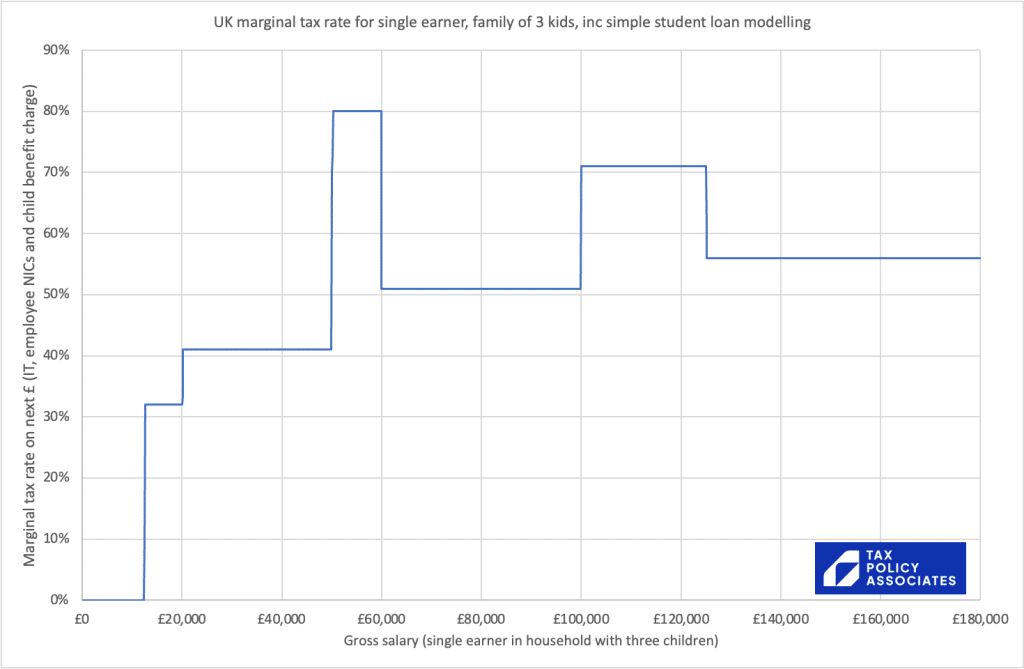
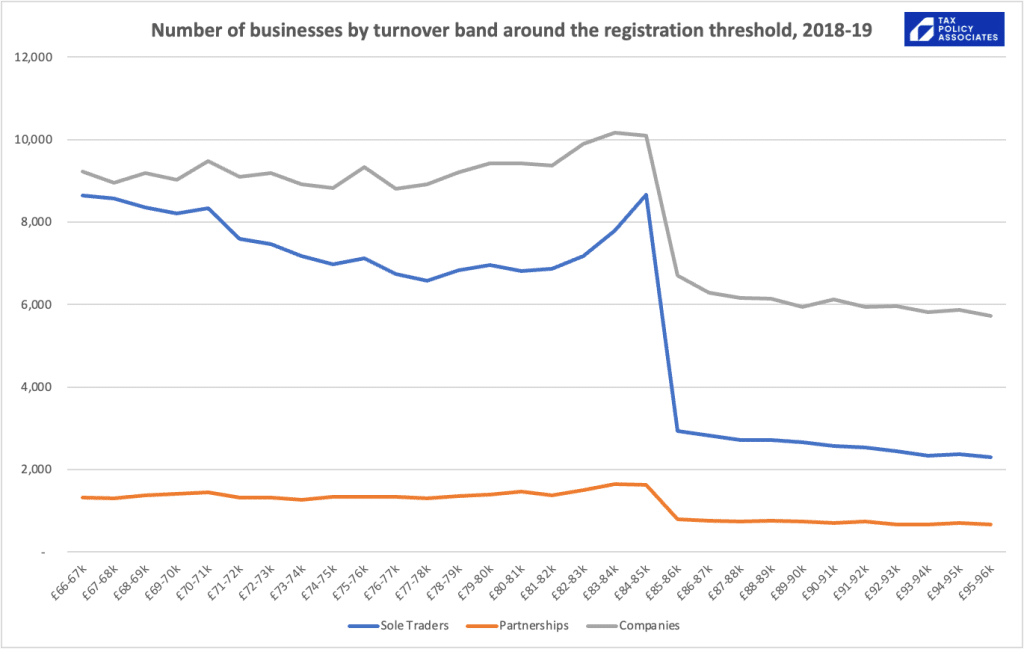
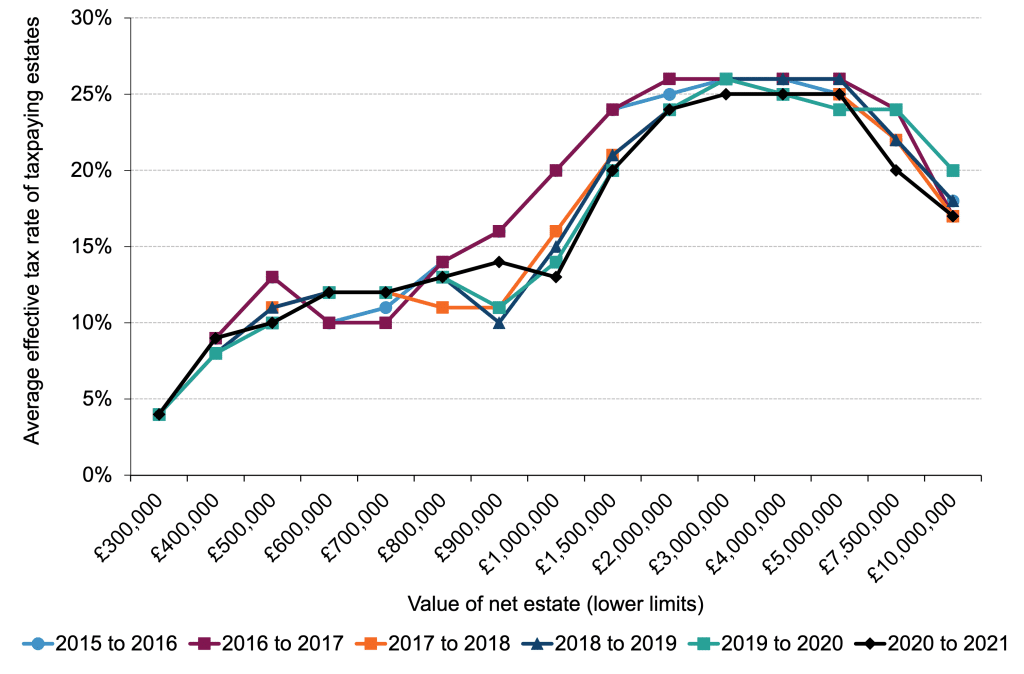
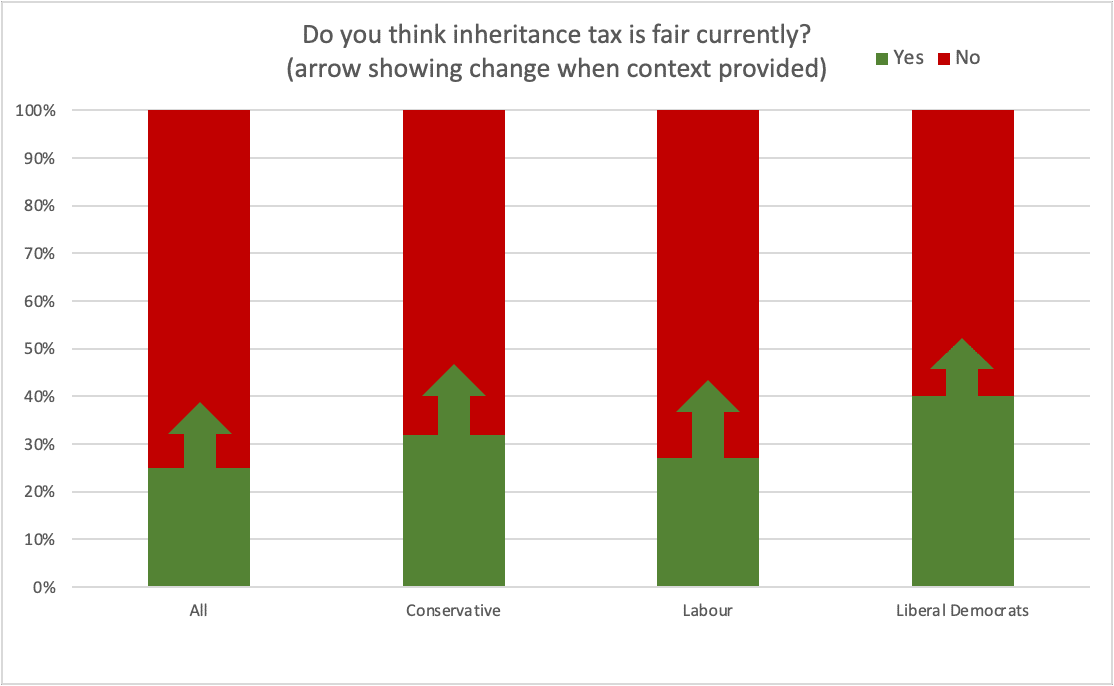




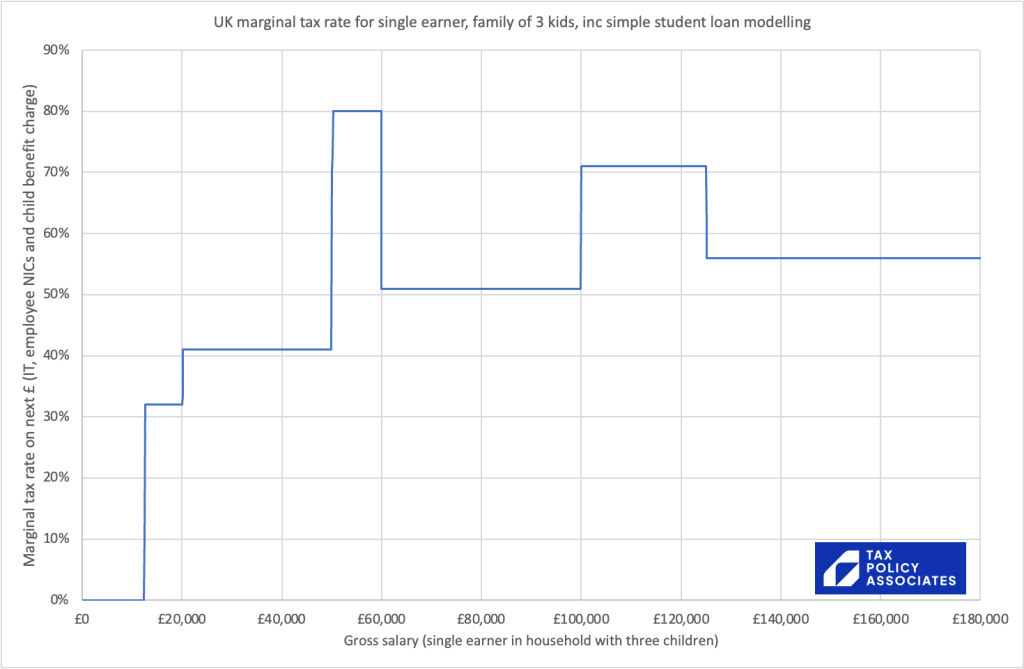

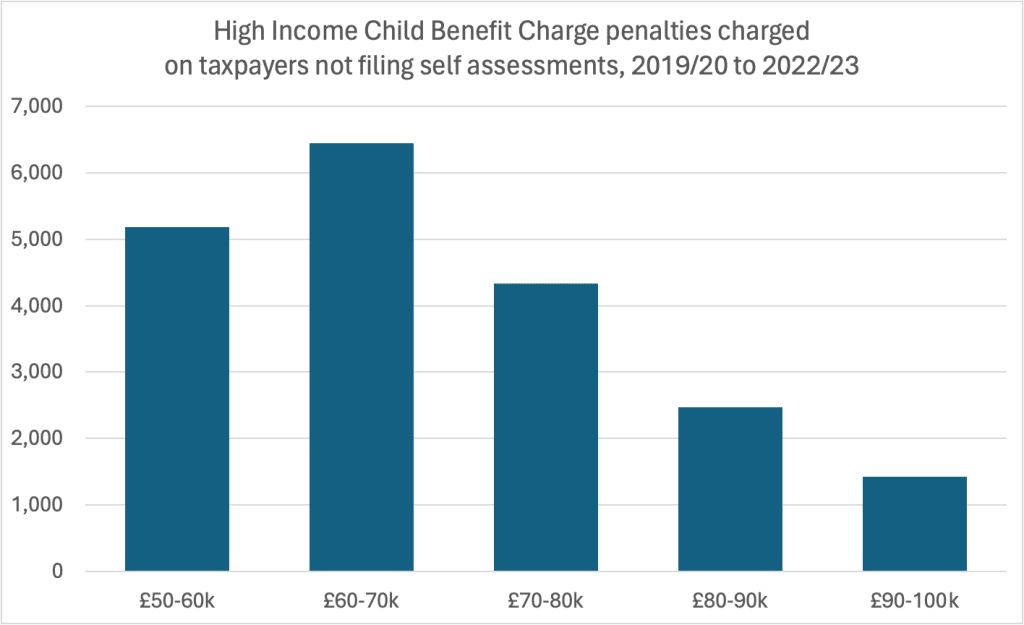
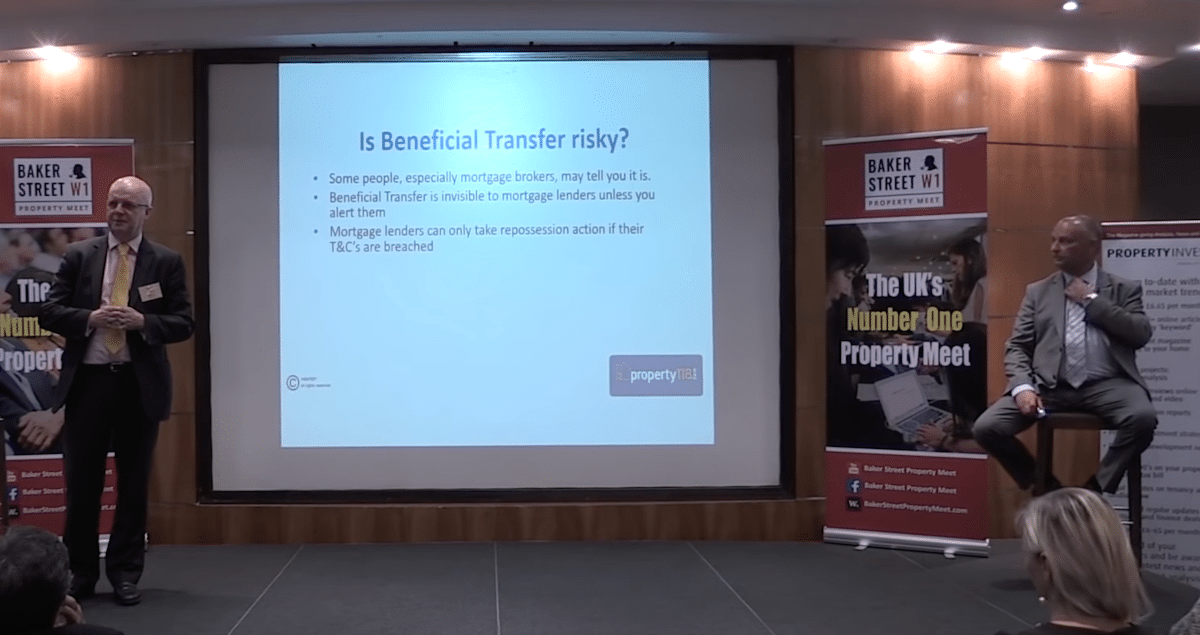
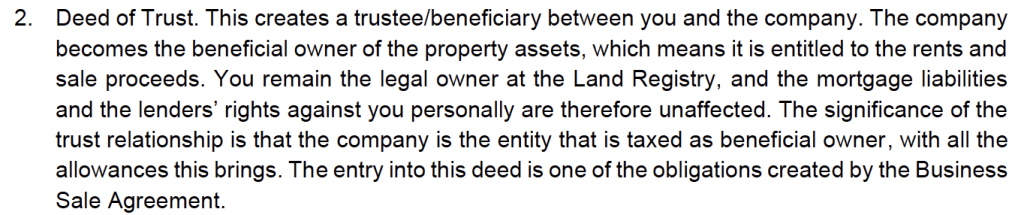







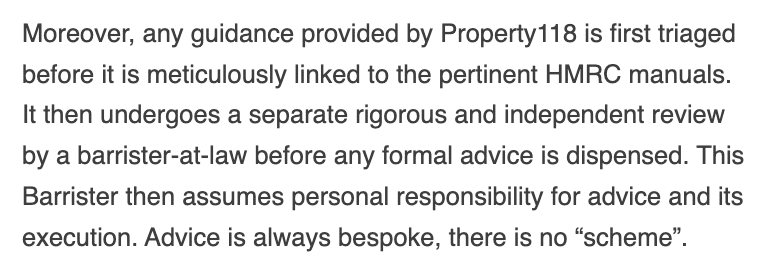

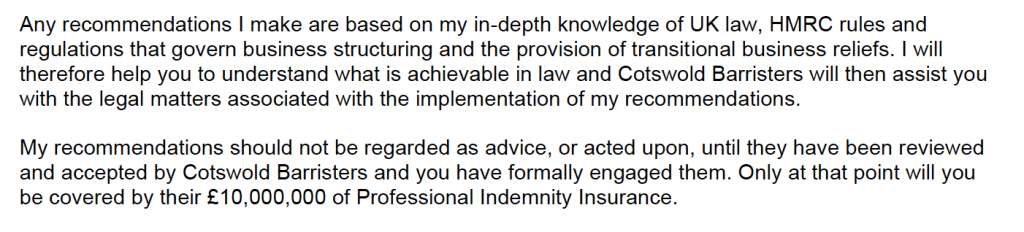
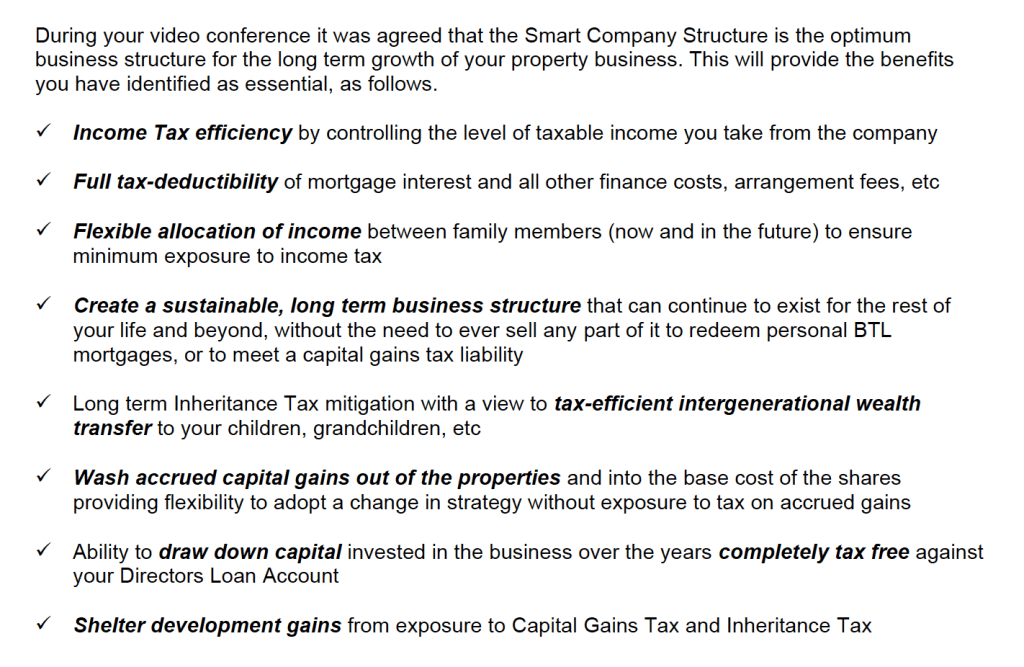



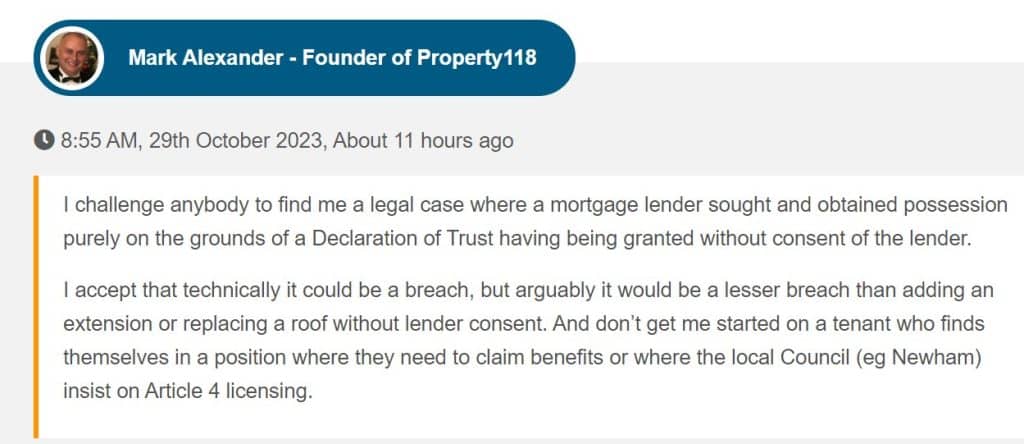
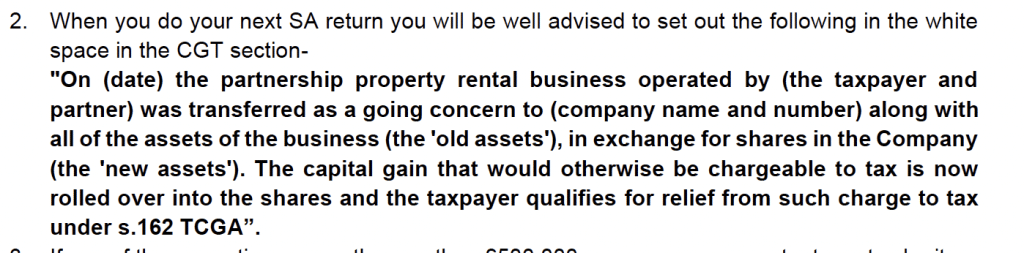
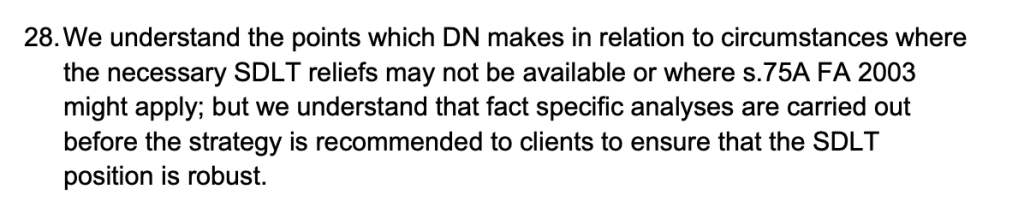

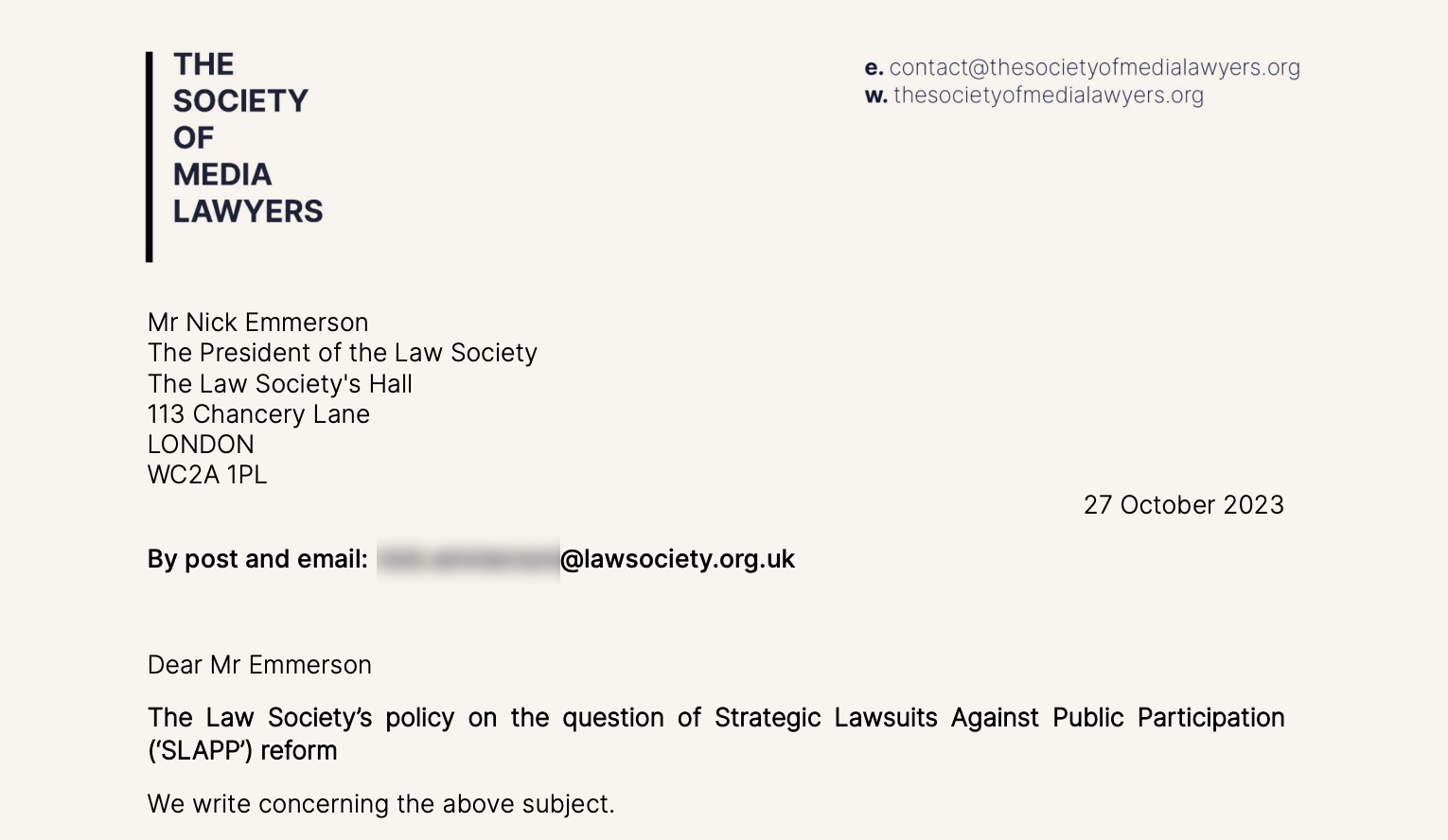


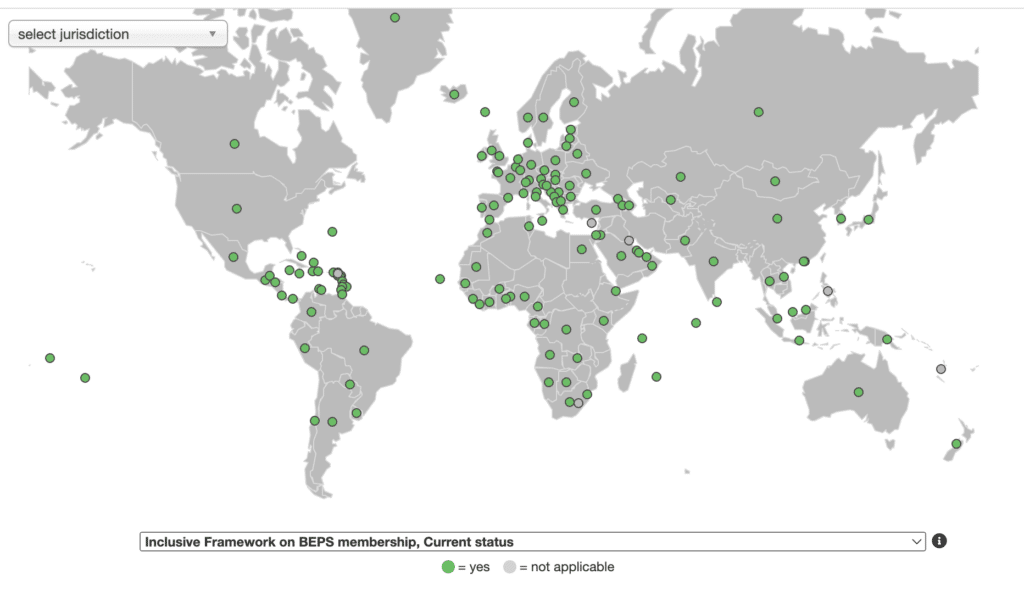
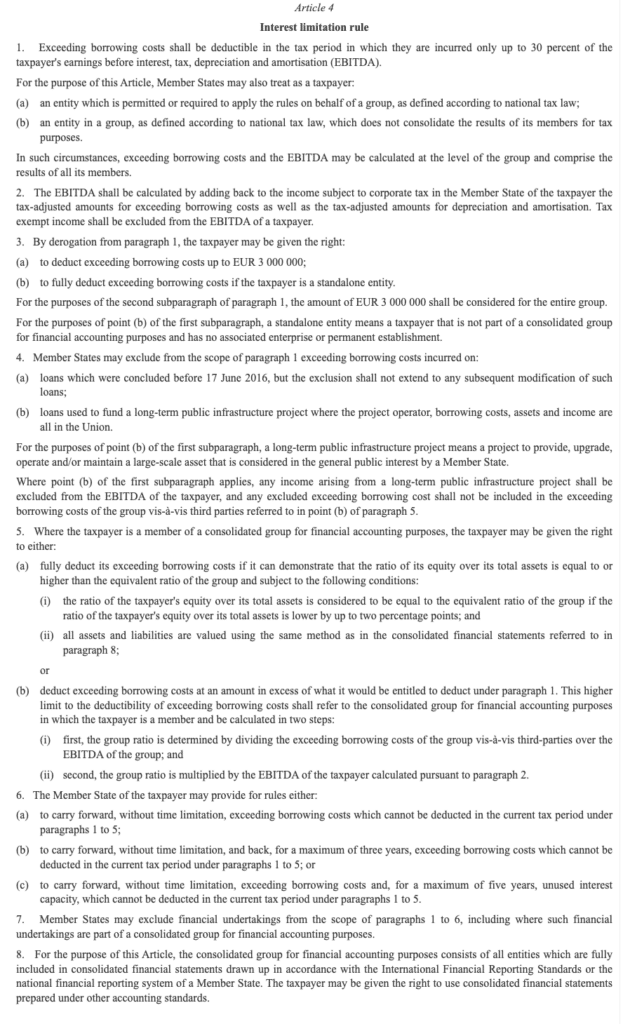











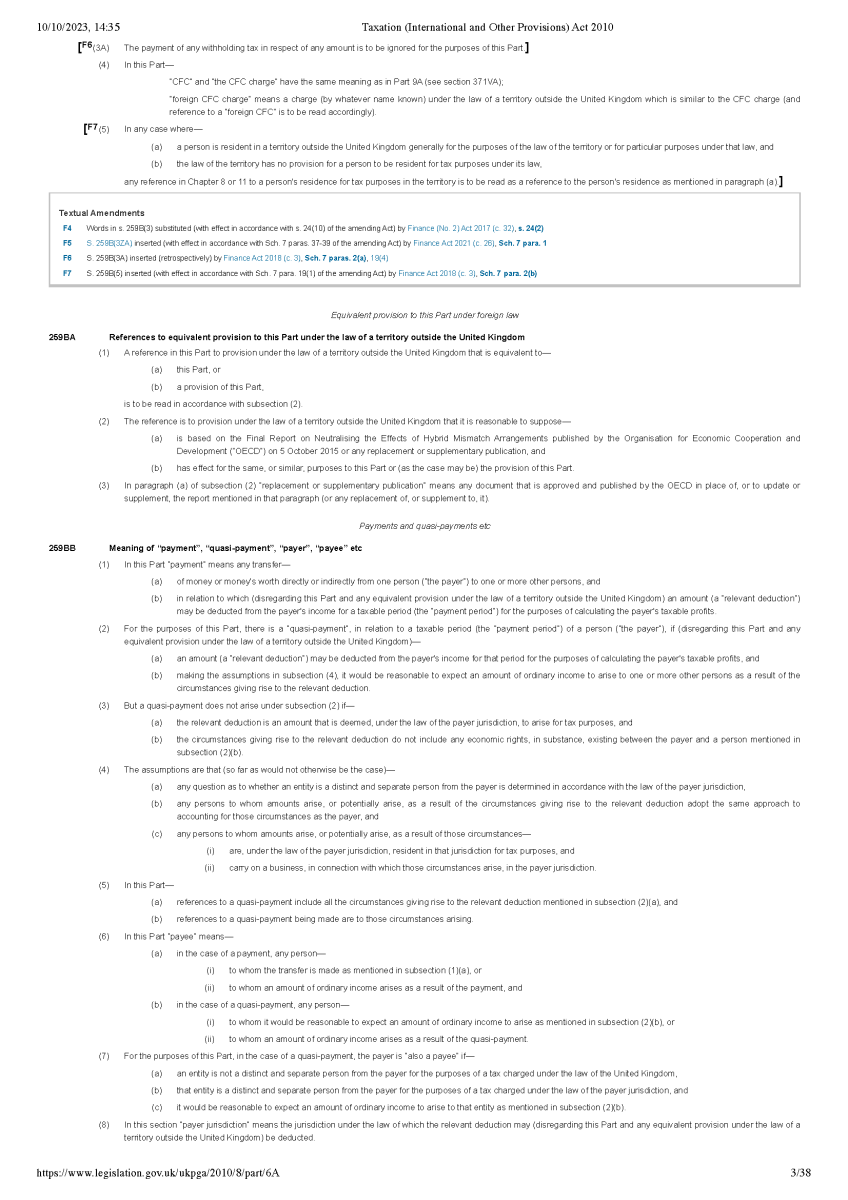
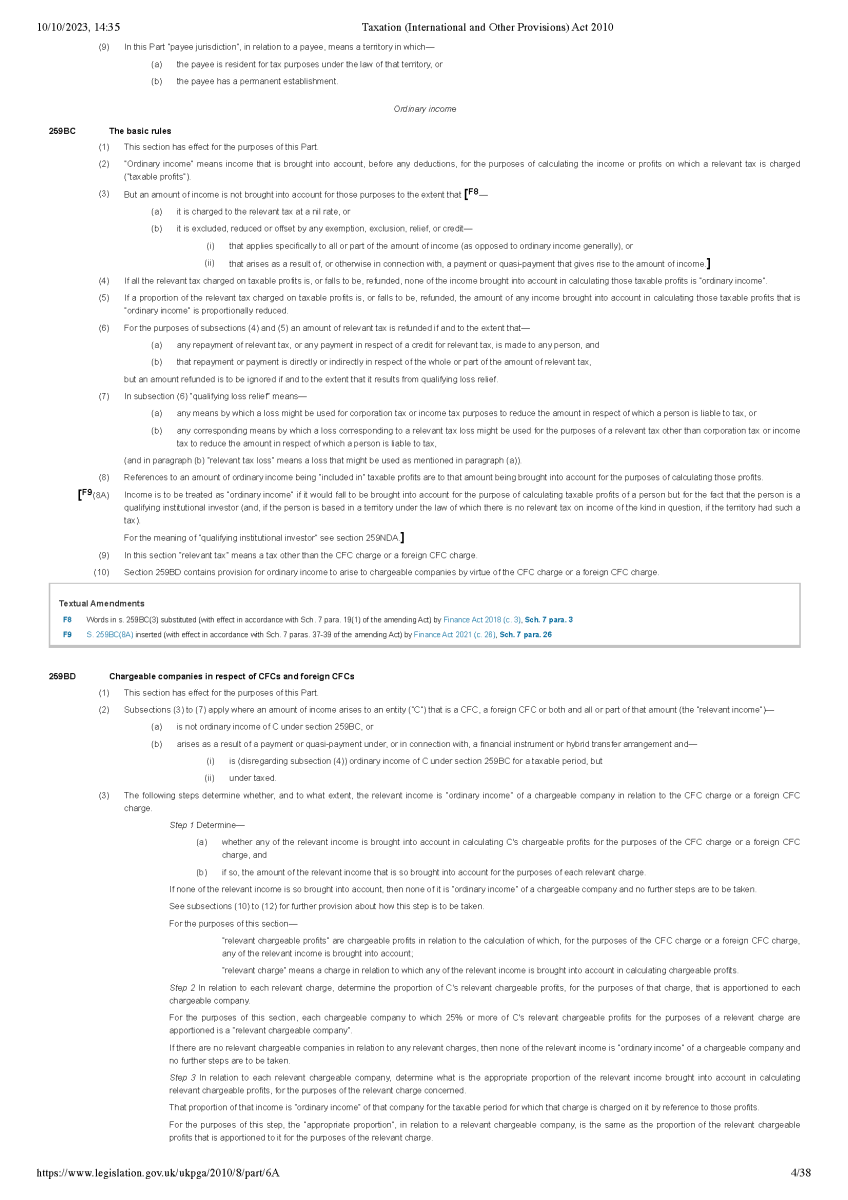
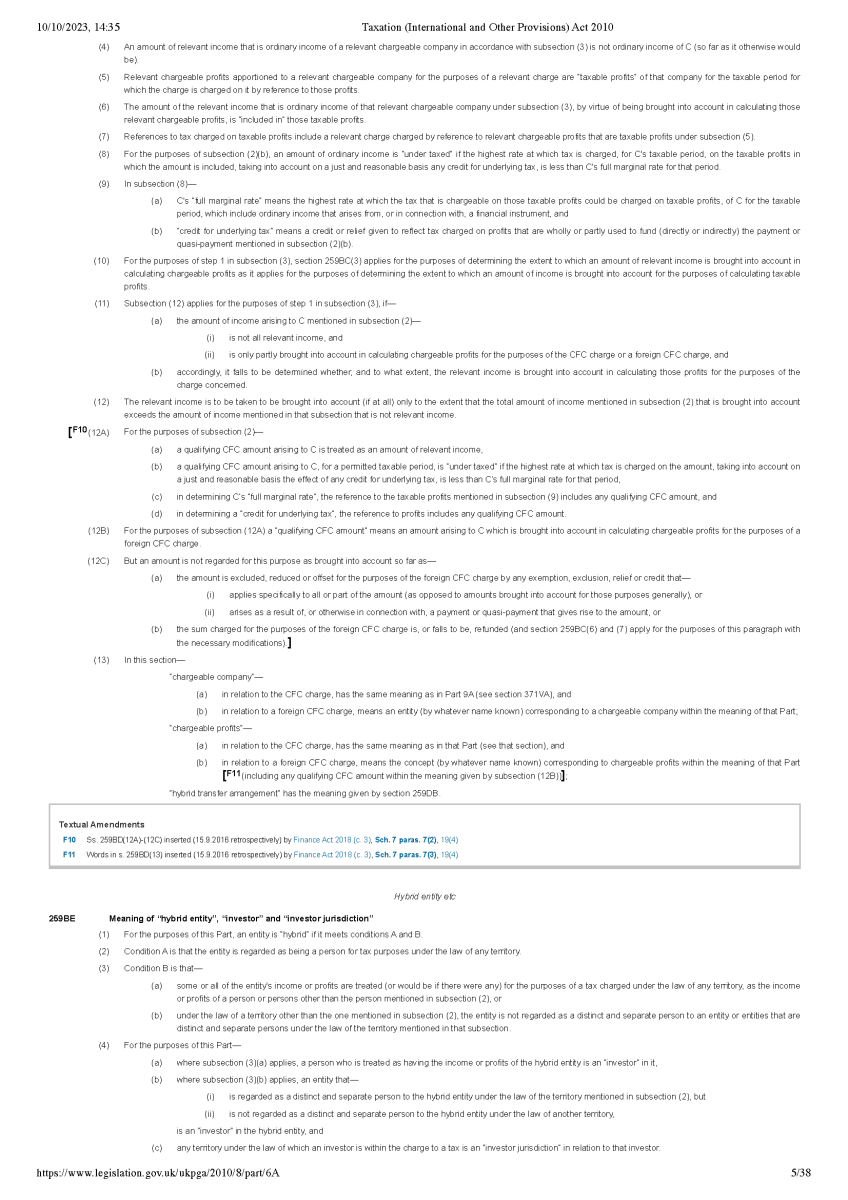



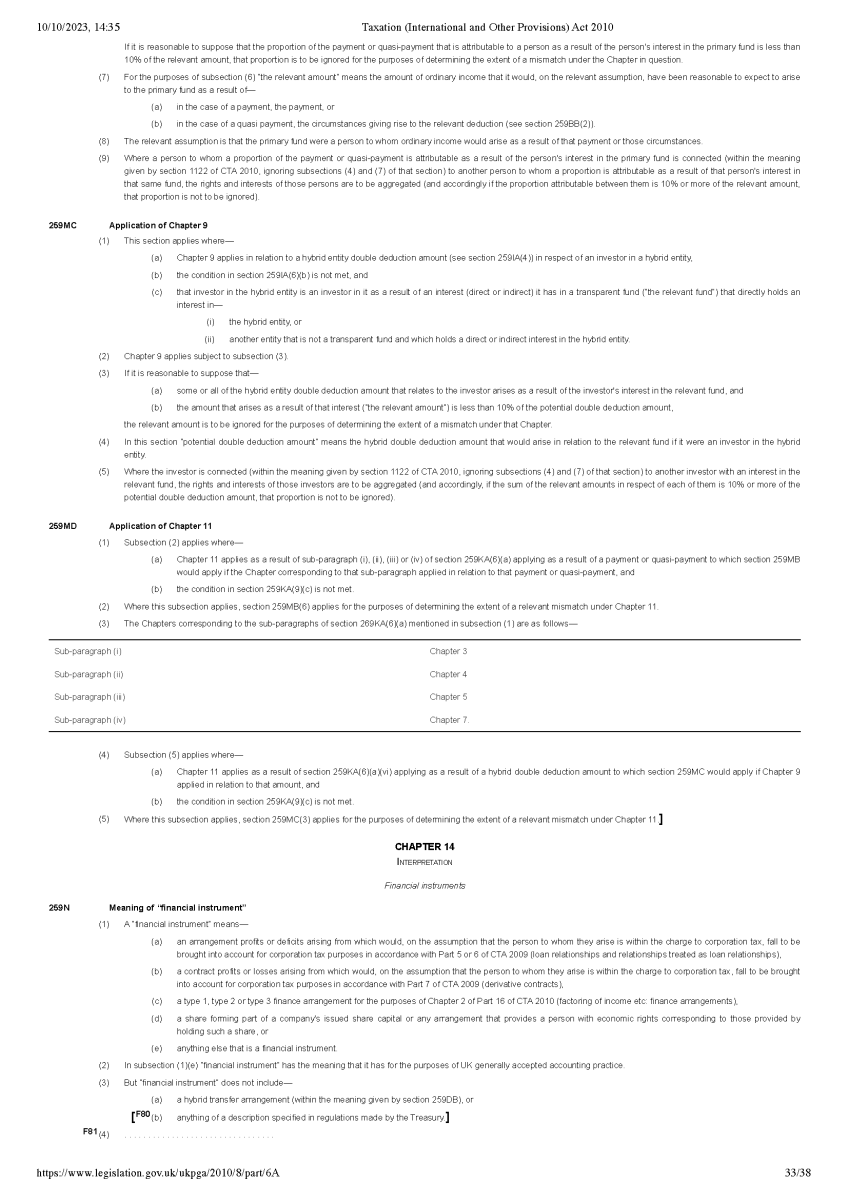

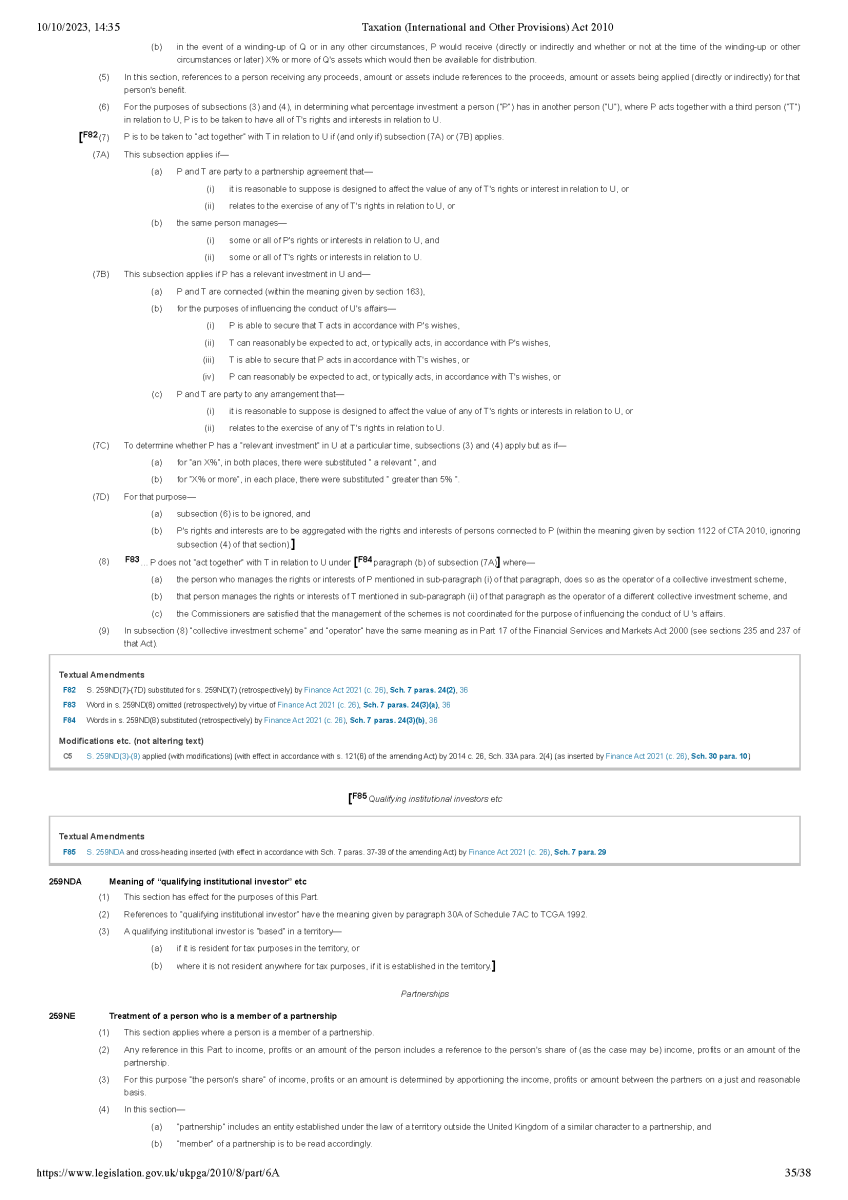












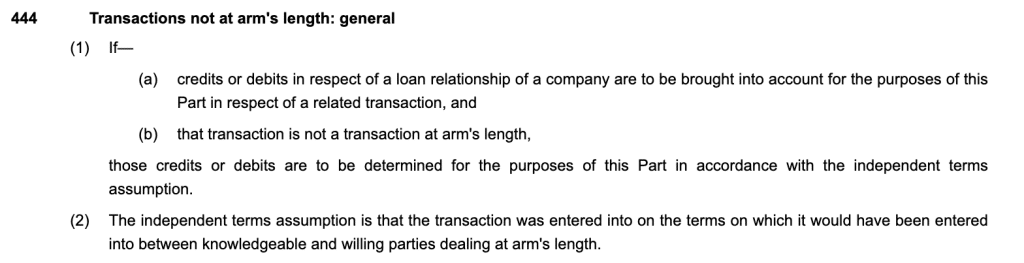
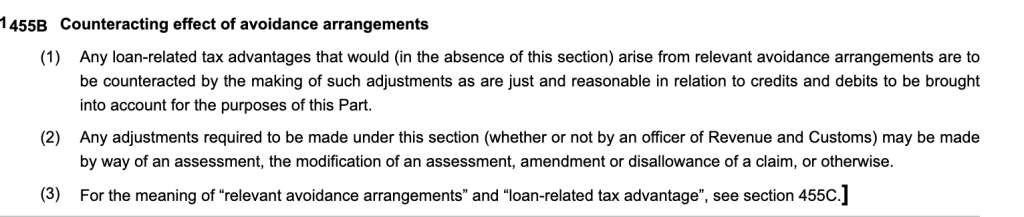
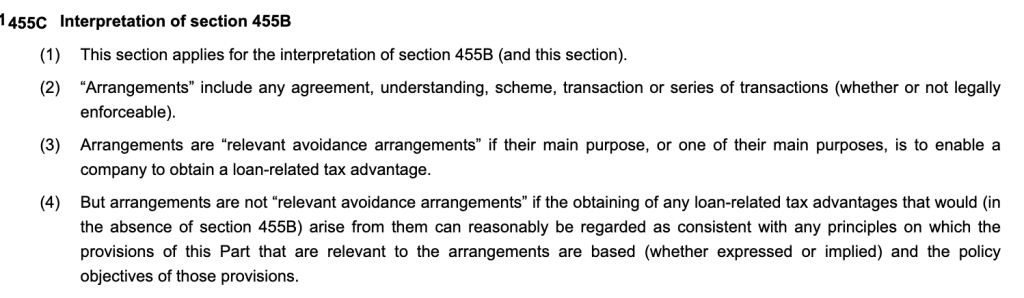

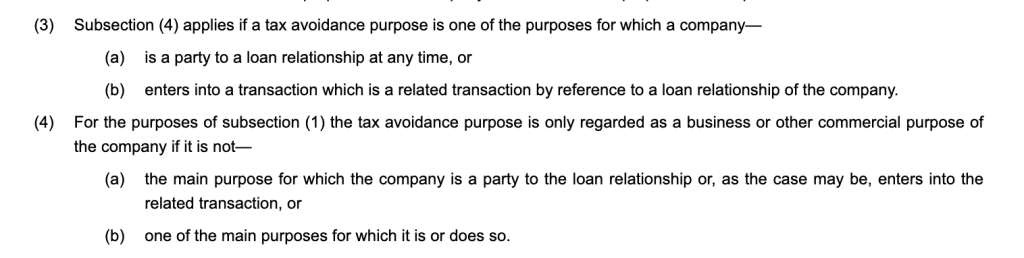



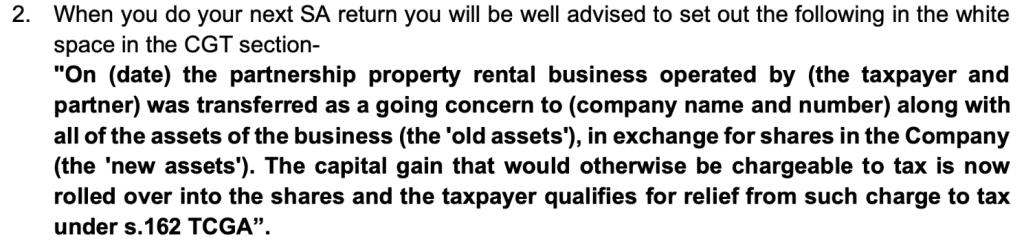


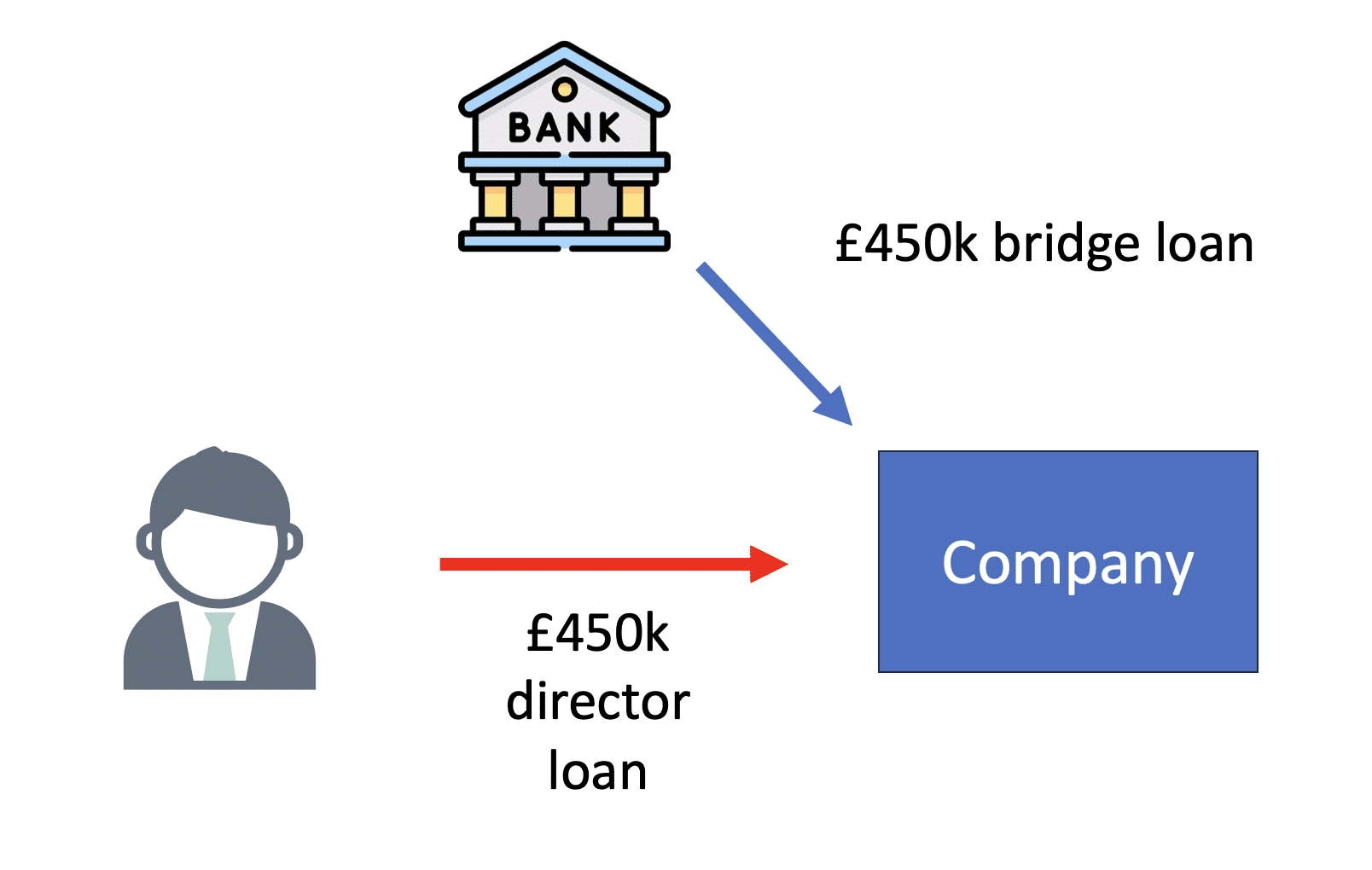
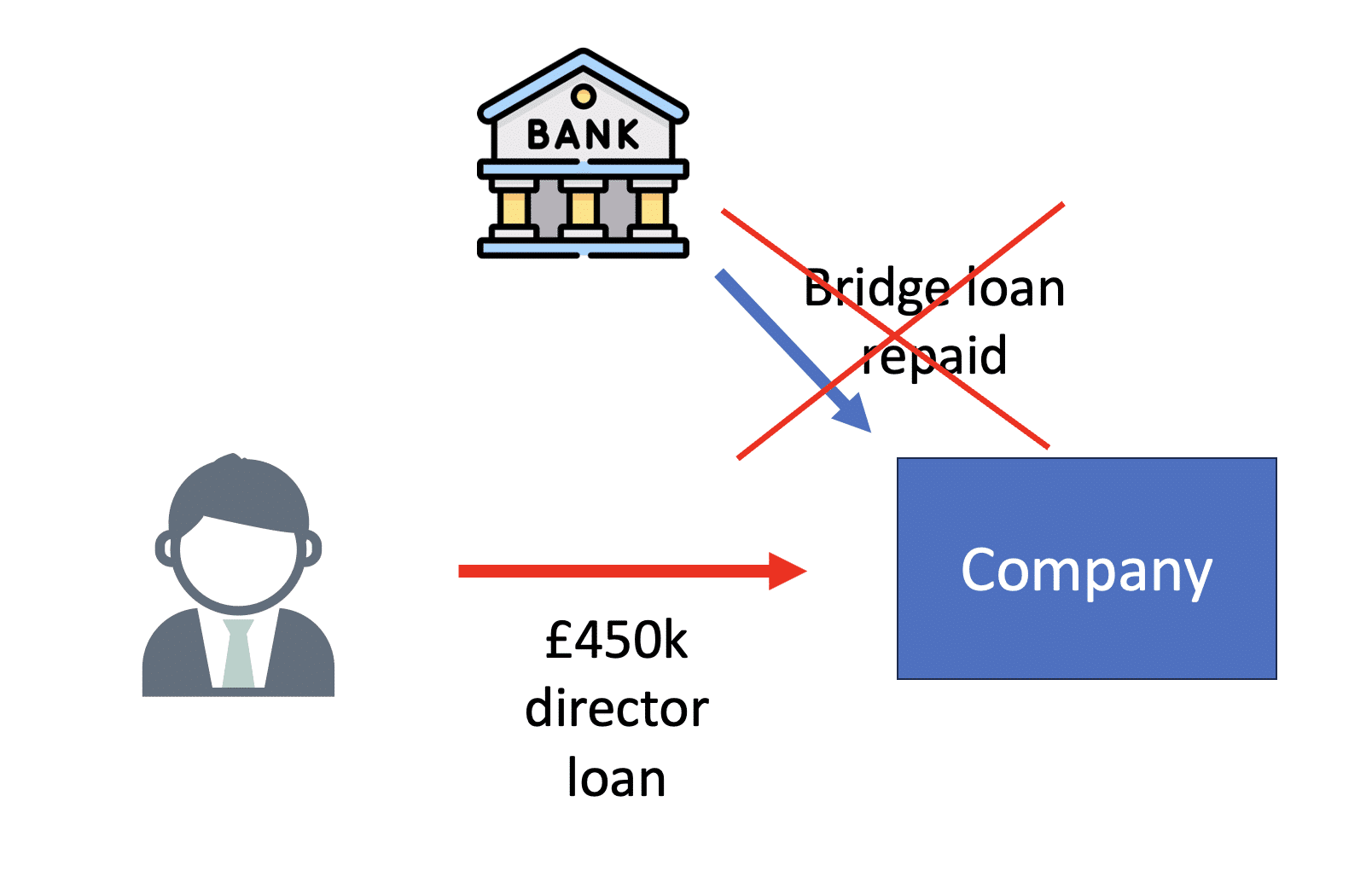
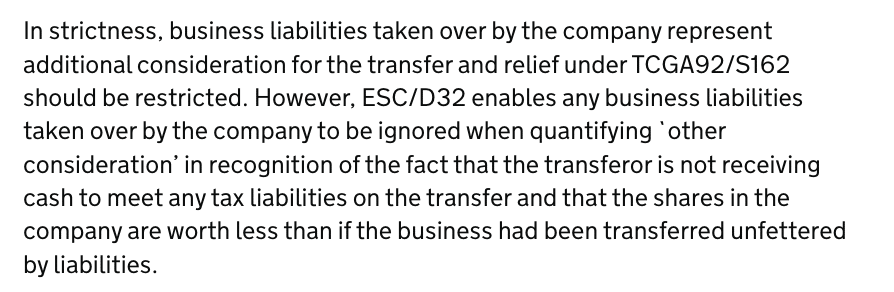

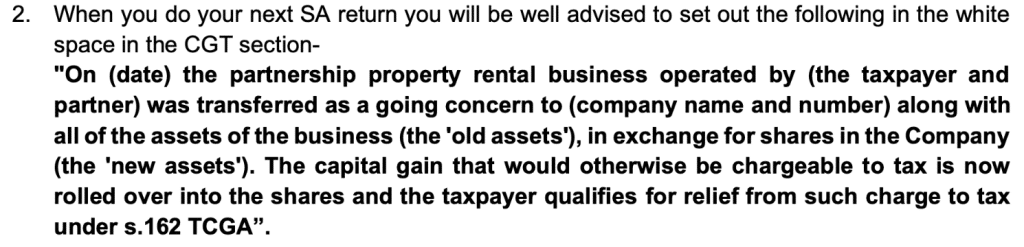






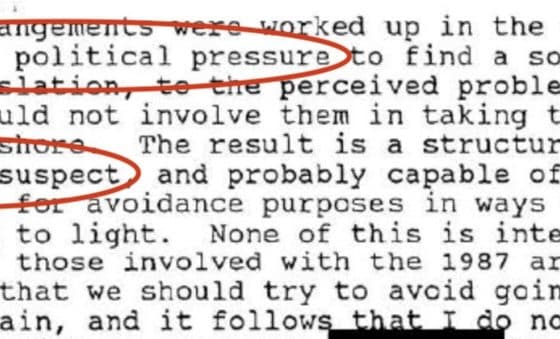
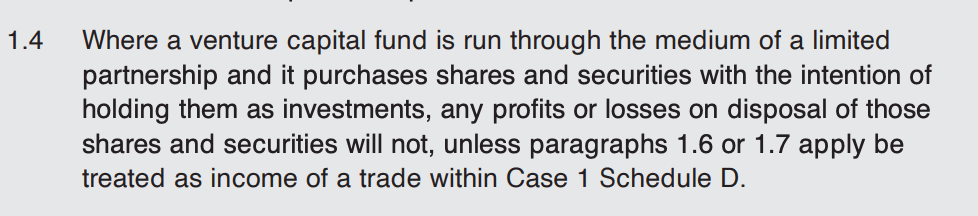
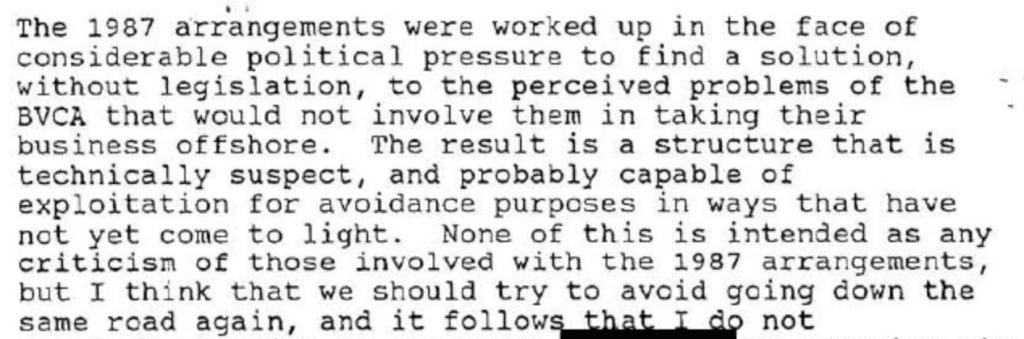
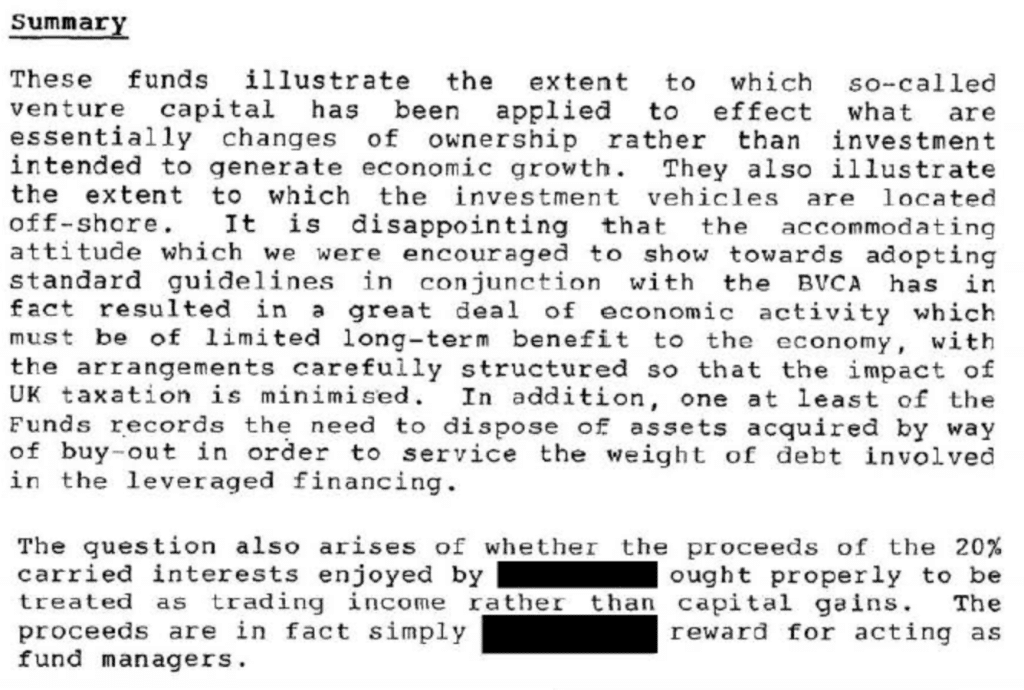

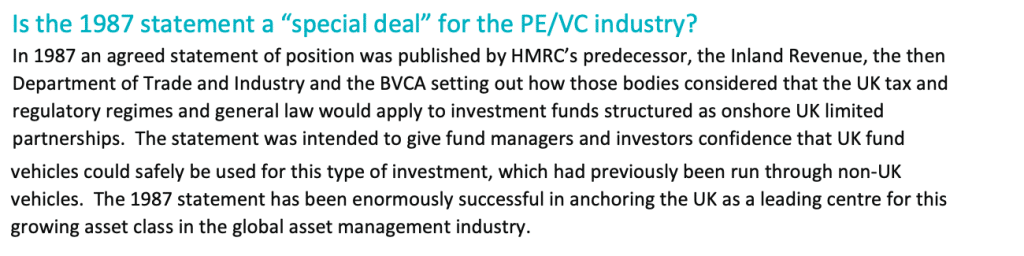
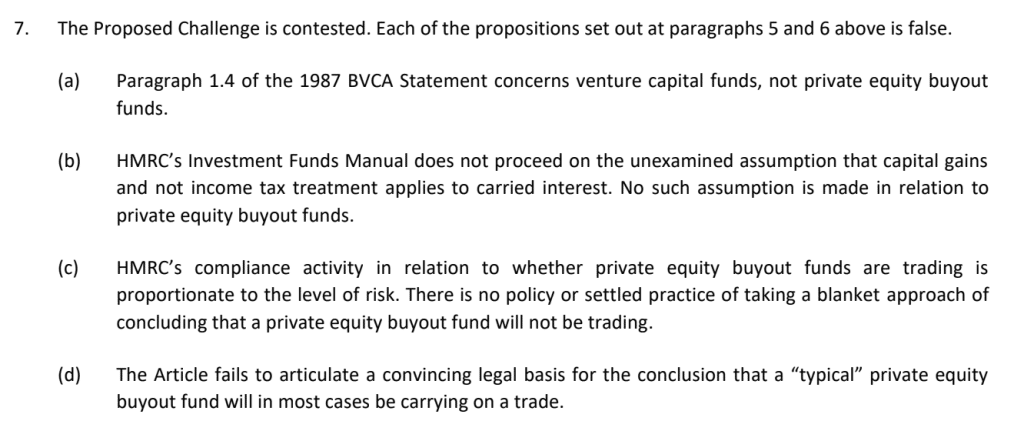







![13.2 Reliefs
There are no special reliefs from inheritance tax for let property.
Business property relief (BPR) can apply to the value of assets used wholly or mainly for the purposes of a business.
However, property letting is not regarded as a business for these purposes. Property held wholly or mainly as an
investment will not qualify for BPR (s 105(3) IHTA 1984).
Although a furnished holiday lettings (FHL) business is a deemed trade, it is unlikely to qualify for BPR. To qualify
for BPR the FHL business needs to provide a level of services over and above that which would be expected from a
landlord. This was explored in Pawson (dec) v HMRC [2012] UKFTT 51 (TC) where the executors of the estate won
the argument for BPR to be given at the First-tier Tribunal, but this was overturned at the Upper Tribunal, and leave
to appeal was refused.
The level and type of services needed to make holiday accommodation into a business qualifying for BPR may be
achieved in the case of a caravan park or seasonal short lets where catering, entertainment and other services are
also provided. However, HMRC are very uneasy about granting such relief and will refer any case concerning FHL
property to their technical team (litigation).
Where the accommodation is merely furnished and no other services are provided to the tenants, HMRC conclude
in their inheritance manual: “In most cases the level of services provided will not be sufficient to weigh the balance
away from ‘investment’” (IHTM 25276).](https://taxpolicy.org.uk/wp-content/uploads/2023/09/Screenshot-2023-09-30-at-23.13.10-1024x733.png)