
We have a new Chancellor – and it looks like a tax cut may be surprisingly high on his agenda. Andy Burnham has said the freezing of income tax thresholds was “the thing I heard the most on the doorsteps”, and that it was “lodged in my mind”.
The personal allowance – the amount you can earn before paying income tax – has been frozen at £12,570 since April 2021.1 Had it risen with inflation it would be £16,070 today. That £3,500 of missing allowance costs a basic-rate taxpayer £700 a year.
It is not hard to see the appeal of delivering a tax cut by increasing the personal allowance. There is an obvious case: it’s simple, it is progressive, and it keeps low incomes out of the income tax system altogether.
The detail, however, is less convincing. The same thing that makes a personal allowance increase tempting politics – that it applies to everyone – means the tax cut it delivers is very small. £6bn used to increase the personal allowance delivers a benefit of £140 a year to almost all basic-rate taxpayers. More targeted measures deliver more cash. The same £6bn used to fund an employee national insurance cut gives someone on the median wage £265. And raising the allowance creates a new and thoroughly irrational tax trap at £126,000.
So it is not crazy to increase the personal allowance. But it is not what I would do.
But if the government is looking at income tax and national insurance, it should look at fixing some of the serious problems that are plausibly holding back productivity and growth. The distortions around £100,000 – where the marginal rate leaps to 62%, and where a cliff edge in childcare support can leave people worse off for earning more – are the worst feature of the income tax system. The Centre for British Progress has set out how they could be fixed, and I wrote about it in the FT. The Centre for British Progress says this can be done on a cost-neutral basis – the Government should be seriously considering whether that’s correct.
Do people really think tax is too high?
There is a widespread belief that tax is too high.
I don’t think that’s correct by historic UK standards. The tax an average worker pays – income tax and National Insurance together – is lower now than in most years since 1975, and far below the 1982 peak. The striking thing is the other line: total tax as a share of GDP is simultaneously at a record high. We are a more heavily taxed country, but not because of the tax on an average wage:2
Nor by international standards. Across the earnings range, the UK sits below almost every comparable European country. There is a particularly striking difference for low incomes, where the UK’s high personal allowance means that we tax much less than any other developed country. The detail, and the reasons, are in that same article:
These charts are, however, politically irrelevant because 63% of GB adults say the tax ordinary people pay is high and just 4% say low. Majorities of every party’s voters, including Labour’s own, says high:3
Perceptions seemed to shift markedly immediately after the 2024 Labour general election victory. For most of the previous five years more people wanted the state to tax and spend more; now 44% say too much against 21% too little:4
I don’t hide my personal political views; I’m generally in favour of a more expansive state. However, right now I worry that we have a crisis of tax legitimacy: people think they pay too much tax and that they’re not getting enough in return. The underlying reasons for this are complex and contested. But, if I were the Government, I’d prioritise both trying to noticeably deliver better public services (within fiscal constraints) and delivering a (noticeable) tax cut.
Five years of tax increases
Whilst tax on the median worker is lower than it’s been for most of modern British history, it has gone up in the last five years – and that’s because of fiscal drag.
Income tax thresholds were set at their current levels in April 2021 and have been frozen ever since. The November 2025 Budget froze them for another three years, to April 2031. Wages keep rising, pushing people through the thresholds and into higher rates of tax, or into paying tax for the first time.
Fiscal drag used to be a nice little trick that the public largely didn’t notice. That may have changed.5
Here’s what has happened to the three main income tax thresholds, with everything converted into 2026 money:6
In the 1990s and early 2000s, people accused Gordon Brown of “stealth tax” by fiscal drag. But this was a gentle drag: he increased thresholds by inflation rather than by wages. What has happened since 2021 is far more aggressive – thresholds frozen outright, through the sharpest burst of inflation in thirty years.
The result has been dramatic. There were 1.7 million higher rate taxpayers in 1990. There are 7.6 million now, and on current policy there will be nearly 9 million by 2030-31:
And the overall tax increase that we as a country are experiencing is mostly down to fiscal drag.7
If all thresholds had been uprated by inflation since 2021:8
- The personal allowance this year would be £16,070, instead of £12,570. For a basic-rate taxpayer that is a tax rise of £700 a year.
- The higher rate threshold this year would be £64,470 rather than £50,270. Someone on £60,000 would not be a higher rate taxpayer; they pay £2,646 more than they would have. At £80,000 the figure is £3,540.9
Undoing this and the parallel National Insurance threshold freezes would cost about £44bn a year.10
No Government is going to do this.
Is a £500 rise in the allowance the answer?
Let’s assume, for the rest of this article, that £6bn is found – one way or another; I return below to where it might come from. Let’s also assume that the Government wants to use it to finance a tax cut.
£6bn buys about £500 on the income tax personal allowance, and about £500 on the National Insurance primary threshold to go with it.11 There is no reason other than neatness and simplicity why the two thresholds have to move together, but neatness and simplicity are good aims for a tax system.
I don’t think this is the best use of £6bn, but it certainly isn’t a crazy idea:
- Everyone understands it. “You can earn another £500 tax-free” is simple. Almost nothing else in tax policy is as easily understood.
- It helps part-time and lower-paid workers. Someone on £13,000 would have almost all of their income taken out of income tax and National Insurance altogether.
- It reduces the tax penalty on starting work. Moving the point at which tax begins improves incentives around the threshold. Someone on £12,500 may have held back (rationally or irrationally) from earning another £500. Now they won’t. Though the evidence that this matters is surprisingly weak. 12 More importantly, the decision whether to work at all is exactly the margin where tax matters most for the low-paid.13
- It reverses some of the fiscal drag above. I don’t like fiscal drag because it’s not being honest with the public. Reversing fiscal drag therefore is in principle a good thing.
- It reaches beyond working people. Landlords and people living off investment income all benefit and – far more importantly (in political terms – so do pensioners.
These are real advantages.
The big disadvantage is that this is a broad but extremely shallow tax cut. The package means a £140 a year tax cut for almost every basic-rate taxpayer – about £2.70 a week. People on higher incomes benefit a bit more, at £240 a year.14
That same brilliant advantage of delivering a tax cut to every taxpayer turns out to spread the tax cut very thinly.
There is another disadvantage which is more subtle and technical, but I don’t think it can be overlooked. Increasing the personal allowance creates a new, and very irrational, £126,000 tax trap.
The personal allowance is clawed back once your income exceeds £100,000, at £1 for every £2. Today the clawback finishes, and the allowance is gone, at exactly £125,140 – which is (by design) where the 45% additional rate starts. A larger allowance takes longer to claw back, so the taper now runs past that point and overlaps the additional rate band.
In that overlap each extra £1 of income is taxed at 45%, and costs 50p of allowance which is itself taxed at 45%. That is a marginal income tax rate of 67.5% – or 69.5% once you add employee National Insurance – between £125,473 and £126,140.15
The fix is obvious: move the additional rate threshold too. It’s peculiar that a Labour chancellor could increase the additional rate threshold, but in this case, doing anything else seems like a bad mistake.
Where would the £6bn come from?
There are only five possibilities:
- Print money. Reasonably clear this is not going to happen.
- Increase borrowing. Highly unattractive at current gilt rates.
- Higher-than-expected growth boosting tax revenues. That worked during the Blair/Brown years – there’s not much sign of it now.
- Cut spending. Many would like to see the Government do that, but it’s much easier for a think tank to propose than for a government – of any political stripe – to deliver. Andy Burnham’s political background, and the circumstances in which he became Prime Minister, make that seem an unlikely option.
- Increase other taxes. An equalisation of the capital gains rate with the income tax rate, with an allowance for the normal return on investment and relief for entrepreneurs, could raise a significant sum. Or several smaller tax increases could raise a similar sum.
Is there a better way to spend £6bn?
An obvious alternative would be to cut employee National Insurance. The same £6bn finances a cut of 1p in the main rate of employee (Class 1) National Insurance, and a matching cut to Class 4 for the self-employed.16
Here’s what that looks like compared with the threshold package. The threshold line is flat – almost everyone gets the same £140 – while the National Insurance line rises with earnings, overtaking it at £26,570 and reaching £377:
So the clear advantage is that it rewards work, and gives the median worker a much larger tax cut than the threshold package (£265 against £140). The clear disadvantage is that the low-paid – those earning under £26,570 – receive a smaller tax cut.
Beyond the politics, there is a powerful technocratic reason to prefer the rate cut: its effect on marginal rates. It’s the marginal rate – the tax on the next pound you earn – that changes behaviour, and a rate cut reduces it for everyone paying it. Costas Meghir and David Phillips’s survey of labour supply and taxes, written for the Mirrlees Review, sets out the UK evidence: responses are concentrated among lower earners and second earners, and they respond to rates, not to lump sums. We want “responses” because they boost growth.
This is not a Laffer-curve argument from the libertarian Right. It’s the mainstream position across the profession – Peter Diamond and Emmanuel Saez’s account of optimal progressive taxation, hardly a right-wing tract, rests on exactly the same logic about marginal rates.
Another advantage: people not working don’t benefit – for example landlords and people receiving investment income.
But the corollary, and the big political problem: pensioners don’t benefit.
To state the obvious: pensioners vote, and a government that hands a tax cut to workers and nothing to pensioners will be heavily criticised. But it’s fundamentally wrong that two people with the same income pay different amounts of tax simply because one is older than the other (or one is working and the other is receiving passive income). National Insurance is the main reason that happens. Cutting national insurance narrows the gap rather than widening it – and I would do this in a heartbeat.
Jeremy Hunt had the right idea when he delivered tax cuts by cutting employee National Insurance. Andy Burnham’s Government should follow it.
Is a high allowance good in principle?
There was a time fairly recently when people somewhat on the left and somewhat on the right both believed there should be a higher personal allowance.
I think it’s a mistake for several reasons.
- It causes unfairness – single-earner households are taxed significantly more heavily than dual earner households (who get two personal allowances!). For this reason, it’s questionable whether a high personal allowance actually benefits the poor (compared to a counterfactual with a lower personal allowance and lower rate).17
- It causes a muddle at the other end of the pay distribution, where the desire to stop high earners receiving the benefit of the personal allowance generates a marginal tax rate of 62% on people earning £100,000 to £125,140.18
- And a fundamental point: the best tax cut is a tax cut that reduces the marginal rate of tax for the greatest number of people – all those people receive an increased incentive to boost their taxable income (whether by working more, or planning/avoiding/evading less).19 A cut in employee National Insurance reduces the marginal rate for every employee paying it – about 20 million people.20 A £500 rise in the thresholds reduces the marginal rate only for the few hundred thousand people sitting in the £500 band just above them (and for the similarly small number between £50,270 and £50,770, whose higher rate threshold moves with the allowance).21 For everyone else it is essentially a cash transfer, not a marginal-rate cut – with no incentive to earn more.
There’s no uniquely correct level. But I think we’ve attached far too much symbolic importance to having a very high headline tax-free allowance.
So what should Burnham do?
The Government shouldn’t ignore the mess around £100,000, where the withdrawal of the allowance and of childcare support combine to produce marginal rates above 100% for some parents. That can plausibly be fixed on a cost-neutral basis, which makes it the rarest thing in tax policy: a large improvement that doesn’t need to be paid for. If Andy Burnham is looking at income tax, he shouldn’t ignore this.
But if there’s £6bn for a tax cut, spend it on the rate and not the threshold. A 1p cut in employee National Insurance gives most workers more money than a £500 rise in the thresholds, rewards work, and narrows the gap between how we tax earned and unearned income. If the allowance goes up anyway, the additional rate threshold must go up with it – otherwise we acquire a 67.5% tax rate at £126,000 for no reason at all.
The personal allowance may be the more attractive headline, but a National Insurance rate cut is the better tax reform.
Comparing tax cuts
We like to assess tax cuts by the “bang for the buck”: the amount of GDP growth that each pound of tax cut creates. Here’s our updated rough and ready estimate for fifteen different tax cuts:22
“Press conference by John Healey, then UK Secretary of State for Defence” by NATO North Atlantic Treaty Organization, CC BY-NC-ND 2.0
How much tax do we actually pay on our wages?
New data suggests Scotland’s 48p tax rate may be losing money
37 ways Andy Burnham could raise £4.7bn
The £2bn lawyer tax – should Rachel Reeves tax LLPs?
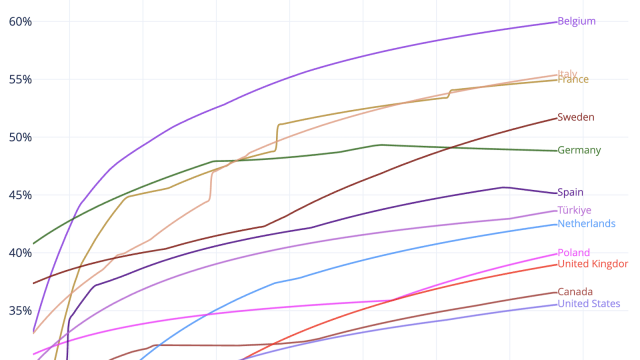
Are UK workers over-taxed? The answer in four infographics
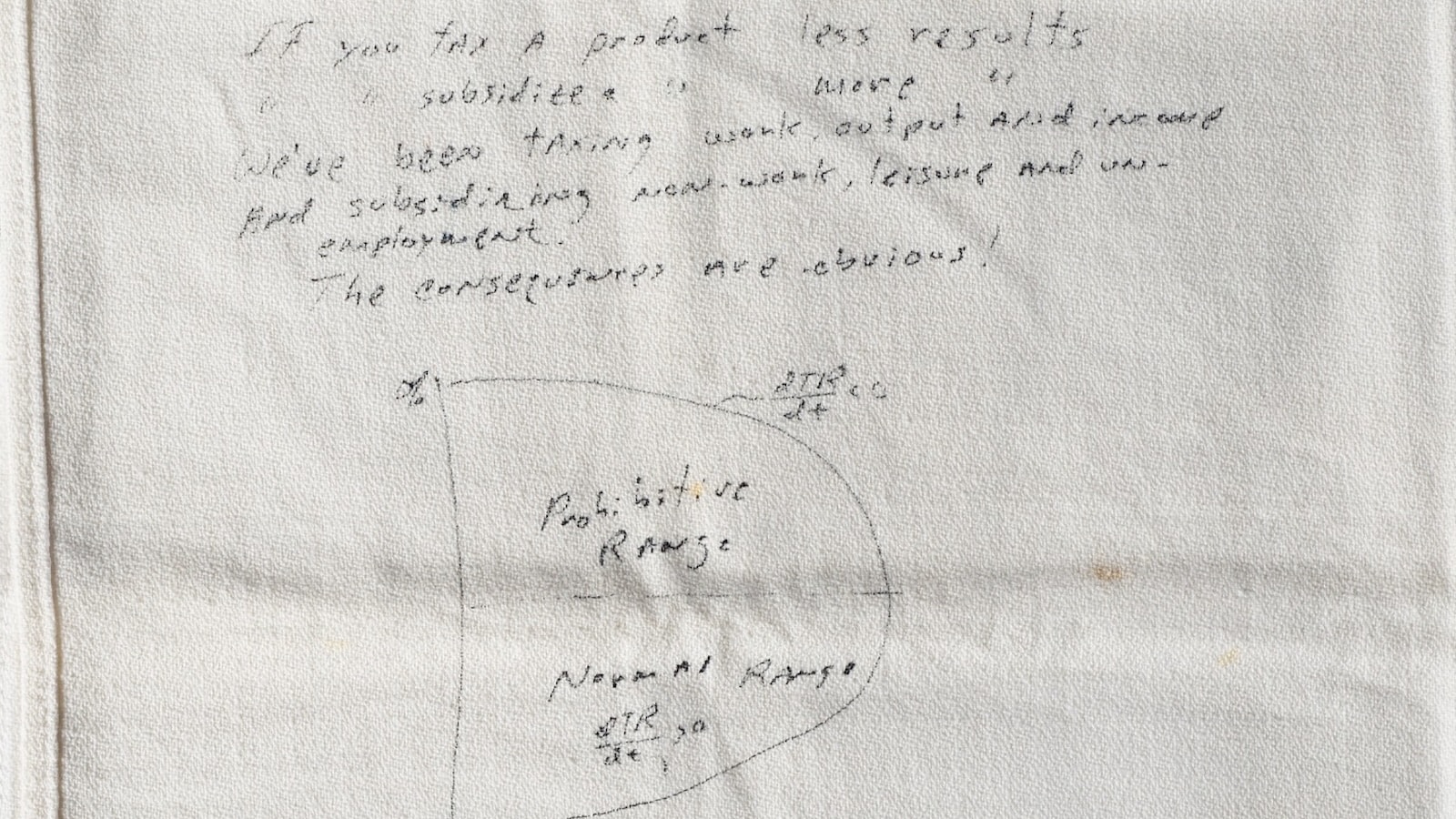
Untaxing – The Laffer curve, and the napkin that changed the world
Footnotes
Often articles on income tax need to deal separately with Scotland, where income tax rates and bands are devolved. This article is about the personal allowance and employee National Insurance, neither of which is devolved, so the figures are UK-wide. ↩︎
Both of these charts, and the methodology and sources behind them, are set out in detail in our earlier article Has Britain run out of “other people” to tax?. We have not repeated the sourcing here. ↩︎
YouGov, tax attitudes survey, fieldwork 16-17 November 2025, 2,112 GB adults. The question was: “In general, do you think the level of tax that ordinary people in the UK pay is high, low or neither?” Results reported by YouGov, 24 November 2025. The same survey shows the breakdowns by age, gender, social grade and region, and an October 2024 wave asked the identical question: the “too high” share has risen from 59% to 63% over the year. Percentages are rounded and may not sum to 100. ↩︎
YouGov, Are we taxing and spending the right amount? – a monthly tracker of GB adults running from July 2019 to June 2026. The question is: “Generally speaking, do you think the government taxes too much and spends too much on services, taxes too little and spends too little on services, or gets the balance about right?” Chart reproduced by Tax Policy Associates from YouGov’s published dataset. In the June 2024 wave 35% said “too little” against 28% “too much”; by the first wave after polling day the two had swapped. This is a different question from the one above and the two are not directly comparable. ↩︎
The House of Commons Library’s explainer on fiscal drag sets out the mechanism and its history. The Resolution Foundation has tracked the distributional effect of the current freeze. ↩︎
The dotted lines show current policy carrying all three down to the end of the freeze – an allowance worth about £11,600, and a higher rate threshold worth about £46,300: ↩︎
The OBR expects the total tax take to rise from 34.5% of GDP in 2024-25 to 38.5% by 2030-31 – a historic high – with income tax and NICs accounting for 2.4 percentage points of the 3.9 point increase, “primarily due to earnings growth combined with the freeze to personal tax thresholds until April 2031”. ↩︎
OBR, Economic and fiscal outlook, March 2026, detailed receipts table 3.19. The “with indexation” personal allowance for 2026-27 is £16,070 against £12,570 frozen, a difference the OBR states as £3,500. The counterfactual assumes CPI uprating from March 2021. ↩︎
Our calculation, comparing 2026-27 income tax on employment earnings under actual thresholds (personal allowance £12,570, basic rate limit £37,700) against the OBR’s indexed counterfactual (allowance £16,070, higher rate threshold £64,470, so a basic rate limit of £48,400). Table 3.19 as above. ↩︎
The OBR’s figure for the 2026-27 yield of the “PA and HRT freezes” is £34bn – EFO March 2026, detailed receipts table 3.17 – with a further £10.2bn from the parallel freeze to the Class 1 NICs thresholds. Plausibly the actual cost of undoing it would be lower, because there would be some positive taxpayer responses (less avoidance, fewer pension contributions, less evasion, people working more). But these responses tend to be small when, as here, the change in the effective rate of tax is modest – the standard survey of the evidence is Saez, Slemrod and Giertz’s review of the elasticity of taxable income. More on why that is here. ↩︎
About £5bn for the £500 on the personal allowance, and about £1bn for the matching £500 on the National Insurance primary threshold and the self-employed lower profits limit. On the other side, 1p off the main rate of employee Class 1 is about £5.35bn, with a matching 1p off Class 4 taking it to roughly £6bn. All of these come from HMRC’s ready reckoner, Direct effects of illustrative tax changes – a table showing what changing each tax by a set amount would raise or cost, which is the standard starting point for any costing of this kind. Two large caveats. First, it is out of date: the current edition was published in June 2025 and built on the OBR’s March 2025 forecast, and HMRC deferred the scheduled update on 6 July 2026 pending a review of its assumptions. Second, HMRC warns that the figures are non-linear, so five times the £100 increment back-of-the-envelopes a £500 change rather than costing it. That approximation applies to both of the options I compare, so the resulting error is probably similar for each – though that is an intuition rather than a calculation. ↩︎
A paper by Emmanuel Saez looking at whether taxpayers bunch at kink points in the tax schedule found clear bunching among the self-employed but essentially none among employees – most people simply cannot fine-tune their earnings to the pound. Work by Raj Chetty and colleagues attributes that to adjustment costs and frictions: the incentive exists, but people cannot easily act on it. ↩︎
The formal concept here is the participation tax rate – what you lose, in tax and withdrawn benefits, from moving into work at all, as distinct from the marginal rate on an extra pound. It was set out in a paper by Herwig Immervoll, Henrik Kleven, Claus Kreiner and Emmanuel Saez. Richard Blundell and Andrew Shephard show that for low-income families the decision whether to work at all responds much more strongly to tax than the decision how many hours to work. I view this as the best argument for increasing the personal allowance. ↩︎
With one exception at the top. The allowance is tapered away between £100,000 and £125,140, so anyone earning above £125,140 has no allowance left to increase and gains nothing at all from that half of the package. They still gain £40 from the National Insurance threshold – so £40 a year in total, against £377 from the alternative. ↩︎
It starts at £125,473 rather than £125,140 because £125,140 is a threshold on taxable income, and while any allowance remains, taxable income lags gross income. So the 60% band gets £333 wider before the 67.5% band begins. I had to write that three times before I understood it. ↩︎
The self-employed main Class 4 rate is 6% on profits between £12,570 and £50,270, against 8% for employees. The figures in the table are for employees. ↩︎
As the IFS noted, the claim that raising the allowance is progressive “is true if one considers the gains across individual income taxpayers. It is not true if one considers the gains across all families as relatively few of the poorest families contain a taxpayer and two-earner couples gain twice as much in cash terms as one-earner families”. The OECD’s Taxing Wages makes the same point internationally: it reports tax burdens separately for single-earner and two-earner couples, and the gap between them in the UK is unusually wide. The standard description of how the whole structure fits together is the IFS’s Survey of the UK Tax System. ↩︎
60% income tax plus 2% employee National Insurance. The band runs from £100,000 to £125,140, where the allowance finally reaches zero. We have written about this, and the other places the UK system produces absurd marginal rates, in Reform income tax: end the scandal of high marginal rates. ↩︎
This is the central conclusion of the Mirrlees Review, the most thorough examination of the UK tax system yet conducted, whose final volume Tax by Design devotes a chapter to the taxation of labour earnings and to why the rate schedule matters more than the allowance. ↩︎
That is the number of people paying Class 1 National Insurance, which is the relevant population for a NICs rate cut – not the number of income taxpayers, which is larger. See the House of Commons Library tax statistics briefing. ↩︎
HMRC does not publish taxpayer numbers for bands as narrow as £500 – the narrowest band in its personal incomes statistics is £12,570 to £15,000 – so the number of people sitting in each £500 band can only be estimated. The point does not depend on the precise figure: on any estimate it is a small fraction of the roughly 20 million people a National Insurance rate cut would reach. ↩︎
We explain the evidence for each of them in our article on Reform UK’s overtime proposal. Costs are mostly from HMRC’s ready reckoner. The GDP figures are our approximate long-run estimates, using the OBR’s scoring of the 2024 employer NI rise (about 0.1% of potential output for £25bn) as the yardstick for rate changes, and published studies for the structural reforms; the workings are in the overtime article and, for the hospitality VAT cut, here. The bar for each option is the upper end of our GDP range divided by the cost, so these are generous to every proposal, including this one. These are approximate estimates, not forecasts. ↩︎


Leave a Reply