
Here’s our immediate response to today’s Budget.
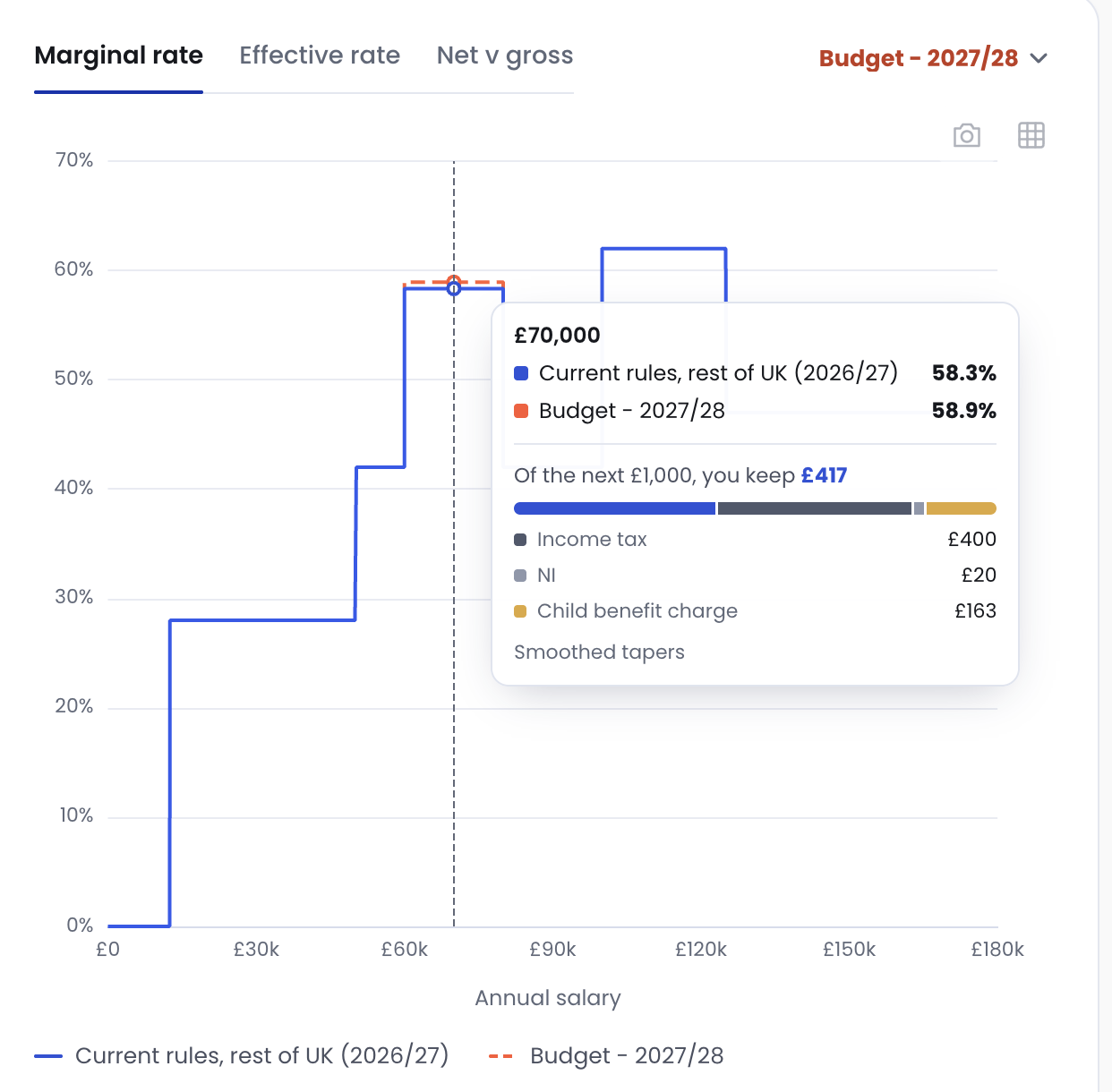
We’ve also updated our tax calculator so it shows the impact of the Budget. But, in short, you won’t see a change unless you’re a pensioner on low income, a landlord, or someone receiving interest outside an ISA.1 And the only very significant impact will be on people with large amounts of rental or non-ISA interest income.
The big picture
Two things are true: this Budget put up tax only a small amount, and tax is continuing to rise significantly. The pandemic left us with much more government debt, which has become much more expensive to service, and significantly increased health and disability benefit costs. That, plus weak economic growth, means successive Chancellors have chosen to put up tax.2
Or, as a percentage of GDP:3
So by 2030/31 we will be paying £123bn more tax (in today’s money) than we would have done if there had been no tax changes since 2021. About two-fifths of that comes from Conservative Budgets, the effect of which is now baked in. Most of the rest comes from Starmer/Reeves Budgets. Only about £6bn comes from today’s Budget.
The Budget changes
In the short term there is almost no net increase in tax. In 2027/28, the tax measures almost cancel out, adding only about £0.7bn:4
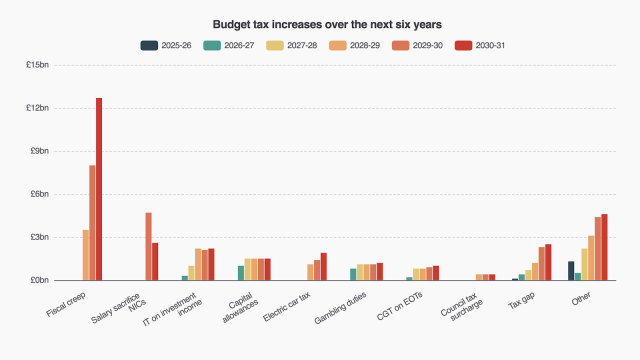
More significant increases phase in over time – £19bn in real terms over six years (but that is a small sum in comparison with the UK’s approximately £3,000bn GDP).
All of this is back-loaded. The savings and property rise brings in just £160m next year but £1.1bn in 2028/29, and the “Tax gap (HMRC)” money only arrives from 2029/30:5
If we put all this together, and look at the total effect, in 2026/27 prices, of each Budget measure over the forecast period:6
The headline tax increases
There are three headline tax increases:
Bank tax
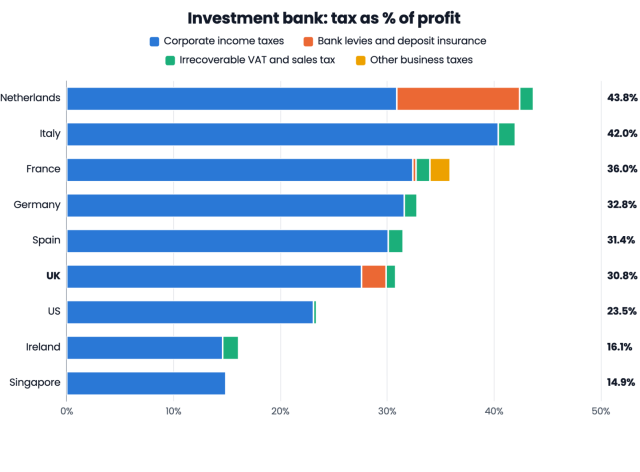
The biggest single measure in the short term is the temporary bank surcharge. That raises about £1.5bn over fifteen months – then it ends. We discussed last week that there was some scope for an increase in bank tax if it was relatively modest and temporary – that appears to be what’s happened. It leaves the overall effective tax rate for our notional investment bank as follows:
Savers and landlords
John Healey repeated Rachel Reeves’s focus on savings and property income, putting it up by another two points from April 2027. That’s on top of last year’s two, so the rates will be 24%, 44% and 49%.7 This also raises about £1bn but, unlike the bank tax increase, it will be permanent.
The government says “84% of income tax payers will be unaffected”. That will be true if we’re just looking at the taxpayers directly affected. However, there will be wider indirect effects. The OBR thinks it’s “more likely than not” that this increase, in conjunction with other recent changes, pushes up rents in the long run.8
Writing-down allowance
Jeremy Hunt introduced full expensing – a 100% up-front tax deduction for investment in qualifying plant and machinery. There’s good reason to believe full expensing can help drive investment and growth.
Investment that doesn’t qualify for full expensing (plant bought for leasing, second-hand assets, cars) kept the old treatment: a “writing-down allowance” of 18% a year on the reducing balance.9
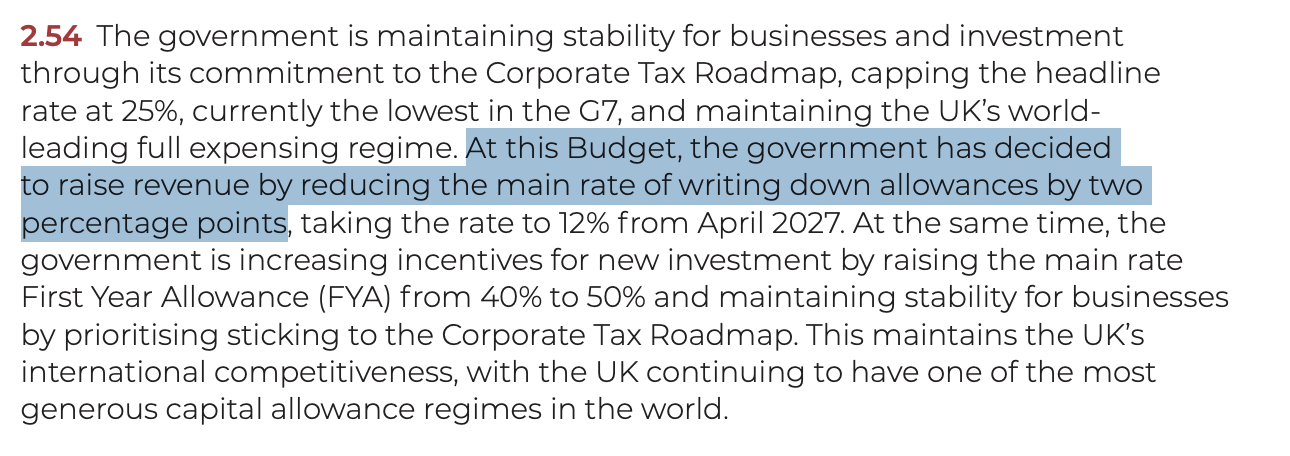
Labour under Keir Starmer and Rachel Reeves kept full expensing, but cut the writing-down allowance from 18% to 14%. At the same time they introduced a new 40% “first-year allowance” for new investment that doesn’t get full expensing. This Budget does both again: the writing-down allowance falls to 12% from April 2027, and the first-year allowance rises to 50% from January 2027.10
The Red Book is candid as to the reason for this:
So what’s the overall effect?
For new investment that gets full expensing, nothing changes.
For new investment that gets the first-year allowance, it’s actually slightly more generous than before: on our rough numbers the tax relief is worth 85% of the cost, up from 84%, and more than the 82% it was worth before Labour’s changes.11
The losers are second-hand assets and cars, and investment that has already been made: the 12% rate also applies to the balances already sitting in businesses’ capital allowance pools.12 For those, the relief falls from 77% to 74% of the cost.
That probably makes it less damaging to growth than the headline suggests. Slowing down relief on investment that’s already been made raises money without changing anyone’s decision about what to build or buy next (unless people expect the same to happen again; which they might!).
The investment that is discouraged, at the margin, is in second-hand plant and cars, and for businesses spending less than £1m a year even the second-hand plant is covered by the annual investment allowance. And a lower writing-down allowance defers relief rather than denying it.
All of this raises, net, about £1bn a year in the medium term. So you can see it as a funny kind of tax on businesses that previously invested in certain types of investment.
Pension tax
The Government promised that pensioners wouldn’t pay additional tax as a result of the State Pension exceeding the personal allowance. There was lots of speculation as to how this could be achieved.
The actual mechanism turns out to be a three year tax reduction of up to £94 a year for anyone over State Pension age whose total income is no more than the full new State Pension (£13,036.40 in 2027/28). There’s then a taper which withdraws that tax reduction at £1 for every £3 above that. (See Overview of tax legislation and rates, para 1.4.)
It’s not irrational to want to prevent pensioners being chased by HMRC for £93. But the complexity looks disproportionate. Each pound of income in the £282 withdrawal band costs 20p of tax plus 33p of lost allowance, meaning a 53% marginal rate for pensioners on about £13,000. Given this is only over a £94 tax reduction, it’s unlikely to change behaviour, so it can’t be compared with the child benefit and personal allowance tapers, which are extremely distortive. It just feels disproportionate: a new relief, a new taper and a new 53% band, for £94.
Other changes
The other significant measures, roughly in order of how much they raise:
Foreign sovereigns
Over the last 20 years, a huge amount of investment has been made in the UK by foreign governments and their sovereign wealth funds.
These investments have almost always been exempt. The basis for that has always been somewhat unsatisfactory – an unwritten/common law rule that effectively results in the UK giving a much more generous treatment to such investors than most other countries. As a recent consultation document said, “The current regime is not codified and is based on principles of international law that HMRC have interpreted through administrative practice”. That’s a murky and arguable basis for billions of pounds of tax-free investment.
From 2029 that exemption goes onto a statutory footing, and their UK property income and gains come into tax. I view that as a good thing – giving a large commercial advantage to some investors was always very hard to justify.13
Foreign branches
UK companies with foreign branches can currently choose whether to exempt them from UK tax. Profitable branches tend to opt in; loss-making ones stay out, so their losses can reduce UK profits.
From January 2027 the exemption becomes mandatory: foreign branch profits are exempt, and foreign branch losses can’t be used in the UK. That raises about £0.5bn a year.14
I expect this will disappoint some banks, as they (unsurprisingly) rather like having loss-making foreign branches that subsidise their UK operations. But it’s right in principle. The UK doesn’t tax the profits of foreign subsidiaries or give relief for their losses, and there’s no good reason why branches should be treated differently, still less that companies should be able to choose. Giving taxpayers the ability to opt for different tax treatments is not, generally speaking, a great approach. It’s becomes a bit “heads I win, tails you lose”.
More to follow later
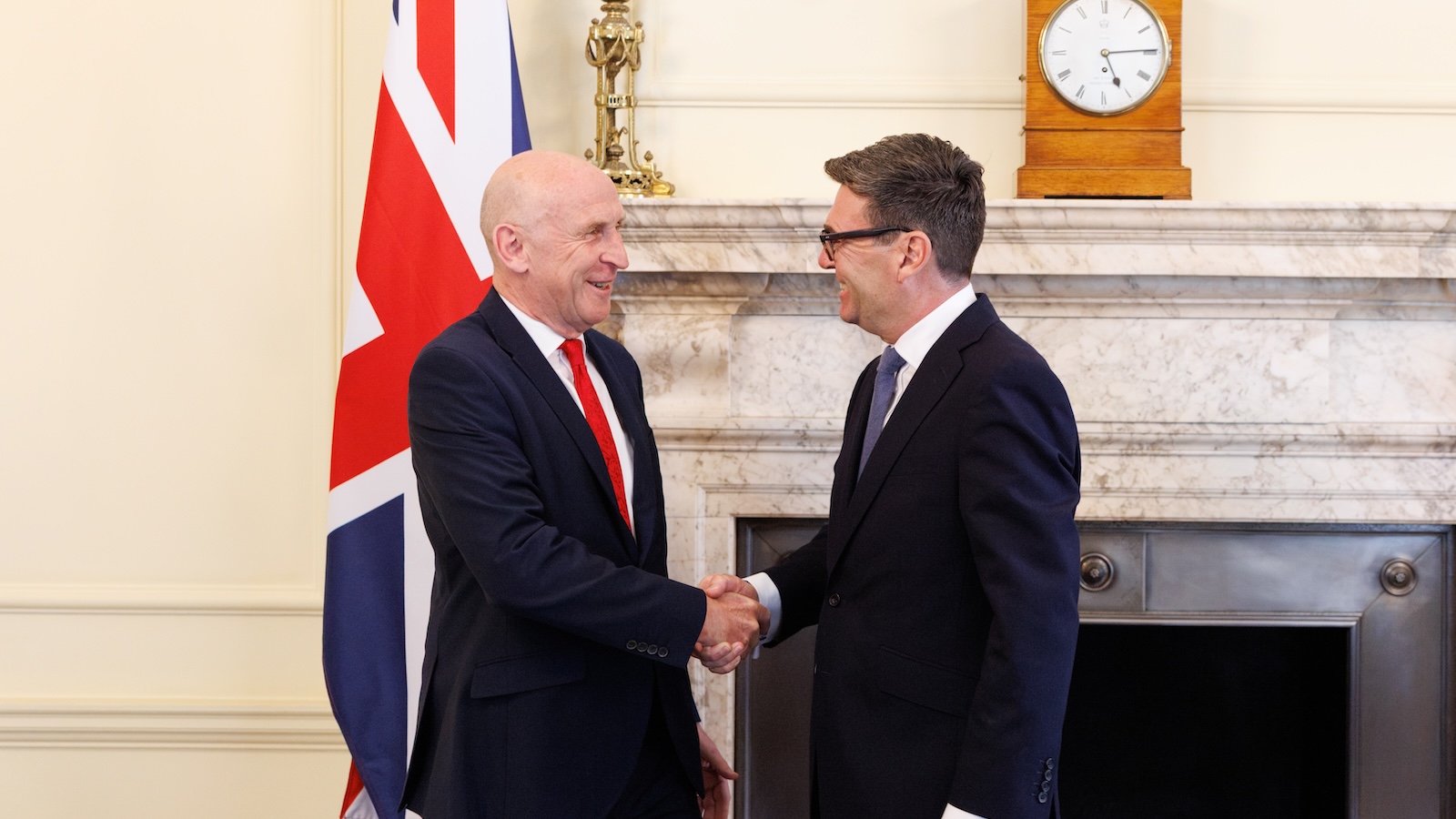
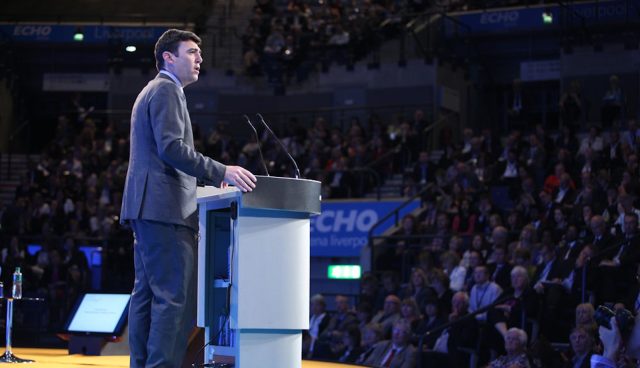
Photo of John Healey and Andy Burnham Crown copyright, CC BY-NC-ND 4.0
The UK tax calculator that shows you what you’re really paying
Banks say they’re overtaxed. The TUC says they’re undertaxed. Who’s right?
Capital gains tax reform was right. Now it’s dead.
A £2.6bn lobbyist fairytale: economic consultancy Cebr sold VAT-free shopping as a tax cut that pays for itself
37 ways Andy Burnham could raise £4.7bn
The Budget – what it says
Footnotes
Also: someone receiving child benefit and earning between £60-80k will see a slightly increased marginal tax rate, because child benefit is going up. ↩︎
The UK’s tax burden was around 33% of GDP in 2019/20 and is forecast to reach 38.5% by 2030/31. The pandemic increased government debt by around 14 percentage points of GDP between 2018/19 and 2020/21, with the direct pandemic support measures costing over £300bn. The subsequent economic shocks – Ukraine and Iran – increased interest rates and inflation, which substantially increased debt servicing costs. By 2025/26, debt interest spending was £110 billion, over twice its pre-pandemic share of GDP. Working-age disability benefit caseloads increased from 2.1 million in November 2019 to 3.2 million in November 2024 – the causes of the increase are unclear (see paragraph 5.30 here). ↩︎
Our analysis. Each tax measure announced since March 2020 is taken at the OBR’s own costing for each year, divided by that year’s nominal GDP, and grouped by the government that announced it. The grey area is what’s left – so by definition the earlier measures. ↩︎
This is our grouping of the 2027/28 column of Budget 2026, Table 6.1, tax rows only (spending rows are excluded). The groups sum to £700m against the Red Book’s total of £695m, the difference being rounding. ↩︎
Our grouping of the tax rows of Budget 2026, Table 6.1, by year, in the format of last year’s chart. Unlike last year’s, it shows cuts as well as rises. Our mapping of each row to a group is available on request. On the timing point, the OBR says the biggest compliance measure “reflects the timely payment system preventing some debt losses and changing the timing of recovery of debt” (para 3.13). ↩︎
Our grouping of the tax rows of Budget 2026, Table 6.1, summed over 2026/27 to 2031/32 and deflated to 2026/27 prices using the OBR’s CPI forecast (Economic and fiscal outlook, Table A.1), but assuming 2.0% for 2032 because the table stops at 2031. The bars add up to the real-terms total of £19.1bn (£21.0bn in cash). ↩︎
Budget 2026, paras 6.246 and 6.247. Property rates apply in England, Wales and Northern Ireland, savings rates across the UK, both from 6 April 2027. Finance cost relief for landlords “will continue to be aligned to the property basic rate”, so it rises to 24% too (policy costings, item 73). The OBR expects the savings rise to yield “£0.6 billion a year on average from 2028-29” and the property rise “£0.4 billion”, after people move savings into ISAs and property into companies (para 3.17). It rates the property costing “High” uncertainty (Table 3.3). ↩︎
That’s the main rate. “Special rate” assets, such as integral features of buildings, get 6%. Full expensing is only available to companies, and smaller businesses mostly deduct their whole spend up-front under the £1m annual investment allowance. ↩︎
Budget 2026, para 6.251: the 50% applies to “expenditure incurred on or after 1 January 2027”, and the 12% applies from 1 April 2027 for corporation tax and 6 April 2027 for income tax. The first-year allowance covers “new main rate expenditure, including plant or machinery for leasing but excludes second-hand assets and cars” (policy costings, item 69). ↩︎
Our calculation: the present value of the allowances as a percentage of the cost, discounting at 5% a year, with the first-year allowance taken immediately and writing-down allowances on the rest from the following year. New assets getting the first-year allowance: 84.2% under 40%/14%, 85.3% under 50%/12%, and 82.2% under the old 18% writing-down allowance alone. Second-hand assets, cars and existing pool balances (writing-down allowances only): 82.2% at 18%, 77.4% at 14% and 74.1% at 12%. At a 10% discount rate the pattern is the same: 70.7%, 75.0% and 77.3% for new assets; 70.7%, 64.2% and 60.0% for the others. ↩︎
The writing-down allowance cut “affects expenditure that receives main rate WDAs, including existing pooled expenditure and new qualifying expenditure” (policy costings, item 69). ↩︎
Consultation, paras 1.3 to 1.5: the government “expects that, in practice, the main effect of the modernisation will be to bring sovereigns’ returns from directly held UK real estate into the charge to tax for the first time, as well as trading income in limited circumstances”. Sovereigns investing through UK companies are already taxed, and are unaffected. The new regime keeps some generous features, including a bespoke REIT route giving “a 15% tax rate on property income distributions” (OOTLAR para 2.16). It takes effect from 1 January 2029. Yield: £690m in 2029/30, £675m in 2030/31 and £655m in 2031/32 (Budget 2026, Table 6.1, row 54; policy costings, item 64). ↩︎
Policy costings, item 77: “This measure makes the foreign branch exemption mandatory for all foreign branches of UK companies, so foreign branch profits will be exempt from UK Corporation Tax and foreign branch losses will no longer be available to offset UK taxable profits.” It applies to accounting periods beginning on or after 1 January 2027, and was first announced on 21 May 2026 (OOTLAR para 1.39). Yield: £480m in 2027/28, then £450m to £495m a year (Table 6.1, row 68). Our expectation that banks are the main losers is our expectation based on the experience of our team, not something the government has said. ↩︎


Leave a Reply