
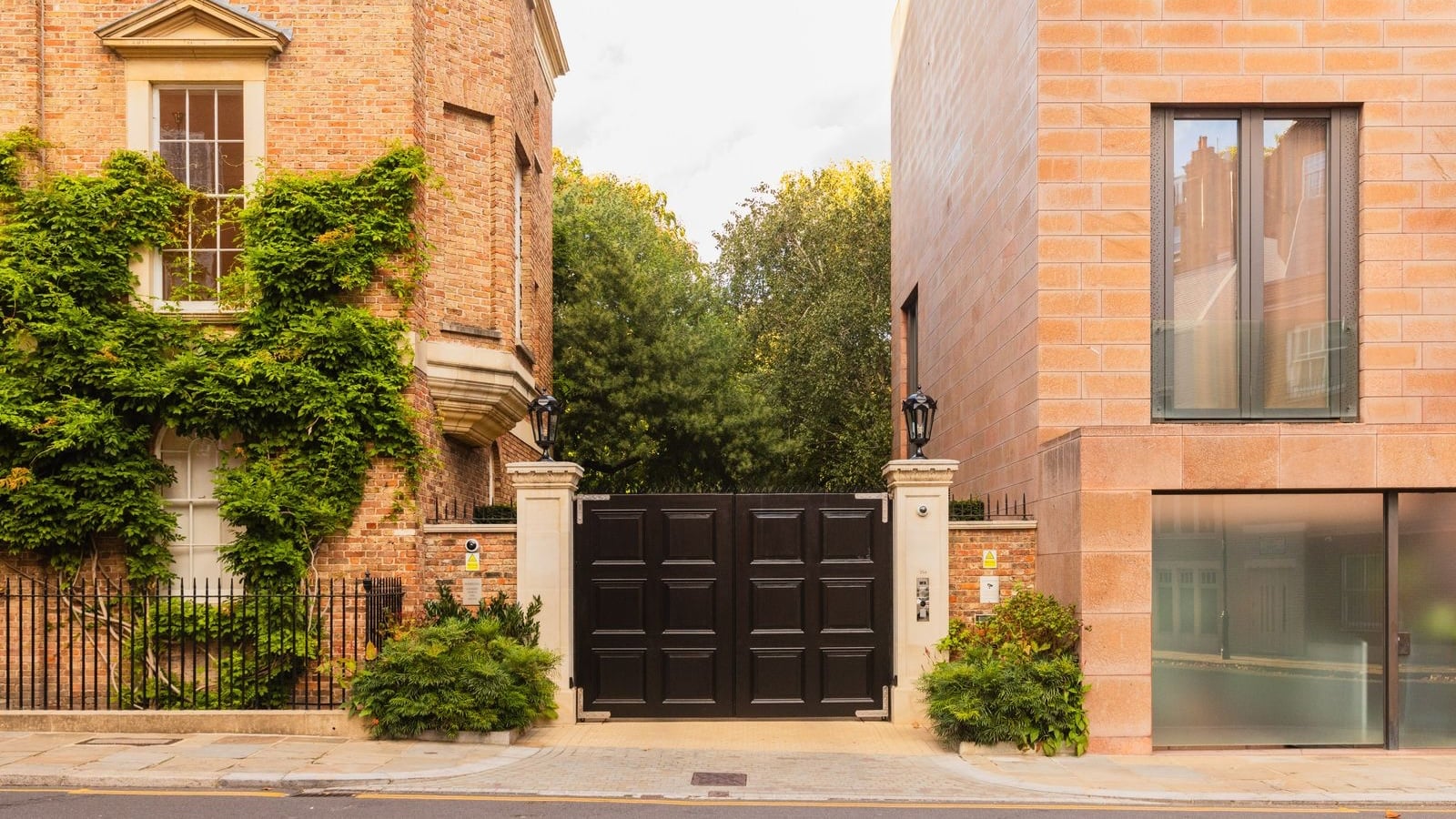
Nick Candy sold Providence House in Chelsea this May for a reported £265m to Suneil Setiya, a hedge fund manager. It’s the most expensive house ever sold in Britain. The way the house was sold avoided about £18.5m of stamp duty.1 Ordinarily, you’d expect £32m of stamp duty on a £265m house, but thanks to a loophole2 in the rules, only about £13m of stamp duty was paid on the purchase – avoiding about £18.5m.
We think it will be of public interest that the most expensive house in British history was acquired using such a structure. And there’s an important question: did the structure work? Or will HMRC be able to recover the £18.5m? If not, then past experience suggests this scheme may start to be used by others buying high-value properties unless and until HMRC close it down.
This story was first identified by London Centric, and we developed the story in partnership with their team.
Providence House
Providence House3 is a Grade II listed villa built in 1809 to a design by Thomas Leverton, and has the largest private garden in central London outside Buckingham Palace. Mr Candy acquired it in 2014.4 The sale was reported in April at between £265m and £275m in different newspapers5, with the buyer named in press reports as Suneil Setiya, co-founder of the hedge fund Quadrature Capital.
Neither the price nor the buyer’s identity is confirmed by any public record, because the sale hasn’t been registered yet, but we understand that it was indeed Mr Setiya.
The LLP
Whilst Mr Candy acquired Providence House in 2014, it wasn’t him who sold it in 2026. The seller was Providence House LLP, which was incorporated on 11 October 2024 and acquired the property four weeks later.
Its members were Mr Candy, his wife Holly Valance,6 and a second LLP whose own members are two long-standing Candy advisers.7 The LLP then borrowed from First Abu Dhabi Bank and used the money to buy Providence House from Mr Candy.8
The LLP’s accounts would tell us more, but there aren’t any. In January 2026 the LLP extended its first accounting period from 31 October 2025 to 31 March 2026, which pushed the filing deadline back to 11 October 2026. That is entirely lawful and not unusual (although in our view it’s a loophole that should be shut), but it means the transaction isn’t visible on Companies House.
We don’t think the sale to the LLP was stamp duty planning. The house had been unmortgaged since 2019, and this looks like a way for Mr Candy to raise money against it without taking on personal liability. The bank lent to the LLP, the LLP acquired Providence House, and Mr Candy could then walk away with the cash and no personal liability for the debt.9
If Mr Candy had entered into this arrangement with a company, there would have been a large stamp duty bill. But, by using an LLP he probably escaped most or all of it. We don’t regard that as avoidance, because realistically he remained the owner of the property.10
The flats
Then, in May 2026, when the LLP sold Providence House to Mr Setiya, the property wasn’t sold on its own. It went across with five much more modest properties: flats worth a few hundred thousand pounds each.11
The flats are all in Embankment Gardens, a short walk from Providence House. Three of them12 were transferred into Providence House LLP by Mr Candy on 8 November 2024, in the same deed that transferred the house itself. He hadn’t owned all of them for long. The transfer records that one came with the benefit of a tenant’s enfranchisement notice dated 23 September 2024, and another with a notice dated 12 February 2024.13 We don’t know what he paid for any of the three, because the deed gives a single price for all four properties together.
The other two were bought afterwards, and here there’s something odd. They cost £475,000 and £220,000, and both were funded by Allica Bridging Finance Limited, with the charge created on the same day as the purchase.14 Bridging finance is short-term and expensive, typically costing far more than a mortgage.
Why is a billionaire buying small flats with bridging finance? We don’t know the answer to that.
What we do know is that the flats were all sold together, as part of one transaction with Providence House. And that they took the count to exactly six. The reason for “six” being a significant number will become clear in a moment.
The sale still hasn’t been registered, so the Land Registry itself still shows the LLP as the holder.15 But HM Land Registry publishes a day list of pending applications, which anyone can search. It shows that for Providence House, and for each of the five flats, an application to register was lodged by the law firm Taylor Wessing LLP under the same file reference, “LZC/PH”, the “PH” presumably standing for Providence House. The Land Registry’s own reference numbers run consecutively, and the timestamps are within two seconds of each other.16
Here are the records. Providence House is the first one:
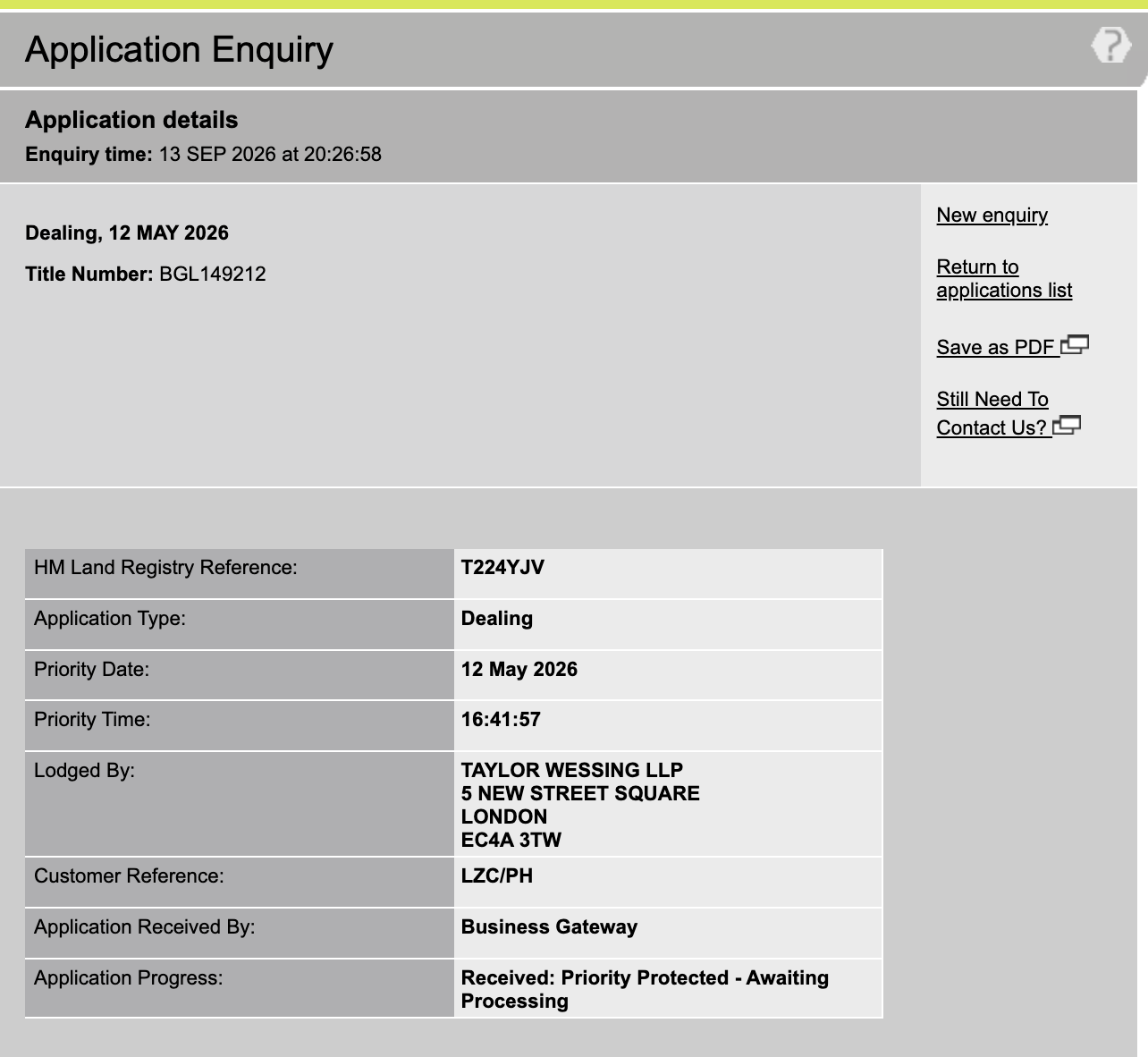
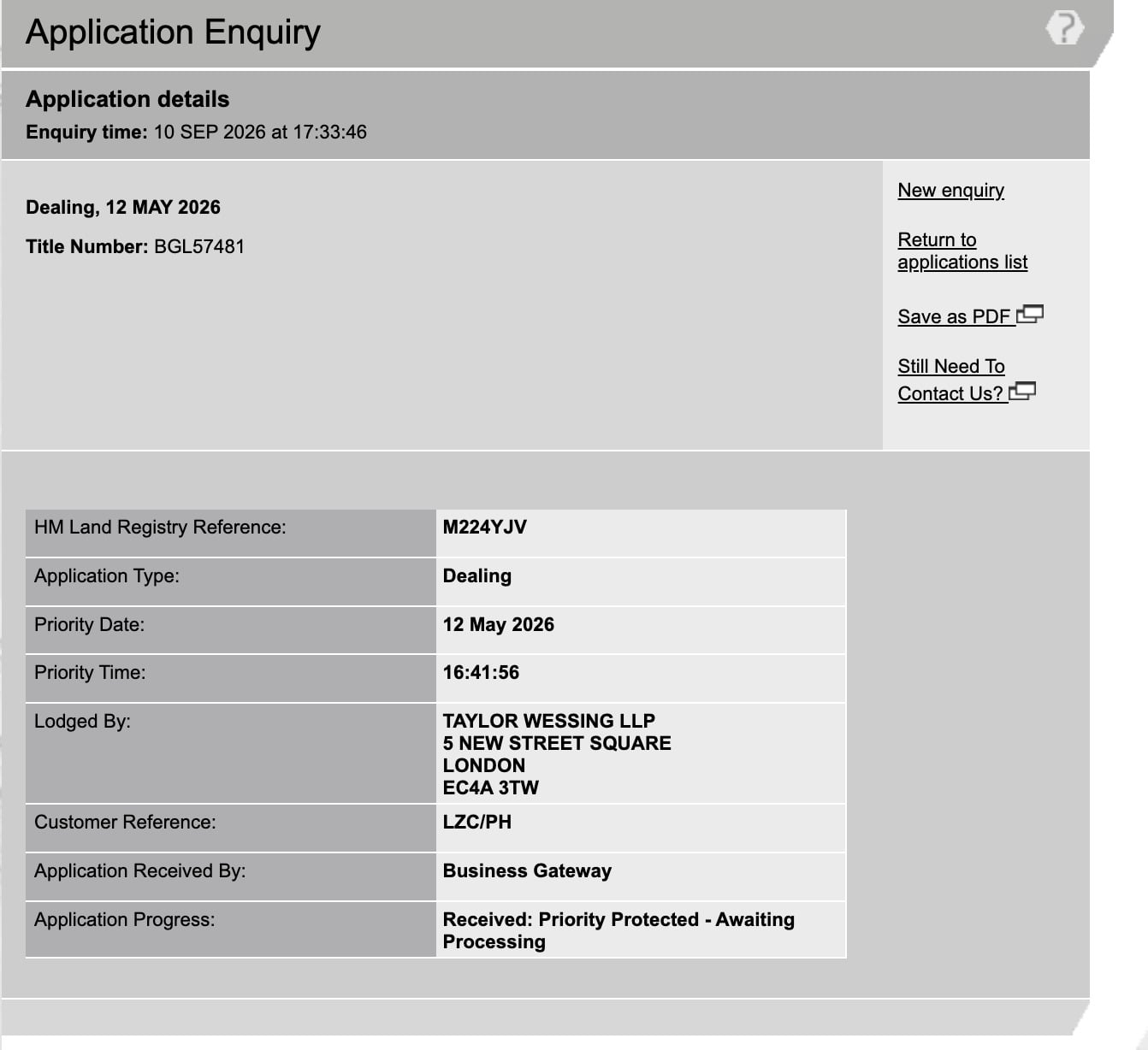
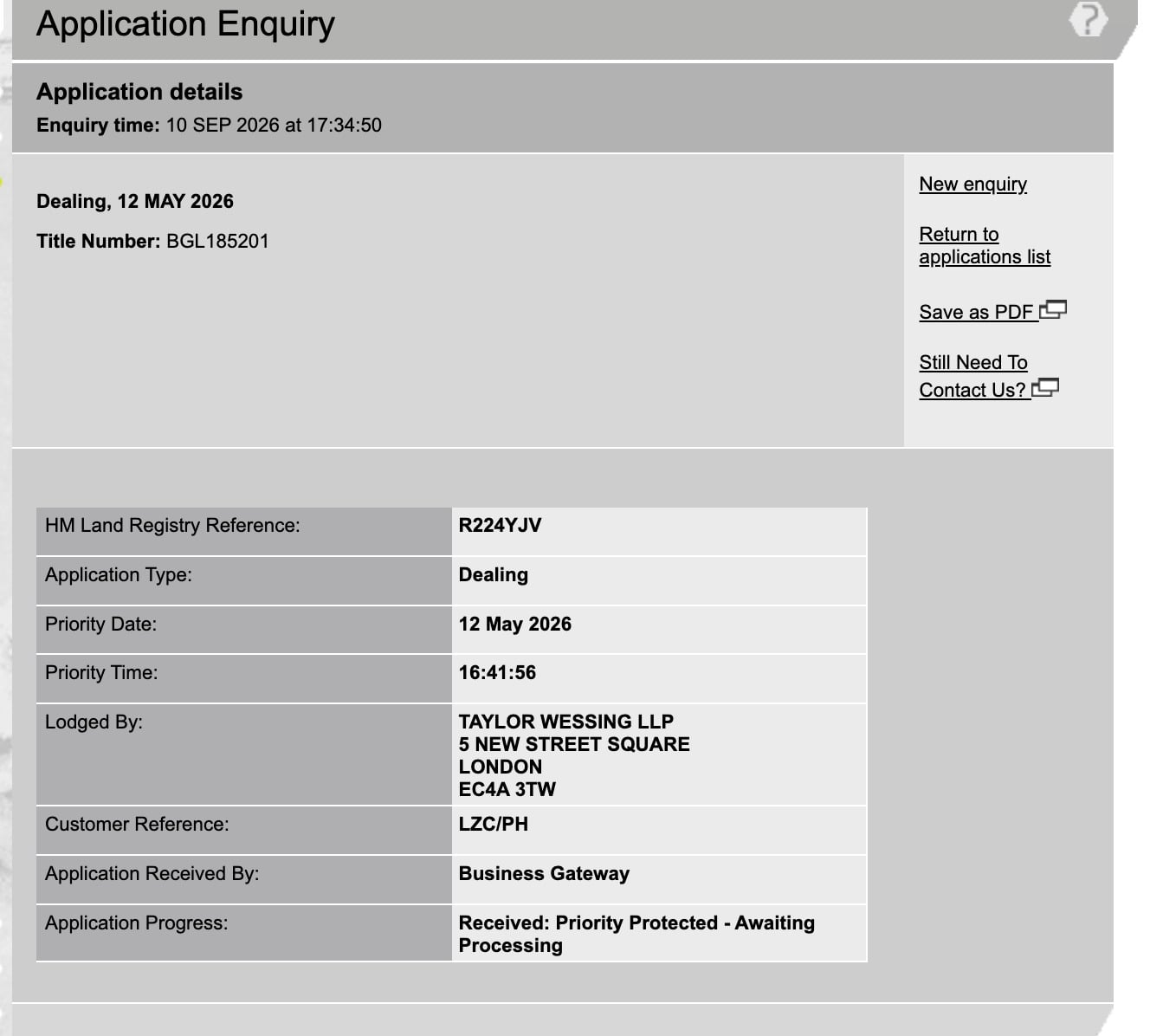
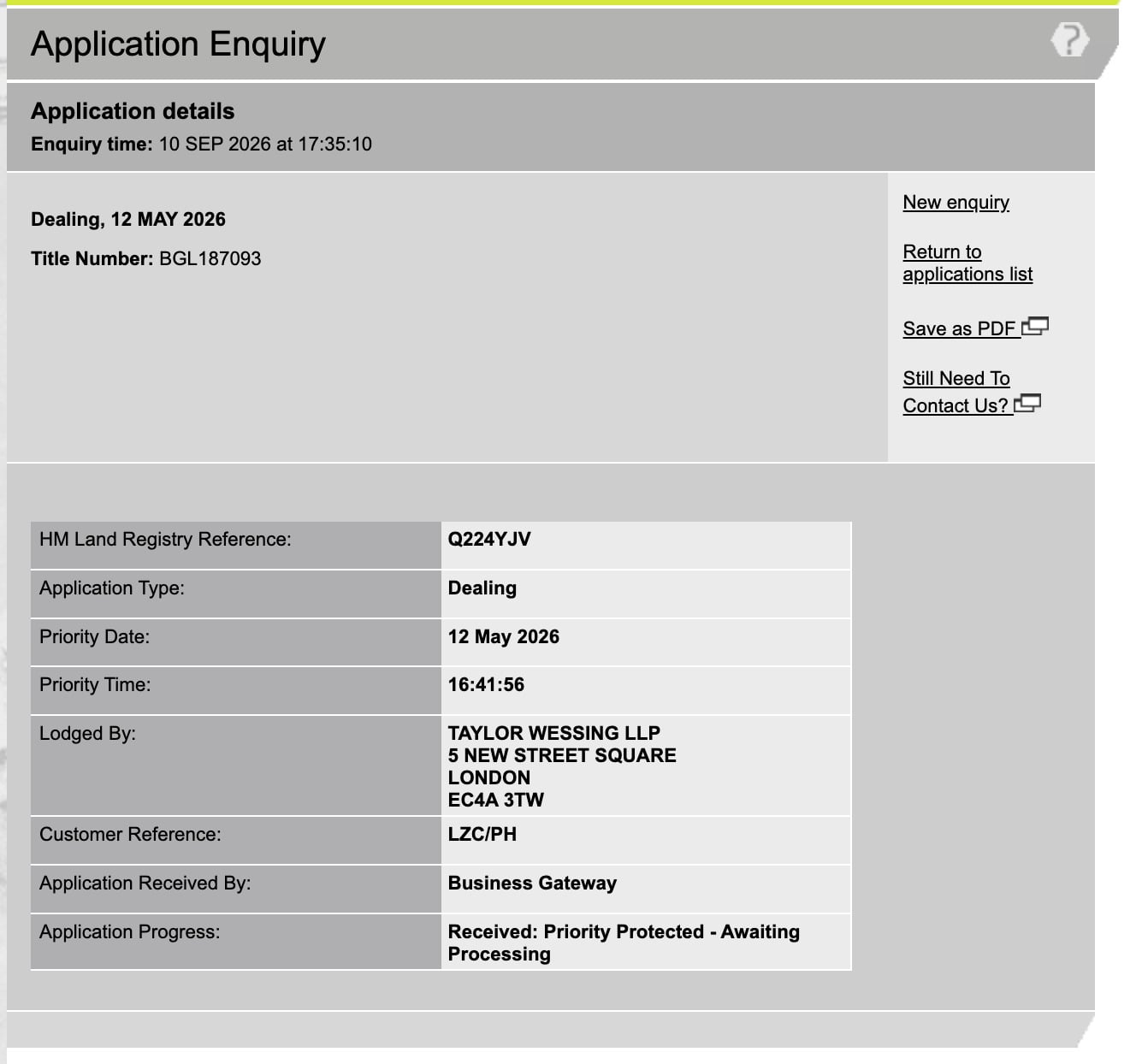
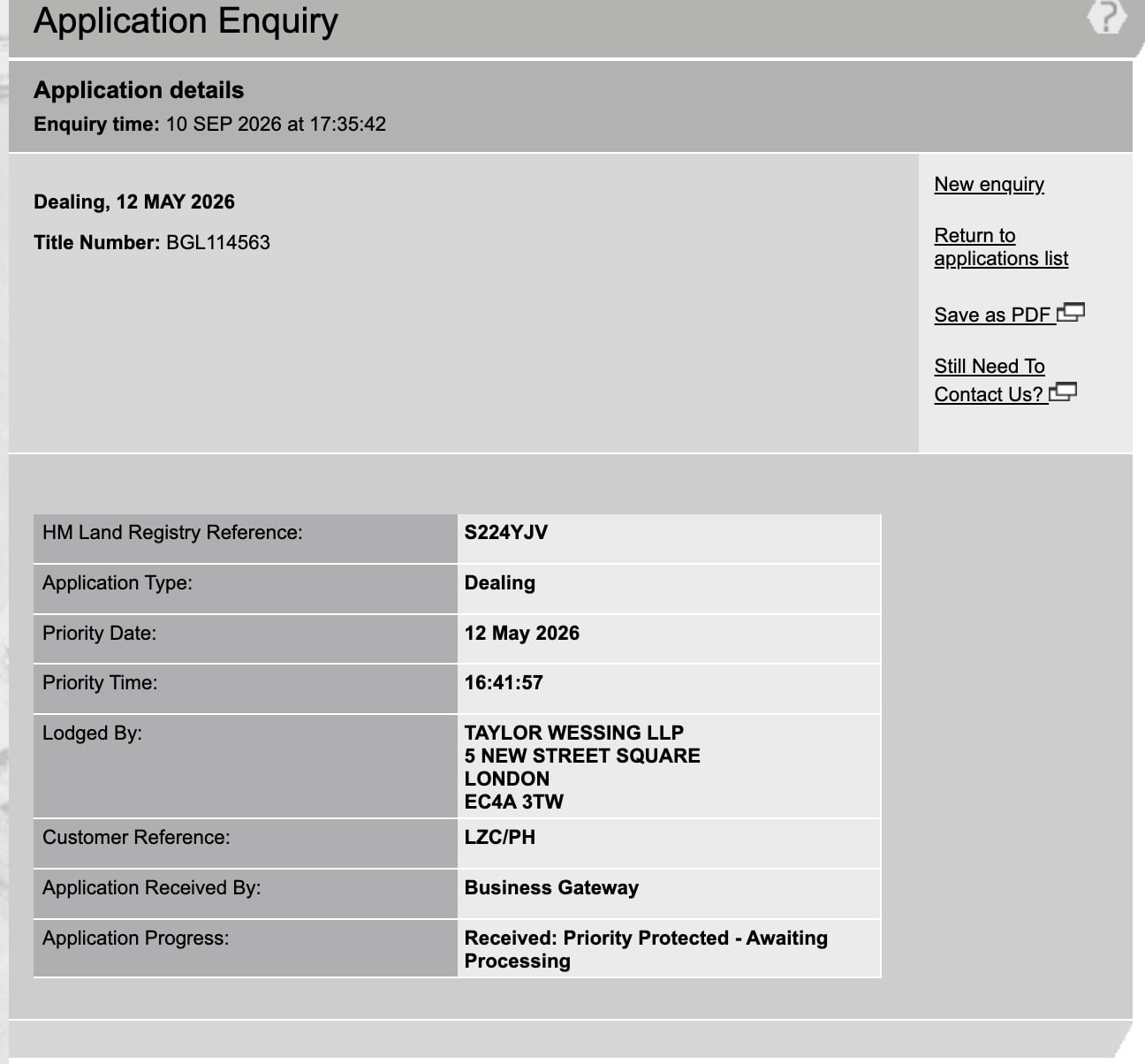
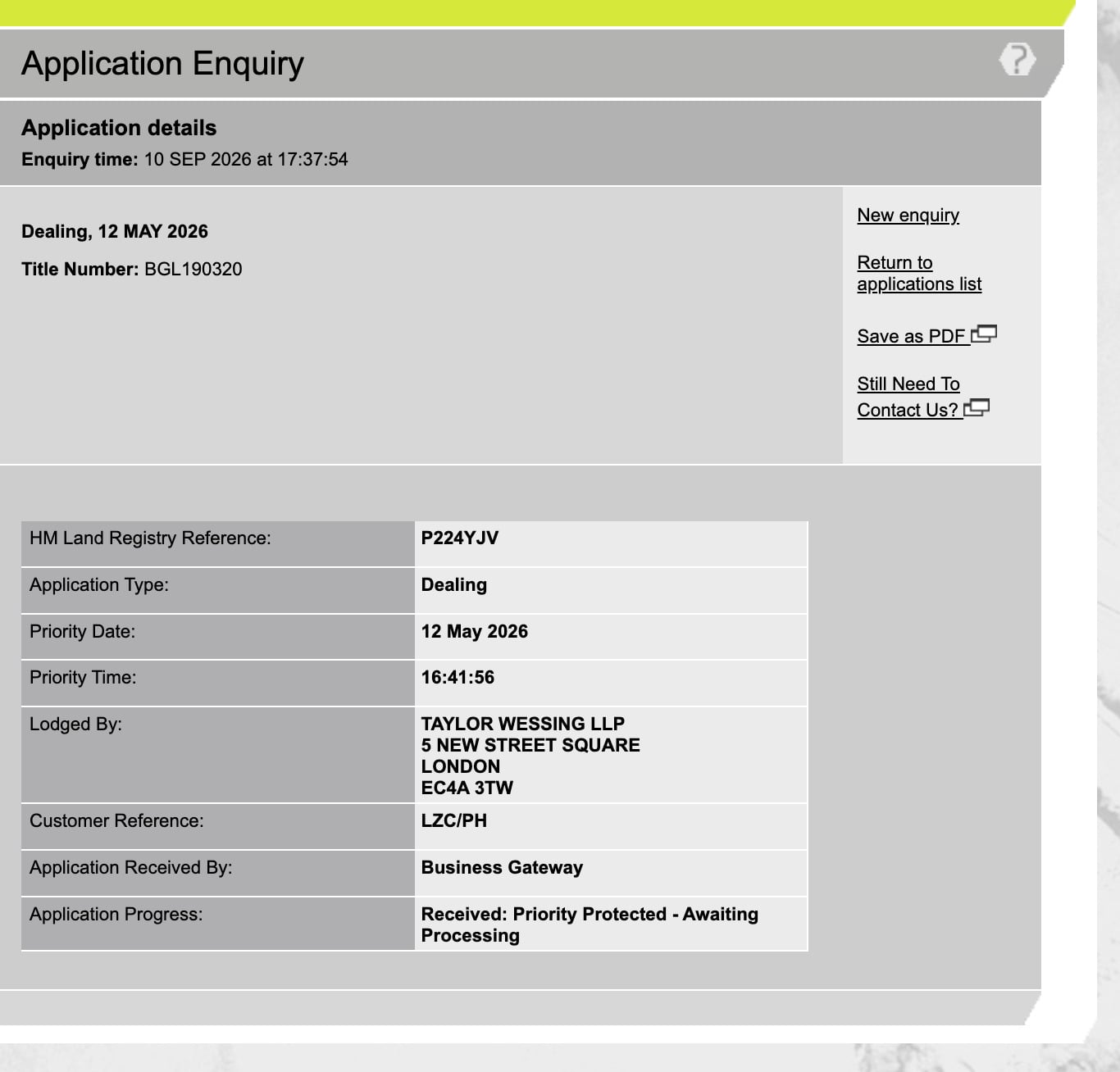
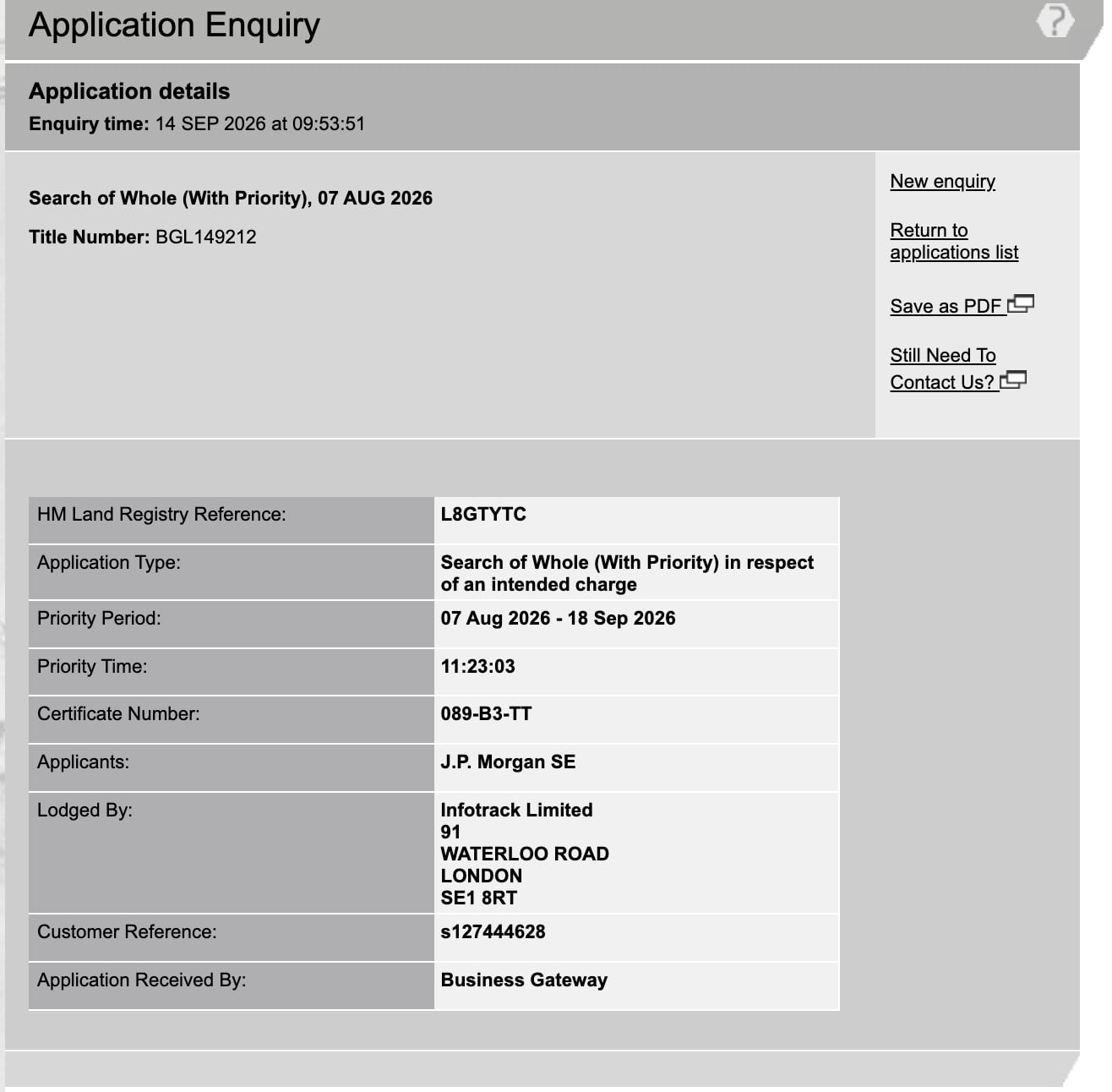
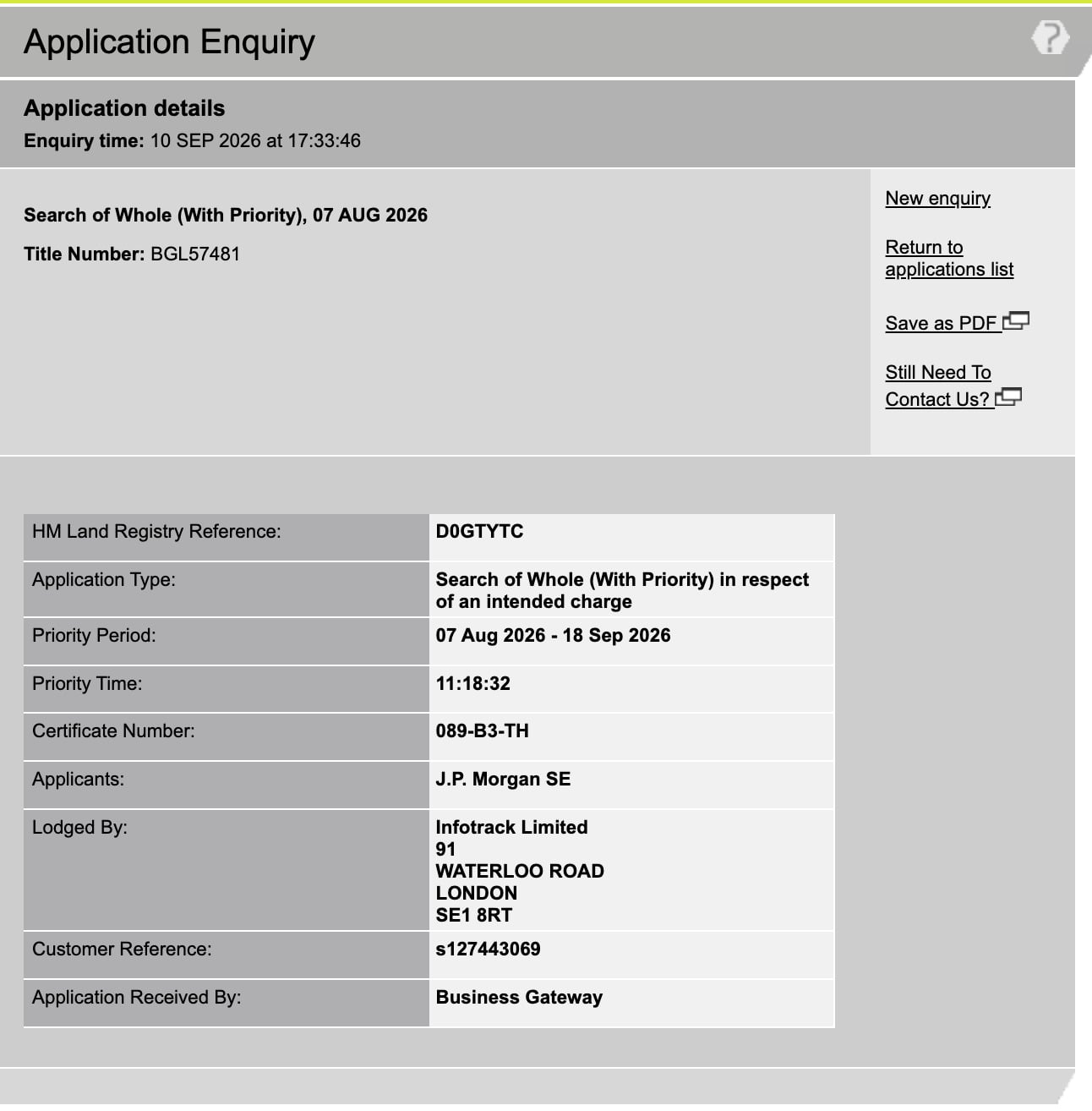
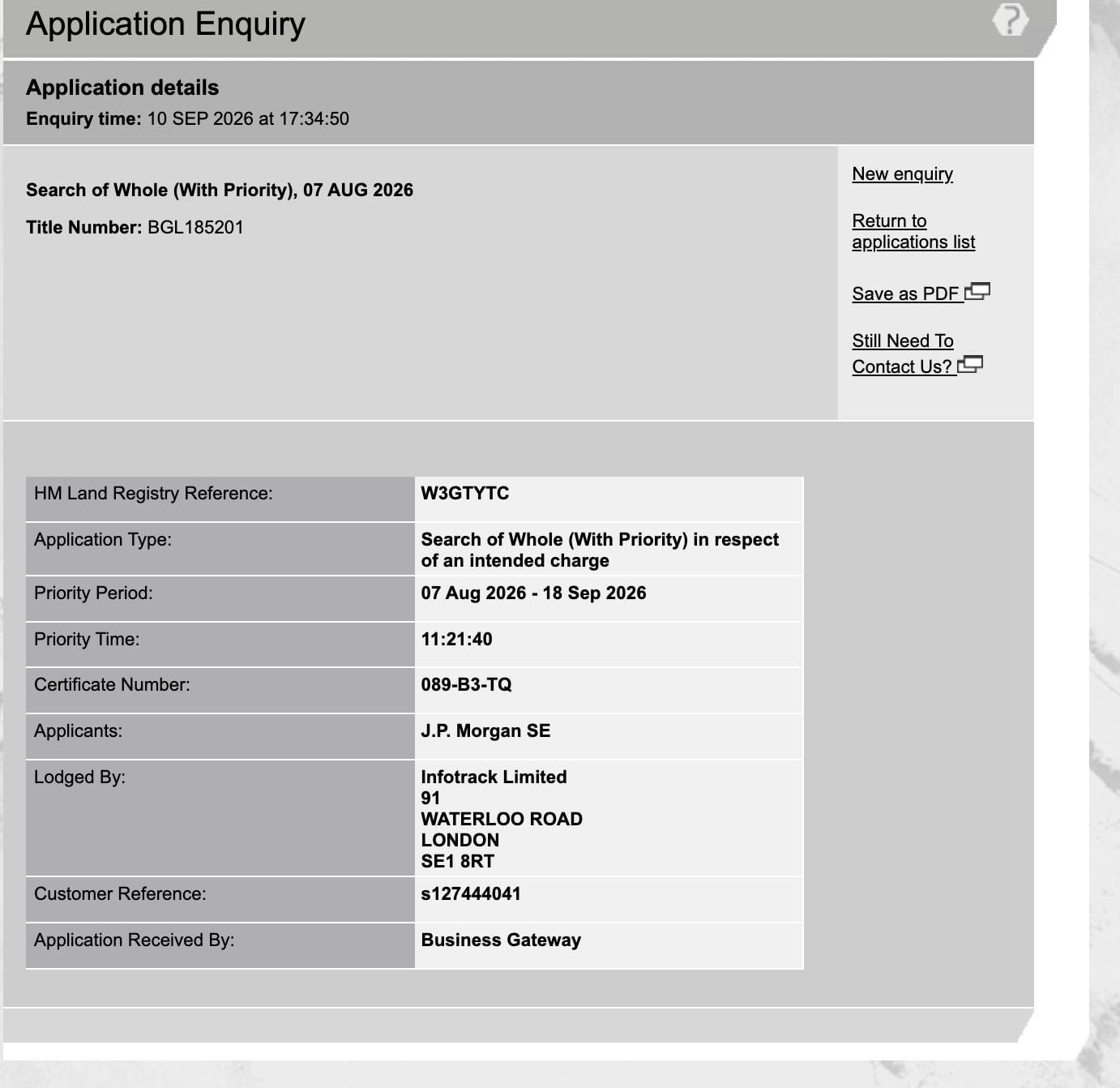
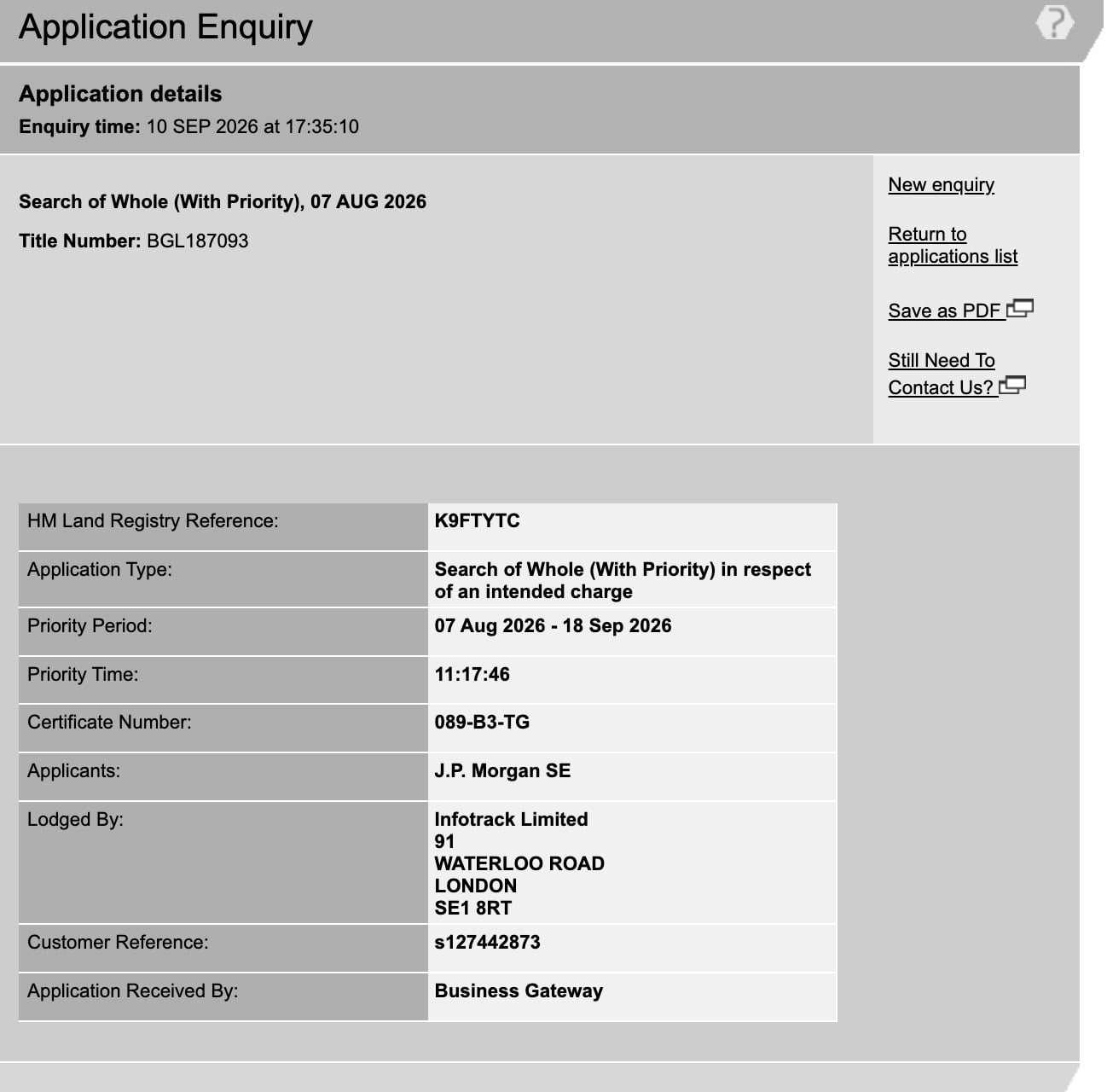
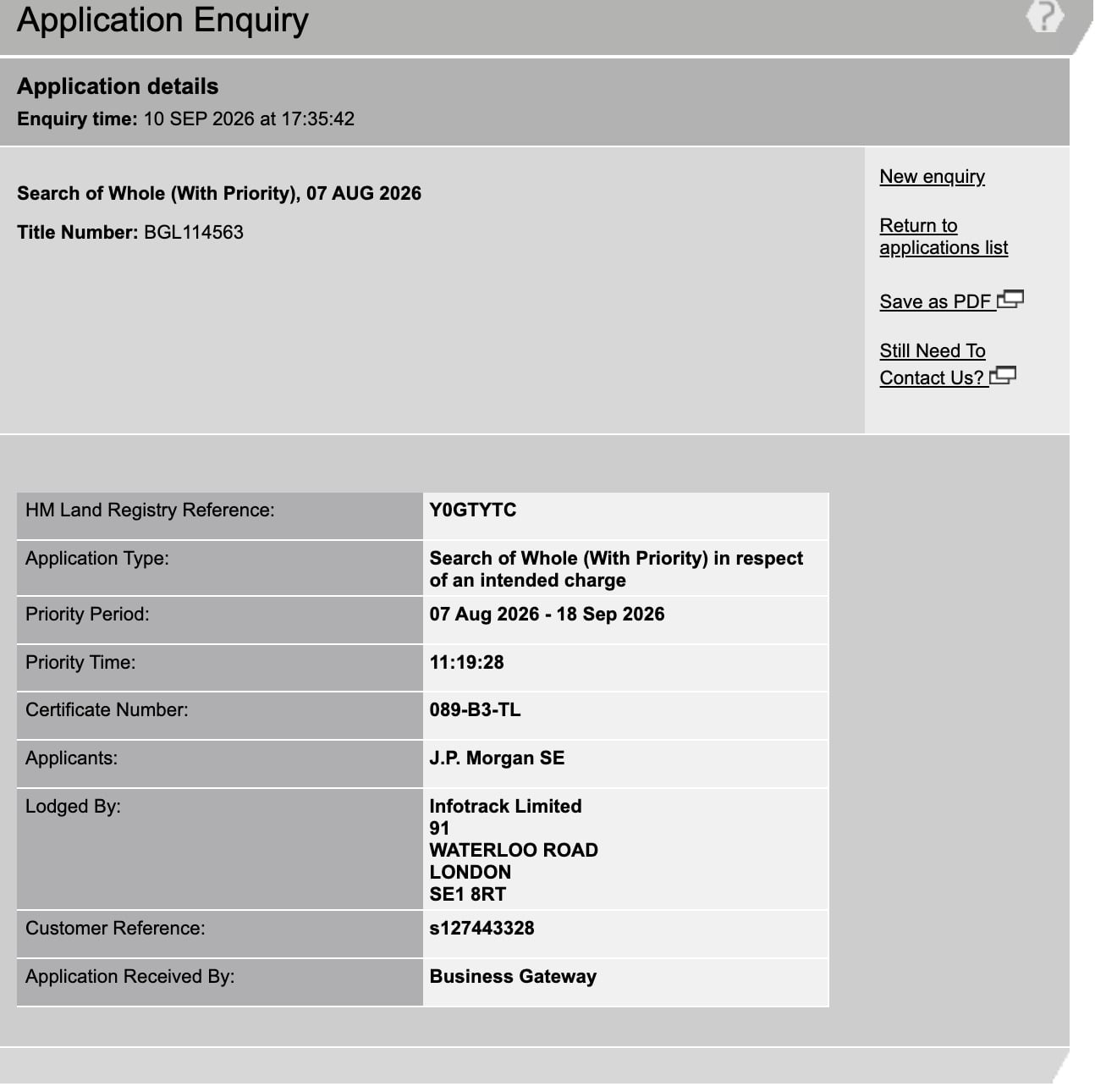
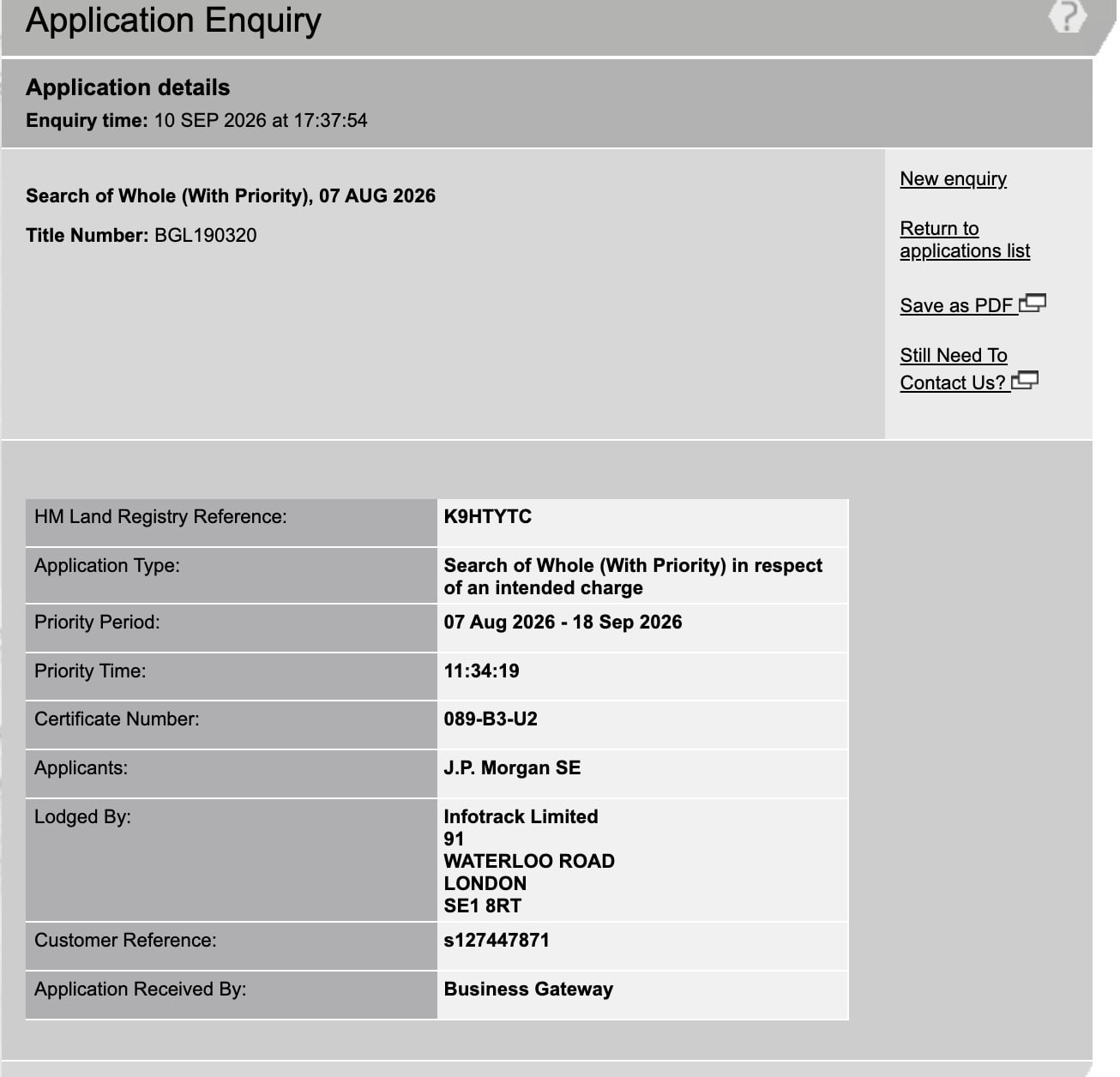
There’s a second set of pending applications, this time from a bank. On 7 August 2026 J.P. Morgan SE applied for priority searches against all six titles “in respect of an intended charge”. That’s what a lender does immediately before taking a mortgage. So the buyer appears to be financing the house and the five flats together, as a single asset:
The stamp duty result
If Providence House LLP had sold Providence House to Mr Setiya for £265m and it had been treated as residential property, Mr Setiya would have faced a stamp duty bill of about £32m.17
If, alternatively, Providence House had been treated as commercial property, the answer would have been very different. The top commercial rate is only 5%, so the bill would “only” have been about £13m.18
One might expect the answer to be obvious. Providence House is residential, because it’s a house that people live in. It is, quite literally, a residence.
But here the obvious answer is wrong, because of section 116(7) Finance Act 2003:
“Where six or more separate dwellings are the subject of a single transaction involving the transfer of a major interest in, or the grant of a lease over, them, then, for the purposes of this Part as it applies in relation to that transaction, those dwellings are treated as not being residential property.”
This is the 6+ rule. If you buy six or more dwellings, then it’s treated as a purchase of non-residential property. The rule was included in the original SDLT legislation back in 2003; these days it’s most relevant to landlords buying/selling portfolios of properties.19
The 6+ rule isn’t a relief. There’s nothing to claim, no box to tick and no election to make. If six dwellings are sold in one transaction then commercial rates apply, automatically – that does not, of itself, amount to tax avoidance.20
Here it makes an enormous difference. Most obviously it takes the rate down from 12% to 5%. But there are also no surcharges21, so it wouldn’t matter if Mr Setiya were non-resident or buying a second home. The rate stays at 5% either way.
That creates a strange outcome. Something like 99% of the price was for Providence House. But by adding five flats worth a fraction of 1% of that, the stamp duty fell by about £18.5m. Around £2m of outlay saved £18.5m of tax. And that’s just a short-term outlay – Mr Setiya is free to sell the flats on whenever he likes.22
Who actually saves the money?
Stamp duty is paid by the buyer. So as a matter of law every penny of the saving belongs to the buyer, Mr Setiya.
That often isn’t the economic answer. A buyer facing £32m of stamp duty will bid less for a house than a buyer facing £13m. The saving gets shared through the price (one way or another). That’s why a seller has a very good reason to assemble a structure, or at least an argument, that the stamp duty is lower.
This creates an interesting problem. If the buyer is being asked to share the benefit with the seller, then what should happen if HMRC successfully challenge and there’s no benefit at all? It’s the buyer who would then have to pay the tax, but does the buyer just accept this is a roll of the dice? Or will the buyer want some upfront agreement that, if this happens, they get a refund or a partial refund from the seller?
Sometimes the answer is that the position is so crystal clear that a buyer’s advisers tell them there’s no realistic prospect that the structure will fail. In other cases there is an explicit agreement between the parties as to what happens if HMRC successfully challenge the treatment (including, for example, how a dispute is to be managed).
We don’t know whether there was an agreement of that kind in this case.
Was this a tax avoidance scheme?
The 6+ rule can certainly avoid stamp duty, but whether its use amounts to “tax avoidance” (in the usual meaning of the term) is a question of fact and degree. It is also not the relevant legal question.
There’s a specific stamp duty anti-avoidance rule, in section 75A of the Finance Act 2003.
Section 75A applies where one person disposes of property, another acquires it, a number of transactions are involved in connection with the disposal and acquisition, and the tax on those transactions comes to less than the tax on a single notional transaction between the two. Where it applies, the intermediate steps are ignored and tax is charged on that notional transaction instead.
It doesn’t matter if the parties intended to avoid tax – section 75A doesn’t require an avoidance motive at all: it’s a question of facts and arithmetic.23
So the question of whether this was “tax avoidance” is more of a moral (and perhaps political) question than a question of tax law. It does, however, tend to frame the attitude of judges – for which see further below.
Our view – although others may well disagree – is that there is a spectrum:
- At one end is a “happy accident” – you buy six properties and have no idea that will save you stamp duty, but it does.
- Then slightly less accidental: you’re probably going to buy/sell five properties but are vacillating over a sixth. Then you realise the sixth one will save you stamp duty, so you add that in as well.
- Then careful: you’re planning to buy/sell six properties over a period, but realise if you’re careful with the timing and execution, you can get within the six-plus property rule and save stamp duty.
- And then artificial: you’re planning to buy/sell one property, but shoehorn in five, so you can claim the six-plus property rule.
In this case, it’s unlikely we are in the first scenario. Accidents tend not to happen when large amounts of money are at stake.
It’s possible we are in the second or third scenario – that there was careful planning, but this was not an artificial scheme. A very wealthy person acquiring a large property does sometimes acquire additional nearby properties as accommodation for staff. But the timing is curious: two of the flats were bought in the thirteen months before the sale, on expensive short-term finance. And the buying stopped at exactly six dwellings, which is of course the number the 6+ rule requires.
Looking at the available facts, it was the view of most (but not all) of the stamp duty experts we spoke to that this looked like an artificially designed structure. But we don’t know for sure, and Mr Candy won’t tell us.
Can HMRC challenge it?
Regardless of the parties’ intent, we think many advisers’ instinctive reaction, particularly those who aren’t stamp duty specialists, would be that section 75A applies. That may not be correct.
In a recent case called Ridgway,24 Mr Ridgway bought a house with an outbuilding, and arranged for a short commercial lease of the outbuilding two weeks before completion. His intention was for the purchase to count as mixed use rather than residential, saving stamp duty. The First-tier Tribunal said section 75A applied, because if we ignore the lease, and roll everything together, we’re left with a residential purchase. The Upper Tribunal disagreed, at [81]:25
“The FTT thereby applied the disregard in section 75A(4)(a) in order to see whether section 75A was engaged. However, the disregard in section 75A(4)(a) only applies where section 75A is engaged… The Property was either residential property or non-residential property pursuant to section 116 for the purposes of all those transactions.”
Apply that here. The LLP sold six dwellings for one price. A notional straight sale of the same six dwellings for the same price is still six dwellings, still non-residential, still taxed at 5%. The figures match, so on this reading section 75A doesn’t bite.
There are, however, several reasons why it might be a mistake to stop there.
As we say above, at this point we don’t know how engineered the structure was, but it’s possible it was artificial tax avoidance, with the flats serving no purpose other than to effect the scheme. If those were the facts as decided by a court, then that is likely to heavily flavour the attitude of that court.26
The second reason, which could help a judge looking to reach the “right” result, is that Ridgway was only an Upper Tribunal decision.27 It binds the First-tier Tribunal, but not necessarily another Upper Tribunal, and certainly doesn’t bind the Court of Appeal or the Supreme Court (where there’s a good chance this transaction, if litigated, would end up).
The third reason is that there wasn’t only one thing happening here. There was also the earlier sale by Mr Candy to the LLP. Before that sale, Mr Candy only owned four of the dwellings, not six. So if section 75A can reach back to that point, and treat the transfer into the LLP as one of the steps, the notional transaction would be a sale of four dwellings, which is residential, and the whole saving disappears. That is a much more aggressive argument, and it has to survive the boundary the courts have drawn around which steps count.2829
There is another approach that a court might be able to take to block the scheme.30
The 6+ rule applies only if the 6+ properties are acquired in the same “transaction”. If the parties first agreed to buy Providence House, with the flats being thrown in later, then HMRC might be able to apply the reasoning in the Pollen Estate Trustee Company case and argue that there were two separate “transactions” (and that the fact all six were transacted in the same documents, and registered together, was not conclusive).31
One final point: it may be that one of those involved should have disclosed the arrangement to HMRC under DOTAS, the rules requiring that tax avoidance schemes are notified to HMRC. This position is rather complex and unclear,32 but if the scheme was notifiable under DOTAS, and there was no promoter, then the obligation to disclose falls on the purchaser.33 As with section 75A, the parties’ motive is not relevant. We don’t know whether this structure was disclosed – some advisors would have disclosed such a structure out of caution.
The response from Messrs Candy and Setiya
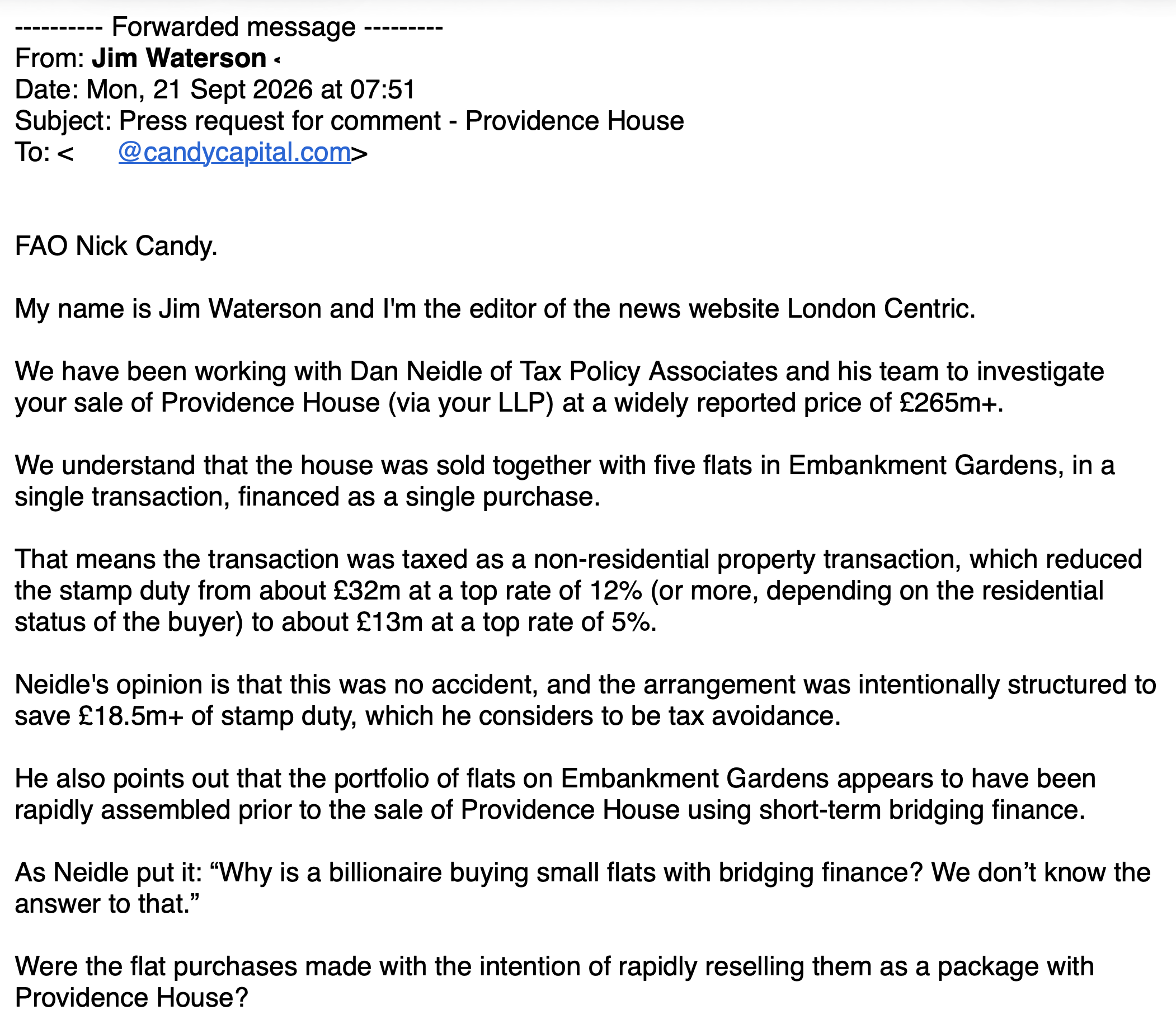
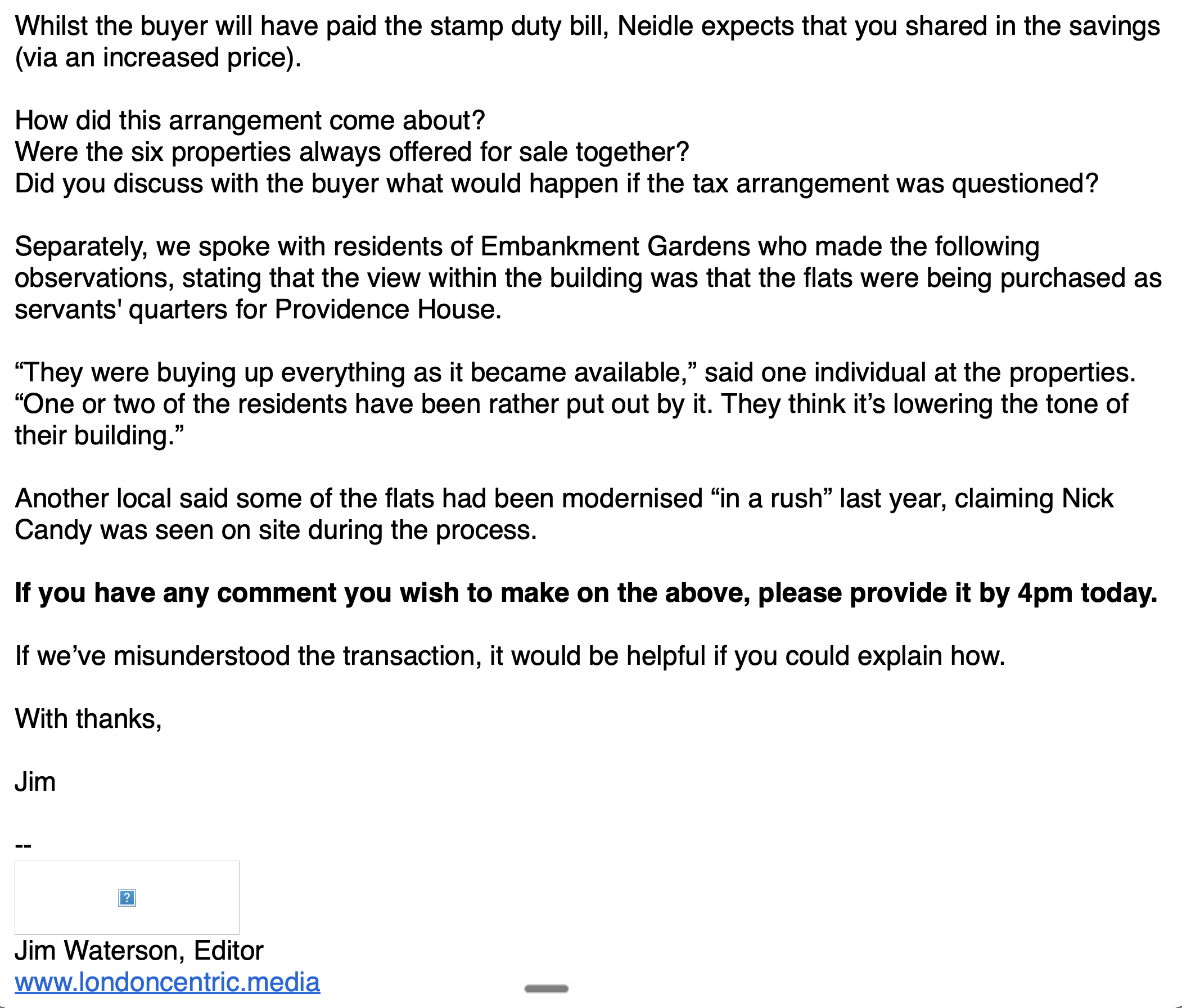
London Centric sent these requests for comment on Monday 21 September:
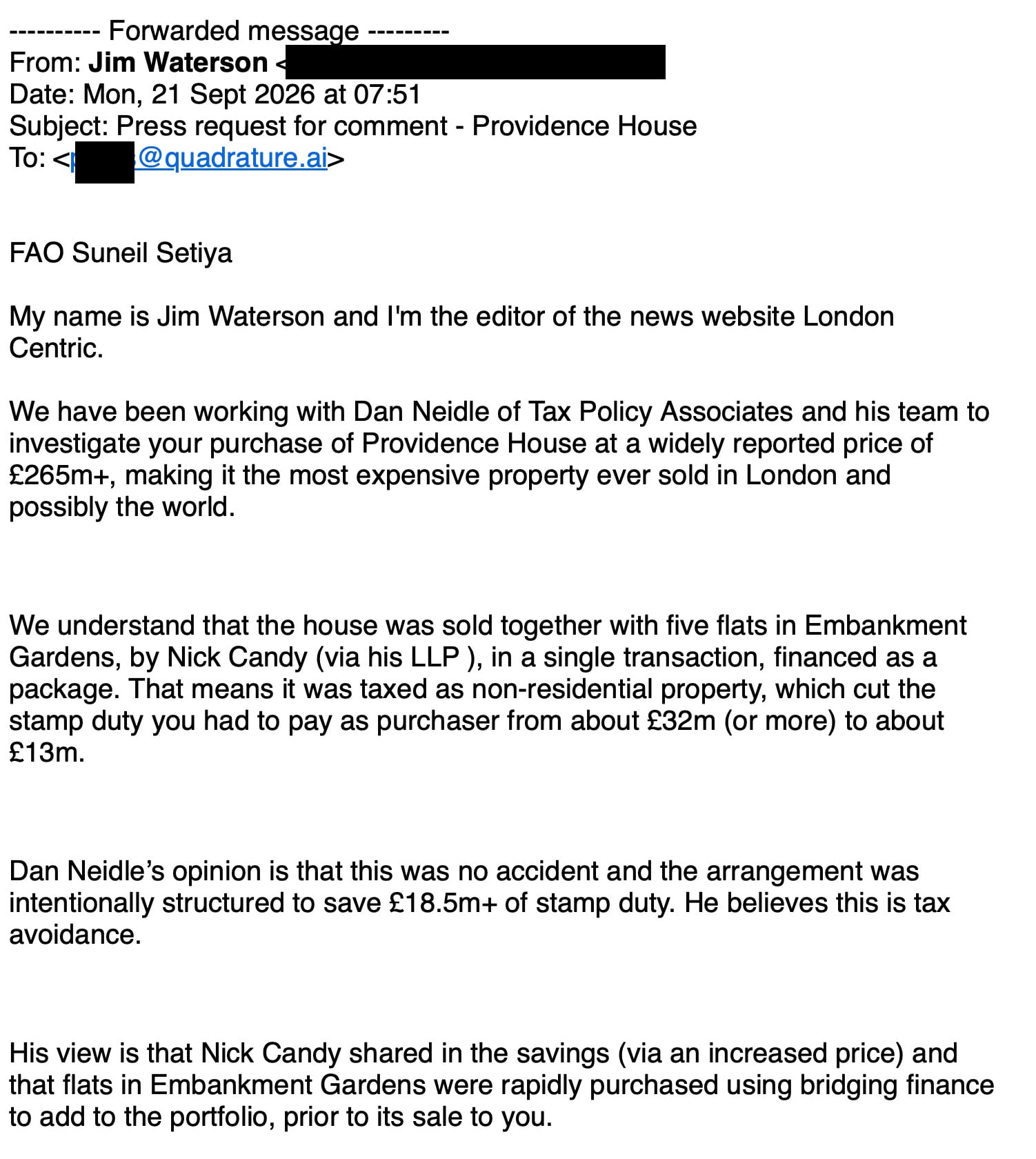
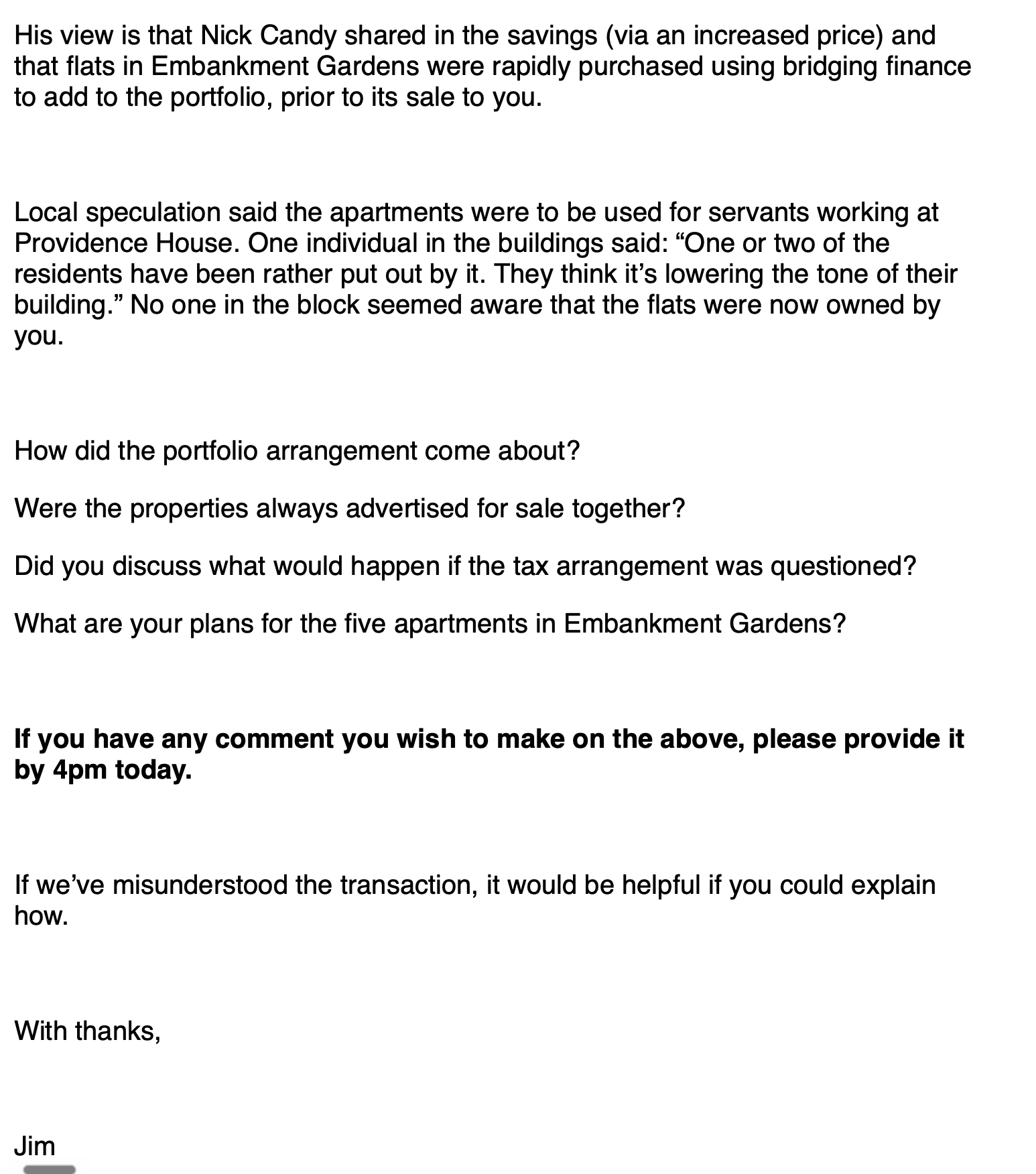
Mr Setiya declined to comment on the record, although it is understood his position is that the sale was always offered as a portfolio of six properties and there was no collusion with Mr Candy to reduce the tax bill.
Mr Candy did not respond to London Centric’s request for comment.
What happens next
HMRC may have opened an enquiry. Its deadline is around 26 February 2027,34 but HMRC may have started to pay attention as soon as they became aware that the most expensive house sale in Britain had been reported as part of a commercial transaction with five small flats.
If HMRC are not going to challenge the arrangement, or if there is a challenge and it fails, then we expect steps will be taken to amend the legislation. Otherwise, we should expect other people to adopt this scheme.
Few people will save anything like as much as Messrs Candy and Setiya, but the break-even point where the scheme starts to make sense is for residential purchases of £24m.35 And for non-residents buying a second home, as little as £12m.36
When we initially published this report, it closed by saying that it’s possible others are using similar structures. This is now confirmed. We’ve spoken to one senior stamp duty specialist who is regularly asked, “Can you make it a six-pack?” He declines, but is aware there are others who do not.37
Photo of the gates of Providence House by Jennifer Forward-Hayter for London Centric, used with kind permission. As far as we can establish, no photograph of Providence House exists under an open licence, and nor does any photograph of Mr Candy.
Many thanks to Jim Waterson and Polly Smythe at London Centric, who originally spotted the issue – this story wouldn’t exist without them. Thanks to V and B for initial research and analysis, and to J and T for their stamp duty expertise. Thanks to B for the “six-pack” comment.
Property118’s tribunal win – it doesn’t help their clients; it looks vulnerable to appeal
Why do we still have stamp duty?

Why did HMRC not charge Angela Rayner a penalty?

MP Estate Planning: the unregulated firm selling defective trusts to the elderly
![To: jeevacation@gmail com[eevacation@gmail com]
From: Peter Mandelson
Sem: Sun 11/7/2010 2 34 57 PM
Subyect: Fwd Rio apartment
Seat to mys bank manager Gratetul tor helpful thoughts trom my chief lite adviser
Sent from ims iPad
Bevin torwarded messave
From: Peter Mander iS
Date: 7 November 2010 [4 29 12 GMI
Subject: Rio apartment
P| ag awe dpeecussed Pan consdernne a purchase of an apartmentin Rion Ttisain](https://taxpolicy.org.uk/wp-content/uploads/2026/01/Screenshot-2026-01-31-at-21.27.15-640x360.png)
Emails show Peter Mandelson discussing Panama tax structure with Jeffrey Epstein

Tenancy reform: the accidental stamp duty headache for 150,000+ tenants
Footnotes
Apologies to all tax professionals, but we’re going to continue our practice of calling SDLT “stamp duty” throughout this article. ↩︎
The word “loophole” is often used in a tax context in the media in a way that is inaccurate and even unfair. For example, much high-value commercial real estate is kept within a special purpose company and sold by selling the company rather than the real estate directly. That means no stamp duty land tax is payable. This, however, has been the practice for decades, and successive governments know this and have made a clear decision not to change the law. Something that is well known and accepted is not a “loophole”. By contrast, we think it’s fair to describe the structure identified in this article as a “loophole” because the 6+ property rule is not intended to be used in this way. We expect that if successive governments had appreciated this was a potential planning opportunity, they would have closed it. The potential for a similar loophole was identified in the context of ATED, but we’re not aware of it having been identified in this context. ↩︎
There’s a good write-up of the history of the house on its Wikipedia page, and some of what follows is taken from that. ↩︎
The house was then called Gordon House, and it has an unusual tax history. Christian Candy contracted to buy it in August 2012 for £68m under two leases, and transferred it to his brother Nick on 1 April 2014. He then spent eleven years litigating with HMRC over £1.92m of stamp duty he said he’d overpaid. He lost in the Court of Appeal on one route ([2022] EWCA Civ 1447) and won on another in July 2026 ([2026] UKUT 282 (TCC)). The lease recorded on the Providence House title, dated 16 April 2019 for 201 years from 1 October 2012, is the “Contracted-out Lease” that was in dispute. The details of the dispute are complex and not relevant to this report. We therefore won’t cover them further. ↩︎
The reported price varies. The Times, which broke the story on 2 April 2026 and later named the buyer, said £265m on both occasions. Bloomberg said £270m, and the Financial Times more than £275m. The £275m figure is also repeated in places that appear to trace back to an error: the Wikipedia article cites the Times piece for £275m, but that article was headlined £265m when published (the archived copies and the article’s own URL both confirm it), and Wikipedia’s own account of the sale further down the same page says £265m. We have no independent way to adjudicate this, so have prudently used the lowest figure, which produces the smallest saving. The real price may appear on the register once the sale is registered (although there are strategies people can use to circumvent the need to publish the true figure). ↩︎
Registered under her original name, Holly Rachel Vukadinovic. It appears they are separated but not divorced; marital status can be highly relevant for many stamp duty purposes. ↩︎
The second entity is SMSDC LLP, incorporated the day before Providence House LLP and registered at the same Mayfair address. Its designated members are Steven Miles Smith, who is also managing director of Mr Candy’s Luxembourg investment vehicle, and David Scott Currie. Both are directors of other Candy companies. Its accounts show a single asset: a £30,000 investment (which we would speculate is/was a very small interest in Providence House LLP). ↩︎
The debenture, dated 8 November 2024, secures Providence House, together with a floating charge over everything else the LLP owns. Schedule 2 assigns to the bank the “Sale agreement in connection with the acquisition of the Property” between Mr Candy and the LLP, dated the same day. We haven’t seen that agreement, so we don’t know the total price. ↩︎
The transfer records the price as “the aggregate of £140,014,210 paid by the Transferee to the Transferor (receipt of which the Transferor acknowledges) and purchase monies that have been unpaid by the Transferee to the Transferor”. So at least £140m changed hands, with the rest likely going in a circle (ending up owed by the LLP to Mr Candy, but no cash actually moving). It is, of course, possible that the bank required a personal guarantee from Mr Candy, but if that was the case, then our theory of the purpose of the transaction is incorrect, and something else was going on. We do not know what. ↩︎
Paragraph 10 of Schedule 15 to the Finance Act 2003 ignores the actual price and substitutes a formula: market value multiplied by (100 minus the “sum of the lower proportions”) per cent. Where the transferor and people connected with him hold the whole partnership, the result is nil or close to it. Mr Candy and his wife were connected, so their shares both count for this purpose. Note that paragraph 39(2) switches off the usual rule that partners are connected with each other, so the advisers’ LLP wouldn’t have counted. The rules here are notoriously complicated and full of bear traps for the unwary. HMRC’s guidance is here. ↩︎
We only know what two of them cost, because the other three went into the LLP at the same time as Providence House, as part of a single deed with one aggregate price. The two we can price were bought for £475,000 and £220,000. On those figures the five flats together are very unlikely to come to much more than 1% of the price of the house. ↩︎
For privacy reasons we won’t give their precise addresses, but they’re easy to find from public records. ↩︎
Notices under section 42 of the Leasehold Reform, Housing and Urban Development Act 1993, by which a leaseholder claims a new, longer lease. The benefit of such a notice passes to a buyer of the flat. So the dates tell us roughly when Mr Candy bought each flat from its previous leaseholder: one within about six weeks of transferring it into the LLP. ↩︎
30 April 2025 and 20 June 2025 respectively. Both charges are on the LLP’s Companies House record. ↩︎
Registration of a transfer takes months, and HM Land Registry has a substantial backlog. Until it completes, the register still names the seller as owner. ↩︎
T224YJV, M224YJV, R224YJV, Q224YJV, S224YJV and P224YJV, all with a priority time of 12 May 2026 at 16:41:56 or 16:41:57. ↩︎
The exact figure would be £31,713,750. Nothing on the first £125,000, 2% on the next £125,000, 5% up to £925,000, 10% up to £1.5m, and 12% on the remaining £263.5m. The current rates are here. We understand Mr Setiya is UK resident, so the 2% non-resident surcharge doesn’t apply, and we’ve assumed conservatively that the house replaced a previous main residence so that the 5% additional property surcharge doesn’t either. If that assumption is wrong the bill would have been £44,963,750 and the saving correspondingly larger. ↩︎
£13,239,500. Nothing on the first £150,000, 2% on the next £100,000, and 5% on the rest. ↩︎
Back in 2003 the top residential and commercial rates were the same; today’s benefit of getting you into a cheaper top rate did not apply. The purpose related to “disadvantaged areas relief”, a tax break intended to encourage investment in deprived areas. Commercial property in designated areas could be bought free of stamp duty regardless of price, but residential purchases only qualified if they cost £150,000 or less. Treating purchases of six or more homes as commercial allowed investors buying blocks of flats to benefit from the full exemption. The British Property Federation explained its role in securing this treatment in evidence to the House of Lords Economic Affairs Committee on 14 May 2003, question 411. The commercial relief was abolished in 2005 and the remaining residential relief in 2013. But the 6+ rule survived – see HMRC’s explanation of the repeal. The separate rule in section 116(7) remained in place. As residential stamp duty rates rose above commercial rates, that surviving rule became increasingly valuable. ↩︎
The 6+ route is sometimes confused with multiple dwellings relief, which was historically another route to a lower bill for a purchase of several homes. MDR was abolished in June 2024, three months before this structure started to be put together; so we won’t refer to it further. ↩︎
The reason why the non-resident surcharge doesn’t apply is interesting and slightly counter-intuitive. The surcharge rules in Schedule 9A Finance Act 2003 apply to a “dwelling”. There is nothing that applies the 6+ rule to Schedule 9A, and therefore the conditions in Schedule 9A may be satisfied when a non-resident applies 6+ residential properties. However, the effect of Schedule 9A applying is driven by s75ZA Finance Act 2003, which makes the surcharge work by adjusting the residential rates. The effect of the 6+ rule is that you’re not on the residential rates, so while Schedule 9A may technically apply, it has no effect. This seems an odd way of achieving the result, but it does reflect deliberate policy – see paragraph 5.9 of the Government’s response to the surcharge consultation. ↩︎
Our calculation here: two of the five flats cost £695,000 between them, and the stamp duty on buying them was about £50,000. We don’t know what the other three cost or what stamp duty was paid on them, but assuming they were in similar ballparks gives roughly £2m to acquire the five flats and pay the stamp duty. ↩︎
Project Blue Ltd v HMRC [2018] UKSC 30 at [42], where Lord Hodge held that section 75A operates mechanically and doesn’t require any tax avoidance purpose. CPC Group, the company Nick Candy ran with his brother, was a JV partner in Project Blue (together with Qatari Diar). ↩︎
HMRC v Ridgway [2024] UKUT 36 (TCC). ↩︎
Although, on the facts, Mr Ridgway still lost. The property was regarded as residential. ↩︎
It’s unsatisfactory to legal purists, but the courts have spent decades striking down structures they think amount to blatant tax avoidance. The modern history starts with WT Ramsay Ltd v IRC [1982] AC 300, where the House of Lords held that a series of pre-ordained steps inserted with no commercial purpose could be viewed as a whole. It was restated as a principle of “ordinary statutory construction” in Barclays Mercantile Business Finance v Mawson [2004] UKHL 51, and from that point, nothing was really the same. Almost every tax avoidance scheme failed in the courts. The principle was applied in Tower MCashback [2011] UKSC 19, and given further force in UBS AG v HMRC [2016] UKSC 13, where the Supreme Court disregarded a condition written into a bonus scheme purely to satisfy the statute (could that kind of approach disregard the flat purchases in the Providence House scheme?). The modern approach isn’t a general power to strike down avoidance, at least not in theory – it’s about asking what the statute was getting at, and whether the facts answer that description. A judge might well regard five tiny purchases bolted onto a £265m transaction as trifles that shouldn’t change the result. ↩︎
The section 75A element of the case is slightly curious. Neither party raised section 75A before the First-tier Tribunal – it was a point the First-tier Tribunal identified itself. Then, at the Upper Tribunal, both parties agreed section 75A did not apply. ↩︎
The Court of Appeal in Tower One St George Wharf Ltd v HMRC [2025] EWCA Civ 1588, and the First-tier Tribunal in HC-One No 1 Ltd v HMRC [2026] UKFTT 678 (TC) at [114], which draws the propositions together: the scope of “scheme transactions” is very broad, but a transaction is only caught if it contributes “directly or indirectly to the means by which the relevant land interest finds its way from V to P”. The transfer into the LLP is a link in the chain of title, so it arguably qualifies. Buying the flats is a bit harder, because they aren’t a means of getting the house from seller to buyer: they’re additional property. The degree of conscious engineering again becomes a key question. ↩︎
And also see below from Kyle Rainsford in the comments – he’s an experienced tax lawyer and thinks we may be under-estimating the prospects for an s75A challenge. ↩︎
We are going to assume that there weren’t arrangements for the flats to be repurchased subsequently by Mr Candy or the LLP. That would be quite inadvisable, and the relatively small amounts of money involved mean it would be a very peculiar thing for the parties to do. But if they did, then it might be possible to disregard the other transactions on common law principles. A first-tier tribunal recently followed that approach in the Sajedi case, but it was then set aside by consent order before the UT; it’s not entirely clear what the background to this was. This kind of artificiality could also create professional problems for the advisers involved (unless they are barristers). ↩︎
Although a complicating factor is that the case involved the definition of “land transaction” – the 6+ rule uses the term “transaction”, which may be wider. ↩︎
The stamp duty hallmark is extraordinarily wide. The regulations catch arrangements “which involve the acquisition of chargeable interests”. This is in Regulation 2(2) of the Stamp Duty Land Tax Avoidance Schemes (Prescribed Descriptions of Arrangements) Regulations 2005, as substituted by SI 2012/2395 (there is no consolidated version on legislation.gov.uk, so the two have to be read together). But it’s then narrowed by the general requirement that obtaining a tax advantage is the main benefit or one of the main benefits of the arrangements. Here that’s reasonably clear. There are no hallmarks, just excluded steps (which aren’t relevant here) and a couple of exclusions. This is where the difficult point comes in. Arrangements are excepted if they’re “of the same, or substantially the same, description as arrangements which were first made available for implementation before 1st April 2010”. Section 116(7) has been in the Finance Act 2003 since it was enacted. But has anyone done anything like this before? Has someone made “buying little properties to reduce SDLT on a big property” available for implementation? We don’t know. But we don’t think the mere possibility of it being done since 2003 is enough. There would have to have been an actual, very similar scheme. See Walapu v HMRC [2016] EWHC 658 (Admin). ↩︎
Section 310 of the Finance Act 2004, and section 314 for privilege: where a lawyer can’t disclose because of legal professional privilege, the duty passes to anyone in the UK who enters into a transaction forming part of the arrangements. HMRC’s guidance at 3.12 is explicit that “for SDLT schemes and IHT schemes, any in-house user has to disclose”. ↩︎
Assuming the effective date was 12 May 2026 and the return was filed on time, within 14 days. Paragraph 12 of Schedule 10 to the Finance Act 2003 gives HMRC nine months from the filing date to open an enquiry. After that it has to make a discovery assessment, which is harder and has its own conditions. ↩︎
We estimate from HM Land Registry’s Price Paid Data for 2022 to 2025 that there are about a dozen £24m+ residential properties purchased every year. ↩︎
Here’s our rationale. The cheapest flats you could realistically buy for this purpose cost perhaps £300k each (plus £20k SDLT each). So five flats is about £1.6m of outlay. The saving from commercial rates is 7% of the price above about £1.5m, being the difference between the 12% top residential rate and the 5% top commercial rate. The SDLT saving therefore hits £1.6m (so the scheme breaks even) at a price of about £24m. The SDLT saving hits twice the outlay (which is where we think most people would consider it worth the bother) at about £47m. But this is all for UK residents buying a main residence. If it’s a second home then the 5% surcharge takes the gap to 12% rather than 7%, and those two figures fall to about £14m and £27m. If the buyer is also non-resident, the further 2% surcharge means the figures fall again, to about £12m and £23m. Five cheap flats start paying for themselves on a property worth barely more than a large London townhouse. All of this is conservative, because it treats the flats as money spent. In reality they are an asset that can be sold on, as Mr Setiya is free to do. If we count only the stamp duty and the transaction costs as the real cost then the break-even drops to about £5m. It would seem highly questionable for someone at that price point to take on all the legal and market risk that the structure creates, but history shows people sometimes do add irrationally and take high levels of legal and economic risk when chasing a perceived tax benefit. Our basic point remains, however, that this is not a technique reserved for record-breaking mansions. ↩︎
Of course, that’s not to say that the Providence House was intentionally made a “six-pack”, but it suggests that this structure is being actively used. ↩︎


Leave a Reply