

UPDATED 5pm: We have now spoken to Graham Aaronson KC, who advised Angela Rayner. He says that HMRC’s decision is explained by facts not apparent from Sir Laurie Magnus’s report. We have reflected his account below. But Ms Rayner’s team is not releasing the underlying documents, and we cannot accept the word of one party to a dispute without evidence.
The Guardian reported this morning that HMRC have “cleared” Angela Rayner over her stamp duty affairs. She has paid the additional £40,000 of stamp duty1 that was due on her Hove flat, but HMRC have decided she was not “careless”, and so no penalty is being charged.
That is a surprising outcome. We said last September that, on the facts as publicly stated, Ms Rayner was almost certainly “careless” within the meaning of Schedule 24 of the Finance Act 2007, and that a penalty of around 20% (about £8,000) was the likely outcome.
Mr Aaronson says the publicly stated facts were incomplete and (although he is not that blunt) Sir Laurie Magnus got it wrong. Mr Aaronson says that, properly understood, the legal advice Ms Rayner received was sufficient to show she had taken reasonable care. If that account is right, HMRC’s decision becomes easier to understand. But Mr Aaronson was acting for Ms Rayner, spoke to us with her permission, and Ms Rayner’s team is not releasing the documents which would let us verify his account. So we have to treat his explanation as one side’s position, not an established fact.
There is an obvious difficulty here: Ms Rayner has not released the evidence showing why she was not “careless”, and HMRC officials are generally prohibited, on pain of criminal sanction, from disclosing information about individual taxpayers. So we know HMRC’s conclusion, but we do not know the evidential basis for it. This leaves us in the unsatisfactory position of having to assess the case on the basis of two competing accounts: Sir Laurie’s public report, and Mr Aaronson’s account of the underlying documents.
This article therefore asks two questions. First: if Sir Laurie’s report was right, why was there no penalty? Second: if Mr Aaronson’s account is right, why will Ms Rayner not release the documents which explain HMRC’s decision?
We also include a technical note at the end explaining why, in our opinion, the substantive legal argument for appealing the £40,000 was weak.
What happened
The full background is in our original article, and mostly comes from the report from Sir Laurie Magnus, the Independent Adviser on Ministerial Standards.
In short:
- Ms Rayner sold her remaining interest in her Ashton-under-Lyne family home to a trust set up for her disabled son, and bought a flat in Hove.
- She paid stamp duty at the standard rate of around £30,000.
- Stamp duty is 5% higher if you are buying a second home; Ms Rayner didn’t pay that higher rate.
- Her conveyancer and a trusts lawyer had both told her standard rate applied – but both had explicitly said this was not specialist tax advice. One “suggested” she obtain specialist tax advice; the other “recommended” it. However Ms Rayner did not obtain tax advice.
- After the story broke in the press, Ms Rayner instructed a tax KC, who advised that the higher rate for additional dwellings did in fact apply, because a “deeming rule” meant that Ms Rayner was deemed to herself own the house that the trust held for her son.
- Ms Rayner therefore had to pay an additional £40,000 (and, we expect, about £3,000 of interest).
This summary is, however, now contested.
Mr Aaronson told us today that new facts emerged during his review of Ms Rayner’s papers. He says that, of the two sets of legal advice, one recommended that Ms Rayner obtain specialist tax advice, but only on a separate point unrelated to the SDLT charge. He says that the other gave definitive advice that the standard rate applied, and concluded that Ms Rayner did not need to take any further action.
Mr Aaronson was careful not to criticise Sir Laurie for reaching a different conclusion: Sir Laurie had two days, and Mr Aaronson had many months. But the two accounts are difficult to reconcile. If there was a “smoking gun” clearing Ms Rayner, then surely her team would have provided it to Sir Laurie? And why did Ms Rayner’s resignation letter say “I deeply regret my decision to not seek additional specialist tax advice”?
Mr Aaronson is an eminent KC with an excellent reputation; however, he was acting for Ms Rayner, and spoke to us with her permission. Ms Rayner’s team is not providing the underlying documentation (we asked; they are not willing to).
We therefore have to treat Mr Aaronson’s account as a serious possibility, not an established fact. Part of Mr Aaronson’s account is reflected in this piece in The Times.
We approached Sir Laurie Magnus’s office: he was not able to provide any comments.
What if Sir Laurie’s report was correct?
Sir Laurie’s report is currently the only independent summary of the facts of this case. We will therefore start by proceeding on the basis that he was correct.
The legal test is whether Ms Rayner failed to take the care a “prudent and reasonable person in her position” would have taken. The leading caselaw is clear that you can rely on professional advice – but, as the First-tier Tribunal said in Lithgow, not where the advice is “hedged about with substantial caveats”. Here, on the basis of Sir Laurie’s conclusions, both advisers told her that they were not tax specialists, and that specialist advice should be obtained. She didn’t obtain it.
It is hard to see how a taxpayer, undertaking a complex transaction involving a court-ordered trust for a disabled child and the purchase of a second property, and twice told to obtain specialist tax advice, can be said to have taken reasonable care by not doing so. That conclusion is even harder where the taxpayer was Deputy Prime Minister and Secretary of State for Housing.
That is exactly the kind of situation in which the caselaw says reliance on the original advice falls away. So neither our usual team, nor the other senior lawyers we have spoken to (including a retired judge), would understand why Ms Rayner was not “careless”.23 We believe Mr Aaronson agrees with this summary of the law – but of course he says the facts are different.
So we remain of the view that, if Sir Laurie was correct that Ms Rayner was advised by two sets of lawyers to obtain specialist tax advice, she was “careless” and penalties are due. Any decision by HMRC to not charge penalties would seem generous.
What if Mr Aaronson’s summary is correct?
If, on the other hand, the facts are as Mr Aaronson says, then HMRC’s conclusion becomes much easier to understand. On Mr Aaronson’s account, Ms Rayner received definitive advice that the standard rate applied. If that account is right, and if the advice was indeed sufficiently clear and unqualified, then the error was not necessarily Ms Rayner’s fault.
Mr Aaronson says that, once he was able to demonstrate the facts to HMRC, they agreed. It appears that this was not a simple case with one “smoking gun”, but a fairly complex chain of correspondence. That would explain why it took some time to reach this point, although that is also a fairly typical timescale for an SDLT enquiry of this nature.
If Mr Aaronson’s summary is correct, then HMRC’s no-penalty decision becomes more understandable. But without the underlying documents, we cannot know whether HMRC was right to accept that account.
Who should we believe?
We cannot accept the word of one side to a dispute, no matter how much we respect their barrister. And HMRC is prohibited from telling us their side of the story.
So unless and until Ms Rayner releases evidence supporting Mr Aaronson’s account, HMRC’s decision remains unexplained. We know the decision; we do not know the evidential basis for it.
What this means
We are not suggesting any impropriety on Ms Rayner’s part. There is no evidence she tried to avoid or evade tax.4 –On Sir Laurie’s account, this looked like a careless mistake. On Mr Aaronson’s account, it did not.
The higher-rates-for-additional-dwellings regime is a mess in numerous respects, and this is far from the only time we’ve seen it produce results which appear unfair. Ms Rayner’s case looks like exactly the kind of thing that happens when people with complicated personal arrangements receive advice which turns out to be wrong — or, on Sir Laurie’s account, do not obtain the specialist advice they were told to obtain.
But the “careless” test in Schedule 24 is not about morality, or the fairness of a policy. It asks a narrow, technical question: did the taxpayer take the care that a reasonable person in their position would take?
On the basis of the only independent statement of the facts, from Sir Laurie Magnus, the answer to that question still looks to us like “no”. Mr Aaronson says the underlying documents show a different picture. Without those documents, we and others can’t can’t assess whether HMRC’s acted correctly.
If Ms Rayner wants people to accept that she acted properly, and HMRC’s decision was correct, then she should release the evidence that led HMRC to conclude she was not careless.
Technical note – our view of the substantive legal argument
A leading KC, Jonathan Peacock, originally advised that higher-rate stamp duty was due. However, Ms Rayner subsequently obtained a second opinion from Graham Aaronson KC who concluded that, on the better view, the standard rate was correct after all, and that stamp duty was never actually underpaid – he said there would be a “realistic chance” of successfully appealing HMRC’s decision. Ms Rayner agreed to pay the additional £40,000 anyway, to settle the HMRC enquiry.
We have reviewed a paper prepared by Mr Aaronson (unfortunately we are not able to publish it). The argument is that paragraph 12 of Schedule 4ZA should be read more broadly than its actual words, so as to cover any court-ordered trust for any disabled child – not just trusts under the Mental Capacity Act 2005 for children who lack mental capacity.
It’s important to say at the start that this is not relevant to the careless penalty point. The question is not whether a clever argument could later be constructed; it’s what care Ms Rayner took at the time the SDLT return was filed.
In our view, the argument is well beyond anything the existing caselaw on Pepper v Hart and Inco Europe would support. It is the kind of argument an advocate can in good faith run on instructions, but in our view it is not – with respect – the “better view” of the law. The better view is the one taken by Ms Rayner’s first KC and by HMRC.
To get there, the argument has two limbs. First, Pepper v Hart [1993] AC 593: where statutory language is ambiguous, obscure or leads to absurdity, a court may consider statements by the sponsoring minister in Parliament. The sponsoring minister (Mel Stride) said in 2017 that the relief was intended to help “disabled children where a court-appointed trustee buys a home for such a child” – wider than the enacted words. Second, Inco Europe Ltd v First Choice Distribution [2000] 1 WLR 586: where Parliament has clearly made a drafting mistake, the courts may rectify the statute by reading in or substituting words, provided the court is “abundantly sure” of (i) the intended purpose, (ii) the inadvertence of the drafter, and (iii) the substance of what Parliament would have enacted. The argument is that paragraph 12(1A) refers to a trust “appointed” by the Court of Protection, which is incoherent (the Court of Protection appoints deputies, not trusts), and that the rational reading is therefore the wider one described by the minister.
We think this is well beyond anything the caselaw supports. Pepper v Hart is a famously narrow doctrine which the courts have spent the last thirty years restricting, not expanding – see for example Wilson v First County Trust [2003] UKHL 40 at [56]-[67] and R (O) v Home Secretary [2022] UKSC 3. It does not allow Hansard to extend a relief to a class of taxpayers Parliament did not actually legislate for. We don’t think Mr Stride’s statement can be read as a clear statement that the provision applies to all disabled children – it was one sentence in a summary of Finance Bill clauses, and we see its natural reading as an imprecise statement of the Parliamentary drafting. We therefore don’t think this is a Minister “clearly stating the effect of a provision” within Pepper v Hart, even in its widest formulation. The various explanatory notes are imprecisely drafted, but not clearly contradicted by the text of the legislation.
Inco Europe is narrower still: it permits the correction of obvious drafting slips, not the wholesale rewriting of an exemption to cover a category of disability the statute simply doesn’t address. Paragraph 12(1A) on its face deals with mental incapacity under the MCA 2005.
The argument that paragraph 12(1A) “fails to cover anything” because the Court of Protection doesn’t “appoint” trusts also seems to us to be a stretch. The provision plainly contemplates a trust over property held by a deputy appointed by the Court of Protection. That is a perfectly workable, if inelegantly drafted, category – and HMRC’s own guidance has been applying it on that basis for years. A court would certainly “fix” minor defects to ensure that the provision does in fact apply to MCA cases. However to stretch it to cover all physical and other disabilities would be to make policy.
In our view, that would require the Supreme Court making a significant extension to Pepper v Hart and/or Inco Europe.
We believe that Mr Aaronson broadly shares the views expressed above. He nevertheless believes that, if he argued the point before the Supreme Court, a majority of the Court would extend the existing interpretative doctrines and find in Ms Rayner’s favour. We do not agree.5
Disclosure
Our founder, Dan Neidle, is a member of the Labour Party. He was a member of its senior disciplinary body (the National Constitutional Committee) but has stood down. He has no formal role in the Labour Party, advises policymakers in all parties, and is a member of the Scottish Government’s tax advisory group.
Footnotes
The tax in question is stamp duty land tax, the modern tax on land in England. “Stamp duty” is a separate, much older, tax on documents. However we will, in the interests of clarity, refer to the tax as “stamp duty” in this article – our apologies to tax advisers. ↩︎
Note that even if there was an ambiguity in the law, and potential arguments the higher rate did not apply that would not be a defence to “carelessness”, because Ms Rayner was unaware of any ambiguity at the time the stamp duty was paid. ↩︎
Some have suggested that the caveats were not specific to the trust complexities, and were just “boilerplate” which the respective lawyers included in all their advice. It was, therefore, not “careless” to ignore these caveats. Those are apparently not the facts of any party. But even if they were, in our view that would be a wrong reading of the law. It would also create an unfortunate incentive to not obtain specialist SDLT tax advice, given they’d escape penalties if additional SDLT turned out to be due. ↩︎
Cases of anyone being jailed for evading stamp duty land tax are very rare, with extreme facts ↩︎
However (and here we agree with Mr Aaronson) it is a point that would never realistically be tested, because the cost of an appeal to the Supreme Court would greatly exceed the £40,000 at issue. ↩︎

Why Angela Rayner is likely to pay £8,000 in stamp duty penalties

Nick Candy, Suneil Setiya, the UK’s biggest house sale, and £18.5m of avoided stamp duty
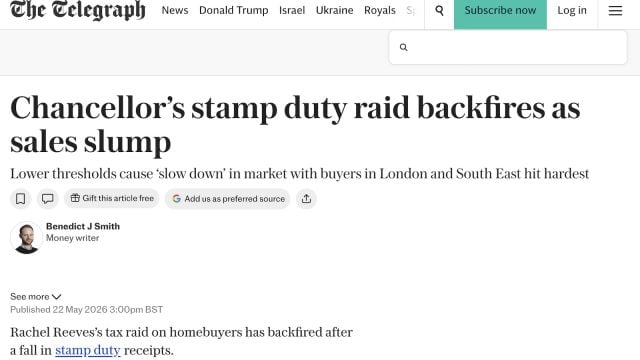
Why do we still have stamp duty?

Tenancy reform: the accidental stamp duty headache for 150,000+ tenants
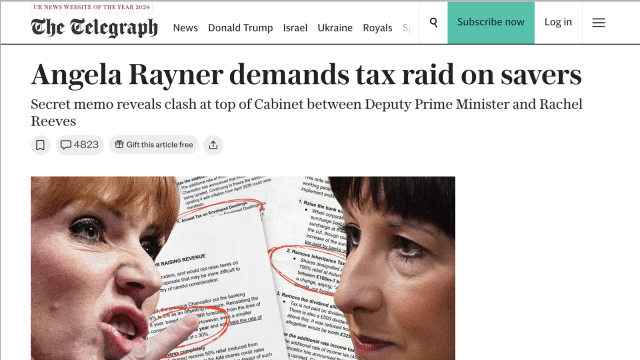
The Angela Rayner tax proposals – how much sense do they make?


Leave a Reply