

It’s being reported that Jeremy Hunt is considering abolishing the non-dom regime. Some are suggesting he’s thinking of stealing Labour’s policy. But he could have a rather different objective – a principled reform of the existing rules, which are currently deeply irrational.
The non-dom rules mean (very broadly) that a foreigner living in the UK who is classified as having a non-UK domicile isn’t taxed on their foreign income and gains, unless they bring (“remit”) the proceeds into the UK. That can continue for up to 15 years, even if they live in the UK for all of that time.
Labour are committed to abolishing the non-dom regime. It’s probably fair to say this is for three reasons:
- Labour believes the non-dom regime is of little practical use to normal people arriving in the UK (even highly paid ones), but of huge value to the exceedingly wealthy.
- That means the rules are inequitable, because some people (non-doms, sometimes very wealthy) pay less tax on their income than normal UK domiciled individuals (whether poor or wealthy).
- Labour doesn’t believe large numbers of non-doms will leave the UK as a result of scrapping the rules, and can point to supporting evidence⚠️. Hence they believe abolishing the non-dom regime could raise funds for spending.
That all suggests the non-dom rules should be scrapped and replaced with a simpler system that operates for a shorter amount of time, perhaps providing a more useful exemption to “normal” people, but a less useful exemption for the very wealthy. That appears to be Labour’s current policy.
It’s possible Jeremy Hunt is considering stealing Labour’s clothes, out of some mixture of principle (perhaps he agrees with the above analysis!) and politics (it will neuter a popular Labour policy).
But it’s also possible that Mr Hunt has his own reasons for wanting to abolish the non-dom regime, which are similar in some respects to Labours, but with a very different emphasis. For example:
- Mr Hunt could believe that the rules are absurdly complicated given the uncertainty around the “domicile” definition. If so, he’s correct – HMRC accurately but unhelpfully says the concept “cannot be defined precisely“. This is not how tax rules should work.
- He may also regard it as deeply irrational that the non-dom rules, and the remittance basis in particular, creates a powerful incentive for some very wealthy people to keep their wealth outside the UK.
- On the other hand, Mr Hunt may be more relaxed about the vertical inequity created by the rules, particularly if he believes there is an overall economic benefit.
- And he may be less sanguine about the prospect of non-doms fleeing the UK upon any abolition of the rules, and therefore not see abolition as a practical source of revenues. That seems to have been Mr Hunt’s view back in 2022.
These views point to abolition, but a different kind of abolition from Labour.
Mr Hunt could abolish the concept of “domicile” and replace it with a simple year-count using the (very successful) modern statutory residence test (sufficiently simple that it can be fairly comprehensively summarised in flowcharts like this).
He could then also abolish the “remittance” concept and simply exempt non-doms on all of their foreign income and gains.
But, unlike Labour, he might keep the current 15 year limit (or perhaps reduce it slightly).
There would be some obvious advantages from such a change:
- The rules would be fairer, and much more useful to moderately wealthy immigrants (think: doctors, IT professionals, junior and mid-level bankers) who have some wealth abroad, but can’t justify the cost of advisers to manage their “remittance” position, and so don’t get much benefit from the non-dom regime.
- The UK would therefore, at the margins, become more attractive to moderately wealthy immigrants.
- The rules would be less easy to manipulate if they had a simple robust test of domicile.
- The UK economy might benefit from an influx of spending from non-doms who no longer need to manage their remittances very cautiously.
This does raise some difficult questions:
- That influx of spending from non-doms could have negative effects, e.g. adding to asset price inflation. I’m not an economist, so I’m not able to assess the pros and cons here.
- There would be winners and losers, as there are from most tax changes – replacing domicile with a simple statutory test would be better for some people and worse for others. But many of the wealthy losers would manage their affairs so they didn’t in fact lose (e.g. by leaving the UK). The wealthy winners would cash their winnings – we’d collect less tax from them. Would this be overcome by additional tax from the immigrants we attracted, or from multiplier effects from “good” new spending from existing non-doms?
- Non-doms would be able to bring more funds into the UK without paying more tax; this could be portrayed as a tax-cut for the very wealthy (and in some respects it would be).
- How do you deal with the transition from the old rules to the new? There must be £10bns of unremitted non-dom income and gains sitting offshore. Do you keep make those funds subject to the old remittance rules forever? That means you keep all the complexity, and reduce the benefit of encouraging non-doms to bring funds to the UK. Or do you bin the remittance rules entirely, and effectively have an amnesty on non-doms’ offshore funds? That means you lose the small-but-significant tax currently collected from historic remittances. There could be simplified compromise approaches, for example a 15% flat rate on all historic remittances (but then you need to keep mixed fund rules to track what is a historic remittance and what isn’t). No easy answers!
These would be good questions for Mr Hunt to consider.
However all discussions about the non-dom rules should come with a health warning: remember the trusts. The 15 year limit is essentially voluntary for the very wealthy, because a non-dom who is about to run into the time limit can put foreign property in a trust, and then (big simplification alert) essentially preserve the benefit of the non-dom rules forever. Any non-dom reform which doesn’t change the treatment of these trusts will not materially impact the very wealthy. A reduction of the 15 year limit would have only a very limited impact on people in this category.
Any reform (Labour or Conservative) that doesn’t properly consider the position of trusts will be half-baked.

The £34bn cost of Reform UK’s “Britannia card” proposal
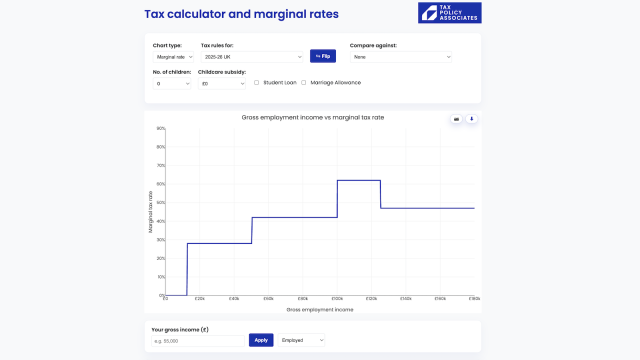
The Budget 2025 tax calculator
Council tax on ‘expensive homes’ – but most of the money comes from the not-so-rich
The £2bn lawyer tax – should Rachel Reeves tax LLPs?

Council tax on expensive homes: could the Budget raise £1bn+?



Leave a Reply