
Currently, the answer is: nobody
Here are two examples I’ve seen in the last two days. They’re not avoidance schemes. They’re pure nonsense. If you follow the advice, you may be committing tax fraud. The people selling the schemes are either ignorant or scammers.
This is from LinkedIn today:

The idea is simple. You’re selling properties, one of which you live in and two which you don’t. Your own residence is exempt from CGT; the others aren’t. So an obvious trick: “tweak” the valuations so most of the capital gain is on your residence, and so exempt.
The obvious problem: filing tax returns on the basis of false valuations is tax fraud. I pointed this out to the author, and he deleted the post. But – if he’s to be believed – he actually advised someone to do this, and they did it.
UPDATE: Will Henderson emailed me to say that he has now spoken to an accountant, understands this was not appropriate advice, and has told his client to speamk to an accountant. I accept that he wasn’t trying to scam anyone… but it’s an example of someone with no tax knowledge giving very dangerous advice
And here’s another, sent to me by a correspondent this morning:
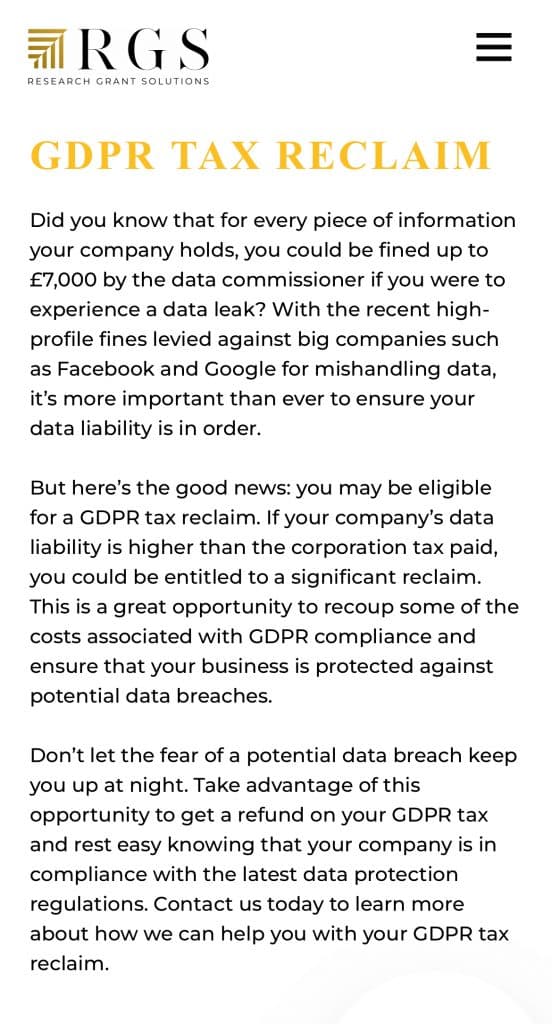
This is the “GDPR tax credit” scam we reported on earlier this year. The idea is that GDPR fines can be hefty, so you can amend your tax return for last year to book an appropriate reserve, and get an immediate corporation tax refund. This doesn’t work at all for a bunch of reasons, not least that you don’t get tax relief for fines.
So this is just a scam. A firm called Forbes Dawson had previously published a warning about it. After our report, AccountingWeb and Computer Weekly also ran stories. If you google “GDPR tax credit” now, most of the results are people warning that there’s no such thing. But the people pushing the schemes don’t care.
This stuff is all over social media – and that’s just the part that’s visible. Plenty else going on under the radar, such as those outfits sending “SDLT refund” letters to people who’ve just bought a house.
Who is liable if you buy a tax scheme that doesn’t work?
You are. Always. Even if you were deceived by the adviser. You may then be able to try to recover your loss from the adviser, but that’s not easy – even if they’re still around.
It has to be this way, otherwise there would be no risk in buying a tax avoidance scheme… you could claim the benefit if it works, and claim you were deceived if it doesn’t.
Why isn’t HMRC stopping this?
HMRC’s job is to collect tax. It isn’t a consumer protection body. In many of these cases it will recover tax that was underpaid, but it has at least six years to do this and so can and will take its time. And when HMRC does act, it is required to do so behind the scenes. Only in exceptional cases can it name promoters.
That means that promoters can continue flogging duff schemes for years before HMRC take action, and sometimes keep on flogging them after HMRC has started to take action.
What about the professional bodies?
Many of the people promoting these schemes aren’t qualified or regulated in any way. Will Henderson is one of many “property gurus” selling terrible tax advice as part of their overall package. Research Grant Solutions tell you nothing about who they are, not even the company name.
When we do see regulated professionals pushing hopeless tax schemes, most of the various professional bodies – Bar Standards Board, Taxation Disciplinary Board, ACCA Disciplinary Board, etc won’t investigate proactively but require a referral (the SRA is the exception: they will investigate cases without waiting for a referral). Complaints typically take over a year to resolve.
All this means that regulation can’t help most of the cases, and is of limited help in the minority of cases involving regulated professionals.
So what’s the solution?
I’m not sure. Creating an elaborate equivalent of the FCA to regulate the detailed content of tax advice would take years and I’m unconvinced how workable it would be.
So my answer is to instead create powerful economic and legal incentives for people not to provide irresponsible tax advice. More on this soon.
Many thanks to R for the tip-off.
Photo by Nicolas Spehler on Unsplash

Nick Candy, Suneil Setiya, the UK’s biggest house sale, and £18.5m of avoided stamp duty

Property118’s tribunal win – it doesn’t help their clients; it looks vulnerable to appeal

MP Estate Planning: the unregulated firm selling defective trusts to the elderly
![To: jeevacation@gmail com[eevacation@gmail com]
From: Peter Mandelson
Sem: Sun 11/7/2010 2 34 57 PM
Subyect: Fwd Rio apartment
Seat to mys bank manager Gratetul tor helpful thoughts trom my chief lite adviser
Sent from ims iPad
Bevin torwarded messave
From: Peter Mander iS
Date: 7 November 2010 [4 29 12 GMI
Subject: Rio apartment
P| ag awe dpeecussed Pan consdernne a purchase of an apartmentin Rion Ttisain](https://taxpolicy.org.uk/wp-content/uploads/2026/01/Screenshot-2026-01-31-at-21.27.15-640x360.png)
Emails show Peter Mandelson discussing Panama tax structure with Jeffrey Epstein

Tax barristers and fraud: how the Bar responded to our allegations


Leave a Reply