
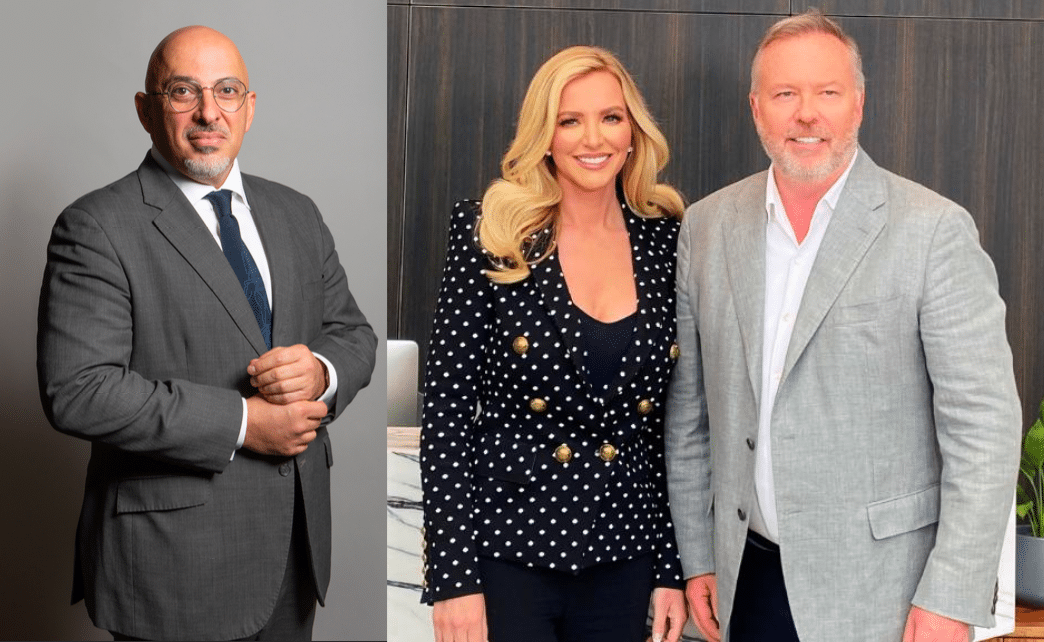
Baroness Mone introduced a company, PPE Medpro, to the “VIP fast lane” for supplying PPE to the Government during the pandemic. There was copious evidence that she and/or her husband, Douglas Barrowman, ran the company. In December 2020, a lawyer instructed by Mone and Barrowman told the Guardian that “any suggestion of an association” between the Tory peer and PPE Medpro would be “inaccurate”, “misleading” and “defamatory”.
But now a representative of Mone and Barrowman has admitted that Barrowman funded and ran PPE Medpro.
Nadhim Zahawi said he would sue the Independent if it reported he was under investigation by HMRC.1 His lawyers accused me of defamation for saying he was lying about his tax affairs, and claimed that Zahawi’s taxes were “fully declared and paid in the UK”.2 Another firm instructed by Zahawi subsequently wrote to me and said Zahawi was not aware of any investigation by HMRC.
It was eventually revealed that Zahawi had been investigated by HMRC for over a year before these stories broke. The Prime Minister’s ethics adviser concluded that Zahawi should have understood he was under investigation.
In both cases, a libel threat was made based upon a falsehood.
Were they lying?
I cannot read Mone, Barrowman or Zahawi’s minds, and it is conceptually possible that all were being honest. For example, Mone and Barrowman may have thought that Barrowman’s deep connection to PPE Medpro was not an “association”.3 Zahawi may have not realised he was under investigation.4 It is also possible that they were not aware of the statements being made by their lawyers.5
In my judgment these explanations are less likely than the alternative: Mone, Barrowman, and Zahawi intentionally instructed their lawyers to make false statements, in order to prevent people publishing unfavourable stories about them – stories they knew were substantively true. In my opinion, they likely lied.6
If a libel case proceeds to court, and the claimant lies on the witness stand, then that is perjury, and prominent people have been prosecuted for it. But if a claimant lies in libel correspondence, directly or through their lawyers, and the matter never reaches trial, then there is no consequence. Except one: often the lie will be effective, and the story quashed, without ever seeing a courtroom.
This is the “mathematics of libel”.
If you’re faced with a wealthy litigant then it’s usually rational for you to withdraw it and avoid defamation proceedings, even if you’re certain your story is true. Why? Because if you win you will devote perhaps a year of your life to the litigation, and end up out of pocket by a few £100k;7 if you lose, you could be on the hook for £1m or more. Or you could give up now, and hopefully pay nothing. This is the rational choice which – appallingly but inevitably – is forced on people by our defamation law.
So if you want to stop people writing the truth about you, you just need two things: money to pay the lawyers, and the willingness to lie. The mathematics of libel will then do the rest, and force that annoying journalist to back down.8 And in the – usually unlikely – event they don’t, you can just walk away, free from consequence. It’s a one-way bet.
We need to change this calculation.
How?
- Any “letter before action” threatening defamation proceedings could be required to be accompanied by a “statement of truth”. The claimant would have to say, under threat of perjury, that the statements in the letter are correct, and that the defamatory statement complained of is false. Lying in correspondence would then have a consequence.9
- The new anti-SLAPP law is welcome, but only applies to cases involving economic crime. It wouldn’t have applied to Zahawi, and it’s doubtful it would have applied to Barrowman/Mone. The law could easily be extended to all defamation cases.
- The Solicitors Regulation Authority could discipline solicitors who make false factual claims in defamation correspondence without having taken appropriate steps to verify the claims,10 or who remain acting for a client past the point it is clear the client lied.11 I am hopeful they will do so in both the Zahawi and Mone/Barrowman cases.
- Or more radical libel reform: the writer Edward Lucas has suggested a speedy and lawyer-free dispute resolution service for defamation cases, much like a small claims court. The best argument against this is that the floodgates would open, and the new court become overwhelmed with claims from ordinary people. But that’s a terrible indictment of the current law – that it’s only viable because only the rich can afford it.
- So perhaps we need a change which is equally radical but much simpler: require that public figures can only sue for defamation if they can demonstrate the authors acted maliciously, with knowing or reckless disregard for the truth.12 We could go further, and require that this point is always heard as a preliminary issue before any defamation action can proceed, with the defendant’s costs payable in full13if the claimant fails to demonstrate malice.
One way or another, we need to end the mathematics of libel, and make it rational for people telling the truth to continue to tell the truth.
Footnotes
I believe similar threats were made to other newspapers; the Independent is unique in having published them. ↩︎
There were other false statements in my correspondence with Zahawi’s lawyers. Their first letter made a factual claim about Zahawi’s father having provided startup capital which appears false, as the relevant document was signed much later and back-dated; the other claim about his father being heavily involved in the business was denied by the company and has no supporting evidence. The letter also contained a statement – “Should there be any serious questions to be asked about our client’s taxes, HMRC will no doubt ask them and our client will respond accordingly” – where the use of the conditional tense can only be regarded as highly misleading (given that Zahawi knew that HMRC had already been asking him “serious questions”). And there were repeated subsequent claims that his taxes were fully declared and paid in the UK ↩︎
The ordinary meaning of “association” to my mind falls some way short of “provided half the money and chaired the consortium“; the effect of the word was to deceive, and surely they knew that. ↩︎
Unless his advisers were shockingly negligent they would have told him that this was an enquiry or a discovery assessment, and in ordinary English most people would describe that as an “investigation”. Sir Laurie Magnus concluded that Zahawi should have understood he was under investigation; it follows that logically either Sir Laurie is wrong, Zahawi was incompetent in not realising he was under investigation, or Zahawi lied. ↩︎
It would be most surprising, and improper, if a lawyer making factual claims, supporting a serious allegation of defamation, did not do so on the basis of instructions from their client. ↩︎
An important note is that I am assuming the Guardian and Independent’s reporting of the libel threats they received is correct. That seems highly likely; surely otherwise Zahawi/Mone/Barrowman would have said so. ↩︎
Whilst you may expect to get an order to cover your legal costs, the “standard basis” by which costs are awarded means you will usually end up having to pay around 1/3 of the costs yourself ↩︎
Even when a journalist doesn’t back down, the defamation laws have a more subtle effect. They slow down the story, requiring legal input and senior editorial involvement at every step. This can be a considerable benefit to the claimant. ↩︎
I’m not suggesting that correspondence in advance of the “letter before action” would have to include a statement of truth. However I expect that defendants would respond to such correspondence by effectively daring the claimant to produce a letter before action and statement of truth. ↩︎
There is no SRA guidance, caselaw or other authority on what “appropriate steps” would be. My view is that it depends on the nature of the claim being made. If I am accused of shooting JFK, then it is reasonable for my lawyer to deny the claims without requiring anything in the way of evidence from me. If I am accused of robbing a bank last week, it is reasonable for the lawyer to ask me if I robbed the bank. If I am accused of owning my house through a Vanuatu trust document leaked to the Guardian, then it is reasonable for my lawyer to ask me to explain the leaked document, and not accept implausible explanations. ↩︎
As more details emerged about the ownership of PPE Medpro, it was reasonably clear that Barrowman controlled it, and his denials were false. By January 2023, it was reasonably clear that Zahawi had been under HMRC investigations, and that his denials were false. Yet, in both cases, lawyers kept acting. ↩︎
In other words, adopt the US libel standard, following New York Times Co. v. Sullivan. One prominent libel barrister responded to this suggestion by saying that it would make it almost impossible for anyone to sue for libel. That is indeed the point. I don’t see a public interest in giving public figures the ability to bankrupt people for claims that are either true or made in good faith ↩︎
i.e. on the indemnity basis ↩︎
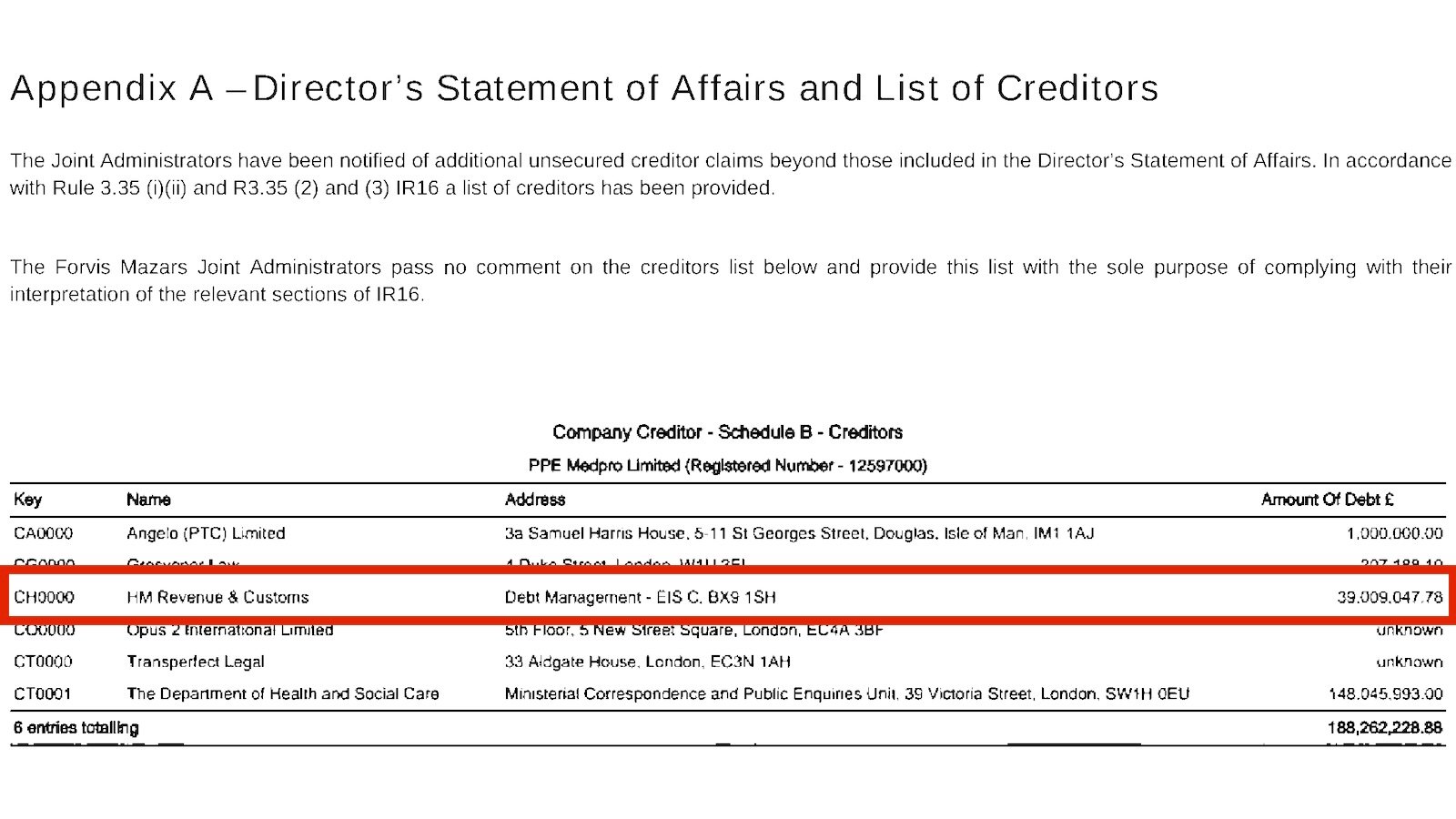
Douglas Barrowman and Michelle Mone may have avoided tax on their £65m PPE profits

The Zahawi libel story isn’t over – his lawyer is appealing
Nadhim Zahawi’s SLAPP results in disciplinary action for his lawyer. Why it happened, and what it means.
Michelle Mone failed to declare her interest in an offshore trust
Douglas Barrowman unlawfully hid the ownership of another company


Leave a Reply to Dan Cancel reply